Power of “Powerless” Speech, but not Powerless Posture

Assertive speech is assumed to signal competence and power, pre-requisites to status, power, and leadership in the U.S. workplace.

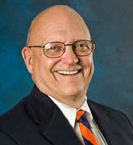
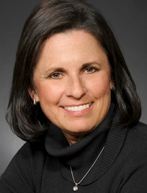
Alison Fragale

Alison Fragale

However, University of North Carolina’s Alison Fragale demonstrated that warmth trumps competence in collaborative team work groups.

Fragale studied “powerless speech,” which has been believed to make a person seem tentative, uncertain, and less likely to be promoted to expanded workplace roles.
She defined “powerless speech” as including:

  • Hesitation: “Well” or “Um”, as known as “clutter words”
  • Tag questions: “Don’t you think?”
  • Hedges: “Sort of” or “Maybe”
  • Disclaimers: “This may be a bad idea, but … “
  • Formal addresses:“Yes, sir” or “Yes, ma’am”

In collaboration-based work teams, “powerless” speech characteristics are significantly associated with being promoted, gaining status and power.
Interpersonal warmth and effective team skills are valued more than dominance and ambition by team members and those selecting leaders for these teams.

Paul Hersey

Paul Hersey

In contrast, “powerful” speech does not feature these characteristics, is more effective when the task or group is independent and people are expected to work alone.

Ken Blanchard

Ken Blanchard

As in Paul Hersey and Ken Blanchard’s Situational Leadership, Fragale concludes that communication style should be tailored to group characteristics.

Li Huang

Li Huang

Likewise, INSEAD’s Li Huang  and Columbia’s Adam Galinsky with Lucia Guillory of Northwestern University demonstrated the impact of “powerful” body language – also called “playing big” –  on perceived power.

Adam Galinsky

Adam Galinsky

Although assuming “larger” postures is associated with credibility and authority, some situations benefit from assuming “smaller”, less powerful postures to establish warmth or to acknowledge another’s higher status.

Lucia Guillory

Lucia Guillory

As noted in an earlier post, Women Get More Promotions With “Behavioral Flexibility”, careful self-observation and behavioral flexibility based on situational requirements are effective foundations to establish group leadership.

-*How do you monitor and adapt “powerless” speech to work situations?

RELATED POSTS:

©kathrynwelds

Neuronal Recordings Suggest “Free Will” Might be “Free Won’t”

Itzhak Fried

Itzhak Fried

People may think they consciously control their actions and performance, but findings from UCLA’s Itzhak Fried and Roy Mukamel with Gabriel Kreiman of Harvard challenged conventional assumptions about “conscious intention” and “free will. ”

Roy Mukamel

Roy Mukamel

Fried, Mukamel, and Kreiman adopted Benjamin Libet’s procedure to assess “free will” at University of California, San Francisco, using intracranial recordings to identify neuron activity that precedes and predicts volunteers’ decision to move a finger.

Gabriel Kreiman

Gabriel Kreiman

Volunteers, who had electrodes implanted in their brains to record early indicators of seizures, pressed a button when they chose and indicated the clock’s hand position when they decided to press the button.

Libet’s process marks the time a voluntary action occurred, and the volunteer’s report of when the decision to act was completed.
These data points enabled researchers to identify specific neurons that were active during the time around the conscious decision to act and the completed action.
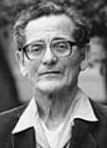
Benjamin Libet

Benjamin Libet

About a quarter of neurons in the frontal lobe’s supplementary motor area (responsible for motor activity coordination) and the anterior cingulate cortex (which directs attention and motivation) changed activity before volunteers said they wanted to press the button.

Spontaneous, voluntary acts were initiated in the cerebrum about 200 milliseconds before the person was consciously aware of the ‘decision’ to act, and researchers predicted with greater than 80 percent accuracy whether a movement had occurred and when the decision to make it happened.

Libet’s team suggested that unconscious brain processes, which are more rapid than conscious decision-making (“free will”), are the instigators of volitional acts.
However, these researchers also proposed that “free will” is more accurately described as “free won’t” because conscious volition can exercise “veto power” over intentions to act.

Kreiman extended this research to better understand loss of voluntary movement in Parkinson’s disease when he pre-empted volunteers’ movements after observing brain activation in the supplementary motor area and the anterior cingulate cortex.
StopHe activated a “stop” sign on a screen in front of each volunteer before the person actually moved, and reported that his volunteers frequently said, ”That was weird. It was like you read my mind.”

Nalini Ambady

Nalini Ambady

These brain studies complement Stanford professor Nalini Ambady’s work at Harvard University on “thin slicing”, or the experience of “knowing before you know.”
Also described as “intuition” or “unconscious cognitive processing,” these findings suggest that the conscious mind is the last to know when we make a decision.

-*How do you manage the discrepancy between unconscious mental processes and conscious awareness of them?

RELATED POSTS:

Twitter:  @kathrynwelds
Blog: |Kathryn Welds |Curated Research and Commentary
Google+:
LinkedIn Open Group Psychology in Human Resources (Organisational Psychology)
Facebook Notes:

©Kathryn Welds

Equal Pay Act’s Fiftieth Anniversary: Progress but no Parity

Equal Pay Act 1963

Equal Pay Act 1963

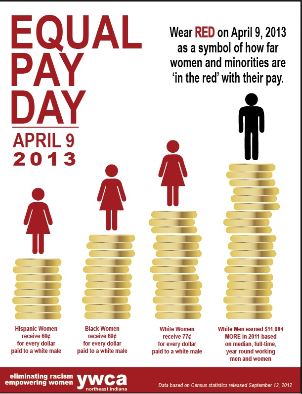
When U.S. President John F. Kennedy signed the Equal Pay Act in 1963, women earned 59 cents for every $1 earned by a man.

Today women are up to 77 cents on the dollar, according to the U.S. Equal Employment Opportunity Commission Chair Jacqueline Berrien.
She noted that the wage discrepancy is even larger for African American women and Latinas.

Jacqueline Berrien

Jacqueline Berrien

Women MBAs graduating from top U.S. business schools in 2012 fared slightly better than the national average, with 2012 Stanford alumnae earning just 79 cents for every $1 earned by a male grads, according to Bloomberg Businessweek’s annual surveys of 24,716 recent MBA graduates from each year’s top 30 U.S. business schools since 2002.
Given the substantial investment of time, money, and effort in obtaining these advanced degrees, women graduates may question this Return on Investment (ROI).

Women from the MBA classes of 2012 averaged 7.3 percent less than their male counterparts with average salaries of $105,059.
This wage disparity is more than triple the 2.2 percent gap women MBAs experienced in 2012 on average earnings of $83,404.

The survey considered pay differences by industries and found women lagged behind men in pay in eight of 11 sectors in 2012, including accounting, finance, marketing, and operations.
The gap has increased across industries since 2002, even in non-finance fields like information technology and entrepreneurship.

The largest pay differential was in highly-compensated financial fields like venture capital and private equity field, where women earned only 82.5¢ for every dollar men made — about 10 ¢ less on the dollar than in 2002.
In contrast, consulting offered the closest pay parity in 2012, with women earning 99¢ for every dollar of male classmates’ salaries.

Women earned more than men in three industries: human resources, non-profits, and investment banking.
The first two industries tend to attract more women and be lower-paid than other fields.

EEOCBerrien, of the EEOC, opined that with the current backsliding in parity progress, the gender pay gap is predicted to close in another 44 years, in 2057 — provided that there is no further deterioration of pay equity advancement.

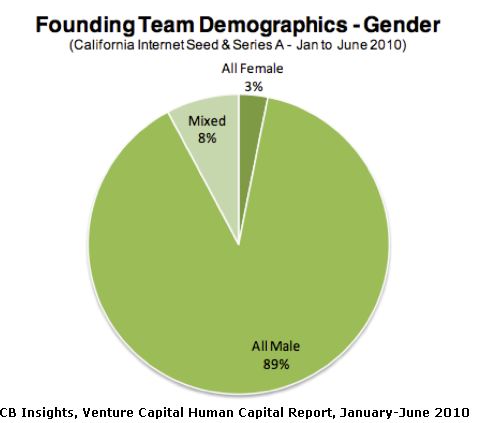
CB Insights reported that in California from January-June 2010:CI Insights Founder Gender - 2010

  • 89 percent of series A and seed-funded companies had all male founders, compared with only 8 percent that had founders of both genders, and just 3 percent of businesses with all female founders
  • 82 percent of company founders were white, compared to 18 percent that were Asian or Pacific Islander

Equal Pay DayThe 2013 Silicon Valley Index, compiled by economic think tank Joint Venture Silicon Valley found significant income disparities by race in addition to gender from 2009-2011:

  • African-American residents’ income dropped 18%, compared to a 4% decrease across the U.S.
  • Hispanic resident’ income decreased 5%, similar to the rest of California
Catherine Bracy

Catherine Bracy

Catherine Bracy observed that the average woman in Silicon Valley, California’s “economic powerhouse”, earns 49 cents for every dollar men make in Silicon Valley, when averaging incomes of African American and Hispanic women residents.

NerdWallet analyzed data from the U.S. Census for 366 metro areas to determine the lowest pay gaps for women in small, medium, and large cities, and concluded that on balance, Silicon Valley was one of the “best places for women to work.”

Wage discrepancy in one of the U.S.’s most economically viable areas, whether around the national average or well below, demonstrates that 50 years after the Equal Pay Act, the average female worker in the U.S. is far from earning an equal wage.

Happy Anniversary, Equal Pay Act of 1963, and Many Happy Returns of the day for at least 44 years, until women’s pay may be equal across industries and geographies.

RELATED POSTS:

Twitter:    @kathrynwelds
Blog: – Kathryn Welds | Curated Research and Commentary    
Google+:
LinkedIn Open Group Psychology in Human Resources (Organisational Psychology)
Facebook Notes:

©Kathryn Welds

Harvard B-School Women “Lean Out” of the Workforce?

First HBS Women

First HBS Women

Women were first admitted to Harvard Business School in 1963, and 50 years later, women are not 50% of the students at HBS.
They trail at 42% for the currently-admitted class, up from the 40% at the time of this survey.

Robin Ely

Robin Ely

Robin Ely of Harvard conducted a survey of of 3,786 women and 2,655 men HBS graduates and found that more than 70% of alumnae are in the paid workforce, and 56% work full time.

Of the 10% of alumnae ages 31 to 47 who “lean out” to care for children full time, only 3% said they planned not to return to return.

HBS 50Ely argues that rather than leaning out, women are actually pushed out or pulled out of the workforce:

“…a whole set of experiences … look less like women opting out, and more like women being pushed out, by organizations that demand a 24/7 work schedule…Women are being pulled out by a culture that promulgates a compelling—some might say guilt-inducing—image of mothering that is hard to live up to while you are trying to hold a job.”

Among women working part-time, three-fourths are engaged in pro bono and volunteer efforts, suggesting that these women continue to have demanding schedules.
More than 63% of the women report regular or significant volunteer commitments, with 67% of those caring for children full-time reporting substantial volunteer activity.

HBS WomenYounger women with two or more children are less likely to be in the workforce than those with no children: 37% for parents vs 9% for the non-parents.

And among the younger cohort of Gen X’ers, 13% of women are working part-time, contrasted with 2% of Gen X men.

At the other end of the age-experience spectrum, another type of “age-approriate opting out” was reported by 43% of female graduates ages 48-66 no longer working full-time.
In contrast, only 28% of men in the same age range were not longer employed, reinforcing previous findings that men work both more hours per year and more years over their careers, leading to higher overall career earnings.

More than 84% of female respondents acknowledged “taking leaves or reducing work hours” hold back women from career advancement.

HBS RestroomThe second most-cited impediment to career advancement for women was “prioritizing family over work,” according to 82% of the female respondents.

Most alumnae reported organizational factors limit women’s advancement:

  • Lack of senior female role models
  • Inhospitable corporate cultures
  • Lack of supportive environments

Fewer than half of the women under the age of 67 report being satisfied with their professional accomplishments or opportunities for career growth.
In contrast, the majority of men agree that their work is meaningful and satisfying.

Drew Gilpin Faust

Drew Gilpin Faust

Harvard’s President Drew Gilpin Faust noted that, women are not equally represented in top leadership roles, echoing statistics showcased by HBS grad Sheryl Sandberg.
She share that women:

  • Comprise 4 percent of Fortune 500 Company CEOs
  • Lead fewer than 10 percent of America’s venture capital firms
  • Hold 26 percent of US full professorships
  • Serve in 20 percent of top US government jobs
Sheryl Sandberg

Sheryl Sandberg

Ely believes that organizations, women, and families will benefit from recruiting and hiring women who have opted out of full-time work but now want to resume their careers, because today’s graduates can expect to live nearly a century.

This change in hiring practices can increase use of top talent while reducing the substantial regret and dissatisfaction many HBS women experienced in their career trajectories.

As one highly-educated, highly-skilled women reflected on her sense of under-utilization and under-employment in a large global organization: “I don’t want to have to go home and vacuum to feel like I’ve accomplished something.”

Organizational policy can increase firms’ profitability, competitiveness, and innovation by deploying top talent across generations and genders, and this HBS study points to one source of potential talent.

-*What actions should individual women and organizations implement to increase the utilization of skilled women’s talents in the workplace?

Related Post

Women’s Post-Business School Work-Life Issues

Twitter:  @kathrynwelds
Blog: Kathryn Welds |Curated Research and Commentary
Google+:
LinkedIn Open Group Psychology in Human Resources (Organisational Psychology)
Facebook Notes: 

©Kathryn Welds

Innovators’s Personality Characteristics and Shibumi Principles Drive Innovation

Øyvind Martinsen

Øyvind Martinsen

BI Norwegian Business School’s Øyvind Martinsen identified components of creative personalities as key attributes for innovative problem solving in business organizations.

Martinsen’s study of 481 people included two groups of students in creative fields: advertising and performing artists,  and a control group of lecturers and managers.

He found that creative individuals differed from the control groups in several dimensions:

  • Have an active imagination, “associative orientation”, an “experimental attitude”
  • Value originality, are comfortable rebelling against rules, standards, and systems
  • Demonstrate high motivation to succeed
  • Become absorbed in creative work
  • Are ambitious Desire recognition, fame
  • Adapt, reimagine, rebrand, and flex to meet current demands and realities
  • Express anxiety, worry, volatile emotions  
  • Demonstrate less concern, friendliness and sensitivity to others
  • Tend to be more critical of others

Martinsen says that a less creative individuals can increase this capacity when their work environments encourage rule-bending and free thought, so organizations can modify policies and practices to convey acceptance of exploration.

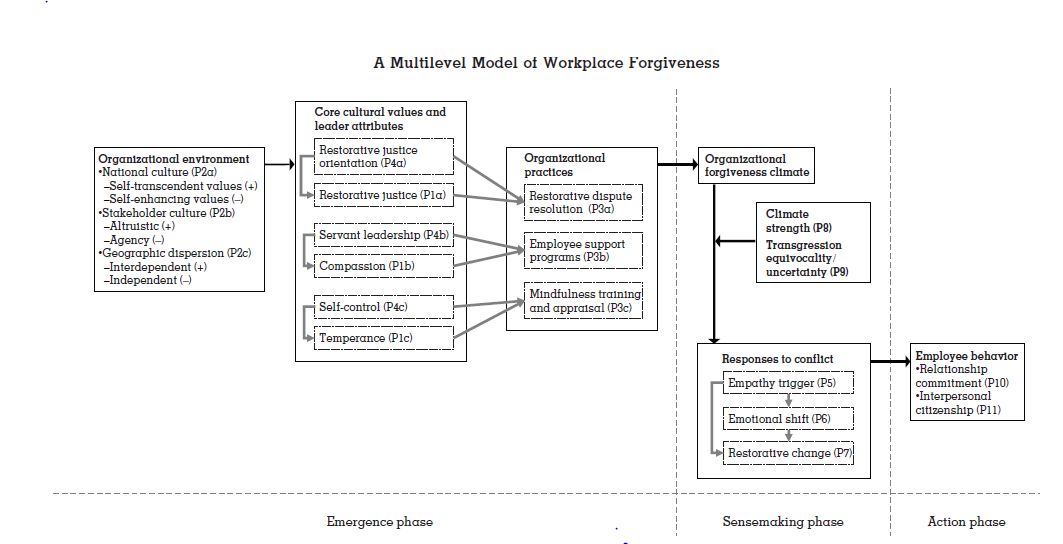
Employees are often urged to take chances by innovating solutions, but sometimes these Ryan Fehr - Workplace Forgiveness Modelincubation efforts may not result in a commercial success — and organizations may not “forgive” the investment of time and money in speculative efforts.

University of Washington’s Ryan Fehr with Michele Gelfand of University of Maryland suggest that organizations should establish the conditions for innovation and for accepting that experimentation may provide “lessons learned” even when efforts cannot be brought to market.

Ryan Fehr

Ryan Fehr

Their research investigated “forgiving organizations” that expand the individual practice of workplace compassion and mindfulness to an institutional level.

Michele Gelfand

Michele Gelfand

Fehr and Gelfand propose a “sensemaking” organizational model based on restorative justice, temperance, and compassion to cultivate the climate of fearless innovation and confident exploration in high-support organizations, which benefit from process and product breakthroughs and related financial rewards.

Matthew May

Matthew May

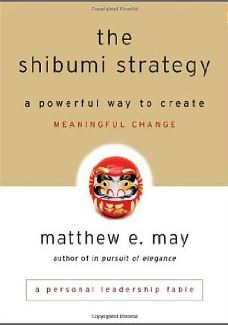
Matthew May explored a multi-faced exemplar of innovation, Shibumi,   imperfectly defined as “effortless effectiveness”, simply-expressed complexity, flawed perfection.

Baldassarre Castiglione

Baldassarre Castiglione

Shibumi shares some qualities with Baldassare Castiglione’s idea of “sprezzatura,” or making “whatever one does or says seem effortless, and almost unpremeditate,” Shibumi, says May, is typically achieved through an innovation-change management sequence of:

  • Commitment
  • Preparation
  • Struggle
  • Breakthrough
  • Transformation
Trevanian

Trevanian

Film scholar Rodney William Whitaker, who wrote under the pseudonym Trevanian, opined that “Shibumi has to do with great refinement underlying commonplace appearances,” and architect Sarah Susanka observed that “…shibumi evolves out of a process of complexity, though none of this complexity shows in the result…to meet a particular design challenge.”

Sarah Susanka

Sarah Susanka

May illustrated examples of familiar Japanese management principles including Hoshin (goal alignment) and Kaizen (continuous improvement), with less familiar principles:

  • Kata (patterns of effective behavior)
  • Genchi genbutsu (observation)
  • Hansei (reflection).

Matthew May-The Shibumi StrategyInnovation and creative problem-solving in any field can benefit from attention to Shibumi’s seven principles:

  • Austerity – Less is more
    Koko” suggests restraint, sparseness, and intentional omission, and ‘Is/isn’t analysis” provides the focus and clarity to exclude elements beyond a designated scope

    Antoine de Saint-Exupéry

    Antoine de Saint-Exupéry

    Antoine de Saint Exupery captured this principle in his view that “Perfection is achieved not when there is nothing left to add, but when there is nothing left to take away.”

In another book, May offered 4 Ss of “elegant”, innovative, and austere solutions:

  • Symmetry” to help solve problems of structure, order, and aesthetics
  • Seduction” for creative engagement
  • Subtraction” for problems of economy
  • Sustainability” for a process or solution that is both repeatable and lasting
  • Simplicity
    Kanso” signals the “enoughness” of streamlined utility, based on prioritization, understatement, and order for the central purpose.
  • Naturalness
    Shizen” points to the paradox of intentional artlessness, or balancing nature’s randomness and patterns with intentional curation.
  • Subtlety
    Yugen” refers to the tension between stagnation of precision in contrast with nature’s growth.
    One example is Steve Jobs building anticipation through restrained information release.
  • Asymmetric Imperfection
    Fukinsei points to the symmetry of nature through its counterpoint:  Asymmetrical and incomplete representations that encourage the viewer’s participation to “complete the incomplete.”Gestalt Art
    Gestalt
    researchers and artists demonstrated increased visual impact when participants co-create and collaborate in the innovation effort.
  • Change Routine Thinking and Actions
    Datsuzoku suggests a break from routine, such as adopting free-spirited Carnival demeanor at the annual masked Fasching in German-speaking countries.Fasching
    Breaking patterns enables breakthrough innovation and creative resourcefulness.
  • Active Stillness, Dynamic Tranquility
    Seijaku is serenity in the midst of activity and provides context of datsuzoku, transcendence of conventional ideas and traditional usage, leading to surprise, astonishment, and freedom to create.
    “Doing nothing” in mindfulness practice can be provide unconscious incubation for eventual creative syntheses to solve complex design issues, and increase self-awareness, focus, and attention.
    Individuals who wish to become more creative even in more confining organizations have reported success by adopting mindfulness meditation based on conscious breathing.
    In addition mindfulness practice can enhance resilience to accept critique in the creative process.

-*How do you establish the individual and organizational conditions for innovations?
-*How do organizations become “forgiving”?

RELATED POSTS:

Twitter:   @kathrynwelds
BlogKathryn Welds |Curated Research and Commentary
Google+:
LinkedIn Open Group Psychology in Human Resources (Organisational Psychology)
Facebook Notes:

©Kathryn Welds
Productivity and Work Motivation Affected by Meaning, Challenge, Mastery, Ownership

Small gestures and verbalizations by managers and organizations can have a large impact on employee productivity, motivation, engagement, and retention – for better or worse.

Dan Ariely

Dan Ariely

Dan Ariely’s research at Duke University showed the small changes in task design dramatically increase or diminish persistence, satisfaction, and commitment to tasks.

The good news is that by simply looking at something that somebody has done, scanning it and saying ‘uh huh,’ [you] dramatically improve people’s motivations…. The bad news is that ignoring the performance of people is almost as bad as shredding their effort in front of their eyes. …,” according to Ariely.

Ariely’s lab experiments found that volunteers valued and liked their work product more when they worked hard and managed obstacles to produce it.
In addition, most people believed, often inaccurately, that other observers shared their positive view of their work product,

His research concluded that people seek meaning, challenge, and ownership in their work, and that these elements can increase work motivation and persistence.

Viktor Frankl

Viktor Frankl

Holocaust survivor and psychiatrist Viktor Frankel articulated this existential perspective in his examination of the critical role that meaning played in the enabling survivors of concentration camp prisoners in Man’s Search for Meaning.

In the less extreme circumstances of the workplace, finding and assigning meaning to work efforts enables people to persist in complex tasks to achieve satisfaction in mastering challenges.

Rosabeth Moss Kanter

Rosabeth Moss Kanter

Harvard’s Rosabeth Moss Kanter concurred that both meaning and mastery are productivity drivers, and to these she added a social dimension, membership, and a distant runner-up, money.

Frederick Herzberg

Frederick Herzberg

In contrast, one of the early though leaders in business management, psychologist Frederick Herzberg, developed a classic formulation of motivational factors contrasted with “hygiene factors.”

Frederick Herzberg - Motivation-Hygiene factorsHis two-factor theory of motivation did not include meaning or money as driving job satisfaction or productivity.

Shawn Achor, formerly of Harvard, argues that happiness is the most important work productivity lever.

Shawn Achor

Shawn Achor

To support his contention, he cited research findings that happy workforces increase an organization’s sales by 37 percent, productivity by 31 percent and accuracy on tasks by 19 percent.

Whether you work for mainly for meaning, money, or other motivations, you may agree that an ideal workplace and manager would foster all of these contributors to employee engagement and productivity.

-*What is the most important work motivator for you?
-*How have you seen managers increase employee engagement and performance through words and actions?

Related Posts

Twitter:  @kathrynwelds
Blog |Kathryn Welds| Curated Research and Commentary
Google+:
LinkedIn Open Group Psychology in Human Resources (Organisational Psychology)
Facebook Notes:

©Kathryn Welds
Interpersonal Envy in Competitive Organizations

Workplace envy is rarely discussed, although it is a logical outcome of competition for scarce resources:  Recognition, advancement, power, reputation, compensation in explicit or implicit organizational “tournaments.”

Jayanth Narayanan

Jayanth Narayanan

National University of Singapore’s Jayanth Narayanan, Kenneth Tai, and Daniel McAllister broached the near-taboo of workplace envy as an inevitable outgrowth of social comparison and related “cognitive dissonance” in attempting to self-regulate or return to emotional and equity “homeostasis.”

Daniel McAllister

Daniel McAllister

They differentiated malicious envy from benign envy and argue that the latter can drive performance through emulating admired outcomes.

This process, called firgun in Hebrew, is characterized by happiness, envy, and support of others, and is positively related to organizational success.
Mudita in Buddhist texts, refers to similar feelings of vicarious joy at another’s success and good fortune.

Hidehiko Takahashi

Hidehiko Takahashi

Narayan and team posit that envy is pain at another’s good fortune, and Hidehiko Takahashi’s team at Japan’s National Institute of Radiological Sciences demonstrated that the social-emotional pain of envy is a variation of the physical pain experience.

Their fMRI study found that the emotional pain of workplace envy is physically manifested in activation of the brain’s anterior cingulate cortex.

Nathan DeWall

Nathan DeWall

As such, Nathan DeWall of University of Kentucky and colleagues reported that Tylenol™ reduces behavioral and neural responses associated with social pain in two fMRI studies.

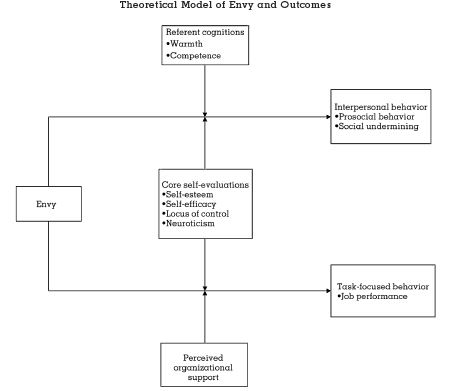
Narayanan argues that envy exerts its differential effect on workplace behavior through each individual’s specific:

  • Core self-evaluations (self-esteem, self-efficacy, locus of control, and neuroticism),
  • Referent cognitions” regarding warmth, likeability, and competence of the envied  person
  • Perceived organizational support

Workplace envy, they argue, can affect:

  • Social undermining
  • Prosocial behavior
  • Job performance

Narayanan and team proposed that those with higher self-esteem are less prone to negative workplace behaviors when experiencing on-the-job envy.

They propose that people are less likely to socially undermine the envied individual when the envied person is viewed as both warm-likeable and competent.

Similarly, they suggest that people who think their organization values them and their work, and supports their work and career development efforts are less likely to decrease job performance when envious at work.

Chade-Meng Tan

Chade-Meng Tan

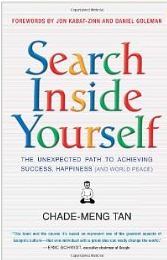
Search Inside YourselfGoogle’s Jolly Good Fellow ChadeMeng Tan proposes the mindfulness-based program “Search Inside Yourself” (SIY) as a way to self-manage workplace envy and other painful social experiences, by developing skills in:

  • Trained attention
  • Self-knowledge and self-mastery
  • Creating useful mental habits.

-*How do you manage workplace envy when you notice it in yourself or others?

RELATED POSTS:

©Kathryn Welds

Gender Differences and Diversity in Corporate Interaction Styles, Financial Outcomes

Gender makes a difference in interaction styles on corporate boards, and the ratio of women to men on these boards is linked to corporate financial performance.

Interaction Styles

Gregory McQueen

Gregory McQueen

Chris Bart

Chris Bart

McMaster University’s Chris Bart and Gregory McQueen of Western University of Health Sciences surveyed 600 board directors (75% male) and found that men tended to base corporate decisions on tradition, rules, and regulations, whereas women tended to ask questions to develop more solution options, cooperate, and consider the interests of all stakeholders.

Nanette Fondas

Nanette Fondas

Nanette Fondas, then of Duke University, and Susan Sassalos, now of Edison International found that women on corporate boards influence other board members to act more “civilized” and “sensitive to other perspectives.”

Val Singh

Val Singh

In the same vein, Cranfield University’s Val Singh reported that women on corporate boards also reduce ‘game playing’ among board members.

Siri Terjesen

Siri Terjesen

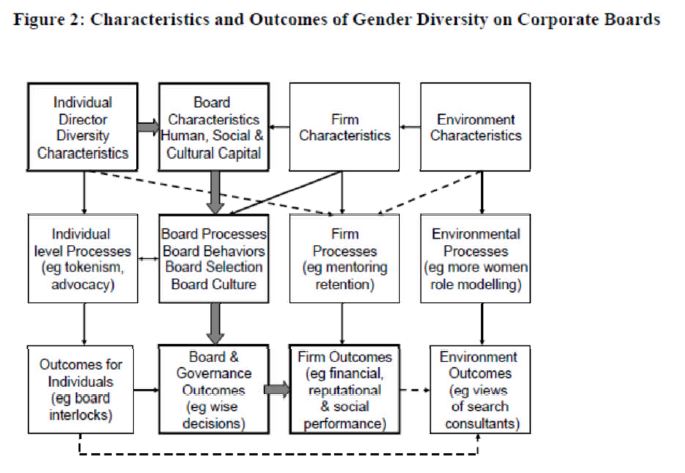
With Siri Terjesen of Indiana University and Cranfield University’s Ruth Sealy, Singh evaluated existing research on corporate board gender diversity to develop a model of analysis by:Val Singh - Gender Diversity on Corporate Boards Model

  • Individual
  • Board
  • Firm
  • Industry and Environment

Financial Performance:

Nancy Carter

Nancy Carter

Catalyst’s Nancy Carter and Lois Joy with Harvey Wagner of University of North Carolina and Michigan State University’s Sriram Narayanan found that Fortune 500 boards with 3 or more women report:

Harvey Wagner

Harvey Wagner

compared to boards with more men.

Nick Wilson

Nick Wilson

Nick Wilson and Ali Altanlar of Leeds University added another financial indicator affected by gender ratios on boards.

Ali Altanlar

Ali Altanlar

In their analysis of 17,000 UK companies that went insolvent in 2008, Wilson and Altanlar reported even one female board director reduces bankruptcy risk by 20%.

Pepperdine University’s Roy D. Adler studied 200 companies among the Fortune 500 to mine data from 1980 through 2001 and reported results consistent with the Catalyst investigation.

Roy Adler

Roy Adler

Adler and team identified the firms that had a record of promoting women to high levels and compared their profit performance to the median performance of Fortune 500 firms in the same industries.

The researchers separately compared profits as a percentage of sales, of revenues and of assets and found that for 2001, the 25 firms with the strongest record of promoting women to high organizational levels outperformed the industry medians with:

  • 34 percent higher revenue
  • 18 percent higher assets
  • 69 percent higher equity.

The 10 firms with the very best records of promoting women showed greater profits than competitors, and results were confirmed in subsequent studies in 2004 through 2008.
Adler and team noted that the odds of all 18 financial measures favoring women are 262,114 to 1, suggesting that these findings were not random errors.

Cristian Dezso

Cristian Dezso

Likewise, University of Maryland’s Cristian Dezső and David Ross of Columbia University found that companies with one or more women in top management  close to CXO level perform better than other companies, based on their assessment of the largest 1,500 public US companies from 1992 to 2006.

Sheryl Sandberg

Sheryl Sandberg

Sheryl Sandberg isn’t the only one to ask “Why so few?” in corporate and government leadership roles, particularly when these results consistently point to the financial benefits of more women in top decision-making roles.

AAUW

AAUW

American Association of University Women asked the same question about women in Science, Technology, Engineering, and Mathematics roles, and concluded that there remains a large gap in equal gender representation in leadership roles and in technical careers – and this discrepancy comes at the price of financial performance and organizational climate.

  • Where have you observed work group interaction differences depending on the ratio of women?
  • What financial impacts have you observed for organizations with women in top leadership roles?
    Level of Analysis Model

RELATED POSTS:

Twitter: @kathrynwelds
Google+
Blog
: – Kathryn Welds | Curated Research and Commentary 
LinkedIn Open Group Psychology in Human Resources (Organisational Psychology)
Facebook Notes:

©Kathryn Welds

What is Your Signature Story in Behavioral Interviews?

Behavioral interviews require advance preparation for both the interviewer and the job applicant, in contrast to the frequently unplanned volley of unstructured Q&A intended to assess candidate fit and potential effectiveness in a work role.

Tom Janz

Tom Janz

Behavioral Interviews, developed by Tom Janz, now Chief Scientist at peopleassessments.com, ask job candidates to provide examples of past behaviors in specific situations deemed relevant to the target role.

The questions are typically framed as an invitation to tell a story about a situation, a challenge, the candidate’s action or solution, and the outcome:

  • Give an example of an occasion when you used logic to solve a problem
  • Think of a goal you reached and tell me how you achieved it
  • Describe a decision you made that was unpopular and how you implemented it
  • Tell me about a time you went “above and beyond the call of duty
  • When was the last time you handled interruptions to your schedule?  How did you do it?
  • When and how did you convince a team to work on a project they didn’t like?
  • Provide an example of handling a difficult situation with a co-worker
  • Tell me about how you worked effectively under pressure

Sometimes the questions are structured to explicitly request that the candidate reply in the “STAR” format:

  • Situation
  • Task
  • Action
  • Results

Candidates increase odds of memorably and skillfully conveying relevant qualifications by preparing “Signature Stories” – theirs alone – to demonstrate how they resourcefully and innovatively:

  • Solved challenging problems
  • Improved strained work relationships
  • Met deadlines and budget
  • Applied “Lessons Learned”
  • Initiated transformational change
  • Demonstrated courage and integrity
Gary Oliphant

Gary Oliphant

Besides being noticed and remembered, signature stories told in behavioral interviews can help both the candidate and interviewer evaluate whether the fit between the role requirements and the candidate’s skills would likely lead to strong future performance.

Becky Oliphant

Becky Oliphant

Evidence for the predictive validity of signature stories told in behavioral interviews was provided by Gary Oliphant and Becky Oliphant of Stetson University with Katharine Hansen of quintcareers.com in their evaluation of 10 Gallup Organization “Life Themes” relevant to loan sales.
From these signature stories, the researchers accurately predicted post-hire performance and retention at a large financial sales organization.

Katharine Hansen

Katharine Hansen

Stories are 22 times more memorable than facts or figures alone,” contends Jennifer Aaker of Stanford, and she offers four elements that increase the impact of signature stories:

  • Goal: Defines a clear purpose and Call to Action, conveying what the listener should think, feel, do
  • Interest: Attracts focused attention by using a “hook” of surprising truth, visual effect, unusual problem-solving approach
  • Caring: Establishes empathic emotional connection with the storyteller’s challenge and journey to reach a meaningful goal
  • Memorable: Makes the story compelling, unforgettable, “re-tellable” and worth “going viral.”
Jennifer Aaker

Jennifer Aaker

Aaker suggests testing stories by asking others to what extent the story:

  • Changed the listener’s perspective
  • Resonated with the listener’s experiences, values, interests
  • Delivered “Moments of insight”
  • Had incomprehensible, inconsistent, or disjointed parts

She says that the mark of an effective “signature story” is that “others look at you differently” and the story moves you closer to a goal.

-*How do you craft dramatic, memorable Signature Stories to illustrate your values and capabilities?

RELATED POSTS:

Twitter:  @kathrynwelds
Google+:
Blog: – Kathryn Welds | Curated Research and Commentary 
LinkedIn Open Group Psychology in Human Resources (Organisational Psychology)
Facebook Notes:

©Kathryn Welds

Is Optimistic View of the Future Associated with Disabilities, Shorter Life Expectancy?

Frieder Lang

Frieder Lang

Frieder Lang of the University of Erlangen-Nuremberg and German Institute for Economic Research and his colleagues challenged the robust, replicated finding that optimism is associated with positive health outcomes.

David Weiss

David Weiss

Lang with University of Zurich’s David Weiss and Denis Gerstorf of Humboldt-University of Berlin and German Institute for Economic Research examined data from 1993 to 2003  German Socio-Economic Panel household surveys.

Denis Gerstorf

Denis Gerstorf

The team collaborated with Gert Wagner of German Institute for Economic Research and Max Planck Institute for Human Development evaluated approximately ratings from 40,000 people 18 to 96 years old, concerning their current and predicted life satisfaction in five years.

Gert Wagner

Gert Wagner

Their disruptive finding is that participants who expected highest life satisfaction in five years were more likely to experience disability and death within the following decade.

Five years after the first interviews:

  • 43 percent of participants were more satisfied with their lives than predicted,
  • 25 percent predicted accurately
  • 32 percent overestimated their life satisfaction with an optimistic bias.

Lang, Weiss, Gerstorf, and Wagner calculated that overestimating future life satisfaction was related to a 9.5 percent increase in reporting disabilities and a 10 percent increased incidence of death.

The youngest participants had the most optimistic outlook, whereas middle-aged adults made the most accurate predictions, but became more pessimistic over time.

Lauren Alloy

Lauren Alloy

Older adults’ predictions of future life satisfaction may be more accurate, albeit less optimistic, consistent with Shelley Taylor, Ellen Langer, Lauren Alloy, Lyn Abramson and others demonstration of an “optimism bias” and “depressive realism.”

Lyn Abramson

Lyn Abramson

In contrast to findings that higher income is associated with better health outcomes, Lang’s team found that stable, good health and income were associated with expecting a greater decline compared with those in poor health or with low incomes.
In contrast to other findings, higher income was related to a greater risk of disability.

Shelley Taylor

Shelley Taylor

Lang and team concluded that the outcomes of optimistic, accurate or pessimistic forecasts may depend on age, available resources, and motivation to adopt health-improving behaviors.
They acknowledged that unrealistic optimism about the future may help people feel better when they are facing inevitable negative outcomes, such as terminal disease.

Neil Weinstein

Neil Weinstein

Similarly, Neil Weinstein of Rutgers found that people may underestimate susceptibility to harm from a variety of hazards.
Close to 300 volunteers across age, gender, educational levels and occupational groups, demonstrated an optimism bias that they were less at risk than peers.

Weinstein hypothesized that optimism bias may be introduced when people extrapolate from their past experience to estimate their future vulnerability.
Therefore, volunteers future expectations may be biased  because they tended not to expect problems they had not already experienced.

He demonstrated that these personal risk judgments were not correlated with volunteers’ actual objective risk factors, suggesting that volunteers did not modify their optimistic biases based on laboratory findings, physical examination, and reported health habits.
Positive illusions persist even in the face of contradictory evidence.

Eric Kim

Eric Kim

These findings that optimistic bias may not be associated with positive health outcomes contrasts with findings from including University of Michigan’s Eric S Kim, Nansook Park, and Christopher Peterson, who found that “Dispositional Optimism” protects older adults from stroke.

George Patton

George Patton

Similarly, George Patton and colleagues at Royal Children’s Hospital in Parkville, Victoria, Australia reported that optimism has a somewhat protective effect on adolescent health risks in a prospective study.

Eric Giltay

Eric Giltay

Yet another counterpoint to Lang and team’s work was offered by Eric Giltay and colleagues at Leiden University Medical Center Johanna Geleijnse, Frans Zitman, Brian Buijsse, and Daan Kromhout, who demonstrated that optimists typically report healthier habits, like less smoking and drinking alcohol, more physical activity and consumption of fruit, vegetables and whole-grain bread.

-*What do you make of these conflicting findings about optimism’s role in health outcomes?

-*How have you seen optimism relate to health outcomes: Does it seem to drive healthy behaviors and outcomes or poorer health?

RELATED POSTS

Twitter:  @kathrynwelds
Google+:
Blog: – Kathryn Welds | Curated Research and Commentary
LinkedIn Open Group Psychology in Human Resources (Organisational Psychology)
Facebook Notes:

©Kathryn Welds