Attractive Men May Appear Competent, But May Not Be Hired in Competitive Situations

Sun Young Lee

Sun Young Lee

Previous blog posts documented bias favouring attractive people for hiring, venture funding, and positive impressions by others.

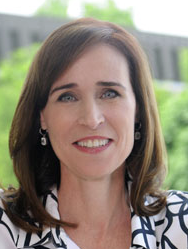
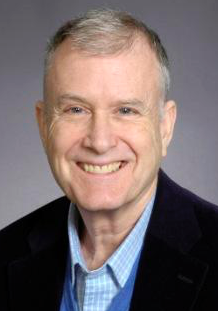
Capable but less attractive individuals may encounter “workplace attractiveness discrimination,” reported Sun Young Lee of University College London, University of Maryland’s Marko Pitesa, Madan Pillutla of London Business School, and INSEAD’s Stefan Thau.

Marko Pitesa

Marko Pitesa

Their studies found that people making employment decisions show systematic selection bias based on candidates’ perceived attractiveness and organizational context.

Selection bias can occur when observers associate unrelated characteristics (gender, ethnicity, national origin, attractiveness) with expectations for work performance (“status generalization”).

Murray Webster

Murray Webster

These assumptions may occur without conscious awareness and without evidence, and can result in group inequalities, according to University of South Carolina’s Murray Webster and Martha Foschi.

James Driskell

James Driskell

Unrelated characteristics, including attractiveness, significantly affected face-to-face interactions in group task experiments by Webster and University of South Carolina colleague James Driskell.

Martha Foschi

Martha Fosch

Decision makers associated attractiveness with competence in male candidates but not in female candidates in one of Lee’s studies.

Interpersonal interdependence occurs when perceived attractiveness affects people’s decisions and actions, according to UCLA’s Harold Kelley and John Thibaut of University of North Carolina.

John Thibault

John Thibault

Lee’s group studied this relationship by assigning male and female volunteers to simulated employment selection situations.
Participants “interviewed” and provided “hiring recommendations” for “job candidates.”
Interviewers were told they would be collaborating for shared team rewards BUT competing for recognition, promotions, commissions, and bonuses.

Madan Pillutla

Madan Pillutla

Volunteers evaluated two similar resumes accompanied by photos of an “attractive” applicant and an “unattractive” candidate.
Next, assessors answered questions about the person’s competence, likely impact on the rater’s success, and their likelihood of recommending the candidate for the position.

When the decision-maker expected to cooperate with the candidate, male candidates who were perceived as more attractive were:

-judged as more competent,
-seen as more likely to enable the evaluator’s career success,
-more frequently recommended for employment.

Stefan Thau

Stefan Thau

However, when decision makers expected to compete with the candidate, attractive male candidates were rated as less capable.
Evaluators less frequently recommended attractive male candidates for employment, suggesting a systematic bias to preserve the evaluator’s place in the workplace hierarchy.

Attractive and unattractive female candidates were judged as equally competent, but attractive male candidates were rated as much more competent than unattractive male candidates.

Subsequent studies provided evaluators with candidates’ age, race, education and headshot to consider in selecting their competitor or collaborator in a tournament task.
Decision-makers preferred attractive male or female candidates unless their personal outcomes were affected by the selection decision.

These studies suggest that attractiveness discrimination is “calculated self-interested behavior” in which men sometimes discriminate in favor and sometimes against attractive males.

-*How do you align with “calculated self-interest behavior” to mitigate bias?

Related Posts:

©Kathryn Welds

Women Undermine Salary Negotiations with Excessive Gratitude

Andreas Leibbrandt

Candid self-disclosure hurt women’s salary negotiation outcomes when they revealed that a salary exceeded their expectations, in a study by Monash University’s Andreas Leibbrandt and John A. List of the University of Chicago.

John List

John List

Some women applying for administrative assistant jobs were told that the wages were “negotiable,” and these women achieved higher pay offers than women who received no information. Volunteers in the no-information group frequently revealed that they were willing to work for a lower hourly rate, and they received lower average salary offers.

Edward E. Jones

Edward E. Jones

Though this approach likely leads to lower salary, it could be considered strategic ingratiation to enhance the future working relationship>
However, this approach could lead the negotiation partner to question the applicant’s judgment and confidence.
In addition, this maneuver may delay salary increases because the candidate expresses satisfaction with the original offer.

Strategic ingratiation
is observed in several behaviours, according to Duke University’s Edward E. Jones:

-Self-presentation: Self-enhancement or “one-down” humility, providing favors or gifts,

-Flattery: “Other-enhancement” by sharing credible positive comments,

-Agreement: Opinion-conformity and matching non-verbal behaviour.

Steven H. Appelbaum

Steven H. Appelbaum

Positive outcomes from “strategic ingratiation” included promotion or pay increase, observed in a study by Concordia University’s Steven H. Appelbaum and Brent Hughes.

This contradictory finding  was explained by situational and individual factors including:

  • Machiavellianism,
  • Locus of control,
  • Work task uniqueness.
Jeffrey Flory

Jeffrey Flory

In another of Leibbrandt and List’s randomized field studies, collaborating with Concordia colleague Jeffrey Flory, men did not wait for permission to negotiate when no statement was made about salary discussions.

In fact, male participants said they prefer ambiguous salary negotiation norms or“competitive work settings”  in which salary negotiation was typically expected.

Women frequently do not negotiate unless given explicit permission.
but when they are invited to negotiate, they obtained higher salaries as frequently as men

Leibbrandt, List, and Flory concluded that women accept “competitive” workplaces when “the job task is female-oriented” and the local labor market offers few alternatives.

Women who seek higher salaries benefit from proposing their “aspirational salaries” rather than waiting for permission to negotiate.
Women negotiators can achieve better outcomes when they offer moderate expressions of gratitude and avoid revealing their “reserve” salary figure.

-*In what work situations have you benefited from applying ‘strategic ingratiation’?

-*To what extent have you seen expressions of gratitude in negotiation undermine bargaining outcomes?

RELATED POSTS:

©Kathryn Welds

Loneliness as Health Risk; Reframing Can Help

Julianne Holt-Lundstad

Julianne Holt-Lundstad

Loneliness increases mortality risk by 26 percent, comparable to health risks of obesity, cigarette smoking, and excessive alcohol use, according to Brigham Young University’s Julianne Holt-Lunstad, Timothy B. Smith, Mark Baker, Tyler Harris, and David Stephenson.
Loneliness harms people’s health in addition to triggering emotional discomfort.

Timothy Smith

Timothy Smith

Loneliness and social isolation differ.
Some people report feeling lonely in the presence of others, whereas socially isolated people may not report loneliness.
However, both loneliness and social isolation increased risk for mortality in a meta-analysis of more than 3 million participants in studies of loneliness, social isolation, and living alone.

Megan Knowles

Megan Knowles

Lonely individuals benefited more from learning to cope with social performance anxiety than from developing social skills, found Franklin & Marshall College’s Megan L. Knowles, Gale M. Lucas of University of Southern CaliforniaFlorida State University’s Roy Baumeister, and Wendi L. Gardner of Northwestern.

Gale M. Lucas

Gale M. Lucas

More than 85 volunteers completed a loneliness self-report, then identified emotions expressed on computer-presented faces.
Self-described lonely people out-performed non-lonely people when social sensitivity tasks were described as measures of “academic aptitude.”

Roy Baumeister

However, lonely participants performed worse when tasks were presented as tests of “social aptitude.”
These volunteers also reported difficulty forming and maintaining friendships, suggesting that social anxiety leads to “choking” in social “performance” situations.
The result is continued loneliness.

Wendi Gardner

Wendi Gardner

Lonely people may be more socially competent than the non-lonely: They were more skilled at remembering social information in studies by Northwestern’s Wendi L. Gardner, Cynthia L. Pickett of University of California Davis, and Ohio State University’s Marilynn B. Brewer.
The team assessed social recall by presenting volunteers with a simulated computer chat task that provided brief acceptance or rejection experiences, then a diary containing both social and individual events.

Cynthia L. Pickett

Cynthia L. Pickett

When social anxiety could be reattributed to an external cause , task  performance increased.
Volunteers consumed a non-caffeinated energy beverage and were told that any jitters they might experience could be attributed to the “caffeine” they’d just consumed.
This explanation provided a plausible but false rationale for anxious feelings.

Alison Wood Brooks

Alison Wood Brooks

Similarly, Harvard’s Alison Wood Brooks found that reframing nervousness as “excitement” helped people perform better on stressful tasks.

An additional coping approach for lonely people is modifying personal mindsets following social loss cues.

Carol Dweck

Carol Dweck

Fixed mindset, identified by Stanford’s Carol Dweck, is a belief that personal capabilities are limited to present capacities.
This perspective is similar to
security-oriented, prevention-focused behaviors of lonely people observed by University of Southern California’s Lucas with Knowles, Gardner, Daniel C. Molden and Valerie E. Jefferis of Northwestern.
This mindset can lead to fear, anxiety, protectiveness and guardedness.

Daniel Molden

Daniel Molden

In contrast, growth mindset is similar to promotion-focused responses like attempts at social engagement.
This developmental mindset holds that personal capabilities can expand based on commitment, effort, practice, instruction, and correcting mistakes.
This view enables teamwork, collaboration, and social interaction.

Marilynn Brewer

Marilynn Brewer

To demonstrate these effects, Lucas’s group gave volunteers cues of acceptance or rejection.
People who received positive primes were more likely to develop a promotion-focused growth mindset.
These participants also reported more effective social thoughts, intentions, and behaviors.

People who experience social anxiety and loneliness can reduce social avoidance by reframing discomfort as “excitement” and by embracing learning and new experiences in a growth mindset.

-*How do you manage loneliness?

Related Posts:

©Kathryn Welds

Workplace Incivility is Contagious, Damaging

James Bartlett

James Bartlett

Workplace incivility has measurable negative consequences including reduced employee engagement and productivity, according to North Carolina State University’s James E. Bartlett and Michelle E. Bartlett with Florida Atlantic University’s Thomas G. Reio.

Trevor Foulk

Trevor Foulk

Rudeness in the workplace is contagious and leads people to be vigilant for subsequent slights, reported University of Florida’s Trevor Foulk, Andrew Woolum, and Amir Erez.
They suggested that low-level workplace hostility enables similar behavior throughout the organization, leading to eroded culture and productivity.

Andrew Woolum

Andrew Woolum

Ninety volunteers practiced negotiation with partners, and those who rated their initial negotiation partner as rude were more likely to be rated as rude by a subsequent partner.

Participants seemed to assimilate and convey the first partner’s rudeness.
The effect persisted during the week between the first and second negotiations.

Amir Erez

Amir Erez

Foulk’s team staged interactions between an apologetic late-arriving participant and the study leader, who responded neutrally or rudely.
Then, volunteers completed a timed task to distinguish real words from nonsense words.

Participants who observed the leader’s rude response more quickly identified rude words in a task than participants who had observed the neutral interaction.
Observing rude interactions can “prime” people’s awareness and sensitivity to future uncivil interactions.

Walter Mischel

Walter Mischel

People who witnessed rudeness were more likely to be rude to others, confirming the impact of observing aggression on future behavior, earlier demonstrated in often-cited “Bobo” experiments by Stanford’s Walter Mischel, Dorothea Ross and Sheila Ross.

Mischel's experiment with Bobo doll

Mischel’s experiment with Bobo doll

Foulk’s group also observed this priming effect when volunteers watched a video of a rude workplace interaction, then answered a fictitious customer neutral-toned email.
Participants’ responses were more likely to be hostile than those who viewed a polite interaction before responding.

Rudeness will flavor the way you interpret ambiguous cues,” noted Foulk, who contended that harsh interactions can reduce collaboration and trust in the workplace.

-*How do you stop the spread of workplace incivility?

Related Posts:

©Kathryn Welds

Intrinsic Motives Linked to Achieving Goals

Amy Wrzesniewski

Amy Wrzesniewski

Effort toward a goal may be sustained when the person is intrinsically motivated by personal commitment to a larger purpose than the goal itself.
Goal-seeking activity can also be decreased by tangible external rewards

Xiangyu Cong

Xiangyu Cong

This interaction between internal and external motives was investigated among more than 10,000 people admitted to the United States Military Academy (“West Point”) by Yale’s Amy Wrzesniewski, Xiangyu Cong, Michael Kane, Audrey Omar, and Thomas Kolditz, with Barry Schwartz of Swarthmore.

Michael John Kane

Michael John Kane

Wrzesniewski’s team considered the long-term impact of holding both intrinsic motives (desire to serve and protect citizens) and extrinsic motives (have a respected career) on West Point cadets’:

-Promotion to commissioned officer rank,

-Extending officer service beyond the minimum required period of 5 years,

-Selection for early career promotions.

Audrey Omar

Audrey Omar

Cadets who were intrinsically motivated were more likely to accomplish these goals.
However, those who also reported extrinsic motivation were less likely to achieve these career distinctions.

Richard Koestner

Richard Koestner

A meta-analytic review of nearly 130 experiments by University of Rochester’s Edward Deci and Richard Ryan with Richard Koestner of McGill confirmed the undermining effects of extrinsic rewards from childhood through adulthood.

Mark Lepper

Mark Lepper

People may report less intrinsic motivation when extrinsic rewards are available, a trend called the “over-justification hypothesis”  by Stanford’s Mark Lepper, David Greene, and Richard Nisbett of University of Michigan.

Clark McCauley

Clark McCauley

People typically view their work as being intrinsically or extrinsically motivated depending on whether they see work as a:

Job, mostly extrinsically motivated, 

-Career, some intrinsic and extrinsic motivation, 

-Calling, intrinsically motivated by fulfillment from the work itself.

Volunteers reported greater satisfaction and better performance when they saw their work as a “calling,” according to Wrzesniewski’s work with Schwartz, collaborating with Bryn Mawr’s Clark McCauley and Paul Rozin of Penn.

Paul Rozin

Paul Rozin

These results suggest the value of finding meaning in work rather than focusing on positive consequences of goal achievement.

Thomas Kolditz

Thomas Kolditz

The U.S. Military has employed extrinsic motive appeals in marketing messages to recruit cadets, suggesting that military services provides “money for college,” “career training,” and enables members to “see the world.”

However, extrinsic motives tend to be associated with less career recognition and tenure than those who find meaning in the organization’s mission.

-*How do you increase intrinsic motivation when extrinsic motivation may seem more appealing?

-*What elements make your work “a calling”?

Related Posts:

©Kathryn Welds

When Do Women Talk More than Men?

Women talk more than men.
Women talk less than men.

-*Which is true?

It depends.

Kay Deaux

Kay Deaux

Social context and expectations determine when females talk more than males, according to NYU’s Kay Deaux and Brenda Major of University of California Santa Barbara.

Brenda Major

Brenda Major

One investigation used electronic audio monitoring devices (digital “sociometers”) to identify gender associated with talk volume during a work collaboration project, and during lunchtime social conversations at work. This study was conducted by Harvard’s Jukka-Pekka Onnela and Sebastian Schnorf, with David Lazer of Northeastern and MIT colleagues Benjamin N. Waber and Sandy Pentland.

Jukka-Pekka Onnela

Jukka-Pekka Onnela

During the work project women talked significantly more than men, except when groups included seven or more people.
In contrast, women spoke less than men in larger groups during the work project.  
In addition, women sat closer to other women in larger project groups.

Sebastian Schnorf

Sebastian Schnorf

During social conversations, women talked the same amount as men, and more than men when the group was large.
Group size is associated with women’s verbal participation in groups depending on the task focus vs. social focus.

Matthias Mehl

Matthias Mehl

These findings support earlier reports of equal verbal participation by women and men by University of Arizona’s Matthias R. Mehl, collaborating with Simine Vazire of Washington University in St. Louis. Their collaborators included University of Connecticut’s Nairán Ramírez-Esparza, with Richard B. Slatcher of Wayne State and University of Texas’s James W. Pennebaker.
This team analyzed voice recordings from more than 390 participants, and concluded that women and men both spoke about 16,000 words per day.

David Lazer

David Lazer

Women in large group social settings spoke more than women in collaborative work projects, found Onnela’s team.
The strongest difference in gender participation related to relationship strength and group size.

Scott E. Page

Scott E. Page

These results have implications for work groups that develop problem solutions and innovations.
Contributions from all women and men in diverse work groups
are required to produce the largest number and most innovative solutions, according to Loyola University’s Lu Hong and Scott E. Page.
They found that diverse work groups produce superior solutions compared with homogenous groups, even if groups were composed of uniformly top performers.

In fact, a group’s “general collective intelligence factor” is most closely associated with:

  • Proportion of females in the group,
  • Average social sensitivity of group members,
  • Equal conversational turn-taking.
Anita Wooley Williams

Anita Wooley Williams

This “collective intelligence factor” was not related to the average or maximum individual intelligence of group members, found Carnegie Mellon’s Anita Williams Woolley, Christopher F. Chabris of Union College, with MIT colleagues Sandy Pentland, Nada Hashmi, and Thomas W. Malone.

Women can apply these insights by increasing verbal participation at work to establish visibility and credibility, while contributing to group performance.

-*How do you determine your degree of verbal contribution in work groups?


RELATED POSTS:

Walking Linked to More Creative Solutions than Sitting

Marily Oppezzo

Marily Oppezzo

People who walked instead of sat generated more novel and feasible ideas, reported Santa Clara University’s Marily Oppezzo and Daniel L. Schwartz of Stanford University.

Dan Schwartz

Dan Schwartz

More than 175 volunteers completed well-validated assessments of creative thinking:

Guilford’s Alternate Uses (GAU) for common objects, created by University of Southern California’s J. P. Guilford, to measure of cognitive flexibility and divergent thinking,

JP Guilford

Edward Bowden

Edward Bowden

Compound Remote-Association test (CRA), developed by University of Wisconsin’s Edward Bowden and Mark Beeman of Northwestern to evaluate convergent thinking,

Barron’s Symbolic Equivalence Test (BSE), introduced by Frank Barron of University of California, Santa Cruz to calibrate the number of original insightful analogies generated for complex ideas.

Frank Barron

Oppezzo and Schwartz coded analogies according to a protocol developed by Northwestern’s Dedre Gentner to measure:

  • Appropriateness,
  • Novelty,
  • Quality, determined by:

o   Level of detail,
o   Semantic proximity to the base statement,
o   Relational mapping to the base statement.

Dedre Gentner

Dedre Gentner

Walking was associated with increased divergent creativity on Guilford’s Alternate Uses (GAU) and improved convergent thinking measured by Compound Remote-Association test (CRA).
This trend significantly increased when volunteers walked outside and these participants produced the most novel and highest quality analogies.

Walkers generated an average of 60% more creative ideas than when seated.
People who walked were more talkative, and their greater verbal output was associated with more valid creative ideas.

Marc Berman

Marc Berman

Participants generated more valid creative solutions when they walked first then sat for the next problem-solving session.

John Jonides

John Jonides

These effects may be explained by Attention Restoration Theory (ART), described by University of Michigan’s Marc G. Berman, John Jonides, and Stephen Kaplan as two types of attention:

Involuntary attention, captured by inherently intriguing stimuli,

-Voluntary or directed attention, directed by cognitive-control processes.

Stephen Kaplan

Stephen Kaplan

They suggested that walking in natural environments renews directed attention and improves performances on difficult tasks even when no longer walking.
Even viewing photographs of nature was associated with improved performance on a complex backwards digit-span task.

In contrast, walking in an urban walk requires directed attention to avoid obstacles and dangerous situations, and provides less opportunity to restore directed attention.

Jin Fan

Jin Fan

After volunteers walked, they performed better on attentional function tasks on the Attention Network Test, developed by Jin Fan of Mount Sinai Medical School to evaluate:

-Alerting,

-Orienting,

-Executive attention.

Benefits of walking were not related to mood or weather conditions during four different seasons.

Friedrich Nietzsche

Friedrich Nietzsche

These studies validate Friedrich Nietzsche’s observation that “all truly great thoughts are conceived by walking and walking in a natural setting before generating creative ideas.
Access to walking places in natural settings can enhance cognitive functioning and performance.

-*How effective have you found taking a brief walk outdoors before high-stakes discussions?

RELATED POSTS:

©Kathryn Welds

Organizational Trust vs “Only the Paranoid Survive”

Organizational life can be punctuated by uncertainty, leading to mistrust.

Andy Grove

Andy Grove

Intel’s former Chairman, Andy Grove, explained his success in guiding the company through a critical product flaw, which threatened Intel’s brand value, noting “Only the Paranoid Survive.

Christel Lane

Christel Lane

However, organizational paranoia’s counterpoint, trust, is associated with productivity, creative problem-solving, employee commitment and retention, found University of Cambridge’s Christel Lane and Reinhardt Bachman of University of Surrey.

Reinhard Bachmann

Reinhard Bachmann

Likewise, Alan Fox catalogued negative consequences of suspicion in work settings.
Roderick Kramer of Stanford also confirmed that people in organizations often misconstrue and overvalue suspicions, leading to low collaboration and isolation at work.

Roderick Kramer

Roderick Kramer

He observed that people with fewer resources or less power engage in self-protective behaviors, accompanied by increased hypervigilance, consistent with findings by Princeton’s Susan Fiske.

Susan Fiske

Susan Fiske

These strategies increase the possibility of “paranoid social cognition,” and may lead people to engage in:

-Idiosyncratic interpretations of interactions,

-Sinister attribution error,

-Perception of conspiracy, highlighted by Rutgers’ Ted Goertzel.

Ted Goertzel

Ted Goertzel

To balance “prudent paranoia” with organizational trust, Kramer recommended considering alternate interpretations from people likely to hold different views.

-*How do you balance organizational trust and “prudent paranoia”?

RELATED POSTS
:

©Kathryn Welds

“High-Commitment” Workplaces Enhance Creative Problem Solving, Innovation

Richard E. Walton

Richard E. Walton

Some organizations have implemented suggestions by  Harvard’s Richard E. Walton to cultivate a  “high-commitment work systems (HCWS)” as a “lever” to positively influence employee productivity, retention, and innovation.

High-commitment employee benefits are designed to elicit employees’ reciprocal commitment and intrinsic motivation to support the organization’s objectives.
These programs include:

  • Employee participation initiatives,
  • Team rewards,
  • Profit sharing,
  • Career development training,
  • Internal transfer opportunities,
  • Internal advancement opportunities, with preference over external candidates,
  • Employment ”security.”

Song Chang

Song Chang

Organizations with these programs, measured by High Commitment Work System Scale, had employees who provided more innovative solutions to complex tasks in a study of more than 50 technology firms in China by Song Chang of The Chinese University of Hong Kong, with Nanjing University’s Liangding Jia and Yahua Cai, and Hong Kong University of Science and Technology’s Riki Takeuchi.

Zhixing Xiao

Zhixing Xiao

“High-commitment work systems (HCWS)” can occur in organizations with varying approaches to human capital management, described by China Europe International Business School’s Zhixing Xiao and Anne S. Tsui of Arizona State University:

  • Anne Tsui

    Anne Tsui

    Mutual-investment (or organization-focused) strategies combine:
    Economic exchanges with
    Social exchanges including implied trust and reciprocity leading to
    Expectations of employment security,

David Walsh

David Walsh

Although this job-focused approach does not imply trust or reciprocity, many contract employers offer employee benefits similar to those in “high-commitment” workplaces.

Joshua Schwartz

Joshua Schwartz

This contrast between employers’ implied social contract by offering high-commitment benefits with at-will employment may appear incongruous to employees.
The result may be confusion, cynicism or disengagement.

David Walsh-Joshua Schwartz At Will Exceptions MapHigh-commitment benefit programs can enable “creative situations,” where individual motivation can contribute to commercial innovation.

Teresa Amabile

Teresa Amabile

Organizations that establish creative work situations typically offer some high-commitment employee programs, according to Harvard’s Teresa Amabile:

  • Job rotation,
  • Training to increase subject matter expertise,
  • Job autonomy,
  • Working in teams to solve problems and deliver products,
  • Participative management.

Despite not guaranteeing employment tenure, these programs were associated with:

  • Egalitarian culture,
  • High trust,
  • Support for disrupting status quo.

Song Chang 2High-commitment employee programs can lead to increased innovation and related commercial opportunities.

However, organizations with at-will employment practices and high-commitment benefits can benefit from clearly communicating the limits of their commitments to avoid adverse employee reactions.

-*What are most effective ways to integrate coexisting at-will employment policies with “high-commitment work systems”?


RELATED POSTS:

©Kathryn Welds

Leader Self-Efficacy Beliefs Determine Impact of Challenging Work Assignments

Stephen Courtright

Stephen Courtright

“High potential” employees often receive “stretch assignments” to expand their organizational knowledge, skills, and contacts.

Amy Colbert

Amy Colbert

Personal leadership self-efficacy (LSE) expectations about ability to deliver successful outcomes determine the actual results, reported Texas A&M’s Stephen H. Courtright, Amy E. Colbert of University of Iowa, and Daejeong Choi of University of Melbourne in their study of more than 150 managers and 600 directors at a Fortune 500 financial services company.

Daejeong Choi

Daejeong Choi

Individuals develop self efficacy, according to Stanford’s Albert Bandura, in response to:

  • Personal accomplishments and mastery,
  • Observing others’ behaviors, experiences, and outcomes,
  • Corrective feedback from others via coaching and mentoring,
  • Mood and physiological factors.

Albert Bandura

Albert Bandura

Bandura proposed that people’s expectations about their personal efficacy determines whether they:

  • Use coping behavior when encountering difficulties,
  • Apply exceptional effort in meeting challenges,
  • Persist for long periods when encountering obstacles.

These behaviors lead to the “virtuous cycle” of increased self-efficacy beliefs.

Laura Paglis Dwyer

Laura Paglis Dwyer

A measure of leadership self-efficacy (LSE), developed by University of Evansville’s Laura L. Paglis Dwyer and Stephen G. Green of Purdue University, evaluates a leader’s skill in:

  • Direction-setting,
  • Gaining followers’ commitment,
  • Overcoming obstacles to change.

Sean Hanna

Sean Hanna

Two additional Leader Self Efficacy characteristics were proposed by United States Military Academy’s Sean T. Hannah with Bruce Avolio, Fred Luthans, and Peter D. Harms of University of Nebraska:

  • Agency,” characterized by intentionally initiating action and exerting positive influence,
  • Confidence.

Jesus Tanguma

Jesus Tanguma

Women demonstrated significantly lower leadership self-efficacy beliefs than men in research by University of Houston’s Michael J. McCormick, Jesús Tanguma
, and Anita Sohn López-Forment.

However, these lower leadership self-efficacy beliefs can be modified with training, coaching, mentoring, and cognitive restructuring practice.

Courtright’s team reinforced that beliefs result from previous experiences can determine future outcomes, suggesting the importance of monitoring and managing these self-efficacy beliefs.

-*How do you maintain robust Leadership Self-Efficacy expectations even after disappointments and setbacks?

RELATED POSTS:

©Kathryn Welds