Introversion and Extraversion Starts with Your Genes and Shows in Your Brain

Susan Cain

Susan Cain

Introverts seem to be experiencing an increasingly “level playing field” in work and social environments after Susan Cain’s best-selling book celebrating “the power of introverts in a world that can’t stop talking.”

Hans Eysenck

Hans Eysenck

University of London’s Hans Eysenck provided one of the first physiological explanations of this duality after Carl Jung’s introduction to “psychological types.”

The subjective experience of introversion and extraversion is measured by the Big Five personality dimensions, developed by Robert McRae and Paul Costa, then of the National Institutes of Health, in addition to the widely-used yet psychometrically-criticized Myers-Briggs Type Indicator. 

Eysenck's Three-Factor Theory of Personality

Eysenck’s Three-Factor Theory of Personality

Observable behaviors associated with extraversion include positive emotions, assertiveness, sociability and talkativeness with energetic engagement in work and social contexts.

In contrast, external manifestations of introversion are lower social engagement and energy, and less need for external social stimulation than extraverts, with a quieter, more deliberate style.

Robert McCrae

Robert McCrae

These behaviors are at least partially based on individuals’ genetic profiles, leading to differing brain activity associated with introverted and extraverted thinking and behavior.

Paul Costa

Paul Costa

Eysenck posited that extraverts and introverts differ in their levels of cortical arousal:  Introverts, he suggested, have a higher baseline level of arousal than extraverts, so need less external stimulation.

In contrast, he hypothesized that extraverts seek external stimulation because they have a lower baseline level of cortical arousal.

Yasuyuki Taki

Yasuyuki Taki

Differences in brain structure and function among introverts and extraverts was analyzed by Yasuyuki Taki’s team at Tohoku University, including collaborators  Benjamin Thyreau, Shigeo Kinomura, Kazunori Sato, Ryoi Goto, Kai Wu, Ryuta Kawashima, and Hiroshi Fukuda. 

The evaluated whether personality traits measured on a revised Big Five inventory (Revised NEO Personality Inventory – NEO-PI-R) were related cortical gray matter volume, measured by brain magnetic resonance images (MRI) for more than 270 healthy volunteers over 6 years.

Colin DeYoung

Colin DeYoung

Likewise, University of Minnesota’s Colin DeYoung, Jacob Hirsh of University of Toronto, The Mind Research Institute’s Matthew Shane, and Yale’s Xenophon Papademetris, Nallakkandi  Rajeevan, and Jeremy Gray used a similar method to conclude that behavioral and subjective extraversion was positively correlated with orbitofrontal cortex metabolism and increased cerebral volume of the medial orbitofrontal cortex in 116 adults. 

Michael X. Cohen

Michael X. Cohen

Extraversion has been correlated with sensitivity to rewards and to the brain’s dopamine system, so University of Amsterdam’s Michael X. Cohen and team investigated the brain’s dopamine-based reward system.

He collaborated with Jennifer Young, Jong-Min Baek, Christopher Kessler, and Charan Ranganath of University of California, Davis to demonstrate the connection among trait extraversion, the A1 allele on the dopamine D2 receptor gene, and “extraverted” activity in the brain’s reward system during a gambling task.

Charan Ranganath

Charan Ranganath

Participants received rewards either immediately following a behavioral response or after a 7.5 second “anticipation” interval.
The research team monitored differing fMRI brain activity in the amygdala, which processes emotional stimuli and triggers excitement, and in the nucleus accumbens, which pushes people to seek rewards, novelty and risks.

Brain activation patterns were related to individual differences in extraversion and presence of the A1 allele on the dopamine D2 receptor gene.
Neural pathways differed for extraverts and introverts, validating anecdotal observations that these personality styles are distinctly different, even deep inside the brain and genes.

Many introverts adopt extraverted behaviors in work and social situations, and a remaining question is how fMRI patterns differ for introverts displaying uncharacteristic extraverted behaviors in contrast to people with trait extraversion.

-*How easily can you adopt your non-dominant personality style when you need to display introversion or extraversion behaviors?

-*What tactics enable you to adopt your less-preferred personality style?

Please follow-share-like www.kathrynwelds.com and @kathrynwelds

RELATED POSTS:

Twitter:  @kathrynwelds
Blog: – Kathryn Welds | Curated Research and Commentary
Google+ google.com/+KathrynWelds
LinkedIn Open Group Psychology in Human Resources (Organisational Psychology)
Facebook Notes:

©Kathryn Welds

Improving Visual Information Processing for Better Performance – Boston Subway Map and More

Transit maps are one example of graphic displays that require the viewer to rapidly process visual information to make quick decisions in often crowded and noisy conditions.

MBTA Map 2013

MBTA Map 2013

Cognitive scientists have studied this type of challenging task load in human performance, but seem not to have been consulted when Boston’s Massachusetts Bay Transportation Authority (MBTA) sponsored a contest to redesign the system map in Spring 2013.

Michael Kvrivishvili

Michael Kvrivishvili

Michael Kvrivishvili, a graphic designer at Moscow’s Art Lebedev Studio, submitted the winning design, which was judged by aesthics and presumed usability.

MIT’s Ruth Rosenholtz, Lavanya Sharan, and Shaiyan Keshvari empirically scrutinized Kvrivishivili’s design using computational modeling to analyze the design’s potential visual clutter and its impact on peripheral vision.

Ruth Rosenholtz

Ruth Rosenholtz

Team Rosenholtz’s model generated “mongrels,” or  alternate representations of Kvrivishvili’s redesigned subway map, that abbreviate and abstract visual elements like color, text, space, line orientation before processing in the visual cortex.

Lavanya Sharan

Lavanya Sharan

Mongrels can account for peripheral vision’s generalized synthesis of information outside direct line-of-sight, which provides an overall impression while sacrificing details to speed information processing.

Shaiyan Keshvari

Shaiyan Keshvari

Their analysis recognized the many positive elements of Kvrivishvili’s design and noted opportunities for design optimization.

Amal Dorai

Amal Dorai

Rosenholtz’s earlier collaboration with MIT colleague Amal Dorai and Rosalind Freeman of Skidmore College evaluated the effectiveness of Dorai’s DesignEye tool to assist designers with this type of human factors optimization.

MBTA 2013 by Behr-Harnot

MBTA 2013 by Behr-Harnot

DesignEye tool enables A/B comparisons between designs and judgments about the quality of a design through simple design visualization.

Design optimization seeks to remedy effects of visual clutter, or excessive and disorganized items that can cause:

  • Crowding
  • Masking
  • Reduced recognition due to occlusion
  • Decreased ability to segment scenes
  • Poorer visual search performance.

 Rosenholtz’s group investigated reliable measures of visual clutter to help designers optimize displays for more effective information processing.

Jeremy Wolfe

Jeremy Wolfe

Among them are Jeremy Wolfe of Harvard’s Guided Search metrics, which measure reaction time (RT), errors, and distinguishing a single item in a crowded visual field provided an alternative to an earlier measure, “set size.”

Yuanzhen Li

Yuanzhen Li

Rosenholtz’s MIT colleagues Yuanzhen Li, Jonathan Mansfield, and Zhenlan Jin evaluated a revised version of her earlier Feature Congestion metric that focused on color and luminance contrast to consider the a new item’s distinctiveness in a crowded display to draw attention.

Michael Mack

Michael Mack

They also assessed Subband Entropy, a measure of visual information in the display, and Edge Density, used by University of Texas’s  Michael Mack and Aude Oliva of MIT to evaluate subjective visual complexity.

Aude Oliva

Aude Oliva

Cognitive science research focused on visual and auditory processing can be applied to optimize human performance through improved usability in many technology and graphic user interfaces.

Eric Johnson

Eric Johnson

Eric Johnson of EMC Computer Systems and a veteran of several Silicon Valley high tech companies, builds on these empirical findings and addresses the challenge of reducing visual clutter with a the ancient practice of feng shui in the workplace.

-*How do you reduce visual clutter in your work environment?
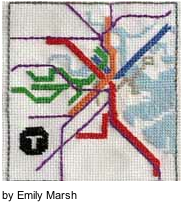
MBTA-Emily Marsh-*What cues do you seek when navigating complex systems like subway systems?

MBTA-Kate Reed

Please follow-share-like www.kathrynwelds.com and @kathrynwelds

RELATED POSTS:

Career Navigation by Embracing Uncertainty
Pattern Recognition in Entrepreneurship

Twitter:  @kathrynwelds
Blog: – Kathryn Welds | Curated Research and Commentary
Google+ google.com/+KathrynWelds
LinkedIn Open Group Psychology in Human Resources (Organisational Psychology)
Facebook Notes:

©Kathryn Welds


How the Brain Perceives Time So You Can Manage Time Demands, not Time

Many daily actions like perceiving through the senses, speaking, and walking require accurate timing, often to milliseconds.

These underlying brain mechanisms are crucial to determining causality, decoding temporal patterns, and managing “time demands,” a commitment to complete a task in the future.

Francis Wade

Francis Wade

Francis Wade suggests conducting a systemic diagnostic assessment of current time demand management practices to identify effective approaches, and those that can benefit from fine-tuning.
This leads to a plan that requires external support from people and technology.

But these processes depend on the brain’s accurate time perception.
-*How does the brain perceive time?

David Eagleman

David Eagleman

Baylor College of Medicine’s David M. Eagleman summarized extensive research that answers this question, with collaboration from Peter U. Tse of Dartmouth, UCLA’s Dean Buonomano, Peter Janssen of Katholieke Universiteit Leuven, University of Oxford’s Anna Christina Nobre, and Alex O. Holcombe of Cardiff University.

Peter Tse

Peter Tse

One recent change to the prevailing view that the basal ganglia and cerebellar systems are the brain’s main timekeepers comes from University of New Mexico’s Deborah L. Harrington and Kathleen Y. Haaland.

Kathleen Haaland

Kathleen Haaland

They built on this finding in work with Robert T. Knight of University of California, Davis, investigating the cerebral cortex’s role in perceptual timekeeping by studying task performance of volunteers with focal left (LHD) or right hemisphere (RHD) lesions compared with uninjured participants.

Robert T. Knight

Robert T. Knight

The groups performed a time duration perception task and a frequency perception task, which controlled for non-time processes in both tasks.
Only people with right hemisphere cerebral cortex lesions showed time perception deficits, suggesting that this area also contributes to perceptual timekeeping

People with this damage who accurately perceived time were also able to switch nonspatial attention, implying that time perception and attention switching are linked.
This group had no damage in the premotor and prefrontal cortex, in contrast to those who performed poorly on the time perception.
These results indicate that premotor and prefrontal cortex areas also contribute to accurate time perception.

Richard Ivry

Richard Ivry

Neural systems underlying timing processes may point to remedies for brain injuries that involve motor timing irregularities such as Parkinson’s disease, according to UC Berkeley’s Richard Ivry and Rebecca Spencer of UMass.  

Rebecca Spencer

Rebecca Spencer

Medical University of South Carolina’s Catalin V. Buhusi and
 Warren H. Meck of Duke University suggest that subjective time perception or psychological time is represented by multiple “internal clocks” that judge duration relative to the relevant time context.

Catalin V. Buhusi

Catalin V. Buhusi

Richard Ivry reported that the cerebellum can be considered as operating multiple “internal clocks,” suggesting a physiological basis for Buhusi and Meck’s multi-clock construct.

-*How do you manage time demands for future performance?

Please follow-share-like www.kathrynwelds.com and @kathrynwelds

RELATED POSTS:

Twitter:  @kathrynwelds
Blog: – Kathryn Welds | Curated Research and Commentary
Google+ google.com/+KathrynWelds
LinkedIn Open Group Psychology in Human Resources (Organisational Psychology)
Facebook Notes:

©Kathryn Welds

Want to Remember Something You Read? Skip the Underlining – Exploding Learning Technique Myths

-*Were you always told to underline key points in textbooks to reinforce recall for future examinations?

If so, you may have adopted a low-value practice.

John Dunlosky

John Dunlosky

Kent State University’s John Dunlosky and Katherine Rawson collaborated with Duke’s Elizabeth J. Marsh to investigate the validity of frequently recommended learning and recall strategies.

Katherine Rawson

Katherine Rawson

They were joined in the evaluation by University of Wisconsin’s Mitchell Nathan and Daniel Willingham of University of Virginia. 

The team evaluated ten learning techniques:

  • Practice testing
  • Distributed practice
  • Elaborative interrogation
  • Self-explanation
  • Interleaved practice
  • Summarization
  • Highlighting or underlining text
  • Keyword mnemonic
  • Imagery for text learning
  • Rereading 
Elizabeth J. Marsh

Elizabeth J. Marsh

Dunlosky’s team assessed the effectiveness of each approach according to their impact across four domains:

      • Learning conditions, such as solo or group efforts
      • Learner characteristics, including age, ability, and level of prior knowledge
      • Learning materials, ranging from simple to complex
      • Criterion tasks for outcome measures of memory, problem solving, and comprehension and related skills.
Mitchell Nathan

Mitchell Nathan

The team debunked the value of many frequently-recommended practice, but validated several of the more challenging and least enjoyable approaches:

  • Practice testing.  All testing, whether practice testing or high-stakes performance testing, can increase performance and recall, sometimes up to 100% improvement in free recall.
    The most effective practice tests go beyond multiple-choice recognition question to require more detailed, process-oriented inquiries created by the learner.
    Besides its effectiveness, practice testing is also the less time-consuming than other approaches, even the less effective techniques.
Daniel Willingham

Daniel Willingham

Open Source, no-cost Anki software provides flash-card reviews and Walter Pauk of Cornell’s note-taking system enable users to list questions in the column next to notes to speed development of practice tests.

The most powerful learning approach combines both strategies in self-tests over time.

->Moderately helpful learning and retention techniques:

  • Self-explanation documents how to solve problems while providing rationales for choices during learning.
    This approach is nearly twice as time consuming as its similarly-rated peer technique, elaborative interrogation explanation, so has a less effective “Return on Investment” of time and attention.
  • Interleaved practice involves shifting study from one related topic to another, and appears to enhance motor learning and mastering cognitive tasks like mathematical problems up to 43% and augment longer-term skill retention.

->Lowest utility practices:

  • Summarization requires succinctly describing content of every text.
    Like note-taking, it was helpful in preparing for written exams but less useful for recognition tasks like multiple choice tests.
    This method was more useful than the most common techniques of highlighting, underlining and rereading, but still had low efficacy for performance enhancement.
     
  • Highlighting or underlining is the most frequently-used practice but has low value as a performance, learning, and recall practice because it requires little critical thinking beyond reading.
  • Keyword mnemonic advocates linking words to meanings by word sounds and imagery.
    This approach is helpful to trigger short-term recall for people’s names and occupations, scientific terms and foreign words but not English word definitions.
    Keyword practice appears effective in limited instances when the material includes easily memorized keywords, but is less effective than rote learning for long-term recall.
  • Imagery for text learning requires imagining visual images while reading texts.
    This approach is somewhat effective for short texts and when the text is heard rather than read, but much less useful for longer text learning.
  • Rereading was much less effective than other techniques.
    Massed rereading immediately after reading was more effective than outlining and summarizing but spaced rereading was more beneficial than massed rereading, echoing the consistent finding that spaced practice enhances performance and retention.

Dunlosky’s team provided a critical evaluation of frequent learning practices and advocates adopting only those that have proven impact on learning, performance, and retention.
Their analysis suggests that leading practices are:

  • Scheduling practice spaced over time to increase retention and to reinforce skill acquisition
  • Creating practice why questions while reading
  • Writing detailed explanations of the why, how, and what of the topic.

-*How do you enhance your ability to learn, retain information, and perform new skills?

Please follow-share-like www.kathrynwelds.com and @kathrynwelds

RELATED POSTS:

Twitter:  @kathrynwelds
Blog: – Kathryn Welds | Curated Research and Commentary
Google+ google.com/+KathrynWelds
LinkedIn Open Group Psychology in Human Resources (Organisational Psychology)
Facebook Notes:

©Kathryn Welds

Body Language Conveys Emotions more Intelligibly than Facial Expressions

Paul Ekman

Paul Ekman

Numerous studies, pioneered by Paul Ekman of University of California, San Francisco, argue that facial expressions provide an accurate, consistent, universal “tell” to underlying emotions.

However, body language more accurately conveys intense emotions than facial Ekman Emotion Stock photoexpressions, according to Hebrew University’s Hillel Aviezer,Yaacov Trope of NYU, and Princeton University’s Alexander Todorov.

Three groups of 15 people judged intense emotions, including pain, pleasure, victory, defeat, grief and joy, portrayed in stock photographs of:

  • facial expressions alone or
  • body language alone or
  • both facial and body expressions.
Hillel Aviezer

Hillel Aviezer

Volunteers assigned more accurate inferences of pictured emotion based on body language, alone or combined with facial expressions, than judgments based on facial context alone.

These results challenge presumption that the face best communicates feeling, yet most participants believe that they rely on facial expression was their most important cue in making inferences.

Yaacov Trope

Yaacov Trope

More than half the volunteers reported that they use facial expression to judge underlying emotions, a bias labeled “illusory facial affect” by Aviezer and team.

Some participants did not view the photos, but heard a description of the content.
The vast majority – 80 percent – said they “would” rely solely on the face when determining the emotion.
The remainder said they would consider the face and body together, yet not one participant indicated that body language alone would be the most important guide to emotion.

Alexander Todorov

Alexander Todorov

Another experiment presented volunteers with altered photos that combined one intense emotional expressed in the face with an opposing “peak” emotion portrayed by the body language.
Volunteers more often judged the emotion associated with the body, although they thought that facial expression was more indicative of underlying emotional experience.

A different condition demonstrated that most participants provided inaccurate judgments of six emotional states portrayed by faces alone:  They judged positive facial expressions as negative more frequently than the actual negative expressions.

Aviezer, Trope, and Todorov argue that facial expressions can be ambiguous and subjective when viewed without the context of body, particularly during intense emotional expressions.

Jamin Halberstadt

Jamin Halberstadt

Jamin Halberstadt of University of Otago explained Team Aviezer’s findings by noting “…bodily context is the expression of emotion…the face reveals a general intensity of feeling but doesn’t communicate what the person is feeling exactly. The body is where the valid information comes from during intense feelings.”

Piotr Winkielman

Piotr Winkielman

His expertise is based on earlier research with University of California at San Diego’s Piotr Winkielman, Paula Niedenthal of University of Wisconsin and University of Clermont-Ferrand’s Nathalie Dalle.
They demonstrated the important role of expectancy in reading, experiencing, and recalling emotions expressed by ambiguous facial photographs.

Paula Niedenthal

Paula Niedenthal

Halberstadt’s team used electromyography (EMG) to evaluate volunteers’ muscle mimicry responses and memory of photos portraying ambiguous faces when associated with emotion labels like “angry” or “happy”, and when the same photos were presented without labels.

Nathalie Dalle

Nathalie Dalle

Participants displayed more EMG activity associated with smiling when they viewed faces labeled “happy” than “angry,” and remembered faces labeled “happy” as happier than faced coded “angry” even though the photographed expressions were ambiguous.

When participants spontaneously mimicked emotions labeled with a specific affect label, they were more likely to remember this emotion.
Since the photos were ambiguous, this recall represents memory bias, based on expecting, then mirroring an expected emotion. 

SPOT-Dept Homeland SecBody language’s greater accuracy than facial expression as a measure of emotion, has important implications for mission critical interrogation and security-screening techniques.

One example is the U.S. Transportation Security Administration’s Screening of Passengers by Observation Techniques (SPOT) program, which was based on Ekman’s facial expression research, but did not account for bodily expression as an indicator of underlying emotion.

Team Aviezer’s findings argue that emotion-screening procedures, as well as everyday workplace interactions, should evaluate both cues from both the body and the face to form most accurate judgments of others’ likely emotional states.  

-*Which cues do you find most helpful in judging other people’s emotional states when interacting with them?

Please follow-share-like www.kathrynwelds.com and @kathrynwelds

RELATED POSTS:

Twitter:  @kathrynwelds
Blog: – Kathryn Welds | Curated Research and Commentary
Google+ google.com/+KathrynWelds
LinkedIn Open Group Psychology in Human Resources (Organisational Psychology)
Facebook Notes:

©Kathryn Welds

Gender Differences in Emotional Expression: Smiling

Previous blog posts have outlined dilemmas women face in being seen as competent yet  “likeable” in negotiations.

Deborah Gruenfeld

Deborah Gruenfeld

Deborah Gruenfeld of Stanford and researcher Carol Kinsey Goman note that women can increase perceived authority. if they smile when situationally-appropriate instead of consistently.

Simine Vazire

Simine Vazire

They imply that observers assign different interpretations to women’s smiles than to men’s smiles.
Washington University in St. Louis’s
Simine Vazire teamed with Laura Naumann of University of California, Berkeley, University of Cambridge’s Peter Rentfrow, and Samuel Gosling of University of Texas to investigate gender differences in the meaning of smiling behavior.   

Jacob Miguel Vigil

Jacob Miguel Vigil

They drew on University of New Mexico professor Jacob Miguel Vigil‘s theory that emotional behaviors promote attraction and aversion, based on others’ perceived:

  • Power to provide resources or harm (dominant, masculine behaviors)
  • Trustworthiness to reciprocate altruism (submissive, feminine)
Laura Naumann

Laura Naumann

Vazire’s team reported that women’s smiles signal positive affect and warmth, which are seen as “trustworthiness cues” in Vigil’s model, and typically attract fewer, but closer relationships.
Gruenfeld and Goman argue that women’s smiling also signals low power in negotiation situations and interpersonal interactions.

Peter Rentfrow

Peter Rentfrow

In contrast, smiling among men indicates confidence and lack of self-doubt, seen as “capacity cues” to the ability to either help or hurt others.
These expressions usually attract numerous, but less-intimate relationships while
conveying a key element of power, self-assurance.

Samuel Gosling

Samuel Gosling

Team Vazire’s research validated Gruenfeld’s and Goman’s hypothesis that observers interpreted women’s smiles differently than men’s, even if the underlying, subjective emotional experience is similar.

Their work supports  Gruenfeld’s and Goman’s recommendation that women balance smiling, a signal of interpersonal warmth, with powerful non-verbal behaviors to achieve best outcomes in negotiations and workplace performance.

-*How has smiling helped establish your warmth?
-*When has smiling undermined your credibility and power?

->Follow-share-like http://www.kathrynwelds.com and @kathrynwelds

RELATED POSTS:

©Kathryn Welds

Saudi Women’s Driving Campaign meets “When Everything Changed”

Saudi Women Driving CampaignSaudi Women’s Driving Campaign occurred near the time that New York Times columnist Gail Collins discussed her book When Everything Changed: The Amazing Journey of American Women from 1960 to the Present  at Harvard’s Radcliffe Institute for Advanced Studies.
Though separated by oceans and time zones, both events refer to the continuing challenge of women achieving parity in societies and workplaces.

Sheikh Saleh bin Saad al-Luhaidan

Sheikh Saleh bin Saad al-Luhaidan

Although there is no law mandating that women do not drive cars in Saudi Arabia, it is actively discouraged by religious leaders like Sheikh Saleh bin Saad al-Luhaydan, who asserted that driving injures women’s pelvis and ovaries and causes birth defects in children of women.

Saudi Woman DrivingSaudi Police detained women who drove cars on 26 October 2013, Saudi Women’s Driving Day, until their “guardians” arrived.
At that time, women were instructed to sign an affidavit stating that they would not drive a car in the future.

Jennifer Psaki

Jennifer Psaki

U.S. State Department spokesperson Jennifer Psaki said, “We support the full inclusion of women in Saudi society…. we would support their ability to drive.  We support, of course, the right of women everywhere to make their own decisions about their lives and their futures and the right to benefit equally from public services and protection from discrimination.”

Hisham Fageeh

Hisham Fageeh

Hisham Fageeh provided the memorable commentary on the controversy with his homage to Bob MarleyNo Woman, No Drive, a viral sensation.

Gail Collins

Gail Collins

According to Collins, “everything changed” for women in the U.S. in the 1960s, although many might say that many issues toward equity remain unresolved.
So far, everything has not changed for Saudi women, but they may find encouragement and even humor in Collins’ chronicle of women’s experience toward parity in the U.S.

-*What actions enable full social equity for Saudi women?

->Follow-share-like http://www.kathrynwelds.com and @kathrynwelds

©Kathryn Welds

Buying Happiness: Satisfaction and Material Purchases vs. Experiential “Investments”

-*Does acquiring possessions lead to happiness and satisfaction?

Leaf Van Boven

Leaf Van Boven

“Not so much,” according to University of Colorado’s Leaf Van Boven and Thomas Gilovich of Cornell, who reported that material purchases are less satisfying than experiential purchases.

Thomas Gilovich

Thomas Gilovich

They suggest that experiences make people happier because experiences are:

  • Subject to positive reinterpretation
  • Central to one’s identity
  • More positively valued by others as having “social value.”
Travis Carter

Travis Carter

Gilovich collaborated with Travis Carter of University of Chicago to survey diverse respondents from various demographic groups.
These two cross-sections of the public reported that purchases to acquire a life experience made them happier than “hedonic” or “utilitarian” material purchases.

In Gilovich and Carter’s related lab experiment, volunteers said they had more positive feelings after recalling an experiential purchase than after thinking about a material purchase.

Eunice Kim

Eunice Kim

Participants also expected that experiences would make them happier than material possessions when they adopted a future, “big picture” perspective in contrast to a present-oriented view.
This finding echoes Eunice Kim Cho and team’s decision-making conclusions highlighted in the last blog postReframing Non-Comparable Choices to Make Them Simpler, More Satisfying

Volunteers reported that material purchases are less satisfying because they can lead to focusing on unchosen options, and comparing to other people’s choices, which contributes to doubt and rumination about alternate choices.

Russell Belk

Russell Belk

In addition, most people “maximize” when they make material purchases in an exhaustive, time-consuming process of considering all possible options, then selecting the optimal-seeming alternative.

Marsha Richins

Marsha Richins

In contrast, most people “satisfice” when selecting experiences by setting a minimum standard for decision quality, then selecting the first option.
This more rapid approach typically leads to less regret.

Scott Dawson

Scott Dawson

People who strongly agree with statements like “Some of the most important achievements in life include acquiring material possessions” and “Buying things gives me a lot of pleasure” report lower levels of life satisfaction according to York University’s Russell Belk as well as to University of Missouri’s Marsha Richins and Scott Dawson of Portland State University, in separate studies.

Many people intuitively sense that possessions don’t buy happiness, and these studies confirm that life experiences tend to be more satisfying than material objects.

-*How do you choose among “utilitarian” items, experiences, and “hedonic” possessions when making purchases?

Please follow-share-like www.kathrynwelds.com and @kathrynwelds

RELATED POSTS:

Twitter:  @kathrynwelds
Blog: – Kathryn Welds | Curated Research and Commentary
Google+ google.com/+KathrynWelds
LinkedIn Open Group Psychology in Human Resources (Organisational Psychology)
Facebook Notes:

©Kathryn Welds

Word of Mouth, Social Media Expand Silicon Valley Networking with a Purpose

Networking with a Purpose

A professional development collaboration among Cisco, Citrix, eBay, EMC, Ericsson, Intel, Oracle, and other Silicon Valley technology companies using the IEEE model of “Birds of A Feather” discussion topics was introduced in a previous blog post.

IEEE

Anna Van Rijswijk, formerly of Cisco, developed this program based on survey data indicating that unstructured professional networking can feel awkward, stressful, and uncomfortable to many potential and actual participants.

Anna Van Rijswijk

Anna Van Rijswijk

Networking with a Purpose format provides structure and focus found in Speed Networking, Tom Jaffee’s business-focused adaptation of Rabbi Yaacov Deyo’s Speed Dating to enable members of his congregation to meet potential life partners. Yaacov Deyo

A Columbia alumnus, Jaffee noted that “at business functions, people often find themselves spending too much time with a small group rather than establishing multiple contacts throughout the function.”

Tom Jaffee

Tom Jaffee

To provide a solution, he built a company that offers events to increase chances that participants will make valuable business connections, much like the no-cost, self-organizing alternative, Networking with a Purpose.

Word of Mouth Marketing (WOMM) and social media mentions on Networking with a Purpose LinkedIn Group, Twitter (#SVBOF), and Facebook dramatically increased demand for registration at Silicon Valley Networking with a Purpose in-person events, and no-cost tickets typically “sell out” within minutes of posting the event invitation. WOMMA

The fifth Networking with a Purpose event is scheduled for Wednesday 20 November 2013 at eBay in San Jose, California, with popular discussion topics including:

  • Enhancing Personal Brand
  • Communicating Upward
  • Career Planning and Accountability
  • Design Thinking
  • Sketchnoting and Graphic Facilitation
  • Think Big, Play Big
  • Work Life Integration
  • Salary Negotiation
  • Office Feng Shui
  • iPhoneography

Silicon AlleyOrganizers have received strong post-event ratings from participants and have been contacted by colleagues in Silicon Alley – New York City – who wish to replicate this approach to professional networking.

-*How do you expand, cultivate and contribute to your professional network?Networking with a Purpose Best Kept Secret

->Follow-share-like http://www.kathrynwelds.com and @kathrynwelds

RELATED POSTS:

©Kathryn Welds

Evidence-Based Stress Management – Physical Exercise – Part 5 of 5

Michael Hopkins-David Bucci

Michael Hopkins-David Bucci

“The positive stress of exercise prepares cells and structures and pathways within the brain so that they’re more equipped to handle stress in other forms,” argue Michael Hopkins, FC DavisMichelle VanTieghemPaul Whalen and David Bucci of Dartmouth.

Michelle VanTieghem

Michelle VanTieghem

They compared effects of a single exercise session or repeated sessions on non-exercising volunteers who were genotyped to determine brain-derived neurotrophic factor (BDNF), a nerve growth factor important in long-term memory.

Paul Whalen

Paul Whalen

Participants were measured on novel object recognition (NOR) memory and mental health dimensions before and after engaging in a 4-week exercise program or a single exercise session.

More frequent exercisers performed better on object recognition memory and said they experienced less stress, but only when their 4 week program included a final test.
In contrast, a single exercise session did not affect recognition memory and resulted in increased perceived stress levels.

This study found no relationship between exercise-induced cognitive benefits and changes in mood and anxiety, suggesting that perceived stress is controlled by a different neural system.

Timothy Schoenfeld

Timothy Schoenfeld

In contrast, Princeton’s Timothy Schoenfeld, Pedro Rada, Pedro Pieruzzini, Brian Hsueh, and Elizabeth Gould, reported different results with mice.
They investigated the paradox of exercise:  It promotes new, excitable brain cells that can aid learning and memory, yet exercise can induce calm in various brain areas.

Elizabeth Gould

Elizabeth Gould

Schoenfeld and team controlled for pre-existing nervousness in adult mice and allowed half to exercise and half to remain sedentary over a six week period.

Exercisers were more willing to cautiously explore and spend time in open areas, suggesting they were more confident and less anxious than their sedentary counterparts.

Brian Hsueh

Brian Hsueh

The runners’ brains developed new, excitable neurons in the hippocampus’ ventral region, associated with processing emotions and releasing GABA, which inhibits brain activity such as the subjective experience of anxiety.

All animals encountered the physical stress of cold water for five minutes, and showed many immediate early genes indicating neuron firing.
However, the runner rats calmed more rapidly due to their release of GABA after this physical stress.

Though this study was conducted with animals, the findings suggest that physical exercise builds capacity to recover more rapidly from stress by regulating anxiety through ventral hippocampus inhibition.

Brett Klika

Brett Klika

Like other stress management recommendations, regular exercise is difficult for many to adopt as an habit.
For reluctant exercisers, Brett Klika and Chris Jordan of Human Performance Institute offer a rapid but challenging solution: “Seven Minutes of Steady Discomfort.”

Chris Jordan

Chris Jordan

Their Scientific 7-Minute Workout includes 12 exercises using a chair, wall and body weight, for interval training alternating large muscles in the upper and lower body.
Each exercise is performed for 30 seconds, at a discomfort rating of 8 on a scale of 1 to 10, with a 10 second rest between.
Though quick, this routine may not be easy, and further willpower may be needed to adopt this approach.

Kirsten Burgomaster

Kirsten Burgomaster

McMaster University’s Kirsten BurgomasterKrista Howarth, Stuart PhillipsMaureen MacDonaldSL McGeeMartin Gibala with Mark Rakobowchuk now of Brunel University validated Klika and Jordan’s proposed Seven Minutes of Discomfort.

Stuart Phillips

Stuart Phillips

They noted that even a few minutes of training at an intensity approaching maximum capacity produces molecular changes within muscles comparable to those of several hours of endurance training like running or bike riding.

John Salamone

John Salamone

Motivational help may be available by activating nucleus accumbens dopamine, which can regulate motivation and lead to goal initiation and persistence, according to University of Connecticut’s John Salamone and Mercè Correa of Universitat Jaume I of Castellón.

Mercè Correa

Mercè Correa

They refined the common assumption that dopamine is associated with reward systems and noted that nucleus accumbens dopamine, involved in appetitive and aversive motivational processes, may provide a biochemical approach to managing motivation and task persistence.

Though it may be difficult to muster the motivation to exercise regularly, these research findings suggest that regular exercise can lead to increased coping and cognitive abilities.

-*To what extent should workplaces promote exercise to reduce stress and increase cognitive performance?

->Follow-share-like www.kathrynwelds.com and @kathrynwelds

RELATED POSTS

Motivation to Manage Stress

Mindful Attention (Part 2)

Social Support (Part 3)

Music (Part 4)

Nature

Sleep

Organizational Roles, Practices

Look for related posts on:

  • Vitamins and Probiotcs (Part 1)
  • Mindful Attention (Part 2)
  • Social Support (Part 3)
  • Music (Part 4)

Twitter@kathrynwelds
Blog: – Kathryn Welds | Curated Research and Commentary
Google+:
LinkedIn Open Group Psychology in Human Resources (Organisational Psychology)

Facebook Notes:

©Kathryn Welds