Category Archives: Resilience

Resilience

Powerful Questions, Anticipated Regret Can Change Behavior

One of the foundations of psychotherapy and executive coaching is the notion that provocative, well-timed, penetrating questions can provoke insight and initiative behavior change.

David Cooperrider

David Cooperrider

One example of a systematic approach to high-impact questioning is Appreciative Inquiry, developed by Case Western’s David Cooperrider and Diana Whitney, and it has been integrated into interpersonal conversations including counseling, coaching, and therapy.

University of Leeds’s Tracy Sandberg and Mark Conner demonstrated the impact of provocative questions when they asked women about anticipated regret if they ignored a preventive health assessment.

Tracy Sandberg

Tracy Sandberg

More than 4,250 women received an invitation for cervical screening and  information leaflet.
A sub-group also received a Theory of Planned Behavior questionnaire developed by University of Massachusetts’s Icek Ajzen.
Another sub-group received both the questionnaire and additional inquiries about their anticipated regrets if they didn’t participate in the screening.

Icek Ajzen

Icek Ajzen

Attendance rates were higher for those who completed the questionnaire about anticipated behavior, and significantly greater for those who also completed the regret questions.
This may be an example of FoMO – Fear of Missing Out, described by University of Essex’s Andrew K. Przybylski and Valerie Gladwell with Kou Murayama of UCLA and University of Rochester.

Andrew Przybylski

Andrew Przybylski

Likewise, “self- prophecy” questions about intention to cheat were associated with reduced cheating among college students, found University of California, Irvine’s Eric Spangenberg and Carl Obermiller of Seattle University.

The question–behavior effect was further demonstrated in a meta-analytic study by Spangenberg with SUNY’s Ioannis Kareklas, Berna Devezer of University of Idaho, and Washington State University’s David E. Sprott.

Eric Spangenberg

Eric Spangenberg

“When you ask a question, it…creates a spring-loaded intention,” and reminds of social norms and past shortcomings, posited Sprott.
It’s that disconnect between what we should do and what we know we have done that motivates us.”

David Sprott

David Sprott

Norm-reinforcing questions are often effective in encouraging proactive behavior aligned with recognized best practices, such as a Public Service Announcement endorsing pre-school vaccination:  Ninety-five percent of parents get their kids vaccinated before kindergarten.
Will you make sure your child is up to date?

William Miller

William Miller

These pointed questions are an “active ingredient” of  Motivational Interviewing developed by University of New Mexico’s William Miller and Stephen Rollnick of Cardiff University, and have been associated with heightened motivation to reduce alcohol and drug consumption.

These finding point to the power of carefully-designed questions to provoke deeper self-reflection and related behavior change.

-*What questions have you used to encourage behavior change?

Follow-share-like http://www.kathrynwelds.com and @kathrynwelds

Related Posts:

Twitter:  @kathrynwelds
Google+
LinkedIn Groups Psychology in Human Resources (Organisational Psychology)
Facebook
Blog: – Kathryn Welds | Curated Research and Commentary

©Kathryn Welds

Increase Self-Control with Purpose in Life, Positive Outlook, Humility

Anthony Burrow

Anthony Burrow

People with a sense of purpose are more likely to make choices with long-term benefits like saving for retirement and children’s education.
In addition, they are less likely to be diverted by short-term gratification and impulsive actions like such as cigarette smoking, drug use, gambling, and driving under the influence, found Cornell’s Anthony L. Burrow and R. Nathan Spreng in work with more than 500 adults.
As a result, Purpose in Life was related to reduced impulsivity and increased self-control.

Nathan Spreng

Nathan Spreng

Volunteers completed a personality inventory and a self-rating of Purpose in Life before making choices about whether to take a smaller amount of money immediately or a larger amount at some later date.

Waiting times and amount of the payoffs differed during each trial.
Participants who said they had a clear life purpose made longer-term, higher-payoff choices, suggesting greater ability to curb the impulse for an immediate reward, and greater self-management capacity.

Chai Jing

Chai Jing

Another factor in reducing one type of impulsive behavior – dangerous driving – is a “positivity bias,” hallmarked by seeing positive events as more salient than negative incidents, reported University of Chinese Academy of Sciences’ Chai Jing , Weina Qu, Xianghong Sun, Kan Zhang, and Yan Ge.

Weina Qu

Weina Qu

They studied more than 40 non-professional drivers using electroencephalograph data, self-reports of driving, violation reports, and International Affective Picture System (IAPS)  scores to measure negativity biases.

Volunteers identified whether a series of 80 pictures had blue borders or red borders around images that implicitly evoke negative, positive, or neutral emotions.
Dangerous drivers took longer to respond on the border-color task when the image was negative, suggesting greater attention to negative input.

Patrick Hill

Patrick Hill

Sense of purpose is also linked to greater longevity in a study by Carleton University’s Patrick Hill and Nicholas Turiano of the University of Rochester, in their study of more than 6100 Americans followed over 14 years.

Rachel Sumner

Rachel Sumner

Purpose in Life can increase White adult’s comfort with diverse groups, and may be associated with reduced prejudice, noted Cornell’s Burrow and Rachel Sumner, Maclen Stanley of Harvard, and Carlton University’s Patrick L. Hill in their study of more than 500 Americans.

Maclen Stanley

Maclen Stanley

Participants who received an experimental prime of life purpose also reported less preference for living in an ethnically homogeneous White city.
These effects persisted were independent of volunteers’ positive affect and perceived connections to ethnic out-groups.

Eddie M.W. Tong

Eddie M.W. Tong

Humility is another characteristic associated with reduced impulsivity and greater self-control in research by National University of Singapore’s Eddie M.W. Tong, Kenny W.T. Tan, Agapera A.B. Chor, Emmeline P.S. Koh, Jehanne S.Y. Lee, and Regina W.Y. Tan.

Defined as the ability to tolerate failures without self-deprecation, and to view successes without developing a sense of superiority, humility primes were associated with improved performance in a physical stamina (handgrip), resisting chocolate, and an insoluble tracing task.

Kenny W.T. Tan

Kenny W.T. Tan

Humility’s effect on self-regulation was significantly different from self-esteem, which had no impact on self-control.
Likewise, achievement motivation and compliance motivation did not explain increased performance.

Taken together, these findings suggest that effectively managing oneself in the face of challenging and tempting circumstances is enhanced by having a clear purpose in life, cultivating a positive bias and humility.

-*To what extent does having a sense of purpose make it easier to maintain self-control in challenging situations?

Follow-share-like http://www.kathrynwelds.com and @kathrynwelds

Related Posts:

Twitter:  @kathrynwelds
Google+
LinkedIn Groups Psychology in Human Resources (Organisational Psychology)
Facebook
Blog: – Kathryn Welds | Curated Research and Commentary

©Kathryn Welds

Men Negotiate More Assertively with Women Managers

Ekaterina Netchaeva

Ekaterina Netchaeva

Men volunteers negotiated more assertively with women in supervisory roles in laboratory tasks, compared with strategies they used with male supervisors, reported Bocconi University’s Ekaterina Netchaeva, Maryam Kouchaki of Northwestern University, and Washington State University’s Leah D. Sheppard.

Maryam Kouchaki

Maryam Kouchaki

This cross-gender negotiation trend was reduced when woman in supervisory roles demonstrated directness and proactivity (“administrative agency”) rather than self-promotion and power-seeking (“ambitious agency”).

Leah D. SheppardThe team told 52 male and 24 female volunteers that they would negotiate their salary at a new job in a computer exercise with a male or female hiring manager.

After the negotiation, participants completed an implicit threat test by identifying words that appeared on a computer screen for a fraction of a second in a variation of the Implicit Association Test developed by Harvard’s Mahzarin Banaji and Anthony Greenwald of University of Washington.
Participants who chose more threat-related words like “fear” or “risk,” were inferred to feel more threatened.

Mahzarin Banaji

Mahzarin Banaji

Male participants who negotiated with a female manager selected more threat-related words on implicit association test, and they negotiated for a higher salary ($49,400 average), compared to men negotiating with a male manager ($42,870 average).

Linda Babcock

Linda Babcock

The manager’s gender didn’t affect female participants, who negotiated a lower salary ($41,346 average), reflecting a common trend where women tend not to negotiate, or to negotiate less vigorously, as noted by Carnegie Mellon’s Linda Babcock and Hannah Riley Bowles of Harvard.

Anthony Greenwald

Anthony Greenwald

In another experimental task, more than 65 male volunteers decided how to share a $10,000 bonus with a male or female team member or with supervisor.
Male participants tended to equally divided the money with male or female team members, but reacted significantly differently with a female supervisor.

Men who endorsed more threat-related words chose to keep more money for themselves when the supervisor was female, compared with when they were paired with a male supervisor.

Hannah Riley Bowles

Hannah Riley Bowles

A related online survey of 226 male and 144 female volunteers found that male participants decided to keep a larger share of the $10,000 bonus when the female manager was described as ambitious or power-seeking, but responded significantly more favorably when the female supervisor was described as proactive or ambitious.
In the latter case, male volunteers offered approximately the same bonus amount to female managers.

This suggests that women managers with male direct-reports enhance these relationships by adopting a consciously direct leadership style, characterized by consistent communication, and proactive problem-solving.

Netchaeva’s group posits that women who adopt a direct, active leadership style reduce threat in cross-gender reporting relationships, and enable greater cooperation in bargaining and negotiation situations.

-*To what extend have you observed evidence of implicit threat responses in cross-gender workplace reporting relationships?

Follow-share-like http://www.kathrynwelds.com and @kathrynwelds

Related Posts:

©Kathryn Welds

Confidence Enables Persistence Enables Performance

Brian J. Lucas

Brian J. Lucas

People consistently underestimated the number of creative ideas they could generate if they continued working on a task, particularly on subjectively difficult innovation challenges, found Northwestern’s Brian J. Lucas and Loran F. Nordgren.

Loran Nordgren

Loran Nordgren

People who were undaunted by difficult tasks were more able to persist in developing novel ideas, and their work produced both more ideas and higher quality of innovations than they predicted.
This research suggests the benefits of “grit”, described by University of Pennsylvania’s Angela Duckworth as perseverance and passion for goals, particularly long-term objectives.

Angela Duckworth

Angela Duckworth

In Lucas and Nordgren’s research, more than 20 volunteers had 10 minutes to generate as many original ideas as possible for things to eat or drink at a U.S. Thanksgiving dinner.
Then, external judges evaluated responses for originality and suggestions rated “above average” were eligible to win a $50 lottery.

Volunteers took a break from idea generating, and estimated the number of ideas they expected to generate with another 10 minutes’ effort before they continued the idea development task.
External raters judged ideas developed in the second work phase as significantly more original than those in the initial session.

Screen Shot 2015-10-05 at 5.14.56 PMThese results were replicated with professional comedy performers from SketchFest, the largest sketch comedy festival in the U.S.
Performers received a comedic scene set-up such as “Four people are laughing hysterically onstage. Two them high five, and everyone stops laughing immediately and someone says….”

Their task was to create as many endings as they could during four minutes and to
predict the number of endings they would develop with during an additional four minutes work time.

These professional comedians also significantly underestimated the number of ideas they would develop with on their second attempt, suggesting persistent undervaluation even among experts.
When a task seems challenging, “people decrease their expectations about how well they will perform,” argued Lucas and Norgren, even though “creative thought is a trial-and-error process that generally produces a series of failed associations before a creative solution emerges.”

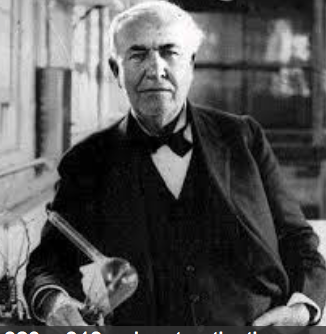
Thomas Edison

Thomas Edison

These findings indicate that negative expectations can reduce persistence, leading to performance below potential.
They confirm Thomas Edison’s assertion that “Our greatest weakness lies in giving up. The most certain way to success is always to try just one more time.”

This effect was also demonstrated in comparisons of people’s numeric competency including:

  • Objective numeracy, or ability to work with numbers: “If the chance of getting a disease is 10 percent, how many people would be expected to get the disease out of 1000?
  • Subjective numeracy, a self-evaluation of math abilities: “How good are you at working with percentages?”;
    How often do you find numerical information to be useful?
  • Symbolic-number mapping abilities, or predicting and understanding numeric relationships such as a carpenter estimating the amount of wood needed for a project.

Ellen J. Peters

Ellen J. Peters

More than 110 volunteers completed tasks including remembering numbers paired to different objects, then evaluating bets based on risk.
People lower in subjective numeracy and confidence had more negative emotional reactions to numbers and were less motivated and confident in numeric tasks, reported Ohio State’s Ellen Peters with Pär Bjälkebring of University of Gothenburg.

Pär Bjälkebring

Pär Bjälkebring

This negative reaction to quantitative tasks presents significant challenges for those who still need to complete tasks like preparing annual personal income tax forms and expense reimbursement reports.

These studies replicated findings that people are not the best judges of their own skills: In fact, one in five people who said they were not good at math actually scored in the top half of an objective math test.

David Dunning

David Dunning

Conversely, one-third of people who said they were good at math actually scored in the bottom half, validating the Dunning-Kruger effect when incompetent individuals overestimating performance despite feedback.

Justin Kruger

Justin Kruger

Persistence in creative as well as tactical tasks can lead to more plentiful and higher quality results than abandoning difficult efforts.

-*How do you maintain persistence during challenging tasks?
-*How do you verify that your self-perceptions align with actual performance and other’s perceptions?

Follow-share-like http://www.kathrynwelds.com and @kathrynwelds

Related Posts:

Twitter:  @kathrynwelds
Google+
LinkedIn Groups Psychology in Human Resources (Organisational Psychology)
Facebook
Blog: – Kathryn Welds | Curated Research and Commentary

©Kathryn Welds

Reduce Rumination, Stress by Taking a Walk in Nature, Viewing Animals

More than 50% of people live in urban environments and most have relatively infrequent contact with nature, according to research published by the United Nations.

Theo Lorenc

Theo Lorenc

One consequence is that many urban dwellers with decreased exposure to nature report “changes in psychological functioning” including ruminative thoughts – repetitive thoughts about negative aspects of the self – and depressed feelings, found University College London’s Theo Lorenc, Mark Petticrew, and Steven Cummins with Stephen Clayton of University of Central Lancaster, and David Neary of University of Manchester, University of Liverpool’s Margaret Whitehead, Hilary Thomson of University of Glasgow,  University of York’s Amanda Jayne Sowden, and Adrian Renton of University of East London.

Stephen Clayton

Stephen Clayton

Contact with nature can affect cognitive performance as well as emotional experience: Children living in urban environments with consistent views of nature outside their windows, performed better on:

  • Working memory (backward digit span, backward alphabet span),
  • Impulse inhibition (matching familiar figures task),
  • Selective attention (Stroop color-word task),
  • Concentration (Necker Cube pattern control task), reported by University of Illinois Urbana-Champaign’s Andrea Faber Taylor, Frances Kuo, and William C. Sullivan.

Andrea Faber Taylor

Andrea Faber Taylor

Urban environments are thought to require substantial top-down voluntary attentional control to filter relevant from irrelevant stimuli.
At the same time, built landscapes can deplete cognitive resources, worsening performance on tasks requiring focused attention, noted University of Uppsala’s Terry HartigGary W. Evans of University of California, Irvine with Marlis Mang of Planning & Design Solutions.

Terry Hartig

Terry Hartig

Walking for 90 minutes in nature reduced ruminationblood flow, and neural activity in the subgenual prefrontal cortex (sgPFC), reported Stanford’s Gregory N. Bratman, Kevin S. Hahn, Gretchen C. Daily, and James J. Gross with J. Paul Hamilton of Laureate Institute for Brain Research.
This brain area has been linked to self-focused behavioral withdrawal and rumination among both healthy and depressed people.

Gregory Bratman

Gregory Bratman

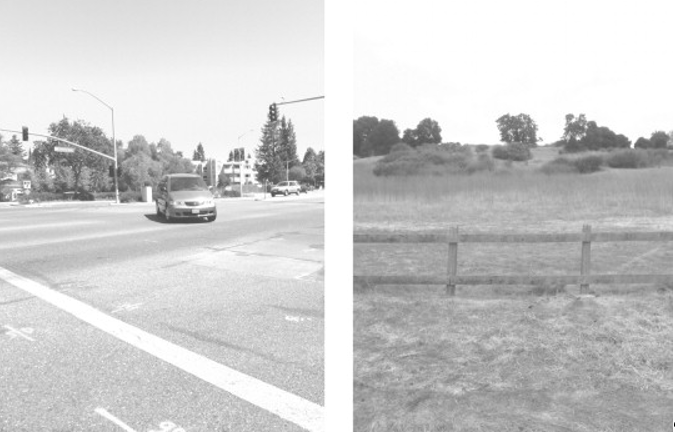
More than 35 volunteers rated their proneness to ruminate with negative thoughts, then half walked alone for 90-minutes without music through undeveloped open space hills through grassland with scattered shrubs and oak trees along a paved path.
They were told to take ten photographs of “whatever captured their attention” to disguise the study’s hypotheses.

Urban vs Rural Walks

Kevin Hahn

Kevin Hahn

Remaining participants walked alone without music down a busy, paved six-lane road with traffic for the same time period.

Following the walks, volunteers again rated their likelihood to repeatedly think negative thoughts.
They also completed a brain scan and cognitive and emotional assessment instruments including:

Lee Anna Clark

Lee Anna Clark

Positive and Negative Affect Scale (PANAS) developed by Southern Methodist University’s David Watson, with Lee Anna Clark and Auke Tellegen of University of Minnesota,

Backward digit span, developed by David Wechsler of Bellevue Hospital,

Jin Fan

Jin Fan

Attention Network Task (ANT- executive attention subtest), developed by Mount Sinai’s Jin Fan, Bruce D. McCandliss and John Fossella of Cornell, Yale’s Jonathan I. Flombaum and Michael I. Posner of University of Oregon,

Rumination-Reflection Questionnaire (RRQ) by Ohio State’s Paul Trapnell and Jennifer Campbell, including items like “I often reflect on episodes of my life that I should no longer concern myself with”),

Nash Unsworth

Nash Unsworth

Operation Span Task (OSPAN) developed by Georgia Tech’s Nash Unsworth, Richard Heitz and and Randall Engle with Josef Schrock o Marysville College,

State-Trait Anxiety Inventory (STAI), developed by University of South Florida’s Charles D. Spielberger, 

Visuospatial working memory (change detection), developed by University of Iowa’s Steven J. Luck and Edward K. Vogel,

Peer-Rated Personality Traits Predict Longevity

Joshua Jackson

Joshua Jackson

Self-rated personality traits and ratings by others effectively predicted mortality risk, according to Washington University’s Joshua J. Jackson, working with James J. Connolly and Madeleine M. Leveille of Connolly Consulting to collaborate with Vanderbilt University’s S. Mason Garrison and Touro University Seamus L. Connolly.
In fact, and friends’ ratings were even better predictors of longevity than were self-reports of personality,

E. Lowell Kelly

E. Lowell Kelly

The team used 75 years of data beginning in 1935 from Kelly/Connolly Longitudinal Study on Personality and Aging (KCLS), along with mortality information across 75 years, developed by University of Michigan’s E. Lowell Kelly and James J. Conley.

Robert McCrae

Robert McCrae

Both study participants and their close friends rated volunteers’ personality traits, “Big Five” traits—conscientiousness, extroversion, agreeableness, neuroticism and openness—described by NIH’s Robert McCrae and Paul Costa.

James Connolly

James Connolly

Male participants seen by their friends as more conscientious and open lived longer, whereas friend-rated emotional stability and agreeableness predicted longevity for women.
Men’s self-ratings of personality traits were somewhat accurate predictors of lifespan, but not women’s self-reports.

Mason Garrison

Mason Garrison

Jackson’s group noted that friends’ ratings were more reliable predictors because multiple evaluations were aggregated rather than relying on a single self-rating.
In addition, “…friends may see something that you miss; they may have some insight that you do not….people may be biased or miss certain aspects of themselves and we are not able to counteract that because there is only one you, only one self-report.

David Yeager

David Yeager

Comparing self-reports with multi-rater reports, University of Pennsylvania’s Angela Duckworth and David Scott Yeager of University of Texas Austin concluded that  “…each approach is imperfect in its own way.

These findings reinforce the importance of multi-rater feedback to provide insight into long-standing personality trends affecting health status.
This increased self-awareness can help people increase conscientious self-care, optimism, agreeableness, and calm stability to enhance long term health status.

-*How have you helped others improve health status by modifying personality styles?

Follow-share-like http://www.kathrynwelds.com and @kathrynwelds

Related Posts:

Twitter:@kathrynwelds
Google+LinkedIn Groups Psychology in Human Resources (Organisational Psychology)
Facebook
Blog: – Kathryn Welds | Curated Research and Commentary

©Kathryn Welds

Cynical Beliefs Linked to Lower Earnings, Poorer Health

Olga Stavrova

Olga Stavrova

People who hold cynical beliefs about human nature and the world have lower incomes than those with a more optimistic view, found University of Cologne’s Olga Stavrova and Daniel Ehlebracht.

Cynical beliefs are measured by statements including:

  • “I think most people would lie to get ahead,”
  • “It’s safer to trust nobody,”
  • “Most people will use somewhat unfair reasons to gain profit or an advantage rather than lose it.”

Daniel Ehlebracht

Daniel Ehlebracht

People who agree with these ideas may avoid cooperation, trust and collaboration with others and while focusing on monitoring, control, and preventing potential exploitation.

Volunteers who endorsed these self-protective behaviors and cynical beliefs reported lower personal income than people who demonstrate greater trust and interpersonal collaboration in studies using a representative sample of Americans between 1986 and 2012, and replicated with a representative German group between 2003 and 2012.

Robert McCrae

Robert McCrae

A related study showed that income-suppressing cynical beliefs are not associated with enduring personality characteristic measured by Robert McCrae of NIH and Paul Costa’s Big Five personality dimensions.

In addition, lower earnings were not explained by cynical individuals’ poorer health, lower education, and greater agreement with items that measure neuroticism and introversion.

Paul Costa

Paul Costa

However, some cynical beliefs are justified by the local environment, such as in counties with low levels of charitable giving, high homicide rates and high overall societal cynicism levels.
Survey data from 41 countries showed that people in these contexts who held cynical beliefs did not have lower personal income than those with more optimistic views.

Anna-Maija Tolppanen

Anna-Maija Tolppanen

Holding cynical beliefs about people was also associated with greater risk of dementia and death among the elderly in a study over 8 to 10 years, according to University of Eastern Finland’s Elisa NeuvonenMinna Rusanen, Anna-Maija Tolppanen, collaborating with Alina Solomon of University of Kuopio, Flinders University’s Tiina Laatikainen, with Tiia Ngandu of Finland’s National Institute for Health and Welfare, Hilkka Soininen of Hospital District of North Karelia, and Kuopio University Hospital’s Miia Kivipelto.

Alina Solomon

Alina Solomon

The team measured cynical distrust with the Cook-Medley Hostility Scale (CMHS) by University of Minnesota’s Walter Cook and Donald Medley, and cognitive status using screening, clinical phase, and differential diagnosis using the Diagnostic and Statistical Manual of Mental Disorders, 4th Edition (DSM-IV) criteria for more than 1450 people.

People with highest level of cynical distrust had higher risk of dementia after the researchers controlled for confounding factors including:

  • Age,
  • Gender,
  • Systolic blood pressure,
  • Total cholesterol,
  • Fasting glucose,
  • Body mass index,
  • Socioeconomic background,
  • Smoking,
  • Alcohol use,
  • Self-reported health,
  • Apolipoprotein E (APOE).

Tiina Laatikainen

Tiina Laatikainen

People with highest levels of cynical distrust were three times more likely to develop dementia than people with low levels of cynicism, even when Neuvonen’s team controlled for effects of dementia risk, including high blood pressure, high cholesterol and smoking.

Tiia Ngandu

Tiia Ngandu

This finding supports suggestions that people who are more open and optimistic have a lower risk for dementia.

Hilary Tindle

Hilary Tindle

In related findings, positive expectations about the future, and trait optimism were associated with reduced rates of coronary heart disease (CHD) and mortality in postmenopausal women, reported University of Pittsburgh’s Hilary A. Tindle, Yue-Fang Chang, Lewis H. Kuller, Greg J. Siegle, Karen A. Matthews, collaborating with Harvard’s JoAnn E. Manson, Jennifer G. Robinson of University of Iowa, and University of Massachusetts’ Milagros C. Rosal.

Michael Scheier

Michael Scheier

More than 97,250 white and black women with no signs of cancer and cardiovascular disease completed the Life Orientation Test–Revised (LOT-R) by Carnegie Mellon’s Michael Scheier and Charles Carver of University of Miami, plus the Cook Medley Questionnaire’s cynicism subscale.

Charles Carver

Charles Carver

Women who scored in the top quartile for optimism had lower age-adjusted rates of Coronary Heart Disease (CHD) and total mortality.
Black women with this optimistic perspective also had significantly less cancer-related mortality.

In contrast, those who scored in the top quartile for cynical hostility had significantly higher rates of CHD and total mortality, reinforcing the value of cultivating a positive viewpoint.

Hilkka Soininen

Hilkka Soininen

Likewise, individuals with the highest cynical distrust measured by Cook-Medley Hostility Scale had higher risk of dementia after adjusting for confounding factors including socioeconomic position, lifestyle, alcohol use, and health status, found Neuvonen’s team.

Financial, physical, and cognitive well-being can be enhanced by cultivating optimism and trust and reducing cynicism.

-*How do you increase and sustain optimism, trust, and collaboration?

Follow-share-like http://www.kathrynwelds.com and @kathrynwelds

Related Posts:

Twitter:  @kathrynwelds
Google+LinkedIn Groups Psychology in Human Resources (Organisational Psychology)
Facebook
Blog: – Kathryn Welds | Curated Research and Commentary

©Kathryn Welds

Higher “Purpose in Life” Reduces Adverse Health Outcomes

Lei Yu

Lei Yu

Purpose in Life – the sense that life has meaning and goal direction – is associated with reduced risks of adverse health outcomes including stroke, according to Rush University Medical Center’s Lei Yu, Patricia A. Boyle, Robert S. Wilson, Julie A. Schneider, and David A. Bennett collaborating with Steven R. Levine of SUNY Downstate Medical Center.

Patricia A. Boyle

Patricia A. Boyle

Older people with a greater sense of purpose are less likely to develop other undesirable health conditions including:

Robert S. Wilson

Robert S. Wilson

Yu’s team analyzed autopsy results on 453 older adults enrolled in the Rush Memory and Aging Project.

All participants underwent annual physical and psychological evaluations, including a standard assessment of Purpose in Life, and were followed until they died, at an average age of 90.
None of the participants had dementia when they entered the study, but 114 people had suffered a stroke.

Eric S. Kim

Eric S. Kim

Yu’s team extended earlier work by University of Michigan’s Eric S. Kim, Jennifer K. Sun, Nansook Park, and Christopher Peterson, demonstrating that Purpose in Life is associated with a reduced risk of clinical strokes in a group of participants aged 53 to 105 years.

This difference suggests that purpose in life is protective for silent infarcts, as well as clinical stroke.

Jennifer Sun

Jennifer Sun

At autopsy, Yu’s group observed macroscopic infarctions, areas of stroke damage visible to the naked eye, among 154 participants and microinfarcts, areas of damage visible with a microscope, among another 128.

Purpose in Life was judged annually using a modified 10-item measure derived from University of Wisconsin’s Carol D. Ryff and Corey Lee Keyes’ scales of Psychological Well-being.

Carol D. Ryff

Carol D. Ryff

Higher scores indicating a greater purpose, and every one-point increase, the likelihood of having one or more macroscopic infarctions decreased by about 50 percent.
In contrast, there was no link between purpose and microinfarcts.

These results persisted after adjusting for potentially confounding factors including vascular risk factors:

  • Body mass index,
  • History of smoking,
  • Diabetes mellitus,
  • Blood pressures.

    Corey Lee Keyes

    Corey Lee Keyes

    Other controlled factors include:

  • Optimism,
  • Childhood adverse experiences,
  • Loneliness,
  • Negative affect,
  • Physical activity,
  • Clinical stroke.Purpose in Life can predict later health status and outcomes, and is amenable to improvement by social participation with friends, community services, physical activity and health behavior modification.
    These positive lifestyle changes contribute to improved physical and mental health and enhanced quality of life throughout the lifespan.

-*How do you define you Purpose in Life?
-*What factors contribute to Purpose in your Life?
-*How do you intentionally increase your sense of Purpose in Life?

Follow-share-like http://www.kathrynwelds.com and @kathrynwelds

Related Posts:

Twitter:  @kathrynwelds
Google+LinkedIn Groups Psychology in Human Resources (Organisational Psychology)
Facebook
Blog: – Kathryn Welds | Curated Research and Commentary

©Kathryn Welds


Rx to Reduce Cardiovascular Risk: Listen to Music

Charalambos Vlachopoulos

Charalambos Vlachopoulos

Listening to music, both classical and rock, decreases aortic stiffness and wave reflection to reduce cardiovascular risk of death and disability, according to Athens Medical School’s Charalambos Vlachopoulos with Angelos Aggelakas, Nikolaos Ioakeimidis, Panagiotis Xaplanteris, Dimitrios Terentes-Printzios, Mahmoud Abdelrasoul, George Lazaros, and Dimitris Tousoulis.

Panagiotis Xaplanteris

Panagiotis Xaplanteris

Even “a brief period of mental stress can have an enduring effect on arterial stiffness,” Vlachopoulos and colleagues noted, suggesting the value of music listening as a health intervention to decrease stress and cardiovascular risk.

Dimitris Tousoulis

Dimitris Tousoulis

The team compared aortic stiffness and carotid-femoral pulse wave velocity (PWV) reflections for 20 healthy volunteers after a half-hour rest period.
Then, participants were divided into three groups that listened to a half-hour of:

  • Classical music including excerpts from J.S. Bach’s Orchestral Suites OR
  • Rock featuring selections by Led Zeppelin, Black Sabbath, and Green Day OR
  • Silence.

Cardiovascular measurements were recorded immediately after the different auditory conditions, and then again after 30 minutes.

Liisa Ukkola-Vuoti

Liisa Ukkola-Vuoti

Participants who listened to either musical genre had lower aortic stiffness immediately after the music, and wave reflection was reduced for at least 30 minutes after the music.
This effect was even greater for those who preferred classical music, whether they listened to rock or classical selections.

Chakravarthi Kanduri

Chakravarthi Kanduri

Music’s “whole body experience” begins with genes:  Musical receptivity, perception, and creativity were linked to gene clusters and duplicate DNA associated with the brain’s serotonin systems in research by University of Helsinki’s Liisa Ukkola-Vuoti, Chakravarthi Kanduri, Jaana Oikkonen, Gemma Buck, Pirre Raijas, Kai Karma, and Irma Järvelä, collaborating with Christine Blancher of Oxford Genomics Centre and Aalto University’s Harri Lähdesmäki.

Jaana Oikkonen

Jaana Oikkonen

They found that neurotransmitter systems enable brain plasticity and connectivity in the brain’s posterior cingulate cortex.

Yi Ting Tan

Yi Ting Tan

Several chromosomes contain specific areas associated with musical perception, found University of Melbourne’s Yi Ting Tan, Gary McPherson, Samuel Berkovic, and Sarah Wilson, collaborating with Isabelle Peretz from University of Montreal.

Isabelle Peretz

Isabelle Peretz

They detected several locations on chromosome 4 tied to music perception and singing, and a specific area on chromosome 8q is implicated in music perception and absolute pitch.
In addition chromosome 12q’s gene AVPR1A was linked to music perception, music memory, and music listening, whereas SLC6A4 on chromosome 17q was associated with music memory.

These findings suggest music listening can be an easy, enjoyable way to enhance arterial function and cardiovascular health.

-*What physical effects do you notice when listening to your preferred musical genre?

Follow-share-like http://www.kathrynwelds.com and @kathrynwelds

Related Posts:

Twitter:  @kathrynwelds
Google+LinkedIn Groups Psychology in Human Resources (Organisational Psychology)
Facebook
Blog: – Kathryn Welds | Curated Research and Commentary

©Kathryn Welds

Choice of Confidants Evolves Rapidly in New Contexts

Peter V Marsden

Peter V Marsden

Prevailing career advice reinforces maintaining a robust professional network, and well-being research emphasizes cultivating supportive social contacts.

Claude S. Fischer

Claude S. Fischer

Core discussion networks,” described by Harvard’s Peter V. Marsden, include people consulted about important matters across professional and personal realms.
Most people expect that these confidants are enduring close contacts, according to University of California, Berkeley’s Lynne McCallister and Claude Fischer.

Mario Luis Small

Mario Luis Small

However, Harvard’s Mario Luis Small, with Vontrese Deeds Pamphile of Northwestern, and University of Chicago’s Peter McMahan demonstrated that core discussion networks can change quickly with new social contexts and obligations.
In fact, Small and team found much quicker network evolutions than previously observed by Utrecht University’s Gerald Mollenhorst, Beate Volker, and Henk Flap.

Gerald Mollenhorst

Gerald Mollenhorst

Change in core discussion network often results from lack of opportunity to meet, asserted Mollenhorst and colleagues.
In addition, life transition events, such as completing education, beginning a job, entering a marriage, and birth of a child were associated with changes in personal networks in research by University of Amsterdam’s Matthijs Kalmijn.

Matthijs Kalmijn

Matthijs Kalmijn

Small and colleagues evaluated a core discussion network during transition to graduate school for 37 first-year students from three academic departments during their first 12 months, using a qualitative-quantitative complementary approach described by Sam Houston State University’s Anthony J. Onwuegbuzie and Kathleen Collins of University of Arkansas.

Network Outcomes” observed by Small’s team were characterized as:

  • Stasis,
  • Expansion,
  • Shedding,
  • Substitution.

Anthony J Onwuegbuzie

Anthony J Onwuegbuzie

Related “Network Mechanisms” of core discussion group changes included new routine activities and obligations and variance in strength of existing social relationships and were associated with rapid adaptation to new social contexts.

Previously, Small demonstrated than almost half the members of a typical core discussion network were composed of people not seen as “close,” suggesting that sources of social support are adaptable to changing contexts of life transitions, and need not be close or long-term contacts.

  • What percentage of your core discussion group confidents are “close” social contacts?
  • What processes enable developing new social support relationships? 

    Follow-share-like http://www.kathrynwelds.com and @kathrynwelds

RELATED POSTS:

Twitter  @kathrynwelds
Blog – Kathryn Welds | Curated Research and Commentary
Google+
LinkedIn Open Group Psychology in Human Resources (Organisational Psychology)
Facebook Notes


©Kathryn Welds