Air Time Matters: Speak Up in the First Five Minutes of a Meeting

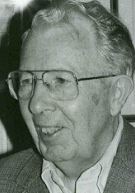
More than thirty years ago, University of Florida’s Marvin Shaw observed that participation in small group approximates the 80/20 Principle:

Marvin Shaw

Marvin Shaw

In a 5 member team, 2 members make 70% of comments
In a  6 member team, 3 members make 70% of comments
In a  8 member team, 3 members make 67% of comments

Most of the comment contributors were men, and those who speak most are typically viewed as most influential, according to Melissa Thomas-Hunt of University of Virginia.
This suggests that women can be at a disadvantage in groups if they don’t speak up.

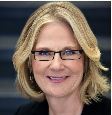
Melissa Thomas-Hunt

Melissa Thomas-Hunt

Thomas-Hunt found that women were less influential in small groups even when they possessed specific expertise in survival skills, a stereotypically male endeavor.
Further, women with elite knowledge were judged as less expert by others.

Conversely, men who possessed expertise were more influential than expert women.
Overall group task performance was affected by these dynamics:  Groups with a female expert made less accurate assessments than groups with a male expert, perhaps because females’ expertise was discounted or ignored due to gender-related expectations for specific competencies.

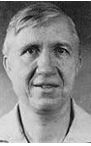
Christopher Karpowitz

Christopher Karpowitz

Women spoke less when there are fewer women in a group, but not when women predominated and decisions were made by majority rule, according to Christopher Karpowitz of Brigham Young University, Princeton University’s Tali Mendelberg and Lee Shaker of Portland State University.

Tali Mendelberg

Tali Mendelberg

They also found that women spoke equally in small groups when there were few women but the decision required unanimous vote.
One implication is that women benefit from building consensus when they are in the minority.

Powerful women who talk more than male counterparts incur backlash from both male and female observers, according to Victoria Brescoll of Yale.

Victoria Brescoll

Victoria Brescoll

In an experimental study, both female and male volunteers read about a female CEO who talked longer than others.  They judged her as significantly less competent and less suitable for leadership than a male CEO who was reported to speak for the same amount of time.

A high-power woman who talked much less than others was judged as equally competent and capable of leading as a high-power man who talked much more than others.
Raters were less generous in their ratings of a high-power male who talked much less than others:  He was judged as equally incompetent and unsuitable for leadership as a high-power female who talked much more than expected.

This suggests that both men and women are punished for behaviors different from gender-role expectations.

Lee Shaker

Lee Shaker

Women’s tendency not to speak up in groups begins well before they enter the workplace, found Harvard’s Catherine Krupnick.
She and her team investigated differences between male and female students’ participation in classroom discussion and the impact of the instructor’s gender on students’ participation.

They reviewed videotapes of 12 women and 12 men instructors, and concluded that male students talked two and a half times longer than female students when the instructor was male and the majority of the students were male — a frequent situation in many educational and work organizations.
On the other hand, female students spoke almost three times longer when instructors were female.

Women students were interrupted more frequently than their male counterparts, most often by other women, and leading them to withdraw from the discussion for the remainder of the class.

Krupnick posited that women’s lower participation in classrooms – and perhaps in other small groups – may be explained by their:

  • Unwillingness to compete against men,
  • Vulnerability to interruption,
  • Unwillingness to interject into men’s and other women’s long uninterrupted statements, known as “discourse runs,”
  • Individual differences in assertiveness, confidence, and speed of formulating responses.
Elizabeth Aries

Elizabeth Aries

Amherst’s Elizabeth Aries noticed that groups composed entirely of women students tended to have a participatory style in which women took turns and spoke for about equal amounts of time throughout the class hour.

In contrast, male groups appeared more contest-like, with extremely uneven amounts of talk per man.
They competed by telling personal anecdotes or raising their voices to establish hierarchies of participation, and this competitive style persisted in mixed-gender groups.

Kathleen Welch-Torres, then of Yale, compared women’s and men’s assertiveness in class discussions at Yale and Brown (mixed-gender institution) with women’s class participation at Wellesley and Smith (single-gender).
She reported that women at both of the mixed-sex institutions were verbally less assertive than men, by using “hedges,” qualifiers and questioning intonations.
However, women at the single-gender institutions Smith and Wellesley were more assertive than women at Yale and Brown and more assertive than men at the coeducational institutions.

Larraine Zappert

Larraine Zappert

Kendyll Stansbury

Kendyll Stansbury

Welch-Torres linked these behaviors to measures of self-esteem and her findings are similar to those of Stanford’s Laraine Zappert and Kendyll Stansbury  who reported that female graduate students held lower self-esteem, less trust in their judgments, and greater fear of making mistakes than male graduate students.

Recommendations to help women move toward fuller participation in small groups from Melissa Thomas-Hunt and Margaret Neale of Stanford include:

Margaret Neale

Margaret Neale

  • Before a meeting:
    • Ask trusted attendees to:
      • Support your ideas during the meeting,
      • Solicit your input in the meeting,
    • Refer to your specific expertise during the meeting,
    • Set a goal for number of contributions in the first five minutes of a meeting.
    • In a meeting:
      • If interrupted: Restate, rephrase and provide specific evidence based on expertise,
      • Showcase  others’ expertise by soliciting their input,
      • Create environment in which  other participants have equal opportunity to participate,
      • Urge members to consider each alternative, rather than disregarding suggestions presented by “lower status” individual.

-*How do you ensure that your expertise is recognized and influential in small group settings?

*What “best practices” do you apply to ensure active participation by women and minority-group members?

RELATED POSTS:

Twitter:    @kathrynwelds
Google+:
Blog: – Kathryn Welds | Curated Research and Commentary
LinkedIn Open Group Psychology in Human Resources (Organisational Psychology)
Facebook Notes:

©Kathryn Welds

Asking Yourself Questions Enhances Performance More Than Self-Encouragement

-*Do affirmative self-statements actually help people perform better?

Joanne Wood

Joanne Wood

It depends, found University of Waterloo’s Joanne Wood  and John W. Lee with Wei Qi “Elaine” (Xun) Perunovic of University of New Brunswick confirmed that  people often use positive self-statements and believe them to be effective.

However, two experiments demonstrate that the value of positive self-statements depends on the individual’s level of self-esteem.

Participants with low self-esteem who repeated a positive self-statement (“I’m a lovable person”) felt worse than people who used no positive self-statement.
They also felt worse than the comparison group when they focused on how the statement was only true.

William Swann

William Swann

Wood’s teamed referred to William Swann’s Self-Verification Theory, which suggests that people prefer that others see them as they see themselves as an explanation of these results.

Swann, of University of Texas at Austin posited that if someone has low self-esteem, a positive self-statement is inconsistent with the person’s experience and self-assessment.
As a result, it would not have “the ring of truth”, and would not have the intended bolstering effect on self-confidence and self-esteem.

This view was validated when participants with high self-esteem felt better when they repeated the positive self-statement statement and when they focused on how it was true.

Ibrahim Senay

Ibrahim Senay

Ibrahim Senay of Istanbul Sehir Universitesi, Penn’s Dolores Albarracin, and Kenji Noguchi of the University of Southern Mississippi investigated the relative impact of “declarative” self-talk, such as “positive thinking” or affirmations (“I will prevail!”) espoused by Maxwell Maltz, Norman Vincent Peale, Napoleon Hill, Dale Carnegie, and Anthony Robbins.
They compared this well-known self-improvement practice with “interrogative” self-talk, such as introspective self-inquiry (“Can I prevail?”).

Dolores Albarracín

Dolores Albarracín

Half the participants spent one minute asking themselves whether they would complete a series of anagrams before that actually began to work on the anagrams, whereas the other half to told themselves that they would complete the task.
Surprisingly to advocates of self-affirmation, the self-questioning group solved significantly more anagrams than the self-affirming group.

Kenji Noguchi

Kenji Noguchi

The researchers extended and replicated the finding by asking one group of volunteers to write “Will I” 20 times before attempting to solve the anagrams.
Another group wrote “I will” 20 times, and the third group wrote “Will” 20 times.
Those were “primed” with the self-questioning “Will I” solved nearly twice as many anagrams as people in the other groups.

Ibrahim Senay-Dolores Albarracín-Kenji Noguchi diagramAlbarracin suggested that “asking questions forces you to define if you really want something…even in the presence of obstacles,” so is more effective than possibly unrealistically-positive self-affirmations.
The researchers suggest that interrogative self-talk, like interrogative discussions in behavioral counseling, persuasive messages in advertising, editorials, or legal settings, and culturally “polite” behavioral requests, may elicit more intrinsically-motivated action and goal-directed behavior.

Mark Lepper

Mark Lepper

Routinely predictable extrinsic rewards can extinguish intrinsic motivation, found Stanford’s Mark Lepper and David Greene collaborated with Richard Nisbett of University of Michigan.

Richard Nisbett

Richard Nisbett

In fact, interrogative self-talk may counteract suppressors to intrinsic motivation and seems to be a learnable practice that may be transferred or “generalized” from individualized learning in counseling settings.


Robert Burnkrant

Robert Burnkrant

This form of inquiry can be persuasive because it focuses the listener’s attention to the argument itself if the question isn’t especially relevant to the listener, or to the message’s source if is more pertinent, reported Rohini Ahluwalia of University of Minnesota, Ohio State’s Robert Burnkrant, and Southern Methodist University’s Daniel Howard.

Min Basadur

Min Basadur

Subjunctive interrogative self-talk, rather than its rhetorical counterpart, can ignite innovation and creativity in organizational settings.
Min Basadur suggested that asking oneself and other How Might We (HMW) ….? enables innovators to defer judgment and  create more options without self-conscious limitations.

Tim Brown

Tim Brown

Embracing the uncertainty of “might” enables innovators to propose ideas “that might work or might not — either way, it’s OK. And the ‘we’ part says we’re going to do it together and build on each other’s ideas,” said Ideo’s CEO, Tim Brown.

This type of self-interrogatory, sometimes presented in group innovation “sprints” at Google Ventures, IDEO, Frog Design or other thought-leading organizations has been effectively been combined with structured innovative problem-solving:  

  • Understand by analyzing problems and requirements through process evaluation,
  • Diverge by applying constraints to “think differently,”
  • Decide by selecting solution to develop,
  • Prototype by “storyboarding” the user experience, process, obstacles,
  • Validate by testing prototypes with potential solution users.

-*Under what circumstances have you found ‘interrogative’ self-talk to enhance performance more than affirmative self-talk?

Related Posts:

Twitter:    @kathrynwelds
Google+:
Blog: – Kathryn Welds | Curated Research and Commentary 
LinkedIn Open Group Psychology in Human Resources (Organisational Psychology)
Facebook Notes:

©Kathryn Welds


Are You Enabling a Bad Leader?

Responsibility for ineffective and unethical leadership is held by many parties, not just leaders themselves.

Barbara Kellerman

Barbara Kellerman

Harvard’s Barbara Kellerman argued that followers – and certainly Executive Board members –  can precipitate, enable and collaborate in bad leadership.

She studied followership of incompetent, corrupt, and evil leadership in public and business settings.
Kellerman concluded that both followers and uninvolved bystanders who do not object enable bad leaders to continue their practices.

John Darley

John Darley

Supporting her contention is experimental demonstration of  the powerful impact of “Bystander Apathy” by New York University’s John Darley and Bibb Latané of Columbia.

Bibb Latane

Bibb Latane

Because followers have less power and status than leaders, complacent observership can be the norm when organizations don’t establish processes to report ineffective and unethical leadership practices with protections against negative repercussions.

Given the challenges of challenging bad leadership practices, followers can increase chances of understanding organizational culture and leadership practices by conducting pre-employment “due diligence”  before accepting a role,

Questions to evaluate “fit” with a leader include:

  • How do you prefer to communicate with your direct reports?
  • How do you mentor, coach, and develop your direct reports?
  • How would you describe your work style?
  • How do you manage conflict within the team?
  • How will you measure success in this role after a year?
  • What are your three most important values?
  • How do your direct reports describe your management style?
  • How are you and your team perceived in the organizations?
  • To what extent do you involve your team members in decisions?
  • How do you support work-life balance for team members?

These queries can’t guard against unexpected circumstances like managers rapidly moving to a new group or restructurings that result in an unevaluated new manager, role, or group.
However, they may provide additional guidance to potential “warning signs” of “misemployment,” and reduce responsibility for complicity in enabling poor management styles.

-*What questions have you found most effective in assessing work style “fit” and compatibility with a potential manager?
-*What “bad leader” roles have you observed in your organzation?

Related Reading:

LinkedIn Open Group Psychology in HR (Organisational Psychology)
Twitter: @kathrynwelds
Google+
Facebook Notes:
Blog: – Kathryn Welds | Curated Research and Commentary

©Kathryn Welds

Facades of Conformity and Surface Acting: Stress for Women, Minorities

David Wagner

David Wagner

When employees mask their true feelings in work situations, they may engage in “surface acting” — or displaying appropriate, but unfelt facial expressions, verbal interactions, and body language.

Christopher Barnes

Christopher Barnes

Surface acting at work was associated with emotional exhaustion, work-to-family conflict, and insomnia outside of work for more than 70 volunteers in a high stress public service occupation, according to Singapore Management University’s David T. Wagner, Christopher M. Barnes of University of Washington and Brent A. Scott of Michigan State University.

Arlie Hochschild

Arlie Hochschild

Emotional labor” is Arlie Hochshild’s earlier term for “surface acting” in customer service interactions, in which employees present prescribed verbalizations and emotions, even when they are not genuinely felt.

She contrasted “surface acting” with “deep acting” in which the person:

  • Exhibits the emotion actually felt,
  •                              Uses past emotional experiences to elicit real emotion and empathic connection with others, in a form of “organizational method acting.
Christina Maslach

Christina Maslach

Surface acting can lead to occupational “burnout,” characterized by emotional exhaustion and detachment from others and reduced workplace performance, noted University of California Berkeley’s Christina Maslach and Susan Jackson.

In addition, Recipients of “surface acting” usually detect that it’s an inauthentic display, according to University of Tampere Veikko Surakka and Jari K Hietanen of University of Helsinki.

Celeste Brotheridge

Celeste Brotheridge

By contrast, deep acting has been associated with a greater sense of personal accomplishment in research by University of Regina’s Celeste Brotheridge and Alicia Grandey of Penn State.

Patricia Hewlin

Patricia Hewlin

Surface Acting can also take a toll, resulting in generalized stress and reduced quality of life outside of work, according to Georgetown’s Patricia Hewlin, and supported by separate findings by University of Lethbridge’s Karen H. Hunter, Andrew A. Luchak of University of Alberta and Athabasca University’s Kay Devine.

They identified stress-inducing behaviors including:

Even people not performing customer-facing roles may encounter situations in which they must behave in “appropriate” ways inconsistent with their true feelings, and experience similar stress spillover from “surface acting” at work.

-*How do you prevent “burnout” when workplace settings seem to require “surface acting”?

-*In what organizational contexts have you observed “Facades of Conformity” and their consequences?

Follow-share-like www.kathrynwelds.com and @kathrynwelds


RELATED POSTS:

LinkedIn Open GroupPsychology in HR (Organisational Psychology)
Twitter: @kathrynwelds
Google+:
Facebook Notes:
Blog: – Kathryn Welds | Curated Research and Commentary

Google+

©Kathryn Welds


Restructuring Cognitive Errors at Work

Charles Manz

Charles Manz

Arizona State University’s Charles C. Manz and Chris P. Neck translated concepts from therapeutic cognitive restructuring to managerial development and employee relations, using ideas from Aaron Beck‘s Cognitive Behavioral Therapy (CBT), Albert Ellis‘s Rational-Emotive Therapy (RET), and David Burns’ synthesis of these approaches, “Feeling Good: The New Mood Therapy.”

Chris Neck

Chris Neck

Manz and Neck adapted these therapeutic concepts to business organizations and managerial relationships, while retaining key concepts including identifying cognitive errors, and developing disputation strategies, followed by replacement self-statements.

Aaron Beck

Aaron Beck

They outlined a five-step self-management process they called Integrative Thought Self-Leadership Procedure, drawing on CBT, RET and “Feeling Good”:

  1. Observe and Record thoughts,
  2. Analyze thoughts,
  3. Develop new thoughts,
  4. Substitute new thoughts,
  5. Monitor and Maintain new, productive thoughts.

-*What practices do you use to develop and apply productive thought patterns under pressure?

 Related Reading

©Kathryn Welds

Action vs Visualization to Improve Performance

Richard Wiseman

Richard Wiseman

University of Hertfordshire psychology researcher and magician Richard Wiseman refuted the popular belief that visualizing desired outcomes achieves results more effectively than direct action.

Lien Pham

Lien Pham

In fact, students who visualized the outcome of a high grade actually received poorer outcomes that those who visualized a better process to achieve a higher grade in research by Orange Coast College’s Lien Pham.

Gabriele Oettingen

Gabriele Oettingen

Similarly, Gabriele Oettingen of New York University asked students to record the duration of fantasies about leaving college and starting a “dream job”.
She found that students who spent more time imagining these positive outcomes, but had lower expectations of actually achieving these goals received fewer job offers and lower starting salaries.

From these studies, Wiseman argued that action rather than imagined rehearsal, fantasy or visualization leads to successful performance outcomes.

Napoleon Bonaparte

This principle was implied by Napoleon Bonaparte more than two centuries ago as he anticipated battle: On s’engage et puis on voit, translated as “You commit yourself and then you see.”

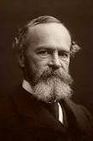
In the 1880s, William James, brother of novelist Henry James and considered “The Father of American Psychology,” asserted that action precedes emotional experience: “You do not run from a bear because you are afraid of it, but rather become afraid of the bear because you run from it.”

William James

This notion contrasts popular concepts, which led to numerous books encouraging people to change their thinking to change their behaviors and feelings.

Since the 1970s, research has focused on whether changing behavior can change feelings.
To test this relationship, James Laird of Clark University asked volunteers to create an angry facial expression by drawing down their eyebrows and clenching their teeth and to create a happy facial expression by drawing back the corners of the mouth.

James Laird

Participants reported feeling significantly happier when they forced their faces into smiles, and much angrier when they were clenching their teeth.

Acting ‘as-if’” and “faking it until you make it” are examples of initiating behaviors to drive emotional and attitudinal change.

Wiseman offered ten actions – not just thoughts – that can lead to feeling better and improved performance.

David Neal

David Neal

INCREASE:

  • Happiness: Smile as widely as possible, extend eyebrow muscles slightly upward, and hold for 20 seconds
  • Willpower: Tense muscles –  Make a fist, contract biceps or press thumb and first finger together
  • Health Eating: Eat with the non-dominant hand to increase “mindful” awareness of eating, based on research by University of Southern California’s David Neal, Wendy Wood, Mengju Wu and David Kurlander of Duke University.
  • David Neal

    David Neal

    Persistence: Sit up straight, cross your arms, from research by Ron Friedman of University of Rochester.
    He found that volunteers who sat with erect posture and crossed arms persisted nearly twice as long to solve challenging problems  as volunteers who didn’t assume this posture

  • Confidence: Adopt expanded chest posture
    Sit down, lean back, look up, and interlock hands behind your head.
    Stand up, place feet flat on the floor, push shoulders back, and chest forward.
  • Negotiation Effectiveness: Use soft chairs
    Joshua Ackerman

    Joshua Ackerman

    University of Michigan’s Joshua Ackerman of  conducted simulated negotiations for a used car, and found that volunteers who sat on soft chairs were more flexible in their negotiations and likely to pay higher prices than those who sat on firm chairs.

  • Persuasion: Nod
    Gary Wells of Iowa State University reported that when volunteers nodded their heads, they were more easily able to learn and retain information with which they didn’t agree or that wasn’t true.
  • Love: Open up
    Robert Epstein

    Robert Epstein

    Cambridge Centre for Behavioral Studies’s Robert Epstein found that eye contact, self-disclosure, sharing vulnerability increase perceived liking, loving, and closeness.

DECREASE:

  • Procrastination: Start for Five Minutes
    Do the task for five minutes, and ask yourself if you want to stop or continue at the end of the time.
    Often, it is easy to continue after 5 minutes.
    If not, stop and begin again for 5 minutes several hours later.
  • Guilt: Wash your hands
    Chen-Bo Zhong

    Chen-Bo Zhong

    Chen-Bo Zhong of the University of Toronto found that volunteers who carried out a perceived immoral act, then cleaned their hands with an antiseptic wipe felt significantly less guilty than others who didn’t wash.

Kim Silverman

Kim Silverman

If magic seems more appealing that intentional action, Wiseman’s psychologist-magician colleague, Kim Silverman of Apple, and the Academy of Magical Arts, notes that ma that magic can change the way we think about our lives:

-Things that seem impossible may be possible,

-Things that are separated and broken may be rejoined,

-There is always a way,

-We can get free from something that holds us back,

-When we feel trapped by a problem, it is just an illusion.

He asserts that magic provides a change of perspective from negative thoughts, and provides a broader perspective because “things may not be as they appear.”

These varied streams of research support intentional action over contemplation and magic to improve mood and initiate positive behavior changes.

-*How can the metaphors of perceptual illusion accelerate problem-solving in complex situations?

-*What counterarguments would you offer to Wiseman?

Related posts :

When Appearance Matters for Career Development

Linda Jackson

Linda Jackson

Numerous social science studies link perceived attractiveness with perceived competence and likeability, including a meta-analysis by Michigan State University’s Linda JacksonJohn E. Hunter and Carole N. Hodge.
They found that physically attractive people are perceived as more intellectually competent, based on their research on “status generalization” theory and “implicit personality” theory.

Women who wore cosmetics were rated more highly for attractiveness, competence, likability and trustworthiness when viewed for as little as 250 milliseconds.
However, when raters looked at the faces for a longer period of time, ratings for likability and trustworthiness changed based on specific makeup looks even though volunteers accurately distinguished between judgments of facial trustworthiness and attractiveness.

Nancy Etcoff

Cosmetics differentially affected automatic and deliberative judgments, found Massachusetts General Hospital’s Nancy Etcoff and Lauren E. Haley collaborating with Shannon Stock of Dana Farber Cancer Institute and Boston University’s David M. House as well as Sarah A. Vickery of Procter & Gamble.

Sarah Vickery

Sarah Vickery

Attractiveness was significantly related to positive judgments of competence, but had a less systematic effect on perceived social warmth.
Integrating these findings, the team concluded that attractiveness “rivets attention, and impels actions that help ensure the survival of our genes.”

Although most people recognize the bias inherent in assumptions that attractive people are competent and that unattractive people are not, this correlation is important in impression management in the workplace, as well as in the political arena.

-*Where have you seen appearance exert an influence in workplace credibility, decision-making and role advancement?

RELATED POSTS:


©Kathryn Welds

Learning Mindsets Enable Employee Development at Work

David Perkins

David Perkins

People adopt differing mindsets when trying to achieve quality results and increase learning at work, according to Harvard’s David Perkins, Michele Rigolizzo, and Marga Biller.

They expanded the distinction between fixed mindset and growth mindset described by Stanford’s Carol Dweck, and assessed with a brief questionnaire.

  • Michele Rigolizzo

    Michele Rigolizzo

    Completion mindset focuses on finishing a routine task with little mental investment.
    Accidental learning occurs with this stance, and employees who experience fear of failure, impersonal work environments, and monotonous tasks usually operate with this mindset.

  • Performance mindset aims to complete a task  without reflecting on how to can re-apply the process in the future.
    Marga Biller

    Marga Biller

    An example is temporarily using a technology but not investing attention to become an expert user.
    Incidental learning is a by-product of this mindset, described by Columbia’s Victoria Marsick and Karen Watkins of University of Georgia.

  • Development mindset seeks to complete a task and to learn applicable approaches when completing similar future tasks.
    An example is leading an effective kickoff meeting to set the tone for productive work sessions.

    Victoria Marsick

    Victoria Marsick

    Intentional learning occurs with active involvement in observing, analyzing, and reflecting on the process.

To move beyond a Completion stance, Perkins and team suggested that organizational leaders  encourage quality work and active reflection on that work to set the expectation of a Development mindset.
In addition, leaders can also implement collaboration and feedback systems with time for reflection on completed tasks.

-*How do you enable team members to adopt a Development Mindset?

Follow-share-like http://www.kathrynwelds.com and @kathrynwelds

Related Posts:

©Kathryn Welds

Powerful Questions, Anticipated Regret Can Change Behavior

One of the foundations of psychotherapy and executive coaching is the notion that provocative, well-timed, penetrating questions can provoke insight and initiative behavior change.

David Cooperrider

David Cooperrider

One example of a systematic approach to high-impact questioning is Appreciative Inquiry, developed by Case Western’s David Cooperrider and Diana Whitney, and it has been integrated into interpersonal conversations including counseling, coaching, and therapy.

University of Leeds’s Tracy Sandberg and Mark Conner demonstrated the impact of provocative questions when they asked women about anticipated regret if they ignored a preventive health assessment.

Tracy Sandberg

Tracy Sandberg

More than 4,250 women received an invitation for cervical screening and  information leaflet.
A sub-group also received a Theory of Planned Behavior questionnaire developed by University of Massachusetts’s Icek Ajzen.
Another sub-group received both the questionnaire and additional inquiries about their anticipated regrets if they didn’t participate in the screening.

Icek Ajzen

Icek Ajzen

Attendance rates were higher for those who completed the questionnaire about anticipated behavior, and significantly greater for those who also completed the regret questions.
This may be an example of FoMO – Fear of Missing Out, described by University of Essex’s Andrew K. Przybylski and Valerie Gladwell with Kou Murayama of UCLA and University of Rochester.

Andrew Przybylski

Andrew Przybylski

Likewise, “self- prophecy” questions about intention to cheat were associated with reduced cheating among college students, found University of California, Irvine’s Eric Spangenberg and Carl Obermiller of Seattle University.

The question–behavior effect was further demonstrated in a meta-analytic study by Spangenberg with SUNY’s Ioannis Kareklas, Berna Devezer of University of Idaho, and Washington State University’s David E. Sprott.

Eric Spangenberg

Eric Spangenberg

“When you ask a question, it…creates a spring-loaded intention,” and reminds of social norms and past shortcomings, posited Sprott.
It’s that disconnect between what we should do and what we know we have done that motivates us.”

David Sprott

David Sprott

Norm-reinforcing questions are often effective in encouraging proactive behavior aligned with recognized best practices, such as a Public Service Announcement endorsing pre-school vaccination:  Ninety-five percent of parents get their kids vaccinated before kindergarten.
Will you make sure your child is up to date?

William Miller

William Miller

These pointed questions are an “active ingredient” of  Motivational Interviewing developed by University of New Mexico’s William Miller and Stephen Rollnick of Cardiff University, and have been associated with heightened motivation to reduce alcohol and drug consumption.

These finding point to the power of carefully-designed questions to provoke deeper self-reflection and related behavior change.

-*What questions have you used to encourage behavior change?

Follow-share-like http://www.kathrynwelds.com and @kathrynwelds

Related Posts:

Twitter:  @kathrynwelds
Google+
LinkedIn Groups Psychology in Human Resources (Organisational Psychology)
Facebook
Blog: – Kathryn Welds | Curated Research and Commentary

©Kathryn Welds

Implicit Discrimination Associated with Meritocratic Beliefs, Low Empathy

Michael Young

Michael Young

Americans more than other nationalities, embrace the idea of meritocracy – that rewards are distributed based on merit, a combination of ability + effort with success, described by University of London’s Michael Young with Sheri Kunovich of Southern Methodist University, and Ohio State’s Kazimierz M. Slomczynski.

Satya Nadella

Satya Nadella

Microsoft’s CEO, Satya Nadella, made headlines when asked his advice for women who are uncomfortable asking for a raise at the 2014 Grace Hopper Celebration of Women in Computing.
He told more than 12,000 women: “It’s not really about asking for a raise, but knowing and having faith that the system will give you the right raise … It’s good karma. It will come back.”

Although his response resulted in widespread criticism, he may have been referring to the social penalty women experience when negotiating for salary increases and promotions.

Hannah Riley Bowles

Hannah Riley Bowles

Harvard’s Hannah Riley Bowles with Linda Babcock and Lei Lai of Carnegie Mellon demonstrated this social penalty when they showed volunteers videos of men and women asking for a raise using identical scripts.
Participants agreed to give both genders a pay increase, but evaluated women as “too aggressive” and not someone they would want to work with.
However, men in these salary negotiation situations were seen as “likable.”

Emilio Castilla

Emilio Castilla

The unequal impact of merit-based compensation on minorities was demonstrated in MIT’s Emilio J. Castilla’s analysis of almost 9,000 employees in support roles at a large service-sector company.
The organization espoused commitment to diversity and had implemented a merit-based compensation system intended to reward high-level performance and equitably reward employees.

Lei Lai

Lei Lai

Despite these egalitarian goals, women, ethnic minorities, and non-U.S.-born employees received smaller increases in compensation compared with white men, despite holding the same jobs, having the same performance score, working in the same units for the same supervisors.

These results illustrated what he called the performance-reward bias – the need for minority groups “to work harder and obtain higher performance scores in order to receive similar salary increases to white men.”

Stephen Benard

Stephen Benard

With his Indiana University colleague, Stephen Benard, Castilla uncovered the paradox of meritocracy” – organizations that espouse meritocratic values awarded a larger monetary reward to male employees compared with equally performing female employees.

Despite their positive intentions and policies, these organizations perpetuated unequal evaluations and rewards across equally performing employee groups.

Eric Luis Uhlmann

Eric Luis Uhlmann

In fact, people who think they are the most objective exhibited greatest evaluation bias, found Northwestern’s Eric Luis Uhlmann and Geoffrey L. Cohen of University of Colorado.
They attributed this finding to overconfidence in objectivity, leading to lack of self-scrutiny and self-assessment of potential and implicit bias.

Corinne Moss-Racusin

Corinne Moss-Racusin

This bias was also demonstrated when volunteers provided significantly more positive evaluations of resumes were attributed to whites and men than identical resumes linked to minority-group members and women, reported by Yale’s Corinne A. Moss-Racusin, John F. Dovidio, Victoria L. Brescoll, Mark J. Graham, and Jo Handelsman.

John Dovidio

John Dovidio

Since egalitarian aspirations and performance management systems do not result in equitable reward distribution, MIT’s Castilla advocated increased transparency and accountability by creating a performance-reward committee to monitor compensation increases and to share information about pay segmented by gender, race, and nationality.
Five years after these changes were introduced in companies Castilla studied, he found that the demographic pay gap had disappeared.

Grit Hein

Grit Hein

Another way to reduce bias is to increase empathy, found Universität Bern’s Grit Hein, Jan B. Engelmann of Tinbergen Institute, and University of Zurich’s Philippe N. Tobler, with Marius C. Vollberg of University College London, in their study of 40 young men of Swiss or Balkan descent.

Participants and two research confederates received an electric charge on the back of the hand.
Next, one of the two confederates was attributed a typical Balkan name or a Swiss name, and was designated a “decision maker.”

Jan B. Engelmann

Jan B. Engelmann

Volunteers were then told they would receive “painful shocks,” but the “decision maker” could prevent this “by giving up money he would otherwise earn.”
Participants received help from the other person 15 times out of 20 trials, and received a shock five times.

Two new confederates, one with a Swiss name and one with a Balkan name, replaced the first two and the participant watched as one of them received the painful electrical pulses.
A brain scan measured the volunteers’s level of empathy for the person receiving the shock.

Philippe Tobler

Philippe Tobler

When the confederate with the Balkan minority name “helped” the participant avoid a shock by “sacrificing” a payoff, the volunteer’s brain scans demonstrated increased empathy for both the specific helper, and for other Balkan people.

The team interpreted this finding to suggest, “…empathy with an out-group member can be learned, and generalizes to other out-group individuals.”

If this trend can be replicated in the workplace by increasing organizational and managerial empathy for members of minority groups during the appraisal process, organizational rewards may be more equitably distributed.

-*How do you reduce bias in appraisal and reward processes?

Follow-share-like http://www.kathrynwelds.com and @kathrynwelds

Related Posts:

Twitter:  @kathrynwelds

Google+
LinkedIn Groups Psychology in Human Resources (Organisational Psychology)
Facebook
Blog: – Kathryn Welds | Curated Research and Commentary

©Kathryn Welds