Category Archives: Working Women

Working Women

How Much Does Appearance Matter?

Linda A. Jackson

Physically attractive people were evaluated as more intellectually competent and likeable in a meta-analysis by Michigan State University’s Linda A. Jackson, John E. Hunter, and Carole N. Hodge.

Nancy Etcoff

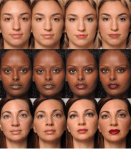
Similarly, women who wore cosmetics were rated more highly on attractiveness, competence, likeability and trustworthiness when viewed for as little as 250 milliseconds by participants in studies by Harvard’s Nancy L. Etcoff, Lauren E. Haley, and David M. House, with Shannon Stock of Dana-Farber Cancer Institute, and Proctor & Gamble’s Sarah A. Vickery.

Models without makeup, with natural, professional, “glamorous” makeup

However, when participants looked at the faces for a longer time, ratings for competence and attractiveness remained the same, but ratings for likeability and trustworthiness changed based on specific makeup looks.

Etcoff’s team concluded that cosmetics could influence automatic judgments because attractiveness “rivets attention and impels actions that help ensure the survival of our genes.”

Most people recognize the bias in assuming that attractive people are competent and that unattractive people are not, yet impression management remains crucial in the workplace and in the political arena.

-*Where have you seen appearance exert an influence in workplace credibility, decision-making and role advancement?

Related Posts

©Kathryn Welds


Women Who Express Anger Seen as Less Influential

Jessica Salerno

Jessica Salerno

Women who expressed anger were less likely to influence their peersin computer-mediated mock jury proceedings, found Arizona State University’s Jessica Salerno and Liana Peter-Hagene of University of Illinois. 

Liana Peter-Hagene

Liana Peter-Hagene

More than 200 U.S. jury-eligible volunteers reviewed opening arguments and closing statements, eyewitness testimonies, crime scene photographs, and an image of the alleged weapon in a homicide.

Participants made individual verdict choices, then exchanged instant messages by computer, with “peers” who were said to be “deliberating their verdict decisions.”

In fact, “peer” messages were scripted, with four of the fictional jurors agreeing with the participant’s verdict, and one disagreeing.
In different test conditions, the dissenting participant had 1) a male user name or 2) a female user name or 3) a gender-neutral name.

Victoria Brescoll

Victoria Brescoll

Half of the dissenting messages contained no emotion, anger, or fear, and had no influence on participants’ opinions.

However, when a single “male dissenter” sent angry messages, characterized by “shouting” in all capital letters, participants’ confidence in their verdict decision significantly dropped.
This confidence-eroding effect of one “male dissenter” held even when the majority of “jurors” shared the same opinion.

A single female dissenter who expressed disagreement in an angry message did not undermine the other juror’s confidence in their decisions.

This finding suggests that a single male dissenter’s angry communication causes people to doubt their opinions, and that “female” anger was less influential than “male” anger.

In contrast, volunteers became more confident in their initial verdict decisions when their vote was echoed by the majority of other participants.

Eric Luis Uhlmann

Eric Luis Uhlmann

Male and female evaluators assigned lower status to female CEOs and female trainees when they expressed anger, compared with angry male professionals in research by Yale University’s Victoria Brescoll and Eric Luis Uhlmann, now of INSEAD.

Kristi Lewis Tyran

Kristi Lewis Tyran

Men who expressed anger in a professional context were conferred higher status than men who expressed sadness.

Likewise, women who expressed anger and sadness were rated less effective than women who shared no emotion, according to Kristi Lewis Tyran of Western Washington University.

Evaluators judged men’s angry reactions more generously, attributing these emotional expressions to external circumstances, such as experiencing pressure and demands from others.

These differing judgments of emotional expression suggest that women’s anger is more harshly evaluated because anger expressions deviate from women’s expected societal, gender, and cultural norms.

-*What impacts and consequences have you observed for women and men who express anger at work?

RELATED POSTS:

©Kathryn Welds


Costs of Workplace Incivility

Christine Pearson

A single incident of incivility in the workplace can result in significant operational costs, reported Christine Pearson of Thunderbird School of Global Management and Christine Porath of Georgetown University.

Additional consequences of workplace incivility include:

  • Decreased work effort due to disengagement,

    Christine Porath

    Christine Porath

  • Less time at work to reduce contact with offensive co-workers or managers,
  • Decreased work productivity due to ruminating about incivility incidents,
  • Less commitment to the organization,
  • Attrition.

Pier Massimo Forni

P.M. Forni

Other organizational symptoms include:

  • Increased customer complaints,
  • Accentuated cultural and communications barriers,
  • Reduced confidence in leadership,
  • Less adoption of changed organizational processes,
  • Reduced willingness to accept additional responsibility and make discretionary work efforts.

Workplace incivility behaviours were described as “rude and discourteous, displaying a lack of regard for others,” noted Pearson and Lynne Andersson, then of St. Joseph’s University.
“Uncivil” behaviors were enumerated in The Baltimore Workplace Civility Study by Johns Hopkins’ P.M. Forni and Daniel L. Buccino with David Stevens and Treva Stack of University of Baltimore:

  • Refusing to collaborate on a team project,
  • Shifting blame for an error to a co-worker,
  • Reading another’s mail,
  • Neglecting to say “please,” “thank you”,
  • Taking a co-worker’s food from the office refrigerator without asking.

Respondents classified more extreme unacceptable behaviors:

  • Pushing a co-worker during an argument,
  • Yelling at a co-worker,
  • Firing a subordinate during a disagreement,
  • Criticising a subordinate in public,
  • Using foul language in the workplace.

Gary Namie

Workplace bullying was included in Gary Namie’s Campaign Against Workplace Bullying.
He defined bullying as “the deliberate repeated, hurtful verbal mistreatment of a person (target) by a cruel perpetrator (bully).

His survey of more than 1300 respondents found that:

  • More than one-third of respondents observed bullying in the previous two years,
  • More than 80% of perpetrators were workplace supervisors,
  • Women bullied as frequently as men,
  • Women were targets of bullying 75% of the time,
  • Few bullies were punished, transferred, or terminated from jobs.

Costs of health-related symptoms experienced by bullying targets included:

  • Depression,
  • Sleep loss, anxiety, inability to concentrate, which reduced work productivity,
  • Post-Traumatic Stress Disorder (PTSD) among 31% of women and 21% of men,
  • Frequent rumination about past bullying, leading to inattention, poor concentration, and reduced productivity.

Choosing CivilityWidespread prevalence of workplace incivility was also reported by Forni, who suggested ways to improve workplace interactions and inclusion:

  • Assume that others have positive intentions,
  • Pay attention, listen,
  • Include all co-workers in workplace activities,
  • Acknowledge others,
  • Give praise when warranted,
  • Respect others’ opinions, time, space, indirect refusals,
  • Avoid asking personal questions,
  • Be selective in asking for favors,
  • Apologize when warranted,
  • Provide constructive suggestions for improvement instead of complaints,
  • Maintain personal grooming, health, and work environment,
  • Accept responsibility for undesired outcomes, if deserved.

More than 95% of respondents in The Baltimore Workplace Civility Study suggested, “Keep stress and fatigue at manageable levels,” a challenging goal for leaders who shape workplace cultures.

Organizational change recommendations include:

  • Institute a grievance process to investigate and address complaints of incivility,
  • Select prospective employees with effective interpersonal skills,
  • Provide a clearly-written policy on interpersonal conduct,
  • Adopt flexibility in scheduling, assignments, and work-life issues.

-*How do you handle workplace incivility when you observe or experience it?

©Kathryn Welds

Plastic Surgery Changes Perceived Personality Traits

Michael J. Reilly

Michael J. Reilly

People often infer others’ personality attributes from visual cues, found Georgetown University Hospital’s Michael J. Reilly, Jaclyn A. Tomsic and Steven P. Davison, collaborating with Stephen J. Fernandez of MedStar Health Research Institute.
This facial profiling is cognitive shortcut that can lead to biased impressions and fewer professional and social opportunities for those unfavorably judged.

Jaclyn A. Tomsic

Jaclyn A. Tomsic

These researchers asked volunteers to evaluate photographs of 30 women shown with neutral facial expressions.

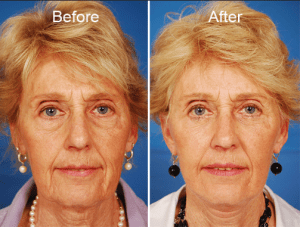
Each rater judged 10 images, including five (5) photographs before the person had plastic surgery procedures and five (5) images following surgical procedures:

  • Chin implant,
  • Eyebrow-lift,
  • Lower blepharoplasty (lower eye lift),
  • Upper blepharoplasty (upper eye lift),
  • Neck-lift,
  • Rhytidectomy (face-lift).

Michael Reilly-Preoperative-Postoperative photos

Raters were not informed that some people in the photos had plastic surgery procedures.

Evaluators assessed each photograph on a 7-point scale for perceived:

  • Aggressiveness,
  • Extroversion,
  • Likeability,
  • Risk-seeking,
  • Social skills,
  • Trustworthiness,
  • Attractiveness.

Michael Reilly - Pre-Post 2Raters assigned higher scores for likeability, social skills, and attractiveness to the images following plastic surgery compared with pre-surgery image ratings.

The researchers concluded that the eyes signal attractiveness and trustworthiness.

They noted that people who had lower eyelid surgery were rated significantly more attractive and trustworthy.

The team concluded that corner of the mouth indicates happy and surprised expressions and personality traits like extroversion.

Likewise, they reported that an upturned mouth and fullness in the cheeks can make a person look more intelligent and socially skilled.

In sum, they found that people who had a facelift procedure were rated significantly more likeable and socially skilled postoperatively.”

Volunteers in a different study attributed positive and negative personality traits to neutral faces when they perceived a similarity to standard positive and negative emotional expressions, reported Princeton’s Christopher P. Said and Alexander Todorov with Nicu Sebe of University of Trento.

Christopher P. Said

Christopher P. Said

This perceptual bias was demonstrated when volunteers attributed positive personality characteristics to faces with neutral expressions when some aspect of the face resembled typical facial expressions of happiness.

Similarly, neutral faces seen attributed negative personality characteristics when they had some similarities to displays of disgust and fear.

These trait inferences resulted from overgeneralization in emotion recognition systems.

Nicu Sebe

Nicu Sebe

 This error can lead to misattributed personality traits and biased impressions.

However, these inaccurate and biased judgments can become more favourable after plastic surgery.

-*To what extent do people’s personality traits seems different following plastic surgery?

-*How often are people treated differently following plastic surgery?

*What are ways to avoid confusing emotional expressions with personality traits?

Related Posts:

©Kathryn Welds

Reputation Affects Women’s Promotion, Earnings

Lily Fang

Lily Fang

Sterling Huang

Men gain greater job benefits from professional connections than women with better education and job skills, according to INSEAD’s Lily Fang and Sterling Huang of Singapore Management University.

Lauren Cohen

Fang and Huang examined U.S. equity analysts’ alumni connections with company senior officers and board members, using a methodology developed by Harvard’s Lauren Cohen, and Christopher Malloy with Andrea Frazzini, of AQR Capital Management.

Christopher Malloy

They considered analysts’:

  • Year-end earnings per share (EPS) forecasts,
  • Buy-stock recommendations from 1993 to 2009,
  • Price impact of their recommendations,
  • Selection to “All America Research Team” (AA) by Institutional Investor magazine during the same period.

    Selection to AA is based on the institutional investors’ subjective evaluation of each analyst’s industry knowledge, communication, responsiveness, and written reports.

Andrea Frazzini

Andrea Frazzini

Forecast accuracy is one of the least important selection criteria.
Therefore, skillful analysts may be not be selected if they are not visible and well-regarded by decision-makers.

Connections directly contributed to male analysts’ likelihood of being named to the  “All America Research Team” (AA), but this relationship did not hold for female analysts.

This variance in connections by gender had significantly different financial consequences for male and female analysts because AA team members earned three times more than non-team analysts.

About 25% of all analysts shared a school tie with a senior officer or board member in the firms they covered, and these connections improved men’s forecast accuracy significantly more than women’s.

These connections also improved the impact of male analysts’ stock recommendations, measured by market reaction to their buy and sell calls.

Female analysts with a connection to a female executive at covered firms significantly improved their ranking accuracy, yet male analysts with a male connection improved their ranking accuracy almost twice as much.

Herminia Ibarra

Herminia Ibarra

Herminia Ibarra, then of INSEAD, also demonstrated that men in an advertising firm capitalized on network ties to improve their employment positions.

Women remain in analytical roles even if they are capable of executive roles because promotion to General Manager roles depends on subjective evaluations by current decision makers, who are usually men.

This different impact of network connections early in women’s and men’s careers could explain gender gaps that exist throughout career trajectories.

Fang and Huang concluded that men and women may be evaluated using separate subjective criteria, resulting in differential career advancement for women and men.

Ronald Burt

Ronald Burt

Career-related social connections (“social capital”) are affected by legitimacy, reputation, and network structures, argued University of Chicago’s Ronald Burt.
He suggested that “holes” in a social network are gaps in connections between two people or groups.
Anyone who builds a bridging relationship across this gap is considered a “broker.” 

This role offers “entrepreneurial opportunities” to access information and shape communications across groups.
Women who fill “network holes” increase their possibility of advancement.

Burt noted limitations to this approach for women:  “…because women are not accepted as legitimate members of the population of highly promotable candidates.”

He noted that women and minorities succeed by leveraging the network of legitimate strategic partners, suggesting the importance of sponsors for underrepresented groups. 

-How do you identify and fill “structural holes in social capital networks”?

RELATED POSTS:

©Kathryn Welds

Women, Minorities Increase Performance by Resisting Stereotype Threat

Claude Steele

Claude Steele

Stereotype threat occurs when stigmatised group members receive information about the group’s expected behavior, potential, and outcomes.
Typically, stereotype threat reduces performance among stigmatised group members.

Joshua Aronson

Stanford’s Claude Steele and Joshua Aronson of NYU, substituted a positive shared identity for typical stereotypes of women and African American participants in academic tasks. 
This intervention was associated with improvee performance compared with the control group of volunteers.

Anthony Greenwald

Stereotypes can be invoked by “implicit primes” even when people explicitly disavowed stereotypes, found University of Washington’s Anthony Greenwald and Mahzarin Banaji, then at Yale.
However, when volunteers focused on tasks rather than beliefs, participants were less likely to render discriminatory decisions.

Laura Kray

Laura Kray

Women and men resisted stereotypic negotiation behaviour when they activated a shared identity.
Participants maintained these less-biased behaviours despite receiving explicit stereotype primes, reported University of California, Berkeley’s Laura Kray, Leigh Thompson of Northwestern, and Columbia’s Adam Galinsky.
This finding suggests that vulnerability to stereotype threat can be modified and sustained.

Gordon Moskowitz

Gordon Moskowitz

People can distance themselves from stereotypes with contrast primes that provide alternatives to a stereotype, noted Lehigh University’s Gordon B. Moskowitz and Ian W. Skurnik of University of Utah.

Ryan P. Brown

Ryan P. Brown

Even members of dominant groups can be affected by stereotype threat:  Men from majority groups can perform less effectively after receiving a positive stereotype prime.
University of Oklahoma’s Ryan P. Brown and Robert A. Josephs of University of Texas suggested that this performance suppression among members of dominant groups can occur when participants sense a “pressure to live up to the standard”.

Robert A Josephs

Robert A Josephs

People can manage stereotype threat by mentioning the stereotype to activate stereotype resistance.
Another mitigation strategy is to focus on a shared identity that transcends the stigmatized group identity, and provide examples that contradict the stereotype.

  • How do you manage stereotype threat for yourself and others?
  • How effective have you found activating stereotype reactance?

RELATED POSTS:

©Kathryn Welds

Women’s Self-Advocacy: Violating the “Female Modesty” Norm

Marie‐Hélène Budworth

Marie‐Hélène Budworth

Some women experience anxiety when required to showcase their accomplishments and skills.
They also understand that self-promotion, personal marketing, and “selling yourself” can be required to be achieve recognition and rewards at work, particularly in the U.S..

Sara L. Mann

Sara L. Mann

Gender norms about “modesty” can contribute to women’s discomfort in highlighting their accomplishments, according to York University‘s MarieHélène Budworth and Sara L. Mann of University of Guelph.
These implicit rules advocate that women:

  • hold a moderate opinion of their skills,
  • appear humble,
  • avoid pretentiousness,
  • disclaim personal responsibility for success,
  • accept personal responsibility for failure.
Laurie Rudman

Laurie Rudman

In contrast, many American men proactively showcase their skills, and observers generally evaluate self-promoting men as “competent,” “capable,” and “confident.”

Men who do not advertise their successes often are negatively evaluated, as are women who self-promote, according to Skidmore’s Corinne Moss-Racusin, Julie Phelan of Langer Research Associates, and Rutgers’ Laurie Rudman.
These researchers concluded that anyone who behaves contrary to expected gender stereotypes may be less favorably evaluated and advance more slowly in careers.

Women from cultures that value cooperation, collaboration, and collective accomplishment face limited career advancement if they conform to these norms in self-promoting work cultures, found Budworth and Mann.  

Deborah A. Small

Deborah A. Small

Likewise, women who adhere to implicit “female modesty” expectations were less likely to ask for promotions and salary increases.
This reluctance contributed to women’s long-term pay disparity according to University of Pennsylvania’s Deborah A. Small, Linda Babcock of Carnegie Mellon University, University of Maryland’s Michele Gelfand and Hilary Gettman.

Peter Glick

Peter Glick

However, if women violate “modesty norms,” they can experience discrimination in hiring, promotion, and wages, reported Rutgers’ Rudman and Peter Glick of Lawrence University.
Similarly, Yale’s Victoria Brescoll noted that these “norm violators” can experience other adverse interpersonal consequences.

Mark Zanna

Mark Zanna

People who violate norms typically experience physical arousal including discomfort, anxiety, fear, nervousness, perspiration, increased heart rate, reported University of Waterloo’s Mark Zanna and Joel Cooper of Princeton.

However, if participants attribute this physical activation to “excitement” rather than norm violation, they were more likely to:

  • Engage in self-promotion,
  • Express interest in self-promotion,
  • More effectively describe their accomplishments.
Jessi L Smith

Jessi L Smith

Despite women’s and some men’s career “double bind,” people can consciously communicate more effectively about their successes, demonstrated in studies by Montana State University’s Jessi L. Smith and Meghan Huntoon.

More than 75 women wrote sample essays for a merit-based scholarship valued up to USD $5,000.
One group composed essays about their own accomplishments whereas another group wrote about another person’s accomplishments.

Andrew Elliott

Andrew Elliott

They also completed Achievement Goal Questionnaire – Revised by University of Rochester Andrew Elliot and Kou Murayama of Tokyo Institute of Technology to evaluate “performance approach” and “performance avoidance.”

The laboratory contained a black box described as a “subliminal noise generator.”
Half the volunteers were told the box produced “inaudible but potentially uncomfortable ultra-high frequency noise,” and they were later asked to evaluate “the effects of extraneous distractions on task performance.”
The remaining participants received no information about the black box.

Victoria Brescoll

Victoria Brescoll

Women who could attribute their experience to the “noise generator” produced higher-quality, more convincing descriptions of their achievements, measured by being awarded significantly higher scholarships prizes.
These women also said they were more interested in the task, which is typically associated with greater intrinsic motivation to showcase personal accomplishments.

In contrast, women who violated the “modesty” norm without reference to the “noise generator” said they:

  • Reported less interest in describing their achievements,
  • Negatively evaluated their performance,
  • Produced lower-quality essays,
  • Reported fear of failure.

Women who displayed their accomplishments in essays were negatively evaluated by judges, who awarded significantly less to people wrote about their own accomplishments rather than about someone else’s.

Leon Festinger

Leon Festinger

One “workaround” for this self-promotion trap is to reciprocally advocate for colleagues.
This strategy highlights colleagues’ accomplishments as organizational policies evolve to encourage everyone’s self-promotion.
Google led this approach with a self-nomination process for advancement and promotion, coupled with reminder emails to submit self-nominations.

When people redefine showcasing their professional accomplishments as “part of the job,” they tend to perform more effectively and experience less cognitive dissonance.

  • How do you manage the norm against women “bragging” and showcasing their accomplishments?

RELATED POSTS:

©Kathryn Welds

Confident Cluelessness = The Dunning-Kruger Effect

Stav Atir

Stav Atir

The Dunning-Kruger effect describes people’s overestimate of their own expertise and their unawareness of their incompetence in grammar, emotional intelligence, logical reasoning, firearm safety, debating, and financial acumen.

Emily Rosenzweig

Emily Rosenzweig

Cornell’s Stav Atir and Emily Rosenzweig of Tulane asked volunteers if they were familiar with concepts like centripetal force and photon as well as fictitious terms including plates of parallax, ultra-lipid, and cholarine.

About 90% of participants claimed some knowledge of at least one of the nine fake concepts.
People who thought they were most knowledgeable also said they recognized more of the meaningless terms.

David Dunning

David Dunning

Atir and Rosenzweig concluded that low performers lack insight about their skill deficits because they ”don’t know what they don’t know.”

Another study, by University of California San Diego’s Elanor Williams, Justin Kruger of NYU, and Cornell’s David Dunning asked volunteers to complete a logical reasoning task, an intuitive physics problem, and a financial challenge.

Elanor Williams

Elanor Williams

Participants who achieved no correct answers expressed the same degree of confidence as the most able performers.

Deborah Keleman

Deborah Keleman

Even 80 professionally-credentialed physical scientists at top universities provided a number of inaccurate purpose-based (“teleological”) explanations about “why things happen” in the natural world. 
These results are noteworthy because most physical scientists’ reject the validity of purpose-based explanations for natural phenomena.

Joshua Rottman

Joshua Rottman

When these professional scientists provided explanations under time constraints, they were twice as likely to endorse inaccurate rationales, reported Boston University’s Deborah Kelemen, Joshua Rottman, and Rebecca Seston.

Rebecca Seston

Rebecca Seston

Scientists were equally likely as humanities scholars to endorse inaccurate arguments. 

Both high and low achievers made judgments said they felt confident because they had a clear rationale for decisions, even though these were “intuitive rules” rather than empirically-based.
Williams’ team concluded, Rule-based confidence is no guarantee of self-insight into performance.”

Most people seem to hold pseudo-scientific explanations as “a default explanatory preference,” a mindset that could explain the appeal of myth and religion across cultures.

Justin Kruger

Justin Kruger

Similarly, people who filed for bankruptcy said they had high confidence in their financial acumen, although their real-life financial management skills didn’t keep them solvent.

More than 25,000 people rated their financial knowledge and completed the 2012 National Financial Capability Study, conducted by the Financial Industry Regulatory Authority with the U.S. Treasury.
Of these, 800 respondents said they filed bankruptcy within the previous two years.

Bankruptcy filers achieved financial knowledge scores in the lowest third of respondents, but they rated their knowledge more positively than financially-solvent respondents.
Nearly a quarter of the recently bankrupted respondents gave themselves the highest possible rating, whereas only 13 percent of financially-solvent respondents were equally confident.

Most people hold a positive view of their capabilities even when faced with contrary evidence.
However, women may hold an unrealistically modest view of their capabilities despite affirming feedback.
These biases in self assessment suggest the importance of realistic recalibration of confidence, aligned with consensual feedback.

-*How do you minimize the risks of “Clueless Confidence”?

-*How can systematic underestimates of competence be reduced to increase “Realistic Confidence”?

Related Posts:

Useful Fiction: Optimism Bias of Positive Illusions

Least Skillful Performers May Have Greatest Illusions of Competence

©Kathryn Welds

Defining “Executive Presence”

Sylvia Ann Hewlett

Sylvia Ann Hewlett

Communication, “Gravitas”, and Appearance were frequently-cited attributes of Executive Presence in a study by Sylvia Ann Hewlett of the Center for Talent Innovation.

Gavin Dagley

More characteristics of executive presence were identified in interviews with 34 professionals, conducted by Perspex Consulting’s Gavin Dagley and Cadeyrn J. Gaskin, formerly of Deakin University.

Caderyn Gaskin

Five “executive presence” qualities were observable during initial contact:

  • Status and reputation, similar to “gravitas” discussed by Hewitt,
  • Physical appearance, mentioned by Hewitt,
  • Confidence,
  • Communication ability, included in Hewitt’s “executive presence” triad,
  • Interpersonal engagement skills.

Five additional presence features emerged during repeated contacts:

  • Interpersonal integrity,
  • Values-in-action,
  • Intellect and expertise,
  • Outcome delivery,
  • Use of coercive power.

These qualities combine in different ways to form four presence “archetypes”:

  • Positive presence, based on favorable impressions of confidence, communication, appearance, and engagement skills plus favorable evaluations of values, intellect, and expertise,
  • Unexpected presence, linked to unfavorable impressions of confidence plus favorable evaluations of intellect, expertise, and values,
  • Unsustainable presence combines favorable impressions of confidence, status, reputation, communication, and engagement skills plus unfavorable evaluations of values and integrity,
  • “Dark presence” is associated with unfavorable perceptions of engagement skills plus unfavorable evaluations of values, integrity, and coercive use of power.

Philippe De Backer

Philippe De Backer

Another typology of executive presence characteristics was identified by Sharon V. Voros and Bain’s Philippe de Backer.
They prioritized elements in order of importance for life outcomes:

  • Focus on long term strategic drivers,
  • Intellect,
  • Charisma, comprised of confidence, intensity, commitment, care, concern and interest in others,
  • Communication skills,
  • Enthusiasm for work,
  • Cultural fit with organisation and team,
  • Poise,
  • Appearance.

Fred Luthans

Fred Luthans

University of Nebraska’s Fred Luthans and Stuart Rosenkrantz with Richard M. Hodgetts of Florida International University investigated the relationship between “executive presence” and career “success.”
These researchers observed nearly 300 managers across levels at large and small mainstream organizations when leaders:

  • Communicated,
  • Engaged in “traditional management” activities, including planning, decision making, controlling,
  • Managed human resource issues.

Richard Hodgetts

Richard Hodgetts

Communication and interpersonal skills, coupled with intentional networking and political acumen enabled some managers to rapidly advance in their organizations.

These rapidly-advancing managers were identified as “successful” leaders because they achieved a higher organizational level compared with their organizational tenure.
In contrast, “effective” managers demonstrated greater managerial skill than “successful” managers, but were not promoted as quickly.

Effective” managers spent most time managing employees’ activities including:

  • Motivating and reinforcing desired behaviours,
  • Managing conflict,
  • Hiring,
  • Training and developing team members,
  • Communicating by exchanging information,
  • Processing paperwork.

Stuart Rosenkrantz

Stuart Rosenkrantz

Subordinates of “effective” managers reported more:

  • Job satisfaction,
  • Organizational commitment,
  • Performance quality,
  • Performance quantity.

Differences in advancement and subordinate reactions to “successful” and “effective” managers were related to differing managerial behaviors.

Fred Luthans-Effective ManagersSuccessful” managers spent little time in managerial activities, but invested more effort in networking, socializing, politicking, and interacting with outsiders.
Their networking activities were most strongly related to career advancement but weakly associated with “effectiveness.”

Few managers were both “successful” and “effective”:
Only about 10% leaders were among the top third of successful managers and effective managers.
This suggests that effective managers who support employee performance may not be advance as rapidly as managers who prioritize their own career over their employees’ careers.

Gender differences in gravitas, communication, and political acumen may explain why men more often are seen as possessing “executive presence.”

Women who aspire to organizational advancement benefit from cultivating both gravitas and proactive networking to complement communication and interpersonal skills.

-*Which behaviors and characteristics are essential to “Executive Presence?”

Related Posts

©Kathryn Welds

Acknowledge Employer Appearance “Concerns” to Get Job Offer

Usually physically attractive people are positively evaluated by others. 
However, women applying for traditionally male jobs were less positively evaluated in search studies, and conclusions suggest that female gender coupled with attractive appearance seems to account for this disadvantage,

Madeline Heilman

Madeline Heilman

The “beauty is beastly effect” is a hiring bias favoring men or less attractive women for “masculine” jobs, described by Yale University’s Madeline E. Heilman and Lois R. Saruwatari.

Lois Suruwatari

Lois Suruwatari

They found that attractiveness was an advantage for men seeking managerial and non-managerial roles, but attractive women had an advantage only when seeking non-managerial roles.

Michelle Hebl

Michelle Hebl

Attractiveness can be considered a “stigma,” just as disability, gender, pregnancy, obesity, and race, suggested Rice University’s Michelle R. Hebl and Robert E. Kleck of Dartmouth College.
They reported that job seeks in these categories can reduce hiring biases by acknowledging the “stigmatising” characteristic during interviews.

Robert Kleck

Robert Kleck

Women who proactively addressed the employers conscious or unconscious concern about gender or appearance in a traditionally male role were rated higher in employment suitability in a study by University or Colorado’s Stefanie K. Johnson and Traci Sitzmann, with Anh Thuy Nguyen of Illinois Institute of Technology.

This proactive approach buffered the impact “hostile sexism” while increasing “benevolent sexism’s” link to employment suitability ratings.

Stefanie Johnson

Stefanie Johnson

Evaluators said they assumed that these candidates possessed more “masculine” traits than other female candidates, which they viewed as an advantage over possessing “feminine” traits at work.

These assessors were less likely to negatively evaluate women behaving in contrast to traditional gender role norms when these women address their appearance, avoiding frequently-observed gender norm “backlash.” 

Traci Sitzmann

Traci Sitzmann

-*How effective you found “pre-emptive objection-handling” in workplace negotiations?

RELATED POSTS:

©Kathryn Welds