Category Archives: Working Women

Working Women

“Feminine Charm” as Negotiation Tactic

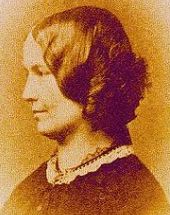
Charlotte Brontë

Charlotte Brontë

Feminine charm” was one of the few available negotiation tactics for women in past decades, portrayed in novels by Charlotte Brontë, Jane Austen, and George Eliot

Jane Austen

Jane Austen

Former United States Secretary of State Madeleine Albright said that she used “charm” in negotiations with heads of state. This statement inspired University of California, Berkeley’s Laura Kray and Alex Van Zant with Connson Locke of London School of Economics to investigate “feminine charm” in negotiation situations.

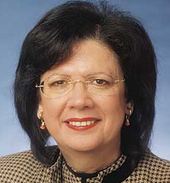
Madeleine Albright

Madeleine Albright

They found that “the aim of feminine charm is to make an interaction partner feel good as a way of gaining compliance” and “charm” is characterised by:

Laura Kray

  • Friendliness, or concern for the other person,
  • Flirtation, or concern for self-presentation.

Hannah Riley Bowles

“Feminine charm” (friendliness plus flirtation) partially buffered the social penalties (“backlash”) against women’s efforts to negotiate, identified by Harvard’s Hannah Riley Bowles and her colleagues.

Linda Babcock

Women who were perceived as flirtatious achieved superior economic deals in negotiations compared with women who were seen as friendly.

This finding validates Carnegie Mellon’s Linda Babcock’s observation that women achieve better negotiation outcomes when they combine power tactics with warmth.

These research results expose “a financial risk associated with female friendliness:…the resulting division of resources may be unfavourable if she is perceived as ‘too nice’.”

-*How do you mitigate the “financial risk associated with female friendliness”?

RELATED POSTS:

©Kathryn Welds

How to Win the Career Advancement Contest – Tournament

Olivia Mandy O'Neill

Olivia Mandy O’Neill

People who work in an organization tacitly agree to participate in a “Workplace Tournament” for advancement, according to (Olivia) Mandy O’Neill of Wharton and Charles O’Reilly of Stanford.

They contend that careers are a series of tournaments in which employees compete for promotion to higher organisational levels.

Brian G.M. Main

The prevalence of implicit workplace “contests” was validated in O’Reilly’s study of executive pay with University of Edinburgh’s Brian G M Main and James Wade, of Emory University.

Phyllis Tharenou

Phyllis Tharenou

Women in organisational hierarchies dominated by men progressed less frequently to management roles even though they might earn more than women in other organisations, according to Phyllis Tharenou of Flinders University.

Employees with managerial aspirations and “masculine” (proactive, assertive, competitive) preferences were more likely to advance in management roles, she found.

These effects were enabled by “career encouragement” such as mentoring and structured career development programs.

Denise Conroy

Denise Conroy

With Denise Conroy of Queensland Technology University, Tharenou studied more than 600 female managers and 600 male managers across six organizational levels.

Women’s and men’s advancement was most closely correlated with workplace development opportunities and organizational structure.
Structural, policy and program changes can increase the number of women in top leadership roles, they found.

Women tend to excel in explicit workplace contests, such as in public sector jobs.
Women in other sectors can improve opportunities for advancement by:

  • Recognizing that advancement is a tournament,
  • Competing strategically,
  • Communicating interest in advancement,
  • Seeking employment in organizations with formal career advancement programs, mentoring, and development training,
  • Selecting employment in organizations that support flexible work practices and use technology to enable employees to work “anytime, anywhere,”
  • Gaining experience in “masculine” organizational culture or male-dominated industries,
  • Identifying social support inside organizations,
  • Seeking and cultivating advocates and sponsors

    .*How do you manage workplace “tournaments” for career advancement?

RELATED POSTS:

©Kathryn Welds

Women’s Likeability–Competence Dilemma: Overcoming the Backlash Effect

Madeline Heilman

Madeline Heilman

Aaron Wallen

Aaron Wallen

Women face workplace challenges when they “succeed” in traditionally-male roles, found New York University’s Madeline Heilman, Aaron Wallen, Daniella Fuchs and Melinda Tamkins.

Melinda Tamkins

Melinda Tamkins

They found that woman who are recognized as successful in roles dominated by men, are less liked than equally successful men in the same fields.

Tyler Okimoto

Tyler Okimoto

Successful women managers avoided interpersonal dislike when they conveyed “communal” attributes through behaviors, testimonials of others, or their role as mothers, found Heilman, with University of Queensland’s Tyler Okimoto.

Frank Flynn

Frank Flynn

This disconnect between women’s competence and likeability was demonstrated by Stanford’s Frank Flynn in a Harvard Business School case of Silicon Valley entrepreneur Heidi Roizen.  

Heidi Roizen

Heidi Roizen

He and Cameron Anderson of UC Berkeley changed Heidi’s name to “Howard Roizen” for half of the participants who read the case.

Cameron Anderson

Cameron Anderson

These volunteers rated Heidi and “Howard” on perceived competence and likeability.

Heidi was rated as equally highly competent and effective as “Howard,” but she was also evaluated as unlikeable and selfish.
Most participants said they wouldn’t want to hire her or work with her.

Whitney Johnson-Lisa Joy Rosner

Whitney Johnson-Lisa Joy Rosner

Whitney Johnson, co-founder of Disruptive Advisors and her colleague Lisa Joy Rosner evaluated Brand Passion Index” (BPI) for recognisable, accomplished women over 12 months by:

  • Activity (number of media mentions),
  • Sentiment (positive or negative emotional tone),
  • Intensity (strong or weak sentiment).

Public Opinion-Mayer-Sandberg-SlaughterThese competent, well-known women were not liked, and were evaluated with harsh negative attributions based on media coverage and at-a-distance observations. Some were characterised as:

  • impressive and smart, and annoying, a bully,
  • excellent, successful working mom and bizarre,
  • amazing, successful mother and destructive, not a good wife,
Laurie Rudman

Laurie Rudman

The competence-likeability dilemma was demonstrated in hiring behaviour experiments by Rutgers University’s Laurie Rudman and Peter Glick of Lawrence University.

Volunteers made “hiring decisions” for male and female “candidates” competing for a managerial role described in stereotypically feminine terms and a managerial role with more stereotypically masculine terms.

Peter Glick

Peter Glick

Applicants were presented as demonstrating:

  • Stereotypically male behaviors (“agentic”)
  • Stereotypically female behaviors (“communal”)
  • Both stereotypically male and female behaviors (“androgynous”).

Women who displayed “masculine” traits were viewed as less socially acceptable  and were not selected for the “feminized” job.
However, this hiring bias did not occur when these women applied for the “male” job.

“Niceness” was not rewarded when competing for jobs:  Both male and female “communal” applicants received low hiring ratings.
Combining niceness with agency improved the “hiring” outcome for “androgynous” female “applicants.”

Rudman and Glick noted that “… women must present themselves as agentic to be hirable, but may therefore be seen as interpersonally deficient.”
They advised women to “temper their agency with niceness.”

Linda Babcock

Linda Babcock

The likeability-competence disconnect is also observed when women negotiate for salary and position, reported by Linda Babcock of Carnegie Mellon.
Her research demonstrated negative evaluations of women who negotiate for salaries using the same script as men.

Deborah Gruenfeld

The likeability-competence dilemma may be mitigated by integrating powerful body language with appeasing behaviors that build relationships and acknowledge others’ authority, suggested Stanford’s Deborah Gruenfeld.

She suggested that many women have been socialized to adopt less powerful body language including:

  • Smiling,
  • Nodding,
  • Tilting the head,
  • Interrupting eye contact,
  • Speaking in sentence fragments,
  • Using rising intonation at sentence endings, leading to the perception of uncertainty.

Some people in decision roles expect women to behave in these ways, and negatively evaluate behaviors that differ from expectations.

Body language is the greatest contributor to split-second judgments (less than 100 milliseconds) of people’s competence, according to Gruenfeld.
She estimated that body language is responsible for about 55% of judgments, whereas self-presentation accounts for 38%, and words for just 7%.

Her earlier work considered body language on assessments of power, and more recently, she investigated gender differences in attributions of competence and likeability.

The likeability-competence conflict may be reduced when women give up physical space  to convey approachability, empathy, and likeability, she noted.

In contrast, she asserted that holding a powerful body posture for two minutes can change levels of testosterone, a marker of dominance. 
She suggested that this tactic can enable greater comfort in assertive interactions.

Alison Fragale

Alison Fragale

Women’s likeability-competence dilemma is not mitigated by achieving workplace success and status.
University of North Carolina’s Alison Fragale, Benson Rosen, Carol Xu, Iryna Merideth found that successful women and men are judged more harshly for mistakes than lower status individuals who make identical errors.

Benson Rosen

Benson Rosen

Fragale’s team found that observers attributed greater intentionality, malevolence, and self-concern to the actions of high status wrongdoers than the identical actions of low status violators.
Volunteers recommended more severe punishments for higher status individuals.

Iryna Meridith

Iryna Meridith

Wrongdoers who demonstrated concern for others, charitable giving, and interpersonal warmth built goodwill that could protect from subsequent mistakes.

-*How do you convey both likeability and competence?

RELATED POSTS:

©Kathryn Welds

“Self-Packaging” and Appearance as Personal Brand Attributes

Napoleon Hill

Napoleon Hill

Al Ries

Al Ries

During the US economic Depression of the 1930s, motivational writer Napoleon Hill laid the foundation for personal positioning, described nearly forty-five years later by marketing executives Al Ries and Jack Trout in Positioning: The Battle for Your Mind.

By 1997, business writer Tom Peters introduced “personal branding” as self-packaging that communicates an individual’s accomplishments and characteristics, including appearance, as a “brand promise of value.”

Tom Peters

Self-packaging can be considered “the shell of who you are” whereas personal branding is “what sets you apart from the crowd.

Jim Kukral

Jim Kukral

These differentiators can include visible characteristics like attire, education, experience, expertise, sense of humour, and speaking style, according to Jim Kurkal and Murray Newlands.

Daniel Lair

Daniel Lair

University of Michigan’s Daniel Lair with Katie Sullivan of University of Utah, and Kent State’s George Cheney investigated components of personal branding, presentation, and packaging.

George Cheney

George Cheney

They found personal branding worth analysing for its complex rhetoric tactics that shape power relations by gender, age, race, and class.

Sylvia Ann Hewlett

Sylvia Ann Hewlett

Sylvia Ann Hewlett of the Center for Talent Innovation identified some of these power relationships and potential biases facing women and members of minority groups who are expected to demonstrate aspects of personal branding, including executive presence.

These analyses suggest that personal packaging and branding can significantly affect professional opportunities and outcomes.

-*What elements do you consider in “personal packaging” and personal appearance?

-*How do you mitigate possible bias based on expectations for personal appearance?

Related Posts

©Kathryn Welds

Women Who Negotiate Salaries May Elicit Negative Evaluations

Linda Babcock

Women negotiate their first post-university salaries less frequently than their male counterparts, leading to a long-term career wage disparity, reported Carnegie-Mellon University’s Linda Babcock.

Hannah Riley Bowles

In addition to this disadvantage of avoiding salary negotiation, women who did negotiate “salary” in a lab study encountered a different problem:  They were disliked by men and women participants due to their perceived “demandingness.” 

Lei Lai

Lei Lai

In this study Harvard’s Hannah Riley Bowles and Lei Lai found another challenge for women attempting to achieve both salary parity and colleagial work relationships.
Less assertive women negotiators were equally disliked and they failed to achieve equitable “salaries.

These findings findings suggest the challenge women face in achieving salary parity and being accepted in work groups.
When male and female volunteers in another lab study asked for salary increases using identical scripts, participants liked men’s style, but disliked the same words from women.

Women negotiators were considered “aggressive,” but they could counteract this perception when they:

  • Smiled
  • Displayed a friendly manner.

These tactics improved others’ perceptions of women negotiators, but did not improve women’s negotiation outcomes.

In contrast, women negotiators improved both social and negotiation outcomes when they:

  • Justified the salary request based on a supporting “business case,”
  • Communicated commitment to positive organizational relationships.

Women who smile and focus on the interpersonal relationship fulfill gender role expectations, leading to greater approval by male and female observers.
This suggests that both men and women have implicit biases about “appropriate” behaviours and communications from women in the workplace

Kathleen McGinn

Kathleen McGinn

Bowles, with Harvard colleague Kathleen McGinn and Babcock, suggested that “situational ambiguity” and “gender triggers” modify women’s willingness to negotiate.

When women have information about the potential salary range and whether the salary is negotiable, they are more likely to negotiate.

Women can improve their negotiation outcomes by asking:

  • the salary range,
  • which elements of the compensation package are negotiable.
Daniel Pink

Daniel Pink

Effective negotiation is a survival skill, according to Dan Pink:

The ability to move others to exchange what they have for what we have is crucial to our survival and our happiness.

He noted that effective persuaders and “sellers” collaborate in “inspecting” a negotiation and “responding” to the negotiation through “interpersonal attunement.”

Pink suggested ABC negotiation skills:

Attunement: Aligning actions and attitudes with others,

Buoyancy:  “Positivity,” optimism, asking questions,

Clarity:  Helping others identify unrecognized needs that can be fulfilled by the negotiation proposal.

Joan Williams

Joan Williams

UC Hastings College of the Law’s Joan Williams offered wide-ranging structural strategies to address documented wage discrepancies.


What is the best negotiation pitch you’ve heard for a job-related salary increase or role promotion?

How did the negotiator overcome objections?

How did the negotiator manage the relationship with the negotiating partner?

Related Posts

©Kathryn Welds

“Everything is Negotiable”: Prepare, Ask, Revise, Ask Again

Women have negotiated less effectively for salaries than men in a number of studies. The real-life consequences of this trend is a persistently lower salaries than men   throughout women’s working lives.

Linda Babcock

The lifetime salary gap for women MBAs was estimated at USD $500,000 – USD $2 million when compared with male classmates, according to Carnegie Mellon’s Linda Babcock.
She linked this difference to men’s greater willingness to negotiate salary and promotions.

Catherine DesRoches

This salary difference also exists for women in academic medicine, who earned about 80 percent of their male peers’ compensation in a salary study by Harvard’s Catherine DesRoches, Sowmya Rao, Lisa Iezzoni, and Eric Campbell with Darren Zinner of Brandeis.

Babcock, with Sara Laschever, suggested that these negotiation differences are linked to  gender socialization practices.

Sara Laschever

They observed that many parents encourage boys to take risks, earn money, and participate in competitive team sports.
These activities can prepare people to negotiate, compete, and tolerate disrupted interpersonal relationships.

In contrast, they suggested that parents may encourage girls to play collaboratively and value interpersonal affiliation instead of getting part-time jobs and participating in sports teams.

John List

John List

Women’s avoidance of salary negotiation and preferring less competitive work roles, was also reported by University of Chicago’s John List, Andreas Leibbrandt, and Jeffrey Flory.

This team’s research studied respondents to two identical “job ads” on internet job boards with different wage structures.
One position offered hourly pay whereas the other role’s pay depended on performance compared with coworkers.
More women than men applied to the hourly wage role.

Andreas Leibbrandt

Andreas Leibbrandt

Men were 94 percent more likely than women to seek and perform well in competitive work roles among nearly 7,000 job seekers across 16 large American cities.
This gender wage gap “more than doubled” as performance-linked compensation increased.
Women in these studies were significantly more likely to choose less competitive employment options.

Jeffrey Flory

Jeffrey Flory

Women were also more likely to apply to jobs in which the performance required teamwork rather than individual accomplishment.

Likewise, women favoured flat fee compensation that was unrelated to   performance.

Men did not wait for an invitation or permission to negotiate.
They were more likely to negotiate even when there was no explicit statement that wages were negotiable.

When there was a specific invitation to ask for higher salaries and job titles, women negotiated as frequently as men 

Babcock and Laschever noted that negotiation practices considered “acceptable” for men may be unfavourably viewed when women use them.

They advised women to adopt several changes in negotiation mindset and behaviours:

  • Consider that “everything is negotiable,”
  • Research personal “market worth” using online resources like Salary.com, Payscale.com, and Glassdoor.com,
  • Consider oneself worthy of higher salaries and job roles,
  • Examine self-limiting beliefs about negotiation,
  • Plan negotiation talking points, including accomplishments, results, impact,
  • Practice negotiating the salary proposal, suggest timing, set an ambitious anchor point, prepare for objections,
  • Plan counter-offers and practice self-regulation (such as through intentional breathing) to maintain negotiation position and interpersonal rapport.

Roger FisherHarvard’s Roger Fisher and William Ury added recommendations for Collaborative Negotiation that enables both people to derive value from the negotiation conversation through preparation, proactivity, and persistence while reaffirming the negotiation goal’s value for all parties.

Ohio State’s Roy Lewicki, David Saunders of Queen’s University, and Vanderbilt’s Bruce Barry of Vanderbilt contributed additional research-based guidance on effective Negotiation.

Leigh Thompson

Leigh Thompson

Related research by Leigh Thompson of Northwestern, found that more than 90% of negotiators neglect to ask “diagnostic questions that reveal the negotiation partner’s most important needs, priorities, preferences, and even fears.
When negotiators elicited these “wants,” they achieved significantly improved negotiation outcomes.

Pat Heim

Pat Heim

Women’s reluctance to negotiate may be related to gender differences in attributions of success and failure, suggested Pat Heim

Women often attribute failures to themselves (“internalizing”) whereas men identify external factors (“rationalisations”l, “excuses”) associated with their shortcomings.
Women are more likely to attribute success to external factors (“deflection of merit”), whereas men typically attribute their effective performance to themselves (“self-bolstering”).

Men are often promoted because they are seen to have “potential,” but women are  more likely to be promoted based on their results and accomplishments, noted Heim.

Even factors like attire can influence perception of authority:  Men judged women as less authoritative when wearing “business casual” attire.

These studies encourage women to develop skills and behaviours required to close the wage gap between professional women and men.

-How do you prepare for negotiations and overcome objections during negotiations?

Related Posts:

©Kathryn Welds

Executive Presence: “Gravitas,” Communication…and Appearance?

Professional advancement requires demonstrated knowledge, skill, and competence, coupled with perceived “cultural fit,“collaboration,” and “executive presence.”

Sylvia Ann Hewlett

Sylvia Ann Hewlett

These requirements appear prone to subjective definition and biased judgments.
What is “executive presence”? How is it measured?

Sylvia Ann Hewlett, CEO of Center for Talent Innovation, conducted 18 focus groups and 60 interviews to investigate behavioral and attitudinal aspects of Executive Presence (EP).

Perceived Executive Presence includes three components:Executive Presence

Gravitas” – Authoritative Behavior

    • Confidence, composure,
    • Decisiveness,
    • Integrity,
    • Emotional Intelligence: Self-awareness, self-regulation, interpersonal skills,
    • Personal reputation,
    • Vision for leadership,

Communication

    • Speaking skills:  Voice tone, articulation, grammatical speech conveying competence,
    • Presence,” “bearing,” “charisma” including assertiveness, humour, humility,
    • Ability to sense audience engagement, emotion, interests,

Appearance

    • Grooming, posture,
    • Physical attractiveness, average body weight,
    • Professional attire.
      According to Hewlett’s interviewees, “Executive Presence” accounts for more than a quarter of factors that determine a next promotion.

Harrison Monarth

How can Executive Presence be developed?

 Harrison Monarth suggested that Executive Presence behaviours can be cultivated with Image Management tactics including:

-Maintaining a positive personal reputation to influence others’ favourable perceptions and willingness to collaborate,

-Effectively managing online “brand”,

-Gaining followers online and in the “real world,”

-Influencing and persuading others,

-Demonstrating “Emotional Intelligence” through self-awareness, awareness of others (empathic insight), and regulating one’s own emotions.

He focused less on appearance than Hewlett and Stanford Law School’s Deborah Rhode, who summarized extensive research on Halo Effect and “The Beauty Bias”.

Deborah Rhode

Rhode estimated that annual world-wide investment in appearance was close to $USD 200 billion in 2010.
She contended that bias based on appearance influences career and life outcomes and is:

  • Is prevalent,
  • Infringes on individuals’ fundamental rights,
  • Compromises merit principles,
  • Reinforces negative stereotypes,
  • Compounds disadvantages facing members of non-dominant races, classes, and gender.

Executive Presence is widely recognized as a prerequisite for leadership roles, yet its components remained loosely-defined until Hewlett’s investigation and Rhode’s human rights analysis.

-*Which elements seem most essential to Executive Presence?

See related posts

©Kathryn Welds

How Much Does Appearance Matter?

Linda A. Jackson

Physically attractive people were evaluated as more intellectually competent and likeable in a meta-analysis by Michigan State University’s Linda A. Jackson, John E. Hunter, and Carole N. Hodge.

Nancy Etcoff

Similarly, women who wore cosmetics were rated more highly on attractiveness, competence, likeability and trustworthiness when viewed for as little as 250 milliseconds by participants in studies by Harvard’s Nancy L. Etcoff, Lauren E. Haley, and David M. House, with Shannon Stock of Dana-Farber Cancer Institute, and Proctor & Gamble’s Sarah A. Vickery.

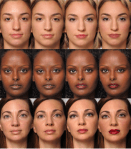
Models without makeup, with natural, professional, “glamorous” makeup

However, when participants looked at the faces for a longer time, ratings for competence and attractiveness remained the same, but ratings for likeability and trustworthiness changed based on specific makeup looks.

Etcoff’s team concluded that cosmetics could influence automatic judgments because attractiveness “rivets attention and impels actions that help ensure the survival of our genes.”

Most people recognize the bias in assuming that attractive people are competent and that unattractive people are not, yet impression management remains crucial in the workplace and in the political arena.

-*Where have you seen appearance exert an influence in workplace credibility, decision-making and role advancement?

Related Posts

©Kathryn Welds


Women Who Express Anger Seen as Less Influential

Jessica Salerno

Jessica Salerno

Women who expressed anger were less likely to influence their peersin computer-mediated mock jury proceedings, found Arizona State University’s Jessica Salerno and Liana Peter-Hagene of University of Illinois. 

Liana Peter-Hagene

Liana Peter-Hagene

More than 200 U.S. jury-eligible volunteers reviewed opening arguments and closing statements, eyewitness testimonies, crime scene photographs, and an image of the alleged weapon in a homicide.

Participants made individual verdict choices, then exchanged instant messages by computer, with “peers” who were said to be “deliberating their verdict decisions.”

In fact, “peer” messages were scripted, with four of the fictional jurors agreeing with the participant’s verdict, and one disagreeing.
In different test conditions, the dissenting participant had 1) a male user name or 2) a female user name or 3) a gender-neutral name.

Victoria Brescoll

Victoria Brescoll

Half of the dissenting messages contained no emotion, anger, or fear, and had no influence on participants’ opinions.

However, when a single “male dissenter” sent angry messages, characterized by “shouting” in all capital letters, participants’ confidence in their verdict decision significantly dropped.
This confidence-eroding effect of one “male dissenter” held even when the majority of “jurors” shared the same opinion.

A single female dissenter who expressed disagreement in an angry message did not undermine the other juror’s confidence in their decisions.

This finding suggests that a single male dissenter’s angry communication causes people to doubt their opinions, and that “female” anger was less influential than “male” anger.

In contrast, volunteers became more confident in their initial verdict decisions when their vote was echoed by the majority of other participants.

Eric Luis Uhlmann

Eric Luis Uhlmann

Male and female evaluators assigned lower status to female CEOs and female trainees when they expressed anger, compared with angry male professionals in research by Yale University’s Victoria Brescoll and Eric Luis Uhlmann, now of INSEAD.

Kristi Lewis Tyran

Kristi Lewis Tyran

Men who expressed anger in a professional context were conferred higher status than men who expressed sadness.

Likewise, women who expressed anger and sadness were rated less effective than women who shared no emotion, according to Kristi Lewis Tyran of Western Washington University.

Evaluators judged men’s angry reactions more generously, attributing these emotional expressions to external circumstances, such as experiencing pressure and demands from others.

These differing judgments of emotional expression suggest that women’s anger is more harshly evaluated because anger expressions deviate from women’s expected societal, gender, and cultural norms.

-*What impacts and consequences have you observed for women and men who express anger at work?

RELATED POSTS:

©Kathryn Welds


Costs of Workplace Incivility

Christine Pearson

A single incident of incivility in the workplace can result in significant operational costs, reported Christine Pearson of Thunderbird School of Global Management and Christine Porath of Georgetown University.

Additional consequences of workplace incivility include:

  • Decreased work effort due to disengagement,

    Christine Porath

    Christine Porath

  • Less time at work to reduce contact with offensive co-workers or managers,
  • Decreased work productivity due to ruminating about incivility incidents,
  • Less commitment to the organization,
  • Attrition.

Pier Massimo Forni

P.M. Forni

Other organizational symptoms include:

  • Increased customer complaints,
  • Accentuated cultural and communications barriers,
  • Reduced confidence in leadership,
  • Less adoption of changed organizational processes,
  • Reduced willingness to accept additional responsibility and make discretionary work efforts.

Workplace incivility behaviours were described as “rude and discourteous, displaying a lack of regard for others,” noted Pearson and Lynne Andersson, then of St. Joseph’s University.
“Uncivil” behaviors were enumerated in The Baltimore Workplace Civility Study by Johns Hopkins’ P.M. Forni and Daniel L. Buccino with David Stevens and Treva Stack of University of Baltimore:

  • Refusing to collaborate on a team project,
  • Shifting blame for an error to a co-worker,
  • Reading another’s mail,
  • Neglecting to say “please,” “thank you”,
  • Taking a co-worker’s food from the office refrigerator without asking.

Respondents classified more extreme unacceptable behaviors:

  • Pushing a co-worker during an argument,
  • Yelling at a co-worker,
  • Firing a subordinate during a disagreement,
  • Criticising a subordinate in public,
  • Using foul language in the workplace.

Gary Namie

Workplace bullying was included in Gary Namie’s Campaign Against Workplace Bullying.
He defined bullying as “the deliberate repeated, hurtful verbal mistreatment of a person (target) by a cruel perpetrator (bully).

His survey of more than 1300 respondents found that:

  • More than one-third of respondents observed bullying in the previous two years,
  • More than 80% of perpetrators were workplace supervisors,
  • Women bullied as frequently as men,
  • Women were targets of bullying 75% of the time,
  • Few bullies were punished, transferred, or terminated from jobs.

Costs of health-related symptoms experienced by bullying targets included:

  • Depression,
  • Sleep loss, anxiety, inability to concentrate, which reduced work productivity,
  • Post-Traumatic Stress Disorder (PTSD) among 31% of women and 21% of men,
  • Frequent rumination about past bullying, leading to inattention, poor concentration, and reduced productivity.

Choosing CivilityWidespread prevalence of workplace incivility was also reported by Forni, who suggested ways to improve workplace interactions and inclusion:

  • Assume that others have positive intentions,
  • Pay attention, listen,
  • Include all co-workers in workplace activities,
  • Acknowledge others,
  • Give praise when warranted,
  • Respect others’ opinions, time, space, indirect refusals,
  • Avoid asking personal questions,
  • Be selective in asking for favors,
  • Apologize when warranted,
  • Provide constructive suggestions for improvement instead of complaints,
  • Maintain personal grooming, health, and work environment,
  • Accept responsibility for undesired outcomes, if deserved.

More than 95% of respondents in The Baltimore Workplace Civility Study suggested, “Keep stress and fatigue at manageable levels,” a challenging goal for leaders who shape workplace cultures.

Organizational change recommendations include:

  • Institute a grievance process to investigate and address complaints of incivility,
  • Select prospective employees with effective interpersonal skills,
  • Provide a clearly-written policy on interpersonal conduct,
  • Adopt flexibility in scheduling, assignments, and work-life issues.

-*How do you handle workplace incivility when you observe or experience it?

©Kathryn Welds