Category Archives: Neuroscience

Neuroscience

Practice Outweighs Talent in Developing Expert Performance

Daniel Coyle

Daniel Coyle

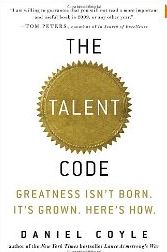
Journalist Daniel Coyle consolidated neuroscience research with stories of expert performers in The Talent Code: Greatness Isn’t Born. It’s Grown. Here’s How .
He distilled three principles that enable performance development across a variety of skills and fields: The Talent Code

“Deep” Practice, which includes daily repetition for up to several hours, observation, and corrective feedback by an expert to develop the myelin of “muscle memory” and increase neural signal strength, speed and accuracy.
This practice must be characterized by focused attention to mimic expert performance, reduce errors, and willingness to practice at increasingly more challenging levels.

Ignition, or commitment based on “unconscious desires” and “triggered by primal cues”

Master Coaching, in which to expert teacher encourages “ignition” and “deep” practice with:

1. Task-specific knowledge explained with vivid examples and meaningful metaphors
2. Perceptive tailoring to each student’s skills and needs
3. “The GPS Reflex”, or providing timely, specific guidance
4. “Theatrical Honesty,” or ability to empathically connect with students

K Anders Ericcson

K Anders Ericsson

Related Posts review foundational research by K. Anders Ericsson, who suggested that expert performance requires “10000 hours of practice.”

Geoff Colvin

Geoff Colvin

Talent is Overrated

Talent is Overrated

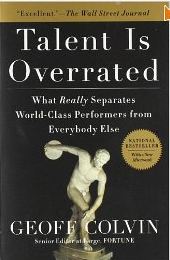
Like Coyle, Geoff Colvin argues that Talent is Overrated and can be eclipsed by systematic practice with corrective coaching.

Paul Herr’s Primal Management: Unraveling the Secrets of Human Nature to Drive High Performance also argues that motivation in the workplace, as in Coyle’s broader discussion of performance and motivation, is based on the “evolutionary psychology” of “tribal survival” and includes:

Paul Herr

Paul Herr

  • Self-Protection, the foundation of Maslow’s hierarch of higher-order needs

    Abraham Maslow

    Abraham Maslow

  • Cooperation, collaborative work in groups fulfills people’s social desires to belong to a group working toward a shared goal
  • Skill deployment, opportunity to develop skills and experience satisfaction with progressive improvement
  • Competency, opportunity to demonstrate skills and receive social recognition for these improvements
  • Innovation, based on people’s curiosity and desire to make in processes, systems, ideas, Primal Managementevents

-*How do you develop your talents?

-*Where do you find expert coaching?

-*How do you persist in “Deep Practice” even when it’s “no fun”?

Related Posts

Twitter  @kathrynwelds
Google+
Blog
: – Kathryn Welds | Curated Research and Commentary
LinkedIn Open Group Psychology in Human Resources (Organisational Psychology)
Facebook Notes

©Kathryn Welds

Chronotypes: Sleep “Fingerprints,” “Social Jet Lag,” and Health

-*Are you out of sync with socially-defined time at work and home?

Most people require about one hour of sleep for every two hours awake, and each hour of missed sleep results in deeper sleep until the “sleep debt” is resolved.
Health and safety problems of varying severity ensue when the sleep debt is unresolved.
Till Roenneberg

Till Roenneberg

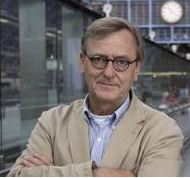
Till Roenneberg of Ludwig-Maximilians-University Munich investigated these health consequences by studying variances individual sleep “chronotypes,” or the amount of elapsed time until a person reaches midsleep,”  the midpoint between average bedtime when not determined by schedule requirements and waking time.

His Internal Time: Chronotypes, Social Jet Lag, and Why You’re So Tired reported one less-known health consequence of discrepant chronotypes – greater likelihood of smoking. Internal Time
Roenneberg found that greater than 60 percent of those with more than five hours social jet lag are smokers and they have greater difficulty changing this habit than those with less social jet lag.

David Randall

David Randall

Journalist David K. Randall experienced an episode of sleepwalking and documented his quest to learn more about sleep in his Dreamland: Adventures in the Strange Science of Sleep.
In it, he points out that sleep is crucial for muscle regeneration and long-term memory formation, and conversely, sleep loss interferes with these critical functions.

Other negative consequences of sleep disruption are even more dire.Dreamland
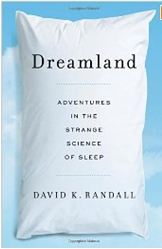
He reported that depression rates are forty times higher for people with insomnia than those without sleep problems, and that sleep apnea causes 38,000 fatal heart attacks and strokes in the United States each year.

The difference between the personal chronotype and socially-defined time can be considered “social jet lag” that can lead to chronic exhaustion.
Roenneberg calculates that more than 40 percent of the Central European population experiences more than two hours of social jet lag, which can lead to increased errors at work and in operating equipment like automobiles. These consequences can be critical when the work involves public safety in transportation and health care settings.

Adolescents generally experience considerable social jet lag because their average midsleep point is later than that of many adults, and is incompatible with typical school start times.
This is because typical adolescent brains release the hormone melatonin around eleven o’clock at night until after the seasonal sunrise.
In contrast, adults, who set school schedules, have minimal levels of melatonin in their bodies when they wake in the morning, so they are more likely to feel and act alert in the early morning.

Sleep, then, has both physiological and cultural determinants, as Roenneberg showed in his analysis of agrarian areas which may not have such technologies as electric lighting, Day Light Saving Time, or work-related reasons for early rising.
These people typically go to sleep earlier and awake earlier than urban dwellers, and have significantly different midsleep points than people in cities.
A. Roger Ekirch

A. Roger Ekirch

Historian A. Roger Ekirch of Virginia Polytechnic Institute and State University argues in At Day’s Close: Night in Times Past, that before the Industrial Revolution, the typical sleep pattern was “segmented sleep” (also known as divided sleep, bimodal sleep pattern, or interrupted sleep).

People slept for two or more periods (called “first sleep” or “dead sleep” and “second sleep” or “morning sleep”) in medieval England, punctuated by a period of wakefulness.
Similar terms are found in terms French and Italian languages and among the Tiv of Nigeria.

At Days CloseHe argues that this is the natural pattern of human sleep, and is important in regulating stress.
If this is accurate, it would change western medical diagnosis of sleep disorders and might change expectations of “normal” sleep patterns for optimal health and productivity.

Ekirch’s review of historical records suggests that agrarian people were exhausted after field labor, so they would eat and go to sleep quickly after stopping work.
They would later awaken later to pray, reflect, have sex, perform manual labor, interpret dreams, visit neighbors, or engage in petty crime.
Scholars, in contrast, used this time for loftier pursuits –  to write without interruption.

-*How do you manage segmented sleep and social jet lag?

Related post:
Kept Up at Night by Intrusive Thoughts of Work: Elusive Sleep

Twitter:  @kathrynwelds
Google+
Blog: – Kathryn Welds | Curated Research and Commentary
LinkedIn Open Group The Executive Coach
Facebook Notes:

©Kathryn Welds

Useful Fiction: Optimism Bias of Positive Illusions

Tali Sharot

Tali Sharot

Tali Sharot of University College London investigated people’s tendency toward unsubstantiated optimism after she observed this bias in her neuropsychological experiments on memory processes of envisioning future events and consequences.

Shelley Taylor

Shelley Taylor

She, like Shelley Taylor of UCLA decades before, argued that this bias was an evolutionary adaptation that enabled people to survive under difficult conditions.  Sharot added to Taylor’s work by suggesting that a majority of people demonstrate the optimism bias by a margin of 5:3.3.

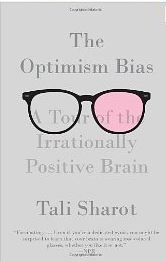
The Optimism BiasSharot’s The Optimism Bias: A Tour of the Irrationally Positive Brain
compares optimism bias to other perceptual illusions, such as sometimes-fatal spatial disorientation among airplane pilots and other frequently-cited optical illusions like “Young Lady or Old Woman”, “Vase or Two Profiles”, and Thatcher illusion.

An example of optimism bias is the well-documented “superiority illusion”, that most people rate their skills, knowledge, and tendencies as above average in a variety of dimensions.

Ellen Langer

Ellen Langer

Another example was identified in 1975 by Ellen Langer of Harvard, who suggested that a pervasive “illusion of control” causes most people to overestimate their ability to control events, even those over which they have no influence.
This cognitive bias has been suggested as prevalent among “problem gamblers” and those who believe in paranormal phenomena.

Elizabeth Phelps

Elizabeth Phelps

Sharot and Elizabeth Phelps of New York University extended Taylor’s early work with neuropsychological research, and reported that the brain’s frontal cortex communication with the posterior hippocampus enables people to envision future possibilities and events.

They observed amygdala and the rostral anterior cingulate cortex activity when people demonstrate the optimism bias and noted that malfunctions in these brain areas are associated with a bias toward pessimism and related depression.

Lauren Alloy

Lauren Alloy

These findings were foreshadowed by Lauren Alloy of Temple University and Lyn Abramson of University of Wisconsin in their 1979 study, which found that people with depression are better able to predict future events accurately, whereas people not burdened with depression have inaccurately optimistic predictions.

Lyn Abramson

Lyn Abramson

“Depressive realism,” just as optimism bias can actually influence or alter future outcomes, as demonstrated in Robert Rosenthal’s classic Pygmalion in the Classroom study and “self-fulfilling prophecy,” leading to the idea that “perception is reality.”

Robert Rosenthal

Robert Rosenthal

Though inaccurate, optimism bias has positive effects. It has been observed to:

  • Reduce perceived stress
  • Improve physical health
  • Increase life span
  • Increase likelihood of people following recommended health practices like exercising, following low-fat diets, taking vitamins.

Sharot suggested that increasing awareness of optimism bias can help people enjoy the benefits of this positive illusion while watching for pitfalls of unrealistic optimism.

-*How do you capitalize on the optimism bias and mitigate its drawbacks?

Related Post:
Oxytocin Receptor Gene’s Link to Optimism, Self-Esteem, Coping with Stress

Sharot’s TED Talk

©Kathryn Welds

“Productive Pause”, Intuition for Better Decisions

Everyday wisdom offers familiar advice to curtail impulsivity through slowing down and reflecting:

  • “Go slow to go fast”
  • “Sleep on it”
  • “Wait before sending an emotional email”
  • “Count to 10, think again”
Frank Partnoy

Frank Partnoy

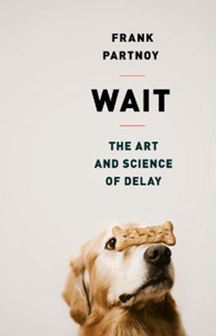
Former investment banker and lawyer Frank Partnoy’s Wait: The Art and Science of Delay provides empirical evidence on the value of delay to increase the quality of decisions and performance across investment, sports, comedy, and other disciplines.Wait

Creativity experts have demonstrated the importance of an “incubation period” in developing innovative solutions, and Partnoy suggests that similar principles provide and advantage: gathering maximum information in uncertain situations, by executing decisions and performance close to the last opportunity.

University of San Diego’s Partnoy recommends a three step approach to decision-making:

1) Determine the maximum time available to gather information and take the decision
2) Consider, reflect, “incubate” on the information as long as possible
3) Act quickly at the last possible moment

Malcolm Gladwell

Malcolm Gladwell

His approach could be summarized by referring to Malcolm Gladwell’s best-seller, Blink: The Power of Thinking Without Thinking : “Don’t just blink but think.”

Nalini Ambady

Nalini Ambady

Gladwell argues that people with expert experience and insight are often skilled at using ‘adaptive unconscious’ intuition to “thin-slice” subtle cues to filter relevant information from “noise,” a concept based on Nalini Ambady and Robert Rosenthal’s research at Harvard.

Justin Albrechtsen

Justin Albrechtsen

Christian Meissner

Christian Meissner

Research by Justin Albrechtsen, Christian Meissner, and Kyle Susa  of University of Texas at El Paso demonstrated “thin-slicing” when they found that intuitive processing can lead to more accurate judgments of deception when compared with deliberative processing.

Kyle Susa

Kyle Susa

Gladwell and these researchers acknowledge that non-experts, and even experts, can be make erroneous decisions due to bias and prejudice that comes from automatic thinking and habitual cognitive heuristics like the halo effect.

Gerard Hodgkinson

Gerard Hodgkinson

Gerard Hodgkinson of Leeds University found that biased intuitive judgment may be mitigated by “devil’s advocacy” and applying analytical tools like multi-attribute decision analysis and root cause analysis.

He suggests that informed intuition or ‘intelligent-unconscious’ results from subconscious information storage, processing and retrieval, and has conducted several empirical studies to evaluate its mechanisms applied to developing business strategies.

Intuitive judgment was positively correlated with quality and speed of decisions, organizational financial and non-financial performance in at least five studies.

Hodgkinson’s team summarized recent advances in neuroscience, including functional magnetic resonance imaging (fMRI) studies to explain complementary intuitive and analytical approaches to decision making  instead of the overly-simplified notion of left brain vs right brain processing  strengths.

He synthesized intuition attributes:

  • Instantaneous insight after incubation period
  • Subjective judgments
  • Based on experience, tacit knowledge, “knowing without knowing
  • Arise through rapid, non-conscious holistic associations
  • Affectively-charged: “feels right”, experienced as ‘‘inklings’’ or ‘‘glimmerings’’
  • Lacking verbalization or conscious awareness of problem solving.

Cognitive neuroscientists have differentiated intuition from instinct and insight using functional magnetic resonance imaging (fMRI) techniques.

Instinct refers to hardwired, autonomous reflex actions, whereas insight involves recognizing and articulating a problem’s structure, and may follow from intuition.

Hodgkinson’s research suggests that intuition can be enhanced by increasing:

  • Expertise (“prepared mind” or ‘‘deep smarts’’)
  • Self-awareness (feeling and cognitive style)
  • Reflection
Akio Morita

Akio Morita

His team’s research supports an assertion by Akio Morita, co-founder of Sony and driving force behind its successful Sony Walkman, that ‘‘creativity requires something more than the processing of information. It requires human thought, spontaneous intuition and a lot of courage.’’

-*How have you used pauses or intuition to strengthen decision-making and advance business innovation?

Related Posts

©Kathryn Welds

How to Change Habits

William James

William James

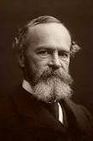
William James, father of American psychology and brother of novelist Henry James wrote in his 1890 The Principles of Psychology, “Habit is thus the enormous flywheel of society, its most precious conservative agent. It alone is what keeps us all within the bounds of ordinance, and saves the children of fortune from the envious uprisings of the poor.”

Though James seemed to look favorably upon the conservative element of habit, the drawbacks of thoughtless habitual actions are clear when people consume more calories than required to complete daily activities, purchase unneeded items, react with predictable emotions in contentious situations, and keep disadvantaged groups without advantages enjoyed by powerful groups.

Charles Duhigg

Charles Duhigg

Charles Duhigg’s bestseller, The Power of Habit: Why We Do What We Do in Life and Business, argues that habits are a significant part of most people’s daily activities – about 40% – and that even brain injured people can form habits.

The Power of HabitHe outlines the A(ntecedant) – B(ehavior) – C(onsequence) model, initiated by a cue or a trigger that signals automatic or habitual behavior.
In a novel situation, the person shifts to a problem-solving mode to develop an appropriate response — which may require creative thinking .

However, in a more typical situation, the person executes the habitual physical, mental, or emotional behavior or “routine,” which is then rewarded — often with a reduction in anxiety or discomfort.

Duhigg shows how dysfunctional habits can be analyzed for the cue, routine, and reward, then changed by modifying the antecedent, behavior or reward.

Albert Ellis

Albert Ellis

The A-B-C approach was popularized by Albert Ellis in his Rational-Emotive Behavior Therapy (RET), and outlined in his more than 50 books including Rational Emotive Behavior Therapy  Rational Emotive Behavior Therapy

Duhigg provides examples from marketing campaigns for well-known consumer products in the U.S., including Pepsodent toothpaste and Febreze air freshener.

Timothy Wilson

Timothy Wilson

Like Duhigg’s model’s reference to earlier behavior modification approaches, Timothy Wilson of University of Virginia’s Redirect: The Surprising New Science of Psychological Change, adapts principles of Aaron T. Beck’s Cognitive Behavioral Therapy (CBT) to change habitual interpretations, attributions, narratives and personal stories that lead to social problems including alcohol and drug abuse, teen violence and pregnancies, and social prejudice.

Aaron Beck

Aaron Beck

Wilson extracts and renames three empirically-validated behavioral techniques:

  • Story editing, to craft a more optimistic, hopeful story or interpretation about a situation, often using writing exercises
  • Story prompting, in which another person provides alternate, more optimistic interpretations based on data or “social proof” from  experiences in a similar situation
  • Cognitive Behavior TherapyDo good, be good, by “acting as if” the new behavior is a well-established habit, often through serving others in volunteer work.

RedirectRSA talk

Another look at habitual, even unconscious thinking in daily life is featured in a related post, Pattern Recognition in Entrepreneurship.

Douglas Van Praet

Douglas Van Praet

This discussion shares Douglas Van Praet’s guidelines to capitalize on unconscious cognitive processing and automatic buying behavior in Unconscious Branding: How Neuroscience Can Empower (and Inspire) Marketing 

BJ Fogg

BJ Fogg

An earlier post, Hacking Human Behavior: “Tiny Habits” Start, Maintain Changes showcased BJ Fogg’s work on “tiny habits” as hooks to behavior change.
His approach draws on many of the same behavior modification principles featured in Duhigg’s and Wilson’s recommendations to analyze habitual cues, routines, and rewards.

-*How do you analyze and modify habits?

Related Posts:

Memorable Business Stories: Ideas and Numbers

Chip Heath-Dan Heath

Chip Heath-Dan Heath

Chip Heath of Stanford and Dan Heath, Senior Fellow at Duke University’s CASE center, distill principles that make messages memorable in  Made to Stick: Why Some Ideas Survive and Others Die

Citing urban legends and advertisements as examples of tenaciously “sticky” messages, they argue that unforgettable ideas can be recalled with an acronym that means “success” in French:   Made to Stick

  • Simplicity
  • Unexpectedness
  • Concreteness, with many details to act as “hooks” to “stick” to  memory’s many “loops” (Velcro theory of memory)
  • Credibility
  • Emotion-laden stories.
Robert Cialdini

Robert Cialdini

The Heaths’ principle of credibility draws on the three elements of persuasive messages outlined by Robert Cialdini in his best-selling Influence: The Psychology of PersuasionInfluence

Credibility is enhanced by liking, authority, and social proof in Cialdini’s model:

  • Liking – Appealing public figures or personal friends endorses
  • Authority – Well-respected role model or respected authority provides testimonial
  • Social proof – Others like me endorse it, and others provide justification: “because…”, though the actual reason is immaterial
  • Reciprocity – “I know you’d do the same for me,” recommended by Guy Kawasaki to convey that “You owe me…”
  • Scarcity – “While supplies last…”, “Limited time offer!”, “Act now, don’t wait!”
  • Commitment, consistency – Draws on people’s desire to appear consistent, and even trustworthy by following through on commitments: “I do what I say I will do…”
  • Contrast principle – Sales people sell the most expensive item first so related items seem inexpensive by comparison: Real estate transaction fees may appear minimal in contrast to a large investment in a house.

Both memorable messages and persuasive messages take advantage of habitual reactions to typical situations.

These automated and sometimes unconscious processes are a heuristic to help people to deal rapidly and efficiently with routine activities and tasks.
However, “auto-pilot” reactions  may lead to being persuaded to act in ways that might not be helpful, such as excessive eating, drinking, spending, or engaging in risky activities.

Jonah Berger

Jonah Berger

ContagiousWharton’s Jonah Berger formulated an acronyn, STEPPS, to describe narrative elements that increase the likelihood that a story, idea, or product will spread like a contagious virus: 

  • Social Currency – Passing along the information makes the sender appear “good” – knowledgeable, helpful or other   
  • Triggers – The message evokes a familiar, frequent situation
  • Emotion – The story evokes emotion, so will strengthen the emotional between the sender and receiver   
  • Public – Similar to Social Currency, passing the message reflects favorably on the sender
  • Practical Value – The sender provides actionable value in sharing the message
  • Stories –  Memorable, surprising elements increase the likelihood that others will convey the message
Randall Bolten

Randall Bolten

Finance executive Randall Bolten draws on similar observations about human cognitive and perceptual processing to recommend ways to tell a memorable and motivating quantitative story.

His Painting with Numbers: Presenting Financials and Other Numbers So People Will Understand You, discusses “quantation” as another type of business storytelling that affects  “personal brand image.”Painting with Numbers

Edward Tufte

Edward Tufte

Even more practical than Edward Tufte’s breathtaking examples of effective “information architecture” in The Visual Display of Quantitative Information and Envisioning Information, Bolten provides coaching on designing memorable, persuasive presentations and “pitches” featuring quantitative information as “proof points.”

His book demonstrates the Heaths’ principles of simplicity, concreteness, and credibility while drawing on Cialdini’s proven approaches of authority, commitment, consistency, and contrast. The Visual Display of Quantitative InformationEnvisioning Information

-*What principles do you use to tell stories that motivate others to act as you hope?

Related Posts:

Twitter:   @kathrynwelds
Google+
Blog: – Kathryn Welds | Curated Research and Commentary
LinkedIn Open Group Mindful leadership
Facebook Notes

©Kathryn Welds

Companion Animals in the Workplace

Technology companies like Autodesk, Google, and Amazon made news when they permitted employees to bring companion dogs to work.Dog at work

This policy was viewed as an employee benefit or “perk”, but a recent study published in International Journal of Workplace Health Management indicates that bringing a companion dog to work can lower stress levels, increase productivity and make work more satisfying.

Centers for Disease Control and Prevention

In fact, the U.S. Centers for Disease Control and National Institutes of Health conclude that companion animals can lower individuals’ cholesterol, trigylcerides, blood pressure, heart rates,  weight, stress, risk of heart attack, social isolation, inactivity, and overall healthcare costs, all of which benefit organization’s operational costs.

National Institute of Health

Randolph Barker and collaborators from Virginia Commonwealth University examined a service-manufacturing-retail company in North Carolina with 550 employees and between 20 – 30 companion dogs.

Randolph Barker

Randolph Barker

Researchers measured 76 employees’ stress levels via surveys of attitudes toward animals in general and in the workplace.
Equal numbers of employees perceived dogs’ presence as increasing or decreasing work productivity.

Employees’ perceived stress levels, measured by cortisol in saliva samples, were significantly lower and job satisfaction was higher on days when dogs were present at work.

Companion dogs at work appeared to boost interpersonal communication, organizational engagement, and morale when employees who did not own dogs asking dog owners to interact with dogs or take them for a walk.

Considerable research around the globe suggests that the stress-reducing effect of companion dogs is tied to an increase in oxytocin when humans and dogs interact.

Kerstin Uvnas-Moberg

Kerstin Uvnas-Moberg

Kerstin Uvnas-Moberg of Uppsala University and author of The Oxytocin Factor: Tapping the Hormone of Calm, Love, And Healing, reported that women and their dogs experienced similar increases in oxytocin levels after ten minutes of friendly contact, and women’s oxytocin response was significantly correlated to the quality of the bond they reported in a survey taken prior to the interacting with their dogs.

The Oxytocin Factor

Likewise, JS Odendaal and RS Meintjes, then of Pretoria Technikon, showed that friendly contact between dogs and humans release oxytocin in both and Miho Nagasawa‘s team  at Azabu University found that amount of oxytocin among dog owners increased with the amount of time they shared eye contact with their dogs.

Suzanne C. Miller’s research group showed that oxytocin increased among women but not men after greeting their companion dog when returning home from work.

Christopher Honts

Christopher Honts

Christopher Honts and Matthew Christensen of Central Michigan University extended findings on stress reduction to evaluate trust, team cohesion and intimacy among teams collaborating on tasks when a well-trained, hypoallergenic dog was present.
During a collaborative creative thinking exercise, participants rated teammates higher on trust and teamwork than those without a dog.

Teams with a dog during the prisoner’s dilemma measure of trust and collaboration were 30% less likely to betray teammates accused of being co-conspirators in a hypothetical crime scenario.

Hiroshi Nittono

Hiroshi Nittono

Hiroshi Nittono and team at Hiroshima University demonstrated improved performance on problem-solving, attention, perceptual discrimination, and motor performance tasks after volunteers viewing images of baby animals compare with adult animals or food, reported in Public Library of Science .

Despite evidence that companion animals in the workplace reduce stress, increase perceptual and problem-solving capabilities and health indicators, barriers include:

  • Cultural objections to dogs and other animals
  • Allergies to companion animals
  • Animals without proper obedience and social skills training for the workplace

-*What do you think about potential financial and morale benefits of companions animals in the workplace?

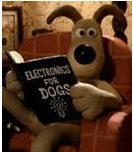
Gromit

Gromit

<-Will this

Miss Sarah's Guide

Miss Fido Manners

be replaced with this? <—————>

Related Posts

Twitter: @kathrynwelds
Google+
LinkedIn Open Group Psychology in Human Resources (Organisational Psychology)
Facebook Notes
Blog: – Kathryn Welds | Curated Research and Commentary

©Kathryn Welds

How Can Dance Inform Business Thinking?

Peter Lovatt

Peter Lovatt founded the Dance Psychology Lab at the University of Hertfordshire, which combines his performance experience as a professional dancer with his training as a research psychologist.

In several TED talks, he marvels at his career trajectory because he “was rubbish at school,” and was relegated to Special Education classes, probably due to his undiagnosed ADHD.

His career demonstrates an innovative synthesis of disciplines with his current research agenda investigating the impact of dance on problem solving using divergent thinking and convergent thinking strategies.

Peter Lovatt at TED

Lovatt’s experiments demonstrated that volunteers who engaged in improvised dance movements solved divergent thinking problems more quickly than when they performed more structured dance maneuvers, or no movement at all.

Similarly, his work showed these volunteers increased their speed of solving convergent thinking problems after they engaged in choreographed dance moves.

These findings may not imply that innovation teams should engage in structured and unstructured movements at work, but it does support the positive impact of dance movement on neural processing speed and problem solving.

Lovatt extended this work to patients with Parkinson’s disease, known to disrupt divergent thinking processes, to validate his findings with normal volunteers.
He demonstrated that Parkinson’s disease patients improved the divergent thinking problem solving after they engaged in improvised dance sequences, and hypothesized that these patients develop new neural pathways to “work around” dopamine-depleted blockages.

Peter Lovatt leading dance experiment

Lovatt’s group found increases in self-esteem among participants in dance styles that:

  • Include more improvisational elements (“high degree of tolerance for not getting it right”),
  • Are gender or culturally neutral
  • Raise the heart rate
  • Are repetitive
  • Encourage looser fitting clothes (in contrast to ballet)
  • Are non-competitive

Related Post on impact of dance:
Oxytocin Increases Empathic Work Relationships, Workplace Trust, Generosity 

Twyla Tharp

MacArthur Fellowship and Tony Award-winning choreographer Twyla Tharp discussed innovation and collaboration through the lens of dance in two books with lessons applicable to business.

In The Creative Habit: Learn It and Use It for Life she asserts that creative expression requires perseverance, practice, hard work, “showing up,” and cultivating systematic habits to act upon innovative initiative.

This echoes the action-orientation advocated by Malcolm Gladwell in his observation of 10,000 hours of practice to develop virtuoso performance and by sports psychologist K. Anders Ericsson, summarized in these related posts:

Tharp’s The Collaborative Habit: Life Lessons for Working Together discusses both how collaboration can change the participants, and practical approaches to collaborative creation – which she acknowledges has not been completely smooth in some of her work with luminaries including Richard Avedon, Mikhail Baryshnikov, Bob Dylan, Milos Forman,  Norma Kamali, Frank Sinatra.
Two related posts on Collaboration are:

Dance provides a fresh perspective and metaphor for business challenges including problem solving, innovation, and collaboration.

-*How do you react to Lovatt’s and Tharp’s application of movement in problem solving, collaboration and innovation?

First Emotionally Intelligent, Mindful Presidents: Barack Obama, Peter Salovey?

Peter Salovey

Peter Salovey, newly appointed President-Elect of Yale University, introduced the term “Emotional Intelligence” in 1989 as “the ability to monitor one’s own and others’ feelings and emotions, to discriminate among them, and to use this information to guide one’s thinking and actions”.

Yale’s new President, is considered a pioneer and originator of research into four elements of EQ used to think and behave adaptively:

  • Accurately perceiving, identifying, pinpointing emotions in self, others
  • Expressing, using emotions as information to decide,  plan, achieve, communicate, create, think
  • Understanding, predicting own and others’ emotions, temporary moods
  • Self-regulating, transforming emotions.
  • Peter Salovey

    Salovey is widely regarded as one who embodies these characteristics and creates community  through his bluegrass band performances with Professors of Bluegrass, active participation in student life (as a Super Mario Brother at Halloween 2009, accompanied by the Yale Symphony orchestra during his tenure as Provost), and award-winning teaching and research.

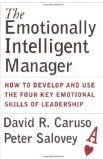
He applied EQ concepts to business with David Caruso in The Emotionally Intelligent Manager: How to Develop and Use the Four Key Emotional Skills of Leadership

Emotional Intelligence can be intentionally increased in work and personal settings by increasing awareness of one’s own and others’ emotions.
One way to achieve this goal is through “Mindfulness,” or non-evaluatively, non-judgmentally attending to physical, cognitive, and emotional experiences arising in the present moment.

Jon Kabat-Zinn

Jon Kabat-Zinn introduced this practice in 1979 and founded Stress Reduction Clinic and the Center for Mindfulness in Medicine, Health Care, and Society at the University of Massachusetts Medical School.
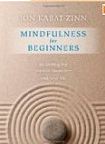
His programs and books, including Mindfulness for Beginners: Reclaiming the Present Moment–and Your Life  help develop skill in being “present” through:

  • Observing – expanded awareness with detachment
  • Describing
  • Participating fully
  • Focused, narrowed attention

He discussed the possible impact of these practices on business leadership and government, building on research findings that mindfulness practice can lower aggressive feelings and increase peaceful sentiments.

Kabat-Zinn provided an example in recently-re-elected U.S. President Barack Obama is the first mindful President, “…since Lincoln, or maybe ever.”

The Dalai Lama, Barack Obama

He added that Obama “… is really present, he has a lot of different qualities that seem to indicate he is emotionally balanced, not driven by ego concerns, that he knows how to balance family life and the impossible job that he has.
There is something about him that’s measured, very peaceful, he listens very, very deeply.”

Many observers will evaluate whether Salovey can put into practice Emotionally Intelligent leadership at Yale, and whether Barack Obama can demonstrate Mindfulness in peaceful international relations and domestic issue-resolution during his final term in office.

-*Where do you observe emotional intelligence and mindfulness among top leaders?

Twitter:  @kathrynwelds
Google+
LinkedIn Open Group Mindful Leadership
Facebook Notes:

Blog: – Kathryn Welds | Curated Research and Commentary

©Kathryn Welds

Action Beats Visualization to Improve Performance

Richard Wiseman

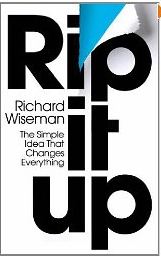
Richard Wiseman of University of Hertfordshire, and a magician before becoming a psychologist, debunked the notion that visualizing desired outcomes achieves results more effectively than direct action in Rip It Up: The radically new approach to changing your life: The Simple Idea That Changes Everything

Citing research by Lien Pham at the University of California, who asked student volunteers to visualize earning a high grade in an upcoming exam or to visualize adopting better study habits.
Pham reported that students who visualized the outcome of a high grade actually received poorer outcomes that those who visualized a better process to achieve a higher grade.

Similarly, Gabriele Oettingen of New York University asked students to record the duration of fantasies about leaving college and starting a “dream job”.
She found that students who spent more time imagining these positive outcomes, but had lower expectations of actually achieving these goals received fewer job offers and lower starting salaries.

Wiseman uses these findings to argue that action rather than imagined rehearsal, fantasy or visualization leads to successful performance outcomes.

Napoleon Bonaparte

This principle was implied by Napoleon Bonaparte more than two centuries ago as he anticipated battle: On s’engage et puis on voit, translated as “You commit yourself; and then, you see”

In the 1880s, William James, brother of novelist Henry James and considered “The Father of American Psychology,” asserted that action precedes emotional experience: “You do not run from a bear because you are afraid of it, but rather become afraid of the bear because you run from it.”

William James

This notion contrasts popular concepts, which led to numerous books encouraging people to change their thinking to change their behaviors and feelings.

Since the 1970s, research has focused on whether changing behavior can change feelings.
To test this relationship, James Laird of Clark University asked volunteers to create an angry expression by drawing down their eyebrows and clenching their teeth and to create a happy expression by drawing back the corners of the mouth.

James Laird

Participants reported feeling significantly happier when they forced their faces into smiles, and much angrier when they were clenching their teeth.
“Acting ‘as-if’ and “faking it until you make it” are examples of initiating behaviors to drive emotional and attitudinal change.

Wiseman offers ten behavioral modifications that can lead to feeling better and improved performance.

INCREASE:

  • Happiness: Smile as widely as possible, extend eyebrow muscles slightly upward, and hold for 20 seconds.
  • Willpower: Tense muscles –  Make a fist, contract biceps or press thumb and first finger together
  • Health Eating: Eat with non-dominant hand to increase “mindful” awareness of eating, based on research by Neal, Wood, Wu & Kurlander
  • Persistence: Sit up straight, cross your arms, from research by Ron Friedman of University of Rochester.
    He found that volunteers who sat up straight and crossed arms persisted in working to solve challenging problems nearly twice as long as volunteers who didn’t assume this posture
  • Confidence: Adopt expanded chest posture
    Sitting down, lean back, look up, and interlock your hands behind your head.
    Standing up, place your feet flat on the floor, push your shoulders back, and your chest forward.
  • Negotiation Effectiveness: Use soft chairs
    Joshua Ackerman of the MIT Sloan School of Management conducted simulated negotiations for a used car, and found that volunteers who sat on soft chairs were more flexible in their negotiations and likely to pay higher prices than those who sat on firm chairs.
  • Persuasion: Nod
    Gary Wells of Iowa State University reported that when volunteers nodded their heads, they were more easily able to learn and retain information with which they didn’t agree or that wasn’t true.
  • Love: Open up
    Robert Epstein of the Cambridge Centre for Behavioral Studies found that eye contact, self-disclosure, sharing vulnerability increase perceived liking, loving, and closeness.

DECREASE:

  • Procrastination: Start for Five Minutes – Do the task for five minutes, and ask yourself if you want to stop or continue at the end of the time.
    Often, it is easy to continue after 5 minutes.
    If not, stop and begin again for 5 minutes several hours later.
  • Guilt: Wash your hands
    Chen-Bo Zhong of the University of Toronto found that volunteers who carried out a perceived immoral act, then cleaned their hands with an antiseptic wipe felt significantly less guilty than others who didn’t wash

These varied streams of research support the call for intentional action over contemplation to improve mood and initiate positive behavior changes.

-*What counterarguments would you offer to Wiseman?

See related post on “bias for action”: