Category Archives: Behavior Change

Behavior Change

Chronotypes: Sleep “Fingerprints,” “Social Jet Lag,” and Health

-*Are you out of sync with socially-defined time at work and home?

Most people require about one hour of sleep for every two hours awake, and each hour of missed sleep results in deeper sleep until the “sleep debt” is resolved.
Health and safety problems of varying severity ensue when the sleep debt is unresolved.

Till Roenneberg

Till Roenneberg

Till Roenneberg of Ludwig-Maximilians-University Munich investigated these health consequences by studying variances individual sleep “chronotypes,” or the amount of elapsed time until a person reaches midsleep,”  the midpoint between average bedtime when not determined by schedule requirements and waking time.

His Internal Time: Chronotypes, Social Jet Lag, and Why You’re So Tired reported one less-known health consequence of discrepant chronotypes – greater likelihood of smoking. Internal Time
Roenneberg found that greater than 60 percent of those with more than five hours social jet lag are smokers and they have greater difficulty changing this habit than those with less social jet lag.

David Randall

David Randall

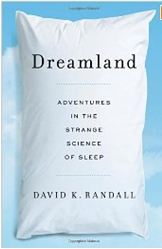
Journalist David K. Randall experienced an episode of sleepwalking and documented his quest to learn more about sleep in his Dreamland: Adventures in the Strange Science of Sleep.
In it, he points out that sleep is crucial for muscle regeneration and long-term memory formation, and conversely, sleep loss interferes with these critical functions.

Other negative consequences of sleep disruption are even more dire.Dreamland
He reported that depression rates are forty times higher for people with insomnia than those without sleep problems, and that sleep apnea causes 38,000 fatal heart attacks and strokes in the United States each year.

The difference between the personal chronotype and socially-defined time can be considered “social jet lag” that can lead to chronic exhaustion.
Roenneberg calculates that more than 40 percent of the Central European population experiences more than two hours of social jet lag, which can lead to increased errors at work and in operating equipment like automobiles. These consequences can be critical when the work involves public safety in transportation and health care settings.

Adolescents generally experience considerable social jet lag because their average midsleep point is later than that of many adults, and is incompatible with typical school start times.
This is because typical adolescent brains release the hormone melatonin around eleven o’clock at night until after the seasonal sunrise.
In contrast, adults, who set school schedules, have minimal levels of melatonin in their bodies when they wake in the morning, so they are more likely to feel and act alert in the early morning.

Sleep, then, has both physiological and cultural determinants, as Roenneberg showed in his analysis of agrarian areas which may not have such technologies as electric lighting, Day Light Saving Time, or work-related reasons for early rising.
These people typically go to sleep earlier and awake earlier than urban dwellers, and have significantly different midsleep points than people in cities.

A. Roger Ekirch

A. Roger Ekirch

Historian A. Roger Ekirch of Virginia Polytechnic Institute and State University argues in At Day’s Close: Night in Times Past, that before the Industrial Revolution, the typical sleep pattern was “segmented sleep” (also known as divided sleep, bimodal sleep pattern, or interrupted sleep).

People slept for two or more periods (called “first sleep” or “dead sleep” and “second sleep” or “morning sleep”) in medieval England, punctuated by a period of wakefulness.
Similar terms are found in terms French and Italian languages and among the Tiv of Nigeria.

At Days CloseHe argues that this is the natural pattern of human sleep, and is important in regulating stress.
If this is accurate, it would change western medical diagnosis of sleep disorders and might change expectations of “normal” sleep patterns for optimal health and productivity.

Ekirch’s review of historical records suggests that agrarian people were exhausted after field labor, so they would eat and go to sleep quickly after stopping work.
They would later awaken later to pray, reflect, have sex, perform manual labor, interpret dreams, visit neighbors, or engage in petty crime.
Scholars, in contrast, used this time for loftier pursuits –  to write without interruption.

-*How do you manage segmented sleep and social jet lag?

Related post:
Kept Up at Night by Intrusive Thoughts of Work: Elusive Sleep

Twitter:  @kathrynwelds
Google+
Blog: – Kathryn Welds | Curated Research and Commentary
LinkedIn Open Group The Executive Coach
Facebook Notes:

©Kathryn Welds

Lean In: Sheryl Sandberg launches Book, Foundation to Advance Women in Organizational Leadership

Sheryl Sandberg

Sheryl Sandberg

Facebook COO Sheryl Sandberg distilled her calls-to-action from her much-viewed TED talk and 2011 Commencement address at Barnard College in her forthcoming book, Lean In: Women, Work and the Will to Lead, scheduled for release 11 March 2013.

She reviews why women in the U.S. hold few of the top leadership roles in organizations and government, and offers greater detail on her much-discussed encouragement to:

  • Think Big
  • Sit at the table
  • Don’t leave before you leave
  • Lean in
  • Be bold, be unafraid
  • Choose the right partner
  • Seek challenges and take risks required to pursue ambitious goals.
Sheryl Sandberg at Barnard

Sheryl Sandberg at Barnard

Sandberg draws on current findings from Stanford University’s Clayman Institute for Gender Research and other top research organizations to offer practical advice on negotiation techniques, mentorship, building a satisfying career, setting boundaries, and replacing the goal of “having it all” with a more achievable target.

Sheryl Sandberg at Clayman Institute

Sheryl Sandberg at Clayman Institute

Sandberg is currently establishing The Lean In Foundation in collaboration with the Clayman Institute and corporate partners, to provide:

  • Online community to share insights and tools,
  • Online lectures by recognized thought leaders to enhance critical career skills,
  • Career discussion circles for women, men, and organizations, so they can deploy women’s talents to solve society’s most challenging issues.

-*How far can you “lean in” without losing your balance?

Related Posts:

  • Self-managed career discussion circles

“Greenlight Group”: No-cost, Self-managed Support to Achieve Professional, Personal Goals

  • “Think Big, Play Big” at Cisco’s 2013 Women in Technology Forum:

“Everything is Negotiable:” Prepare, Ask, Revise, Ask Again

Twitter  @kathrynwelds
Google+
Blog
: – Kathryn Welds | Curated Research and Commentary 
LinkedIn Open Group Women in Technology (sponsored by EMC)
Facebook Notes:

©Kathryn Welds

Lessons Learned, Do-Over Wishes: Regrets in Life, Career

Daniel Gulati

Daniel Gulati

Daniel Gulati, founder of FashionStake and Harvard Business School graduate, asked 30 professionals between ages 28 and 58 what they regretted most about their careers.
Most frequently mentioned “do-over” wishes were:

Frederick Herzberg

Frederick Herzberg

1.    Avoiding the temptation to accept a job for the money, confirming Frederick Herzberg assertion that “hygiene” factors, like salary, do not result in motivation or “engagement” in work.
In contrast, most people search for meaningful work in addition to an equitable wage.

Related Post:
Finding Work You Love, Measuring Your Life

Deloitte Shift Index 20122.    Leaving a bad job situation sooner. Gulati asserted that large corporations provide a “variable reinforcement schedule” in which the timing, frequency, and size of rewards is unpredictable, leading people to stay in roles they may not like on the hope of maximizing gains.
As a result, many people feel bound to large organizations by “golden handcuffs,” despite findings by Deloitte’s Shift Index survey the 80% of those surveyed are dissatisfied with their jobs.

Lara Buchak

Lara Buchak

In addition, people may tend toward risk-averseness in the workplace because most are more bothered by threat of losses than they are pleased by gains, according to findings by MIT’s Lara Buchak.

This risk-averseness may lead to “premature optimization,” rather than innovative and exploratory risks to uncover strengths, career options, and technical solutions to work challenges.

3.  Not starting a business, compounded by the same risk-averseness, variable schedules of reinforcement, premature optimization, and perceived golden handcuffs dynamics.

John Coleman

John Coleman

4. Not using time in school settings more productively, meaningfully, insightfully, mentioned by survey participants in Gulati’s collaboration with fellow Harvard Business School grads, John Coleman

W. Oliver Segovia

W. Oliver Segovia

and  W. Oliver Segovia featured in Passion & Purpose, and HBR Guide to Getting the Right Job.

Passion and Purpose5. Not following unanticipated career opportunities, again due to risk-averseness and premature optimization.

Gulati expanded his investigations to 100 younger HBR Guide to Getting the Right Jobpeople, between 25 and 35, and found both existential and specific regrets and do-over wishes:

1.    Not doing something “useful”, also mentioned by Daniel Pink and Martin Seligman, who found that Purpose, Mastery, and Control are top motivators.

Martin Seligman

Martin Seligman

Related Post: Career Navigation by Embracing Uncertainty

2.    Not living in the moment, due to over-scheduling and lack of training or discipline to focus mindfully on the present moment

3.    “Wasting time” earlier in life, such as not taking full advantage of school years

4.    Not travelling more, again limited by risk-averseness, premature optimization leading to financial commitments and family responsibilities

5.    Not developing physically fitness, partly attributed to “after-work drinks” instead of exercise.

Neal Roese

Neal Roese

Northwestern’s Neal Roese, Mike Morrison of University of Illinois at Urbana-Champaign, and Kai Epstude of University of Groningen asked 370 adults in the United States to describe one memorable regret.

Kai Epstude

Kai Epstude

Influenced by gender, age and education level, most-frequently cited regrets were:

  • Missed romantic connection (~20%), with women more than twice as likely (44%) to men (19%). Those not in a relationship were the most likely to cite a romantic regret.
  • Family issues (arguments, unkindness-16%)
  • Education (13 percent)
  •  Career (12 percent)
    • Money (10 percent)
    • Parenting mistakes (9 percent)
    • Health regrets (6 percent)

Participants expressed equal regret for things they had done as those who felt regret for something they had not done, but these missed-opportunity regrets were more likely to persist over time.

Jane McGonigal

Jane McGonigal

Jane McGonigal considered the other end of the age spectrum when she reported on “do-over” wishes of hospice patients:

• Work less hard
• Stay in touch with friends
• Let myself be happier
• Have the courage to express my true self
• Live a life true to my dreams

Related Post: How Gaming Can Help You Live Better and Longer

Isabelle Bauer

Isabelle Bauer

Isabelle Bauer, then at Concordia University, explored the impact of regrets on emotional and physical well-being, and found that people cope with regret by:

  • Undoing regrets, often through rationalization
  • Changing internal appraisals of regret

These findings of Lessons Learned in the School of Experience suggest the importance of:

  • Finding meaningful and worthwhile work
  • Taking considered risks to connect with others, explore interests and the world
  • Balancing work and interpersonal priorities
  • Investing time in high priority endeavors
  • Finding ways to reprioritize activities based on Lessons Learned from perceived regrets.

-*What are your Lessons Learned as you plan your New Year?

-*How do you manage your “Do-Over” thoughts?

Twitter:  @kathrynwelds
Google+
Blog
: – Kathryn Welds | Curated Research and Commentary
LinkedIn Open Group Brazen Careerist
Facebook Notes 

©Kathryn Welds

“Productive Pause”, Intuition for Better Decisions

Everyday wisdom offers familiar advice to curtail impulsivity through slowing down and reflecting:

  • “Go slow to go fast”
  • “Sleep on it”
  • “Wait before sending an emotional email”
  • “Count to 10, think again”
Frank Partnoy

Frank Partnoy

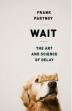
Former investment banker and lawyer Frank Partnoy’s Wait: The Art and Science of Delay provides empirical evidence on the value of delay to increase the quality of decisions and performance across investment, sports, comedy, and other disciplines.Wait

Creativity experts have demonstrated the importance of an “incubation period” in developing innovative solutions, and Partnoy suggests that similar principles provide and advantage: gathering maximum information in uncertain situations, by executing decisions and performance close to the last opportunity.

University of San Diego’s Partnoy recommends a three step approach to decision-making:

1) Determine the maximum time available to gather information and take the decision
2) Consider, reflect, “incubate” on the information as long as possible
3) Act quickly at the last possible moment

Malcolm Gladwell

Malcolm Gladwell

His approach could be summarized by referring to Malcolm Gladwell’s best-seller, Blink: The Power of Thinking Without Thinking : “Don’t just blink but think.”

Nalini Ambady

Nalini Ambady

Gladwell argues that people with expert experience and insight are often skilled at using ‘adaptive unconscious’ intuition to “thin-slice” subtle cues to filter relevant information from “noise,” a concept based on Nalini Ambady and Robert Rosenthal’s research at Harvard.

Justin Albrechtsen

Justin Albrechtsen

Christian Meissner

Christian Meissner

Research by Justin Albrechtsen, Christian Meissner, and Kyle Susa  of University of Texas at El Paso demonstrated “thin-slicing” when they found that intuitive processing can lead to more accurate judgments of deception when compared with deliberative processing.

Kyle Susa

Kyle Susa

Gladwell and these researchers acknowledge that non-experts, and even experts, can be make erroneous decisions due to bias and prejudice that comes from automatic thinking and habitual cognitive heuristics like the halo effect.

Gerard Hodgkinson

Gerard Hodgkinson

Gerard Hodgkinson of Leeds University found that biased intuitive judgment may be mitigated by “devil’s advocacy” and applying analytical tools like multi-attribute decision analysis and root cause analysis.

He suggests that informed intuition or ‘intelligent-unconscious’ results from subconscious information storage, processing and retrieval, and has conducted several empirical studies to evaluate its mechanisms applied to developing business strategies.

Intuitive judgment was positively correlated with quality and speed of decisions, organizational financial and non-financial performance in at least five studies.

Hodgkinson’s team summarized recent advances in neuroscience, including functional magnetic resonance imaging (fMRI) studies to explain complementary intuitive and analytical approaches to decision making  instead of the overly-simplified notion of left brain vs right brain processing  strengths.

He synthesized intuition attributes:

  • Instantaneous insight after incubation period
  • Subjective judgments
  • Based on experience, tacit knowledge, “knowing without knowing
  • Arise through rapid, non-conscious holistic associations
  • Affectively-charged: “feels right”, experienced as ‘‘inklings’’ or ‘‘glimmerings’’
  • Lacking verbalization or conscious awareness of problem solving.

Cognitive neuroscientists have differentiated intuition from instinct and insight using functional magnetic resonance imaging (fMRI) techniques.

Instinct refers to hardwired, autonomous reflex actions, whereas insight involves recognizing and articulating a problem’s structure, and may follow from intuition.

Hodgkinson’s research suggests that intuition can be enhanced by increasing:

  • Expertise (“prepared mind” or ‘‘deep smarts’’)
  • Self-awareness (feeling and cognitive style)
  • Reflection
Akio Morita

Akio Morita

His team’s research supports an assertion by Akio Morita, co-founder of Sony and driving force behind its successful Sony Walkman, that ‘‘creativity requires something more than the processing of information. It requires human thought, spontaneous intuition and a lot of courage.’’

-*How have you used pauses or intuition to strengthen decision-making and advance business innovation?

Related Posts

©Kathryn Welds

Career Navigation by Embracing Uncertainty

John Krumboltz

John Krumboltz

John Krumboltz of Stanford echoes the message in an earlier blog post, Is Career “Planning” Actually Career “Improvisation”? in his book, Luck is No Accident: Making the Most of Happenstance in Your Life and Career  Luck is no accident

He notes that people can’t control outcomes of unpredictable life and career situations, but he advocates paying attention to thoughts and actions that hinder progress toward goals — and to modify them with small steps.

Related Post:
Creating Productive Thought Patterns through “Thought Self-Leadership”

Increased mindful attention to habitual patterns can set the conditions for desired outcomes by planning contingencies for undesirable eventualities.

Part of this process is being:

  • Open to possibilities that diverge from an original plan
  • Willing to consider unexpected opportunities
  • Able to risk mistakes and rejection.

This may see demanding and undesirable for goal-directed people with a plan, but Krumboltz’s research demonstrates the effectiveness of these guidelines and other familiar recommendations:

  • Research areas of interest
  • Network
  • Ask for what you want
  • Keep learning
Daniel Pink

Daniel Pink

Similarly, Daniel Pink advises flexibility in career “planning” in his anime-like The Adventures of Johnny Bunko: The Last Career Guide You’ll Ever Need and questions whether there can be a career “plan”, given many unpredictable possibilities.The Adventures of Johnny Bunko

Like Peter Drucker and Donald Clifton before him, Pink urges building on existing strengths and finding ways to compensate for less strong areas, rather than investing effort in remedying them.

Donalid Clifton

Donalid Clifton

In addition to familiar suggestions – persist in taking on ambitious challenges while learning from them – he recommends focusing on solving problems for others, and finding a niche to deliver valuable results.Now Discover Your Strengths

This service-orientation pays dividends as a career development strategy and in “making a difference” in the community and one’s family.

DrivePink’s later book, Drive: The Surprising Truth About What Motivates Us ,   draws on Frederick Herzberg’s delineation of intrinsic motivation and extrinsic motivation.

Frederick Herzberg

Frederick Herzberg

People are motivated, Pink says, by career roles that provide opportunities for:

  • Autonomy, exerting control over work content and context
  • Mastery, improving skill in work over time through persistence, effort, corrective feedback
  • Purpose, participating in an inspiring goal

Related Post:
Finding Work You Love, Measuring Your Life

Pink’s TED Talk demonstrates his passionate advocacy for replacing traditional rewards and recognition with “Motivation 2.0” that provides opportunities for autonomy, mastery, and purpose.

Edward Deci - Richard Ryan

Edward Deci – Richard Ryan

Draw on strengths

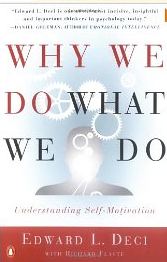
Pink cites Edward Deci’s and Richard Ryan‘s Cognitive Evaluation Theory (CET) that investigated variability in intrinsic motivation, and Deci’s Why We Do What We Do: Understanding Self-Motivation which advised managers to adopt “autonomy-supportive”   behaviors to encourage employees’ intrinsic motivation.Why we do what we do

These varied studies suggest the value of flexibility in career “planning” to capitalize on serendipitous opportunities, and seeking work roles that:

  • Draw on strengths
  • Enable intrinsic motivators like autonomy, purpose, mastery, and affiliation, instead of focusing primarily on monetary or status rewards.

-*How do you navigate your career in the face of incomplete information about future outcomes?

Related Posts:

©Kathryn Welds

How to Change Habits

William James

William James

William James, father of American psychology and brother of novelist Henry James wrote in his 1890 The Principles of Psychology, “Habit is thus the enormous flywheel of society, its most precious conservative agent. It alone is what keeps us all within the bounds of ordinance, and saves the children of fortune from the envious uprisings of the poor.”

Though James seemed to look favorably upon the conservative element of habit, the drawbacks of thoughtless habitual actions are clear when people consume more calories than required to complete daily activities, purchase unneeded items, react with predictable emotions in contentious situations, and keep disadvantaged groups without advantages enjoyed by powerful groups.

Charles Duhigg

Charles Duhigg

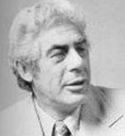
Charles Duhigg’s bestseller, The Power of Habit: Why We Do What We Do in Life and Business, argues that habits are a significant part of most people’s daily activities – about 40% – and that even brain injured people can form habits.

The Power of HabitHe outlines the A(ntecedant) – B(ehavior) – C(onsequence) model, initiated by a cue or a trigger that signals automatic or habitual behavior.
In a novel situation, the person shifts to a problem-solving mode to develop an appropriate response — which may require creative thinking .

However, in a more typical situation, the person executes the habitual physical, mental, or emotional behavior or “routine,” which is then rewarded — often with a reduction in anxiety or discomfort.

Duhigg shows how dysfunctional habits can be analyzed for the cue, routine, and reward, then changed by modifying the antecedent, behavior or reward.

Albert Ellis

Albert Ellis

The A-B-C approach was popularized by Albert Ellis in his Rational-Emotive Behavior Therapy (RET), and outlined in his more than 50 books including Rational Emotive Behavior Therapy  Rational Emotive Behavior Therapy

Duhigg provides examples from marketing campaigns for well-known consumer products in the U.S., including Pepsodent toothpaste and Febreze air freshener.

Timothy Wilson

Timothy Wilson

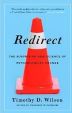
Like Duhigg’s model’s reference to earlier behavior modification approaches, Timothy Wilson of University of Virginia’s Redirect: The Surprising New Science of Psychological Change, adapts principles of Aaron T. Beck’s Cognitive Behavioral Therapy (CBT) to change habitual interpretations, attributions, narratives and personal stories that lead to social problems including alcohol and drug abuse, teen violence and pregnancies, and social prejudice.

Aaron Beck

Aaron Beck

Wilson extracts and renames three empirically-validated behavioral techniques:

  • Story editing, to craft a more optimistic, hopeful story or interpretation about a situation, often using writing exercises
  • Story prompting, in which another person provides alternate, more optimistic interpretations based on data or “social proof” from  experiences in a similar situation
  • Cognitive Behavior TherapyDo good, be good, by “acting as if” the new behavior is a well-established habit, often through serving others in volunteer work.

RedirectRSA talk

Another look at habitual, even unconscious thinking in daily life is featured in a related post, Pattern Recognition in Entrepreneurship.

Douglas Van Praet

Douglas Van Praet

This discussion shares Douglas Van Praet’s guidelines to capitalize on unconscious cognitive processing and automatic buying behavior in Unconscious Branding: How Neuroscience Can Empower (and Inspire) Marketing 

BJ Fogg

BJ Fogg

An earlier post, Hacking Human Behavior: “Tiny Habits” Start, Maintain Changes showcased BJ Fogg’s work on “tiny habits” as hooks to behavior change.
His approach draws on many of the same behavior modification principles featured in Duhigg’s and Wilson’s recommendations to analyze habitual cues, routines, and rewards.

-*How do you analyze and modify habits?

Related Posts:

Happiness-Money Connection: Halo Effect of Happy Mood? Part 2

Daniel Kahneman

Daniel Kahneman

The Happiness-Money Connection: Halo Effect of Happy Mood? Part 1 outlined studies by Nobel Prize winner and psychologist Daniel Kahneman, with Angus Deaton and by British researchers Jan-Emmanuel De Neve and Andrew Oswald, documenting the long-term positive impact of subjective positive emotions on life outcomes including academic attainment, employment status, and income over time.Michael Norton’s research added the insight that money can buy happiness – if it’s used for other people.

Taken together, these findings point to the value of cultivating positive emotional states.

Martin Seligman

Martin Seligman

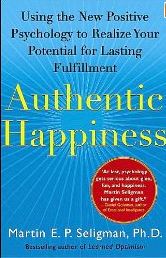
Distinguished psychologist Martin E. P. Seligman was one of the first researchers to empirically investigate correlates of happiness and well-being, and his recent book,

Flourish: A Visionary New Understanding of Happiness and Well-being recasts his

Flourish

earlier emphasis on Authentic Happiness: Using the New Positive Psychology to Realize Your Potential for Lasting Fulfillment.
He opined that “well-being” is a more accurate concept, defined by the acronym PERMA:

  • Positive Emotion
  • Engagement
  • Relationships
  • Meaning
  • Accomplishment

Authentic Happiness

Though this is largely a conceptual model, he offers several exercises like considering one’s “signature strengths” and “three blessings” or things that have gone well during a day.

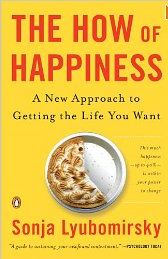
Sonja Lyubomirsky of UC Riverside synthesized happiness-enhancing recommendations from self-help books in The How of Happiness: A New Approach to Getting the Life You Want,  and provided familiar happiness-enhancing strategies:The How of Happiness

  • Cultivate optimism, consciously stop negative thoughts
  • Avoid “overthinking“, social comparison
  • Practice kindness
  • Invest time in social relationships, family
  • Develop coping strategies
  • Forgive self, others
  • Increase “flow” experiences, do enjoyable things
  • Savor life’s joyful experiences
  • Live in the present
  • Commit to goals
  • Organize space, work, life
  • Participate in religious or meditative practice
  • Keep self-reflection Journals

The Happiness Project

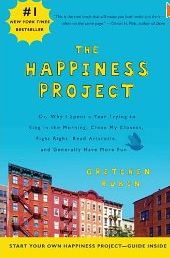
Gretchen Rubin combined some of these recommendations with erudite references to great philosophers’ and thinkers’ guidance, health recommendations, and time-tested common sense in The Happiness Project.

Daniel Gilbert of Harvard’s bestseller, Stumbling on Happiness , synthesized social science research about imagined expected future outcomes and control over them in relation to the experience of happiness.Stumbling on Happiness

He noted that human imagination and prediction are inaccurate, so he suggested using “surrogates” of future events to more accurately test future satisfaction with real-life choices like having children, moving to a new home, or working in a new job.

Other ways to cultivate the Emotional Intelligence capabilities of positive emotional experience are highlighted in related Posts:

-*How have you cultivated happiness?
-*How have happiness and money been related in your experience?

Twitter: @kathrynwelds
Google+
LinkedIn Open Group The Executive Coach
Facebook Notes
Blog: – Kathryn Welds | Curated Research and Commentary 

©Kathryn Welds

Effective Questions as Change and Innovation Catalyst

James Thurber

James Thurber

American humorist and cartoonist James Thurber reassured his readers that “It is better to know some of the questions than all of the answers,” a dictum supported by philosophers, mindfulness meditation practitioners, psychotherapists, scientists, artists, and creative others.

Given the importance of questioning, many resources are available to refine skill in inquiry:  Understanding others’ questions, framing high-impact queries, responding to others, and using questions to catalyze individual and organizational change.

QBQJohn Miller’s sales-oriented QBQ! The Question Behind the Question: Practicing Personal Accountability at Work and in Life advocates understanding the intent of statements phased as questions by crafting “What?” and “How?” questions instead of defense-provoking “Why?”

His approach is applicable in organizational management and change situations, and argues for increasing personal accountability while decreasing blame by focusing on the underlying work concerns like achieving revenue targets, deliverable timelines, customer satisfaction goals, cost savings.

The Art of Powerful QuestionsLike Miller, Eric Vogt, Juanita Brown, David Isaacs advocate “What?” questions in The Art of Powerful Questions: Catalyzing Insight, Innovation, and Action.

This team asserts that high-impact questions in business situations are valuable because they

• Evoke the listener’s curiosity, imagination, creative problem-solving, new possibilities
• Stimulate reflective conversation
• Provoke thoughtful consideration of diverse perspectives, contributions
• Clarify underlying assumptions
• Generates energy, progress, improvement
• Focus attention on issues and alternatives
• Memorably resonate with meaning
• Articulate progress toward shared understanding
• Suggest more questions

Dennis Matthies

Dennis Matthies, Chief Questioning Officer of Training organization Vervago supplies the “how” of questioning by helping business participants refine skill in formulating seven types of “precision” analytic questions, drawing on formal logic and critical thinking disciplines:

  • Assumption Questions, including existence, uniqueness, measurement, possibility, value, audience, time constancy, category, similarity
  • Basic Critical Questions (BCQ), including data, source
  • Questions of Clarification, including ambiguity/vagueness, “pivot table” segmentation for granular analysis
  • Go/No Go Questions, including “meeting basics and participation”, participant motivation analysis, inquiry focus

Vervago advocates “precision” responses to questions by:

  • Referring to the question
  • Answering briefly
  • Anticipating and addressing underlying concerns embedded in the question.
David Cooperrider

David Cooperrider

David Cooperrider of Case Western Reserve University broadened the vision of effective questioning’s potential impact when he developed Appreciative Inquiry (AI) as an affirmative approach collaborative organizational change.

This approach reduces resistance by focusing on desired change instead of the perceived problem, outlined in his book, with Diana Whitney, Appreciative Inquiry: A Positive Revolution in Change.

Appreciative InquiryAI’s “4Ds” of organizational change share some similarities with Design Thinking Processes:

  • Discovery Phase – Appreciating strengths and best practices of the current situation
  • Dream Phase – Envisioning the value and benefits of a proposed change
  • Design Phase – Defining processes and organizational structures that can deploy demonstrated strengths while moving toward a defined change state
  • Destiny Phase – Strengthen the organizational system’s capacity to sustain ongoing positive change

-*How do you use questions to clarify direction and initiate change?

Related Posts:

Twitter  @kathrynwelds
Google+
LinkedIn Open Group Mindful Leadership
Facebook Notes

Blog: – Kathryn Welds | Curated Research and Commentary

©Kathryn Welds
How Can Dance Inform Business Thinking?

Peter Lovatt

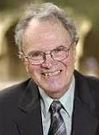
Peter Lovatt founded the Dance Psychology Lab at the University of Hertfordshire, which combines his performance experience as a professional dancer with his training as a research psychologist.

In several TED talks, he marvels at his career trajectory because he “was rubbish at school,” and was relegated to Special Education classes, probably due to his undiagnosed ADHD.

His career demonstrates an innovative synthesis of disciplines with his current research agenda investigating the impact of dance on problem solving using divergent thinking and convergent thinking strategies.

Peter Lovatt at TED

Lovatt’s experiments demonstrated that volunteers who engaged in improvised dance movements solved divergent thinking problems more quickly than when they performed more structured dance maneuvers, or no movement at all.

Similarly, his work showed these volunteers increased their speed of solving convergent thinking problems after they engaged in choreographed dance moves.

These findings may not imply that innovation teams should engage in structured and unstructured movements at work, but it does support the positive impact of dance movement on neural processing speed and problem solving.

Lovatt extended this work to patients with Parkinson’s disease, known to disrupt divergent thinking processes, to validate his findings with normal volunteers.
He demonstrated that Parkinson’s disease patients improved the divergent thinking problem solving after they engaged in improvised dance sequences, and hypothesized that these patients develop new neural pathways to “work around” dopamine-depleted blockages.

Peter Lovatt leading dance experiment

Lovatt’s group found increases in self-esteem among participants in dance styles that:

  • Include more improvisational elements (“high degree of tolerance for not getting it right”),
  • Are gender or culturally neutral
  • Raise the heart rate
  • Are repetitive
  • Encourage looser fitting clothes (in contrast to ballet)
  • Are non-competitive

Related Post on impact of dance:
Oxytocin Increases Empathic Work Relationships, Workplace Trust, Generosity 

Twyla Tharp

MacArthur Fellowship and Tony Award-winning choreographer Twyla Tharp discussed innovation and collaboration through the lens of dance in two books with lessons applicable to business.

In The Creative Habit: Learn It and Use It for Life she asserts that creative expression requires perseverance, practice, hard work, “showing up,” and cultivating systematic habits to act upon innovative initiative.

This echoes the action-orientation advocated by Malcolm Gladwell in his observation of 10,000 hours of practice to develop virtuoso performance and by sports psychologist K. Anders Ericsson, summarized in these related posts:

Tharp’s The Collaborative Habit: Life Lessons for Working Together discusses both how collaboration can change the participants, and practical approaches to collaborative creation – which she acknowledges has not been completely smooth in some of her work with luminaries including Richard Avedon, Mikhail Baryshnikov, Bob Dylan, Milos Forman,  Norma Kamali, Frank Sinatra.
Two related posts on Collaboration are:

Dance provides a fresh perspective and metaphor for business challenges including problem solving, innovation, and collaboration.

-*How do you react to Lovatt’s and Tharp’s application of movement in problem solving, collaboration and innovation?

First Emotionally Intelligent, Mindful Presidents: Barack Obama, Peter Salovey?

Peter Salovey

Peter Salovey, newly appointed President-Elect of Yale University, introduced the term “Emotional Intelligence” in 1989 as “the ability to monitor one’s own and others’ feelings and emotions, to discriminate among them, and to use this information to guide one’s thinking and actions”.

Yale’s new President, is considered a pioneer and originator of research into four elements of EQ used to think and behave adaptively:

  • Accurately perceiving, identifying, pinpointing emotions in self, others
  • Expressing, using emotions as information to decide,  plan, achieve, communicate, create, think
  • Understanding, predicting own and others’ emotions, temporary moods
  • Self-regulating, transforming emotions.
  • Peter Salovey

    Salovey is widely regarded as one who embodies these characteristics and creates community  through his bluegrass band performances with Professors of Bluegrass, active participation in student life (as a Super Mario Brother at Halloween 2009, accompanied by the Yale Symphony orchestra during his tenure as Provost), and award-winning teaching and research.

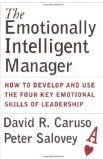
He applied EQ concepts to business with David Caruso in The Emotionally Intelligent Manager: How to Develop and Use the Four Key Emotional Skills of Leadership

Emotional Intelligence can be intentionally increased in work and personal settings by increasing awareness of one’s own and others’ emotions.
One way to achieve this goal is through “Mindfulness,” or non-evaluatively, non-judgmentally attending to physical, cognitive, and emotional experiences arising in the present moment.

Jon Kabat-Zinn

Jon Kabat-Zinn introduced this practice in 1979 and founded Stress Reduction Clinic and the Center for Mindfulness in Medicine, Health Care, and Society at the University of Massachusetts Medical School.
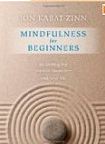
His programs and books, including Mindfulness for Beginners: Reclaiming the Present Moment–and Your Life  help develop skill in being “present” through:

  • Observing – expanded awareness with detachment
  • Describing
  • Participating fully
  • Focused, narrowed attention

He discussed the possible impact of these practices on business leadership and government, building on research findings that mindfulness practice can lower aggressive feelings and increase peaceful sentiments.

Kabat-Zinn provided an example in recently-re-elected U.S. President Barack Obama is the first mindful President, “…since Lincoln, or maybe ever.”

The Dalai Lama, Barack Obama

He added that Obama “… is really present, he has a lot of different qualities that seem to indicate he is emotionally balanced, not driven by ego concerns, that he knows how to balance family life and the impossible job that he has.
There is something about him that’s measured, very peaceful, he listens very, very deeply.”

Many observers will evaluate whether Salovey can put into practice Emotionally Intelligent leadership at Yale, and whether Barack Obama can demonstrate Mindfulness in peaceful international relations and domestic issue-resolution during his final term in office.

-*Where do you observe emotional intelligence and mindfulness among top leaders?

Twitter:  @kathrynwelds
Google+
LinkedIn Open Group Mindful Leadership
Facebook Notes:

Blog: – Kathryn Welds | Curated Research and Commentary

©Kathryn Welds