Category Archives: Behavior Change

Behavior Change

Working toward Goals with “Implementation Intentions”

Heidi Grant Halvorson

Heidi Grant Halvorson

People are motivated by goals that enable:

  • Relatedness to others,
  • Competence in skillful performance,
  • Autonomy in directing effort, according to Columbia’s Heidi Grant Halvorson.

Juliana Breines

She advocated working toward “better” performance rather than focusing on achieving the goal.

This can be accomplished by acknowledging mistakes and practicing self-compassion, suggested by Berkeley’s Juliana Breines and Serena Chen, and University of Texas‘s Kristin Neff.

The Relatedness-Competence-Autonomy model aligns with Daniel Pink’s suggestion that meaningful goals enable two similar features and one different element:

Daniel Pink

  • Autonomy (same): Controlling work content and context,
  • Mastery (like Competence): Improving skill over time through persistence, effort, corrective feedback,
  • Purpose (in contrast to Relatedness): Being part of an inspiring goal.

Halvorson suggested ways to move closer toward goals:

Serena Chen

-Consider the larger context of specific productive actions, 

-Define reasons for doing what needs to be done – the “why,”

-Use “implementation intentions” to prepare responses for challenging situations: If X, then Y.

If “x” occurs (specify time, place, circumstance),
-Then I will respond by doing, thinking, saying “y.”

      • ->“When I feel anxious, I will focus on inhaling and exhaling slowly for 60 seconds.”
      ->“When it’s 7 am, I will walk for 10 minutes,”

Kristin Neff

-Apply implementation intention routines (habits) for “strategic automation” to reduce decision-overload that may undermine self-control,

-Focus on something interesting for five minutes to evoke positive feelings,

-Review “small wins” and progress toward goals.

Goal persistence can be increased, reported Stanford’s Teresa Amabile and Steven Kramer in a study of employees at seven companies.

Teresa Amabile

Teresa Amabile

They found that “catalysts” and “nourishers” continue movement toward goals.
She recommended capitalising on preferred motivational style:

-“Promotion-focused” (maximise gains, avoid missed opportunities, powered by optimism),
-“Prevention-focused” (minimise losses, variance, powered by cautious pessimism),

Carol Dweck

Carol Dweck

Halvorson collaborated with Stanford’s Carol Dweck and quoted Henry Ford: “Whether you think you can or think you can’t, you’re probably right” to underscore the value of optimistic engagement with goals.

Henry Ford

Henry Ford

They synthesized Dweck’s work on “mindsets” with Halvorson’s recommendations for :
-Setting,
-Monitoring,
-Protecting,
-Executing,
-c\Celebrating goals.  

An earlier post outlined Dweck’s definitions of mindsets:

• Fixed Mindset:  Belief that personal capabilities are limited to present capacities, associated with fear, anxiety,

• Growth Mindset:  View that personal capabilities can expand based on:
-Commitment,
-Effort,
-Practice,
-Instruction,
-Correcting mistakes,
-Collaboration.

Peter Gollwitzer

Peter Gollwitzer

Columbia’s Peter Gollwitzer refined “mindsets” by distinguishing the Deliberative Mindset of evaluating which goals to pursue from the Implementation Mindset of planning goal execution.

His team found that the Deliberative Mindset is associated with:

    • Accurate, impartial analysis of goal feasibility and desirability,
    • Open-mindedness.

In contrast, the Implementation Mindset is linked to:

    • Optimistic, partial analysis of goal feasibility and desirability,
    • Closed-mindedness.

Halvorson, Dweck and Gollwitzer translated their research on self-determination and motivation into practical recommendations for goal seekers:

    • Adopt a supportive “mindset,”
    • Practice “self-compassion” when encountering setbacks to achieving goals,
    • Design effective responses to anticipated challenging situations,
    • Use “implementation intentions” and “strategic automation” toward goals,
    • Consider incremental progress toward goals.

-*What approaches help you work toward goals?

Related Posts:

©Kathryn Welds

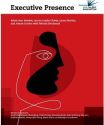
Executive Presence: “Gravitas,” Communication…and Appearance?

Professional advancement requires demonstrated knowledge, skill, and competence, coupled with perceived “cultural fit,“collaboration,” and “executive presence.”

Sylvia Ann Hewlett

Sylvia Ann Hewlett

These requirements appear prone to subjective definition and biased judgments.
What is “executive presence”? How is it measured?

Sylvia Ann Hewlett, CEO of Center for Talent Innovation, conducted 18 focus groups and 60 interviews to investigate behavioral and attitudinal aspects of Executive Presence (EP).

Perceived Executive Presence includes three components:Executive Presence

Gravitas” – Authoritative Behavior

    • Confidence, composure,
    • Decisiveness,
    • Integrity,
    • Emotional Intelligence: Self-awareness, self-regulation, interpersonal skills,
    • Personal reputation,
    • Vision for leadership,

Communication

    • Speaking skills:  Voice tone, articulation, grammatical speech conveying competence,
    • Presence,” “bearing,” “charisma” including assertiveness, humour, humility,
    • Ability to sense audience engagement, emotion, interests,

Appearance

    • Grooming, posture,
    • Physical attractiveness, average body weight,
    • Professional attire.
      According to Hewlett’s interviewees, “Executive Presence” accounts for more than a quarter of factors that determine a next promotion.

Harrison Monarth

How can Executive Presence be developed?

 Harrison Monarth suggested that Executive Presence behaviours can be cultivated with Image Management tactics including:

-Maintaining a positive personal reputation to influence others’ favourable perceptions and willingness to collaborate,

-Effectively managing online “brand”,

-Gaining followers online and in the “real world,”

-Influencing and persuading others,

-Demonstrating “Emotional Intelligence” through self-awareness, awareness of others (empathic insight), and regulating one’s own emotions.

He focused less on appearance than Hewlett and Stanford Law School’s Deborah Rhode, who summarized extensive research on Halo Effect and “The Beauty Bias”.

Deborah Rhode

Rhode estimated that annual world-wide investment in appearance was close to $USD 200 billion in 2010.
She contended that bias based on appearance influences career and life outcomes and is:

  • Is prevalent,
  • Infringes on individuals’ fundamental rights,
  • Compromises merit principles,
  • Reinforces negative stereotypes,
  • Compounds disadvantages facing members of non-dominant races, classes, and gender.

Executive Presence is widely recognized as a prerequisite for leadership roles, yet its components remained loosely-defined until Hewlett’s investigation and Rhode’s human rights analysis.

-*Which elements seem most essential to Executive Presence?

See related posts

©Kathryn Welds

Costs of Workplace Incivility

Christine Pearson

A single incident of incivility in the workplace can result in significant operational costs, reported Christine Pearson of Thunderbird School of Global Management and Christine Porath of Georgetown University.

Additional consequences of workplace incivility include:

  • Decreased work effort due to disengagement,

    Christine Porath

    Christine Porath

  • Less time at work to reduce contact with offensive co-workers or managers,
  • Decreased work productivity due to ruminating about incivility incidents,
  • Less commitment to the organization,
  • Attrition.
Pier Massimo Forni

P.M. Forni

Other organizational symptoms include:

  • Increased customer complaints,
  • Accentuated cultural and communications barriers,
  • Reduced confidence in leadership,
  • Less adoption of changed organizational processes,
  • Reduced willingness to accept additional responsibility and make discretionary work efforts.

Workplace incivility behaviours were described as “rude and discourteous, displaying a lack of regard for others,” noted Pearson and Lynne Andersson, then of St. Joseph’s University.
“Uncivil” behaviors were enumerated in The Baltimore Workplace Civility Study by Johns Hopkins’ P.M. Forni and Daniel L. Buccino with David Stevens and Treva Stack of University of Baltimore:

  • Refusing to collaborate on a team project,
  • Shifting blame for an error to a co-worker,
  • Reading another’s mail,
  • Neglecting to say “please,” “thank you”,
  • Taking a co-worker’s food from the office refrigerator without asking.

Respondents classified more extreme unacceptable behaviors:

  • Pushing a co-worker during an argument,
  • Yelling at a co-worker,
  • Firing a subordinate during a disagreement,
  • Criticising a subordinate in public,
  • Using foul language in the workplace.

Gary Namie

Workplace bullying was included in Gary Namie’s Campaign Against Workplace Bullying.
He defined bullying as “the deliberate repeated, hurtful verbal mistreatment of a person (target) by a cruel perpetrator (bully).

His survey of more than 1300 respondents found that:

  • More than one-third of respondents observed bullying in the previous two years,
  • More than 80% of perpetrators were workplace supervisors,
  • Women bullied as frequently as men,
  • Women were targets of bullying 75% of the time,
  • Few bullies were punished, transferred, or terminated from jobs.

Costs of health-related symptoms experienced by bullying targets included:

  • Depression,
  • Sleep loss, anxiety, inability to concentrate, which reduced work productivity,
  • Post-Traumatic Stress Disorder (PTSD) among 31% of women and 21% of men,
  • Frequent rumination about past bullying, leading to inattention, poor concentration, and reduced productivity.

Choosing CivilityWidespread prevalence of workplace incivility was also reported by Forni, who suggested ways to improve workplace interactions and inclusion:

  • Assume that others have positive intentions,
  • Pay attention, listen,
  • Include all co-workers in workplace activities,
  • Acknowledge others,
  • Give praise when warranted,
  • Respect others’ opinions, time, space, indirect refusals,
  • Avoid asking personal questions,
  • Be selective in asking for favors,
  • Apologize when warranted,
  • Provide constructive suggestions for improvement instead of complaints,
  • Maintain personal grooming, health, and work environment,
  • Accept responsibility for undesired outcomes, if deserved.

More than 95% of respondents in The Baltimore Workplace Civility Study suggested, “Keep stress and fatigue at manageable levels,” a challenging goal for leaders who shape workplace cultures.

Organizational change recommendations include:

  • Institute a grievance process to investigate and address complaints of incivility,
  • Select prospective employees with effective interpersonal skills,
  • Provide a clearly-written policy on interpersonal conduct,
  • Adopt flexibility in scheduling, assignments, and work-life issues.

-*How do you handle workplace incivility when you observe or experience it?

©Kathryn Welds

Positive Thinking+Mental Contrasting+WOOP Improve Performance

Gabriele Oettingen

Gabriele Oettingen

Positive thinking without an implementation strategy is ineffective in achieving goals, found NYU’s Gabriele Oettingen.
She advocated using “Mental Contrast” (identifying obstacles to a goal) combined with Implementation Intentions (ways to overcome these obstacles) summarised asWOOP”:

  • Wish,
  • Outcome,
  • Obstacles (Mental Contrast),
  • Plan (Implementation Intentions).


    Mental Contrast
      (considering possible Obstacles) was effective when perceived probability of success was average or high.
    Mental Contrast combined with Implementation Intentions (Developing a Mitigation Plan), was associated with improved self-regulation and performance.

Andreas Kappes

Andreas Kappes

Oettingen and University of London colleague Andreas Kappas reported two less effective approaches to goal engagement:

– Indulging (wishful thinking) – Thinking about the desired future state without considering obstacles and ways to overcome them,

– Dwelling (ruminating) – Thinking about the present reality without identifying future goals and ways to achieve them.

Probability of Success-Mental Contrast-Indulve-Dwelling

Volunteers who spent more time imagining working in a “dream job,” but who didn’t consider obstacles and ways to overcome them received fewer job offers and lower starting salaries, found Oettingen and Doris Mayer of University of Hamburg. These participants also accurately had lower expectations of success.

The research team differentiated the motivational impact of:

  • Positive expectations for future success when probability is high->high effort->successful performance,
  • Positive fantasies when the probability of success is low, based on not considering obstacles and mitigations >no increased effort.

Mental Contrast helped people disengage from unfeasible goals like reviving an ended relationship or achieving an unattainable professional identity.
When chances of success are low, people can combine Mental Contrast with an estimated probability of success to move on to more feasible goals.

In one study, volunteers increased effort when they saw the “silver lining” in a negative personal attribute (“impulsivity”) and linked it with a positive element (“creativity”).

Timur Sevincer

Timur Sevincer

These participants showed greater effort-based creativity and results than those who were given no information or told that there’s no association between impulsivity and creativity.

Mental Contrast (identifying Obstacles) between a desired future with a present reality also increased physiological activation measured by systolic blood pressure and grip strength as well as increasing performance effort, reported University of Hamburg’s A. Timur Sevincer and P. Daniel Busatta collaborating with Oettingen.

Philip Daniel Busatta

Philip Daniel Busatta

Coupling Mental Contrast (identifying Obstacles) with Implementation Intentions (Developing Mitigation Plans) helped economically-disadvantaged children convert positive thoughts about future outcomes into effective action thatsignificantly improved their school grades, school attendance, and classroom conduct. found University of Pennsylvania’s Angela Lee Duckworth, Teri A. Kirby of University of Washington with NYU’s Peter Gollwitzer and Oettingen.

Teri Kirby

Teri Kirby

Mental Contrast can increase motivation to act when used with Implementation Intentions.

  • How have you seen Mental Contrast and Implementation Intentions affect your motivation and performance?

RELATED POSTS:

©Kathryn Welds

Defining “Executive Presence”

Sylvia Ann Hewlett

Sylvia Ann Hewlett

Communication, “Gravitas”, and Appearance were frequently-cited attributes of Executive Presence in a study by Sylvia Ann Hewlett of the Center for Talent Innovation.

Gavin Dagley

More characteristics of executive presence were identified in interviews with 34 professionals, conducted by Perspex Consulting’s Gavin Dagley and Cadeyrn J. Gaskin, formerly of Deakin University.

Caderyn Gaskin

Five “executive presence” qualities were observable during initial contact:

  • Status and reputation, similar to “gravitas” discussed by Hewitt,
  • Physical appearance, mentioned by Hewitt,
  • Confidence,
  • Communication ability, included in Hewitt’s “executive presence” triad,
  • Interpersonal engagement skills.

Five additional presence features emerged during repeated contacts:

  • Interpersonal integrity,
  • Values-in-action,
  • Intellect and expertise,
  • Outcome delivery,
  • Use of coercive power.

These qualities combine in different ways to form four presence “archetypes”:

  • Positive presence, based on favorable impressions of confidence, communication, appearance, and engagement skills plus favorable evaluations of values, intellect, and expertise,
  • Unexpected presence, linked to unfavorable impressions of confidence plus favorable evaluations of intellect, expertise, and values,
  • Unsustainable presence combines favorable impressions of confidence, status, reputation, communication, and engagement skills plus unfavorable evaluations of values and integrity,
  • “Dark presence” is associated with unfavorable perceptions of engagement skills plus unfavorable evaluations of values, integrity, and coercive use of power.

Philippe De Backer

Philippe De Backer

Another typology of executive presence characteristics was identified by Sharon V. Voros and Bain’s Philippe de Backer.
They prioritized elements in order of importance for life outcomes:

  • Focus on long term strategic drivers,
  • Intellect,
  • Charisma, comprised of confidence, intensity, commitment, care, concern and interest in others,
  • Communication skills,
  • Enthusiasm for work,
  • Cultural fit with organisation and team,
  • Poise,
  • Appearance.

Fred Luthans

Fred Luthans

University of Nebraska’s Fred Luthans and Stuart Rosenkrantz with Richard M. Hodgetts of Florida International University investigated the relationship between “executive presence” and career “success.”
These researchers observed nearly 300 managers across levels at large and small mainstream organizations when leaders:

  • Communicated,
  • Engaged in “traditional management” activities, including planning, decision making, controlling,
  • Managed human resource issues.

Richard Hodgetts

Richard Hodgetts

Communication and interpersonal skills, coupled with intentional networking and political acumen enabled some managers to rapidly advance in their organizations.

These rapidly-advancing managers were identified as “successful” leaders because they achieved a higher organizational level compared with their organizational tenure.
In contrast, “effective” managers demonstrated greater managerial skill than “successful” managers, but were not promoted as quickly.

Effective” managers spent most time managing employees’ activities including:

  • Motivating and reinforcing desired behaviours,
  • Managing conflict,
  • Hiring,
  • Training and developing team members,
  • Communicating by exchanging information,
  • Processing paperwork.

Stuart Rosenkrantz

Stuart Rosenkrantz

Subordinates of “effective” managers reported more:

  • Job satisfaction,
  • Organizational commitment,
  • Performance quality,
  • Performance quantity.

Differences in advancement and subordinate reactions to “successful” and “effective” managers were related to differing managerial behaviors.

Fred Luthans-Effective ManagersSuccessful” managers spent little time in managerial activities, but invested more effort in networking, socializing, politicking, and interacting with outsiders.
Their networking activities were most strongly related to career advancement but weakly associated with “effectiveness.”

Few managers were both “successful” and “effective”:
Only about 10% leaders were among the top third of successful managers and effective managers.
This suggests that effective managers who support employee performance may not be advance as rapidly as managers who prioritize their own career over their employees’ careers.

Gender differences in gravitas, communication, and political acumen may explain why men more often are seen as possessing “executive presence.”

Women who aspire to organizational advancement benefit from cultivating both gravitas and proactive networking to complement communication and interpersonal skills.

-*Which behaviors and characteristics are essential to “Executive Presence?”

Related Posts

©Kathryn Welds

Creating Productive Thought Patterns

Albert Ellis

Albert Ellis

Leaders’ actions actions are influenced by unspoken self-talk.
Sometimes, these thoughts are self-critical and provoke anxiety.

Aaron Beck

Aaron Beck

Cognitive Behavior Therapy (CBT), developed by University of Pennsylvania’s Aaron Beck, provides a systematic way to notice and restructure “irrational self-talk.
Similar approaches were developed by Albert Ellis in Rational-Emotive Therapy (RET), and David Burns in his synthesis of CBT and RET.

David Burns

David Burns

Arizona State University’s Charles Manz and Chris Neck  translated these self-management processes to managerial development.
They outlined a Thought Self-Leadership Procedure as a five-step circular process:

Charles Manz

Charles Manz

1. Observe and record thoughts,

2. Analyze thoughts for potential errors in reasoning (jumping to conclusions, exaggeration),

3. Substitute alternate positive, realistic, plausible, acceptable thoughts,

4. Monitor personal reactions to these thoughts,

5. If more negative thoughts appear, continue to substitute the more productive thoughts.

Screenshot 2023-03-04 at 10.06.57

John Crimmins

John Crimmins

Other recommendations to manage thoughts about stressful situations were distilled by John Crimmins of Behaviour Institute in coaching people at work.

He suggested asking the following questions:

  • How do I know if this thought is true?
  • What evidence do I have to support this thought or belief?
  • How can I test my assumptions/beliefs to find out if they’re accurate?
  • What would a trusted friend say about these thoughts?
  • How is this thought helpful now?
  • What other ways that I can think about this situation?
  • What would a friend say when I blame myself in this situation?
  • What would I say to a friend who was in this situation?
  • What would a friend say to me when I take this situation personally?
  • How can I consider this situation on a continuum rather than in either-or terms?

-*What practices do you use to develop and apply productive thought patterns?

©Kathryn Welds

Managing Workplace Interruptions

Edward Sykes

Edward Sykes

Most office workers spend an average of two hours a day doing unplanned tasks, according to Sheridan Institute’s Edward Sykes.
These work interruptions are associated with:

Quintus Jett

Unplanned tasks decrease productivity and are characterized by:

  • Intrusions – Unplanned interactions initiated by others: Synchronous communication including instant message, phone call, or a coworkers visiting to talk,
  • Distractions – Unplanned focus change from a task to environmental conditions like other conversations,
  • Breaks – Unscheduled task stoppage to rest, visit the restroom, have a meal,
  • Discrepancy Detection – Unplanned task stoppage to correct errors or redirect work effort toward a revised objective.

Jennifer George

Unplanned workplace interruptions are increasingly prevalent due to rising incidence of:

  • Open and collaborative workspaces,
  • Technological interruptions,
  • Meetings.

Sheldon Cohen

Sheldon Cohen

Open space floor plans increase unplanned interruptions, perceived stress, and “cognitive fatigue,” due to greater noise levels and reduced privacy for employees.
These factors also reduce employees’ job satisfaction, found Carnegie Mellon’s Sheldon Cohen and E. M. De Croon and team of University of Amsterdam.

Julie Renneker

Julie Renneker

Synchronous communications are more disruptive than asynchronous communications, which allow response at a convenient time and mitigate the negative impact of task-shifting on cognitive load and stress level, noted University of Texas’s Julie Rennecker and Lindsey Godwin, now of Champlain College.

Greg Oldham

Greg Oldham

Strategies to mitigate the impact of work disruptions include time management and boundary setting, according to Tulane’s Greg Oldham, Carol Kulik of University of South Australia and Florida State University’s Lee Stepina.
 They suggested that employees:

Carol Kulik

Carol Kulik

-“Batch” communication to check email and returning phone calls at specified intervals,

-Block technology pop-ups, alerts, sounds to avoid startling interruptions,

James Tyler

James Tyler

-Organize tasks around energy peaks, with tasks requiring the most effort and concentration earlier in the workday and after a break, also advocated by Purdue’s James Tyler and Kathleen Burns of University of Wisconsin,

Kathleen Burns

Kathleen Burns

-Take active breaks, such as walking outside to breathe outdoor air,

John Aiello

John Aiello

-Schedule interruption-free intervals, to increase perceived control over interruptions and reduce stress, also cited by Duke’s Andrew Carton and John Aiello of Rutgers,

-Create “work-arounds” for open space floor plans by:
.Installing higher cubicle dividers,
.Providing noise-cancelling headphones,
.Offering white noise machines to reduce ambient notice,
.Designating reservable private work rooms for audio privacy,

-Reduce meeting frequency to focus on issues that require group discussion, consensus, commitment.

A counterpoint argument is that task interruptions provide benefits, proposed by  Jett and George.
The argued that unplanned and planned interruptions :

  • Prevent widespread rework when employees alert colleagues to a work discrepancy or error,
  • Increase productivity during repetitive or well-learned tasks that may lead to boredom, errors, or lost task focus.

-*How do you reduce the negative impact of workplace interruptions?

RELATED POSTS:

©Kathryn Welds


Developing “Big 8” Job Competencies

George Hallenbeck

George Hallenbeck

Better job performance is associated with eight capabilities known as “The Big 8”, according to Korn-Ferry International’s George Hallenbeck, in the Leadership Architect® Library of Competencies:

• Dealing with Ambiguity,
• Creativity,
• Innovation Management,
• Strategic Agility,
• Planning,
• Motivating Others,
• Building Effective Teams,
• Managing Vision & Purpose.

He analyzed more than 1500 ratings on this 360 degree assessment, and found that just 12% of executives possessed four or more of “The Big 8.”
None of these organizational leaders demonstrated more than six of these competencies, though they consistently showed more than individual contributors.
This suggests that although executives demonstrate more of critical leadership capabilities than non-leaders, the vast majority have significant room for professional development.

Daniel GolemanExecutives and individual contributors who had more of “The Big 8” competencies also had more of “Career Staller and Stopper” behaviors.
Bold individuals who demonstrate persistance may effectively execute, but may run afoul of key stakeholders and influencers.

Self-Awareness and Self-Management, identified in Daniel Goleman’s framework for Emotional Intelligence, may be a key to balancing between the Big 8’s performance enhancing impacts while mitigating their potential drawbacks in stalling careers.

-*What have you found the most important job competences among organizational leaders and those preparing for future leadership roles?

Related Posts:

©Kathryn Welds

Developing Executive Self Awareness to Enhance Leadership Impact

Vicki Swisher

Lack of self-awareness among organizational leaders is pervasive and costly, according to Korn Ferry’s Vicky Swisher and Evelyn Orr.
They studied executives using the FYI: For Your Insight assessment tool, based on research from FYI for Insight: 21 Leadership Characteristics for Success and 5 That Will Get You Fired.

Evelyn Orr

Evelyn Orr

Executives’ most significant blind spots were:

• Making tough people calls,
• Demonstrating personal flexibility, adapting approaches to new circumstances.

Similarly,  the top leadership problems were:
• Not inspiring employees, not building talent,
• “Too narrow”, relying on deep expertise without broadening perspective.

Leaders vastly underestimated their effectiveness in “managing up”, suggesting that they focused more on their next promotion, rather than on developing their employees.

Joe Luft

Joe Luft

Lack of self-awareness can be reduced by using a “Reality Check” including:

o Feedback from others to provide “early warning” of difficulty.
However, this requires that evaluators are willing to provide candid observations, despite widespread discomfort in providing corrective feedback.

o Self-reflection concerning effective and ineffective behaviors, documented in a personal journal for review.

Harry Ingham

Harry Ingham

Executives learned most to enhance leadership skills and self-reflection from on-the-job experiences, distantly followed by learning from other people.
Structured trainings are least effective and most costly approaches to enhance leadership cognitive, emotional, motivational, self-awareness, and learning agility capabilities.

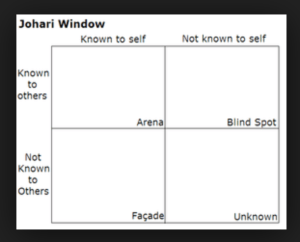
These leadership development processes reduce individual blind spots, portrayed by San Francisco State University’s Joe Luft and Harry Ingham of National Training Labs in The JoHari Windowjohari-window

Korn Ferry’s Michael M. Lombardo and Robert W. Eichinger provided additional executive development recommendations based on research in FYI: For your Improvement, A Development and Coaching Guide(3rd Edition).

-*How do you increase your self-awareness at work and reduce your “blind spots” about yourself and others?

Twitter: @kathrynwelds
Google+:
Facebook Notes

©Kathryn Welds

Consequences of “Facades of Conformity”

Patricia Hewlin

Patricia Hewlin

Employees, especially minority group members, adopt Façades of conformity (FOC) when they “act as if” they embrace an organization’s values to remain employed or to succeed in that organization, found Georgetown University’s Patricia Hewlin.

Facades of Conformity can lead to employees developing “rationalizations” that enable them to carry out distasteful or even assignments, found University of Alberta’s Flora Stormer and Kay Devine of Athabasca University.

Jerome Kerviel

Jerome Kerviel

This may explain Jerome Kerviels experience at Societe General.
He was branded as a “rogue trader,” though he seemed not to personally benefit from unauthorized trades.

He and others explained his motivation to please his managers and to earn a bonus based on his trades, in the context of his “outsider status” as someone who had not attended elite universities and was not considered a “star.”

-*In what organizational contexts have you observed “Facades of Conformity” and their consequences?

©Kathryn Welds