Author Archives: kathrynwelds

Unknown's avatar

About kathrynwelds

Organizational Psychologist | Change Consultant | Leadership and Career Coach | Thought Partner | Accountability Ally | Creating value by connecting people, information, and ideas, to accomplish strategic results Professional experience spans roles as an organizational psychologist, coach, consultant, leader in technology, healthcare, professional services, public sector.

How Much Does Appearance Matter?

Linda A. Jackson

Physically attractive people were evaluated as more intellectually competent and likeable in a meta-analysis by Michigan State University’s Linda A. Jackson, John E. Hunter, and Carole N. Hodge.

Nancy Etcoff

Similarly, women who wore cosmetics were rated more highly on attractiveness, competence, likeability and trustworthiness when viewed for as little as 250 milliseconds by participants in studies by Harvard’s Nancy L. Etcoff, Lauren E. Haley, and David M. House, with Shannon Stock of Dana-Farber Cancer Institute, and Proctor & Gamble’s Sarah A. Vickery.

Models without makeup, with natural, professional, “glamorous” makeup

However, when participants looked at the faces for a longer time, ratings for competence and attractiveness remained the same, but ratings for likeability and trustworthiness changed based on specific makeup looks.

Etcoff’s team concluded that cosmetics could influence automatic judgments because attractiveness “rivets attention and impels actions that help ensure the survival of our genes.”

Most people recognize the bias in assuming that attractive people are competent and that unattractive people are not, yet impression management remains crucial in the workplace and in the political arena.

-*Where have you seen appearance exert an influence in workplace credibility, decision-making and role advancement?

Related Posts

©Kathryn Welds


Women Who Express Anger Seen as Less Influential

Jessica Salerno

Jessica Salerno

Women who expressed anger were less likely to influence their peersin computer-mediated mock jury proceedings, found Arizona State University’s Jessica Salerno and Liana Peter-Hagene of University of Illinois. 

Liana Peter-Hagene

Liana Peter-Hagene

More than 200 U.S. jury-eligible volunteers reviewed opening arguments and closing statements, eyewitness testimonies, crime scene photographs, and an image of the alleged weapon in a homicide.

Participants made individual verdict choices, then exchanged instant messages by computer, with “peers” who were said to be “deliberating their verdict decisions.”

In fact, “peer” messages were scripted, with four of the fictional jurors agreeing with the participant’s verdict, and one disagreeing.
In different test conditions, the dissenting participant had 1) a male user name or 2) a female user name or 3) a gender-neutral name.

Victoria Brescoll

Victoria Brescoll

Half of the dissenting messages contained no emotion, anger, or fear, and had no influence on participants’ opinions.

However, when a single “male dissenter” sent angry messages, characterized by “shouting” in all capital letters, participants’ confidence in their verdict decision significantly dropped.
This confidence-eroding effect of one “male dissenter” held even when the majority of “jurors” shared the same opinion.

A single female dissenter who expressed disagreement in an angry message did not undermine the other juror’s confidence in their decisions.

This finding suggests that a single male dissenter’s angry communication causes people to doubt their opinions, and that “female” anger was less influential than “male” anger.

In contrast, volunteers became more confident in their initial verdict decisions when their vote was echoed by the majority of other participants.

Eric Luis Uhlmann

Eric Luis Uhlmann

Male and female evaluators assigned lower status to female CEOs and female trainees when they expressed anger, compared with angry male professionals in research by Yale University’s Victoria Brescoll and Eric Luis Uhlmann, now of INSEAD.

Kristi Lewis Tyran

Kristi Lewis Tyran

Men who expressed anger in a professional context were conferred higher status than men who expressed sadness.

Likewise, women who expressed anger and sadness were rated less effective than women who shared no emotion, according to Kristi Lewis Tyran of Western Washington University.

Evaluators judged men’s angry reactions more generously, attributing these emotional expressions to external circumstances, such as experiencing pressure and demands from others.

These differing judgments of emotional expression suggest that women’s anger is more harshly evaluated because anger expressions deviate from women’s expected societal, gender, and cultural norms.

-*What impacts and consequences have you observed for women and men who express anger at work?

RELATED POSTS:

©Kathryn Welds


Rationalisation: Coping or Complacency?

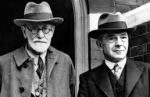
Sigmund Freud, Ernest Jones

Rationalisation was described by Freud biographer and psychoanalyst Ernest Jones as an unconscious maneuver to provide plausible explanations for unacceptable behaviour, motives, or feelings.

Gil Diesendruck

Children as young as ages four to six demonstrated this tactic in experiments by Bar-Ilan University’s Avi Benozio and Gil Diesendruck.

The research team found that young children learned to “reframe” disappointing circumstances.
This approach is often used by older people to reduce uncomfortable cognitive dissonance, described in classic studies by New School’s Leon Festinger.

Leon Festinger

In Benozio and Diesendruck’s experiments, children ages three, four, five and six years old completed tasks in exchange for stickers that varied in attractiveness to each age group.

Participants could invest considerable effort or minimal work in activities and could choose to keep these prizes or give them to another person.

Six year olds who invested substantial effort to obtain attractive rewards were less likely to relinquish stickers to others.

Elliot Aronson

When six year olds applied significant effort to obtain less desirable rewards, they also distributed fewer to others, but their reasoning differed.

They adjusted their appraisal of the less attractive stickers, judging these prizes as more appealing.
In contrast, four year olds discarded stickers rather than bolstering the value of the stickers.

Aesop

These differences suggest that children learn to rationalize by age six and continue using this strategy into adulthood, and validated by Stanford’s Elliot Aronson and the U.S. Army’s Judson Mills.

Their studies validated Aesop‘s observation of “sweet lemons” and “sour grapes” in the well-known fable The Fox and the Grapes.

To evaluate a possible relationship between cognitive dissonance and rationalization, UCLA’s Johanna M. Jarcho and Matthew D. Lieberman with Elliot T. Berkman of University of Oregon conducted fMRIs while participants responded to measures of attitude change linked to cognitive dissonance.

Joanna Jarcho

Joanna Jarcho

Brain activity showed significantly increased rapid reappraisal pattern used in emotional regulation, suggesting that rationalization may be an automatic coping mechanism rather than an unconscious defense mechanism.

Reinhold Niebuhr

Reinhold Niebuhr

Benozio and Diesendruck noted that this adaptive capacity could lead to complacence instead of working to change negative circumstances, articulated in the well-known Serenity Prayer attributed to Yale’s Reinhold Niebuhr:

…grant me the serenity to accept the things I cannot change,
The courage to change the things I can,
And the wisdom to know the difference.

-*To what extent is rationalisation a logical error?
-*How effective is rationalisation as an emotional regulation strategy?

Related Posts:

©Kathryn Welds

Costs of Workplace Incivility

Christine Pearson

A single incident of incivility in the workplace can result in significant operational costs, reported Christine Pearson of Thunderbird School of Global Management and Christine Porath of Georgetown University.

Additional consequences of workplace incivility include:

  • Decreased work effort due to disengagement,

    Christine Porath

    Christine Porath

  • Less time at work to reduce contact with offensive co-workers or managers,
  • Decreased work productivity due to ruminating about incivility incidents,
  • Less commitment to the organization,
  • Attrition.

Pier Massimo Forni

P.M. Forni

Other organizational symptoms include:

  • Increased customer complaints,
  • Accentuated cultural and communications barriers,
  • Reduced confidence in leadership,
  • Less adoption of changed organizational processes,
  • Reduced willingness to accept additional responsibility and make discretionary work efforts.

Workplace incivility behaviours were described as “rude and discourteous, displaying a lack of regard for others,” noted Pearson and Lynne Andersson, then of St. Joseph’s University.
“Uncivil” behaviors were enumerated in The Baltimore Workplace Civility Study by Johns Hopkins’ P.M. Forni and Daniel L. Buccino with David Stevens and Treva Stack of University of Baltimore:

  • Refusing to collaborate on a team project,
  • Shifting blame for an error to a co-worker,
  • Reading another’s mail,
  • Neglecting to say “please,” “thank you”,
  • Taking a co-worker’s food from the office refrigerator without asking.

Respondents classified more extreme unacceptable behaviors:

  • Pushing a co-worker during an argument,
  • Yelling at a co-worker,
  • Firing a subordinate during a disagreement,
  • Criticising a subordinate in public,
  • Using foul language in the workplace.

Gary Namie

Workplace bullying was included in Gary Namie’s Campaign Against Workplace Bullying.
He defined bullying as “the deliberate repeated, hurtful verbal mistreatment of a person (target) by a cruel perpetrator (bully).

His survey of more than 1300 respondents found that:

  • More than one-third of respondents observed bullying in the previous two years,
  • More than 80% of perpetrators were workplace supervisors,
  • Women bullied as frequently as men,
  • Women were targets of bullying 75% of the time,
  • Few bullies were punished, transferred, or terminated from jobs.

Costs of health-related symptoms experienced by bullying targets included:

  • Depression,
  • Sleep loss, anxiety, inability to concentrate, which reduced work productivity,
  • Post-Traumatic Stress Disorder (PTSD) among 31% of women and 21% of men,
  • Frequent rumination about past bullying, leading to inattention, poor concentration, and reduced productivity.

Choosing CivilityWidespread prevalence of workplace incivility was also reported by Forni, who suggested ways to improve workplace interactions and inclusion:

  • Assume that others have positive intentions,
  • Pay attention, listen,
  • Include all co-workers in workplace activities,
  • Acknowledge others,
  • Give praise when warranted,
  • Respect others’ opinions, time, space, indirect refusals,
  • Avoid asking personal questions,
  • Be selective in asking for favors,
  • Apologize when warranted,
  • Provide constructive suggestions for improvement instead of complaints,

  • Maintain personal grooming, health, and work environment,
  • Accept responsibility for undesired outcomes, if deserved.

More than 95% of respondents in The Baltimore Workplace Civility Study suggested, “Keep stress and fatigue at manageable levels,” a challenging goal for leaders who shape workplace cultures.

Organizational change recommendations include:

  • Institute a grievance process to investigate and address complaints of incivility,
  • Select prospective employees with effective interpersonal skills,
  • Provide a clearly-written policy on interpersonal conduct,
  • Adopt flexibility in scheduling, assignments, and work-life issues.

-*How do you handle workplace incivility when you observe or experience it?

©Kathryn Welds

Plastic Surgery Changes Perceived Personality Traits

Michael J. Reilly

Michael J. Reilly

People often infer others’ personality attributes from visual cues, found Georgetown University Hospital’s Michael J. Reilly, Jaclyn A. Tomsic and Steven P. Davison, collaborating with Stephen J. Fernandez of MedStar Health Research Institute.
This facial profiling is cognitive shortcut that can lead to biased impressions and fewer professional and social opportunities for those unfavorably judged.

Jaclyn A. Tomsic

Jaclyn A. Tomsic

These researchers asked volunteers to evaluate photographs of 30 women shown with neutral facial expressions.

Each rater judged 10 images, including five (5) photographs before the person had plastic surgery procedures and five (5) images following surgical procedures:

  • Chin implant,
  • Eyebrow-lift,
  • Lower blepharoplasty (lower eye lift),
  • Upper blepharoplasty (upper eye lift),
  • Neck-lift,
  • Rhytidectomy (face-lift).

Michael Reilly-Preoperative-Postoperative photos

Raters were not informed that some people in the photos had plastic surgery procedures.

Evaluators assessed each photograph on a 7-point scale for perceived:

  • Aggressiveness,
  • Extroversion,
  • Likeability,
  • Risk-seeking,
  • Social skills,
  • Trustworthiness,
  • Attractiveness.

Michael Reilly - Pre-Post 2Raters assigned higher scores for likeability, social skills, and attractiveness to the images following plastic surgery compared with pre-surgery image ratings.

The researchers concluded that the eyes signal attractiveness and trustworthiness.

They noted that people who had lower eyelid surgery were rated significantly more attractive and trustworthy.

The team concluded that corner of the mouth indicates happy and surprised expressions and personality traits like extroversion.

Likewise, they reported that an upturned mouth and fullness in the cheeks can make a person look more intelligent and socially skilled.

In sum, they found that people who had a facelift procedure were rated significantly more likeable and socially skilled postoperatively.”

Volunteers in a different study attributed positive and negative personality traits to neutral faces when they perceived a similarity to standard positive and negative emotional expressions, reported Princeton’s Christopher P. Said and Alexander Todorov with Nicu Sebe of University of Trento.

Christopher P. Said

Christopher P. Said

This perceptual bias was demonstrated when volunteers attributed positive personality characteristics to faces with neutral expressions when some aspect of the face resembled typical facial expressions of happiness.

Similarly, neutral faces seen attributed negative personality characteristics when they had some similarities to displays of disgust and fear.

These trait inferences resulted from overgeneralization in emotion recognition systems.

Nicu Sebe

Nicu Sebe

 This error can lead to misattributed personality traits and biased impressions.

However, these inaccurate and biased judgments can become more favourable after plastic surgery.

-*To what extent do people’s personality traits seems different following plastic surgery?

-*How often are people treated differently following plastic surgery?

*What are ways to avoid confusing emotional expressions with personality traits?

Related Posts:

©Kathryn Welds

Reputation Affects Women’s Promotion, Earnings

Lily Fang

Lily Fang

Sterling Huang

Men gain greater job benefits from professional connections than women with better education and job skills, according to INSEAD’s Lily Fang and Sterling Huang of Singapore Management University.

Lauren Cohen

Fang and Huang examined U.S. equity analysts’ alumni connections with company senior officers and board members, using a methodology developed by Harvard’s Lauren Cohen, and Christopher Malloy with Andrea Frazzini, of AQR Capital Management.

Christopher Malloy

They considered analysts’:

  • Year-end earnings per share (EPS) forecasts,
  • Buy-stock recommendations from 1993 to 2009,
  • Price impact of their recommendations,
  • Selection to “All America Research Team” (AA) by Institutional Investor magazine during the same period.

    Selection to AA is based on the institutional investors’ subjective evaluation of each analyst’s industry knowledge, communication, responsiveness, and written reports.

Andrea Frazzini

Andrea Frazzini

Forecast accuracy is one of the least important selection criteria.
Therefore, skillful analysts may be not be selected if they are not visible and well-regarded by decision-makers.

Connections directly contributed to male analysts’ likelihood of being named to the  “All America Research Team” (AA), but this relationship did not hold for female analysts.

This variance in connections by gender had significantly different financial consequences for male and female analysts because AA team members earned three times more than non-team analysts.

About 25% of all analysts shared a school tie with a senior officer or board member in the firms they covered, and these connections improved men’s forecast accuracy significantly more than women’s.

These connections also improved the impact of male analysts’ stock recommendations, measured by market reaction to their buy and sell calls.

Female analysts with a connection to a female executive at covered firms significantly improved their ranking accuracy, yet male analysts with a male connection improved their ranking accuracy almost twice as much.

Herminia Ibarra

Herminia Ibarra

Herminia Ibarra, then of INSEAD, also demonstrated that men in an advertising firm capitalized on network ties to improve their employment positions.

Women remain in analytical roles even if they are capable of executive roles because promotion to General Manager roles depends on subjective evaluations by current decision makers, who are usually men.

This different impact of network connections early in women’s and men’s careers could explain gender gaps that exist throughout career trajectories.

Fang and Huang concluded that men and women may be evaluated using separate subjective criteria, resulting in differential career advancement for women and men.

Ronald Burt

Ronald Burt

Career-related social connections (“social capital”) are affected by legitimacy, reputation, and network structures, argued University of Chicago’s Ronald Burt.
He suggested that “holes” in a social network are gaps in connections between two people or groups.
Anyone who builds a bridging relationship across this gap is considered a “broker.” 

This role offers “entrepreneurial opportunities” to access information and shape communications across groups.
Women who fill “network holes” increase their possibility of advancement.

Burt noted limitations to this approach for women:  “…because women are not accepted as legitimate members of the population of highly promotable candidates.”

He noted that women and minorities succeed by leveraging the network of legitimate strategic partners, suggesting the importance of sponsors for underrepresented groups. 

-How do you identify and fill “structural holes in social capital networks”?

RELATED POSTS:

©Kathryn Welds

Range Offers vs Point Offers for Better Negotiation Settlements

Daniel Ames

Daniel Ames

Many people avoid making negotiation offers as a range of values, because they expect that co-negotiators will “anchor” on the range’s lower value or higher value. 

Malia F Mason

Malia F Mason

However, range offers led to stronger outcomes in experiments by Columbia University’s Daniel R. Ames and Malia F. Mason.
This team suggested that these “dual anchors” signal a negotiator’s value awareness and politeness.

Range offers and point offers have varying impacts, depending on the proposer’s perceived preparation, believability, respectfulness, and reasonableness.

Negotiators’ credibility, interpersonal style, and understanding of value  were associated with the anchor value’s influence on agreements.

Ames and Mason tested three types of negotiation proposal ranges:

  • Bolstering Range in which the target point value as the bottom of the range and an aspirational value as the top of the range.
    This strategy usually yields generous counteroffers and higher settlement prices. They recommend using Bolstering Range Offers in negotiations.  
  • Backdown Range features the target point value as the upper end of the range and a concession value as the lower offer.
    This approach often leads to accepting the lower value and they do not recommend this approach.
  • Bracketing Range includes the target point offer and often has neutral settlement outcomes for the offer-maker.
    This tactic can be perceived by co-negotiators as more collaborative and less aggressive.
Martin Schweinsberg

Martin Schweinsberg

Extreme anchors are often seen as aggressive and unrealistic, may lead to negotiation breakdown, according to INSEAD’s Martin Schweinsberg with Gillian Ku of London Business School, collaborating with Cynthia S. Wang of University of Michigan, and National University of Singapore’s Madan M. Pillutla.
Even experienced, skillful negotiators said they were offended by extreme offers.
Likewise, less capable negotiators were more likely to walk away from these negotiations.

Gilliam Ku

Gilliam Ku

Point offers and range offers operated independently and interacted to  influence settlement values. 
They concluded that Bolstering Range Offers imply the co-negotiator’s reservation price and can positively influence negotiation outcomes, whereas Precise Offers influence the perception of offer credibility

  • When do you present a precise negotiation offer instead of a negotiation range?

RELATED POSTS:

Group “Intelligence”=Social Skills+Number of Women Members

Anita Wooley Williams

Anita Wooley Williams

A group’s “general collective intelligence factor” is related to social and communication skills, NOT to the average individual intelligence or even maximum individual intelligence of group members, found Carnegie Mellon’s Anita Williams Woolley, Christopher F. Chabris of Union College, with MIT colleagues Alex (“Sandy”) Pentland, Nada Hashmi, and Thomas W. Malone.

Group intelligence was most closely associated with:

  • Group member social sensitivity and empathy,
  • Equal conversational turn-taking,
  • Proportion of females in the group.
Christopher Chabris

Christopher Chabris

Nearly 700 volunteers completed an individual I.Q. test, then worked in teams on tasks including:

  • Logical analysis,
  • Coordination,
  • Planning,
  • Brainstorming,
  • Moral-ethical reasoning.
Simon Baron-Cohen

Simon Baron-Cohen

Each participant also completed a measure of empathy and social reasoning based on identifying emotional states portrayed in images of people’s eyes.

This instrument, Reading the Mind in the Eyes, was developed by University of Cambridge’s Simon Baron-Cohen, Sally Wheelright, Jacqueline Hill, Yogini Raste, and Ian Plumb.

Reading the Mind in the Eyes

Sally Wheelright

Individuals’ ability to infer other team members’ emotional states correlated with team effectiveness in solving workplace tasks, but not with extraversion or reported motivation.

Teams that performed best in online and face-to-face situations, also demonstrated stronger social and communication skills:

  • Accurate emotion-reading, empathy, and interpersonal sensitivity,
  • Communication volume,
  • Equal participation.

David Engel

High-performing teams accurately inferred others’ feelings even when emotional state was conveyed without visual, auditory, or non-verbal cues, reported Wooley’s team collaborating with MIT’s David Engel and Lisa X. Jing.

CONCLUSION: Teams increase task performance when members have well-developed “Emotional Intelligence,” social insight, and communication skills and when there is a high proportion of women in the team.
These factors are more important than when members have the highest average IQ. 

  • How do you enhance a work group’s collective intelligence in performance tasks?

RELATED POSTS:

©Kathryn Welds

Nothing to Lose: Effective Negotiating Even When “Powerless”

Michael Schaerer

Most negotiators prefer to have a “fall back position.”
However INSEAD’s Michael Schaerer and Roderick Swaab with Adam Galinsky of Columbia found that having no alternatives and less power than co-negotiators can improve outcomes.

A weak alternative can establish an unfavourably modestanchor point,according to Hebrew University’s late Amos Tversky and Daniel Kahneman of Princeton.

Adam Galinsky
Adam Galinsky

These “lowball” first offers usually undermine a negotiator’s final outcome.

Professional athletes and their agents provided examples of negotiating better deals when they had no “back up” offers and “nothing to lose.”  They set more ambitious anchor points, and often negotiate a more favourable settlement.

Amos Tversky
Amos Tversky

Schaerer and team asked a hundred people whether they would prefer to negotiate a job offer with a weak alternate offer or without any alternative.
More than 90 percent of participants preferred an unattractive alternative offer, confirming that any alternative is usually seen as better than no alternative.

Schaerer asked volunteers to sell previously-owned music when they had:

  • No offers (no alternative),
  • One offer at USD $2 (weak alternative),
  • A bid at USD $8 (strong alternative).
Roderick Swaab
Roderick Swaab

Volunteers in each group proposed a first offer, and rated the degree of power they felt.
People with the “strong” alternative felt most powerful and those with no alternative felt least powerful.

Volunteers with a weak alternative felt more powerful than those with no alternative, but they made lower first offers.
This indicated that they had less confidence than participants with no alternative.

Conclusion: Having any alternative can help people feel powerful but can undermine negotiation performance.

Schaerer’s team asked a volunteer to “sell” a coffee mug to a potential “buyer,” who was a confederate of the researchers.

The volunteer “seller” received a phone call from “another buyer,” who was a confederate of the researchers, before the volunteer seller met the original potential buyer.
When half the “sellers” met the original purchase prospect, the “buyer” made a low offer.
The “buyer” declined to bid for the other half of “sellers.”

Daniel Kahneman
Daniel Kahneman

Sellers without an alternative offer said they felt less powerful, but made higher first offers and received significantly higher sales prices than negotiators with an unattractive alternative.

In another situation, half of the “sellers” concentrated on available alternatives (none, weak, or strong) and the remaining negotiators focused on the target price.

Volunteers with unappealing alternatives negotiated worse deals than those with no options when they focused on alternatives.
“Sellers” avoided this pitfall by concentrating on the target price.
Conclusion:  Focus on the goal when alternatives are weak.

Negotiators with non-existent or unappealing alternatives can set audacious goals and make an ambitious opening offer because they have “nothing to lose.”
This strategy usually renders better results for the disadvantaged negotiator.

  • How do you overcome lowball anchoring when you have few negotiation alternatives?

RELATED POSTS:

©Kathryn Welds

Positive Thinking+Mental Contrasting+WOOP Improve Performance

Gabriele Oettingen

Gabriele Oettingen

Positive thinking without an implementation strategy is ineffective in achieving goals, found NYU’s Gabriele Oettingen.
She advocated using “Mental Contrast” (identifying obstacles to a goal) combined with Implementation Intentions (ways to overcome these obstacles) summarised asWOOP”:

  • Wish,
  • Outcome,
  • Obstacles (Mental Contrast),
  • Plan (Implementation Intentions).


    Mental Contrast
      (considering possible Obstacles) was effective when perceived probability of success was average or high.
    Mental Contrast combined with Implementation Intentions (Developing a Mitigation Plan), was associated with improved self-regulation and performance.

Andreas Kappes

Andreas Kappes

Oettingen and University of London colleague Andreas Kappas reported two less effective approaches to goal engagement:

– Indulging (wishful thinking) – Thinking about the desired future state without considering obstacles and ways to overcome them,

– Dwelling (ruminating) – Thinking about the present reality without identifying future goals and ways to achieve them.

Probability of Success-Mental Contrast-Indulve-Dwelling

Volunteers who spent more time imagining working in a “dream job,” but who didn’t consider obstacles and ways to overcome them received fewer job offers and lower starting salaries, found Oettingen and Doris Mayer of University of Hamburg. These participants also accurately had lower expectations of success.

The research team differentiated the motivational impact of:

  • Positive expectations for future success when probability is high->high effort->successful performance,
  • Positive fantasies when the probability of success is low, based on not considering obstacles and mitigations >no increased effort.

Mental Contrast helped people disengage from unfeasible goals like reviving an ended relationship or achieving an unattainable professional identity.
When chances of success are low, people can combine Mental Contrast with an estimated probability of success to move on to more feasible goals.

In one study, volunteers increased effort when they saw the “silver lining” in a negative personal attribute (“impulsivity”) and linked it with a positive element (“creativity”).

Timur Sevincer

Timur Sevincer

These participants showed greater effort-based creativity and results than those who were given no information or told that there’s no association between impulsivity and creativity.

Mental Contrast (identifying Obstacles) between a desired future with a present reality also increased physiological activation measured by systolic blood pressure and grip strength as well as increasing performance effort, reported University of Hamburg’s A. Timur Sevincer and P. Daniel Busatta collaborating with Oettingen.

Philip Daniel Busatta

Philip Daniel Busatta

Coupling Mental Contrast (identifying Obstacles) with Implementation Intentions (Developing Mitigation Plans) helped economically-disadvantaged children convert positive thoughts about future outcomes into effective action thatsignificantly improved their school grades, school attendance, and classroom conduct. found University of Pennsylvania’s Angela Lee Duckworth, Teri A. Kirby of University of Washington with NYU’s Peter Gollwitzer and Oettingen.

Teri Kirby

Teri Kirby

Mental Contrast can increase motivation to act when used with Implementation Intentions.

  • How have you seen Mental Contrast and Implementation Intentions affect your motivation and performance?

RELATED POSTS:

©Kathryn Welds