Organizational Psychologist | Change Consultant | Leadership and Career Coach | Thought Partner | Accountability Ally |
Creating value by connecting people, information, and ideas, to accomplish strategic results
Professional experience spans roles as an organizational psychologist, coach, consultant, leader in technology, healthcare, professional services, public sector.
William James, father of American psychology and brother of novelist Henry James wrote in his 1890 The Principles of Psychology, “Habit is thus the enormous flywheel of society, its most precious conservative agent. It alone is what keeps us all within the bounds of ordinance, and saves the children of fortune from the envious uprisings of the poor.”
Though James seemed to look favorably upon the conservative element of habit, the drawbacks of thoughtless habitual actions are clear when people consume more calories than required to complete daily activities, purchase unneeded items, react with predictable emotions in contentious situations, and keep disadvantaged groups without advantages enjoyed by powerful groups.
He outlines the A(ntecedant) – B(ehavior) – C(onsequence) model, initiated by a cue or a trigger that signals automatic or habitual behavior.
In a novel situation, the person shifts to a problem-solving mode to develop an appropriate response — which may require creative thinking .
However, in a more typical situation, the person executes the habitual physical, mental, or emotional behavior or “routine,” which is then rewarded — often with a reduction in anxiety or discomfort.
Duhigg shows how dysfunctional habits can be analyzed for the cue, routine, and reward, then changed by modifying the antecedent, behavior or reward.
Albert Ellis
The A-B-C approach was popularized by Albert Ellis in his Rational-Emotive Behavior Therapy (RET), and outlined in his more than 50 books including Rational Emotive Behavior Therapy
Duhigg provides examples from marketing campaigns for well-known consumer products in the U.S., including Pepsodent toothpaste and Febreze air freshener.
Timothy Wilson
Like Duhigg’s model’s reference to earlier behavior modification approaches, Timothy Wilson of University of Virginia’s Redirect: The Surprising New Science of Psychological Change, adapts principles of Aaron T. Beck’s Cognitive Behavioral Therapy (CBT) to change habitual interpretations, attributions, narratives and personal stories that lead to social problems including alcohol and drug abuse, teen violence and pregnancies, and social prejudice.
Aaron Beck
Wilson extracts and renames three empirically-validated behavioral techniques:
Story editing, to craft a more optimistic, hopeful story or interpretation about a situation, often using writing exercises
Story prompting, in which another person provides alternate, more optimistic interpretations based on data or “social proof” from experiences in a similar situation
Do good, be good, by “acting as if” the new behavior is a well-established habit, often through serving others in volunteer work.
An earlier post, Hacking Human Behavior: “Tiny Habits” Start, Maintain Changes showcased BJ Fogg’s work on “tiny habits” as hooks to behavior change.
His approach draws on many of the same behavior modification principles featured in Duhigg’s and Wilson’s recommendations to analyze habitual cues, routines, and rewards.
Citing urban legends and advertisements as examples of tenaciously “sticky” messages, they argue that unforgettable ideas can be recalled with an acronym that means “success” in French:
Simplicity
Unexpectedness
Concreteness, with many details to act as “hooks” to “stick” to memory’s many “loops” (Velcro theory of memory)
Credibility
Emotion-laden stories.
Robert Cialdini
The Heaths’ principle of credibility draws on the three elements of persuasive messages outlined by Robert Cialdini in his best-selling Influence: The Psychology of Persuasion.
Credibility is enhanced by liking, authority, and social proof in Cialdini’s model:
Liking – Appealing public figures or personal friends endorses
Authority – Well-respected role model or respected authority provides testimonial
Social proof – Others like me endorse it, and others provide justification: “because…”, though the actual reason is immaterial
Reciprocity – “I know you’d do the same for me,” recommended by Guy Kawasaki to convey that “You owe me…”
Commitment, consistency – Draws on people’s desire to appear consistent, and even trustworthy by following through on commitments: “I do what I say I will do…”
Contrast principle – Sales people sell the most expensive item first so related items seem inexpensive by comparison: Real estate transaction fees may appear minimal in contrast to a large investment in a house.
Both memorable messages and persuasive messages take advantage of habitual reactions to typical situations.
These automated and sometimes unconscious processes are a heuristic to help people to deal rapidly and efficiently with routine activities and tasks.
However, “auto-pilot” reactions may lead to being persuaded to act in ways that might not be helpful, such as excessive eating, drinking, spending, or engaging in risky activities.
Jonah Berger
Wharton’sJonah Bergerformulated an acronyn, STEPPS, to describe narrative elements that increase the likelihood that a story, idea, or product will spread like a contagious virus:
Social Currency – Passing along the information makes the sender appear “good” – knowledgeable, helpful or other
Triggers – The message evokes a familiar, frequent situation
Emotion – The story evokes emotion, so will strengthen the emotional between the sender and receiver
Public – Similar to Social Currency, passing the message reflects favorably on the sender
Practical Value – The sender provides actionable value in sharing the message
Stories – Memorable, surprising elements increase the likelihood that others will convey the message
Randall Bolten
Finance executive Randall Bolten draws on similar observations about human cognitive and perceptual processing to recommend ways to tell a memorable and motivating quantitative story.
Even more practical than Edward Tufte’s breathtaking examples of effective “information architecture” in The Visual Display of Quantitative Information and Envisioning Information, Bolten provides coaching on designing memorable, persuasive presentations and “pitches” featuring quantitative information as “proof points.”
His book demonstrates the Heaths’ principles of simplicity, concreteness, and credibility while drawing on Cialdini’s proven approaches of authority, commitment, consistency, and contrast.
-*What principles do you use to tell stories that motivate others to act as you hope?
Technology companies like Autodesk, Google, and Amazon made news when they permitted employees to bring companion dogs to work.
This policy was viewed as an employee benefit or “perk”, but a recent study published in International Journal of Workplace Health Management indicates that bringing a companion dog to work can lower stress levels, increase productivity and make work more satisfying.
In fact, the U.S. Centers for Disease Control and National Institutes of Health conclude that companion animals can lower individuals’ cholesterol, trigylcerides, blood pressure, heart rates, weight, stress, risk of heart attack, social isolation, inactivity, and overall healthcare costs, all of which benefit organization’s operational costs.
Randolph Barker and collaborators from Virginia Commonwealth University examined a service-manufacturing-retail company in North Carolina with 550 employees and between 20 – 30 companion dogs.
Randolph Barker
Researchers measured 76 employees’ stress levels via surveys of attitudes toward animals in general and in the workplace.
Equal numbers of employees perceived dogs’ presence as increasing or decreasing work productivity.
Employees’ perceived stress levels, measured by cortisol in saliva samples, were significantly lower and job satisfaction was higher on days when dogs were present at work.
Companion dogs at work appeared to boost interpersonal communication, organizational engagement, and morale when employees who did not own dogs asking dog owners to interact with dogs or take them for a walk.
Considerable research around the globe suggests that the stress-reducing effect of companion dogs is tied to an increase in oxytocin when humans and dogs interact.
Christopher Honts and Matthew Christensen of Central Michigan University extended findings on stress reduction to evaluate trust, team cohesion and intimacy among teams collaborating on tasks when a well-trained, hypoallergenic dog was present.
During a collaborative creative thinking exercise, participants rated teammates higher on trust and teamwork than those without a dog.
Teams with a dog during the prisoner’s dilemma measure of trust and collaboration were 30% less likely to betray teammates accused of being co-conspirators in a hypothetical crime scenario.
Hiroshi Nittono
Hiroshi Nittono and team at Hiroshima University demonstrated improved performance on problem-solving, attention, perceptual discrimination, and motor performance tasks after volunteers viewing images of baby animals compare with adult animals or food, reported in Public Library of Science .
Despite evidence that companion animals in the workplace reduce stress, increase perceptual and problem-solving capabilities and health indicators, barriers include:
Cultural objections to dogs and other animals
Allergies to companion animals
Animals without proper obedience and social skills training for the workplace
-*What do you think about potential financial and morale benefits of companions animals in the workplace?
Guy Kawasaki’s new book and most recent book have departed from his focus on business strategy, marketing, and storytelling to focus on tactical “how-to” guides. APE: Author, Publisher, Entrepreneur-How to Publish a Bookechoes his earlier imperatives to “add value, make meaning”, whether writing or developing an entrepreneurial idea.
This reference manual enumerates the benefits of self-publishing (aka “artisinal publishing”) compared with traditional publishing models:
Content and design control
Longevity
Revisions
Money
Direct connection
Price control
Time to market
Global distribution
Control of foreign rights
Analytics
Deal flexibility.
Guy Kawasaki
He acknowledges drawbacks, but argues that “artisinal publishing” trumps traditional publishing models despite:
No advance
No editing team
No corporate marketing team
Possibly lower prestige
Self-service distribution
Self-service foreign rights and translations
Guy Kawasaki
Kawasaki crowd-sourced the origami butterfly concept for his last book cover, Enchantment: The Art of Changing Hearts, Minds, and Actions, and applied the same social approach to “beta-testing,” proof reading, critiquing, and editing this volume.
He candidly acknowledged the value of a professional copy editor to ensure that “artisinally-published” books look professional: even with massive iterations of crowd-sourced review, the copy editor found 1500 issues for correction.
He provides clear cost delineations in 2012 US dollars and suggestions to fund the development process, such as engaging in affiliate fee arrangements for products and services mentioned in a book and taking advantage of discounts through the Independent Booksellers Association.
Kawasaki candidly reveals that publishing a book may not be a revenue generator, citing his experience of making more from speaking engagements than royalties on his more than a dozen traditionally-published books
Despite his track record of evangelizing Apple products, he advocated using Microsoft Word for manuscript layout because many who collaborate on an “artisinally-published” book may require this format.
A seasoned marketer, he demystified distribution channels and suggested:
Amazon (Kindle Direct Publishing),
Apple (iBookstore),
Barnes & Noble (Nook),
Google (Google Play),
Kobo
He clarified the implications of producing digital media in contrast to physical media in discussing distribution through Gumroad for direct sales or printed books.
The latter requires the self-published author to collect, record, and report sales tax for sales within the same state or locale.
As a founder of Alltop and a Twitter evangelist, Kawasaki provided recommendations for promoting awareness of “artisinally-published” books via social media, Net Galley reviewers and bloggers, as well as virtual book tours.
He offers recommendations for independent author and publisher resources including:
If You Want to Write by Brenda Ueland, which he said “changed my life by empowering me to write even though I didn’t consider myself a writer.”
Kawasaki provided an unexpected “pearl of wisdom,” applicable to many life situations beyond building personal brand reach through “artisinal publishing,” from book enthusiast Marilyn Monroe who said,
Marilyn Monroe
“Sometimes good things fall apart so better things can fall together.”
-*What has been your experience in traditional or “artisinal” publishing?
The Happiness-Money Connection: Halo Effect of Happy Mood? Part 1outlined studies by Nobel Prize winner and psychologist Daniel Kahneman, with Angus Deaton and by British researchers Jan-Emmanuel De Neve and Andrew Oswald, documenting the long-term positive impact of subjective positive emotions on life outcomes including academic attainment, employment status, and income over time.Michael Norton’s research added the insight that money can buy happiness – if it’s used for other people.
Taken together, these findings point to the value of cultivating positive emotional states.
Martin Seligman
Distinguished psychologist Martin E. P. Seligman was one of the first researchers to empirically investigate correlates of happiness and well-being, and his recent book,
Though this is largely a conceptual model, he offers several exercises like considering one’s “signature strengths” and “three blessings” or things that have gone well during a day.
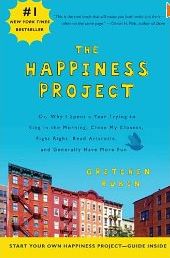
Gretchen Rubin combined some of these recommendations with erudite references to great philosophers’ and thinkers’ guidance, health recommendations, and time-tested common sense in The Happiness Project.
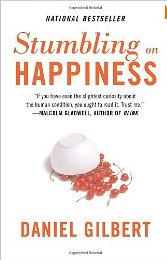
Daniel Gilbertof Harvard’s bestseller, Stumbling on Happiness , synthesized social science research about imagined expected future outcomes and control over them in relation to the experience of happiness.
He noted that human imagination and prediction are inaccurate, so he suggested using “surrogates” of future events to more accurately test future satisfaction with real-life choices like having children, moving to a new home, or working in a new job.
Other ways to cultivate the Emotional Intelligence capabilities of positive emotional experience are highlighted in related Posts:
They analyzed more than 450,000 responses to the Gallup-Healthways Well-Being Index, a daily survey of 1,000 US residents conducted by the Gallup Organization, and distinguished two elements of “subjective well-being” or happiness:
Emotional well-being – Frequency and intensity of joy, stress, sadness, anger, and affection,leading to pleasant or unpleasant quality of life, measured by Cantril’s Self-Anchoring Scale of yesterday’s emotional experiences
Life evaluation – Subjective assessment of one’s life.
They found that as emotional well-being rises with income up to about $75,000 in 2010 US dollars, then does not continue increasing with higher income levels.
In addition, daily emotions were predicted by health status, care giving, loneliness, and smoking.
Life evaluation increased as income and education increased, and the study confirmed that low income exacerbates the emotional pain associated with divorce, ill health, and being alone.
Michael Norton
In fact, Michael Norton of Harvard Business School found that volunteers’ happiness increased with more money only when they spent money on others.
Replicated in Canada, Uganda, Rwanda, and other countries, his research found that happiness increases when people:
Select experiences over things
Spend money on others, regardless of the amount of money spent
He concluded that money can buy happiness when it’s spent on other people and experiences in Happy Money: The Science of Smarter Spending … a worthwhile reminder in this season of gift-giving.
Norton’s TED talk
British researchers investigated longitudinal connections between happiness and money, and found that people who express more positive emotions as teenagers have more positive life outcomes as adults, including higher education and income.
Jan-Emmanuel De Neve of University College London and Andrew Oswald of
Jan-Emmanuel De Neve
University of Warwick analyzed Carolina Population Center’s National Longitudinal Study of Adolescent Health (“Add Health”) profiles of more than 10,000 Americans at ages 16, 18 and 22 and their annual incomes at age 29.
De Neve and Oswald controlled for education level, IQ, height and self-esteem, all known to contribute to financial success.
Reported in Proceedings of the National Academy of Sciences, they found that those who express more positive emotions in their teen years, reported greater life satisfaction and optimism as young adults, were more likely to earn a university degree, secure employment, advance to higher-level roles, and have higher incomes by age 29.
The survey assessed life satisfaction on a 5-point scale, and found that an increase of 1-point at age 22 made translated to a $2,000 difference in later income measured in in 2012 US dollars, and the later income difference between the happiest and unhappiest participants was $8,000 by the same measure.
Andrew Oswald
DeNeve and Oswald validated the finding by comparing about 3,000 sibling pairs who shared the same parents and socioeconomic status.
They found that the happier siblings also had more positive emotions and life evaluation than less-happy participants.
One explanation of these findings is that observers generalize positive impressions of people who display more positive emotions in a “halo effect”, so these happier individuals are seen as more likeable, competent and attractive, and are offered more opportunities for education, employment, and social relationships.
These findings suggest the importance of increasing the “Emotional Intelligence” competencies of emotional self-regulation.
See The Happiness-Money Connection: Halo Effect of Happy Mood?Part 2 for research-based recommendations on developing happiness and well-being.
-*How do you view the connection between happiness and money?
American humorist and cartoonist James Thurber reassured his readers that “It is better to know some of the questions than all of the answers,” a dictum supported by philosophers, mindfulness meditation practitioners, psychotherapists, scientists, artists, and creative others.
Given the importance of questioning, many resources are available to refine skill in inquiry: Understanding others’ questions, framing high-impact queries, responding to others, and using questions to catalyze individual and organizational change.
His approach is applicable in organizational management and change situations, and argues for increasing personal accountability while decreasing blame by focusing on the underlying work concerns like achieving revenue targets, deliverable timelines, customer satisfaction goals, cost savings.
Like Miller, Eric Vogt, Juanita Brown, David Isaacs advocate “What?” questions in The Art of Powerful Questions: Catalyzing Insight, Innovation, and Action.
This team asserts that high-impact questions in business situations are valuable because they
• Evoke the listener’s curiosity, imagination, creative problem-solving, new possibilities
• Stimulate reflective conversation
• Provoke thoughtful consideration of diverse perspectives, contributions
• Clarify underlying assumptions
• Generates energy, progress, improvement
• Focus attention on issues and alternatives
• Memorably resonate with meaning
• Articulate progress toward shared understanding
• Suggest more questions
Dennis Matthies
Dennis Matthies, Chief Questioning Officer of Training organization Vervago supplies the “how” of questioning by helping business participants refine skill in formulating seven types of “precision” analytic questions, drawing on formal logic and critical thinking disciplines:
AssumptionQuestions, including existence, uniqueness, measurement, possibility, value, audience, time constancy, category, similarity
Basic Critical Questions (BCQ), including data, source
Questions of Clarification, including ambiguity/vagueness, “pivot table” segmentation for granular analysis
Go/No Go Questions, including “meeting basics and participation”, participant motivation analysis, inquiry focus
Vervago advocates “precision” responses to questions by:
Referring to the question
Answering briefly
Anticipating and addressing underlying concerns embedded in the question.
David Cooperrider
David Cooperrider of Case Western Reserve University broadened the vision of effective questioning’s potential impact when he developed Appreciative Inquiry (AI) as an affirmative approach collaborative organizational change.
Peter Lovatt founded the Dance Psychology Lab at the University of Hertfordshire, which combines his performance experience as a professional dancer with his training as a research psychologist.
In several TED talks, he marvels at his career trajectory because he “was rubbish at school,” and was relegated to Special Education classes, probably due to his undiagnosed ADHD.
His career demonstrates an innovative synthesis of disciplines with his current research agenda investigating the impact of dance on problem solving using divergent thinking and convergent thinking strategies.
Peter Lovatt at TED
Lovatt’s experiments demonstrated that volunteers who engaged in improvised dance movements solved divergent thinking problems more quickly than when they performed more structured dance maneuvers, or no movement at all.
Similarly, his work showed these volunteers increased their speed of solving convergent thinking problems after they engaged in choreographed dance moves.
These findings may not imply that innovation teams should engage in structured and unstructured movements at work, but it does support the positive impact of dance movement on neural processing speed and problem solving.
Lovatt extended this work to patients with Parkinson’s disease, known to disrupt divergent thinking processes, to validate his findings with normal volunteers.
He demonstrated that Parkinson’s disease patients improved the divergent thinking problem solving after they engaged in improvised dance sequences, and hypothesized that these patients develop new neural pathways to “work around” dopamine-depleted blockages.
Peter Lovatt leading dance experiment
Lovatt’s group found increases in self-esteem among participants in dance styles that:
Include more improvisational elements (“high degree of tolerance for not getting it right”),
Are gender or culturally neutral
Raise the heart rate
Are repetitive
Encourage looser fitting clothes (in contrast to ballet)
MacArthur Fellowship and Tony Award-winning choreographer Twyla Tharp discussed innovation and collaboration through the lens of dance in two books with lessons applicable to business.
In The Creative Habit: Learn It and Use It for Life she asserts that creative expression requires perseverance, practice, hard work, “showing up,” and cultivating systematic habits to act upon innovative initiative.
This echoes the action-orientation advocated by Malcolm Gladwell in his observation of 10,000 hours of practice to develop virtuoso performance and by sports psychologist K. Anders Ericsson, summarized in these related posts:
Tharp’s The Collaborative Habit: Life Lessons for Working Together discusses both how collaboration can change the participants, and practical approaches to collaborative creation – which she acknowledges has not been completely smooth in some of her work with luminaries including Richard Avedon, Mikhail Baryshnikov, Bob Dylan, Milos Forman, Norma Kamali, Frank Sinatra.
Two related posts on Collaboration are:
Design Thinking integrates structured creative problem-solving and “systems thinking” methods in design, engineering, business, educational, and non-profit settings by drawing on:
“Empathy” for the problem context, often using ethnographic field research
Creativity in developing solutions
Rationality in aligning solutions with the context
David M. Kelley
David M. Kelley, IDEO founder, applied “design thinking” to business, based on RolfFaste’s discussions Stanford of RobertMcKim’s foundational book, Experiences in Visual Thinking.
Design Thinking has been categorized in seven stages:
Define the problem, audience, criteria for “success,” priority
Research the issue’s history, obstacles, previous efforts, stakeholders, end-users, thought leaders
Ideate via brainstorming to identify end-users’ needs, wants
Prototype with combined, expanded refined ideas, solicit feedback from end users, others
Choose solutions after reviewing the objective
Implement after determining, planning tasks, resources, assignments, execution timeline
Learn by gathering end-user feedback, evaluating whether the solution met its goals, document successes and areas for improvement Tim Brown, CEO of IDEO, discussed the cycle of Inspiration-Ideation–Implementation by applying such complementary processes as analysis and synthesis, and convergent and divergent thinking in Change by Design: How Design Thinking Transforms Organizations and Inspires Innovation.His TED Talk characterizes Design Thinking as a collaborative, participatory, human-centered process to solve problems innovatively by integrating opposing ideas and constraints and balancing among:
user desirability
technical feasibility
economic viabilityThomas Lockwood’s Design Thinking: Integrating Innovation, Customer Experience, and Brand Value, echoed Design Thinking’s use of careful observation, field research, graphic representation of solutions, and prototyping.He augmented the familiar framework by contributing an additional recommendation: Concurrent business analysis, to accelerate innovative business strategy development and implementation.
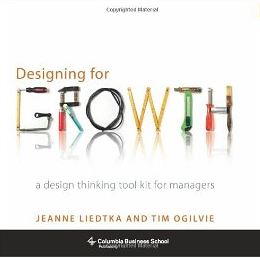
University of Virginia Darden School of Business professor Jeanne Liedtka added to Design Thinking process structures with her four-phase, 10-step framework in Designing for Growth: A Design Thinking Tool Kit for Managers, organized around key questions:
What Is?
What If?
What Wows?
What Works?
Frog Design’s David Sherwin and Robert Fabricant developed Collective Action Toolkit, well-suited for young people in developing countries to become involved in developing solutions to pressing community problems.The process helps them develop important life skills:
Critical thinking
Listening to others
Asking effective questions
Generating innovative ideas
Active collaboration
Creating high-impact, motivating stories
Sustaining collective action
CAT activities draw on design Thinking Principles in six areas:
Imagine New Ideas
Make Something Real
Plan for Action
Build Your Team
Seek New Understanding
Clarify Your GoalOutputs are documented according to:
What We Did
What We Learned
What We’ll DoNext
Frog’s Collective Action Toolkit was field-tested with girls Bangladesh and Kenya, who reported increased self-confidence to engage in community development activities, and increased involvement and leadership in community building initiatives.-*What are some ways that Design Thinking can solve problems you see in work and life?
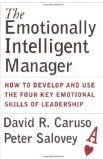
Peter Salovey, newly appointed President-Elect of Yale University, introduced the term “Emotional Intelligence” in 1989 as “the ability to monitor one’s own and others’ feelings and emotions, to discriminate among them, and to use this information to guide one’s thinking and actions”.
Yale’s new President, is considered a pioneer and originator of research into four elements of EQ used to think and behave adaptively:
Accurately perceiving, identifying, pinpointing emotions in self, others
Expressing, using emotions as information to decide, plan, achieve, communicate, create, think
Understanding, predicting own and others’ emotions, temporary moods
Self-regulating, transforming emotions.
Peter Salovey
Salovey is widely regarded as one who embodies these characteristics and creates community through his bluegrass band performances with Professors of Bluegrass, active participation in student life (as a Super Mario Brother at Halloween 2009, accompanied by the Yale Symphony orchestra during his tenure as Provost), and award-winning teaching and research.
Emotional Intelligence can be intentionally increased in work and personal settings by increasing awareness of one’s own and others’ emotions. One way to achieve this goal is through “Mindfulness,” or non-evaluatively, non-judgmentally attending to physical, cognitive, and emotional experiences arising in the present moment.
He discussed the possible impact of these practices on business leadership and government, building on research findings that mindfulness practice can lower aggressive feelings and increase peaceful sentiments.
He added that Obama “… is really present, he has a lot of different qualities that seem to indicate he is emotionally balanced, not driven by ego concerns, that he knows how to balance family life and the impossible job that he has. There is something about him that’s measured, very peaceful, he listens very, very deeply.”
Many observers will evaluate whether Salovey can put into practice Emotionally Intelligent leadership at Yale, and whether Barack Obama can demonstrate Mindfulness in peaceful international relations and domestic issue-resolution during his final term in office.
-*Where do you observe emotional intelligence and mindfulness among top leaders?












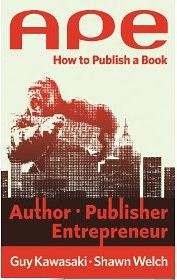 Guy Kawasaki’s new book and most recent book have departed from his focus on business strategy, marketing, and storytelling to focus on tactical “how-to” guides.



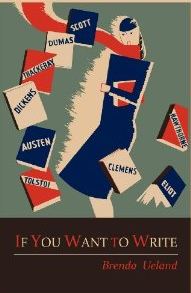 If You Want to Write


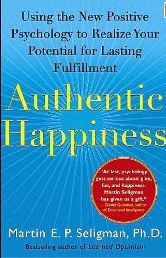


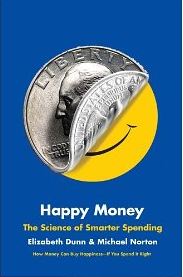 He concluded that money can buy happiness when it’s spent on other people and experiences in

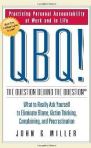 John Miller’s sales-oriented
 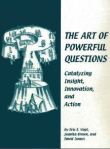 Like Miller, Eric Vogt, Juanita Brown, David Isaacs advocate “What?” questions in The Art of Powerful Questions: Catalyzing Insight, Innovation, and Action.

 AI’s “4Ds” of organizational change share some similarities with Design Thinking Processes:












 Kathryn Welds, PhD | Curated Research + Commentary