Increase Self-Control with Purpose in Life, Positive Outlook, Humility

Anthony Burrow

Anthony Burrow

People with a sense of purpose are more likely to make choices with long-term benefits like saving for retirement and children’s education.
In addition, they are less likely to be diverted by short-term gratification and impulsive actions like such as cigarette smoking, drug use, gambling, and driving under the influence, found Cornell’s Anthony L. Burrow and R. Nathan Spreng in work with more than 500 adults.
As a result, Purpose in Life was related to reduced impulsivity and increased self-control.

Nathan Spreng

Nathan Spreng

Volunteers completed a personality inventory and a self-rating of Purpose in Life before making choices about whether to take a smaller amount of money immediately or a larger amount at some later date.

Waiting times and amount of the payoffs differed during each trial.
Participants who said they had a clear life purpose made longer-term, higher-payoff choices, suggesting greater ability to curb the impulse for an immediate reward, and greater self-management capacity.

Chai Jing

Chai Jing

Another factor in reducing one type of impulsive behavior – dangerous driving – is a “positivity bias,” hallmarked by seeing positive events as more salient than negative incidents, reported University of Chinese Academy of Sciences’ Chai Jing , Weina Qu, Xianghong Sun, Kan Zhang, and Yan Ge.

Weina Qu

Weina Qu

They studied more than 40 non-professional drivers using electroencephalograph data, self-reports of driving, violation reports, and International Affective Picture System (IAPS)  scores to measure negativity biases.

Volunteers identified whether a series of 80 pictures had blue borders or red borders around images that implicitly evoke negative, positive, or neutral emotions.
Dangerous drivers took longer to respond on the border-color task when the image was negative, suggesting greater attention to negative input.

Patrick Hill

Patrick Hill

Sense of purpose is also linked to greater longevity in a study by Carleton University’s Patrick Hill and Nicholas Turiano of the University of Rochester, in their study of more than 6100 Americans followed over 14 years.

Rachel Sumner

Rachel Sumner

Purpose in Life can increase White adult’s comfort with diverse groups, and may be associated with reduced prejudice, noted Cornell’s Burrow and Rachel Sumner, Maclen Stanley of Harvard, and Carlton University’s Patrick L. Hill in their study of more than 500 Americans.

Maclen Stanley

Maclen Stanley

Participants who received an experimental prime of life purpose also reported less preference for living in an ethnically homogeneous White city.
These effects persisted were independent of volunteers’ positive affect and perceived connections to ethnic out-groups.

Eddie M.W. Tong

Eddie M.W. Tong

Humility is another characteristic associated with reduced impulsivity and greater self-control in research by National University of Singapore’s Eddie M.W. Tong, Kenny W.T. Tan, Agapera A.B. Chor, Emmeline P.S. Koh, Jehanne S.Y. Lee, and Regina W.Y. Tan.

Defined as the ability to tolerate failures without self-deprecation, and to view successes without developing a sense of superiority, humility primes were associated with improved performance in a physical stamina (handgrip), resisting chocolate, and an insoluble tracing task.

Kenny W.T. Tan

Kenny W.T. Tan

Humility’s effect on self-regulation was significantly different from self-esteem, which had no impact on self-control.
Likewise, achievement motivation and compliance motivation did not explain increased performance.

Taken together, these findings suggest that effectively managing oneself in the face of challenging and tempting circumstances is enhanced by having a clear purpose in life, cultivating a positive bias and humility.

-*To what extent does having a sense of purpose make it easier to maintain self-control in challenging situations?

Follow-share-like http://www.kathrynwelds.com and @kathrynwelds

Related Posts:

Twitter:  @kathrynwelds
Google+
LinkedIn Groups Psychology in Human Resources (Organisational Psychology)
Facebook
Blog: – Kathryn Welds | Curated Research and Commentary

©Kathryn Welds

Openness to Experience Predicts Untapped Musical Ability

David M. Greenberg

David M. Greenberg

Openness to Experience was the most accurate predictors of musical ability, even among people with no musical experience, found University of Cambridge’s David M. Greenberg and Daniel Müllensiefen of University of London.

Daniel Müllensiefen

Daniel Müllensiefen

This finding enables parents and educators to encourage promising but inexperienced musical talent to pursue the cognitive and performance-enhancing benefits of musical training, described in earlier blog posts.

For example, musical training’s beneficial effect on reducing the cost of task switching is relevant in many work situations that require rapid shifts in attentional focus, and was empirically validated by York University’s Linda Moradzadeh, Galit Blumenthal, and Melody Wiseheart.

Paul Costa

Paul Costa

More than among 7,800 participants provided detailed demographic information, including their musical experience.
In addition, they completed the Big Five Inventory of personality dimensions, developed by NIH’s Paul Costa and Robert McCrae:

  • Extroversion,
  • Agreeableness,
  • Conscientiousness,
  • Neuroticism,
  • Openness to Experience.
Robert McCrae

Robert McCrae

Within Openness to Experience, volunteers rated their agreement with Openness to Aesthetics items like:
“I see myself as someone who:

  • values artistic, aesthetic experiences,
  • has few artistic interests,
  • is sophisticated in art, music, or literature.”

Besides their Openness to Aesthetic experience, participants rated their musical expertise, and completed musical ability assessments.
Almost three-quarters reported playing no musical instrument.

Linda Moradzadeh

Linda Moradzadeh

Volunteers listened to unfamiliar 10-note to 17-note melodies, which were repeated in a different key, then decided whether the two melodies were the same.
In another musical skills task, volunteers listened to excerpts of instrumental music were overlaid with a metronomic beep, then judged whether the beep was on the beat.
Those who scored higher on Openness to Experience performed significantly better on musical tasks, even if they reported no musical experience.

Galit Blumenthal

Galit Blumenthal

These findings suggest that it’s possible to identify people who are likely to have musical talent based on their personality characteristics, even if they have no musical experience.
This research may encourage families, educators, and academic policy makers to encourage music training and capitalize on its well-documented cognitive benefits – even among those who are Open to Experience but not musically experienced.

-*How does Openness to Experience enhance work-related performance?

Follow-share-like http://www.kathrynwelds.com and @kathrynwelds

Related Posts:   

Twitter:  @kathrynwelds
Google+LinkedIn Groups Psychology in Human Resources (Organisational Psychology)
Facebook
Blog: – Kathryn Welds | Curated Research and Commentary

©Kathryn Welds

Men Negotiate More Assertively with Women Managers

Ekaterina Netchaeva

Ekaterina Netchaeva

Men volunteers negotiated more assertively with women in supervisory roles in laboratory tasks, compared with strategies they used with male supervisors, reported Bocconi University’s Ekaterina Netchaeva, Maryam Kouchaki of Northwestern University, and Washington State University’s Leah D. Sheppard.

Maryam Kouchaki

Maryam Kouchaki

This cross-gender negotiation trend was reduced when woman in supervisory roles demonstrated directness and proactivity (“administrative agency”) rather than self-promotion and power-seeking (“ambitious agency”).

Leah D. SheppardThe team told 52 male and 24 female volunteers that they would negotiate their salary at a new job in a computer exercise with a male or female hiring manager.

After the negotiation, participants completed an implicit threat test by identifying words that appeared on a computer screen for a fraction of a second in a variation of the Implicit Association Test developed by Harvard’s Mahzarin Banaji and Anthony Greenwald of University of Washington.
Participants who chose more threat-related words like “fear” or “risk,” were inferred to feel more threatened.

Mahzarin Banaji

Mahzarin Banaji

Male participants who negotiated with a female manager selected more threat-related words on implicit association test, and they negotiated for a higher salary ($49,400 average), compared to men negotiating with a male manager ($42,870 average).

Linda Babcock

Linda Babcock

The manager’s gender didn’t affect female participants, who negotiated a lower salary ($41,346 average), reflecting a common trend where women tend not to negotiate, or to negotiate less vigorously, as noted by Carnegie Mellon’s Linda Babcock and Hannah Riley Bowles of Harvard.

Anthony Greenwald

Anthony Greenwald

In another experimental task, more than 65 male volunteers decided how to share a $10,000 bonus with a male or female team member or with supervisor.
Male participants tended to equally divided the money with male or female team members, but reacted significantly differently with a female supervisor.

Men who endorsed more threat-related words chose to keep more money for themselves when the supervisor was female, compared with when they were paired with a male supervisor.

Hannah Riley Bowles

Hannah Riley Bowles

A related online survey of 226 male and 144 female volunteers found that male participants decided to keep a larger share of the $10,000 bonus when the female manager was described as ambitious or power-seeking, but responded significantly more favorably when the female supervisor was described as proactive or ambitious.
In the latter case, male volunteers offered approximately the same bonus amount to female managers.

This suggests that women managers with male direct-reports enhance these relationships by adopting a consciously direct leadership style, characterized by consistent communication, and proactive problem-solving.

Netchaeva’s group posits that women who adopt a direct, active leadership style reduce threat in cross-gender reporting relationships, and enable greater cooperation in bargaining and negotiation situations.

-*To what extend have you observed evidence of implicit threat responses in cross-gender workplace reporting relationships?

Follow-share-like http://www.kathrynwelds.com and @kathrynwelds

Related Posts:

©Kathryn Welds

Touch Can Increase Compliance, Persistence, Performance

Edward T. Hall

Edward T. Hall

Fifty years ago, Edward T. Hall, then of Illinois Institute of Technology, identified differences in interpersonal space ranging from intimate to personal to social to public, and inspired examination of acceptable interpersonal distance across cultures, genders, and organizations.

Circles of Interpersonal Space

Circles of Interpersonal Space

A decade later, Chris Kleinke, then of Wheaton College, expanded Hall’s work on “proxemics” as he explored the impact of close contact in public spaces, particularly non-intimate touching.

He found that in a relatively low-touch culture like the U.S., directing gaze and touch toward others increased their compliance with ambiguous requests in laboratory experiments.

Chris Kleinke

Chris Kleinke

Since then, this finding has been incorporated in sales, learning, healthcare, and other service settings based on evidence that touch increased performance when applied after a person initially agreed to a request, in research by Oakland University Jane C. Nannberg and Christine H. Hansen.

David Vaidis

David Vaidis

“Dosage” of touch had an additive effect when University of Paris’ David Vaidis and Severine Halimi-Falkowicz of University of Provence found that people who were touched two times persisted in lengthy tasks more than people who were touched once.

Likewise, University of Missouri’s Frank N. Willis and Helen K. Hamm found that touch contributed to compliance with challenging requests, especially in gaining agreement from people of the same gender as the requestor.

Séverine Halimi-Falkowicz

Séverine Halimi-Falkowicz

Another demonstration of influential touch was when female restaurant servers briefly touched customers on the hand or the shoulder while returning change from the bill payment.

These customers’ reactions were compared with other patrons who were not touched by the servers, in research by University of Mississippi‘s  April H. Crusco and Christopher G. Wetzel of Rhodes College.

Chris Wetzel

Chris Wetzel

They evaluated customers’ reactions to service, food, setting, and other elements of the dining experience with a restaurant survey as well as the gratuity amount, expressed as a percentage of the bill.

Customers who were touched on the hand or shoulder gave the server significantly larger gratuities than those who were not touched, and there was no significant difference between tips from customers who had been touched on the hand or the shoulder.

These findings confirm the influence of interpersonal touch in public commercial settings, and offer a reminder that non-intimate touching can increase cooperation and commitment to complete lengthy or challenging tasks.

-*How have you used interpersonal touch in public work situations to enable cooperation and performance?

Follow-share-like http://www.kathrynwelds.com and @kathrynwelds

Related Posts:

Twitter:  @kathrynwelds
Google+
LinkedIn Groups Psychology in Human Resources (Organisational Psychology)
Facebook
Blog: – Kathryn Welds | Curated Research and Commentary

©Kathryn Welds

Power Increases Responsibility, Generosity toward Future Generations

Leigh Plunkett Tost

Leigh Plunkett Tost

Power can increase future perspective, feelings of social responsibility, and intergenerational generosity toward others, according to University of Michigan’s Leigh Plunkett Tost, Kimberly A. Wade-Benzoni of Duke University, and University of Idaho’s Hana Huang Johnson.

Priscilla Chan, Mark Zuckerberg

Priscilla Chan, Mark Zuckerberg

Mark Zuckerberg and Pricilla Chan’s sizeable gift of Facebook stock on the occasion of their daughter’s birth is a recent example.

Katherine DeCelles

Katherine DeCelles

This finding contrasts previous reports that power tends to cause people to act in more self-interested ways with peers, particularly “in the presence of a weak moral identity,” according to University of Toronto’s Katherine DeCelles, D. Scott DeRue of University of Michigan, Harvard’s Joshua Margolis, and Tara L. Ceranic of University of San Diego.

Kimberly Wade-Benzoni

Kimberly Wade-Benzoni

Focusing on previous power experiences also was linked with a longer-term time perspective among more than 110 participants who wrote about a time they experienced power over others.
Volunteers in studies by Tost’s group reported greater willingness to allocate charitable donations to a cause with long-term benefits than one addressing an immediate need, compared with a matched group that didn’t write about a previous power experience.

Hana Huang Johnson

Hana Huang Johnson

In another task, more than 230 volunteers also wrote a power prime, then chose between allocating a $1,000 bonus to themselves or another participant now or a larger amount in the future.
Participants who recalled a power experience were more likely to allocate a greater future bonus to themselves and someone else.

Scott DeRue

Scott DeRue

Tost’s team suggested that people with intergenerational power typically feel responsible for ensuring others’ long-term interests, manifested in generous behavior to younger generations.
DeCelles’ findings suggest that moral identity may interact with intergenerational relations to influence people to act with less self-interest and greater altruism.

Joshua Margolis

Joshua Margolis

In additional studies, more than 160 participants were randomly assigned to influence tasks that other group members performed.
The controlling participants reported greater willingness to allocate more future lottery winnings to another group member compare with volunteers who did not control others’ assignments.

Sonya Lyubomirsky

Sonya Lyubomirsky

Many of these paradoxes of generosity and altruism are investigated through University of Notre Dame’s Science of Generosity initiative.
One promising project is led by University of California, Riverside’s Sonya Lyubomirsky, who explored “the how” and “myths” of happiness.

She currently investigates “ripple” and contagion effects of generosity propagation in work settings, and argues that performing generous acts makes the giver, receiver, connector, and observer happier.
In addition, she posits that workplace generosity promotes a positive workplace climate.

Tara Ceranic

Tara Ceranic

Feelings of power seem to invoke a sense of responsibility to ensure and enable others’ interests.
This insight can benefit non-profit organizations seeking increased donations by highlighting that those with decision-making authority have the power to shape the performance and outcomes of the generations to come.

-*To what extent do those with organizational power demonstrate a longer time perspective and willingness to enable the next generation’s well-being?

Follow-share-like http://www.kathrynwelds.com and @kathrynwelds

Related Posts:

Previous blog posts have outlined the varied positive effects of focusing on previous power experiences, and on time perspective’s relationship with investment choices.

Twitter:  @kathrynwelds
Google+LinkedIn Groups Psychology in Human Resources (Organisational Psychology)
Facebook
Blog: – Kathryn Welds | Curated Research and Commentary

©Kathryn Welds

Perception of CEOs’ Non Verbal Leadership Behaviors Affect IPO Valuations, Predict Financial Performance

Elizabeth Blankespoor

Elizabeth Blankespoor

Favorable first impressions of CEOs can affect new companies’ valuations and can predict near-term performance.

Perception of CEO non-verbal behavior during IPO road show presentations was associated with higher valuations at each IPO stage, found Stanford’s Elizabeth Blankespoor, Greg Miller of University of Michigan, and University of North Carolina’s Brad Hendricks.
These findings underscore the importance of road show presentations and presenters’ credibility to investors, underwriters, analyst, and financial media.

Greg Miller

Greg Miller

Blankespoor’s team noted that for most investors, the road show is the first time they see the CEO in the two-week interval between setting the initial proposed price and determining the final offer price.
As a result, Blankespoor and colleagues posit “a tight link between perceptions and valuation.”

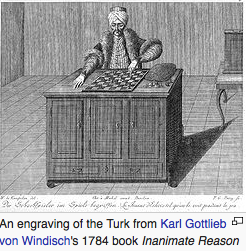
Participants in their investigation were hired through Amazon’s Mechanical Turk, a crowdsourcing task website, to view videotapes of CEOs presenting IPO roadshow, then to rate the speakers for competence, attractiveness, and trustworthiness.

Brad Hendricks

Brad Hendricks

At least 40 people viewed each series of 30-second video clips from 224 actual road show presentations between 2011 and 2013, with modified audio to muffle words while retaining vocal pitch and rhythm.

After controlling for other factors that could affect stock price like CEO age, experience, and education, companies with higher-rated CEOs on a composite score of competence, attractiveness, and trustworthiness ratings received a larger price increase for the proposed offering price and the revised price for secondary markets.

Mechanical TurkFor each 5% increase in CEO composite perception score, the final market price was 11% higher, and CEO perceived competence and attractiveness had a significant impact on firm valuation.
However, trustworthiness alone had no effect.

These initial perceptions also correlated with companies’ early performance, based on stock prices up to 12 months after the IPO, suggesting that “…investors … glean real additional information about the CEO from … nonverbal behavior and … perceptions of management are signals for firm value.”

Gotham Research GroupBloggers as well as traditional media outlets are important arbiters of CEO reputation.
In a commissioned analysis of 10 well-known institutional bloggers by the Gotham Research Group, perceptions of CEO authenticity were significantly related to bloggers’ evaluations of CEO competence and performance.

Candor, bluntness, fearlessness, specificity, plain words, examples from stories, warmth, frequent contact with customers and employees, and acknowledging challenges and worthy competitors are all essential to setting a credible tone, according to this report.

Weber ShandwickIn fact, Public Relations firm Weber Shandwick noted that 49% of company reputation is attributed to CEO reputation, and 60% of market value is attributed to company reputation.
Perception of a CEO, the firm argues, has significant influence on market value, underscoring empirical findings by Blankespoor’s team.

-*What non-verbal behaviors and attributes signal “leadership” and “executive presence” to you?

Follow-share-like http://www.kathrynwelds.com and @kathrynwelds

Related Posts:

Twitter:  @kathrynwelds
Google+LinkedIn Groups Psychology in Human Resources (Organisational Psychology)
Facebook
Blog: – Kathryn Welds | Curated Research and Commentary

©Kathryn Welds



Recalling Supportive Relationships Can Reduce Dislike of Outsiders

Animosity toward perceived outsiders remains a powerful driver of political attitudes and aggressive behavior toward out-groups, even in diverse societies.

Muniba Saleem

Muniba Saleem

However, intergroup discord can be reduced by recalling times of connection to supportive others, found University of Michigan’s Muniba Saleem collaborating with Sara Prot, Ben C. P. Lam and Craig A. Anderson of Iowa State, plus Harvard’s Mina Cikara and Margareta Jelic University of Zagreb.

John Bowlby

John Bowlby

Their study is based on observations by John Bowlby of London’s Child Guidance clinic and his protégée, University of Virginia’s Mary Ainsworth, that healthy social and emotional functioning depends on healthy attachment to at least one reliably supportive person in childhood.

Mary Ainsworth

Mary Ainsworth

Saleem’s team confirmed that evoking early positive memories of attachment can modify aggressive thoughts and behaviors based on fear and insecurity, particularly among those strongly identified with their in-group.

Muzafer Sherif

Muzafer Sherif

This approach proved more effective than earlier prejudice-reduction techniques requiring different groups to work together on shared goals such as in Muzafer Sherif’s Robber’s Cave experiment with University of Oklahoma colleagues O. J. Harvey, B. Jack White, William R. Hood, and Carolyn W. Sherif.
Saleem’s intervention produced more robust attitude change because it  reduced fear that can lead to aggression.

Muzafer Sherif - Robber's Cave

Team Tasks at Robber’s Cave

In Team Saleem’s experiments, more than 275 people from University of Michigan had the opportunity to undermine counterparts from a rival school, Ohio State, with no negative personal consequences.

Sara Prot

Sara Prot

Participants completed surveys of their propensity for attachment anxiety and avoidance of close relationships.
Then, half described someone “who loves and accepts you in times of need” while the remaining volunteers described a person “who lives in your neighborhood, but you do not know well.”

Craig Anderson

Craig Anderson

Next, University of Michigan participants assigned 11 puzzles of varying difficulty to an Ohio State student, who could win a $25 gift card by completing all the puzzles within 10 minutes.
University of Michigan volunteers could reduce the likelihood of the OSU student winning the gift card by assigning more challenging puzzles.

Mina Cikara

Mina Cikara

Those who strongly identified with University of Michigan and who were primed to think about the close, loving personal relationship were significantly less likely to assign difficult puzzles.
This result suggests that the positive emotional memory reduced the impulse to undermine a rival’s positive outcome even with a strong in-group preference.

In a related study, more than 260 Americans recalled one of several situations:

  • Someone close was available, supportive, and loving,
  • Typical, uneventful workday,”
  • When you accomplished a meaningful goal.”

Islamic State of Iraq and Syria

Islamic State of Iraq and Syria

Saleem’s team tested related scenarios closer to current geo-political concerns:  Volunteers in the US reported their reactions to the terrorist group Islamic State of Iraq and Syria (ISIS).
Their descriptions included “angry,” “disgusted,” and “fearful.”

Finally, participants indicated their degree of support for “militaristic and aggressive policies intended to counter terrorism,” such as “I think it is OK to bomb an entire country if it is known to harbor ISIS terrorists.”

Gordon Moskowitz

Gordon Moskowitz

Volunteers prompted to recall a secure attachment were less likely to support military and aggressive measures against ISIS members and demonstrated significantly reduced negative stereotypes and negative emotions.

This effect was not due to increase positive mood because participants who recalled the positive experience of accomplishing an important goal responded significantly more aggressively.

Irmak Olcaysoy Okten

Irmak Olcaysoy Okten

Though promising, the impact of this work may be limited to those who have the advantage of experiencing close, secure relationships.
People who have missed these experiences are more likely to express prejudice, lack of remorse for aggression toward others.
In addition, cross-school rivalry and fears of terrorists are at least partially condoned, whereas racial and cultural prejudices are socially unacceptable to many.

As a result of social disapproval, some prejudices becomes implicit or unconscious.
They can be detected only through indirect measures such as the Implicit Association Test, and more recently, by evidence of biased time perception accompanying racial prejudice.

Cynthia Gooch

Cynthia Gooch

For example, White people who were concerned about appearing racially prejudiced were asked to judge the length of time they viewed faces of White men and Black men.
These White volunteers thought that time passed 10% more slowly than measured by clock time: They reported viewing faces of Black men for longer than they actually had, found Lehigh University’s Gordon B. Moskowitz and Irmak Olcaysoy Okten with Cynthia M. Gooch of Temple University.

Perceptual bias about time is also relevant to high stakes situations including perceived duration of job interviews for candidates of a different race than the interviewer, and physicians’ perception of the length of medical encounters.

This intergroup perceptual bias also can have significant consequences when white police officers’ estimate the duration of an encounter with a suspect of another race, and when they determine lethal force should be initiated.

First Person Shooter Task

First Person Shooter Task

This research reinforces the importance of early and later supportive relationships in reducing bias, subtle undermining, and over aggression toward other groups

-*How do you reduce prejudice and aggression across work teams?

Follow-share-like http://www.kathrynwelds.com and @kathrynwelds

Related Posts:

Twitter:  @kathrynwelds
Google+LinkedIn Groups Psychology in Human Resources (Organisational Psychology)
Facebook
Blog: – Kathryn Welds | Curated Research and Commentary

©Kathryn Welds

Confidence Enables Persistence Enables Performance

Brian J. Lucas

Brian J. Lucas

People consistently underestimated the number of creative ideas they could generate if they continued working on a task, particularly on subjectively difficult innovation challenges, found Northwestern’s Brian J. Lucas and Loran F. Nordgren.

Loran Nordgren

Loran Nordgren

People who were undaunted by difficult tasks were more able to persist in developing novel ideas, and their work produced both more ideas and higher quality of innovations than they predicted.
This research suggests the benefits of “grit”, described by University of Pennsylvania’s Angela Duckworth as perseverance and passion for goals, particularly long-term objectives.

Angela Duckworth

Angela Duckworth

In Lucas and Nordgren’s research, more than 20 volunteers had 10 minutes to generate as many original ideas as possible for things to eat or drink at a U.S. Thanksgiving dinner.
Then, external judges evaluated responses for originality and suggestions rated “above average” were eligible to win a $50 lottery.

Volunteers took a break from idea generating, and estimated the number of ideas they expected to generate with another 10 minutes’ effort before they continued the idea development task.
External raters judged ideas developed in the second work phase as significantly more original than those in the initial session.

Screen Shot 2015-10-05 at 5.14.56 PMThese results were replicated with professional comedy performers from SketchFest, the largest sketch comedy festival in the U.S.
Performers received a comedic scene set-up such as “Four people are laughing hysterically onstage. Two them high five, and everyone stops laughing immediately and someone says….”

Their task was to create as many endings as they could during four minutes and to
predict the number of endings they would develop with during an additional four minutes work time.

These professional comedians also significantly underestimated the number of ideas they would develop with on their second attempt, suggesting persistent undervaluation even among experts.
When a task seems challenging, “people decrease their expectations about how well they will perform,” argued Lucas and Norgren, even though “creative thought is a trial-and-error process that generally produces a series of failed associations before a creative solution emerges.”

Thomas Edison

Thomas Edison

These findings indicate that negative expectations can reduce persistence, leading to performance below potential.
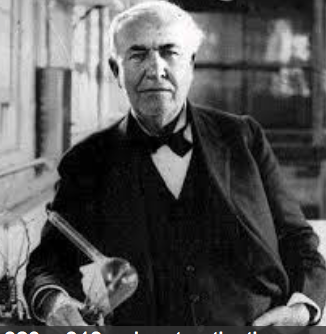
They confirm Thomas Edison’s assertion that “Our greatest weakness lies in giving up. The most certain way to success is always to try just one more time.”

This effect was also demonstrated in comparisons of people’s numeric competency including:

  • Objective numeracy, or ability to work with numbers: “If the chance of getting a disease is 10 percent, how many people would be expected to get the disease out of 1000?
  • Subjective numeracy, a self-evaluation of math abilities: “How good are you at working with percentages?”;
    How often do you find numerical information to be useful?
  • Symbolic-number mapping abilities, or predicting and understanding numeric relationships such as a carpenter estimating the amount of wood needed for a project.

Ellen J. Peters

Ellen J. Peters

More than 110 volunteers completed tasks including remembering numbers paired to different objects, then evaluating bets based on risk.
People lower in subjective numeracy and confidence had more negative emotional reactions to numbers and were less motivated and confident in numeric tasks, reported Ohio State’s Ellen Peters with Pär Bjälkebring of University of Gothenburg.

Pär Bjälkebring

Pär Bjälkebring

This negative reaction to quantitative tasks presents significant challenges for those who still need to complete tasks like preparing annual personal income tax forms and expense reimbursement reports.

These studies replicated findings that people are not the best judges of their own skills: In fact, one in five people who said they were not good at math actually scored in the top half of an objective math test.

David Dunning

David Dunning

Conversely, one-third of people who said they were good at math actually scored in the bottom half, validating the Dunning-Kruger effect when incompetent individuals overestimating performance despite feedback.

Justin Kruger

Justin Kruger

Persistence in creative as well as tactical tasks can lead to more plentiful and higher quality results than abandoning difficult efforts.

-*How do you maintain persistence during challenging tasks?
-*How do you verify that your self-perceptions align with actual performance and other’s perceptions?

Follow-share-like http://www.kathrynwelds.com and @kathrynwelds

Related Posts:

Twitter:  @kathrynwelds
Google+
LinkedIn Groups Psychology in Human Resources (Organisational Psychology)
Facebook
Blog: – Kathryn Welds | Curated Research and Commentary

©Kathryn Welds

Does Music Increase Risk-Taking, Ethical Lapses?

John DrydenJohn Dryden

John Dryden

What passion cannot Music raise and quell?” asked English poet, playwright, and critic John Dryden in A Song for St. Cecilia’s Day, 1687.

More recently, researchers have identified that music can increase risk-taking and ethically questionable behaviors in experimental settings.

Marja-Liisa Halko

Marja-Liisa Halko

Listening to preferred music was associated with increased risk-taking in a study of 23 adolescents ages 12 to 17 conducted by University of Helsinki’s Marja-Liisa Halko and Markku Kaustia of Aalto University.
Participants identified favorite and most disliked songs, and these tracks provided alternating background music during 16 opportunities to gamble for real money in trials with varying risk.

Volunteers could choose whether to participate or pass on gambles that offered a 50-50 chance to win or lose money.
If they accepted a gamble marked “plus 1.50, minus 1.20,” they had a 50 percent chance of winning 1.5 Euros, and a 50 percent chance of losing 1.2 Euros.
Preferred music was played during 64 gambles, whereas disliked music provided the auditory background during 64 other trials, and another 128 gambles were conducted in silence.

Markku Kaustia

Markku Kaustia

Participants accepted more risky gambles when their favorite music played, and they accepted fewest high risk gambles when accompanied by disliked tunes. These findings suggest that preferred music increases money’s “marginal utility” or additional satisfaction a consumer gains from “consuming one more unit of a good or service.”

Favorite music seemed to encourage people to “do what it takes” to earn more money, even if it involves greater risk and potential loss.

Naomi Ziv

Naomi Ziv

Many people prefer up-tempo music due to its mood-enhancing effects, yet upbeat music may have a darker side:  It can move people to harm others, found NYU’s Naomi Ziv.

More than 100 volunteers spent 90 seconds trying to underline all vowels in an unclear photocopied page of text.
One-quarter of the participants completed the task in silence, while the others heard one of four upbeat musical numbers, including James Brown’s I Feel Good while they finished the job.

Erica Nadera

Erica Nadera

Ziv’s team asked volunteers to inconvenience and disappoint their peers by telling saying that other volunteers couldn’t participate in a study required for academic credit because the researcher didn’t feel like staying during the experiment.

In another study, Ziv’s team asked voluntary participants to tell another volunteer who had been seriously ill that the researcher would not provide previously-promised course material, again because the researcher didn’t feel like doing so.

Steven Brown

Steven Brown

People who heard upbeat music played in the background were significantly more willing to provide the ethically dubious excuse to another volunteer compared with people who completed the task in silence.

Ulrik Volgsten

Ulrik Volgsten

Effective manipulation through music, including its use in advertising and in torture were summarized by Erica Nadera of Rutgers, while MacMaster University’s Steven Brown and Ulrik Volgsten of Örebro University assembled academic articles on music’s social uses and social control processes.

Daniel Västfjäll

Daniel Västfjäll

The specific mechanism to trigger changes in individuals’ experienced affective processes has been called including “musical mood induction procedure” (MMIP) by Linköping University’s Daniel Västfjäll in his review of research demonstrating music’ effect on peoples’ moods and emotions.

Emmett Velten

Emmett Velten

The most frequently-used mood induction procedure was developed by University of Southern California’s Emmett Velten and typically asks participants to read 60 self-referent statements including “This is great, I really do feel good” (elated condition), “I have too many bad things in my life” (depressed condition), and  “This book or any part thereof must not be reproduced in any form” (neutral condition).

However, this approach’s validity and reliability are limited by demand characteristics biasing results because the experimenters’ expectations suggest an implicit demand for specific performance requirements.

David M Clark

David M Clark

As a result, University of Oxford’s David M. Clark developed the Musical MIP eliciting depressed, neutral, and elated mood conditions based on music, and University of Oxford colleague Maryanne Martin noted that the MMIP induced the desired mood more than 75% of experimental trials.

She also concluded that the MMIP was especially efficient in inducing depressed and anxious moods, but inferior to other MIPs (such as Welten’s mood-induction procedure, social feedback, and social recollection) in inducing elated moods

Music’s varied impact on mood, performance, decision-making, pain perception, endurance and other dimensions is discussed in related blog posts, as is its use for beneficial and these less altruistic ends.

-*How do you use music to manage your own and others’ mood and productivity?

Follow-share-like http://www.kathrynwelds.com and @kathrynwelds

Related Posts:

Twitter:  @kathrynwelds
Google+LinkedIn Groups Psychology in Human Resources (Organisational Psychology)
Facebook
Blog: – Kathryn Welds | Curated Research and Commentary

©Kathryn Welds

Collaboration Can Encourage Corruption, Lying

Damon Jones

Damon Jones

Many corporations encourage collaboration and make it part of culture statements and annual performance reviews.
Cisco Systems, for example, defined collaboration as “working across boundaries, building teams, managing conflict, earning trust, and recognizing good performance,” part of the CLEAD performance management and development system.

Mark Greenberg

Mark Greenberg

Ability to collaborate develops in childhood and is associated with positive life outcomes, demonstrated in a two decade longitudinal study of more than 750 Americans from kindergarten into adulthood by Penn State’s Damon Jones, Mark Greenberg and Daniel Max Crowley.

Daniel Max Crowley

Daniel Max Crowley

They found that kindergartners whose teachers rated them highly on social competence dimensions including:

Ori Weisel

Ori Weisel

Although collaborative settings may boost honesty due to increased observability, accountability, University of Nottingham’s Ori Weisel and Shaul Shalvi of Ben-Gurion University of the Negev showed that collaboration among equals can trigger corruption by lying, misreporting, and exaggerating performance.

Shaul Shalvi

Shaul Shalvi

They experimentally evaluated performance between 280 partners on a die rolling task for which they earned cash.
Player A privately rolled a die and reported the result to player B, who then privately rolled and reported the result.
Both players were paid only if they both reported the same results — for example, if both reported rolling “6”, each earned €6.

Robert S Feldman

Robert S Feldman

Players tended to inflate potential profit by misreporting actual outcomes, demonstrated by the proportion of reported matches.
The probability of rolling the same number in each round was one in six, or an average of 3.33 times in 20 rounds.
However, teams reported an average of 16.3 matches—nearly five times the expected number, demonstrating likely misrepresentation to achieve financial payoff.

Participants also lied even when they did not benefit, provided their partner benefitted.
Wiesel and Shalvi explained that “people are willing to pay the moral cost of lying even if they don’t stand to get any material benefit—the only benefit is the joy of collaboration.

Paul Ekman

Paul Ekman

When partners’ payoffs were not aligned, they were less likely to inaccurately report performance.
This finding suggests that participants were more likely to engage in “corrupt collaboration” when lying was financially advantageous to themselves and their partners.

Lying, one component of “corrupt collaboration,” occurs many times each day, according to University of Massachusetts’ Robert Feldman.
In fact, he found that two people getting acquainted lied an average of three times in ten minutes.

James Tyler

James Tyler

However, lying may not be detected in collaborative situations.
Feldman asserts that “no single or even combination of verbal or nonverbal behaviors accurately indicate when a person is lying… Most people have no better than a coin-flip chance of telling a lie from the truth….And many of the cues we think are associated with lying are unrelated to deception.”
This view is more pessimistic than  Paul Ekman’s contention that lying can be detected.

Andreas Reichert

Andreas Reichert

Besides being potentially difficult to detect in collaborative situations, lying can be contagious.
For example, volunteers were more likely to engage in their own deceptive behavior toward others as a result of being duped, in research by Purdue’s James M. Tyler, Robert S. Feldman of University of Massachusetts with Andreas Reichert of University of Konstanz.

Greg Willard

Greg Willard

Corrupt collaboration practices like lying may persist due to financial and other benefits.
In fact, people who lie also demonstrated more confidence, higher  achievement goals, positive affect, and composure during a stressful mock job interview scenario by Harvard’s Greg Willard and Richard Gramzow of Syracuse University.

However, when liars knew that their embellishments would be verified, their performance – and their prevarications – were reduced over time.
This finding suggests that visible monitoring seem to curb the potential downsides of collaboration in the workplace.

Richard Gramzow

Richard Gramzow

Despite collaboration’s purported positive effects on innovation, this teamwork approach can be accompanied by a side effect of enabling willful and reckless “corruption”, lying, and exaggeration.
However, this darker side of collaboration can be reduced by verifying the trust instilled in others.

-*How have you maximized the benefit of collaboration and team work while reducing the likelihood of developing “corrupt collaboration”?

Follow-share-like http://www.kathrynwelds.com and @kathrynwelds

Related Posts:

 Twitter: @kathrynwelds
Google+
LinkedIn Groups Psychology in Human Resources (Organisational Psychology)
Facebook

Blog: – Kathryn Welds | Curated Research and Commentary

©Kathryn Welds