Category Archives: Resilience

Resilience

Lessons Learned, Do-Over Wishes: Regrets in Life, Career

Daniel Gulati

Daniel Gulati

Daniel Gulati, founder of FashionStake and Harvard Business School graduate, asked 30 professionals between ages 28 and 58 what they regretted most about their careers.
Most frequently mentioned “do-over” wishes were:
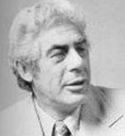
Frederick Herzberg

Frederick Herzberg

1.    Avoiding the temptation to accept a job for the money, confirming Frederick Herzberg assertion that “hygiene” factors, like salary, do not result in motivation or “engagement” in work.
In contrast, most people search for meaningful work in addition to an equitable wage.

Related Post:
Finding Work You Love, Measuring Your Life

Deloitte Shift Index 20122.    Leaving a bad job situation sooner. Gulati asserted that large corporations provide a “variable reinforcement schedule” in which the timing, frequency, and size of rewards is unpredictable, leading people to stay in roles they may not like on the hope of maximizing gains.
As a result, many people feel bound to large organizations by “golden handcuffs,” despite findings by Deloitte’s Shift Index survey the 80% of those surveyed are dissatisfied with their jobs.

Lara Buchak

Lara Buchak

In addition, people may tend toward risk-averseness in the workplace because most are more bothered by threat of losses than they are pleased by gains, according to findings by MIT’s Lara Buchak.

This risk-averseness may lead to “premature optimization,” rather than innovative and exploratory risks to uncover strengths, career options, and technical solutions to work challenges.

3.  Not starting a business, compounded by the same risk-averseness, variable schedules of reinforcement, premature optimization, and perceived golden handcuffs dynamics.

John Coleman

John Coleman

4. Not using time in school settings more productively, meaningfully, insightfully, mentioned by survey participants in Gulati’s collaboration with fellow Harvard Business School grads, John Coleman

W. Oliver Segovia

W. Oliver Segovia

and  W. Oliver Segovia featured in Passion & Purpose, and HBR Guide to Getting the Right Job.

Passion and Purpose5. Not following unanticipated career opportunities, again due to risk-averseness and premature optimization.

Gulati expanded his investigations to 100 younger HBR Guide to Getting the Right Jobpeople, between 25 and 35, and found both existential and specific regrets and do-over wishes:

1.    Not doing something “useful”, also mentioned by Daniel Pink and Martin Seligman, who found that Purpose, Mastery, and Control are top motivators.

Martin Seligman

Martin Seligman

Related Post: Career Navigation by Embracing Uncertainty

2.    Not living in the moment, due to over-scheduling and lack of training or discipline to focus mindfully on the present moment

3.    “Wasting time” earlier in life, such as not taking full advantage of school years

4.    Not travelling more, again limited by risk-averseness, premature optimization leading to financial commitments and family responsibilities

5.    Not developing physically fitness, partly attributed to “after-work drinks” instead of exercise.

Neal Roese

Neal Roese

Northwestern’s Neal Roese, Mike Morrison of University of Illinois at Urbana-Champaign, and Kai Epstude of University of Groningen asked 370 adults in the United States to describe one memorable regret.

Kai Epstude

Kai Epstude

Influenced by gender, age and education level, most-frequently cited regrets were:

  • Missed romantic connection (~20%), with women more than twice as likely (44%) to men (19%). Those not in a relationship were the most likely to cite a romantic regret.
  • Family issues (arguments, unkindness-16%)
  • Education (13 percent)
  •  Career (12 percent)
    • Money (10 percent)
    • Parenting mistakes (9 percent)
    • Health regrets (6 percent)

Participants expressed equal regret for things they had done as those who felt regret for something they had not done, but these missed-opportunity regrets were more likely to persist over time.

Jane McGonigal

Jane McGonigal

Jane McGonigal considered the other end of the age spectrum when she reported on “do-over” wishes of hospice patients:

• Work less hard
• Stay in touch with friends
• Let myself be happier
• Have the courage to express my true self
• Live a life true to my dreams

Related Post: How Gaming Can Help You Live Better and Longer

Isabelle Bauer

Isabelle Bauer

Isabelle Bauer, then at Concordia University, explored the impact of regrets on emotional and physical well-being, and found that people cope with regret by:

  • Undoing regrets, often through rationalization
  • Changing internal appraisals of regret

These findings of Lessons Learned in the School of Experience suggest the importance of:

  • Finding meaningful and worthwhile work
  • Taking considered risks to connect with others, explore interests and the world
  • Balancing work and interpersonal priorities
  • Investing time in high priority endeavors
  • Finding ways to reprioritize activities based on Lessons Learned from perceived regrets.

-*What are your Lessons Learned as you plan your New Year?

-*How do you manage your “Do-Over” thoughts?

Twitter:  @kathrynwelds
Google+
Blog
: – Kathryn Welds | Curated Research and Commentary
LinkedIn Open Group Brazen Careerist
Facebook Notes 

©Kathryn Welds

How to Change Habits

William James

William James

William James, father of American psychology and brother of novelist Henry James wrote in his 1890 The Principles of Psychology, “Habit is thus the enormous flywheel of society, its most precious conservative agent. It alone is what keeps us all within the bounds of ordinance, and saves the children of fortune from the envious uprisings of the poor.”

Though James seemed to look favorably upon the conservative element of habit, the drawbacks of thoughtless habitual actions are clear when people consume more calories than required to complete daily activities, purchase unneeded items, react with predictable emotions in contentious situations, and keep disadvantaged groups without advantages enjoyed by powerful groups.

Charles Duhigg

Charles Duhigg

Charles Duhigg’s bestseller, The Power of Habit: Why We Do What We Do in Life and Business, argues that habits are a significant part of most people’s daily activities – about 40% – and that even brain injured people can form habits.

The Power of HabitHe outlines the A(ntecedant) – B(ehavior) – C(onsequence) model, initiated by a cue or a trigger that signals automatic or habitual behavior.
In a novel situation, the person shifts to a problem-solving mode to develop an appropriate response — which may require creative thinking .

However, in a more typical situation, the person executes the habitual physical, mental, or emotional behavior or “routine,” which is then rewarded — often with a reduction in anxiety or discomfort.

Duhigg shows how dysfunctional habits can be analyzed for the cue, routine, and reward, then changed by modifying the antecedent, behavior or reward.

Albert Ellis

Albert Ellis

The A-B-C approach was popularized by Albert Ellis in his Rational-Emotive Behavior Therapy (RET), and outlined in his more than 50 books including Rational Emotive Behavior Therapy  Rational Emotive Behavior Therapy

Duhigg provides examples from marketing campaigns for well-known consumer products in the U.S., including Pepsodent toothpaste and Febreze air freshener.

Timothy Wilson

Timothy Wilson

Like Duhigg’s model’s reference to earlier behavior modification approaches, Timothy Wilson of University of Virginia’s Redirect: The Surprising New Science of Psychological Change, adapts principles of Aaron T. Beck’s Cognitive Behavioral Therapy (CBT) to change habitual interpretations, attributions, narratives and personal stories that lead to social problems including alcohol and drug abuse, teen violence and pregnancies, and social prejudice.

Aaron Beck

Aaron Beck

Wilson extracts and renames three empirically-validated behavioral techniques:

  • Story editing, to craft a more optimistic, hopeful story or interpretation about a situation, often using writing exercises
  • Story prompting, in which another person provides alternate, more optimistic interpretations based on data or “social proof” from  experiences in a similar situation
  • Cognitive Behavior TherapyDo good, be good, by “acting as if” the new behavior is a well-established habit, often through serving others in volunteer work.

RedirectRSA talk

Another look at habitual, even unconscious thinking in daily life is featured in a related post, Pattern Recognition in Entrepreneurship.

Douglas Van Praet

Douglas Van Praet

This discussion shares Douglas Van Praet’s guidelines to capitalize on unconscious cognitive processing and automatic buying behavior in Unconscious Branding: How Neuroscience Can Empower (and Inspire) Marketing 

BJ Fogg

BJ Fogg

An earlier post, Hacking Human Behavior: “Tiny Habits” Start, Maintain Changes showcased BJ Fogg’s work on “tiny habits” as hooks to behavior change.
His approach draws on many of the same behavior modification principles featured in Duhigg’s and Wilson’s recommendations to analyze habitual cues, routines, and rewards.

-*How do you analyze and modify habits?

Related Posts:

Companion Animals in the Workplace

Technology companies like Autodesk, Google, and Amazon made news when they permitted employees to bring companion dogs to work.Dog at work

This policy was viewed as an employee benefit or “perk”, but a recent study published in International Journal of Workplace Health Management indicates that bringing a companion dog to work can lower stress levels, increase productivity and make work more satisfying.

Centers for Disease Control and Prevention

In fact, the U.S. Centers for Disease Control and National Institutes of Health conclude that companion animals can lower individuals’ cholesterol, trigylcerides, blood pressure, heart rates,  weight, stress, risk of heart attack, social isolation, inactivity, and overall healthcare costs, all of which benefit organization’s operational costs.

National Institute of Health

Randolph Barker and collaborators from Virginia Commonwealth University examined a service-manufacturing-retail company in North Carolina with 550 employees and between 20 – 30 companion dogs.

Randolph Barker

Randolph Barker

Researchers measured 76 employees’ stress levels via surveys of attitudes toward animals in general and in the workplace.
Equal numbers of employees perceived dogs’ presence as increasing or decreasing work productivity.

Employees’ perceived stress levels, measured by cortisol in saliva samples, were significantly lower and job satisfaction was higher on days when dogs were present at work.

Companion dogs at work appeared to boost interpersonal communication, organizational engagement, and morale when employees who did not own dogs asking dog owners to interact with dogs or take them for a walk.

Considerable research around the globe suggests that the stress-reducing effect of companion dogs is tied to an increase in oxytocin when humans and dogs interact.

Kerstin Uvnas-Moberg

Kerstin Uvnas-Moberg

Kerstin Uvnas-Moberg of Uppsala University and author of The Oxytocin Factor: Tapping the Hormone of Calm, Love, And Healing, reported that women and their dogs experienced similar increases in oxytocin levels after ten minutes of friendly contact, and women’s oxytocin response was significantly correlated to the quality of the bond they reported in a survey taken prior to the interacting with their dogs.

The Oxytocin Factor

Likewise, JS Odendaal and RS Meintjes, then of Pretoria Technikon, showed that friendly contact between dogs and humans release oxytocin in both and Miho Nagasawa‘s team  at Azabu University found that amount of oxytocin among dog owners increased with the amount of time they shared eye contact with their dogs.

Suzanne C. Miller’s research group showed that oxytocin increased among women but not men after greeting their companion dog when returning home from work.

Christopher Honts

Christopher Honts

Christopher Honts and Matthew Christensen of Central Michigan University extended findings on stress reduction to evaluate trust, team cohesion and intimacy among teams collaborating on tasks when a well-trained, hypoallergenic dog was present.
During a collaborative creative thinking exercise, participants rated teammates higher on trust and teamwork than those without a dog.

Teams with a dog during the prisoner’s dilemma measure of trust and collaboration were 30% less likely to betray teammates accused of being co-conspirators in a hypothetical crime scenario.

Hiroshi Nittono

Hiroshi Nittono

Hiroshi Nittono and team at Hiroshima University demonstrated improved performance on problem-solving, attention, perceptual discrimination, and motor performance tasks after volunteers viewing images of baby animals compare with adult animals or food, reported in Public Library of Science .

Despite evidence that companion animals in the workplace reduce stress, increase perceptual and problem-solving capabilities and health indicators, barriers include:

  • Cultural objections to dogs and other animals
  • Allergies to companion animals
  • Animals without proper obedience and social skills training for the workplace

-*What do you think about potential financial and morale benefits of companions animals in the workplace?

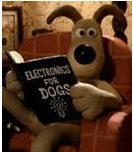
Gromit

Gromit

<-Will this

Miss Sarah's Guide

Miss Fido Manners

be replaced with this? <—————>

Related Posts

Twitter: @kathrynwelds
Google+
LinkedIn Open Group Psychology in Human Resources (Organisational Psychology)
Facebook Notes
Blog: – Kathryn Welds | Curated Research and Commentary

©Kathryn Welds

Happiness-Money Connection: Halo Effect of Happy Mood? Part 2

Daniel Kahneman

Daniel Kahneman

The Happiness-Money Connection: Halo Effect of Happy Mood? Part 1 outlined studies by Nobel Prize winner and psychologist Daniel Kahneman, with Angus Deaton and by British researchers Jan-Emmanuel De Neve and Andrew Oswald, documenting the long-term positive impact of subjective positive emotions on life outcomes including academic attainment, employment status, and income over time.Michael Norton’s research added the insight that money can buy happiness – if it’s used for other people.

Taken together, these findings point to the value of cultivating positive emotional states.

Martin Seligman

Martin Seligman

Distinguished psychologist Martin E. P. Seligman was one of the first researchers to empirically investigate correlates of happiness and well-being, and his recent book,

Flourish: A Visionary New Understanding of Happiness and Well-being recasts his

Flourish

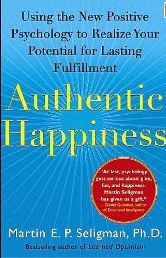
earlier emphasis on Authentic Happiness: Using the New Positive Psychology to Realize Your Potential for Lasting Fulfillment.
He opined that “well-being” is a more accurate concept, defined by the acronym PERMA:

  • Positive Emotion
  • Engagement
  • Relationships
  • Meaning
  • Accomplishment

Authentic Happiness

Though this is largely a conceptual model, he offers several exercises like considering one’s “signature strengths” and “three blessings” or things that have gone well during a day.

Sonja Lyubomirsky of UC Riverside synthesized happiness-enhancing recommendations from self-help books in The How of Happiness: A New Approach to Getting the Life You Want,  and provided familiar happiness-enhancing strategies:The How of Happiness

  • Cultivate optimism, consciously stop negative thoughts
  • Avoid “overthinking“, social comparison
  • Practice kindness
  • Invest time in social relationships, family
  • Develop coping strategies
  • Forgive self, others
  • Increase “flow” experiences, do enjoyable things
  • Savor life’s joyful experiences
  • Live in the present
  • Commit to goals
  • Organize space, work, life
  • Participate in religious or meditative practice
  • Keep self-reflection Journals

The Happiness Project

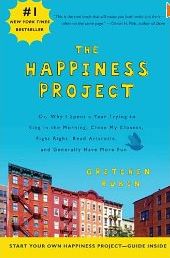
Gretchen Rubin combined some of these recommendations with erudite references to great philosophers’ and thinkers’ guidance, health recommendations, and time-tested common sense in The Happiness Project.

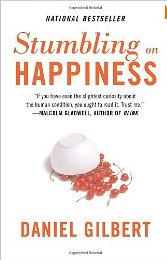
Daniel Gilbert of Harvard’s bestseller, Stumbling on Happiness , synthesized social science research about imagined expected future outcomes and control over them in relation to the experience of happiness.Stumbling on Happiness

He noted that human imagination and prediction are inaccurate, so he suggested using “surrogates” of future events to more accurately test future satisfaction with real-life choices like having children, moving to a new home, or working in a new job.

Other ways to cultivate the Emotional Intelligence capabilities of positive emotional experience are highlighted in related Posts:

-*How have you cultivated happiness?
-*How have happiness and money been related in your experience?

Twitter: @kathrynwelds
Google+
LinkedIn Open Group The Executive Coach
Facebook Notes
Blog: – Kathryn Welds | Curated Research and Commentary 

©Kathryn Welds
Happiness-Money Connection: Halo Effect of Happy Mood? Part 1

Daniel Kahneman

Daniel Kahneman

“(More) Money can’t buy (more) happiness” has been demonstrated in a research study published in the Proceedings of the National Academy of Sciences by Nobel Prize winner and psychologist Daniel Kahneman, with Angus Deaton.

They analyzed more than 450,000 responses to the Gallup-Healthways Well-Being Index, a daily survey of 1,000 US residents conducted by the Gallup Organization, and distinguished two elements of “subjective well-being” or happiness:

  • Emotional well-being – Frequency and intensity of joy, stress, sadness, anger, and affection,leading to pleasant or unpleasant quality of life, measured by Cantril’s Self-Anchoring Scale of yesterday’s emotional experiences
  • Life evaluation – Subjective assessment of one’s life.

They found that as emotional well-being rises with income up to about $75,000 in 2010 US dollars, then does not continue increasing with higher income levels.
In addition, daily emotions were predicted by health status, care giving, loneliness, and smoking.

Life evaluation increased as income and education increased, and the study confirmed that low income exacerbates the emotional pain associated with divorce, ill health, and being alone.

Michael Norton

Michael Norton

In fact, Michael Norton of Harvard Business School found that volunteers’ happiness increased with more money only when they spent money on others.

Replicated in Canada, Uganda, Rwanda, and other countries, his research found that happiness increases when people:

  • Select experiences over things
  • Spend money on others, regardless of the amount of money spent

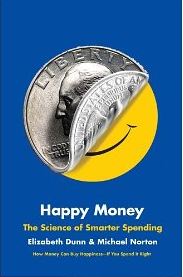
 He concluded that money can buy happiness when it’s spent on other people and experiences in Happy Money: The Science of Smarter Spending … a worthwhile reminder in this season of gift-giving.
Norton’s TED talk

British researchers investigated longitudinal connections between happiness and money, and found that people who express more positive emotions as teenagers have more positive life outcomes as adults, including higher education and income.

Jan-Emmanuel De Neve of University College London and Andrew Oswald of

Jan-Emmanuel De Neve

Jan-Emmanuel De Neve

University of Warwick  analyzed Carolina Population Center’s National Longitudinal Study of Adolescent Health (“Add Health”) profiles of more than 10,000 Americans at ages 16, 18 and 22 and  their annual incomes at age 29.

De Neve and Oswald controlled for education level, IQ, height and self-esteem, all known to contribute to financial success.

Reported in Proceedings of the National Academy of Sciences, they found that those who express more positive emotions in their teen years, reported greater life satisfaction and optimism as young adults, were more likely to earn a university degree, secure employment, advance to higher-level roles, and have higher incomes by age 29.

The survey assessed life satisfaction on a 5-point scale, and found that an increase of 1-point at age 22 made translated to a $2,000 difference in later income measured in in 2012 US dollars, and the later income difference between the happiest and unhappiest participants was $8,000 by the same measure.

Andrew Oswald

Andrew Oswald

DeNeve and Oswald validated the finding by comparing about 3,000 sibling pairs who shared the same parents and socioeconomic status.
They found that the happier siblings also had more positive emotions and life evaluation than less-happy participants.

One explanation of these findings is that observers generalize positive impressions of people who display more positive emotions in a “halo effect”, so these happier individuals are seen as more likeable, competent and attractive, and are offered more opportunities for education, employment, and social relationships.

These findings suggest the importance of increasing the “Emotional Intelligence” competencies of emotional self-regulation.
See The Happiness-Money Connection: Halo Effect of Happy Mood?Part 2 for research-based recommendations on developing happiness and well-being.

-*How do you view the connection between happiness and money?

Related posts:

Twitter: @kathrynwelds
Google+
LinkedIn Open Group Executive Coach
Facebook Notes
Blog: – Kathryn Welds | Curated Research and Commentary

©Kathryn Welds
How Can Dance Inform Business Thinking?

Peter Lovatt

Peter Lovatt founded the Dance Psychology Lab at the University of Hertfordshire, which combines his performance experience as a professional dancer with his training as a research psychologist.

In several TED talks, he marvels at his career trajectory because he “was rubbish at school,” and was relegated to Special Education classes, probably due to his undiagnosed ADHD.

His career demonstrates an innovative synthesis of disciplines with his current research agenda investigating the impact of dance on problem solving using divergent thinking and convergent thinking strategies.

Peter Lovatt at TED

Lovatt’s experiments demonstrated that volunteers who engaged in improvised dance movements solved divergent thinking problems more quickly than when they performed more structured dance maneuvers, or no movement at all.

Similarly, his work showed these volunteers increased their speed of solving convergent thinking problems after they engaged in choreographed dance moves.

These findings may not imply that innovation teams should engage in structured and unstructured movements at work, but it does support the positive impact of dance movement on neural processing speed and problem solving.

Lovatt extended this work to patients with Parkinson’s disease, known to disrupt divergent thinking processes, to validate his findings with normal volunteers.
He demonstrated that Parkinson’s disease patients improved the divergent thinking problem solving after they engaged in improvised dance sequences, and hypothesized that these patients develop new neural pathways to “work around” dopamine-depleted blockages.

Peter Lovatt leading dance experiment

Lovatt’s group found increases in self-esteem among participants in dance styles that:

  • Include more improvisational elements (“high degree of tolerance for not getting it right”),
  • Are gender or culturally neutral
  • Raise the heart rate
  • Are repetitive
  • Encourage looser fitting clothes (in contrast to ballet)
  • Are non-competitive

Related Post on impact of dance:
Oxytocin Increases Empathic Work Relationships, Workplace Trust, Generosity 

Twyla Tharp

MacArthur Fellowship and Tony Award-winning choreographer Twyla Tharp discussed innovation and collaboration through the lens of dance in two books with lessons applicable to business.

In The Creative Habit: Learn It and Use It for Life she asserts that creative expression requires perseverance, practice, hard work, “showing up,” and cultivating systematic habits to act upon innovative initiative.

This echoes the action-orientation advocated by Malcolm Gladwell in his observation of 10,000 hours of practice to develop virtuoso performance and by sports psychologist K. Anders Ericsson, summarized in these related posts:

Tharp’s The Collaborative Habit: Life Lessons for Working Together discusses both how collaboration can change the participants, and practical approaches to collaborative creation – which she acknowledges has not been completely smooth in some of her work with luminaries including Richard Avedon, Mikhail Baryshnikov, Bob Dylan, Milos Forman,  Norma Kamali, Frank Sinatra.
Two related posts on Collaboration are:

Dance provides a fresh perspective and metaphor for business challenges including problem solving, innovation, and collaboration.

-*How do you react to Lovatt’s and Tharp’s application of movement in problem solving, collaboration and innovation?

First Emotionally Intelligent, Mindful Presidents: Barack Obama, Peter Salovey?

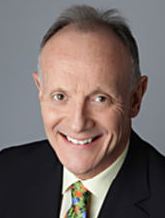
Peter Salovey

Peter Salovey, newly appointed President-Elect of Yale University, introduced the term “Emotional Intelligence” in 1989 as “the ability to monitor one’s own and others’ feelings and emotions, to discriminate among them, and to use this information to guide one’s thinking and actions”.

Yale’s new President, is considered a pioneer and originator of research into four elements of EQ used to think and behave adaptively:

  • Accurately perceiving, identifying, pinpointing emotions in self, others
  • Expressing, using emotions as information to decide,  plan, achieve, communicate, create, think
  • Understanding, predicting own and others’ emotions, temporary moods
  • Self-regulating, transforming emotions.
  • Peter Salovey

    Salovey is widely regarded as one who embodies these characteristics and creates community  through his bluegrass band performances with Professors of Bluegrass, active participation in student life (as a Super Mario Brother at Halloween 2009, accompanied by the Yale Symphony orchestra during his tenure as Provost), and award-winning teaching and research.

He applied EQ concepts to business with David Caruso in The Emotionally Intelligent Manager: How to Develop and Use the Four Key Emotional Skills of Leadership

Emotional Intelligence can be intentionally increased in work and personal settings by increasing awareness of one’s own and others’ emotions.
One way to achieve this goal is through “Mindfulness,” or non-evaluatively, non-judgmentally attending to physical, cognitive, and emotional experiences arising in the present moment.

Jon Kabat-Zinn

Jon Kabat-Zinn introduced this practice in 1979 and founded Stress Reduction Clinic and the Center for Mindfulness in Medicine, Health Care, and Society at the University of Massachusetts Medical School.
His programs and books, including Mindfulness for Beginners: Reclaiming the Present Moment–and Your Life  help develop skill in being “present” through:

  • Observing – expanded awareness with detachment
  • Describing
  • Participating fully
  • Focused, narrowed attention

He discussed the possible impact of these practices on business leadership and government, building on research findings that mindfulness practice can lower aggressive feelings and increase peaceful sentiments.

Kabat-Zinn provided an example in recently-re-elected U.S. President Barack Obama is the first mindful President, “…since Lincoln, or maybe ever.”

The Dalai Lama, Barack Obama

He added that Obama “… is really present, he has a lot of different qualities that seem to indicate he is emotionally balanced, not driven by ego concerns, that he knows how to balance family life and the impossible job that he has.
There is something about him that’s measured, very peaceful, he listens very, very deeply.”

Many observers will evaluate whether Salovey can put into practice Emotionally Intelligent leadership at Yale, and whether Barack Obama can demonstrate Mindfulness in peaceful international relations and domestic issue-resolution during his final term in office.

-*Where do you observe emotional intelligence and mindfulness among top leaders?

Twitter:  @kathrynwelds
Google+
LinkedIn Open Group Mindful Leadership
Facebook Notes:

Blog: – Kathryn Welds | Curated Research and Commentary
©Kathryn Welds

Oxytocin Receptor Gene’s Link to Optimism, Self-Esteem, Coping with Stress

Shelley Taylor

Shelley Taylor

Shelley E. Taylor, distinguished professor at UCLA identified the oxytocin receptor gene (OXTR) link to optimism, self-esteem and “mastery” — the belief that one has control over one’s own life.
These three elements are required to manage stress and depression.

Reported in the Proceedings of the National Academy of Sciences (PNAS), she notes that oxytocin, a hormone that increases in response to stress, is associated with good social skills such as empathy and social behavior, especially under stress.

In one location on the oxytocin receptor gene, two variants occur:

•    “A” (adenine) variant, associated with increased sensitivity to stress, poorer social skills, depressive symptoms and worse mental health outcomes

•    “G” (guanine) variant, associated with optimism, self-esteem and mastery.

This effect was demonstrated in 326 volunteers, who completed measured by self-assessments and saliva samples for DNA analysis.
Those with two “A” nucleotides or one “A” and one “G” at this oxytocin receptor gene location, showed lower levels of optimism, self-esteem and mastery and higher levels of depressive symptoms than people with two “G” nucleotides,

Taylor notes that genes may predict behavior, but do not determine it because many environmental factors and other genes interact with oxytocin receptor gene variants in stress, coping, and emotional behaviors.

These findings suggest people who train themselves to appraise situations more optimistically, to see themselves more worthy, capable and competent, are able to improve ability to cope with stressful events.

Taylor’s book, The Tending Instinct: Women, Men, and the Biology of Relationships, outlines the importance of cultivating socially nurturing environments to mitigate genetic vulnerabilities.

She notes that “a mother’s tending can completely eliminate the potential effects of a gene; a risk for a disease can fail to materialize with nurturing, and a genetic propensity may lead to one outcome for one person and the opposite for another, based on the tending they received.”

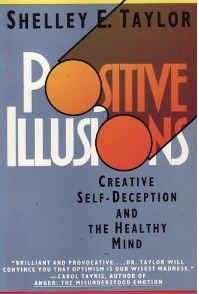
Her most influential work demonstrated a “self-enhancement bias” in her book, Positive Illusions: Creative Self-Deception and the Healthy Mind ,
she explained that “most people regard themselves, their circumstances, and the future as considerably more positive than is objectively likely…. These illusions are not merely characteristic of human thought; they appear actually to be adaptive, promoting rather than undermining good mental health.”

In contrast, Rick Hanson argues that a negative bias is more adaptive to survival than a positive bias.
He notes that negative stimuli produce more neural activity than do equally intense positive ones, and are perceived more easily and quickly: “The brain is like Velcro for negative experiences but Teflon for positive ones.”

His book, Just One Thing: Developing a Buddha Brain One Simple Practice at a Time, recommends meditation to tame automatic negative thoughts.

-*Where have you seen examples of “the tending instinct,” positive illusions and negative bias in the workplace?

See related posts on Hormones and Emotional Expression:
•    Oxytocin, Testoterone: Oxytocin Increases Empathic Work Relationships, Workplace Trust, Generosity
•    Cortisol, Testosterone: Thoughts Change Bodies, Bodies Change Minds, Roles Shape Hormones: “Faking Until It’s Real”

Twitter:  @kathrynwelds
Google+
LinkedIn Open Group Mindful Leadership
Facebook Notes 

Blog: – Kathryn Welds | Curated Research and Commentary
©Kathryn Welds

2012 Top Companies for Work-Life Balance

Glassdoor.com synthesized employee ratings for the past 12 months to produce a list of companies in which is it possible to both make a living and live a life.

Silicon Valley companies include Agilent Technologies (#3), LinkedIn (#8), and Hitachi Data Systems (#20), but not Google, Facebook, Synopsis, or Intuit.

-*How do you assess a potential employer’s organizational culture for balancing work priorities with life priorities?

LinkedIn Open Group – Mindful Leadership
Twitter: @kathrynwelds
Google+
Facebook Notes:

©Kathryn Welds

10 Ways to Build Resilience

A key factor in “psychological resilience”, or the process of adapting to unexpected adversity, trauma, tragedy, threats, or stress, is having caring and supportive relationships within and outside the family, according to research by the American Psychological Association (APA).

Other factors include:

• Making realistic plans and executing them
• Positive view of self
• Confidence in your strengths and abilities
• Skills in communication and problem solving
• Managing strong feelings and impulses

APA outlines actions that increase personal resilience

• Make connections with family members, friends, or others to request and accept support. Civic groups, faith-based organizations, or volunteering to help others can make meaningful connections

• Consider crises as solvable problems. You can change how you interpret and respond to these events.

• Recognize that change occurs with increasing frequency. You can balance thoughtful acceptance of a situation with acting to change it.

• Move toward your goals, with regular small accomplishments

• Take decisive actions

• Look for opportunities for self-discovery and learning “life lessons” that may benefit others

• Develop confidence that you can address the issues. Others in the social support network may assist.

• Keep things in perspective, in relation to the great challenges faced by others

• Visualize your goals and aspirations

  • Cultivate an optimistic outlook, and consider hope as essential as oxygen

• Take care of yourself with exercise, relaxation, balanced diet and lifestyle, medical attention

Additional strategies may assist: the process of adapting well in the face of adversity, trauma, tragedy, threats, or even significant sources of stress

-*What are your most effective strategies for building personal resilience in the face of challenges?

LinkedIn Open Group – Mindful Leadership
Twitter: @kathrynwelds
Google+
Facebook Notes:

©Kathryn Welds