Category Archives: Neuroscience

Neuroscience

Introversion and Extraversion Starts with Your Genes and Shows in Your Brain

Susan Cain

Susan Cain

Introverts seem to be experiencing an increasingly “level playing field” in work and social environments after Susan Cain’s best-selling book celebrating “the power of introverts in a world that can’t stop talking.”

Hans Eysenck

Hans Eysenck

University of London’s Hans Eysenck provided one of the first physiological explanations of this duality after Carl Jung’s introduction to “psychological types.”

The subjective experience of introversion and extraversion is measured by the Big Five personality dimensions, developed by Robert McRae and Paul Costa, then of the National Institutes of Health, in addition to the widely-used yet psychometrically-criticized Myers-Briggs Type Indicator. 
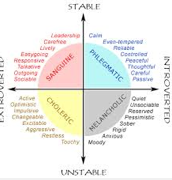
Eysenck's Three-Factor Theory of Personality

Eysenck’s Three-Factor Theory of Personality

Observable behaviors associated with extraversion include positive emotions, assertiveness, sociability and talkativeness with energetic engagement in work and social contexts.

In contrast, external manifestations of introversion are lower social engagement and energy, and less need for external social stimulation than extraverts, with a quieter, more deliberate style.

Robert McCrae

Robert McCrae

These behaviors are at least partially based on individuals’ genetic profiles, leading to differing brain activity associated with introverted and extraverted thinking and behavior.

Paul Costa

Paul Costa

Eysenck posited that extraverts and introverts differ in their levels of cortical arousal:  Introverts, he suggested, have a higher baseline level of arousal than extraverts, so need less external stimulation.

In contrast, he hypothesized that extraverts seek external stimulation because they have a lower baseline level of cortical arousal.

Yasuyuki Taki

Yasuyuki Taki

Differences in brain structure and function among introverts and extraverts was analyzed by Yasuyuki Taki’s team at Tohoku University, including collaborators  Benjamin Thyreau, Shigeo Kinomura, Kazunori Sato, Ryoi Goto, Kai Wu, Ryuta Kawashima, and Hiroshi Fukuda. 

The evaluated whether personality traits measured on a revised Big Five inventory (Revised NEO Personality Inventory – NEO-PI-R) were related cortical gray matter volume, measured by brain magnetic resonance images (MRI) for more than 270 healthy volunteers over 6 years.

Colin DeYoung

Colin DeYoung

Likewise, University of Minnesota’s Colin DeYoung, Jacob Hirsh of University of Toronto, The Mind Research Institute’s Matthew Shane, and Yale’s Xenophon Papademetris, Nallakkandi  Rajeevan, and Jeremy Gray used a similar method to conclude that behavioral and subjective extraversion was positively correlated with orbitofrontal cortex metabolism and increased cerebral volume of the medial orbitofrontal cortex in 116 adults. 

Michael X. Cohen

Michael X. Cohen

Extraversion has been correlated with sensitivity to rewards and to the brain’s dopamine system, so University of Amsterdam’s Michael X. Cohen and team investigated the brain’s dopamine-based reward system.

He collaborated with Jennifer Young, Jong-Min Baek, Christopher Kessler, and Charan Ranganath of University of California, Davis to demonstrate the connection among trait extraversion, the A1 allele on the dopamine D2 receptor gene, and “extraverted” activity in the brain’s reward system during a gambling task.

Charan Ranganath

Charan Ranganath

Participants received rewards either immediately following a behavioral response or after a 7.5 second “anticipation” interval.
The research team monitored differing fMRI brain activity in the amygdala, which processes emotional stimuli and triggers excitement, and in the nucleus accumbens, which pushes people to seek rewards, novelty and risks.

Brain activation patterns were related to individual differences in extraversion and presence of the A1 allele on the dopamine D2 receptor gene.
Neural pathways differed for extraverts and introverts, validating anecdotal observations that these personality styles are distinctly different, even deep inside the brain and genes.

Many introverts adopt extraverted behaviors in work and social situations, and a remaining question is how fMRI patterns differ for introverts displaying uncharacteristic extraverted behaviors in contrast to people with trait extraversion.

-*How easily can you adopt your non-dominant personality style when you need to display introversion or extraversion behaviors?

-*What tactics enable you to adopt your less-preferred personality style?

Please follow-share-like www.kathrynwelds.com and @kathrynwelds

RELATED POSTS:

Twitter:  @kathrynwelds
Blog: – Kathryn Welds | Curated Research and Commentary
Google+ google.com/+KathrynWelds
LinkedIn Open Group Psychology in Human Resources (Organisational Psychology)
Facebook Notes:

©Kathryn Welds

Improving Visual Information Processing for Better Performance – Boston Subway Map and More

Transit maps are one example of graphic displays that require the viewer to rapidly process visual information to make quick decisions in often crowded and noisy conditions.

MBTA Map 2013

MBTA Map 2013

Cognitive scientists have studied this type of challenging task load in human performance, but seem not to have been consulted when Boston’s Massachusetts Bay Transportation Authority (MBTA) sponsored a contest to redesign the system map in Spring 2013.

Michael Kvrivishvili

Michael Kvrivishvili

Michael Kvrivishvili, a graphic designer at Moscow’s Art Lebedev Studio, submitted the winning design, which was judged by aesthics and presumed usability.

MIT’s Ruth Rosenholtz, Lavanya Sharan, and Shaiyan Keshvari empirically scrutinized Kvrivishivili’s design using computational modeling to analyze the design’s potential visual clutter and its impact on peripheral vision.

Ruth Rosenholtz

Ruth Rosenholtz

Team Rosenholtz’s model generated “mongrels,” or  alternate representations of Kvrivishvili’s redesigned subway map, that abbreviate and abstract visual elements like color, text, space, line orientation before processing in the visual cortex.

Lavanya Sharan

Lavanya Sharan

Mongrels can account for peripheral vision’s generalized synthesis of information outside direct line-of-sight, which provides an overall impression while sacrificing details to speed information processing.

Shaiyan Keshvari

Shaiyan Keshvari

Their analysis recognized the many positive elements of Kvrivishvili’s design and noted opportunities for design optimization.

Amal Dorai

Amal Dorai

Rosenholtz’s earlier collaboration with MIT colleague Amal Dorai and Rosalind Freeman of Skidmore College evaluated the effectiveness of Dorai’s DesignEye tool to assist designers with this type of human factors optimization.

MBTA 2013 by Behr-Harnot

MBTA 2013 by Behr-Harnot

DesignEye tool enables A/B comparisons between designs and judgments about the quality of a design through simple design visualization.

Design optimization seeks to remedy effects of visual clutter, or excessive and disorganized items that can cause:

  • Crowding
  • Masking
  • Reduced recognition due to occlusion
  • Decreased ability to segment scenes
  • Poorer visual search performance.

 Rosenholtz’s group investigated reliable measures of visual clutter to help designers optimize displays for more effective information processing.

Jeremy Wolfe

Jeremy Wolfe

Among them are Jeremy Wolfe of Harvard’s Guided Search metrics, which measure reaction time (RT), errors, and distinguishing a single item in a crowded visual field provided an alternative to an earlier measure, “set size.”

Yuanzhen Li

Yuanzhen Li

Rosenholtz’s MIT colleagues Yuanzhen Li, Jonathan Mansfield, and Zhenlan Jin evaluated a revised version of her earlier Feature Congestion metric that focused on color and luminance contrast to consider the a new item’s distinctiveness in a crowded display to draw attention.

Michael Mack

Michael Mack

They also assessed Subband Entropy, a measure of visual information in the display, and Edge Density, used by University of Texas’s  Michael Mack and Aude Oliva of MIT to evaluate subjective visual complexity.

Aude Oliva

Aude Oliva

Cognitive science research focused on visual and auditory processing can be applied to optimize human performance through improved usability in many technology and graphic user interfaces.

Eric Johnson

Eric Johnson

Eric Johnson of EMC Computer Systems and a veteran of several Silicon Valley high tech companies, builds on these empirical findings and addresses the challenge of reducing visual clutter with a the ancient practice of feng shui in the workplace.

-*How do you reduce visual clutter in your work environment?

MBTA-Emily Marsh-*What cues do you seek when navigating complex systems like subway systems?

MBTA-Kate Reed

Please follow-share-like www.kathrynwelds.com and @kathrynwelds

RELATED POSTS:

Career Navigation by Embracing Uncertainty
Pattern Recognition in Entrepreneurship

Twitter:  @kathrynwelds
Blog: – Kathryn Welds | Curated Research and Commentary
Google+ google.com/+KathrynWelds
LinkedIn Open Group Psychology in Human Resources (Organisational Psychology)
Facebook Notes:

©Kathryn Welds


How the Brain Perceives Time So You Can Manage Time Demands, not Time

Many daily actions like perceiving through the senses, speaking, and walking require accurate timing, often to milliseconds.

These underlying brain mechanisms are crucial to determining causality, decoding temporal patterns, and managing “time demands,” a commitment to complete a task in the future.

Francis Wade

Francis Wade

Francis Wade suggests conducting a systemic diagnostic assessment of current time demand management practices to identify effective approaches, and those that can benefit from fine-tuning.
This leads to a plan that requires external support from people and technology.

But these processes depend on the brain’s accurate time perception.
-*How does the brain perceive time?

David Eagleman

David Eagleman

Baylor College of Medicine’s David M. Eagleman summarized extensive research that answers this question, with collaboration from Peter U. Tse of Dartmouth, UCLA’s Dean Buonomano, Peter Janssen of Katholieke Universiteit Leuven, University of Oxford’s Anna Christina Nobre, and Alex O. Holcombe of Cardiff University.

Peter Tse

Peter Tse

One recent change to the prevailing view that the basal ganglia and cerebellar systems are the brain’s main timekeepers comes from University of New Mexico’s Deborah L. Harrington and Kathleen Y. Haaland.

Kathleen Haaland

Kathleen Haaland

They built on this finding in work with Robert T. Knight of University of California, Davis, investigating the cerebral cortex’s role in perceptual timekeeping by studying task performance of volunteers with focal left (LHD) or right hemisphere (RHD) lesions compared with uninjured participants.

Robert T. Knight

Robert T. Knight

The groups performed a time duration perception task and a frequency perception task, which controlled for non-time processes in both tasks.
Only people with right hemisphere cerebral cortex lesions showed time perception deficits, suggesting that this area also contributes to perceptual timekeeping

People with this damage who accurately perceived time were also able to switch nonspatial attention, implying that time perception and attention switching are linked.
This group had no damage in the premotor and prefrontal cortex, in contrast to those who performed poorly on the time perception.
These results indicate that premotor and prefrontal cortex areas also contribute to accurate time perception.

Richard Ivry

Richard Ivry

Neural systems underlying timing processes may point to remedies for brain injuries that involve motor timing irregularities such as Parkinson’s disease, according to UC Berkeley’s Richard Ivry and Rebecca Spencer of UMass.  

Rebecca Spencer

Rebecca Spencer

Medical University of South Carolina’s Catalin V. Buhusi and
 Warren H. Meck of Duke University suggest that subjective time perception or psychological time is represented by multiple “internal clocks” that judge duration relative to the relevant time context.

Catalin V. Buhusi

Catalin V. Buhusi

Richard Ivry reported that the cerebellum can be considered as operating multiple “internal clocks,” suggesting a physiological basis for Buhusi and Meck’s multi-clock construct.

-*How do you manage time demands for future performance?

Please follow-share-like www.kathrynwelds.com and @kathrynwelds

RELATED POSTS:

Twitter:  @kathrynwelds
Blog: – Kathryn Welds | Curated Research and Commentary
Google+ google.com/+KathrynWelds
LinkedIn Open Group Psychology in Human Resources (Organisational Psychology)
Facebook Notes:

©Kathryn Welds

Evidence-Based Stress Management – Physical Exercise – Part 5 of 5

Michael Hopkins-David Bucci

Michael Hopkins-David Bucci

“The positive stress of exercise prepares cells and structures and pathways within the brain so that they’re more equipped to handle stress in other forms,” argue Michael Hopkins, FC DavisMichelle VanTieghemPaul Whalen and David Bucci of Dartmouth.

Michelle VanTieghem

Michelle VanTieghem

They compared effects of a single exercise session or repeated sessions on non-exercising volunteers who were genotyped to determine brain-derived neurotrophic factor (BDNF), a nerve growth factor important in long-term memory.

Paul Whalen

Paul Whalen

Participants were measured on novel object recognition (NOR) memory and mental health dimensions before and after engaging in a 4-week exercise program or a single exercise session.

More frequent exercisers performed better on object recognition memory and said they experienced less stress, but only when their 4 week program included a final test.
In contrast, a single exercise session did not affect recognition memory and resulted in increased perceived stress levels.

This study found no relationship between exercise-induced cognitive benefits and changes in mood and anxiety, suggesting that perceived stress is controlled by a different neural system.

Timothy Schoenfeld

Timothy Schoenfeld

In contrast, Princeton’s Timothy Schoenfeld, Pedro Rada, Pedro Pieruzzini, Brian Hsueh, and Elizabeth Gould, reported different results with mice.
They investigated the paradox of exercise:  It promotes new, excitable brain cells that can aid learning and memory, yet exercise can induce calm in various brain areas.

Elizabeth Gould

Elizabeth Gould

Schoenfeld and team controlled for pre-existing nervousness in adult mice and allowed half to exercise and half to remain sedentary over a six week period.

Exercisers were more willing to cautiously explore and spend time in open areas, suggesting they were more confident and less anxious than their sedentary counterparts.

Brian Hsueh

Brian Hsueh

The runners’ brains developed new, excitable neurons in the hippocampus’ ventral region, associated with processing emotions and releasing GABA, which inhibits brain activity such as the subjective experience of anxiety.

All animals encountered the physical stress of cold water for five minutes, and showed many immediate early genes indicating neuron firing.
However, the runner rats calmed more rapidly due to their release of GABA after this physical stress.

Though this study was conducted with animals, the findings suggest that physical exercise builds capacity to recover more rapidly from stress by regulating anxiety through ventral hippocampus inhibition.

Brett Klika

Brett Klika

Like other stress management recommendations, regular exercise is difficult for many to adopt as an habit.
For reluctant exercisers, Brett Klika and Chris Jordan of Human Performance Institute offer a rapid but challenging solution: “Seven Minutes of Steady Discomfort.”

Chris Jordan

Chris Jordan

Their Scientific 7-Minute Workout includes 12 exercises using a chair, wall and body weight, for interval training alternating large muscles in the upper and lower body.
Each exercise is performed for 30 seconds, at a discomfort rating of 8 on a scale of 1 to 10, with a 10 second rest between.
Though quick, this routine may not be easy, and further willpower may be needed to adopt this approach.

Kirsten Burgomaster

Kirsten Burgomaster

McMaster University’s Kirsten BurgomasterKrista Howarth, Stuart PhillipsMaureen MacDonaldSL McGeeMartin Gibala with Mark Rakobowchuk now of Brunel University validated Klika and Jordan’s proposed Seven Minutes of Discomfort.

Stuart Phillips

Stuart Phillips

They noted that even a few minutes of training at an intensity approaching maximum capacity produces molecular changes within muscles comparable to those of several hours of endurance training like running or bike riding.

John Salamone

John Salamone

Motivational help may be available by activating nucleus accumbens dopamine, which can regulate motivation and lead to goal initiation and persistence, according to University of Connecticut’s John Salamone and Mercè Correa of Universitat Jaume I of Castellón.

Mercè Correa

Mercè Correa

They refined the common assumption that dopamine is associated with reward systems and noted that nucleus accumbens dopamine, involved in appetitive and aversive motivational processes, may provide a biochemical approach to managing motivation and task persistence.

Though it may be difficult to muster the motivation to exercise regularly, these research findings suggest that regular exercise can lead to increased coping and cognitive abilities.

-*To what extent should workplaces promote exercise to reduce stress and increase cognitive performance?

->Follow-share-like www.kathrynwelds.com and @kathrynwelds

RELATED POSTS

Motivation to Manage Stress

Mindful Attention (Part 2)

Social Support (Part 3)

Music (Part 4)

Nature

Sleep

Organizational Roles, Practices

Look for related posts on:

  • Vitamins and Probiotcs (Part 1)
  • Mindful Attention (Part 2)
  • Social Support (Part 3)
  • Music (Part 4)

Twitter@kathrynwelds
Blog: – Kathryn Welds | Curated Research and Commentary
Google+:
LinkedIn Open Group Psychology in Human Resources (Organisational Psychology)
Facebook Notes:

©Kathryn Welds

Evidence-Based Stress Management – Music – Part 4 of 5

Many people intuitively turn to music when they want to regulate energy and mood.

Valorie Salimpoor

Valorie Salimpoor

Listening to music evokes sympathetic nervous system activity, a sign of emotional arousal measured by changes in heart rate, respiration, electrodermal activity, body temperature, and blood volume pulse, according to Rotman Research Institute’s Valorie Salimpoor, McGill’s Mitchel Benovoy, Gregory Longo, Jeremy Cooperstock, and Robert Zatorre.

Mitchel Benovoy

Mitchel Benovoy

The researchers asked twenty-six participants to select and listen to “pleasurable” music and researchers selected “neutral” music for participants based.
Pleasure ratings and emotional arousal measures were strongly related, and those who did not experience pleasure also showed no significant increases in emotional arousal.

Gregory Longo

Gregory Longo

This finding suggests that listening to preferred music can be used as a mood-enhancement and stress management approach.

Lori Gooding

Lori Gooding

Kentucky University’s Lori Gooding and Olivia Yinger validated music’s stress management benefits for surgical patients.
They found that listening to music can reduce anxiety, subjective pain, and requests sedative medication following surgery.

Olivia Yinger

Olivia Yinger

Slow music expedited relaxation and reduced pain, suggesting that music tempo, rhythm and volume can contribute to reduced anxiety, improved treatment experiences, with lower medical costs in medical intensive care units.

Nick Perham

Nick Perham

Besides managing stress, listening to background music before task performance can increase attention and memory by evoking arousal and positive mood, according to Nick Perham and Joanne Vizard, then of University of Wales Institute Cardiff.

Joann Vizard

Joann Vizard

However, listening to music during a task decreased serial recall among adult volunteers, again pointing to the value of listening to music before but not during tasks that require acute concentration.

Kristie Young

Kristie Young

Beyond passively listening to music, performing music by singing during a complex task can decrease performance.
Monash University’s Genevieve Hughes and Kristie Young with Christina Rudin-Brown of Transport Canada found that singing while performing complex, attention-requiring task increases mental workload and distraction.

Christina Rudin-Brown

Christina Rudin-Brown

They asked participants to learn the lyrics two popular songs, then sing them while operating a simulated car during a 6.6 km urban trip with four speed zones and encountering expected and unexpected traffic events.

Volunteers who sang while “driving” scanned their visual field less often, focused on the area directly ahead (“cognitive tunnelling”), and were less aware of potential hazards during a peripheral detection task (PDT).
However, singing reduced “driving” speed and enabled volunteers to maintain position in their “lanes.”

Efforts to compensate for the increased mental workload associated with singing and listening to music appeared ineffective, suggesting that listening to music during complex tasks impairs performance.

Jim Blascovich

Jim Blascovich

In contrast to performance-disrupting impact  of listening to music while performing complex tasks, SUNY Buffalo’s Karen Allen with Jim Blascovich of University of California, Santa Barbara reported that surgeons worked more quickly and accurately when they listened to preferred music, and physical stress was reduced, indicated by cardiac and electrodermal autonomic responses, hemodynamic measures.
Those who listened to no music did not perform as quickly and accurately as those who listened to their preferred music.

Stress-reducing and performance impacts of music appear related to both personal musical preferences, and musical temp and genre.

Leigh Riby

Leigh Riby

Northumbria University’s Leigh Riby found that “uplifting” music can boost mental alertness, attention and memory.

Volunteers pressed a keyboard space bar when a green square appeared on screen but not when they saw different-colored circles and squares under two conditions: in silence and while listening “uplifting” concertos (Vivaldi’s Four Seasons).

Riby measured brain activity with an EEG and found that participants responded accurately more quickly when listening to the ”uplifting” Spring concerto in contrast to performing with no music or the slower, more somber Autumn concerto.
The Spring concert “seemed to give rise to particular imagery in the brain and evoke positive, contented feelings which translated into higher levels of cognitive functioning,” according to Riby.

The underlying mechanism of music’s effects on attention, concentration, and performance is dopamine release in response to music that elicited “chills” or ‘‘musical frisson” — changes in skin conductance, heart rate, breathing, and temperature that were correlated with pleasurability ratings of the music.

Alain Dagher

Alain Dagher

Salimpoor and her McGill team, including Kevin Larcher and Alain Dagher, used PET and fMRI brain imaging techniques to measure anticipation and consumption of music as a reward, and demonstrated that volunteers who listen to preferred, “pleasurable” music experience greater release of dopamine, which is associated with emotional arousal and pleasurability ratings.

This is one of the first demonstrations that an abstract, cognitive, non-tangible reward can lead to dopamine release, and that different brain circuits are involved in anticipating (caudate) and experiencing (nucleus accumbens) musical tension and resolution.

Teresa Lesiuk

Teresa Lesiuk

University of Miami’s Teresa Lesiuk reported improved task speed, performance, and new ideas with information technology specialists who listened to preferred music.

She attributed these positive effects to reduced stress and improved mood, and found that people who were moderately skilled at their jobs benefited most, but experts experience no benefit.
Consistent with findings that music can be a distraction in cognitively-demanding tasks, novices found that music undermined performance.

Amit Sood

Amit Sood

When people’s minds wander, music can help focus on the present moment, according to Amit Sood of Mayo Clinic, who advocates music’s value in developing and reinforcing Mindful Attention – another approach to managing stress.

 -*When does music in the workplace reduce stress? Increase performance?

->Follow-share-like www.kathrynwelds.com and @kathrynwelds

RELATED POSTS

Motivation to Manage Stress

Mindful Attention (Part 2)

Social Support (Part 3)

Music (Part 4)

Nature

Sleep

Organizational Roles, Practices

Look for related posts on:

  • Vitamins and Probiotcs (Part 1)
  • Mindful Attention (Part 2)
  • Social Support (Part 3)
  • Physical Exercise (Part 5)

Twitter:  @kathrynwelds
Blog: – Kathryn Welds | Curated Research and Commentary
Google+:
LinkedIn Open Group Psychology in Human Resources (Organisational Psychology)
Facebook Notes:

©Kathryn Welds

Evidence-Based Stress Management – Social Support – Part 3 of 5

George Vaillant

George Vaillant

Personal relationships and social support have been shown to buffer the negative effects of stress inside and outside the workplace, according to George Vaillant, then of Harvard, with colleagues SE MeyerKenneth Mukamal, and Stephen Soldz.

Kenneth Mukamal

Kenneth Mukamal

They evaluated data from a 50-year prospective multivariate study of 223 men and found that engaging with others during a stressful event improves mood, but withdrawing from others increases anxiety, depression, and stress.
In this sample, friends seemed more important than closeness to spouse and to children for sustained physical health.

Lawrence Fisher

Lawrence Fisher

Social  relationships that buffer stress and anxiety include family closeness and connectedness, problem-focused family coping skills, clear family organization, explicit decision making, and direct communication  according to University of California, San Francisco’s Lawrence Fisher and Karen Weihs of University of Arizona.

Stephen Soldz

Stephen Soldz

In contrast, lack of social connections can increase both stress and susceptibility to disease agents due to alterations in the neuroendocrine system, according to Vaillant and team.

Karen Weihs

Karen Weihs

Undermining relationship characteristics include hostility, criticism, and blame within the family; family perfectionism and rigidity; and psychopathology, according to Fisher and Weihs.

Stress-reducing social support can come from animal companions, according to SUNY Buffalo’s Karen AllenBarbara Shykoff, and Joseph Izzo, who demonstrated that “nonevaluative social support” from animal companions reduces blood pressure in response to mental stress.

Joseph Izzo

Joseph Izzo

Forty-eight hypertensive volunteers were assigned to random comparison groups:  One group had animal companions in addition to an anti-hypertensive medication (angiotensin-converting-enzyme inhibitor or ACE inhibitor) and the other group received medication only.

Before participants received medication, volunteerss in both groups had similar physical responses to stress, measured by blood pressure, heart rate, and plasma renin activity.

Allen, Shykoff, and Izzo monitored these physical indicators after experimental mental stressors (serial subtraction and speech), compared with baseline measures.
They found that although medication alone lowers resting blood pressure, social support from animal companions was associated with lower blood pressure in response to mental stress.

Mark Ellenbogen

Mark Ellenbogen

Like some other stress management recommendations, this research-based finding requires willingness, and commitment to engage with others when it may seem easier and more appealing to be alone.

Oxytocin may promote seeking social support when experiencing stress and the impulse to withdraw from others, shown in research by Concordia University’s Mark Ellenbogen and Christopher Cardoso.

Christopher Cardoso

Christopher Cardoso

They demonstrated that oxytocin can increase a person’s trust in others following social rejection.
Volunteers received oxytocin nasal spray or a placebo, then experienced experimentally-induced social rejection when confederates challenged, interrupted, and ignored the participants.

Volunteers who inhaled oxytocin before the experimental social rejection and who reported greater distress on mood and personality questionnaires also said they generally invest greater trust in other people.
In contrast, oxytocin had no effect on trust among volunteers who were not bothered by the evoked social rejection.

These findings suggest that oxytocin may help individuals experiencing stress access the benefits of social support and may become an additional stress management option.

-*How can workplaces enable social support for employees experiencing stress?

RELATED POSTS

Motivation to Manage Stress

Mindful Attention (Part 2)

Social Support (Part 3)

Music (Part 4)

Nature

Sleep

Organizational Roles, Practices

Look for related posts on:

  • Vitamins and Probiotcs (Part 1)
  • Mindful Attention (Part 2)
  • Music (Part 4)
  • Physical Exercise (Part 5)

Follow-share-like www.kathrynwelds.com and @kathrynwelds

Twitter:  @kathrynwelds
Blog: – Kathryn Welds | Curated Research and Commentary
Google+:
LinkedIn Open Group Psychology in Human Resources (Organisational Psychology)
Facebook Notes:

©Kathryn Welds

Evidence-Based Stress Management – Mindful Attention – Part 2 of 5

Workplace stress reduces employees’ ability to concentrate and pay attention to work, but mindfulness training can enhance these skills while reducing stress.

Matthew Killingsworth

Matthew Killingsworth

Inattentiveness and distraction are both frequent and unpleasant, according to Harvard’s Matthew Killingsworth and Daniel Gilbert.
They surveyed more than 2,000 adults, who reported that 47 percent of the time, their focus was not on their current activities.
In addition, these volunteers reported being less happy when distracted.

Lee Ann Cardaciotto

Lee Ann Cardaciotto

Another way to measure distraction and attentiveness is The Philadelphia Mindfulness Scale, developed by La Salle University’s Lee Ann Cardaciotto and James Herbert, Evan Forman, Ethan Moitra, and Victoria Farrow of Drexel University.
This tool provides a baseline measure of potential need for stress management and mindfulness training, and can demonstrate impact of training.

Jon Kabat-Zinn

Jon Kabat-Zinn

Current approaches to stress management training are typically based on Jon Kabat-Zinn’s Mindfulness-Based Stress Reduction (MBSR), which trains participants to focus on breathing, which slows respiration and heart rate, and triggers the “relaxation response.”

Wendy Hasenkamp

Wendy Hasenkamp

Using these frameworks, Emory’s Wendy Hasenkamp, Christine Wilson-Mendenhall, Erica Duncan, and Lawrence Barsalou investigated the neurological activity during distraction and mind-wandering experiences using fMRI scans of 14 meditators.

Participants focused on breathing and pressed a button when they realized their minds were wandering, then returned focus to the breathing.
Scans pinpointed active brain regions before, during, or after the button press.

Erica Duncan

Erica Duncan

Hasenkamp and team proposed four intervals in a cognitive cycle, based on button-pressing patterns:

  • Mind wandering (default mode activity), controlled by the medial prefrontal cortex, leading to  self-focused thoughts
  • Awareness of mind wandering (attentional subnetworks)
  • Shifting of attention (executive subnetworks)
  • Sustained attention (executive subnetworks).
Lawrence Barsalou

Lawrence Barsalou

These experienced meditators disengaged attention and deactivated medial prefrontal cortex more quickly after identifying mind-wandering, suggesting that their mindfulness practice helped them voluntarily shift from perseverative, ruminating thoughts.
They demonstrated increased connectivity between default mode and attention brain regions, enabling less default mode activity while meditating.

Britta Hölzel

Britta Hölzel

Besides reducing stress, mindfulness meditation trains attention, improves working memory, fluid intelligence, introspection, and standardized test scores, according to Britta Hölzel team at Harvard and Justus Liebig Universität Giessen.
In addition, mindfulness meditation has shown beneficial results in comprehensive treatment of post-traumatic stress disorder, anxiety, depression, and sexual dysfunction.

Fadel Zeidan

Fadel Zeidan

Hölzel’s group conducted anatomical magnetic resonance (MR) images for 16 volunteers with no previous mindfulness meditation experience before and after they participated in the 8-week training program.
Gray matter concentration increased in the meditators’ left hippocampus, posterior cingulate cortex, temporo-parietal junction, and cerebellum, areas responsible for learning and memory processes, emotion regulation, self-referential processing, and perspective taking.

Further support for mindfulness meditation’s value in reducing perceived stress and anxiety comes from Wake Forest Baptist Medical Center’s Fadel Zeidan.
His study identified brain areas activated and deactivated during meditation and participants reported that anxiety decreased by 39 percent during practice.

Norman Farb

Norman Farb

Mindfulness meditation training modifies the way people experience themselves over time and in the present moment, according to University of Toronto’s Norman Farb and six collaborators.
The team used functional magnetic resonance imaging (fMRI) to examine monitoring of two self-reference processes:  Focus on enduring traits (’narrative’ focus) or momentary experience (’experiential’ focus).

They compared participants with no previous meditation experience, and volunteers who completed an 8-week mindfulness meditation training to increase attention on the present.

Herbert Benson

Herbert Benson

Brain scans of inexperienced and experienced meditators differed significantly in tasks that required these two forms of self-awareness: the self across time and in the present moment.
These two experiences are usually integrated but can be dissociated through mindfulness attention training.
Results suggest that mindfulness training enables people to focus on the present moment without the distraction of intrusive, ruminative thoughts which can increase stress.

Manoj Bhasin

Manoj Bhasin

Mindfulness-based stress management has significant long term effects by modifying gene expression.
Harvard’s Herbert Benson, who led research on “the relaxation response” almost four decades ago, along with colleagues including Harvard’s Manoj Bhasin and Abbott Northwestern Hospital Jeffery Dusek and four others, assert that meditation evokes “a specific genomic response that counteracts the harmful genomic effects of stress.”

Jeffrey Dusek

Jeffrey Dusek

Genes associated with inflammation and stress are less active and those involved in energy metabolism, mitochondrial function, insulin secretion and telomere maintenance are activated.

Bhasin, Dusek and team measured peripheral blood transcriptome in experienced and inexperienced meditators before and after they listened to a relaxation response-inducing tape or a health education message.

Both short-term and long-term practitioners showed significant temporal gene expression changes with a greater effect among the experienced meditators.

This and other research evidence supports the effectiveness of mindfulness attention training as a stress management practice.
Mindful attention training enables people to voluntarily control body processes like respiration and heart rate, which reduces perceived stress.
The practice can induce calm thoughts that reciprocally reduce the physical expressions of stress.

Jonathan Smallwood

Jonathan Smallwood

Like other stress management techniques, this practice requires willingness and commitment to take full advantage of benefits demonstrated in lab studies.

If efforts to cultivate mindfulness falter, mind-wandering or “self-generated thoughts” can be channeled away from self-referential worries to enable creativity problem-solving and planning.

Jessica Andrews-Hanna

Jessica Andrews-Hanna

Max Planck Institute’s Jonathan Smallwood and Jessica Andrews-Hanna of University of Colorado argue that “a wandering mind helps project past and future selves.”

Thomas Suddendorf

Thomas Suddendorf

Similarly, University of Queensland’s Thomas Suddendorf and Michael Corballis of University of Auckland posit that this hindsight and foresight enables experience and memory integration into a sense of self through this “mental time travel.” 

Michael Corballis

Michael Corballis

University of California, Santa Barbara’s Benjamin Baird collaborated with Jonathan Smallwood and four colleagues to evaluate the impact of mind-wandering on a creativity task during a demanding task, rest, or an undemanding task.

Benjamin Baird

Benjamin Baird

They found that engaging in an undemanding task during an incubation period led to substantial performance improvements, suggesting the value of mind-wandering to develop creative solutions.

Although mindfulness training has been reliably associated with effective stress management, even moments of mind-wandering can be channeled to productive ends in creative problem-solving.

-*How applicable are mindfulness attention training practice for workplace stress?

Follow-share-like www.kathrynwelds.com and @kathrynwelds

RELATED POSTS

Motivation to Manage Stress

Mindful Attention (Part 2)

Social Support (Part 3)

Music (Part 4)

Nature

Sleep

Organizational Roles, Practices

Look for related posts on:

  • Vitamins and Probiotcs (Part 1)
  • Social Support (Part 3)
  • Music (Part 4)
  • Physical Exercise (Part 5)

Twitter:  @kathrynwelds
Blog: – Kathryn Welds | Curated Research and Commentary
Google+:
LinkedIn Open Group Psychology in Human Resources (Organisational Psychology)
Facebook Notes:

©Kathryn Welds

Evidence-Based Stress Management – Vitamins, Probiotics – Part 1 of 5

The majority of U.S. adults experience significant anxiety and stress each day, often compounded by the use of multiple electronic devices, cognitive overload, and “social comparison” when participating in social media.

Amy Arnsten

Amy Arnsten

General stress and anxiety can negatively affect work performance because it can undermine prefrontal cognitive abilities and eventually lead to architectural changes in prefrontal dendrites, according to Yale’s Amy Arnsten.

John Medina of Seattle University concurred, noting that prefrontal cortex structural damage occurs when catecholamines and glucocorticoids are released during stress experiences.

John Medina

John Medina

He amplified Arnsten’s findings by linking these substances to declines in processing language and math, working memory, and attention regulation as well as to increased fear conditioning and memory for negative emotional states.

Stress management recommendations abound, and this series of five blog posts reviews research evidence supporting suggestions that usually require commitment and willpower, such as eliminating multi-tasking and reducing internet usage.

Michael Roizen

Michael Roizen

If reducing media usage is an unappealing prospect, heavy users can cite  Michael Roizen‘s findings at Cleveland Clinic, that the internet can be a vehicle for stress management.
He reported that internet-based stress management programs are effective.

Two familiar nutritional suggestions have been reconfirmed in recent research:  Include vitamins as well as probiotics (beneficial bacteria) found in fermented foods such as yoghurt, kefir, sauerkraut, tempeh, soft cheese, miso, sourdough bread, sour pickles or supplements.

Bonnie Kaplan

Bonnie Kaplan

University of Calgary’s Bonnie Kaplan validated claims that vitamin and mineral supplements can enhance mental energy, manage stress, enhance mood and reduce fatigue for those prone to anxiety and depression as well as for healthy adults.

Kaplan found that among 97 adults with diagnosed mood disorders, higher vitamin and mineral intake over three days were significantly correlated with enhanced mood, better mental functioning and reduced stress.

Sara-Jayne Long

Sara-Jayne Long

David Benton

David Benton

Similarly, Sara-Jayne Long and David Benton of University of Swansea showed that people who took a multivitamin pill for a month experienced a 68 percent reduction in anxiety and perceived stress, but not depression, fatigue or confusion, in their meta-analytic review.
Supplements containing high doses of B vitamins may be more effective in improving mood states.

Kirsten Tillisch

Kirsten Tillisch

Kirsten Tillisch of UCLA and 10 collaborators demonstrated the cognitive benefits of eating foods containing probiotics.
Tillisch and team reported that women who regularly consumed probiotics in yogurt showed altered brain function in managing stress and anxiety both while in a resting state and in response to an emotion-recognition task.

Participants were women between ages 18 and 55, divided into three groups who consumed different dietary products:

  • Yogurt containing a mix of several probiotics twice a day for four weeks
  • Dairy product that looked and tasted like the yogurt but contained no probiotics
  • No fermented milk product

Functional Magnetic Resonance Imaging (fMRI) scans before and after the four-week study and found that women who consumed the probiotic yogurt were better able to modulate experimentally-induced anxiety and stress.

Participants showed decreased activity in the insula when they viewed a series of pictures of people with angry or frightened faces and matched them to other faces showing the same emotions.
In addition, volunteers had somatosensory cortex activity during the emotional reactivity task, demonstrating better stress coping.

During the resting brain scan, participants in each group showed differing activity patterns in the brainstem’s periaqueductal grey area and the prefrontal cortex, confirming the impact of dietary change on signals to and from the intestine to the brain.

Probiotics were associated with enhanced stress management, with the benefits popularized by journalist Michael Pollan.

For those unenthusiastic about foods containing probiotics, supplements may complement vitamins in a stress-containment program.

-*How effective have you found probiotics, vitamins, and reduced internet usage to manage stress?
-*What approaches do you use to initiate and sustain habit change for stress management?

RELATED POSTS

Motivation to Manage Stress

Mindful Attention (Part 2)

Social Support (Part 3)

Music (Part 4)

Nature

Sleep

Organizational Roles, Practices

Look for related posts on:

  • Mindful Attention (Part 2)
  • Social Support (Part 3)
  • Music (Part 4)
  • Physical Exercise (Part 5)

    Follow-share-like www.kathrynwelds.com and @kathrynwelds

Twitter:  @kathrynwelds
Blog: – Kathryn Welds | Curated Research and Commentary
Google+:
LinkedIn Open Group Psychology in Human Resources (Organisational Psychology)
Facebook Notes:

©Kathryn Welds

Decrease Stress, Increase Collaboration through Group Singing?

Björn Vickhoff

Björn Vickhoff

Helge Malmgren

Helge Malmgren

Collaborative activities including dancing and cooking, have been shown to increase inclusion, cohesiveness and oxytocin and may reduce stress.

Cross-disciplinary researchers in Sweden demonstrated the stress-reducing effect of another interactive group activity, choral singing.

Mathias Engwall

Mathias Engwall

Gunnar Nyberg

Gunnar Nyberg

University of Gothenburg ‘s Björn Vickhoff,  Helge Malmgren, Mathias Engwall, Rebecka Jörnsten with Gunnar Nyberg and Johan Snygg of Sahlgrenska University Hospital joined composer Rickard Åström, church cantor Seth-Reino Ekström and University of Newcastle,  Australia’s Michael Nilsson
to monitor heart rates, respiration, skin conductance, and finger temperature of volunteers who sang together.
Choral singing synchronized singers’ neural activities and muscular movement, and lowered heart rate, according to lead researcher Vickhoff.

Michael Nilsson

Michael Nilsson

Rickard Åström

Rickard Åström

Åström opined that choral singing provides “guided breathing” that has similar stress-reducing effects as focused breathing in meditative practice.
He noted the additional social benefits of affiliation with others, and a sense of inclusion and belonging.

Seth-Reino Ekström

Seth-Reino Ekström

Vickhoff’s research team measured Heart Rate (HR) and Heart Rate Variability (HRV) measured by Respiratory Sinus Arrhythmia (RSA).

Volunteer singers performed three tasks:

  • Hum a single tone and breathe as needed
  • Sing a hymn [Härlig är is jorden”  – Lovely is the Earth] with free, unguided breathing
  • Sing a slow mantra and breathe between phrases.

The team found that these differing musical structures influenced heart rates:  Unison singing of standard song structures caused heart rate synchronization across participants.

Vickhoff explained that “…through song we can exercise a certain control over mental states,”  because singing regulates activity in the vagus nerve, which is affected by emotional experiences.
Non-verbal communication in choral singing and related emotional experiences of this collaborative effort can affect vocal timbre, so songs with long phrases achieve the same slowed breathing and heart rate that can occur during yoga and mindfulness meditation.

The research team is now investigating whether this biological synchronization can induce a shared mental perspective that strengthens collaboration.
This may have been the theory behind IBM’s company songs, and shared activities like physical exercises in Japanese workplaces.

Eduardo Salas

Eduardo Salas

Drew Rozell

Drew Rozell

Evidence for links among biological synchronization, shared mindset and collaboration is mixed or equivocal.
Naval Air Warfare Center’s  Eduardo Salas with Drew Rozell  and Brian Mullen, then of Syracuse University and Florida Maxima Corporation’s James Driskell found no significant effect of team building through shared activities and purpose on performance in their meta-analytic study.

Brian Mullen

Brian Mullen

Salas, Rozell, Mullen, and Driskell found that team building interventions focused on interpersonal relations (like Vickhoff’s “shared mind”), goal setting, or problem solving showed little impact on performance.

Susan Cohen

Susan Cohen

However, University of Southern California’s Susan Cohen and Diane Bailey, now of Stanford, concluded that group cohesiveness, social integration, and positive emotional tone were associated with group performance across a number of studies.

Diane Bailey

Diane Bailey

Cohen and Bailey’s findings in their meta-analytic study suggest that cohesiveness, social integration, and positive emotional tone should be  evaluated when considering choral singing’spotential impact on reducing stress and developing a “we mindset” for collaborative work performance.

-*Which group activities strengthen collaborative team performance?
-*Which team activities augment reduce the physical signs of stress?
-*Which shared activities are appropriate to introduce in a work setting?

RELATED POSTS:

Twitter:    @kathrynwelds
Blog: – Kathryn Welds | Curated Research and Commentary
Google+:
LinkedIn Open Group Psychology in Human Resources (Organisational Psychology)
Facebook Notes:

©Kathryn Welds


Juggling as Brain Training

The physical skill of juggling can change the brain’s structure and function for the better, and may be a recommended therapy for brain injuries.

Bogdan Draganski

Bogdan Draganski

Volker Busch

Volker Busch

Bogdan Draganski, now of University of Lausanne collaborated with University of Regensburg colleagues Volker Busch, Ulrich Bogdahn, and Gerhard Schuierer, and Arne May, now of University of Hamburg  with Christian Gaser of University of Jena, to visualize brain plasticity among volunteers who learned to juggle.

Ulrich Bogdahn

Ulrich Bogdahn

Volunteers showed transient and selective structural changes in the left parietal lobe’s posterior cortex  and bilateral central temporal areas brain, areas associated with processing and storing complex visual motion on used whole-brain magnetic-resonance imaging.

Gerhard Schuierer

Gerhard Schuierer

This study demonstrates that the brain’s macroscopic structure can change based on stimuli like juggling, rather than being limited to functional changes in the cortex.

Arne May

Arne May

May and Gaser collaborated with University of Hamburg colleagues Janina Boyke, Joenna Driemeyer, and Christian Büchel in related research.

Christian Gaser

Christian Gaser

This time, they trained 25 people with an average age of 60 years in juggling for 12 weeks, and 25 control group volunteers were not trained.

Christian Büchel

Christian Büchel

The team conducted three MRI brain scans for each participant:

  • Before juggling practice
  • After 3 months of juggling
  • After another 3 months of no juggling.

Jugglers showed significant increase in the brain’s “gray matter,” nerve cells’ bodies responsible for information processing, located in the hippocampus (memory formation), bilateral nucleus accumbens (reward systems that may lead to action) and visual cortext’s middle temporal area.

Without practice during the three months after the training, none of the volunteers retained their ability to juggle and their gray matter declined to pre-training levels.

This suggests the value of continued practice in physical and cognitive skills to maintain brain structure and function.

Jan Scholz

Jan Scholz

University of Oxford’s Jan Scholz, Miriam Klein-FlüggeTimothy E.J. Behrens, and Heidi Johansen-Berg extended this research to demonstrate that people who learn to juggle also increased “white matter” containing axons that connect different cells, not just gray matter.

 The Oxford team conducted baseline brain scans using diffusion tensor imaging to reveal  white matter structure for 24 young men and women volunteers, who later practiced juggling for half an hour a day for six weeks.

Miriam Klein-Flügge

Miriam Klein-Flügge

The researchers compared brain scans of 24 non-juggling volunteers and found that the volunteer jugglers increased white matter in the parietal lobe’s intraparietal sulcus, which integrates vision and reaching and grasping in the periphery of vision.
Even less-skilled jugglers had similar increases in white matter, attributed to amount of time devoted to practice.

Heidi Johansen-Berg

Heidi Johansen-Berg

In contrast, the non-jugglers showed no changes in white matter after the six week period, suggesting value in practicing juggling to develop the brain’s structure and functioning to enable rapid, coordinated movement and body positioning.

Brain scans taken after four weeks without juggling practice showed that the new white matter remained and the amount of gray matter increased, showing some skill retention in the absence of consistent practice.

-*What physical skills do you develop as brain training?

RELATED POSTS:

Twitter:    @kathrynwelds
Blog: Kathryn Welds | Curated Research and Commentary 
Google+:
LinkedIn Open Group Psychology in Human Resources (Organisational Psychology)

Facebook Notes:

©Kathryn Welds