Category Archives: Leadership

Leadership

Perceived Power Affects Vocal Characteristics, Life Outcomes

Margaret Thatcher

Margaret Thatcher

British Prime Minister Margaret Thatcher participated in vocal training to project greater authority in her political role, with highly effective results.

Even without specific vocal training, research volunteers adopted powerful vocal elements when believed they had power and informational advantages in lab experiments by San Diego State University’s Sei Jin Ko and Melody S. Sadler with Adam D. Galinsky of Columbia.

Sei Jin Ko

Sei Jin Ko

Ko’s team asked more than 160 volunteers to read a text designed to evaluate speaking skills as a baseline for later comparison.
Then, they randomly assigned volunteers to a “high” ranking role with the prime “you have a strong alternative offer, valuable inside information, or high status in the workplace, or by asking participants to recall an experience in which they had power.

The remaining participants were told they had “a weak offer, no inside information, or low workplace status,” or were asked to recall an experience in which they lacked power.

Melody Sadler

Melody Sadler

To compare the impact of these power primes with the baseline reading performance, participants in both groups read a text about negotiating.
People in the high power group spoke in a higher pitch, with greater volume, and less tone variability than the low-power group.
In fact, team Ko found that people in the high power prime group had a similar vocal profile to Thatcher following her vocal training.

Mariëlle Stel

Mariëlle Stel

This contrasts previous research that demonstrated lower vocal pitch is associated with greater perceived power in work by Tilburg University’s Mariëlle Stel and Farah M. Djalal with Eric van Dijk and Wilco W. van Dijk of Leiden University, collaborating with University of California, San Diego’s Pamela K. Smith.

Eric van Dijk

Eric van Dijk

In additional investigations by Ko’s team, additional participants listened to recordings of people who read in the previous condition, and accurately determined which volunteers conveyed higher status and were more likely to engage in high-power behaviors, based only on vocal elements.

Joris Lammers

Joris Lammers

Power primes” or asking people to recall a time they had power and felt powerful, can significantly influence important life opportunities determined by hiring and university admission decisions, reported Tilburg University’s Joris Lammers with David Dubois of INSEAD and Northwestern’s Derek D. Rucker collaborating with Adam D. Galinsky of Columbia.

Thomas Mussweiler

Thomas Mussweiler

Self-generated primes are especially influential because they lead to “assimilation of the power suggestion, whereas primes provided by other people, as in Ko’s investigation, yield “contrast,” suggested Universität Würzburg’s Thomas Mussweiler and Roland Neumann.

Egon Brunswik

Egon Brunswik

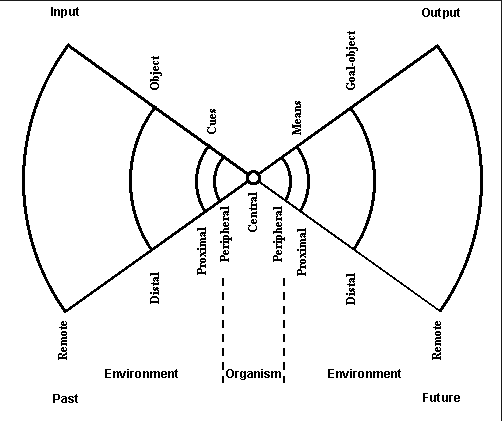
The strong impact of beliefs about power has been explained by Egon Brunswik of Berkeley’s “lens model” of perception, self-fulfilling prophecy theory by University of California’s Robert Rosenthal, and self-efficacy theory described Stanford’s Albert Bandura.

These findings suggest that beliefs about personal power shape behaviors like vocal profile, which can lead to differing outcomes in occupational and life opportunities.

Egon Brunswik's Lens Model

Egon Brunswik’s Lens Model

  • How do you modify your voice to convey power and authority?
  • How do you develop confidence in your power?

RELATED POSTS:

©Kathryn Welds

Perceived Personal Power Can Modify Time Perception, Perceived Stress

Alice Moon

Alice Moon

People’s subjective experience of time differ based on individual characteristics, which can influence feelings of control over time and coping with time demands.

Serena Chen

Serena Chen

University of California Berkeley’s Alice Moon and Serena Chen evaluated more than 550 volunteers’ ratings of their perceived personal power and their perspectives on available time to accomplish goals.

Moon and Chen asked more than 100 participants to assume the role of a “manager” while sitting in a “high-power chair,” or the role of an “employee” while both groups rated their perceived personal resources of time and power.
Participants who played the more powerful role of “manager” reported that they had more time than “employee.”

Moon and Chen also primed more than 100 American adults to think of themselves in high-power or low-power positions, and asked them to rate statements about availability of time to achieve goals.

Even when participants did not actually have more available time, those who felt most powerful perceived greater control over their time, and greater time availability.
This is another example of the power of expectation exceeding the importance of an actual resource, competency, or experience.

Mario Weick

Mario Weick

These findings support other reports that managers experience less stress than subordinates in organizations, attributable to their “position power.”

Ana Guinote

Ana Guinote

People who feel powerful tend to hold a significantly optimistic bias when predicting time required to complete task, reported University of Kent’s Mario Weick and Ana Guinote of University College London.

They attributed this unrealistic optimism to
confident belief in personal self-efficacy accompanying subjective feelings of power in their evaluation of:

  • Actual power and time perception,
  • Induced feelings of power through priming,
  • Pre-existing personal self-perceptions.
Priyanka D. Joshi

Priyanka D. Joshi

This “planning fallacy” of underestimating task completion time often results from a narrow focus on the goal, coupled with the optimism bias that obscures potential obstacles and risks.

Nathanael Fast

Nathanael Fast

Likewise, people who feel powerful also tend to feel more confident about the future, more aware of their “future self,” and more willing to wait for longer-term rewards, found University of Southern California ’s Priyanka D. Joshi and Nathanael J. Fast.

Specifically, participants assigned to high-power roles and to power priming instructions were less likely to display temporal discounting, or choosing smaller short-term rewards over larger goals that require a longer waiting period.

This suggests that people who feel powerful have a sense of abundance in other domains, including time and money.
As a result, feeling powerful enables people to forego current rewards, “delay gratification,” and make present investments to achieve potentially larger longer-term pay-offs.

-*How do you increase your personal experience of power and time perspective?

Follow-share-like www.kathrynwelds.com and @kathrynwelds


RELATED POSTS:

Twitter  @kathrynwelds
Blog – Kathryn Welds | Curated Research and Commentary  
Google+
LinkedIn Open Group Psychology in Human Resources (Organisational Psychology)
Facebook Notes:

©Kathryn Welds

Increase Feelings of Power by Listening to Music with Strong Bass Beat

Dennis Hsu

Dennis Hsu

Listening to music with specific emotional qualities has been associated with productivity, performance, creative problem solving, endurance, decreased pain sensitivity, and decision biases, outlined in previous blog posts.

Loran Nordgren

Loran Nordgren

Subjective power feelings are an additional outcome of listening to music with substantial bass beat, reported Northwestern University’s Dennis Y. Hsu, Loran F. Nordgren, Derek D. Rucker, Li Huang, and Columbia’s Adam D. Galinsky.

Derek D. Rucker

Derek D. Rucker

Hsu’s team found that power-inducing music produced enhanced:

  • Abstract thinking
  • Illusions of control
  • Willingness to volunteer first for a potentially stressful task.
Li Huang

Li Huang

Subjective feelings of power are important contributors to workplace performance because they associated with confidence and self-efficacy, which influence willingness to persist in accomplishing challenging tasks.

Adam Galinsky

Adam Galinsky

More than 75 volunteers listened to an original, two-minute instrumental composition with either a prominent bass line or a subdued bass element in Team Hsu’s investigation.
Participants rated their feelings of power, dominance and determination along with their sense of happiness, excitement, and enthusiasm.

Pamela K. Smith

Pamela K. Smith

People who listened to the heavy-bass music said they experienced greater feelings of power than those who listened to the more subdued variation, but the increased bass element did not affect feelings of happiness or excitement.
Those who heard the composition with prominent bass elements also produced more power-related terms in a word-completion test.

Daniël Wigboldus

Daniël Wigboldus

Likewise, those who heard familiar “high-power music” such as Queen’s “We Will Rock You,” volunteered to be the first participants in a debate competition and scored higher on a test measuring abstract thinking, compared with people who listened to widely-known “low-power music” like “Who Let the Dogs Out?”

Ap Dijksterhuis

Ap Dijksterhuis

Feeling powerful is more important than actually possessing power in achieving superior performance, confirmed by University of California San Diego’s Pamela K. Smith with Daniël H.J. Wigboldus of Radboud University Nijmegen, and University of Amsterdam’s Ap Dijksterhuisc.
They reported this well-validated finding and expanded Smith’s previous report, with NYU’s Yaacov Trope, that people’s subjective sense of power is partly determined by individual information processing style.

Yaacov Trope

Yaacov Trope

Smith’s team found that people who demonstrated abstract thought reported greater sense of power, greater preference for high-power roles, and more feelings of control over the environment, compared with people who were primed to use concrete thinking.

Subjective feelings of power can be enhanced by listening to music with a prominent bass element, in addition to writing “power primes” and assuming expansive body postures.

-*How do you increase your personal experience of power?

Follow-share-like www.kathrynwelds.com and @kathrynwelds


RELATED POSTS:

©Kathryn Welds

Does Customer Recommendation Predict Company Growth?

Fred Reichheld

Fred Reichheld

Net Promoter Scores gauge customer loyalty, expressed by willingness to recommend and advocate the company’s products and services to others.

Its creator, Fred Reichheld of Bain & Company, posited that NPS is a more meaningful measure of a company’s relationship with its customers than customer satisfaction metrics because, he argued, it is correlated with revenue growth.

Richard Owen

Richard Owen

Satmetrix Executives Richard Owen and Laura Brooks further articulated this linkage between customer loyalty and revenue growth.

NPS’s customer loyalty metric is based on 10-point ratings in response to just one question: How likely is it that you would recommend our company/product/service to a friend or colleague?

Laura Brooks

Laura Brooks

“Promoters” respond with a score of 9 or 10 whereas “Detractors” provide ratings of 0-6, and scores of 7 and 8 are ignored in this system, leading to the question of why they are included.
NPS is calculated by subtracting the percentage of customers who are Detractors from the percentage of customers who are Promoters.

Timothy L. Keiningham

Timothy L. Keiningham

Critics, including Ipsos Loyalty’s Timothy L. Keiningham, Bruce Cooil of Vanderbilt, BI Norwegian School of Management’s Tor Wallin Andreassen, and Lerzan Aksoy of Fordham, argue that American Customer Satisfaction Index (ACSI) is an equally accurate predictor of revenue growth.

They reinforced the frequently-replicated finding that actual behaviors, including positive and negative “word of mouth (WOM)are better predictors than attitudes about possible future behaviors, in their evaluation of longitudinal data from 21 firms and 15,500-plus interviews from the Norwegian Customer Satisfaction Barometer.

Claes Fornell

Claes Fornell

Likewise, University of Michigan’s Claes Fornell, Forrest V. Morgensen, and M.S. Krishan, with Sunil Mithas of University of Maryland, found that “it is possible to beat the market consistently by investing in firms that do well on the ACSI.”

Companies that invest in initiatives to increase customer satisfaction, reflected in higher scores than competitors on the American Customer Satisfaction Index (ACSI), also performed better in measures of market value.

More surprisingly, they found that these higher returns are associated with lower stock market risk, probably due to “stock market imperfections” that require time to adjust to news of strong ACSI performance.

Bob Hayes

Bob Hayes

Similarly, customer satisfaction and loyalty researcher Bob Hayes contended that “likelihood to recommend” measures the same construct and has the same predictive value of business growth as customer loyalty questions such as:

  • Overall satisfaction
  • Predicted likelihood to purchase again, evaluated through his Purchasing Loyalty Index (PLI)
  • Number of referrals through “word of mouth” and “word of mouse,” calculated in his Advocacy Loyalty Index (ALI)
  • Resistance to defection to competing offers, measured with his Retention Loyalty Index (RLI).

    Hayes Customer Loyalty Grid

    Hayes Customer Loyalty Grid

Hayes’ findings reinforced the caveat that actual behavior is a more accurate than attitudes about likely future behavior, also demonstrated by University of Connecticut’s V Kumar, J Andrew Petersen and Robert Leone in their analysis of telecoms and financial service customers willing to recommend their service provider.

V Kumar

V Kumar

Only about one-third of these potential Advocates actually recommended the provider, and only about 13% of those referrals actually led to new customers.
Kumar and team called this the “promise gap” and suggested that it can be mitigated by delivering beyond customer expectations, even when a customer complains.

Neal A Morgan

Neil Morgan

Indiana University’s Neil A. Morgan and Lopo Leotte Rego of University of Iowa added a wrinkle to critiques of Net Promoter Scores as the sole necessary indicator of customer satisfaction.

Like Keiningham’s team and Hayes, they found that recommendation intentions (“net promoters”) have “little to no predictive value.
Unlike Hayes, their results found little predictive strength for actual behavior in average number of recommendations.

Instead, Morgan and Rego argued for multiple measures of customer satisfaction as the best predictor of revenue group.
Additionally they found that Top 2 Box satisfaction scores – the sum of percentages for the top two point on surveys of purchase intent, satisfaction or awareness – provided “good” predictive value.

Daniel Schneider

Daniel Schneider

The Net Promoter Score also had the lowest predictive validity when compared to three other scales by Stanford’s Jon Krosnick and Daniel Schneider, with Intuit’s Matt Berent and Hays Interactive’s Randall Thomas.

To improve the NPS, the team recommended replacing the 11 point unipolar rating scale with a 7 point bipolar scale from positive to negative impressions.

Jon Krosnick

Jon Krosnick

Their work replicated Hayes’ finding that liking and satisfaction with a company are highly significantly predictors than the likelihood of recommending, so Krosnick’s team recommended including questions like:

  • Overall, how satisfied are you with the each of the following companies?
  • How much do you like or dislike each of the following companies?

They uncovered correlations among measures of customer experience, and showed that liking is the best predictor of the number of recommendations and satisfaction.

Leon Festinger

Leon Festinger

Customers typically form more positive evaluations after the decision to purchase, probably due to validating purchase choices and reduce cognitive dissonance of purchase dissatisfaction, described by Stanford’s Leon Festinger.

These findings suggest that Reichheld’s claim of NPS as “the only question you need to ask” may be unsubstantiated, and that multiple measures of customer experience are more accurate predictors of a company’s revenue performance.

-*How credible is “willingness to recommend” a company as a predictor of its revenue growth?

Follow-share-like www.kathrynwelds.com and @kathrynwelds

RELATED POSTS:

©Kathryn Welds

Most Effective “Calls to Action” Are Aligned to Audience “Construal Level”, Psychological Distance”

Nir Halevy

Nir Halevy

Leaders can elicit stronger commitment and willingness to follow requested actions when they deliver messages tailored to the audience’s “psychological distance” from them, according to Stanford’s Nir Halevy and Yair Berson of Bar-Ilan University.

Yaacov Trope

Yaacov Trope

Construal level theory” (CLT), developed by NYU’s Yaacov Trop and Nira Liberman of Tel Aviv University, posits that the “psychological distance” is related to differences in organizational hierarchy position as well as spatial and temporal distance.

Nira Liberman

Nira Liberman

Halevy and Berson found that greater psychological distance requires greater message abstractness, often characterized as “high level,” “visionary,” and “big picture” communications.

In contrast, communications with people who work closely with each other are more influential when messages are concrete and specific.

Yair Berson

Yair Berson

Halevy and Berson found that “construal fit” is associated with greater job satisfaction, commitment, and social bonding.

These findings add to other “fit” theories, pioneered by Paul Hersey and Ken Blanchard’s Situational Leadership concepts, and suggest leadership behaviors are most effective when tailored to specific workplace situations,

Paul Hersey

Paul Hersey

Practical implications include:

  • Providing more specific messages to people working in different locations and time zones.
  • Pairing individuals at closer organizational levels for workplace mentoring rather than “executive shadowing” experiences.
Ken Blanchard

Ken Blanchard

*How do you tailor leadership communications based on the audience’s “psychological distance” and “construal level?”

Follow-share-like http://www.kathrynwelds.com and @kathrynwelds

Situational LeadershipRELATED POSTS:

Twitter @kathrynwelds
Blog: Kathryn Welds | Curated Research and Commentary  
Google+
LinkedIn Open Group Psychology in Human Resources (Organisational Psychology)
Facebook Notes

©Kathryn Welds

Executives’ Financial Risk Tolerance Related to Marital Status

Nickolai Roussanov

Nickolai Roussanov

Unmarried executives tend to advocate more aggressive investments in corporate capital expenditures, innovation activity, research and development, and acquisitions, resulting in significantly higher stock return volatility, according to Wharton’s Nikolai Roussanov and Pavel G. Savor of Temple University.

Pavel G. Savor

Pavel G. Savor

Marital status is a changeable characteristic rather than a personal inherent trait, previously considered as unrelated to risk-taking decisions.

However, Roussanov and Savor found that marital status can both reflect and affect individual risk preferences based on their analysis of financial risk-taking decisions of CEOs of the U.S.’s 1,500 largest public companies and variations in divorce laws across U.S. states.

Although unmarried CEOs tend lead smaller, early-stage, high-growth firms that benefit from greater investing, Roussanov and Savor controlled for various differences between firms and found that unmarried CEOs make about 10% more risky investments than married CEOs.
Managers are “rational maximizers,” and the target of maximization can change based on personal circumstances, they concluded.

Terence Burnham

Terence Burnham

Unmarried men are more aggressive and willing to take risks, due to higher testosterone levels, according to Chapman University’s Terence Burnham, with colleagues Judith Flynn Chapman and Peter Ellison of Harvard, University of Nevada’s Peter Gray, Matthew McIntyre of 23and Me, and University of Rochester’s Susan Lipson.

Judith Flynn Chapman

Judith Flynn Chapman

In addition, they note that married men may become more cautious as responsibilities for family members increase and testosterone levels decrease.

CEOs, they found, are more likely to be unmarried in U.S. community property states because it is much costlier for a wealthy individual to be divorced.
As a result, it  may be potentially costlier to marry, given the significant chance of divorce.

Peter Ellison

Peter Ellison

A person’s individual characteristics and … individual life cycle matter for the decisions that they make…on behalf of the firms that they lead… Managerial decisions are affected by what is happening in those individual’s personal lives.,” said Roussanov.

Peter Gray

Peter Gray

Boards of Directors may consider a leader’s or candidate’s personal situation, although in the U.S., this is not a legitimate selection criterion.
However, Boards may design CEO incentive compensation tailored to the executive’s risk tolerance, informed by marital status.

For example, a married male or a female CEO leading a fast-growing firm may need financial incentives to increase risk tolerance, since both groups tend to have lower average testosterone levels and lower risk appetite than unmarried men, according to researchers including Northwestern’ s Paola Sapienza, with Luigi Zingales and Dario Maestripieri of University of Chicago

Likewise, a younger unmarried male or CEO of a less dynamic business may need compensation that rewards slower but consistent long term growth.

-*To what extent have you seen organizational leader’s changeable characteristics affect business performance?

RELATED POSTS:

©Kathryn Welds

Mitigating Pervasive “Cheap Talk” at Work, in Dating

Paul Oyer

Paul Oyer

“Cheap talk,” a game theory concept, took on personal meaning for Stanford’s Paul Oyer during his foray into the online dating “marketplace” at OkCupid.

He was candid on some parts of his profile but edited details in other areas is explained by game theory’s “cheap talk,” which suggests that the value of editing and embellishing information is based on expected utility – potential dating partners’ selection criteria – in relation to the possible cost of selective reporting – “overcoming barriers to entry” but being disqualified for lack of full disclosure.

Data from OkCupid and match.com suggest that many participants engage in cheap talk, to enhance physical attractiveness and fitness as well as income.
As a result, “profile inflators’ curatorial enhancements” (non-cooperative cheap talk) led most to discount most all claims as “cheap talk,” leading to a significant disadvantage for truthfully uninflated profiles (cooperative cheap talk), noted Oyer.

Jonathan Zinman

Jonathan Zinman

Marketing and advertising campaigns have the reputation for employing cheap talk, documented by Dartmouth’s Jonathan Zinman and Eric Zitzewitz, who found that ski resorts exaggerate snowfall, especially during periods including holidays and weekends.

Eric Zitzewitz

Eric Zitzewitz

However, external verification through real time reporting via smartphones reduced the revenue-enhancing effect of meteorological exaggeration, according to Zinman and Zitzewitz.

Like resort marketers, CEOs may engage in a cycle of optimistic forward-looking statements, based on expectations that any statement would be discounted as “cheap talk,” noted Harvard’s Jeremy Stein.

Jeremy Stein

Jeremy Stein

Similarly, before he became a member of the Federal Reserve, Stein found that official statements by the Chair of the Federal Reserve were more credible and less likely to contain “cheap talk” when a target range for inflation was announced, instead of a precise value.

Stock analysts, too, are a source of influential “cheap talk,” particularly when a company goes public, because their employer’s other services securities underwriting become more valuable, observed National Taiwan University’s Hsiou-wei Lin and Maureen McNichols of Stanford.

Hsiou-Wei Lin

Hsiou-Wei Lin

They found that analysts employed by a bank that worked with the target company provided higher forecasts than independent analysts.
As a result, the stock market was “less responsive” to assumed “cheap talk” of in-house analysts.

Maureen McNichols

Maureen McNichols

To manage “cheap talk,” Stanford’s Nobel laureate A. Michael Spence modeled signaling information to a valued target audience in the job market.
In online dating, this could be sending a virtual rose, to indicate greater-than-average interest in meeting, resulting in increased acceptance rates for participants with “average desirability” of income level and physical characteristics.

A Michael Spence

A Michael Spence

“Signaling” has become a familiar process in university application processes, when candidates indicate clear preference and intention to attend if accepted, at the “cost” of foregoing other early decision applications.

Like “signaling,” external verification of “cheap talk” claims review sites like Yelp.com, or even friend-of-a-friend accounts can increase the “cost” and reduce exaggerated claims.

-*When has “cheap talk” contributed to achieving goals?
-*How do you manage “cheap talk” by others?

Follow-share-like http://www.kathrynwelds.com and @kathrynwelds

RELATED POSTS:

·         Unrealistic Optimism Drives Profitability

·         Useful Fiction: Optimism Bias of Positive Illusions

Twitter @kathrynwelds
BlogKathryn Welds | Curated Research and Commentary
Google+
LinkedIn Open Group Psychology in Human Resources (Organisational Psychology)
Facebook Notes:

©Kathryn Welds

Paradoxical Bias against Innovative Ideas in the Workplace

Jennifer Mueller

Jennifer Mueller

Managers’ implicit attitudes and cognitive “mindset” during proposal presentations can bias organizational decision-makers against innovative solutions without their awareness, according to University of San Diego’s Jennifer Mueller with Shimul Melwani of University of North Carolina and Cornell University’s Jack Goncalo.

Shimul Melwani

Shimul Melwani

Mueller and team pointed out a paradox:  Most managers say they want innovative solutions to workplace issues from team members, yet often reject these creative ideas to reduce risk and uncertainty.

The team asked volunteers to rate a running shoe equipped with nanotechnology that improved fit and reduced potential to develop blisters.

Jack Goncalo

Jack Goncalo

They “primed” some participants toward increased uncertainty in this task by telling them that there were many potential answers to a problem.
In contrast, they cued another group with reduced uncertainty by instructing them that a problem required a single solution.

When volunteers who said they favored creative ideas experienced uncertainty, they preferred concepts of practicality on an implicit word association test, and associated “creativity” with negative concepts including “vomit,” “poison” and “agony.”

Uncertain participants also rated the shoe as significantly less creative than those in the more structured condition, suggesting that were less able to recognize a creative idea and held an unconscious “negative bias against creativity.”

Cheryl Wakslak

Cheryl Wakslak

In more recent work, Mueller collaborated with University of Southern California’s Cheryl Wakslak and Viswanathan Krishnan with University of California, San Diego to expand the idea assessment scenario with two ideas that were independently rated as “creative,” and two ideas judged “not creative.”

Vish Krishnan

Vish Krishnan

Mueller, Wakslak and Krishnan cued some participants to consider “why” in evaluating creative ideas, to evoke broad, abstract thinking, and “high-level construal.
They instructed other volunteers to think about “how” creative idea works, to stimulate narrow focus on practical details and logistics, and “low-level construal.”

Although participants in both groups rated two non-creative ideas similarly, those who adopted a “high-level construal” or a “why” mindset recognized creative ideas more often than those using the “how” mindset.

As an idea’s degree of creativity increases, uncertainty also increases about its feasibility, acceptability, and practicality.
This increased risk may reduce evaluators’ willingness to accept and advocate for an innovative idea, even when objective evidence is presented to validate a creative idea.

To mitigate the paradoxical rejection of creative ideas, organizational leaders can ask team members to consider “why” when creative evaluating proposals to enable “big picture” thinking and a broader construal level.

-*How do you encourage innovative solutions to work challenges?

Follow-share-like http://www.kathrynwelds.com and @kathrynwelds

RELATED POSTS:

Twitter  @kathrynwelds
Blog – Kathryn Welds | Curated Research and Commentary  

Google+
LinkedIn Open Group Psychology in Human Resources (Organisational Psychology)
Facebook Notes:

©Kathryn Welds

Word of Mouth, Social Media Expand Silicon Valley Networking with a Purpose

Networking with a Purpose

A professional development collaboration among Cisco, Citrix, eBay, EMC, Ericsson, Intel, Oracle, and other Silicon Valley technology companies using the IEEE model of “Birds of A Feather” discussion topics was introduced in a previous blog post.

IEEE

Anna Van Rijswijk, formerly of Cisco, developed this program based on survey data indicating that unstructured professional networking can feel awkward, stressful, and uncomfortable to many potential and actual participants.

Anna Van Rijswijk

Anna Van Rijswijk

Networking with a Purpose format provides structure and focus found in Speed Networking, Tom Jaffee’s business-focused adaptation of Rabbi Yaacov Deyo’s Speed Dating to enable members of his congregation to meet potential life partners. Yaacov Deyo

A Columbia alumnus, Jaffee noted that “at business functions, people often find themselves spending too much time with a small group rather than establishing multiple contacts throughout the function.”

Tom Jaffee

Tom Jaffee

To provide a solution, he built a company that offers events to increase chances that participants will make valuable business connections, much like the no-cost, self-organizing alternative, Networking with a Purpose.

Word of Mouth Marketing (WOMM) and social media mentions on Networking with a Purpose LinkedIn Group, Twitter (#SVBOF), and Facebook dramatically increased demand for registration at Silicon Valley Networking with a Purpose in-person events, and no-cost tickets typically “sell out” within minutes of posting the event invitation. WOMMA

The fifth Networking with a Purpose event is scheduled for Wednesday 20 November 2013 at eBay in San Jose, California, with popular discussion topics including:

  • Enhancing Personal Brand
  • Communicating Upward
  • Career Planning and Accountability
  • Design Thinking
  • Sketchnoting and Graphic Facilitation
  • Think Big, Play Big
  • Work Life Integration
  • Salary Negotiation
  • Office Feng Shui
  • iPhoneography

Silicon AlleyOrganizers have received strong post-event ratings from participants and have been contacted by colleagues in Silicon Alley – New York City – who wish to replicate this approach to professional networking.

-*How do you expand, cultivate and contribute to your professional network?Networking with a Purpose Best Kept Secret

->Follow-share-like http://www.kathrynwelds.com and @kathrynwelds

RELATED POSTS:

©Kathryn Welds

Recasting Unattainable Goals into Refreshed Options

Several previous posts have showcased research findings linking perseverance and persistence with expert performance and career advancement.

Faizel Mohidin

Faizel Mohidin

Faizel Mohidin SMART goal mind mapMind Map expert Faizel Mohidin shared an augmented understanding of SMART goals in a compelling graphic that showcases the necessity of goal achievability.

Goals may become unattainable due to:

  • Lack of opportunity (older than usual childbearing age, divorce)
  • Negative life event (death of a spouse, job loss)
  • Lack of resources (insufficient time, health, or money), or
  • Unattractive opportunity cost
Carsten Wrosch

Carsten Wrosch

Michael Scheier

Michael Scheier

Concordia University’ s Carsten Wrosch collaborated with Michael Scheier of Carnegie Mellon University, University of British Columbia’s Gregory Miller, Richard Schulz  of University of Pittsburgh, and University of Miami’s Charles Carver to examine disengagement from unattainable, goals, reengagement with more achievable goals, and subjective well-being among 280 volunteers in three studies.

Gregory Miller

Gregory Miller

Richard Schulz

Richard Schulz

Participants rated their ease in stopping focus on unattainable goals, and the amount of effort they invested in alternate achievable goals, along with multiple measures of physical and mental well-being.

They found that people who disengaged from unattainable goals and reengaged with attainable goals reported higher subjective well-being, lower stress, fewer intrusive thoughts about personal issues, and feeling more control in life circumstances than those who persisted with objectively unattainable goals.

Jutta Heckhausen

Jutta Heckhausen

Charles Carver

Charles Carver

Wrosh built on these findings that goal disengagement and reengagement can increase self-efficacy and emotional self-regulation by collaborating with Jutta Heckhausen of University of California, Irvine and Wake Forest University’s William Fleeson, to investigate the special case of women approaching and past the usual age of childbearing.

William Fleeson

William Fleeson

Their observations led them to propose an “action-phase model of developmental regulation,” in which people close to a developmental deadline like end of fertility, focus on “goal pursuit.”

In contrast, people past a developmental deadline without attaining a time-limited goal tend to focus on “disengagement and self-protection.”

This research suggests tempering advice to “never give up” with an assesssment of goal feasibility to decide whether to disengage, then reengage with a more achievable aspiration.

-*What approaches expedite disengagement from an unattainable goal and reengagement  with a revised, achievable objective?

RELATED POSTS:

Twitter:    @kathrynwelds
Blog: – Kathryn Welds | Curated Research and Commentary
Google+:
LinkedIn Open Group Psychology in Human Resources (Organisational Psychology)
Facebook Notes:

©Kathryn Welds