Category Archives: Behavior Change

Behavior Change

Increase Self-Control with Purpose in Life, Positive Outlook, Humility

Anthony Burrow

Anthony Burrow

People with a sense of purpose are more likely to make choices with long-term benefits like saving for retirement and children’s education.
In addition, they are less likely to be diverted by short-term gratification and impulsive actions like such as cigarette smoking, drug use, gambling, and driving under the influence, found Cornell’s Anthony L. Burrow and R. Nathan Spreng in work with more than 500 adults.
As a result, Purpose in Life was related to reduced impulsivity and increased self-control.

Nathan Spreng

Nathan Spreng

Volunteers completed a personality inventory and a self-rating of Purpose in Life before making choices about whether to take a smaller amount of money immediately or a larger amount at some later date.

Waiting times and amount of the payoffs differed during each trial.
Participants who said they had a clear life purpose made longer-term, higher-payoff choices, suggesting greater ability to curb the impulse for an immediate reward, and greater self-management capacity.

Chai Jing

Chai Jing

Another factor in reducing one type of impulsive behavior – dangerous driving – is a “positivity bias,” hallmarked by seeing positive events as more salient than negative incidents, reported University of Chinese Academy of Sciences’ Chai Jing , Weina Qu, Xianghong Sun, Kan Zhang, and Yan Ge.

Weina Qu

Weina Qu

They studied more than 40 non-professional drivers using electroencephalograph data, self-reports of driving, violation reports, and International Affective Picture System (IAPS)  scores to measure negativity biases.

Volunteers identified whether a series of 80 pictures had blue borders or red borders around images that implicitly evoke negative, positive, or neutral emotions.
Dangerous drivers took longer to respond on the border-color task when the image was negative, suggesting greater attention to negative input.

Patrick Hill

Patrick Hill

Sense of purpose is also linked to greater longevity in a study by Carleton University’s Patrick Hill and Nicholas Turiano of the University of Rochester, in their study of more than 6100 Americans followed over 14 years.

Rachel Sumner

Rachel Sumner

Purpose in Life can increase White adult’s comfort with diverse groups, and may be associated with reduced prejudice, noted Cornell’s Burrow and Rachel Sumner, Maclen Stanley of Harvard, and Carlton University’s Patrick L. Hill in their study of more than 500 Americans.

Maclen Stanley

Maclen Stanley

Participants who received an experimental prime of life purpose also reported less preference for living in an ethnically homogeneous White city.
These effects persisted were independent of volunteers’ positive affect and perceived connections to ethnic out-groups.

Eddie M.W. Tong

Eddie M.W. Tong

Humility is another characteristic associated with reduced impulsivity and greater self-control in research by National University of Singapore’s Eddie M.W. Tong, Kenny W.T. Tan, Agapera A.B. Chor, Emmeline P.S. Koh, Jehanne S.Y. Lee, and Regina W.Y. Tan.

Defined as the ability to tolerate failures without self-deprecation, and to view successes without developing a sense of superiority, humility primes were associated with improved performance in a physical stamina (handgrip), resisting chocolate, and an insoluble tracing task.

Kenny W.T. Tan

Kenny W.T. Tan

Humility’s effect on self-regulation was significantly different from self-esteem, which had no impact on self-control.
Likewise, achievement motivation and compliance motivation did not explain increased performance.

Taken together, these findings suggest that effectively managing oneself in the face of challenging and tempting circumstances is enhanced by having a clear purpose in life, cultivating a positive bias and humility.

-*To what extent does having a sense of purpose make it easier to maintain self-control in challenging situations?

Follow-share-like http://www.kathrynwelds.com and @kathrynwelds

Related Posts:

Twitter:  @kathrynwelds
Google+
LinkedIn Groups Psychology in Human Resources (Organisational Psychology)
Facebook
Blog: – Kathryn Welds | Curated Research and Commentary

©Kathryn Welds

Power Increases Responsibility, Generosity toward Future Generations

Leigh Plunkett Tost

Leigh Plunkett Tost

Power can increase future perspective, feelings of social responsibility, and intergenerational generosity toward others, according to University of Michigan’s Leigh Plunkett Tost, Kimberly A. Wade-Benzoni of Duke University, and University of Idaho’s Hana Huang Johnson.

Priscilla Chan, Mark Zuckerberg

Priscilla Chan, Mark Zuckerberg

Mark Zuckerberg and Pricilla Chan’s sizeable gift of Facebook stock on the occasion of their daughter’s birth is a recent example.

Katherine DeCelles

Katherine DeCelles

This finding contrasts previous reports that power tends to cause people to act in more self-interested ways with peers, particularly “in the presence of a weak moral identity,” according to University of Toronto’s Katherine DeCelles, D. Scott DeRue of University of Michigan, Harvard’s Joshua Margolis, and Tara L. Ceranic of University of San Diego.

Kimberly Wade-Benzoni

Kimberly Wade-Benzoni

Focusing on previous power experiences also was linked with a longer-term time perspective among more than 110 participants who wrote about a time they experienced power over others.
Volunteers in studies by Tost’s group reported greater willingness to allocate charitable donations to a cause with long-term benefits than one addressing an immediate need, compared with a matched group that didn’t write about a previous power experience.

Hana Huang Johnson

Hana Huang Johnson

In another task, more than 230 volunteers also wrote a power prime, then chose between allocating a $1,000 bonus to themselves or another participant now or a larger amount in the future.
Participants who recalled a power experience were more likely to allocate a greater future bonus to themselves and someone else.

Scott DeRue

Scott DeRue

Tost’s team suggested that people with intergenerational power typically feel responsible for ensuring others’ long-term interests, manifested in generous behavior to younger generations.
DeCelles’ findings suggest that moral identity may interact with intergenerational relations to influence people to act with less self-interest and greater altruism.

Joshua Margolis

Joshua Margolis

In additional studies, more than 160 participants were randomly assigned to influence tasks that other group members performed.
The controlling participants reported greater willingness to allocate more future lottery winnings to another group member compare with volunteers who did not control others’ assignments.

Sonya Lyubomirsky

Sonya Lyubomirsky

Many of these paradoxes of generosity and altruism are investigated through University of Notre Dame’s Science of Generosity initiative.
One promising project is led by University of California, Riverside’s Sonya Lyubomirsky, who explored “the how” and “myths” of happiness.

She currently investigates “ripple” and contagion effects of generosity propagation in work settings, and argues that performing generous acts makes the giver, receiver, connector, and observer happier.
In addition, she posits that workplace generosity promotes a positive workplace climate.

Tara Ceranic

Tara Ceranic

Feelings of power seem to invoke a sense of responsibility to ensure and enable others’ interests.
This insight can benefit non-profit organizations seeking increased donations by highlighting that those with decision-making authority have the power to shape the performance and outcomes of the generations to come.

-*To what extent do those with organizational power demonstrate a longer time perspective and willingness to enable the next generation’s well-being?

Follow-share-like http://www.kathrynwelds.com and @kathrynwelds

Related Posts:

Previous blog posts have outlined the varied positive effects of focusing on previous power experiences, and on time perspective’s relationship with investment choices.

Twitter:  @kathrynwelds
Google+LinkedIn Groups Psychology in Human Resources (Organisational Psychology)
Facebook
Blog: – Kathryn Welds | Curated Research and Commentary

©Kathryn Welds

Recalling Supportive Relationships Can Reduce Dislike of Outsiders

Animosity toward perceived outsiders remains a powerful driver of political attitudes and aggressive behavior toward out-groups, even in diverse societies.

Muniba Saleem

Muniba Saleem

However, intergroup discord can be reduced by recalling times of connection to supportive others, found University of Michigan’s Muniba Saleem collaborating with Sara Prot, Ben C. P. Lam and Craig A. Anderson of Iowa State, plus Harvard’s Mina Cikara and Margareta Jelic University of Zagreb.

John Bowlby

John Bowlby

Their study is based on observations by John Bowlby of London’s Child Guidance clinic and his protégée, University of Virginia’s Mary Ainsworth, that healthy social and emotional functioning depends on healthy attachment to at least one reliably supportive person in childhood.

Mary Ainsworth

Mary Ainsworth

Saleem’s team confirmed that evoking early positive memories of attachment can modify aggressive thoughts and behaviors based on fear and insecurity, particularly among those strongly identified with their in-group.

Muzafer Sherif

Muzafer Sherif

This approach proved more effective than earlier prejudice-reduction techniques requiring different groups to work together on shared goals such as in Muzafer Sherif’s Robber’s Cave experiment with University of Oklahoma colleagues O. J. Harvey, B. Jack White, William R. Hood, and Carolyn W. Sherif.
Saleem’s intervention produced more robust attitude change because it  reduced fear that can lead to aggression.

Muzafer Sherif - Robber's Cave

Team Tasks at Robber’s Cave

In Team Saleem’s experiments, more than 275 people from University of Michigan had the opportunity to undermine counterparts from a rival school, Ohio State, with no negative personal consequences.

Sara Prot

Sara Prot

Participants completed surveys of their propensity for attachment anxiety and avoidance of close relationships.
Then, half described someone “who loves and accepts you in times of need” while the remaining volunteers described a person “who lives in your neighborhood, but you do not know well.”

Craig Anderson

Craig Anderson

Next, University of Michigan participants assigned 11 puzzles of varying difficulty to an Ohio State student, who could win a $25 gift card by completing all the puzzles within 10 minutes.
University of Michigan volunteers could reduce the likelihood of the OSU student winning the gift card by assigning more challenging puzzles.

Mina Cikara

Mina Cikara

Those who strongly identified with University of Michigan and who were primed to think about the close, loving personal relationship were significantly less likely to assign difficult puzzles.
This result suggests that the positive emotional memory reduced the impulse to undermine a rival’s positive outcome even with a strong in-group preference.

In a related study, more than 260 Americans recalled one of several situations:

  • Someone close was available, supportive, and loving,
  • Typical, uneventful workday,”
  • When you accomplished a meaningful goal.”
Islamic State of Iraq and Syria

Islamic State of Iraq and Syria

Saleem’s team tested related scenarios closer to current geo-political concerns:  Volunteers in the US reported their reactions to the terrorist group Islamic State of Iraq and Syria (ISIS).
Their descriptions included “angry,” “disgusted,” and “fearful.”

Finally, participants indicated their degree of support for “militaristic and aggressive policies intended to counter terrorism,” such as “I think it is OK to bomb an entire country if it is known to harbor ISIS terrorists.”

Gordon Moskowitz

Gordon Moskowitz

Volunteers prompted to recall a secure attachment were less likely to support military and aggressive measures against ISIS members and demonstrated significantly reduced negative stereotypes and negative emotions.

This effect was not due to increase positive mood because participants who recalled the positive experience of accomplishing an important goal responded significantly more aggressively.

Irmak Olcaysoy Okten

Irmak Olcaysoy Okten

Though promising, the impact of this work may be limited to those who have the advantage of experiencing close, secure relationships.
People who have missed these experiences are more likely to express prejudice, lack of remorse for aggression toward others.
In addition, cross-school rivalry and fears of terrorists are at least partially condoned, whereas racial and cultural prejudices are socially unacceptable to many.

As a result of social disapproval, some prejudices becomes implicit or unconscious.
They can be detected only through indirect measures such as the Implicit Association Test, and more recently, by evidence of biased time perception accompanying racial prejudice.

Cynthia Gooch

Cynthia Gooch

For example, White people who were concerned about appearing racially prejudiced were asked to judge the length of time they viewed faces of White men and Black men.
These White volunteers thought that time passed 10% more slowly than measured by clock time: They reported viewing faces of Black men for longer than they actually had, found Lehigh University’s Gordon B. Moskowitz and Irmak Olcaysoy Okten with Cynthia M. Gooch of Temple University.

Perceptual bias about time is also relevant to high stakes situations including perceived duration of job interviews for candidates of a different race than the interviewer, and physicians’ perception of the length of medical encounters.

This intergroup perceptual bias also can have significant consequences when white police officers’ estimate the duration of an encounter with a suspect of another race, and when they determine lethal force should be initiated.

First Person Shooter Task

First Person Shooter Task

This research reinforces the importance of early and later supportive relationships in reducing bias, subtle undermining, and over aggression toward other groups

-*How do you reduce prejudice and aggression across work teams?

Follow-share-like http://www.kathrynwelds.com and @kathrynwelds

Related Posts:

Twitter:  @kathrynwelds
Google+LinkedIn Groups Psychology in Human Resources (Organisational Psychology)
Facebook
Blog: – Kathryn Welds | Curated Research and Commentary

©Kathryn Welds

Does Music Increase Risk-Taking, Ethical Lapses?

John DrydenJohn Dryden

John Dryden

What passion cannot Music raise and quell?” asked English poet, playwright, and critic John Dryden in A Song for St. Cecilia’s Day, 1687.

More recently, researchers have identified that music can increase risk-taking and ethically questionable behaviors in experimental settings.

Marja-Liisa Halko

Marja-Liisa Halko

Listening to preferred music was associated with increased risk-taking in a study of 23 adolescents ages 12 to 17 conducted by University of Helsinki’s Marja-Liisa Halko and Markku Kaustia of Aalto University.
Participants identified favorite and most disliked songs, and these tracks provided alternating background music during 16 opportunities to gamble for real money in trials with varying risk.

Volunteers could choose whether to participate or pass on gambles that offered a 50-50 chance to win or lose money.
If they accepted a gamble marked “plus 1.50, minus 1.20,” they had a 50 percent chance of winning 1.5 Euros, and a 50 percent chance of losing 1.2 Euros.
Preferred music was played during 64 gambles, whereas disliked music provided the auditory background during 64 other trials, and another 128 gambles were conducted in silence.

Markku Kaustia

Markku Kaustia

Participants accepted more risky gambles when their favorite music played, and they accepted fewest high risk gambles when accompanied by disliked tunes. These findings suggest that preferred music increases money’s “marginal utility” or additional satisfaction a consumer gains from “consuming one more unit of a good or service.”

Favorite music seemed to encourage people to “do what it takes” to earn more money, even if it involves greater risk and potential loss.

Naomi Ziv

Naomi Ziv

Many people prefer up-tempo music due to its mood-enhancing effects, yet upbeat music may have a darker side:  It can move people to harm others, found NYU’s Naomi Ziv.

More than 100 volunteers spent 90 seconds trying to underline all vowels in an unclear photocopied page of text.
One-quarter of the participants completed the task in silence, while the others heard one of four upbeat musical numbers, including James Brown’s I Feel Good while they finished the job.

Erica Nadera

Erica Nadera

Ziv’s team asked volunteers to inconvenience and disappoint their peers by telling saying that other volunteers couldn’t participate in a study required for academic credit because the researcher didn’t feel like staying during the experiment.

In another study, Ziv’s team asked voluntary participants to tell another volunteer who had been seriously ill that the researcher would not provide previously-promised course material, again because the researcher didn’t feel like doing so.

Steven Brown

Steven Brown

People who heard upbeat music played in the background were significantly more willing to provide the ethically dubious excuse to another volunteer compared with people who completed the task in silence.

Ulrik Volgsten

Ulrik Volgsten

Effective manipulation through music, including its use in advertising and in torture were summarized by Erica Nadera of Rutgers, while MacMaster University’s Steven Brown and Ulrik Volgsten of Örebro University assembled academic articles on music’s social uses and social control processes.

Daniel Västfjäll

Daniel Västfjäll

The specific mechanism to trigger changes in individuals’ experienced affective processes has been called including “musical mood induction procedure” (MMIP) by Linköping University’s Daniel Västfjäll in his review of research demonstrating music’ effect on peoples’ moods and emotions.

Emmett Velten

Emmett Velten

The most frequently-used mood induction procedure was developed by University of Southern California’s Emmett Velten and typically asks participants to read 60 self-referent statements including “This is great, I really do feel good” (elated condition), “I have too many bad things in my life” (depressed condition), and  “This book or any part thereof must not be reproduced in any form” (neutral condition).

However, this approach’s validity and reliability are limited by demand characteristics biasing results because the experimenters’ expectations suggest an implicit demand for specific performance requirements.

David M Clark

David M Clark

As a result, University of Oxford’s David M. Clark developed the Musical MIP eliciting depressed, neutral, and elated mood conditions based on music, and University of Oxford colleague Maryanne Martin noted that the MMIP induced the desired mood more than 75% of experimental trials.

She also concluded that the MMIP was especially efficient in inducing depressed and anxious moods, but inferior to other MIPs (such as Welten’s mood-induction procedure, social feedback, and social recollection) in inducing elated moods

Music’s varied impact on mood, performance, decision-making, pain perception, endurance and other dimensions is discussed in related blog posts, as is its use for beneficial and these less altruistic ends.

-*How do you use music to manage your own and others’ mood and productivity?

Follow-share-like http://www.kathrynwelds.com and @kathrynwelds

Related Posts:

Twitter:  @kathrynwelds
Google+LinkedIn Groups Psychology in Human Resources (Organisational Psychology)
Facebook
Blog: – Kathryn Welds | Curated Research and Commentary

©Kathryn Welds

Change Future Time Perspective to Reduce Procrastination

Neil Lewis

Neil Lewis

Future events seemed more “proximal” or occurring sooner when volunteers considered in days rather than months or years.

This shift in perspective made the Future Self and the future event seem more tangible and connected to the Present Self, enabling participants to begin progress toward distant goals, according to University of Michigan’s Neil Lewis and Daphna Oyserman of the University of Southern California.

Daphna Oyserman

Daphna Oyserman

Many people know the dilemma between purchasing expensive clothes now instead of putting the money into retirement savings or between enjoying dessert now when “swimsuit season” is just weeks away.
This pull between current rewards and costs vs future events and required efforts was labeled temporal discounting by Stanford’s Kacey Ballard and Brian Knutson.

Kacey Ballard

Kacey Ballard

People may not act when considering future events like retirement because they focus more on whether to take action in the present.
In contrast, people tend to concentrate how to act when faced with imminent situations requiring attention, according to temporal construal theory, described by NYU’s Yaacov Trope and Nira Liberman.

Yaacov Trope

Yaacov Trope

Further, people may not act when an anticipated Future Self seems incongruous or disconnected with the Present Self, found Williams College’s Kris Kirby with Nancy Petry of University of Vermont and Virginia Tech’s Warren Bickel.

Nancy Petry

Nancy Petry

When volunteers have begun preparing for the future, such as a work presentation, saving for a home, retirement, or children’s education, they saw metrics implying when a future event will occur.

More than 160 volunteers considered six scenarios — three with time metrics and three without.
For the time-metric situations, participants imagined that they were shopping, studying, or carrying out other tasks in preparation for future events — a birthday party, presentation, wedding, exam — and were asked to report how long it would be until those events occurred.

Warren Bickel

Warren Bickel

When participants considered time in the smaller of two possible units, the event seemed closer – an average of 29.7 days sooner when considered in days instead of months and an average of 8.7 months sooner when considered in months instead of years.

In other Lewis and Oyserman studies, more than 1100 participants in the U.S. indicated when they should start saving for a future scenario such as a child’s college education, measured either as 18 years or 6,570 days.

Nira Liberman

Nira Liberman

People who realized that this event would arrive within days planned to start saving four times sooner than those who thought that educational expenditures were years away, even when controlling for income, age, and self-control.

In contrast, when participants hadn’t begun preparing for an expected future event, they considered metrics as implying when they should start preparing.

This difference in time perspective can affect whether people achieve future goals that require consistent, long-term investments of time, effort, and money.
In fact, Oyserman argues that changing time perspective is  “… a new way to think about reaching goals that does not require willpower and is not about having character or caring.

Brian Knutson

Brian Knutson

Since the majority of people do not save save sufficient financial resources for required future expenditures, changing time metrics to more granular measures can make both future goals and one’s Future Self more aligned with the Present Self.

-*How do you align Future Self with Present Self when working toward future goals?

Follow-share-like http://www.kathrynwelds.com and @kathrynwelds

Related Posts:

Twitter: @kathrynwelds
Google+
LinkedIn Groups Psychology in Human Resources (Organisational Psychology)
Facebook
Blog: – Kathryn Welds | Curated Research and Commentary

©Kathryn Welds

 

Peer-Rated Personality Traits Predict Longevity

Joshua Jackson

Joshua Jackson

Self-rated personality traits and ratings by others effectively predicted mortality risk, according to Washington University’s Joshua J. Jackson, working with James J. Connolly and Madeleine M. Leveille of Connolly Consulting to collaborate with Vanderbilt University’s S. Mason Garrison and Touro University Seamus L. Connolly.
In fact, and friends’ ratings were even better predictors of longevity than were self-reports of personality,

E. Lowell Kelly

E. Lowell Kelly

The team used 75 years of data beginning in 1935 from Kelly/Connolly Longitudinal Study on Personality and Aging (KCLS), along with mortality information across 75 years, developed by University of Michigan’s E. Lowell Kelly and James J. Conley.

Robert McCrae

Robert McCrae

Both study participants and their close friends rated volunteers’ personality traits, “Big Five” traits—conscientiousness, extroversion, agreeableness, neuroticism and openness—described by NIH’s Robert McCrae and Paul Costa.

James Connolly

James Connolly

Male participants seen by their friends as more conscientious and open lived longer, whereas friend-rated emotional stability and agreeableness predicted longevity for women.
Men’s self-ratings of personality traits were somewhat accurate predictors of lifespan, but not women’s self-reports.

Mason Garrison

Mason Garrison

Jackson’s group noted that friends’ ratings were more reliable predictors because multiple evaluations were aggregated rather than relying on a single self-rating.
In addition, “…friends may see something that you miss; they may have some insight that you do not….people may be biased or miss certain aspects of themselves and we are not able to counteract that because there is only one you, only one self-report.

David Yeager

David Yeager

Comparing self-reports with multi-rater reports, University of Pennsylvania’s Angela Duckworth and David Scott Yeager of University of Texas Austin concluded that  “…each approach is imperfect in its own way.

These findings reinforce the importance of multi-rater feedback to provide insight into long-standing personality trends affecting health status.
This increased self-awareness can help people increase conscientious self-care, optimism, agreeableness, and calm stability to enhance long term health status.

-*How have you helped others improve health status by modifying personality styles?

Follow-share-like http://www.kathrynwelds.com and @kathrynwelds

Related Posts:

Twitter:@kathrynwelds
Google+LinkedIn Groups Psychology in Human Resources (Organisational Psychology)
Facebook
Blog: – Kathryn Welds | Curated Research and Commentary

©Kathryn Welds

Cynical Beliefs Linked to Lower Earnings, Poorer Health

Olga Stavrova

Olga Stavrova

People who hold cynical beliefs about human nature and the world have lower incomes than those with a more optimistic view, found University of Cologne’s Olga Stavrova and Daniel Ehlebracht.

Cynical beliefs are measured by statements including:

  • “I think most people would lie to get ahead,”
  • “It’s safer to trust nobody,”
  • “Most people will use somewhat unfair reasons to gain profit or an advantage rather than lose it.”
Daniel Ehlebracht

Daniel Ehlebracht

People who agree with these ideas may avoid cooperation, trust and collaboration with others and while focusing on monitoring, control, and preventing potential exploitation.

Volunteers who endorsed these self-protective behaviors and cynical beliefs reported lower personal income than people who demonstrate greater trust and interpersonal collaboration in studies using a representative sample of Americans between 1986 and 2012, and replicated with a representative German group between 2003 and 2012.

Robert McCrae

Robert McCrae

A related study showed that income-suppressing cynical beliefs are not associated with enduring personality characteristic measured by Robert McCrae of NIH and Paul Costa’s Big Five personality dimensions.

In addition, lower earnings were not explained by cynical individuals’ poorer health, lower education, and greater agreement with items that measure neuroticism and introversion.

Paul Costa

Paul Costa

However, some cynical beliefs are justified by the local environment, such as in counties with low levels of charitable giving, high homicide rates and high overall societal cynicism levels.
Survey data from 41 countries showed that people in these contexts who held cynical beliefs did not have lower personal income than those with more optimistic views.

Anna-Maija Tolppanen

Anna-Maija Tolppanen

Holding cynical beliefs about people was also associated with greater risk of dementia and death among the elderly in a study over 8 to 10 years, according to University of Eastern Finland’s Elisa NeuvonenMinna Rusanen, Anna-Maija Tolppanen, collaborating with Alina Solomon of University of Kuopio, Flinders University’s Tiina Laatikainen, with Tiia Ngandu of Finland’s National Institute for Health and Welfare, Hilkka Soininen of Hospital District of North Karelia, and Kuopio University Hospital’s Miia Kivipelto.

Alina Solomon

Alina Solomon

The team measured cynical distrust with the Cook-Medley Hostility Scale (CMHS) by University of Minnesota’s Walter Cook and Donald Medley, and cognitive status using screening, clinical phase, and differential diagnosis using the Diagnostic and Statistical Manual of Mental Disorders, 4th Edition (DSM-IV) criteria for more than 1450 people.

People with highest level of cynical distrust had higher risk of dementia after the researchers controlled for confounding factors including:

  • Age,
  • Gender,
  • Systolic blood pressure,
  • Total cholesterol,
  • Fasting glucose,
  • Body mass index,
  • Socioeconomic background,
  • Smoking,
  • Alcohol use,
  • Self-reported health,
  • Apolipoprotein E (APOE).
Tiina Laatikainen

Tiina Laatikainen

People with highest levels of cynical distrust were three times more likely to develop dementia than people with low levels of cynicism, even when Neuvonen’s team controlled for effects of dementia risk, including high blood pressure, high cholesterol and smoking.

Tiia Ngandu

Tiia Ngandu

This finding supports suggestions that people who are more open and optimistic have a lower risk for dementia.

Hilary Tindle

Hilary Tindle

In related findings, positive expectations about the future, and trait optimism were associated with reduced rates of coronary heart disease (CHD) and mortality in postmenopausal women, reported University of Pittsburgh’s Hilary A. Tindle, Yue-Fang Chang, Lewis H. Kuller, Greg J. Siegle, Karen A. Matthews, collaborating with Harvard’s JoAnn E. Manson, Jennifer G. Robinson of University of Iowa, and University of Massachusetts’ Milagros C. Rosal.

Michael Scheier

Michael Scheier

More than 97,250 white and black women with no signs of cancer and cardiovascular disease completed the Life Orientation Test–Revised (LOT-R) by Carnegie Mellon’s Michael Scheier and Charles Carver of University of Miami, plus the Cook Medley Questionnaire’s cynicism subscale.

Charles Carver

Charles Carver

Women who scored in the top quartile for optimism had lower age-adjusted rates of Coronary Heart Disease (CHD) and total mortality.
Black women with this optimistic perspective also had significantly less cancer-related mortality.

In contrast, those who scored in the top quartile for cynical hostility had significantly higher rates of CHD and total mortality, reinforcing the value of cultivating a positive viewpoint.

Hilkka Soininen

Hilkka Soininen

Likewise, individuals with the highest cynical distrust measured by Cook-Medley Hostility Scale had higher risk of dementia after adjusting for confounding factors including socioeconomic position, lifestyle, alcohol use, and health status, found Neuvonen’s team.

Financial, physical, and cognitive well-being can be enhanced by cultivating optimism and trust and reducing cynicism.

-*How do you increase and sustain optimism, trust, and collaboration?

Follow-share-like http://www.kathrynwelds.com and @kathrynwelds

Related Posts:

Twitter:  @kathrynwelds
Google+LinkedIn Groups Psychology in Human Resources (Organisational Psychology)
Facebook
Blog: – Kathryn Welds | Curated Research and Commentary

©Kathryn Welds

Women, Men, and Time: Differences in “Managing” a Limited Resource

Francis Wade

Francis Wade

Special thanks to Francis Wade of 2TimeLabs for his sharing his expertise.

Though women and men have the same amount of time, women seem to manage more time demands and have developed more skillful time practices to grapple with perceived “time scarcity,” according to detailed time-use studies by New South Wales’s Lyn Craig and Janeen Baxter of University of Queensland.

Lyn Craig

Lyn Craig

They found that working mothers invest more hours taking care of children and doing housework than their working husbands.

Arlie Hochschild

Arlie Hochschild

This finding validates the idea that women do a “Second Shift” of work – at home and at the office, described by University of California Berkeley’s Arlie Hochschild.

Brigid Schulte

Brigid Schulte

Personal anecdotes from of women stretched between “two shifts” validate these research findings, distilled in journalist Brigid Schulte’s popular Overwhelmed: Work, Love, and Play When No One Has the Time.

Therese Macan

Therese Macan

To grapple with time demands that may seem to outweigh available time resources, women typically engage in significantly more mechanical time management behaviors like planning, listing, and scheduling, found University of Missouri’s Therese Macan, Comila Shahani of Hofstra University and Robert Dipboye of University of South Florida, who developed the Time Management Behaviors (TMB) inventory

Abdülkadir Pehlivan

Abdülkadir Pehlivan

Many, but not all, gender differences appear to hold across countries and cultures:  Like Macan’s team, Karadeniz Technical University’s Abdülkadir Pehlivan noted that women use more listing, planning and programming than men.

In contrast, male volunteers said they feel more in charge of their time management behaviors, even when they don’t employ the same systematic time procedures as women.

Ranjita Misra

Ranjita Misra

However in a U.S. investigation, females reported better perceived “control” of time, based on using “mechanical” techniques like setting and prioritizing goals as well as planning, reported West Virginia University’s Ranjita Misra and Michelle McKean.
In addition, women said they organize tasks and workspaces more frequently than men.

Despite this efficiency, women paid a price with higher anxiety and lower leisure satisfaction, which may explain the need to develop improved practices.
Males, in contrast, reported more leisure activities and less anxiety.

Tanya Meade

Tanya Meade

In addition, Australian Time Organisation and Management Scale (ATOMS), developed by University of Western Sydney’s Tanya Covic Meade, B.J. Adamson, M. Lincoln and P.L. Kench revealed that 71% of women volunteers recognize this gender difference in time practices:  Women respondents and Meade’s team concluded that “females may be better at carrying out behavioral activities associated with time management, such as making lists and keeping a diary.”

Mark Trueman

Mark Trueman

Another study found that female student volunteers reported considerably greater use of time “management” skills than male students in a five-year investigation by Keele University’s Mark Trueman and James Hartley and in similar research by Al Ain University of Science and Technology Ahmad Saleh Al Khatib.

Nurten Kaya

Nurten Kaya

These gender differences also persisted in specific working environments such as nursing in University of Istanbul’s study by Hatice Kaya with Nurten Kaya, Aylin Öztürk Palloş, Leyla Küçük, which found that female students were able to manage their time better than male students.

Jale Eldeleklioglu

Jale Eldeleklioglu

Because time is a limited and valuable resource, Uludag University’s Jale Eldeleklioglu suggested the life skill of time “management” should begin at a young age in school: ” male students’ time management skills are not as developed as female students’ (so we need) more programs to reduce anxiety and improve students’ time management skills.

-*What differences have you observed in the ways that women and men interact with available time?

-*What practices have you found beneficial in managing time demands?

Follow-share-like http://www.kathrynwelds.com | @kathrynwelds

Follow-share-like www.2time-sys.com | http://perfect.mytimedesign.com |@fwade

Related Posts:

Twitter:  @kathrynwelds
Google+LinkedIn Groups Psychology in Human Resources (Organisational Psychology)
Facebook
Blog: – Kathryn Welds | Curated Research and Commentary

©Kathryn Welds



Rx to Reduce Cardiovascular Risk: Listen to Music

Charalambos Vlachopoulos

Charalambos Vlachopoulos

Listening to music, both classical and rock, decreases aortic stiffness and wave reflection to reduce cardiovascular risk of death and disability, according to Athens Medical School’s Charalambos Vlachopoulos with Angelos Aggelakas, Nikolaos Ioakeimidis, Panagiotis Xaplanteris, Dimitrios Terentes-Printzios, Mahmoud Abdelrasoul, George Lazaros, and Dimitris Tousoulis.

Panagiotis Xaplanteris

Panagiotis Xaplanteris

Even “a brief period of mental stress can have an enduring effect on arterial stiffness,” Vlachopoulos and colleagues noted, suggesting the value of music listening as a health intervention to decrease stress and cardiovascular risk.

Dimitris Tousoulis

Dimitris Tousoulis

The team compared aortic stiffness and carotid-femoral pulse wave velocity (PWV) reflections for 20 healthy volunteers after a half-hour rest period.
Then, participants were divided into three groups that listened to a half-hour of:

  • Classical music including excerpts from J.S. Bach’s Orchestral Suites OR
  • Rock featuring selections by Led Zeppelin, Black Sabbath, and Green Day OR
  • Silence.

Cardiovascular measurements were recorded immediately after the different auditory conditions, and then again after 30 minutes.

Liisa Ukkola-Vuoti

Liisa Ukkola-Vuoti

Participants who listened to either musical genre had lower aortic stiffness immediately after the music, and wave reflection was reduced for at least 30 minutes after the music.
This effect was even greater for those who preferred classical music, whether they listened to rock or classical selections.

Chakravarthi Kanduri

Chakravarthi Kanduri

Music’s “whole body experience” begins with genes:  Musical receptivity, perception, and creativity were linked to gene clusters and duplicate DNA associated with the brain’s serotonin systems in research by University of Helsinki’s Liisa Ukkola-Vuoti, Chakravarthi Kanduri, Jaana Oikkonen, Gemma Buck, Pirre Raijas, Kai Karma, and Irma Järvelä, collaborating with Christine Blancher of Oxford Genomics Centre and Aalto University’s Harri Lähdesmäki.

Jaana Oikkonen

Jaana Oikkonen

They found that neurotransmitter systems enable brain plasticity and connectivity in the brain’s posterior cingulate cortex.

Yi Ting Tan

Yi Ting Tan

Several chromosomes contain specific areas associated with musical perception, found University of Melbourne’s Yi Ting Tan, Gary McPherson, Samuel Berkovic, and Sarah Wilson, collaborating with Isabelle Peretz from University of Montreal.

Isabelle Peretz

Isabelle Peretz

They detected several locations on chromosome 4 tied to music perception and singing, and a specific area on chromosome 8q is implicated in music perception and absolute pitch.
In addition chromosome 12q’s gene AVPR1A was linked to music perception, music memory, and music listening, whereas SLC6A4 on chromosome 17q was associated with music memory.

These findings suggest music listening can be an easy, enjoyable way to enhance arterial function and cardiovascular health.

-*What physical effects do you notice when listening to your preferred musical genre?

Follow-share-like http://www.kathrynwelds.com and @kathrynwelds

Related Posts:

Twitter:  @kathrynwelds
Google+LinkedIn Groups Psychology in Human Resources (Organisational Psychology)
Facebook
Blog: – Kathryn Welds | Curated Research and Commentary

©Kathryn Welds

Perceived Power Affects Vocal Characteristics, Life Outcomes

Margaret Thatcher

Margaret Thatcher

British Prime Minister Margaret Thatcher participated in vocal training to project greater authority in her political role, with highly effective results.

Even without specific vocal training, research volunteers adopted powerful vocal elements when believed they had power and informational advantages in lab experiments by San Diego State University’s Sei Jin Ko and Melody S. Sadler with Adam D. Galinsky of Columbia.

Sei Jin Ko

Sei Jin Ko

Ko’s team asked more than 160 volunteers to read a text designed to evaluate speaking skills as a baseline for later comparison.
Then, they randomly assigned volunteers to a “high” ranking role with the prime “you have a strong alternative offer, valuable inside information, or high status in the workplace, or by asking participants to recall an experience in which they had power.

The remaining participants were told they had “a weak offer, no inside information, or low workplace status,” or were asked to recall an experience in which they lacked power.

Melody Sadler

Melody Sadler

To compare the impact of these power primes with the baseline reading performance, participants in both groups read a text about negotiating.
People in the high power group spoke in a higher pitch, with greater volume, and less tone variability than the low-power group.
In fact, team Ko found that people in the high power prime group had a similar vocal profile to Thatcher following her vocal training.

Mariëlle Stel

Mariëlle Stel

This contrasts previous research that demonstrated lower vocal pitch is associated with greater perceived power in work by Tilburg University’s Mariëlle Stel and Farah M. Djalal with Eric van Dijk and Wilco W. van Dijk of Leiden University, collaborating with University of California, San Diego’s Pamela K. Smith.

Eric van Dijk

Eric van Dijk

In additional investigations by Ko’s team, additional participants listened to recordings of people who read in the previous condition, and accurately determined which volunteers conveyed higher status and were more likely to engage in high-power behaviors, based only on vocal elements.

Joris Lammers

Joris Lammers

Power primes” or asking people to recall a time they had power and felt powerful, can significantly influence important life opportunities determined by hiring and university admission decisions, reported Tilburg University’s Joris Lammers with David Dubois of INSEAD and Northwestern’s Derek D. Rucker collaborating with Adam D. Galinsky of Columbia.

Thomas Mussweiler

Thomas Mussweiler

Self-generated primes are especially influential because they lead to “assimilation of the power suggestion, whereas primes provided by other people, as in Ko’s investigation, yield “contrast,” suggested Universität Würzburg’s Thomas Mussweiler and Roland Neumann.

Egon Brunswik

Egon Brunswik

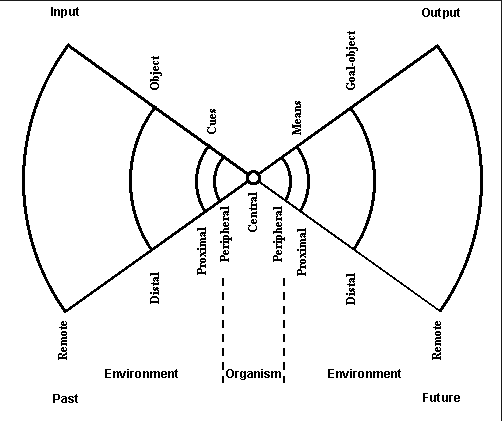
The strong impact of beliefs about power has been explained by Egon Brunswik of Berkeley’s “lens model” of perception, self-fulfilling prophecy theory by University of California’s Robert Rosenthal, and self-efficacy theory described Stanford’s Albert Bandura.

These findings suggest that beliefs about personal power shape behaviors like vocal profile, which can lead to differing outcomes in occupational and life opportunities.

Egon Brunswik's Lens Model

Egon Brunswik’s Lens Model

  • How do you modify your voice to convey power and authority?
  • How do you develop confidence in your power?

RELATED POSTS:

©Kathryn Welds