Tag Archives: Performance

Listening to Music Increases Endurance, Reduce Perceived Discomfort in Physical Exercise

Costas Karageorghis

Costas Karageorghis

Listening to up-tempo music synchronized to low- or moderate-intensity exercise can distract from fatigue and discomfort and reduce oxygen consumption, according to Sheffield Hallam University’s CJ Bacon and TR Myers, and Brunel University’s Costas Karageorghis.

They found that cyclists who listened to synchronous up-tempo music used 7% less oxygen than those who cycled in silence.

Peter C Terry

Peter C Terry

Listening to music synchronized with exercise elevates mood, increases endurance, reduces perceived effort and increases metabolic efficiency, according to University of South Queensland’s Peter C. Terry, who collaborated with Karageorghis to produce a comprehensive review of psychophysical effects of music in sport and exercise.

Karageorghis collaborated with Brunel colleagues Denis A. Mouzourides, Tariq A. Sasso, Daley J. Morrish, and Carolyn L. Walley with David-Lee Priest of University of East Anglia,  to conclude that “
motivational qualities of music have considerable bearing on how long participants might endure a repetitive activity and their feelings during the task.”

David-Lee Priest

David-Lee Priest

They pointed to the public health and social implications of their findings when they asserted that “motivational synchronous music may serve as an important tool to underpin current initiatives of Western governments to improve public health and lessen the financial burdens on public health services.”

Follow-share-like http://www.kathrynwelds.com and @kathrynwelds

-*How do you use music to enable task persistence?

RELATED POSTS:

Twitter  @kathrynwelds
Blog – Kathryn Welds | Curated Research and Commentary  
Google+
LinkedIn Open Group Psychology in Human Resources (Organisational Psychology)
Facebook Notes:

©Kathryn Welds

Does Music Training Improve Other Skills?

Considerable research indicates that training in music theory and performance is associated with better performance on quantitative, reasoning, visual, and motor tasks, but recent findings offer a counterpoint.

Leonid Perlovsky

Leonid Perlovsky

Among the evidence supporting the benefits of musical training, De Rochebelle School (C.S.D.D)’s Arnaud Cabanac collaborated with Leonid Perlovsky of Harvard University, Canadian Air Force Research Laboratory’s Marie-Claude Bonniot-Cabanac, and Michel Cabanac of Laval University to report that student musicians earned better grades than peers and performed better on a more stressful, complicated tasks.

Michel Cabanac

Michel Cabanac

German Institute for Economic Research (DIW Berlin)’s Adrian Hille and Jürgen Schupp, also of Free University of Berlin (FUB), concurred that long-term music training during childhood and youth affects cognitive skills development, school grades.

Adrian Hille

Adrian Hille

They examined data from the German Socio-Economic Panel (SOEP) and found that adolescents with music training have better cognitive skills and school grades and were 15 percent more likely to report planning to attend a university.

In addition, these young musicians were more conscientious, open and ambitious across socio-economic statuses.
These improvements in cognitive and non-cognitive skills were more than twice as great as the contribution of sports, theater or dance training and participation.

Sylvain Moreno

Sylvain Moreno

Preschool children, too, demonstrated enhanced performance on a measure of verbal intelligence after participating in an interactive computerized music training, according to Rotman Research Institute’s Sylvain Moreno with University of Toronto colleagues E. Glenn Schellenberg and Tom Chau, who collaborated with York University’s Ellen Bialystok, Raluca Barac, and Nicholas J. Cepeda.  

They reported that after just 20 days of this computer-based music training, these children showed improvement on verbal tasks, and related changes in functional brain plasticity during an executive-function task.

Frances Rauscher

Frances Rauscher

Musical training was associated with better performance on auditory discrimination and fine motor tasks among children who had three years or more musical instrument training, according to University of Wisconsin’s Frances H. Rauscher with Gordon L. Shaw, and Catherine N. Ky of University of California, Irvine.

Marie Forgeard

Marie Forgeard

Children who received at least three years of instrumental music training outperformed their control counterparts on auditory discrimination abilities and fine motor skills, vocabulary and nonverbal reasoning skills in studies by University of Pennsylvania’s Marie Forgeard, with Andrea Norton, and Gottfried Schlaug of Harvard Medical School’s and Boston College’s Ellen Winner.

These performance enhancements were associated with duration of musical training, but Forgeard’s team did not replicate earlier findings of enhanced  spatial skills, phonemic awareness, and mathematical abilities.

In a sample of music listeners instead of music learners, National Cheng Kung University’s Pei-Luen Tsai and colleagues found that stroke patients in Taiwan showed improved visual attention while listening to classical music, compared with white noise and silence.

Samuel Mehr

Samuel Mehr

Despite this affirmative evidence, Samuel Mehr of Harvard University, who plays saxophone, flute, bassoon, oboe, and clarinet, found no evidence of a cognitive benefit when young children receive music lessons.

With Harvard colleagues Adena Schachner, Rachel C. Katz, and Elizabeth S. Spelke, Mehr conducted two Randomized Control Trials (RCT) with four year old preschool children to evaluate the cognitive effects of music classes, compared with non-musical visual arts instruction or to a no instruction.

After six weeks, the team evaluated children’s skills in:

  • Spatial-navigational reasoning
  • Visual form analysis
  • Numerical discrimination
  • Receptive vocabulary.
Adena Schachner

Adena Schachner

Although their initial findings suggested improved performance for children who received musical training, the team was unable to replicate the finding.
The team found a small positive effect of music instruction on intelligence in only one study.

They reported that children who participated in music classes performed no better than those with visual arts or no classes on any assessment.

Elizabeth Spelke

Elizabeth Spelke

Mehr and team concluded that before asserting cognitive benefits of music training, it is essential to:

-*What benefits on performance in other areas have you observed among people who have musical training?

-*How do you evaluate conflicting evidence for and against musical training’s impact on cognitive performance?

 Follow-share-like http://www.kathrynwelds.com and @kathrynwelds

RELATED POSTS:

Measuring and Increasing Hope to Improve Performance, Health

Hope shifts focus from the present moment to action paths (“pathways”) required to achieve future goals and motivation to follow these goal routes (“agency”).

Some advocates of mindful attention to the present moment question cultivating hope because it focuses on the future instead of the present, despite abundant empirical evidence that hope is positively associated with academic achievement, health outcomes, and more.

Benjamn Franklin

Benjamn Franklin

Buddhist thinkers argued that hope is illusory and prolongs human suffering and even America’s sage, Benjamin Franklin, noted that one who lives on hope will die fasting.

C. RIck Snyder

C. RIck Snyder

In contrast, hope investigator University of Kansas’s Charles “Rick” Snyder substantiated the health and performance benefits of hope and distinguished hope from learned optimism, self-efficacy, and self-esteem.

He developed and validated measures of hope as a trait and as a state, evaluating “pathways” and “agency” beliefs, with collaborators Cheri Harris, John R Anderson, Sharon A. Holleran, Lori M Irving, Sandra T. Sigmon, Lauren Yoshinobu, June Gibb, Charyle Langelle, and Pat Harney.

Snyder and team reported that children and adults across ethnic and gender groups who scored higher in hope demonstrated:

He offered tips for setting goals and enhancing “pathways” and “agency” toward goals, including:

  • Prioritizing self-selected goals
  • Developing multiple paths for each goal
  • Expecting positive outcomes while designing ways to remove potential obstacles.
Pam Omidyar

Pam Omidyar

One practical application of Snyder’s Hope Theory is Re-Mission,video game for cancer patients, developed by HopeLab’s Pam Omidyar, Pam Kato, and UCLA’s Steven Cole.

Pam Kato

Pam Kato

Adolescent patients in remission with acute leukemia, lymphoma, and soft-tissue sarcoma are required to continue daily chemotherapy treatments for up to several years.
Those who miss even 20% of their daily treatments increase their mortality risk by 200%.

Steve Cole

Steve Cole

Kato collaborated with Cole, West Virginia University’s Andrew Bradlyn and Brad Pollock of University of Texas to evaluate video-game interventions to improve young people’s medication adherence.

 They conducted a randomized trial with baseline and 1 month and 3 month assessments at 34 medical centers in the United States, Canada, and Australia.

Brad Pollock

Brad Pollock

Volunteers were 375 males and females between 13 to 29 years old undergoing chemotherapy for at least 4 months.
Participants in the video game tailored to young cancer patient increased adherence to chemotherapy by 50%, and showed increased self-efficacy and knowledge, compared with those who played commercial video games or no video games.

fMRI studies showed that their brains were most active when they played the game instead of observing the game interface.
Most active areas were:

  • Limbic structures including caudate, putamen, and nucleus accumbens, measuring anticipatory excitement before securing a reward
  • Thalamus, “the internet of the brain”
  • Hippocampus, the link between experience and long-term memory

Cole further evaluated Re-Mission and Zamzee, a motivational system to promote physical activity among young people, and now leads HopeLab’s Re-Mission 2 to further amplify positive health behavior and resilience.

-*How do you leverage hope to improve your work performance and health behaviors?

Follow-share-like http://www.kathrynwelds.com and @kathrynwelds

RELATED POSTS:

Twitter  @kathrynwelds
Blog – Kathryn Welds | Curated Research and Commentary  
Google+
LinkedIn Open Group Psychology in Human Resources (Organisational Psychology)
Facebook Notes:

©Kathryn Welds

Improving Visual Information Processing for Better Performance – Boston Subway Map and More

Transit maps are one example of graphic displays that require the viewer to rapidly process visual information to make quick decisions in often crowded and noisy conditions.

MBTA Map 2013

MBTA Map 2013

Cognitive scientists have studied this type of challenging task load in human performance, but seem not to have been consulted when Boston’s Massachusetts Bay Transportation Authority (MBTA) sponsored a contest to redesign the system map in Spring 2013.

Michael Kvrivishvili

Michael Kvrivishvili

Michael Kvrivishvili, a graphic designer at Moscow’s Art Lebedev Studio, submitted the winning design, which was judged by aesthics and presumed usability.

MIT’s Ruth Rosenholtz, Lavanya Sharan, and Shaiyan Keshvari empirically scrutinized Kvrivishivili’s design using computational modeling to analyze the design’s potential visual clutter and its impact on peripheral vision.

Ruth Rosenholtz

Ruth Rosenholtz

Team Rosenholtz’s model generated “mongrels,” or  alternate representations of Kvrivishvili’s redesigned subway map, that abbreviate and abstract visual elements like color, text, space, line orientation before processing in the visual cortex.

Lavanya Sharan

Lavanya Sharan

Mongrels can account for peripheral vision’s generalized synthesis of information outside direct line-of-sight, which provides an overall impression while sacrificing details to speed information processing.

Shaiyan Keshvari

Shaiyan Keshvari

Their analysis recognized the many positive elements of Kvrivishvili’s design and noted opportunities for design optimization.

Amal Dorai

Amal Dorai

Rosenholtz’s earlier collaboration with MIT colleague Amal Dorai and Rosalind Freeman of Skidmore College evaluated the effectiveness of Dorai’s DesignEye tool to assist designers with this type of human factors optimization.

MBTA 2013 by Behr-Harnot

MBTA 2013 by Behr-Harnot

DesignEye tool enables A/B comparisons between designs and judgments about the quality of a design through simple design visualization.

Design optimization seeks to remedy effects of visual clutter, or excessive and disorganized items that can cause:

  • Crowding
  • Masking
  • Reduced recognition due to occlusion
  • Decreased ability to segment scenes
  • Poorer visual search performance.

 Rosenholtz’s group investigated reliable measures of visual clutter to help designers optimize displays for more effective information processing.

Jeremy Wolfe

Jeremy Wolfe

Among them are Jeremy Wolfe of Harvard’s Guided Search metrics, which measure reaction time (RT), errors, and distinguishing a single item in a crowded visual field provided an alternative to an earlier measure, “set size.”

Yuanzhen Li

Yuanzhen Li

Rosenholtz’s MIT colleagues Yuanzhen Li, Jonathan Mansfield, and Zhenlan Jin evaluated a revised version of her earlier Feature Congestion metric that focused on color and luminance contrast to consider the a new item’s distinctiveness in a crowded display to draw attention.

Michael Mack

Michael Mack

They also assessed Subband Entropy, a measure of visual information in the display, and Edge Density, used by University of Texas’s  Michael Mack and Aude Oliva of MIT to evaluate subjective visual complexity.

Aude Oliva

Aude Oliva

Cognitive science research focused on visual and auditory processing can be applied to optimize human performance through improved usability in many technology and graphic user interfaces.

Eric Johnson

Eric Johnson

Eric Johnson of EMC Computer Systems and a veteran of several Silicon Valley high tech companies, builds on these empirical findings and addresses the challenge of reducing visual clutter with a the ancient practice of feng shui in the workplace.

-*How do you reduce visual clutter in your work environment?

MBTA-Emily Marsh-*What cues do you seek when navigating complex systems like subway systems?

MBTA-Kate Reed

Please follow-share-like www.kathrynwelds.com and @kathrynwelds

RELATED POSTS:

Career Navigation by Embracing Uncertainty
Pattern Recognition in Entrepreneurship

Twitter:  @kathrynwelds
Blog: – Kathryn Welds | Curated Research and Commentary
Google+ google.com/+KathrynWelds
LinkedIn Open Group Psychology in Human Resources (Organisational Psychology)
Facebook Notes:

©Kathryn Welds


Want to Remember Something You Read? Skip the Underlining – Exploding Learning Technique Myths

-*Were you always told to underline key points in textbooks to reinforce recall for future examinations?

If so, you may have adopted a low-value practice.

John Dunlosky

John Dunlosky

Kent State University’s John Dunlosky and Katherine Rawson collaborated with Duke’s Elizabeth J. Marsh to investigate the validity of frequently recommended learning and recall strategies.

Katherine Rawson

Katherine Rawson

They were joined in the evaluation by University of Wisconsin’s Mitchell Nathan and Daniel Willingham of University of Virginia. 

The team evaluated ten learning techniques:

  • Practice testing
  • Distributed practice
  • Elaborative interrogation
  • Self-explanation
  • Interleaved practice
  • Summarization
  • Highlighting or underlining text
  • Keyword mnemonic
  • Imagery for text learning
  • Rereading 
Elizabeth J. Marsh

Elizabeth J. Marsh

Dunlosky’s team assessed the effectiveness of each approach according to their impact across four domains:

      • Learning conditions, such as solo or group efforts
      • Learner characteristics, including age, ability, and level of prior knowledge
      • Learning materials, ranging from simple to complex
      • Criterion tasks for outcome measures of memory, problem solving, and comprehension and related skills.
Mitchell Nathan

Mitchell Nathan

The team debunked the value of many frequently-recommended practice, but validated several of the more challenging and least enjoyable approaches:

  • Practice testing.  All testing, whether practice testing or high-stakes performance testing, can increase performance and recall, sometimes up to 100% improvement in free recall.
    The most effective practice tests go beyond multiple-choice recognition question to require more detailed, process-oriented inquiries created by the learner.
    Besides its effectiveness, practice testing is also the less time-consuming than other approaches, even the less effective techniques.
Daniel Willingham

Daniel Willingham

Open Source, no-cost Anki software provides flash-card reviews and Walter Pauk of Cornell’s note-taking system enable users to list questions in the column next to notes to speed development of practice tests.

The most powerful learning approach combines both strategies in self-tests over time.

->Moderately helpful learning and retention techniques:

  • Self-explanation documents how to solve problems while providing rationales for choices during learning.
    This approach is nearly twice as time consuming as its similarly-rated peer technique, elaborative interrogation explanation, so has a less effective “Return on Investment” of time and attention.
  • Interleaved practice involves shifting study from one related topic to another, and appears to enhance motor learning and mastering cognitive tasks like mathematical problems up to 43% and augment longer-term skill retention.

->Lowest utility practices:

  • Summarization requires succinctly describing content of every text.
    Like note-taking, it was helpful in preparing for written exams but less useful for recognition tasks like multiple choice tests.
    This method was more useful than the most common techniques of highlighting, underlining and rereading, but still had low efficacy for performance enhancement.
     
  • Highlighting or underlining is the most frequently-used practice but has low value as a performance, learning, and recall practice because it requires little critical thinking beyond reading.
  • Keyword mnemonic advocates linking words to meanings by word sounds and imagery.
    This approach is helpful to trigger short-term recall for people’s names and occupations, scientific terms and foreign words but not English word definitions.
    Keyword practice appears effective in limited instances when the material includes easily memorized keywords, but is less effective than rote learning for long-term recall.
  • Imagery for text learning requires imagining visual images while reading texts.
    This approach is somewhat effective for short texts and when the text is heard rather than read, but much less useful for longer text learning.
  • Rereading was much less effective than other techniques.
    Massed rereading immediately after reading was more effective than outlining and summarizing but spaced rereading was more beneficial than massed rereading, echoing the consistent finding that spaced practice enhances performance and retention.

Dunlosky’s team provided a critical evaluation of frequent learning practices and advocates adopting only those that have proven impact on learning, performance, and retention.
Their analysis suggests that leading practices are:

  • Scheduling practice spaced over time to increase retention and to reinforce skill acquisition
  • Creating practice why questions while reading
  • Writing detailed explanations of the why, how, and what of the topic.

-*How do you enhance your ability to learn, retain information, and perform new skills?

Please follow-share-like www.kathrynwelds.com and @kathrynwelds

RELATED POSTS:

Twitter:  @kathrynwelds
Blog: – Kathryn Welds | Curated Research and Commentary
Google+ google.com/+KathrynWelds
LinkedIn Open Group Psychology in Human Resources (Organisational Psychology)
Facebook Notes:

©Kathryn Welds

Evidence-Based Stress Management – Physical Exercise – Part 5 of 5

Michael Hopkins-David Bucci

Michael Hopkins-David Bucci

“The positive stress of exercise prepares cells and structures and pathways within the brain so that they’re more equipped to handle stress in other forms,” argue Michael Hopkins, FC DavisMichelle VanTieghemPaul Whalen and David Bucci of Dartmouth.

Michelle VanTieghem

Michelle VanTieghem

They compared effects of a single exercise session or repeated sessions on non-exercising volunteers who were genotyped to determine brain-derived neurotrophic factor (BDNF), a nerve growth factor important in long-term memory.

Paul Whalen

Paul Whalen

Participants were measured on novel object recognition (NOR) memory and mental health dimensions before and after engaging in a 4-week exercise program or a single exercise session.

More frequent exercisers performed better on object recognition memory and said they experienced less stress, but only when their 4 week program included a final test.
In contrast, a single exercise session did not affect recognition memory and resulted in increased perceived stress levels.

This study found no relationship between exercise-induced cognitive benefits and changes in mood and anxiety, suggesting that perceived stress is controlled by a different neural system.

Timothy Schoenfeld

Timothy Schoenfeld

In contrast, Princeton’s Timothy Schoenfeld, Pedro Rada, Pedro Pieruzzini, Brian Hsueh, and Elizabeth Gould, reported different results with mice.
They investigated the paradox of exercise:  It promotes new, excitable brain cells that can aid learning and memory, yet exercise can induce calm in various brain areas.

Elizabeth Gould

Elizabeth Gould

Schoenfeld and team controlled for pre-existing nervousness in adult mice and allowed half to exercise and half to remain sedentary over a six week period.

Exercisers were more willing to cautiously explore and spend time in open areas, suggesting they were more confident and less anxious than their sedentary counterparts.

Brian Hsueh

Brian Hsueh

The runners’ brains developed new, excitable neurons in the hippocampus’ ventral region, associated with processing emotions and releasing GABA, which inhibits brain activity such as the subjective experience of anxiety.

All animals encountered the physical stress of cold water for five minutes, and showed many immediate early genes indicating neuron firing.
However, the runner rats calmed more rapidly due to their release of GABA after this physical stress.

Though this study was conducted with animals, the findings suggest that physical exercise builds capacity to recover more rapidly from stress by regulating anxiety through ventral hippocampus inhibition.

Brett Klika

Brett Klika

Like other stress management recommendations, regular exercise is difficult for many to adopt as an habit.
For reluctant exercisers, Brett Klika and Chris Jordan of Human Performance Institute offer a rapid but challenging solution: “Seven Minutes of Steady Discomfort.”

Chris Jordan

Chris Jordan

Their Scientific 7-Minute Workout includes 12 exercises using a chair, wall and body weight, for interval training alternating large muscles in the upper and lower body.
Each exercise is performed for 30 seconds, at a discomfort rating of 8 on a scale of 1 to 10, with a 10 second rest between.
Though quick, this routine may not be easy, and further willpower may be needed to adopt this approach.

Kirsten Burgomaster

Kirsten Burgomaster

McMaster University’s Kirsten BurgomasterKrista Howarth, Stuart PhillipsMaureen MacDonaldSL McGeeMartin Gibala with Mark Rakobowchuk now of Brunel University validated Klika and Jordan’s proposed Seven Minutes of Discomfort.

Stuart Phillips

Stuart Phillips

They noted that even a few minutes of training at an intensity approaching maximum capacity produces molecular changes within muscles comparable to those of several hours of endurance training like running or bike riding.

John Salamone

John Salamone

Motivational help may be available by activating nucleus accumbens dopamine, which can regulate motivation and lead to goal initiation and persistence, according to University of Connecticut’s John Salamone and Mercè Correa of Universitat Jaume I of Castellón.

Mercè Correa

Mercè Correa

They refined the common assumption that dopamine is associated with reward systems and noted that nucleus accumbens dopamine, involved in appetitive and aversive motivational processes, may provide a biochemical approach to managing motivation and task persistence.

Though it may be difficult to muster the motivation to exercise regularly, these research findings suggest that regular exercise can lead to increased coping and cognitive abilities.

-*To what extent should workplaces promote exercise to reduce stress and increase cognitive performance?

->Follow-share-like www.kathrynwelds.com and @kathrynwelds

RELATED POSTS

Motivation to Manage Stress

Mindful Attention (Part 2)

Social Support (Part 3)

Music (Part 4)

Nature

Sleep

Organizational Roles, Practices

Look for related posts on:

  • Vitamins and Probiotcs (Part 1)
  • Mindful Attention (Part 2)
  • Social Support (Part 3)
  • Music (Part 4)

Twitter@kathrynwelds
Blog: – Kathryn Welds | Curated Research and Commentary
Google+:
LinkedIn Open Group Psychology in Human Resources (Organisational Psychology)
Facebook Notes:

©Kathryn Welds

Evidence-Based Stress Management – Music – Part 4 of 5

Many people intuitively turn to music when they want to regulate energy and mood.
Valorie Salimpoor

Valorie Salimpoor

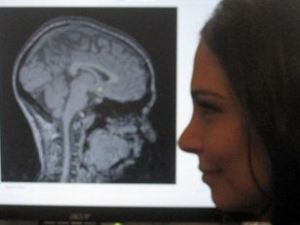
Listening to music evokes sympathetic nervous system activity, a sign of emotional arousal measured by changes in heart rate, respiration, electrodermal activity, body temperature, and blood volume pulse, according to Rotman Research Institute’s Valorie Salimpoor, McGill’s Mitchel Benovoy, Gregory Longo, Jeremy Cooperstock, and Robert Zatorre.

Mitchel Benovoy

Mitchel Benovoy

The researchers asked twenty-six participants to select and listen to “pleasurable” music and researchers selected “neutral” music for participants based.
Pleasure ratings and emotional arousal measures were strongly related, and those who did not experience pleasure also showed no significant increases in emotional arousal.

Gregory Longo

Gregory Longo

This finding suggests that listening to preferred music can be used as a mood-enhancement and stress management approach.

Lori Gooding

Lori Gooding

Kentucky University’s Lori Gooding and Olivia Yinger validated music’s stress management benefits for surgical patients.
They found that listening to music can reduce anxiety, subjective pain, and requests sedative medication following surgery.

Olivia Yinger

Olivia Yinger

Slow music expedited relaxation and reduced pain, suggesting that music tempo, rhythm and volume can contribute to reduced anxiety, improved treatment experiences, with lower medical costs in medical intensive care units.

Nick Perham

Nick Perham

Besides managing stress, listening to background music before task performance can increase attention and memory by evoking arousal and positive mood, according to Nick Perham and Joanne Vizard, then of University of Wales Institute Cardiff.

Joann Vizard

Joann Vizard

However, listening to music during a task decreased serial recall among adult volunteers, again pointing to the value of listening to music before but not during tasks that require acute concentration.

Kristie Young

Kristie Young

Beyond passively listening to music, performing music by singing during a complex task can decrease performance.
Monash University’s Genevieve Hughes and Kristie Young with Christina Rudin-Brown of Transport Canada found that singing while performing complex, attention-requiring task increases mental workload and distraction.

Christina Rudin-Brown

Christina Rudin-Brown

They asked participants to learn the lyrics two popular songs, then sing them while operating a simulated car during a 6.6 km urban trip with four speed zones and encountering expected and unexpected traffic events.

Volunteers who sang while “driving” scanned their visual field less often, focused on the area directly ahead (“cognitive tunnelling”), and were less aware of potential hazards during a peripheral detection task (PDT).
However, singing reduced “driving” speed and enabled volunteers to maintain position in their “lanes.”

Efforts to compensate for the increased mental workload associated with singing and listening to music appeared ineffective, suggesting that listening to music during complex tasks impairs performance.

Jim Blascovich

Jim Blascovich

In contrast to performance-disrupting impact  of listening to music while performing complex tasks, SUNY Buffalo’s Karen Allen with Jim Blascovich of University of California, Santa Barbara reported that surgeons worked more quickly and accurately when they listened to preferred music, and physical stress was reduced, indicated by cardiac and electrodermal autonomic responses, hemodynamic measures.
Those who listened to no music did not perform as quickly and accurately as those who listened to their preferred music.

Stress-reducing and performance impacts of music appear related to both personal musical preferences, and musical temp and genre.

Leigh Riby

Leigh Riby

Northumbria University’s Leigh Riby found that “uplifting” music can boost mental alertness, attention and memory.

Volunteers pressed a keyboard space bar when a green square appeared on screen but not when they saw different-colored circles and squares under two conditions: in silence and while listening “uplifting” concertos (Vivaldi’s Four Seasons).

Riby measured brain activity with an EEG and found that participants responded accurately more quickly when listening to the ”uplifting” Spring concerto in contrast to performing with no music or the slower, more somber Autumn concerto.
The Spring concert “seemed to give rise to particular imagery in the brain and evoke positive, contented feelings which translated into higher levels of cognitive functioning,” according to Riby.

The underlying mechanism of music’s effects on attention, concentration, and performance is dopamine release in response to music that elicited “chills” or ‘‘musical frisson” — changes in skin conductance, heart rate, breathing, and temperature that were correlated with pleasurability ratings of the music.

Alain Dagher

Alain Dagher

Salimpoor and her McGill team, including Kevin Larcher and Alain Dagher, used PET and fMRI brain imaging techniques to measure anticipation and consumption of music as a reward, and demonstrated that volunteers who listen to preferred, “pleasurable” music experience greater release of dopamine, which is associated with emotional arousal and pleasurability ratings.

This is one of the first demonstrations that an abstract, cognitive, non-tangible reward can lead to dopamine release, and that different brain circuits are involved in anticipating (caudate) and experiencing (nucleus accumbens) musical tension and resolution.

Teresa Lesiuk

Teresa Lesiuk

University of Miami’s Teresa Lesiuk reported improved task speed, performance, and new ideas with information technology specialists who listened to preferred music.

She attributed these positive effects to reduced stress and improved mood, and found that people who were moderately skilled at their jobs benefited most, but experts experience no benefit.
Consistent with findings that music can be a distraction in cognitively-demanding tasks, novices found that music undermined performance.

Amit Sood

Amit Sood

When people’s minds wander, music can help focus on the present moment, according to Amit Sood of Mayo Clinic, who advocates music’s value in developing and reinforcing Mindful Attention – another approach to managing stress.

 -*When does music in the workplace reduce stress? Increase performance?

->Follow-share-like www.kathrynwelds.com and @kathrynwelds

RELATED POSTS

Motivation to Manage Stress

Mindful Attention (Part 2)

Social Support (Part 3)

Music (Part 4)

Nature

Sleep

Organizational Roles, Practices

Look for related posts on:

  • Vitamins and Probiotcs (Part 1)
  • Mindful Attention (Part 2)
  • Social Support (Part 3)
  • Physical Exercise (Part 5)

Twitter:  @kathrynwelds
Blog: – Kathryn Welds | Curated Research and Commentary
Google+:
LinkedIn Open Group Psychology in Human Resources (Organisational Psychology)
Facebook Notes:

©Kathryn Welds

Symbolic Practice Improves Memorization, Performance

Edward Warburton

Edward Warburton

Expert ballet dancers are skilled performing artists with strong non-verbal communication competencies.
In addition, they are efficient learners of complex three-dimensional sequences, who master cognitively-challenging novel tasks under time constraints and with high expectations of quality performance.

Margaret Wilson

Margaret Wilson

Symbolic practice of these demanding tasks through “marking” can improve performance and reduce the mental strain of learning, mastering, and performing at an expert level, and may be applicable to enhancing other types of performance.

Molly Lynch

Molly Lynch

Former professional ballet dancer Edward Warburton of University of California, Santa Cruz collaborated with UCSC colleague Margaret Wilson  and their counterparts at University of California, Irvine, Molly Lynch and Shannon Cuykendall to investigate the impact of dancers performing an abbreviated version of  choreography during rehearsal by “marking” to conserve energy and to aid recall of complex routines.
One example is marking using a finger rotation to represent a turn.

Shannon Cuykendall

Shannon Cuykendall

Warburton and team compared the quality of performances by dancers who rehearsed by “marking” and by performing the full choreography.

Guided by the “embodied cognitive-load hypothesis,” they reasoned that if marking provided only reduced physical effort, then there should be no difference in the quality of performance between marking and full-effort rehearsals.

In contrast, they found that the performances rehearsed by “marking” were superior, suggesting that marking’s symbolic practice provides cognitive as well as physical benefits.
Marking reduced the cognitive load during rehearsal to allow more effective memory encoding.

David Kirsh

David Kirsh

David Kirsh, University of California San Diego further investigated the assertion that “dance is embodied thought” and that the body is an instrument of cognition by collecting video and interview data as University of Cambridge research fellow Wayne McGregor’s Random Dance company developed a new choreographic sequence.

Wayne McGregor

Wayne McGregor

Kirsh reported that marking was more effective than mental simulation without symbolic movement in enhancing performance.
He noted that marking is “physical thinking,” a simplified representational vehicle for thought, and a form of thinking because it is a:

  • Gestural language for encoding aspects of a target movement
  • Way to prime neural systems involved in the target movement
  • Method to increase precision in mentally projecting aspects of the target movement.

External representations like marking, diagrams, illustrations, instructions reinforce memory through other sensory channels like vision or audition, providing “scaffolding” to enhance recall.

These varied symbolic representations also enhance cognitive power because they:

  • Reduce the “costs” of making inferences and thoughts
  • Are a shared thought “object”
  • Create lasting referents
  • Facilitate repeat representation at other times and places
  • May be more intuitive than cognitive representations
  • Enable information encoding and “projection” to form complex thought structures

Warburton and team suspect that other symbolic rehearsal techniques like whispering, gesturing, and sub-vocalizing could provide similar performance improvements in other areas such as language learning, and are currently investigating these applications.

-*How effective have you found symbolic representations in reducing “cognitive load” and improving performance?

RELATED POSTS:

->*Follow-share-like www.kathrynwelds.com and @kathrynwelds

Twitter:  @kathrynwelds
Blog: – Kathryn Welds | Curated Research and Commentary
Google+
LinkedIn Open Group Psychology in Human Resources (Organisational Psychology)
Facebook Notes:

©Kathryn Welds

Juggling as Brain Training

The physical skill of juggling can change the brain’s structure and function for the better, and may be a recommended therapy for brain injuries.

Bogdan Draganski

Bogdan Draganski

Volker Busch

Volker Busch

Bogdan Draganski, now of University of Lausanne collaborated with University of Regensburg colleagues Volker Busch, Ulrich Bogdahn, and Gerhard Schuierer, and Arne May, now of University of Hamburg  with Christian Gaser of University of Jena, to visualize brain plasticity among volunteers who learned to juggle.

Ulrich Bogdahn

Ulrich Bogdahn

Volunteers showed transient and selective structural changes in the left parietal lobe’s posterior cortex  and bilateral central temporal areas brain, areas associated with processing and storing complex visual motion on used whole-brain magnetic-resonance imaging.

Gerhard Schuierer

Gerhard Schuierer

This study demonstrates that the brain’s macroscopic structure can change based on stimuli like juggling, rather than being limited to functional changes in the cortex.

Arne May

Arne May

May and Gaser collaborated with University of Hamburg colleagues Janina Boyke, Joenna Driemeyer, and Christian Büchel in related research.

Christian Gaser

Christian Gaser

This time, they trained 25 people with an average age of 60 years in juggling for 12 weeks, and 25 control group volunteers were not trained.

Christian Büchel

Christian Büchel

The team conducted three MRI brain scans for each participant:

  • Before juggling practice
  • After 3 months of juggling
  • After another 3 months of no juggling.

Jugglers showed significant increase in the brain’s “gray matter,” nerve cells’ bodies responsible for information processing, located in the hippocampus (memory formation), bilateral nucleus accumbens (reward systems that may lead to action) and visual cortext’s middle temporal area.

Without practice during the three months after the training, none of the volunteers retained their ability to juggle and their gray matter declined to pre-training levels.

This suggests the value of continued practice in physical and cognitive skills to maintain brain structure and function.

Jan Scholz

Jan Scholz

University of Oxford’s Jan Scholz, Miriam Klein-FlüggeTimothy E.J. Behrens, and Heidi Johansen-Berg extended this research to demonstrate that people who learn to juggle also increased “white matter” containing axons that connect different cells, not just gray matter.

 The Oxford team conducted baseline brain scans using diffusion tensor imaging to reveal  white matter structure for 24 young men and women volunteers, who later practiced juggling for half an hour a day for six weeks.

Miriam Klein-Flügge

Miriam Klein-Flügge

The researchers compared brain scans of 24 non-juggling volunteers and found that the volunteer jugglers increased white matter in the parietal lobe’s intraparietal sulcus, which integrates vision and reaching and grasping in the periphery of vision.
Even less-skilled jugglers had similar increases in white matter, attributed to amount of time devoted to practice.

Heidi Johansen-Berg

Heidi Johansen-Berg

In contrast, the non-jugglers showed no changes in white matter after the six week period, suggesting value in practicing juggling to develop the brain’s structure and functioning to enable rapid, coordinated movement and body positioning.

Brain scans taken after four weeks without juggling practice showed that the new white matter remained and the amount of gray matter increased, showing some skill retention in the absence of consistent practice.

-*What physical skills do you develop as brain training?

RELATED POSTS:

Twitter:    @kathrynwelds
Blog: Kathryn Welds | Curated Research and Commentary 
Google+:
LinkedIn Open Group Psychology in Human Resources (Organisational Psychology)
Facebook Notes:

©Kathryn Welds

Neuronal Recordings Suggest “Free Will” Might be “Free Won’t”

Itzhak Fried

Itzhak Fried

People may think they consciously control their actions and performance, but findings from UCLA’s Itzhak Fried and Roy Mukamel with Gabriel Kreiman of Harvard challenged conventional assumptions about “conscious intention” and “free will. ”

Roy Mukamel

Roy Mukamel

Fried, Mukamel, and Kreiman adopted Benjamin Libet’s procedure to assess “free will” at University of California, San Francisco, using intracranial recordings to identify neuron activity that precedes and predicts volunteers’ decision to move a finger.

Gabriel Kreiman

Gabriel Kreiman

Volunteers, who had electrodes implanted in their brains to record early indicators of seizures, pressed a button when they chose and indicated the clock’s hand position when they decided to press the button.

Libet’s process marks the time a voluntary action occurred, and the volunteer’s report of when the decision to act was completed.
These data points enabled researchers to identify specific neurons that were active during the time around the conscious decision to act and the completed action.

Benjamin Libet

Benjamin Libet

About a quarter of neurons in the frontal lobe’s supplementary motor area (responsible for motor activity coordination) and the anterior cingulate cortex (which directs attention and motivation) changed activity before volunteers said they wanted to press the button.

Spontaneous, voluntary acts were initiated in the cerebrum about 200 milliseconds before the person was consciously aware of the ‘decision’ to act, and researchers predicted with greater than 80 percent accuracy whether a movement had occurred and when the decision to make it happened.

Libet’s team suggested that unconscious brain processes, which are more rapid than conscious decision-making (“free will”), are the instigators of volitional acts.
However, these researchers also proposed that “free will” is more accurately described as “free won’t” because conscious volition can exercise “veto power” over intentions to act.

Kreiman extended this research to better understand loss of voluntary movement in Parkinson’s disease when he pre-empted volunteers’ movements after observing brain activation in the supplementary motor area and the anterior cingulate cortex.
StopHe activated a “stop” sign on a screen in front of each volunteer before the person actually moved, and reported that his volunteers frequently said, ”That was weird. It was like you read my mind.”

Nalini Ambady

Nalini Ambady

These brain studies complement Stanford professor Nalini Ambady’s work at Harvard University on “thin slicing”, or the experience of “knowing before you know.”
Also described as “intuition” or “unconscious cognitive processing,” these findings suggest that the conscious mind is the last to know when we make a decision.

-*How do you manage the discrepancy between unconscious mental processes and conscious awareness of them?

RELATED POSTS:

Twitter:  @kathrynwelds
Blog: |Kathryn Welds |Curated Research and Commentary
Google+:
LinkedIn Open Group Psychology in Human Resources (Organisational Psychology)
Facebook Notes:

©Kathryn Welds