Leaders’ actions actions are influenced by unspoken self-talk.
Sometimes, these thoughts are self-critical and provoke anxiety.
Aaron Beck
Cognitive Behavior Therapy (CBT), developed by University of Pennsylvania’s Aaron Beck, provides a systematic way to notice and restructure “irrationalself-talk.“ Similar approaches were developed by Albert Ellis in Rational-Emotive Therapy (RET), and David Burns in his synthesis of CBT and RET.
David Burns
Arizona State University’s Charles Manz and Chris Neck translated these self-management processes to managerial development.
They outlined a Thought Self-Leadership Procedure as a five-step circular process:
Charles Manz
1. Observe and record thoughts,
2. Analyze thoughts for potential errors in reasoning (jumping to conclusions, exaggeration),
Simple behavior changes, such as following a structured checklist, can prevent crucial workplace errors and increase quality in medical settings, found Harvard’s Atul Gawande.
He found that people effectively improved their performance when they recognizedweaknesses in organizational processes, and took proactive steps to remedy these shortcomings.
Doing Right –Ensuring that skill, will, and incentives are aligned to drive excellent performance,
Ingenuity – Deliberately monitoring potential failures, continuously seeking innovative ways to improve performance and solutions.
These elements can be improved with attentive observation and feedback to prevent errors of omission when people don’t:
Know enough (ignorance),
Make proper use of what they know (ineptitude).
Ignorance occurs less frequently than ineptitude because relevant information is widely available, Gawande noted.
He suggested that both errors can be improved by systematic analysis and consistent use of tools like checklists.
He found a correlation between IRR and leadership effectiveness in new investment ventures.
Selecting capable leaders is critical to business outcomes, so Smart also evaluated VC firms’ typical approach to assessing potential leaders:
The Art Critic is the most frequent approach in which the VC assesses leadership talent at a glance, intuitively, based on extensive experience,
The Sponge conducts extensive due diligence, then decides based on intuition,
The Prosecutorinterrogates the candidate, tests with challenging questions and hypothetical situations,
The Suitorwoos the candidate instead of analyzing capabilities and fit,
The Terminatoreliminates the evaluation because the venture firm replaces the company’s originators,
The Infiltrator becomes a “participant-observer” in an immersive, time-consuming experientially-based assessment,
The Airline Captain uses a formal checklistto prevent past mistakes. This last approach was linked to the highest average Internal Rate of Return (IRR) for the new ventures.
In addition, this strategy was significantly less likely to result in later terminating senior managers.
Venture Capitalists in these studies reported that two of their most significant mistakes were:
Investing insufficient time in talent analysis,
Being influenced by “halo effect” in evaluating candidates.
Systematic reminders to execute all elements required for expert performance can prevent failure and signal potential failure points.
Better job performance is associated with eight capabilities known as “The Big 8”, according to Korn-Ferry International’s George Hallenbeck, in the Leadership Architect® Library of Competencies:
He analyzed more than 1500 ratings on this 360 degree assessment, and found that just 12% of executives possessed four or more of “The Big 8.”
None of these organizational leaders demonstrated more than six of these competencies, though they consistently showed more than individual contributors.
This suggests that although executives demonstrate more of critical leadership capabilities than non-leaders, the vast majority have significant room for professional development.
Executives and individual contributors who had more of “The Big 8” competencies also had more of “Career Staller and Stopper” behaviors.
Bold individuals who demonstrate persistance may effectively execute, but may run afoul of key stakeholders and influencers.
Self-Awareness and Self-Management, identified in Daniel Goleman’s framework for Emotional Intelligence, may be a key to balancing between the Big 8’s performance enhancing impacts while mitigating their potential drawbacks in stalling careers.
-*What have you found the most important job competences among organizational leaders and those preparing for future leadership roles?
• Making tough people calls,
• Demonstrating personal flexibility, adapting approaches to new circumstances.
Similarly, the top leadership problems were:
• Not inspiring employees, not building talent,
• “Too narrow”, relying on deep expertise without broadening perspective.
Leaders vastly underestimated their effectiveness in “managing up”, suggesting that they focused more on their next promotion, rather than on developing their employees.
Joe Luft
Lack of self-awareness can be reduced by using a “Reality Check” including:
o Feedback from others to provide “early warning” of difficulty.
However, this requires that evaluators are willing to provide candid observations, despite widespread discomfort in providing corrective feedback.
o Self-reflection concerning effective and ineffective behaviors, documented in a personal journal for review.
Harry Ingham
Executives learned most to enhance leadership skills and self-reflection from on-the-job experiences, distantly followed by learning from other people. Structured trainings are least effective and most costly approaches to enhance leadership cognitive, emotional, motivational, self-awareness, and learning agility capabilities.
These leadership development processes reduce individual blind spots, portrayed by San Francisco State University’s Joe Luft and Harry Ingham of National Training Labs in The JoHari Window.
Employees, especially minority group members, adopt Façades of conformity (FOC) when they “act as if” they embrace an organization’s values to remain employed or to succeed in that organization, found Georgetown University’s Patricia Hewlin.
Facades of Conformity can lead to employees developing “rationalizations” that enable them to carry out distasteful or even assignments, found University of Alberta’s Flora Stormer and Kay Devine of Athabasca University.
Jerome Kerviel
This may explain Jerome Kerviel’s experience at Societe General.
He was branded as a “rogue trader,” though he seemed not to personally benefit from unauthorized trades.
He and others explained his motivation to please his managers and to earn a bonus based on his trades, in the context of his “outsider status” as someone who had not attended elite universities and was not considered a “star.”
-*In what organizational contexts have you observed “Facades of Conformity” and their consequences?
One of the foundations of psychotherapy and executive coaching is the notion that provocative, well-timed, penetrating questions can provoke insight and initiative behavior change.
David Cooperrider
One example of a systematic approach to high-impact questioning isAppreciative Inquiry, developed by Case Western’s David Cooperrider and Diana Whitney, and it has been integrated into interpersonal conversations including counseling, coaching, and therapy.
University of Leeds’s Tracy Sandberg and Mark Conner demonstrated the impact of provocative questions when they asked women about anticipated regret if they ignored a preventive health assessment.
Tracy Sandberg
More than 4,250 women received an invitation for cervical screening and information leaflet.
A sub-group also received a Theory of Planned Behavior questionnaire developed by University of Massachusetts’s Icek Ajzen.
Another sub-group received both the questionnaire and additional inquiries about their anticipated regrets if they didn’t participate in the screening.
Icek Ajzen
Attendance rates were higher for those who completed the questionnaire about anticipated behavior, and significantly greater for those who also completed the regret questions.
This may be an example of FoMO – Fear of Missing Out, described by University of Essex’s Andrew K. Przybylski and Valerie Gladwell with Kou Murayama of UCLA and University of Rochester.
Andrew Przybylski
Likewise, “self- prophecy” questions about intention to cheat were associated with reduced cheating among college students, found University of California, Irvine’s Eric Spangenberg and Carl Obermiller of Seattle University.
The question–behavior effect was further demonstrated in a meta-analytic study by Spangenberg with SUNY’s Ioannis Kareklas, Berna Devezer of University of Idaho, and Washington State University’s David E. Sprott.
Eric Spangenberg
“When you ask a question, it…creates a spring-loaded intention,” and reminds of social norms and past shortcomings, posited Sprott.
“It’s that disconnect between what we should do and what we know we have done that motivates us.”
David Sprott
Norm-reinforcing questions are often effective in encouraging proactive behavior aligned with recognized best practices, such as a Public Service Announcement endorsing pre-school vaccination: Ninety-five percentof parents get their kids vaccinated before kindergarten.
Will you make sure your child is up to date?
William Miller
These pointed questions are an “active ingredient” of Motivational Interviewing developed by University of New Mexico’s William Miller and Stephen Rollnick of Cardiff University, and have been associated with heightened motivation to reduce alcohol and drug consumption.
These finding point to the power of carefully-designed questions to provoke deeper self-reflection and related behavior change.
-*What questions have you used to encourage behavior change?
William James, father of American psychology and brother of novelist Henry James wrote in his 1890 The Principles of Psychology, “Habit is thus the enormous flywheel of society, its most precious conservative agent. It alone is what keeps us all within the bounds of ordinance, and saves the children of fortune from the envious uprisings of the poor.”
Though James seemed to look favorably upon the conservative element of habit, the drawbacks of thoughtless habitual actions are clear when people consume more calories than required to complete daily activities, purchase unneeded items, react with predictable emotions in contentious situations, and keep disadvantaged groups without advantages enjoyed by powerful groups.
He outlines the A(ntecedant) – B(ehavior) – C(onsequence) model, initiated by a cue or a trigger that signals automatic or habitual behavior.
In a novel situation, the person shifts to a problem-solving mode to develop an appropriate response — which may require creative thinking .
However, in a more typical situation, the person executes the habitual physical, mental, or emotional behavior or “routine,” which is then rewarded — often with a reduction in anxiety or discomfort.
Duhigg shows how dysfunctional habits can be analyzed for the cue, routine, and reward, then changed by modifying the antecedent, behavior or reward.
Albert Ellis
The A-B-C approach was popularized by Albert Ellis in his Rational-Emotive Behavior Therapy (RET), and outlined in his more than 50 books including Rational Emotive Behavior Therapy
Duhigg provides examples from marketing campaigns for well-known consumer products in the U.S., including Pepsodent toothpaste and Febreze air freshener.
Timothy Wilson
Like Duhigg’s model’s reference to earlier behavior modification approaches, Timothy Wilson of University of Virginia’s Redirect: The Surprising New Science of Psychological Change, adapts principles of Aaron T. Beck’s Cognitive Behavioral Therapy (CBT) to change habitual interpretations, attributions, narratives and personal stories that lead to social problems including alcohol and drug abuse, teen violence and pregnancies, and social prejudice.
Aaron Beck
Wilson extracts and renames three empirically-validated behavioral techniques:
Story editing, to craft a more optimistic, hopeful story or interpretation about a situation, often using writing exercises
Story prompting, in which another person provides alternate, more optimistic interpretations based on data or “social proof” from experiences in a similar situation
Do good, be good, by “acting as if” the new behavior is a well-established habit, often through serving others in volunteer work.
An earlier post, Hacking Human Behavior: “Tiny Habits” Start, Maintain Changes showcased BJ Fogg’s work on “tiny habits” as hooks to behavior change.
His approach draws on many of the same behavior modification principles featured in Duhigg’s and Wilson’s recommendations to analyze habitual cues, routines, and rewards.
Peter Lovatt founded the Dance Psychology Lab at the University of Hertfordshire, which combines his performance experience as a professional dancer with his training as a research psychologist.
In several TED talks, he marvels at his career trajectory because he “was rubbish at school,” and was relegated to Special Education classes, probably due to his undiagnosed ADHD.
His career demonstrates an innovative synthesis of disciplines with his current research agenda investigating the impact of dance on problem solving using divergent thinking and convergent thinking strategies.
Peter Lovatt at TED
Lovatt’s experiments demonstrated that volunteers who engaged in improvised dance movements solved divergent thinking problems more quickly than when they performed more structured dance maneuvers, or no movement at all.
Similarly, his work showed these volunteers increased their speed of solving convergent thinking problems after they engaged in choreographed dance moves.
These findings may not imply that innovation teams should engage in structured and unstructured movements at work, but it does support the positive impact of dance movement on neural processing speed and problem solving.
Lovatt extended this work to patients with Parkinson’s disease, known to disrupt divergent thinking processes, to validate his findings with normal volunteers.
He demonstrated that Parkinson’s disease patients improved the divergent thinking problem solving after they engaged in improvised dance sequences, and hypothesized that these patients develop new neural pathways to “work around” dopamine-depleted blockages.
Peter Lovatt leading dance experiment
Lovatt’s group found increases in self-esteem among participants in dance styles that:
Include more improvisational elements (“high degree of tolerance for not getting it right”),
Are gender or culturally neutral
Raise the heart rate
Are repetitive
Encourage looser fitting clothes (in contrast to ballet)
MacArthur Fellowship and Tony Award-winning choreographer Twyla Tharp discussed innovation and collaboration through the lens of dance in two books with lessons applicable to business.
In The Creative Habit: Learn It and Use It for Life she asserts that creative expression requires perseverance, practice, hard work, “showing up,” and cultivating systematic habits to act upon innovative initiative.
This echoes the action-orientation advocated by Malcolm Gladwell in his observation of 10,000 hours of practice to develop virtuoso performance and by sports psychologist K. Anders Ericsson, summarized in these related posts:
Tharp’s The Collaborative Habit: Life Lessons for Working Together discusses both how collaboration can change the participants, and practical approaches to collaborative creation – which she acknowledges has not been completely smooth in some of her work with luminaries including Richard Avedon, Mikhail Baryshnikov, Bob Dylan, Milos Forman, Norma Kamali, Frank Sinatra.
Two related posts on Collaboration are:
Improve performance under pressure by squeezing a ball or clenching the non-dominant hand before competition to activate specific motor regions of the brain, according to Jürgen Beckmann and his research team, who studied experienced soccer players, tae kwon do experts and badminton players.
The Journal of Experimental Psychology: General reported that right-handed athletes who squeezed a ball in their left hand before competing were less like to “choke under pressure” than right-handed players who squeeze a ball in their right hand.
Beckmann and collaborators Peter Gröpel and Felix Ehrlenspiel noted that when athletes don’t perform well “under pressure,” they may be focusing on their own movements rather than relying on automatic motor skills developed through repeated practice – or “muscle memory.”
They explained, “Rumination can interfere with concentration and performance on motor tasks … Many movements…can be impaired by attempts at consciously controlling them. This technique can be helpful for many situations and tasks.”
Iris Hung
Other applications include business situations like presentations or negotiations, or helping elderly people improve balance by clenching a ball before walking or climbing stairs. Iris Hung the National University of Singapore found additional applications: Avoiding the temptation of sugary snacks in a cafeteria, enduring physical pain, and disturbing information.
Hendrie Weisinger
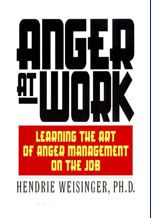
Hendrie Weisinger, whose best-seller Nobody’s Perfect was the first of 8 books, integrates this finding with other research-based recommendations to manage performance pressure with “Nerves of Steel.” His new book is scheduled for release by Random House in 2013.
His other books, including Emotional Intelligence at Work and Anger at Work, along with video excerpts are available on his website.
-*How do you maintain performance when experiencing pressure?
Gary Burlingame recently published a meta-analysis of 40 studies that demonstrate the efficacy of groups for a number of conditions, and Dennis Kivlighan noted that group success is associated with participants’:
Shared purpose
Common identity
Social support through interaction
Reciprocal influence of the members on one another
Interpersonal feedback to reduce idiosyncratic individual perspectives and attitudes.
Dennis Kivlighan
In addition, groups can benefit more people at lower cost than individual coaching.
An example of these principles at work was reported recently at a large Silicon Valley technology company.
Jennifer Hartnett-Henderson
Jennifer Hartnett-Henderson [@JHartnettHender] organized a “Greenlight Group”, based on Keith Ferrazzi’s model outlined in his book, Who’s Got Your Back?
Using a “snowball” recruitment strategy, she brought together five individuals from different internal organizations, in varied roles and job levels.
The goal was to meet six times as a team over a 90 day period, to help each other achieve their most challenging professional and personal goals by giving each other feedback, supporting each other, and holding each other accountable to progress.
She outlined the benefits of “Greenlight Groups”, and executives at the company were impressed with the value proposition when they learned about it via “word-of-mouth”:
Self-manage career goals with no-cost peer support
Achieve personal goals
Access confidential peer support, feedback from trusted advisors
Over the six meetings:
Two participants transferred to new internal roles at higher grade levels
Two participants achieved greater work-life balance by reducing number of weekly work hours to less than 55 per week
Two participants dramatically increased social media presence
Two participants explored internal and external career opportunities
Two participants explored monetizing entrepreneurial opportunities
Two participants initiated weight-reduction program
One participant initiated exercise program
One participant increased exercise time and performance
This example suggests the value of self-organized, mutual-assistance groups to achieve professional and personal goals over a defined time period.
-*What self-managed career development programs have been effective in your workplaces?



 Executives and individual contributors who had more of “The Big 8” competencies also had more of “Career Staller and Stopper” behaviors.





















 Kathryn Welds, PhD | Curated Research + Commentary