Category Archives: Leadership

Leadership

How to Win the Career Advancement Contest – Tournament

Olivia Mandy O'Neill

Olivia Mandy O’Neill

People who work in an organization tacitly agree to participate in a “Workplace Tournament” for advancement, according to (Olivia) Mandy O’Neill of Wharton and Charles O’Reilly of Stanford.

They contend that careers are a series of tournaments in which employees compete for promotion to higher organisational levels.

Brian G.M. Main

The prevalence of implicit workplace “contests” was validated in O’Reilly’s study of executive pay with University of Edinburgh’s Brian G M Main and James Wade, of Emory University.

Phyllis Tharenou

Phyllis Tharenou

Women in organisational hierarchies dominated by men progressed less frequently to management roles even though they might earn more than women in other organisations, according to Phyllis Tharenou of Flinders University.

Employees with managerial aspirations and “masculine” (proactive, assertive, competitive) preferences were more likely to advance in management roles, she found.

These effects were enabled by “career encouragement” such as mentoring and structured career development programs.

Denise Conroy

Denise Conroy

With Denise Conroy of Queensland Technology University, Tharenou studied more than 600 female managers and 600 male managers across six organizational levels.

Women’s and men’s advancement was most closely correlated with workplace development opportunities and organizational structure.
Structural, policy and program changes can increase the number of women in top leadership roles, they found.

Women tend to excel in explicit workplace contests, such as in public sector jobs.
Women in other sectors can improve opportunities for advancement by:

  • Recognizing that advancement is a tournament,
  • Competing strategically,
  • Communicating interest in advancement,
  • Seeking employment in organizations with formal career advancement programs, mentoring, and development training,
  • Selecting employment in organizations that support flexible work practices and use technology to enable employees to work “anytime, anywhere,”
  • Gaining experience in “masculine” organizational culture or male-dominated industries,
  • Identifying social support inside organizations,
  • Seeking and cultivating advocates and sponsors

    .*How do you manage workplace “tournaments” for career advancement?

RELATED POSTS:

©Kathryn Welds

Managing “Triadic Managers” and Navigating Office Politics

Oliver James

Oliver James

Some business leaders exhibit one or more of three difficult behavioral styles: Psychopathy, Narcissism, Machiavellianism, according to British psychologist and journalist, Oliver James.
He called these people “triadic managers.” 

Fictional comedies and dramas satirize the stress and distress wrought by such managers.
Each element of the toxic triumvirate has been empirically investigated by clinical researchers and social scientists.

The most extensively researched of the three personality trends is psychopathy, given its relevance to law enforcement. Francis Urhardt-House of Cards
Psychopaths typically display:

  • Callous manipulation, lying, and exploitation,
  • Grandiosity, entitlement, and shallowness,
  • Impulsiveness and thrill-seeking,
  • Little interpersonal empathy and remorse.
Ronald Schouten

Ronald Schouten

More than 3 million Americans and one in 10 on Wall Street are psychopathic, estimated Harvard’s Ronald Schouten, a former US federal prosecutor, who collaborated with criminal defense attorney James Silver.

James Silver

They noted that nearly 15 percent of the general population demonstrate “almost psychopathic” behavior, and many are employed as senior executives.

Robert Hare

Robert Hare

Senior managers are four times more likely than the general population to display psychopathic tendencies, found University of British Columbia’s Robert Hare and industrial-organizational psychologist Paul Babiak.

They differentiated three types of workplace psychopaths:

  • Manipulator,
  • Bully,
  • Puppetmaster.

    Paul Babiak

    Paul Babiak

Clive Boddy

Clive Boddy

Narcissists in global business and financial contexts share characteristics of psychopaths, noted Middlesex University’s Clive Boddy:

  • Grandiose sense of self-importance, superiority, entitlement,
  • Vanity and desire for attention,
  • Exploitativeness,
  • Lack of empathy.
Katarina Fritzon

Katarina Fritzon

About one percent of the general population and 16 percent of clinical groups meet the criteria for narcissism.

These people can excel in professions where they control others and elicit adulation.

Many well-known individuals in politics, finance, entertainment, and medicine meet these criteria.

Likewise, senior business managers were more likely than criminal psychiatric patients to have narcissistic, histrionic, or obsessive-compulsive personality disorders, reported Belinda Board and Katarina Fritzon, then of the University of Surrey.

Sam Vaknin

Sam Vaknin

One “successful narcissist,” Sam Vaknin, recounted his career before and after his felony incarceration for securities fraud.

Niccolo di Bernardo dei Machiavelli

The third element of “triadic managers”, Machiavellianism, is characterized by:

  • Detachment and coldness,
  • Manipulation,
  • Calculating maneuvers to advance self-interest.

Centuries after Machiavelli’s classic book, Columbia University’s Richard Christie and Florence Geis studied the Machiavellian personality and developed a personality assessment to identify these characteristics.

Given the likelihood of interacting with psychopaths, narcissists, and Machiavellian personalities in business, James conducted 50 interviews with “triadic managers” to uncover ways to deal with them.
He suggested:

  • Closely observing others to more accurately and rapidly recognise psychopathic, narcissistic, and Machiavellian workplace behaviors,
  • Managing others’ “perception of one’s performance,
  • Delivering measurable results,

  • Selectively applying psychopathic, narcissistic, and Machiavellian workplace behaviors toward offenders while appearing sincere,

  • Networking to maintain relationships and allies to support moving to a new role.

    -*How do you detect and interact with colleagues who manifest characteristics of psychopathy, narcissism, and Machiavellianism?

RELATED POST

©Kathryn Welds

“Self-Packaging” and Appearance as Personal Brand Attributes

Napoleon Hill

Napoleon Hill

Al Ries

Al Ries

During the US economic Depression of the 1930s, motivational writer Napoleon Hill laid the foundation for personal positioning, described nearly forty-five years later by marketing executives Al Ries and Jack Trout in Positioning: The Battle for Your Mind.

By 1997, business writer Tom Peters introduced “personal branding” as self-packaging that communicates an individual’s accomplishments and characteristics, including appearance, as a “brand promise of value.”

Tom Peters

Self-packaging can be considered “the shell of who you are” whereas personal branding is “what sets you apart from the crowd.

Jim Kukral

Jim Kukral

These differentiators can include visible characteristics like attire, education, experience, expertise, sense of humour, and speaking style, according to Jim Kurkal and Murray Newlands.

Daniel Lair

Daniel Lair

University of Michigan’s Daniel Lair with Katie Sullivan of University of Utah, and Kent State’s George Cheney investigated components of personal branding, presentation, and packaging.

George Cheney

George Cheney

They found personal branding worth analysing for its complex rhetoric tactics that shape power relations by gender, age, race, and class.

Sylvia Ann Hewlett

Sylvia Ann Hewlett

Sylvia Ann Hewlett of the Center for Talent Innovation identified some of these power relationships and potential biases facing women and members of minority groups who are expected to demonstrate aspects of personal branding, including executive presence.

These analyses suggest that personal packaging and branding can significantly affect professional opportunities and outcomes.

-*What elements do you consider in “personal packaging” and personal appearance?

-*How do you mitigate possible bias based on expectations for personal appearance?

Related Posts

©Kathryn Welds

Women Who Negotiate Salaries May Elicit Negative Evaluations

Linda Babcock

Women negotiate their first post-university salaries less frequently than their male counterparts, leading to a long-term career wage disparity, reported Carnegie-Mellon University’s Linda Babcock.

Hannah Riley Bowles

In addition to this disadvantage of avoiding salary negotiation, women who did negotiate “salary” in a lab study encountered a different problem:  They were disliked by men and women participants due to their perceived “demandingness.” 

Lei Lai

Lei Lai

In this study Harvard’s Hannah Riley Bowles and Lei Lai found another challenge for women attempting to achieve both salary parity and colleagial work relationships.
Less assertive women negotiators were equally disliked and they failed to achieve equitable “salaries.

These findings findings suggest the challenge women face in achieving salary parity and being accepted in work groups.
When male and female volunteers in another lab study asked for salary increases using identical scripts, participants liked men’s style, but disliked the same words from women.

Women negotiators were considered “aggressive,” but they could counteract this perception when they:

  • Smiled
  • Displayed a friendly manner.

These tactics improved others’ perceptions of women negotiators, but did not improve women’s negotiation outcomes.

In contrast, women negotiators improved both social and negotiation outcomes when they:

  • Justified the salary request based on a supporting “business case,”
  • Communicated commitment to positive organizational relationships.

Women who smile and focus on the interpersonal relationship fulfill gender role expectations, leading to greater approval by male and female observers.
This suggests that both men and women have implicit biases about “appropriate” behaviours and communications from women in the workplace

Kathleen McGinn

Kathleen McGinn

Bowles, with Harvard colleague Kathleen McGinn and Babcock, suggested that “situational ambiguity” and “gender triggers” modify women’s willingness to negotiate.

When women have information about the potential salary range and whether the salary is negotiable, they are more likely to negotiate.

Women can improve their negotiation outcomes by asking:

  • the salary range,
  • which elements of the compensation package are negotiable.
Daniel Pink

Daniel Pink

Effective negotiation is a survival skill, according to Dan Pink:

The ability to move others to exchange what they have for what we have is crucial to our survival and our happiness.

He noted that effective persuaders and “sellers” collaborate in “inspecting” a negotiation and “responding” to the negotiation through “interpersonal attunement.”

Pink suggested ABC negotiation skills:

Attunement: Aligning actions and attitudes with others,

Buoyancy:  “Positivity,” optimism, asking questions,

Clarity:  Helping others identify unrecognized needs that can be fulfilled by the negotiation proposal.

Joan Williams

Joan Williams

UC Hastings College of the Law’s Joan Williams offered wide-ranging structural strategies to address documented wage discrepancies.


What is the best negotiation pitch you’ve heard for a job-related salary increase or role promotion?

How did the negotiator overcome objections?

How did the negotiator manage the relationship with the negotiating partner?

Related Posts

©Kathryn Welds

Training or Mentorship to Build Leadership Skills?

Peter Harms

Are leadership development services worth the investment?

Paul Lester

Paul Lester

A six-month study of U.S. Military Academy cadets at West Point provided answers.

University of Nebraska-Lincoln’s Peter Harms collaborated with Paul Lester of the U.S. Army Comprehensive Soldier Fitness Directory, U.S. Military Academy’s Sean Hanna, Gretchen Vogelgesang of Federal Management Partners, and University of Washington’s Bruce Avolio to evaluate:

Sean Hanna

– Sean Hanna

  • -Military cadets’ readiness to receive candid feedback from multiple sources,
  • -Impact of mentoring from a supportive leadership coach,

-Availability of advancement opportunities in the organization.

Bruce Avolio

Participants were randomly assigned to an individual mentorship program or classroom-based group leadership training.

Those who participated in the mentorships were significantly more likely to report increased confidence in assuming a leadership role than those in the classroom training.

The mentoring group’s effectiveness was significantly related to the mentorship coaches’ ability to:

  • Establish a trust-based collaborative relationship,
  • Provide support,
  • Offer candid feedback based on observations,
  • Advocate for cadets who exercised leadership.

Additionally, participants who reported greatest gains in leadership skills and confidence were:

  • Open to receiving direct developmental feedback from mentors,

The most cost-effective approach to leadership development did not produce the greatest results, suggesting the value of individualized leadership coaching

Ted Kaptchuk

Ted Kaptchuk

The powerful effect of individual attention was demonstrated in a different study, when 250 patients with Irritable Bowel Syndrome (IBS) received individual attention from medical personnel.

Those who received the most individualized attention in three no-treatment conditions reported the greatest symptom relief even though they received no medical intervention and participants were informed that the “treatment” was a placebo, reported Harvard’s Ted Kaptchuk.

The most important “active ingredient” in leadership development training may be personalized attention, followed by candidates’ willingness to receive candid feedback and to implement recommendations.

 -*How has personalized mentoring helped you develop leadership competencies?

©Kathryn Welds

Executive Presence: “Gravitas,” Communication…and Appearance?

Professional advancement requires demonstrated knowledge, skill, and competence, coupled with perceived “cultural fit,“collaboration,” and “executive presence.”

Sylvia Ann Hewlett

Sylvia Ann Hewlett

These requirements appear prone to subjective definition and biased judgments.
What is “executive presence”? How is it measured?

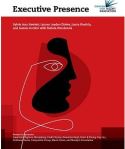
Sylvia Ann Hewlett, CEO of Center for Talent Innovation, conducted 18 focus groups and 60 interviews to investigate behavioral and attitudinal aspects of Executive Presence (EP).

Perceived Executive Presence includes three components:Executive Presence

Gravitas” – Authoritative Behavior

    • Confidence, composure,
    • Decisiveness,
    • Integrity,
    • Emotional Intelligence: Self-awareness, self-regulation, interpersonal skills,
    • Personal reputation,
    • Vision for leadership,

Communication

    • Speaking skills:  Voice tone, articulation, grammatical speech conveying competence,
    • Presence,” “bearing,” “charisma” including assertiveness, humour, humility,
    • Ability to sense audience engagement, emotion, interests,

Appearance

    • Grooming, posture,
    • Physical attractiveness, average body weight,
    • Professional attire.
      According to Hewlett’s interviewees, “Executive Presence” accounts for more than a quarter of factors that determine a next promotion.

Harrison Monarth

How can Executive Presence be developed?

 Harrison Monarth suggested that Executive Presence behaviours can be cultivated with Image Management tactics including:

-Maintaining a positive personal reputation to influence others’ favourable perceptions and willingness to collaborate,

-Effectively managing online “brand”,

-Gaining followers online and in the “real world,”

-Influencing and persuading others,

-Demonstrating “Emotional Intelligence” through self-awareness, awareness of others (empathic insight), and regulating one’s own emotions.

He focused less on appearance than Hewlett and Stanford Law School’s Deborah Rhode, who summarized extensive research on Halo Effect and “The Beauty Bias”.

Deborah Rhode

Rhode estimated that annual world-wide investment in appearance was close to $USD 200 billion in 2010.
She contended that bias based on appearance influences career and life outcomes and is:

  • Is prevalent,
  • Infringes on individuals’ fundamental rights,
  • Compromises merit principles,
  • Reinforces negative stereotypes,
  • Compounds disadvantages facing members of non-dominant races, classes, and gender.

Executive Presence is widely recognized as a prerequisite for leadership roles, yet its components remained loosely-defined until Hewlett’s investigation and Rhode’s human rights analysis.

-*Which elements seem most essential to Executive Presence?

See related posts

©Kathryn Welds

Costs of Workplace Incivility

Christine Pearson

A single incident of incivility in the workplace can result in significant operational costs, reported Christine Pearson of Thunderbird School of Global Management and Christine Porath of Georgetown University.

Additional consequences of workplace incivility include:

  • Decreased work effort due to disengagement,

    Christine Porath

    Christine Porath

  • Less time at work to reduce contact with offensive co-workers or managers,
  • Decreased work productivity due to ruminating about incivility incidents,
  • Less commitment to the organization,
  • Attrition.

Pier Massimo Forni

P.M. Forni

Other organizational symptoms include:

  • Increased customer complaints,
  • Accentuated cultural and communications barriers,
  • Reduced confidence in leadership,
  • Less adoption of changed organizational processes,
  • Reduced willingness to accept additional responsibility and make discretionary work efforts.

Workplace incivility behaviours were described as “rude and discourteous, displaying a lack of regard for others,” noted Pearson and Lynne Andersson, then of St. Joseph’s University.
“Uncivil” behaviors were enumerated in The Baltimore Workplace Civility Study by Johns Hopkins’ P.M. Forni and Daniel L. Buccino with David Stevens and Treva Stack of University of Baltimore:

  • Refusing to collaborate on a team project,
  • Shifting blame for an error to a co-worker,
  • Reading another’s mail,
  • Neglecting to say “please,” “thank you”,
  • Taking a co-worker’s food from the office refrigerator without asking.

Respondents classified more extreme unacceptable behaviors:

  • Pushing a co-worker during an argument,
  • Yelling at a co-worker,
  • Firing a subordinate during a disagreement,
  • Criticising a subordinate in public,
  • Using foul language in the workplace.

Gary Namie

Workplace bullying was included in Gary Namie’s Campaign Against Workplace Bullying.
He defined bullying as “the deliberate repeated, hurtful verbal mistreatment of a person (target) by a cruel perpetrator (bully).

His survey of more than 1300 respondents found that:

  • More than one-third of respondents observed bullying in the previous two years,
  • More than 80% of perpetrators were workplace supervisors,
  • Women bullied as frequently as men,
  • Women were targets of bullying 75% of the time,
  • Few bullies were punished, transferred, or terminated from jobs.

Costs of health-related symptoms experienced by bullying targets included:

  • Depression,
  • Sleep loss, anxiety, inability to concentrate, which reduced work productivity,
  • Post-Traumatic Stress Disorder (PTSD) among 31% of women and 21% of men,
  • Frequent rumination about past bullying, leading to inattention, poor concentration, and reduced productivity.

Choosing CivilityWidespread prevalence of workplace incivility was also reported by Forni, who suggested ways to improve workplace interactions and inclusion:

  • Assume that others have positive intentions,
  • Pay attention, listen,
  • Include all co-workers in workplace activities,
  • Acknowledge others,
  • Give praise when warranted,
  • Respect others’ opinions, time, space, indirect refusals,
  • Avoid asking personal questions,
  • Be selective in asking for favors,
  • Apologize when warranted,
  • Provide constructive suggestions for improvement instead of complaints,
  • Maintain personal grooming, health, and work environment,
  • Accept responsibility for undesired outcomes, if deserved.

More than 95% of respondents in The Baltimore Workplace Civility Study suggested, “Keep stress and fatigue at manageable levels,” a challenging goal for leaders who shape workplace cultures.

Organizational change recommendations include:

  • Institute a grievance process to investigate and address complaints of incivility,
  • Select prospective employees with effective interpersonal skills,
  • Provide a clearly-written policy on interpersonal conduct,
  • Adopt flexibility in scheduling, assignments, and work-life issues.

-*How do you handle workplace incivility when you observe or experience it?

©Kathryn Welds

Defining “Executive Presence”

Sylvia Ann Hewlett

Sylvia Ann Hewlett

Communication, “Gravitas”, and Appearance were frequently-cited attributes of Executive Presence in a study by Sylvia Ann Hewlett of the Center for Talent Innovation.

Gavin Dagley

More characteristics of executive presence were identified in interviews with 34 professionals, conducted by Perspex Consulting’s Gavin Dagley and Cadeyrn J. Gaskin, formerly of Deakin University.

Caderyn Gaskin

Five “executive presence” qualities were observable during initial contact:

  • Status and reputation, similar to “gravitas” discussed by Hewitt,
  • Physical appearance, mentioned by Hewitt,
  • Confidence,
  • Communication ability, included in Hewitt’s “executive presence” triad,
  • Interpersonal engagement skills.

Five additional presence features emerged during repeated contacts:

  • Interpersonal integrity,
  • Values-in-action,
  • Intellect and expertise,
  • Outcome delivery,
  • Use of coercive power.

These qualities combine in different ways to form four presence “archetypes”:

  • Positive presence, based on favorable impressions of confidence, communication, appearance, and engagement skills plus favorable evaluations of values, intellect, and expertise,
  • Unexpected presence, linked to unfavorable impressions of confidence plus favorable evaluations of intellect, expertise, and values,
  • Unsustainable presence combines favorable impressions of confidence, status, reputation, communication, and engagement skills plus unfavorable evaluations of values and integrity,
  • “Dark presence” is associated with unfavorable perceptions of engagement skills plus unfavorable evaluations of values, integrity, and coercive use of power.

Philippe De Backer

Philippe De Backer

Another typology of executive presence characteristics was identified by Sharon V. Voros and Bain’s Philippe de Backer.
They prioritized elements in order of importance for life outcomes:

  • Focus on long term strategic drivers,
  • Intellect,
  • Charisma, comprised of confidence, intensity, commitment, care, concern and interest in others,
  • Communication skills,
  • Enthusiasm for work,
  • Cultural fit with organisation and team,
  • Poise,
  • Appearance.

Fred Luthans

Fred Luthans

University of Nebraska’s Fred Luthans and Stuart Rosenkrantz with Richard M. Hodgetts of Florida International University investigated the relationship between “executive presence” and career “success.”
These researchers observed nearly 300 managers across levels at large and small mainstream organizations when leaders:

  • Communicated,
  • Engaged in “traditional management” activities, including planning, decision making, controlling,
  • Managed human resource issues.

Richard Hodgetts

Richard Hodgetts

Communication and interpersonal skills, coupled with intentional networking and political acumen enabled some managers to rapidly advance in their organizations.

These rapidly-advancing managers were identified as “successful” leaders because they achieved a higher organizational level compared with their organizational tenure.
In contrast, “effective” managers demonstrated greater managerial skill than “successful” managers, but were not promoted as quickly.

Effective” managers spent most time managing employees’ activities including:

  • Motivating and reinforcing desired behaviours,
  • Managing conflict,
  • Hiring,
  • Training and developing team members,
  • Communicating by exchanging information,
  • Processing paperwork.

Stuart Rosenkrantz

Stuart Rosenkrantz

Subordinates of “effective” managers reported more:

  • Job satisfaction,
  • Organizational commitment,
  • Performance quality,
  • Performance quantity.

Differences in advancement and subordinate reactions to “successful” and “effective” managers were related to differing managerial behaviors.

Fred Luthans-Effective ManagersSuccessful” managers spent little time in managerial activities, but invested more effort in networking, socializing, politicking, and interacting with outsiders.
Their networking activities were most strongly related to career advancement but weakly associated with “effectiveness.”

Few managers were both “successful” and “effective”:
Only about 10% leaders were among the top third of successful managers and effective managers.
This suggests that effective managers who support employee performance may not be advance as rapidly as managers who prioritize their own career over their employees’ careers.

Gender differences in gravitas, communication, and political acumen may explain why men more often are seen as possessing “executive presence.”

Women who aspire to organizational advancement benefit from cultivating both gravitas and proactive networking to complement communication and interpersonal skills.

-*Which behaviors and characteristics are essential to “Executive Presence?”

Related Posts

©Kathryn Welds

Creating Productive Thought Patterns

Albert Ellis

Albert Ellis

Leaders’ actions actions are influenced by unspoken self-talk.
Sometimes, these thoughts are self-critical and provoke anxiety.

Aaron Beck

Aaron Beck

Cognitive Behavior Therapy (CBT), developed by University of Pennsylvania’s Aaron Beck, provides a systematic way to notice and restructure “irrational self-talk.
Similar approaches were developed by Albert Ellis in Rational-Emotive Therapy (RET), and David Burns in his synthesis of CBT and RET.

David Burns

David Burns

Arizona State University’s Charles Manz and Chris Neck  translated these self-management processes to managerial development.
They outlined a Thought Self-Leadership Procedure as a five-step circular process:

Charles Manz

Charles Manz

1. Observe and record thoughts,

2. Analyze thoughts for potential errors in reasoning (jumping to conclusions, exaggeration),

3. Substitute alternate positive, realistic, plausible, acceptable thoughts,

4. Monitor personal reactions to these thoughts,

5. If more negative thoughts appear, continue to substitute the more productive thoughts.

Screenshot 2023-03-04 at 10.06.57

John Crimmins

John Crimmins

Other recommendations to manage thoughts about stressful situations were distilled by John Crimmins of Behaviour Institute in coaching people at work.

He suggested asking the following questions:

  • How do I know if this thought is true?
  • What evidence do I have to support this thought or belief?
  • How can I test my assumptions/beliefs to find out if they’re accurate?
  • What would a trusted friend say about these thoughts?
  • How is this thought helpful now?
  • What other ways that I can think about this situation?
  • What would a friend say when I blame myself in this situation?
  • What would I say to a friend who was in this situation?
  • What would a friend say to me when I take this situation personally?
  • How can I consider this situation on a continuum rather than in either-or terms?

-*What practices do you use to develop and apply productive thought patterns?

©Kathryn Welds

Followers’ Role in Enabling Bad Leaders

Barbara Kellerman

Barbara Kellerman

Seven types of ineffective and unethical leaders are enabled by their followers, according to Harvard’s Barbara Kellerman.

She categorized bad leaders as:

Incompetent – Failing to create positive change,

Rigid – Not adapting to new ideas, conditions,

Intemperate – Lacking self-control,

Callous – Uncaring and unkind, discounting needs and wishes of group members, especially subordinates,

Corrupt – Advancing self-interest ahead of public interest, through “lying, cheating, and stealing”,

Insular – Disregarding health and welfare of outsiders,

Evil – Committing atrocities, using pain as an instrument of power, exerting physical, psychological harm.

Kellerman’s earlier work focused on Hitler’s leadership, and asserted that his power wouldn’t have existed without complaint followership.

John Darley

John Darley

She noted that bystanders who do not speak up enable bad leaders to continue their practices.

“Bystander Apathy”  was documented more than forty years ago by NYU’s John Darley and Bibb Latané of Columbia.

Bibb Latane

Bibb Latane

Given status differentials between leaders and subordinates, followers can break out of complacent observership only if organizational structures enable them to call attention to unethical leadership practices.

Kellerman suggested mitigation practices for various organizational structures in a videotaped lecture, including developing support coalitions and considering external opportunities for employment outside the organisation.

-*What “bad leader” roles have you observed in your organization?

-*What seem to be effective ways to interact with a “bad” organizational leader?

©Kathryn Welds