Category Archives: Behavior Change

Behavior Change

Recognizing, Coping with Long-Lasting Emotions

Philippe Verduyn

Philippe Verduyn

Most people feel sad longer than they feel ashamed, surprised, irritated or bored because sadness is most often triggered by important events that require time for emotional and cognitive processing, according to University of Leuven’s Philippe Verduyn and Saskia Lavrijsen.

Saskia Lavrijssen

Saskia Lavrijssen

This finding that emotions triggered by personally-important events are longer-lasting may seen intuitively obvious, but Verduyn and Lavrjsen empirically validated earlier hypotheses suggested by University of Amsterdam’s Joep Sonnemans and Nico Frijda as well as University of Leuven’s Verduyn, Iven Van Mechelen, and Francis Tuerlinckx.

Joep Sonnemans

Joep Sonnemans

They asked more than 230 volunteers to remember recent emotional episodes and report their duration.

Klaus R. Scherer

Klaus R. Scherer

Participants also described their strategies to evaluate and deal with emotions categorized by Swiss Center for Affective Sciences’ s Klaus R. Scherer, including admiration, anger, anxiety, being touched, boredom, compassion, contentment, desperation, disappointment, disgust, enthusiasm, fear, gratitude, guilt, hatred, hope, humiliation, irritation, jealousy, joy, pride, relaxation, relief, sadness, shame, stress, and surprise.

James Gross

James Gross

Volunteers rated coping strategies according to a model of emotional regulation developed by Stanford’s James Gross and Ross A. Thompson of University of California Davis:

  • Situation selection – Entering the situation that elicited emotion
  • Situation modification – Trying to change the event that elicited the emotion
  • Distraction – Attempting to distract attention from the emotional situation
  • Rumination – Continued thinking about feelings and consequences of the event
  • Reflecting – Considering the emotion-eliciting event, but not repetitively ruminating
  • Reappraisal – Trying to differently view the emotion-eliciting event
  • Emotional suppression – Attempting to stop experiencing the emotion
  • Expressive suppression – Trying not expressing the emotion.

Iven Van Mechelen

Iven Van Mechelen

Participants also rated their appraisal of the situation that triggered emotion based on Scherer’s Geneva Appraisal Questionnaire:

  • Event importance – Extent the event that elicited the emotion was important to them
  • Event impact – Advantages and disadvantages of the event that elicited the emotion
  • Other responsibility – Degree that someone else was responsible for the emotion-eliciting event
  • Self responsibility – Degree that they were responsible for the emotion-eliciting event
  • Problem-focused coping – Extent that they could change something about the emotion- eliciting event
  • Emotion-focused coping – Extent that they could change something about the emotion elicited by the event
  • Expectedness – Degree to which they anticipated the emotion-eliciting event
  • Negative impact on self-image – Extent to which they judged the emotion-evoking event as reducing self-esteem
  • Injustice – Degree to which they judged the emotion-eliciting event as unjust
  • Immorality – Extent to which they judged the emotion-eliciting event as immoral.

Verduyn and Lavrijsen differentiated emotions from moods by telling volunteers that an emotion is always elicited by an external or internal event with a specific onset point.

Karen Brans

Karen Brans

The team also provided two differing definitions of an emotion’s end point:
Half the participants were told than an emotion ends as soon as the emotion is no longer felt for the first time (except for sleep) whereas the remaining volunteers were told than an emotion ends as soon as one has fully recovered from the event.

Emotion duration differed for similar emotions, such as persistent guilt compared with transient shame, and longer-lasting anxiety contrasted with intense but fleeting fear.

Susan Nolen-Hoeksema

Susan Nolen-Hoeksema

Two regulation strategiesrumination and reflection – and one appraisal dimensionevent importance – were associated with increased emotion duration, supporting theories by KU Leuven’s Iven Van Mechelen, Verduyn, and Karen Brans, and empirical research by Yale’s Susan Nolen-Hoeksema.

Of these 27 emotions, sadness lasted the longest.
Other positive and negative emotions, including shame, surprise, fear, disgust, boredom, being touched, irritated or feeling relief, rapidly dissipated, supporting other findings by Verduyn and Brans.

Though boredom, shame, and fear seem to endure endlessly, this research indicates that they are more transient than most people expect.
These unpleasant experiences pass, as do significant incidents that require time to “process.”

Follow-share-like http://www.kathrynwelds.com and @kathrynwelds

  • What coping and appraisal strategies are most helpful in shortening the duration of unpleasant emotions?

RELATED POSTS:

Twitter  @kathrynwelds
Blog – Kathryn Welds | Curated Research and Commentary
Google+
LinkedIn Open Group Psychology in Human Resources (Organisational Psychology)
Facebook Notes

©Kathryn Welds



Low-Stakes Testing Improves Learning Retention, Retrieval

Henry L. Roediger III

Henry L. Roediger III

Few people enjoy having knowledge gaps exposed by formal testing, but those who receive this corrective feedback are more likely to retain information over time, according to studies by Washington University’s Henry L. Roediger III and Jeffrey D. Karpicke.

Mary Pyc

Mary Pyc

Their work confirms considerable previous research, and the idea that testing acts as a “meditator” to retrieve stored information, suggested by Kent State University’s Mary A. Pyc and Katherine A. Rawson.

Katherine A. Rawson

Katherine A. Rawson

Participants in Roediger and Karpicke’s investigation read texts and were tested by writing as much as they recalled of selected sections, rather than completing a multiple choice test or writing a critical thinking essay on the topic.
Volunteers recalled about 70 percent of the ideas they’d read, then re-read the
remaining passages that were not tested.

Jeffrey D. Karpicke

Jeffrey D. Karpicke

Delayed testing on both sets of readings occurred after two days or seven days, and volunteers were significantly more able to remember material on which they’d been tested.

Roediger and Karpicke noted that testing requires people to retrieve knowledge from memory, rather than merely acquire information as when reading or listening to a lecture.
The testing effect, also known as the retrieval practice effect, strengthens learning by embedding information in memory.

Karl Szpunar

Karl Szpunar

Most effective testing is integrated into learning with frequent, low-stakes checkpoints in contrast to less frequent, higher-stakes testing in the traditional British education system, they suggested.

Novall Y. Khan

Novall Y. Khan

Additionally, “interpolated testing” during learning activities enables people to sustain attention, reduce mind wandering, test anxiety, and perceived “cognitive load,” found Harvard’s Karl K. Szpunar, Novall Y. Khan, and Daniel L. Schacter.

Sarah L. Eddy

Sarah L. Eddy

The testing effect can benefit people who have previously under-performed relative to their peers, and are under-represented in courses, reported University of Washington’s Sarah L Eddy and Mary Pat Wenderoth with Sara E Brownell of Arizona State University.

Mary Pat Wenderoth

Mary Pat Wenderoth

They evaluated women’s academic achievement and participation in class discussions in more than 20 large university biology courses.

Sara E. Brownell

Sara E. Brownell

Unlike in science, technology, engineering, and mathematics, 60% of the students were women.
However, they responded to only 40% of questions posed by the instructor during classes, much less than their representation in the course.
In addition, these women achieved lower exam scores than men with similar overall academic performance.

Daniel Schachter

Daniel Schachter

However, when the researchers introduced frequent, low-stakes testing – even without providing test results – women’s information retention and accessing significantly improved.

Frequent low-stakes testing integrated into learning activities leads to longer-term information comprehension, retention, and application – and this frequent exposure to a sometimes-feared or disliked activity can reduce avoidant reactions.

-*How effective do you find frequent tests to increase recall and retention of learning materials?

Related Posts:

Twitter:  @kathrynwelds
Google+
LinkedIn Groups Psychology in Human Resources (Organisational Psychology)
Facebook
Blog: – Kathryn Welds | Curated Research and Commentary

©Kathryn Welds

Fewer Wedding Expenses, More Guests to Stay Married Longer

A persistent advertising campaign in the United States claims that “A Diamond is Forever” and provides more explicit guidance in the rhetorical question, “How else could two months’ salary last forever?”

Andrew M. Francis

Andrew M. Francis

Emory University’s Andrew M. Francis and Hugo M. Mialon evaluated the purported connection between wedding-related expenditures to duration of marriage based on a survey of more than 3,000 ever-married volunteers in the United States.

Hugo Mialon

Hugo Mialon

They conducted a number of statistical controls across nearly 40 demographic and relationship characteristics, and found that marriage duration in this widely varied group was inversely related to expenditures on engagement ring and wedding ceremony.

Francis and Mialon noted that the wedding industry is a big business in the U.S.:  More than $50 billion in 2014, and the average wedding cost in the U.S. during 2013 was an astonishing $29,858.

However, most people in the U.S. are unable to afford this lavish expenditure because it represents about 60% of the median U.S. household income.
Further, U.S. wages are increasing at a much slower rate than increases in average wedding costs, according to the U.S. Department of Labor – only about 2% over the last several years.

As a result, expenditures of this magnitude can induce stress and disagreements among people who make financial commitments beyond their capacity, and can be associated with shorter-duration marriages.

Support for this speculation comes Francis and Mialon’s finding that women who spent more than $20,000 on the wedding – well below the average, according to TheKnot.com – are 3.5 times more likely to divorce than those who spent between $5,000 and $10,000 – still a significant sum in relation to average annual income.
Likewise, men who spent between $2,000 and $4,000 on an engagement ring ended their marriages 30% more often than those who spent between $500 and $2,000.

Margaret Brinig

Margaret Brinig

Some expenditures may be anachronisms:  Engagement rings were originally a contractual assurance if the marriage promise was breached, noted University of Toronto’s Margaret F. Brinig.
It could be argued that there may be less current-day utility for this practice in light of no-fault divorce laws in many areas of the U.S.

Lee Cronk

Lee Cronk

Similarly, premarital gifts like a ring continuously worn contain visible “signaling properties” to indicate that a woman is “in contract” to wed, remarked Rutgers University’s Lee Cronk and Bria Dunham of Boston University.

Some wedding characteristics were associated with longer-enduring marriages:  People whose weddings had higher attendance had longer-lasting marriages, perhaps related to participants having a strong social network to provide support, encouragement, and reminders of wedding promises during the inevitable challenges of marriage.

Bria Dunham

“…Weddings associated with the lower likelihood of divorce are those that are relatively inexpensive but high in attendance,” noted Francis and Mialon.

People who went on a honeymoon, regardless of cost, also tended to stay with their spouses longer than those who did not, suggesting that this ritual may reinforce the interpersonal bond after a sometimes stressful but happy event.

  • What are other financial correlates of longer-lasting marriages and relationships?

RELATED POST:

Twitter  @kathrynwelds

Google+

Facebook Notes

©Kathryn Welds

Symbolic Gestures Can Prompt Behaviors, Shape Perceptions

Michal Parzuchowski

Michal Parzuchowski

Non-emotional gestures can “prime” abstract concepts, like “honesty,” and prompts people to behave consistent with these ideas, according to Michal Parzuchowski and Bogdan Wojciszke of University of Social Sciences and Humanities, Sopot, Poland.

Bodgan Wojciszke

Bodgan Wojciszke

They evaluated a symbolic gesture, putting a hand on one’s heart (“HOH”), which is associated with “honesty” in Poland, where the studies were conducted.

In the U.S., this gesture has a different meaning: Patriotism when enacted during The Pledge of Allegiance.
This distinction demonstrates cultural variation between specific gestures, and suggests opportunities for related research in other geographies.

HOHv NeutralVolunteers who performing this gesture were described as appearing more “honest” and trustworthy than when the same people enacted a neutral control gesture.

In addition, participants who performed the hand-over-heart gesture behaved more honestly when they provided more honest assessments of others’ attractiveness and refrained from cheating, compared to volunteers who performed neutral gestures.

Bodily experience associated with abstract concepts can influence both perceptions of others, and one’s own behaviors to align with the intangible idea – and the effect doesn’t depend on peoples’ emotional states.

More than 35 Polish volunteers listened to parts of a recorded job interview in which the applicant made several low-credibility statements like “I have never been late for work” and “I have never argued with members of my family.”

As they listened, participants viewed the speaker’s photograph.
Half of the participants saw a photo showing the speaker with both of hands placed behind the back, whereas the other half saw an image of the speaker with right hand over the heart (HOH).
Then, all participants rated the speaker’s credibility.

Participants rated the speaker pictured with hand over heart as more believable, suggesting that the gesture, locally associated with honesty, leading volunteers to perceive the person producing the signal of honesty “…as more credible, even if her statements are not very credible.”

Other volunteers rated the appearance of women in photographs, previously rated by independent judges as “moderate to low attractiveness”.
The women were described as the experimenter’s friends, to “prime” social desirability for a favorable evaluation from participants.

HOH-hipResearchers asked volunteers to enact gestures to “increase their cognitive load”:  Half the volunteers completed ratings while holding their right hand over their hearts whereas the other participants placed hand on their hips.

Participants who held their hand over their hearts rated less attractive faces significantly lower than volunteers who held their hand on their hips, suggesting that they the “’Hand-over-Heart’ gesture influenced people to respond more honestly,“…even if it meant being impolite.

HOJH v shoulderIn another study, more than 50 volunteers solved math problems and reported number completed .

Some wrote solutions with their dominant hands, but others held a “breathing monitor band” by either:

  • Putting right hand on left shoulder, or
  • Right hand over heart.

Participant had an incentive to exaggerate the number of completed problems because researchers told volunteers that one randomly-selected participant would be receive cash prize for each correct answer.

Those who held their hands on their shoulders claimed they solved 45 percent more problems than either of the other two groups, whereas people who held hands over hearts accurately reported completed problems, suggesting that temptation to embellish problem-solving performance was overridden by acting consistently with the gesture associated with honesty.

Bodily sensations influence the way we think, feel, and act…(and) a bodily sensation may activate the concept associated with it; this in turn may shape information processing, and behavior,” concluded Parzuchowski and Wojciszke.

These findings validate the idea of “embodied cognition” – bodily experience and states can influence thinking and likewise, thinking can affect bodily experience and states.
Other examples include judgments of height, weight, importance influenced by physical experiences.

Anita Eerland

Anita Eerland

People whose native language is read and written from left to right typically make smaller estimates of weight and height when leaning to the left (“posture-modulated estimation”) because their language leads them to represent numbers along a continuum with smaller numbers on the left and larger numbers on the right (“mental-number-line theory”), according to Anita Eerland now of Open University of the Netherlands with Max Planck Institute’s Tulio Guadalupe, and Rolf Zwaan of Erasmus University.

Tulio Guadalupe

Tulio Guadalupe

They induced people to lean slightly to the right or to the left by asking them to stand on a Wii Balance Board while answering estimation questions.
Eerland and team changed the directional lean as subjects leaned left or right, or stood upright without mentioning changes in position

When participants were leaned to the left, they produced significantly smaller estimates were than when they leaned to the right.

Eerland-Zwaan Wedding

Eerland-Zwaan Wedding

These results may vary for participants whose native language is read and written from right to left, and Eerland and team suggested replicating this study with other language groups.

Lynden Miles

Lynden Miles

Thoughts can lead to changed body position, found University of Aberdeen’s Lynden Miles, Louise Nind, and C Neil Macrae, when they asked volunteers to think about the future.

Imagining future events caused participants to shift their body position to lean forward, whereas they leaned back when asked to think about the past.

Similarly, qualitative dimension ratings can be affected by physical experience.

When volunteers judged a proposal’s importance, they rated it more momentous when holding a heavy object, according to University of Amsterdam’s Nils B. Jostmann, Daniël Lakens of Utrecht University and Institute Superior de Ciências do Trabalho e da Empresa, Lisbon’s Thomas W. Schubert.

European participants guessed the value of foreign currency in Euros while recording answers on either a heavy clipboard or a light-weight clipboard.
Those who held the lighter clipboard estimated lower average values.

In addition, volunteers estimated the importance of University students participating in making foreign study grant decisions.
Participants who held the heavier clipboard rated student participation as more important.

George Lakoff

George Lakoff

Jostmann and team experimentally demonstrated the impact of body, physical objects, and abstract metaphors on thinking, originally posited by University of California, Berkeley’s George Lakoff and Mark Johnson who linked

  • Control and Mood to direction:

“I have control over him,”
“I am on top of the situation,”
“He’s at the height of his power,”
“He ranks above me in strength,”

“I’m feeling up today”
“He is under my control,”
“His power is on the decline.

“I’m feel down in the dumps.”

  • Love, interpersonal connection to physical force

“I could feel the electricity between us”
“There were sparks
“They gravitated to each other”

  • Anger to heat, pressure

“He’s hot under the collar
“She said it in the heat of anger

John Bargh

John Bargh

Similarly, trustworthiness was associated with the physical experience of warmth when volunteer participants judged a new acquaintance as trustworthy after only a brief interaction when participants held a cup of warm coffee instead of a cold beverage, according to Yale’s John Bargh.

Embodied cognition” is one explanation for the interactive influence of symbolic thought, movement, and bodily experience on one’s behavior and peoples’ perceptions of others.

-*What metaphors and symbolic gestures affect your behavior?

Follow-share-like http://www.kathrynwelds.com and @kathrynwelds

RELATED POSTS:

Twitter  @kathrynwelds
Blog Kathryn Welds | Curated Research and CommentaryGoogle+
LinkedIn Open Group Psychology in Human Resources (Organisational Psychology)
Facebook Notes

©Kathryn Welds

Listening to Music Increases Endurance, Reduce Perceived Discomfort in Physical Exercise

Costas Karageorghis

Costas Karageorghis

Listening to up-tempo music synchronized to low- or moderate-intensity exercise can distract from fatigue and discomfort and reduce oxygen consumption, according to Sheffield Hallam University’s CJ Bacon and TR Myers, and Brunel University’s Costas Karageorghis.

They found that cyclists who listened to synchronous up-tempo music used 7% less oxygen than those who cycled in silence.

Peter C Terry

Peter C Terry

Listening to music synchronized with exercise elevates mood, increases endurance, reduces perceived effort and increases metabolic efficiency, according to University of South Queensland’s Peter C. Terry, who collaborated with Karageorghis to produce a comprehensive review of psychophysical effects of music in sport and exercise.

Karageorghis collaborated with Brunel colleagues Denis A. Mouzourides, Tariq A. Sasso, Daley J. Morrish, and Carolyn L. Walley with David-Lee Priest of University of East Anglia,  to conclude that “
motivational qualities of music have considerable bearing on how long participants might endure a repetitive activity and their feelings during the task.”

David-Lee Priest

David-Lee Priest

They pointed to the public health and social implications of their findings when they asserted that “motivational synchronous music may serve as an important tool to underpin current initiatives of Western governments to improve public health and lessen the financial burdens on public health services.”

Follow-share-like http://www.kathrynwelds.com and @kathrynwelds

-*How do you use music to enable task persistence?

RELATED POSTS:

Twitter  @kathrynwelds
Blog – Kathryn Welds | Curated Research and Commentary  
Google+
LinkedIn Open Group Psychology in Human Resources (Organisational Psychology)
Facebook Notes:

©Kathryn Welds

Still Fulfilling Your New Year’s Resolutions?

-*Did New Year’s Resolutions fade as quickly as the month of January?

Katherine Milkman

Katherine Milkman

If so, University of Pennsylvania Katherine Milkman has a recommendation to resume the good intentions toward goals: “Nudges”—small environmental interventions that can shift behavior to increase adherence to challenging commitments, whether at work or in personal life.

Hengchen Dai

Hengchen Dai

Milkman collaborated with Wharton colleague Hengchen Dai and Harvard’s Jason Riis to investigate “temporal turning points” – moments that feel like a new beginning, like New Year’s Day or beginning a new job or school.

Jason Riis

Jason Riis

Milkman, Riis, and Dai reported several examples of the “fresh start effect”:  They found that the number of online Google searches for the term “diet” increase following temporal landmarks like the beginning of a new week, month, year, or semester; a birthday or a holiday.
The largest increase—82% above the baseline—occurred immediately after New Year’s Day for nine years they studied.

Similarly, the number of gym visits of 12,000 undergraduates over 18 months increased in January, then declined, with smaller increases at the beginning of each week, each month, and each term.

 This pattern also occurred among 43,000 participants in a goal-setting website, stickK, over 30 months.

Members can set goals and contractually agree to consequences for failing to attain them, such as community sanctions to monetary payments to disliked organizations.
The greatest number of contracts—145% above the average rate—were signed at the beginning of the New Year, and more contracts were signed at the beginning of each week.

Richard Thaler

Richard Thaler

Commitments to pursue and return to goals increase after these “notational boundary,” described by Richard Thaler of University of Chicago.
A temporally-triggered “fresh start” can compensate for limited willpower and persistence by giving people a chance to restart their commitments.

Besides “temporal turning points,” self-designed “nudges” can be contingency plans for a specific corrective action when confronted with the temptation to deviate from the goal path: “Whenever situation x arises, I will initiate the goal-directed response y.”

Peter Gollwitzer

Peter Gollwitzer

New York University’s Peter Gollwitzer calls these mitigation plans “implementation intentions,” which result in better adherence to goal-directed efforts when developed before tempting situational cues.

Stephen Ciccone

Stephen Ciccone

The stock market’s “January Effect” of better-than-average performance early in the year may result from the “fresh start” phenomenon, although Stephen J. Ciccone of University of New Hampshire argues that it may be more affected by investor optimism and the “false hope syndrome.”

Janet Polivy

Janet Polivy

University of Toronto’s Janet Polivy and C. Peter Herman describe the “false hope syndrome’s” unrealistic expectations about the likely speed, amount, ease, and consequences of self-change attempts, and subsequent disappointment of these optimistic aspirations.

Ciccone found that investor sentiment, as measured by the University of Michigan’s Index of Consumer Confidence, peaks in January and suggested that optimistic bid up stock prices of firms with higher levels of uncertainty.

C. Peter Herman

C. Peter Herman

Typically, these firms are unable to meet the optimistic expectations, and disappoint investors when they under-perform.
However, this pattern continues each year, probably due to the combined impact of  “fresh start effect” and the “false hope syndrome.”

Unrealistic optimism has been well-documented in overestimates of personal abilities, future performance and the impact of achieving goals, as well as underestimates of the time and effort to achieve goals.

Jeffrey Jensen Arnett

Jeffrey Jensen Arnett

Jeffrey Jensen Arnett of Clark University found that both 200 adolescents and more than 200 adults held optimistic biases regarding the risks of smoking even though the strong majorities of smokers and nonsmokers in these groups agreed that smoking is addictive and causes death for “most people” who smoke.

However, the adolescent and adult smokers doubted that they would die from smoking even if they smoked for 30 or 40 years, and most adolescents believed that they “could smoke for a few years and then quit.”

Roger Buehler

Likewis Roger Buehler

Likewise, most people underestimate time required to complete tasks, called “planning fallacy”  by Wilfred Laurier University’s Roger Buehler, Dale Griffin of University British Columbia and University of Waterloo’s Michael Ross.

Dale Griffin

Dale Griffin

They found that 465 volunteers:

  • Underestimated their own but not others’ completion times for academic and nonacademic tasks
  • Focused on future plans rather than comparing with similar past experiences when making completions time estimates
  • Attributed their past errors in predicting completion times to external, transient, and specific factors, implying less personal accountability for misjudgments.
Mike Ross

Mike Ross

Volunteers were able to eliminate their bias toward inaccurately optimistic estimates when they explicitly considered connect relevant past experiences to inform current estimates.

Fiona Jones

Fiona Jones

The optimism bias can be reduced by setting modest, attainable goals, according to University of Leeds’ Fiona Jones and Adrian Coggins with Peter Harris of University of Sussex and University of Hertfordshire’s Hilary Waller.

They compared 119 volunteers’ expectations about their participation in a twelve-week-long exercise course and their actual attendance, and found that participants who set smaller goals were more likely to achieve and maintain the goal behavior over time.

-*How effective are “temporal turning points” to initiate and re-start positive behaviors toward your goals?
-*How do you guard against optimism bias and “false hope syndrome” in planning and executing toward your goals?

RELATED POSTS:

Twitter  @kathrynwelds
Blog – Kathryn Welds | Curated Research and Commentary  
Google+
LinkedIn Open Group Psychology in Human Resources (Organisational Psychology)
Facebook Notes:

©Kathryn Welds


Measuring and Increasing Hope to Improve Performance, Health

Hope shifts focus from the present moment to action paths (“pathways”) required to achieve future goals and motivation to follow these goal routes (“agency”).

Some advocates of mindful attention to the present moment question cultivating hope because it focuses on the future instead of the present, despite abundant empirical evidence that hope is positively associated with academic achievement, health outcomes, and more.

Benjamn Franklin

Benjamn Franklin

Buddhist thinkers argued that hope is illusory and prolongs human suffering and even America’s sage, Benjamin Franklin, noted that one who lives on hope will die fasting.

C. RIck Snyder

C. RIck Snyder

In contrast, hope investigator University of Kansas’s Charles “Rick” Snyder substantiated the health and performance benefits of hope and distinguished hope from learned optimism, self-efficacy, and self-esteem.

He developed and validated measures of hope as a trait and as a state, evaluating “pathways” and “agency” beliefs, with collaborators Cheri Harris, John R Anderson, Sharon A. Holleran, Lori M Irving, Sandra T. Sigmon, Lauren Yoshinobu, June Gibb, Charyle Langelle, and Pat Harney.

Snyder and team reported that children and adults across ethnic and gender groups who scored higher in hope demonstrated:

He offered tips for setting goals and enhancing “pathways” and “agency” toward goals, including:

  • Prioritizing self-selected goals
  • Developing multiple paths for each goal
  • Expecting positive outcomes while designing ways to remove potential obstacles.
Pam Omidyar

Pam Omidyar

One practical application of Snyder’s Hope Theory is Re-Mission,video game for cancer patients, developed by HopeLab’s Pam Omidyar, Pam Kato, and UCLA’s Steven Cole.

Pam Kato

Pam Kato

Adolescent patients in remission with acute leukemia, lymphoma, and soft-tissue sarcoma are required to continue daily chemotherapy treatments for up to several years.
Those who miss even 20% of their daily treatments increase their mortality risk by 200%.

Steve Cole

Steve Cole

Kato collaborated with Cole, West Virginia University’s Andrew Bradlyn and Brad Pollock of University of Texas to evaluate video-game interventions to improve young people’s medication adherence.

 They conducted a randomized trial with baseline and 1 month and 3 month assessments at 34 medical centers in the United States, Canada, and Australia.

Brad Pollock

Brad Pollock

Volunteers were 375 males and females between 13 to 29 years old undergoing chemotherapy for at least 4 months.
Participants in the video game tailored to young cancer patient increased adherence to chemotherapy by 50%, and showed increased self-efficacy and knowledge, compared with those who played commercial video games or no video games.

fMRI studies showed that their brains were most active when they played the game instead of observing the game interface.
Most active areas were:

  • Limbic structures including caudate, putamen, and nucleus accumbens, measuring anticipatory excitement before securing a reward
  • Thalamus, “the internet of the brain”
  • Hippocampus, the link between experience and long-term memory

Cole further evaluated Re-Mission and Zamzee, a motivational system to promote physical activity among young people, and now leads HopeLab’s Re-Mission 2 to further amplify positive health behavior and resilience.

-*How do you leverage hope to improve your work performance and health behaviors?

Follow-share-like http://www.kathrynwelds.com and @kathrynwelds

RELATED POSTS:

Twitter  @kathrynwelds
Blog – Kathryn Welds | Curated Research and Commentary  
Google+
LinkedIn Open Group Psychology in Human Resources (Organisational Psychology)
Facebook Notes:

©Kathryn Welds

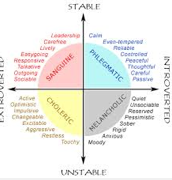
Introversion and Extraversion Starts with Your Genes and Shows in Your Brain

Susan Cain

Susan Cain

Introverts seem to be experiencing an increasingly “level playing field” in work and social environments after Susan Cain’s best-selling book celebrating “the power of introverts in a world that can’t stop talking.”

Hans Eysenck

Hans Eysenck

University of London’s Hans Eysenck provided one of the first physiological explanations of this duality after Carl Jung’s introduction to “psychological types.”

The subjective experience of introversion and extraversion is measured by the Big Five personality dimensions, developed by Robert McRae and Paul Costa, then of the National Institutes of Health, in addition to the widely-used yet psychometrically-criticized Myers-Briggs Type Indicator. 

Eysenck's Three-Factor Theory of Personality

Eysenck’s Three-Factor Theory of Personality

Observable behaviors associated with extraversion include positive emotions, assertiveness, sociability and talkativeness with energetic engagement in work and social contexts.

In contrast, external manifestations of introversion are lower social engagement and energy, and less need for external social stimulation than extraverts, with a quieter, more deliberate style.

Robert McCrae

Robert McCrae

These behaviors are at least partially based on individuals’ genetic profiles, leading to differing brain activity associated with introverted and extraverted thinking and behavior.

Paul Costa

Paul Costa

Eysenck posited that extraverts and introverts differ in their levels of cortical arousal:  Introverts, he suggested, have a higher baseline level of arousal than extraverts, so need less external stimulation.

In contrast, he hypothesized that extraverts seek external stimulation because they have a lower baseline level of cortical arousal.

Yasuyuki Taki

Yasuyuki Taki

Differences in brain structure and function among introverts and extraverts was analyzed by Yasuyuki Taki’s team at Tohoku University, including collaborators  Benjamin Thyreau, Shigeo Kinomura, Kazunori Sato, Ryoi Goto, Kai Wu, Ryuta Kawashima, and Hiroshi Fukuda. 

The evaluated whether personality traits measured on a revised Big Five inventory (Revised NEO Personality Inventory – NEO-PI-R) were related cortical gray matter volume, measured by brain magnetic resonance images (MRI) for more than 270 healthy volunteers over 6 years.

Colin DeYoung

Colin DeYoung

Likewise, University of Minnesota’s Colin DeYoung, Jacob Hirsh of University of Toronto, The Mind Research Institute’s Matthew Shane, and Yale’s Xenophon Papademetris, Nallakkandi  Rajeevan, and Jeremy Gray used a similar method to conclude that behavioral and subjective extraversion was positively correlated with orbitofrontal cortex metabolism and increased cerebral volume of the medial orbitofrontal cortex in 116 adults. 

Michael X. Cohen

Michael X. Cohen

Extraversion has been correlated with sensitivity to rewards and to the brain’s dopamine system, so University of Amsterdam’s Michael X. Cohen and team investigated the brain’s dopamine-based reward system.

He collaborated with Jennifer Young, Jong-Min Baek, Christopher Kessler, and Charan Ranganath of University of California, Davis to demonstrate the connection among trait extraversion, the A1 allele on the dopamine D2 receptor gene, and “extraverted” activity in the brain’s reward system during a gambling task.

Charan Ranganath

Charan Ranganath

Participants received rewards either immediately following a behavioral response or after a 7.5 second “anticipation” interval.
The research team monitored differing fMRI brain activity in the amygdala, which processes emotional stimuli and triggers excitement, and in the nucleus accumbens, which pushes people to seek rewards, novelty and risks.

Brain activation patterns were related to individual differences in extraversion and presence of the A1 allele on the dopamine D2 receptor gene.
Neural pathways differed for extraverts and introverts, validating anecdotal observations that these personality styles are distinctly different, even deep inside the brain and genes.

Many introverts adopt extraverted behaviors in work and social situations, and a remaining question is how fMRI patterns differ for introverts displaying uncharacteristic extraverted behaviors in contrast to people with trait extraversion.

-*How easily can you adopt your non-dominant personality style when you need to display introversion or extraversion behaviors?

-*What tactics enable you to adopt your less-preferred personality style?

Please follow-share-like www.kathrynwelds.com and @kathrynwelds

RELATED POSTS:

Twitter:  @kathrynwelds
Blog: – Kathryn Welds | Curated Research and Commentary
Google+ google.com/+KathrynWelds
LinkedIn Open Group Psychology in Human Resources (Organisational Psychology)
Facebook Notes:

©Kathryn Welds

Want to Remember Something You Read? Skip the Underlining – Exploding Learning Technique Myths

-*Were you always told to underline key points in textbooks to reinforce recall for future examinations?

If so, you may have adopted a low-value practice.

John Dunlosky

John Dunlosky

Kent State University’s John Dunlosky and Katherine Rawson collaborated with Duke’s Elizabeth J. Marsh to investigate the validity of frequently recommended learning and recall strategies.

Katherine Rawson

Katherine Rawson

They were joined in the evaluation by University of Wisconsin’s Mitchell Nathan and Daniel Willingham of University of Virginia. 

The team evaluated ten learning techniques:

  • Practice testing
  • Distributed practice
  • Elaborative interrogation
  • Self-explanation
  • Interleaved practice
  • Summarization
  • Highlighting or underlining text
  • Keyword mnemonic
  • Imagery for text learning
  • Rereading 
Elizabeth J. Marsh

Elizabeth J. Marsh

Dunlosky’s team assessed the effectiveness of each approach according to their impact across four domains:

      • Learning conditions, such as solo or group efforts
      • Learner characteristics, including age, ability, and level of prior knowledge
      • Learning materials, ranging from simple to complex
      • Criterion tasks for outcome measures of memory, problem solving, and comprehension and related skills.
Mitchell Nathan

Mitchell Nathan

The team debunked the value of many frequently-recommended practice, but validated several of the more challenging and least enjoyable approaches:

  • Practice testing.  All testing, whether practice testing or high-stakes performance testing, can increase performance and recall, sometimes up to 100% improvement in free recall.
    The most effective practice tests go beyond multiple-choice recognition question to require more detailed, process-oriented inquiries created by the learner.
    Besides its effectiveness, practice testing is also the less time-consuming than other approaches, even the less effective techniques.
Daniel Willingham

Daniel Willingham

Open Source, no-cost Anki software provides flash-card reviews and Walter Pauk of Cornell’s note-taking system enable users to list questions in the column next to notes to speed development of practice tests.

The most powerful learning approach combines both strategies in self-tests over time.

->Moderately helpful learning and retention techniques:

  • Self-explanation documents how to solve problems while providing rationales for choices during learning.
    This approach is nearly twice as time consuming as its similarly-rated peer technique, elaborative interrogation explanation, so has a less effective “Return on Investment” of time and attention.
  • Interleaved practice involves shifting study from one related topic to another, and appears to enhance motor learning and mastering cognitive tasks like mathematical problems up to 43% and augment longer-term skill retention.

->Lowest utility practices:

  • Summarization requires succinctly describing content of every text.
    Like note-taking, it was helpful in preparing for written exams but less useful for recognition tasks like multiple choice tests.
    This method was more useful than the most common techniques of highlighting, underlining and rereading, but still had low efficacy for performance enhancement.
     
  • Highlighting or underlining is the most frequently-used practice but has low value as a performance, learning, and recall practice because it requires little critical thinking beyond reading.
  • Keyword mnemonic advocates linking words to meanings by word sounds and imagery.
    This approach is helpful to trigger short-term recall for people’s names and occupations, scientific terms and foreign words but not English word definitions.
    Keyword practice appears effective in limited instances when the material includes easily memorized keywords, but is less effective than rote learning for long-term recall.
  • Imagery for text learning requires imagining visual images while reading texts.
    This approach is somewhat effective for short texts and when the text is heard rather than read, but much less useful for longer text learning.
  • Rereading was much less effective than other techniques.
    Massed rereading immediately after reading was more effective than outlining and summarizing but spaced rereading was more beneficial than massed rereading, echoing the consistent finding that spaced practice enhances performance and retention.

Dunlosky’s team provided a critical evaluation of frequent learning practices and advocates adopting only those that have proven impact on learning, performance, and retention.
Their analysis suggests that leading practices are:

  • Scheduling practice spaced over time to increase retention and to reinforce skill acquisition
  • Creating practice why questions while reading
  • Writing detailed explanations of the why, how, and what of the topic.

-*How do you enhance your ability to learn, retain information, and perform new skills?

Please follow-share-like www.kathrynwelds.com and @kathrynwelds

RELATED POSTS:

Twitter:  @kathrynwelds
Blog: – Kathryn Welds | Curated Research and Commentary
Google+ google.com/+KathrynWelds
LinkedIn Open Group Psychology in Human Resources (Organisational Psychology)
Facebook Notes:

©Kathryn Welds

Evidence-Based Stress Management – Physical Exercise – Part 5 of 5

Michael Hopkins-David Bucci

Michael Hopkins-David Bucci

“The positive stress of exercise prepares cells and structures and pathways within the brain so that they’re more equipped to handle stress in other forms,” argue Michael Hopkins, FC DavisMichelle VanTieghemPaul Whalen and David Bucci of Dartmouth.

Michelle VanTieghem

Michelle VanTieghem

They compared effects of a single exercise session or repeated sessions on non-exercising volunteers who were genotyped to determine brain-derived neurotrophic factor (BDNF), a nerve growth factor important in long-term memory.

Paul Whalen

Paul Whalen

Participants were measured on novel object recognition (NOR) memory and mental health dimensions before and after engaging in a 4-week exercise program or a single exercise session.

More frequent exercisers performed better on object recognition memory and said they experienced less stress, but only when their 4 week program included a final test.
In contrast, a single exercise session did not affect recognition memory and resulted in increased perceived stress levels.

This study found no relationship between exercise-induced cognitive benefits and changes in mood and anxiety, suggesting that perceived stress is controlled by a different neural system.

Timothy Schoenfeld

Timothy Schoenfeld

In contrast, Princeton’s Timothy Schoenfeld, Pedro Rada, Pedro Pieruzzini, Brian Hsueh, and Elizabeth Gould, reported different results with mice.
They investigated the paradox of exercise:  It promotes new, excitable brain cells that can aid learning and memory, yet exercise can induce calm in various brain areas.

Elizabeth Gould

Elizabeth Gould

Schoenfeld and team controlled for pre-existing nervousness in adult mice and allowed half to exercise and half to remain sedentary over a six week period.

Exercisers were more willing to cautiously explore and spend time in open areas, suggesting they were more confident and less anxious than their sedentary counterparts.

Brian Hsueh

Brian Hsueh

The runners’ brains developed new, excitable neurons in the hippocampus’ ventral region, associated with processing emotions and releasing GABA, which inhibits brain activity such as the subjective experience of anxiety.

All animals encountered the physical stress of cold water for five minutes, and showed many immediate early genes indicating neuron firing.
However, the runner rats calmed more rapidly due to their release of GABA after this physical stress.

Though this study was conducted with animals, the findings suggest that physical exercise builds capacity to recover more rapidly from stress by regulating anxiety through ventral hippocampus inhibition.

Brett Klika

Brett Klika

Like other stress management recommendations, regular exercise is difficult for many to adopt as an habit.
For reluctant exercisers, Brett Klika and Chris Jordan of Human Performance Institute offer a rapid but challenging solution: “Seven Minutes of Steady Discomfort.”

Chris Jordan

Chris Jordan

Their Scientific 7-Minute Workout includes 12 exercises using a chair, wall and body weight, for interval training alternating large muscles in the upper and lower body.
Each exercise is performed for 30 seconds, at a discomfort rating of 8 on a scale of 1 to 10, with a 10 second rest between.
Though quick, this routine may not be easy, and further willpower may be needed to adopt this approach.

Kirsten Burgomaster

Kirsten Burgomaster

McMaster University’s Kirsten BurgomasterKrista Howarth, Stuart PhillipsMaureen MacDonaldSL McGeeMartin Gibala with Mark Rakobowchuk now of Brunel University validated Klika and Jordan’s proposed Seven Minutes of Discomfort.

Stuart Phillips

Stuart Phillips

They noted that even a few minutes of training at an intensity approaching maximum capacity produces molecular changes within muscles comparable to those of several hours of endurance training like running or bike riding.

John Salamone

John Salamone

Motivational help may be available by activating nucleus accumbens dopamine, which can regulate motivation and lead to goal initiation and persistence, according to University of Connecticut’s John Salamone and Mercè Correa of Universitat Jaume I of Castellón.

Mercè Correa

Mercè Correa

They refined the common assumption that dopamine is associated with reward systems and noted that nucleus accumbens dopamine, involved in appetitive and aversive motivational processes, may provide a biochemical approach to managing motivation and task persistence.

Though it may be difficult to muster the motivation to exercise regularly, these research findings suggest that regular exercise can lead to increased coping and cognitive abilities.

-*To what extent should workplaces promote exercise to reduce stress and increase cognitive performance?

->Follow-share-like www.kathrynwelds.com and @kathrynwelds

RELATED POSTS

Motivation to Manage Stress

Mindful Attention (Part 2)

Social Support (Part 3)

Music (Part 4)

Nature

Sleep

Organizational Roles, Practices

Look for related posts on:

  • Vitamins and Probiotcs (Part 1)
  • Mindful Attention (Part 2)
  • Social Support (Part 3)
  • Music (Part 4)

Twitter@kathrynwelds
Blog: – Kathryn Welds | Curated Research and Commentary
Google+:
LinkedIn Open Group Psychology in Human Resources (Organisational Psychology)
Facebook Notes:

©Kathryn Welds