Tag Archives: Behavior Change

Behavior Change

Career Resilience in Managing Job Loss, Unexpected Changes

Mary Lynn Pulley

Mary Lynn Pulley

Mary Lynn Pulley, a Center for Creative Leadership adjunct faculty member and author of Losing Your Job – Reclaiming Your Soul: Stories of Resilience, Renewal, and Hope, shares practical recommendations to respond to change or hardship:

Resilience enables people to recover from adversity and is characterized by some of the same attributes as Emotional Intelligence:

• Flexibility
• Durability
• Optimism
• Openness to learning.

The flipside of resilience is burnout, fatigue, malaise, depression, defensiveness and cynicism.

Pulley asserts that resilience can be developed by modifying thoughts to broaden personal outlook and adapt to change.
The second step is modifying actions based on modified attitudes, beliefs, and concepts.

She suggests developing resilience by:

Embracing continuous learning
• Learn and apply new skills to more adapt more quickly during changes
Finding purpose
• Develop a “personal why” to provide meaning and context to work
• Take responsibility to direct your personal and career development
• Separate who your self-definition and core identity from your work tasks and job title. “Who you are is not just what you do.”

Cultivating relationships
• Maintain personal and professional relationships for support and feedback, to develop perspective, achieve goals, deal with hardships

Questioning and modifying self-definition and career
• Reassess awareness of personal skills, talents and interests, and personal narrative
• Consider new work opportunities to align with current skills
• Practice new behavioral competencies to align with current situational requirements

Re-thinking money
• Live within your means to remain flexible during unexpected change

Keeping a journal
• The Center for Creative Leadership suggests that writing in “learning journals” or “reflection journals” enables reflection, self-awareness, learning, adaptability, and insight.

Three recommended journal sections include:
1. Event or experience
Describe the occurrence in factual, objective, quantifiable terms:
Who? What? When? Where? How? Why?

2. Reaction
Describe your reaction to the event in factual, objective, quantifiable terms. What did you want to do in response to the event?
What did you actually do?
What were your thoughts?
What were your feelings?

3. Lessons
What did you learn from the event and from your reaction to it?
What did the event suggest as a development area?
What common reaction patterns occur in similar situations?
What different reactions patterns have occurred in the past?
What do these different reactions suggest about progress in developing resilience?

The Center for Creative Leadership suggests that learning comes “reflecting on the doing,” and not just on the “doing” of specific actions.

-*Which of Pulley’s recommendations seem most applicable and feasible to rebound from unbidden changes, like job loss?

LinkedIn Open Group Brazen Careerist
Twitter: @kathrynwelds
Google+:
Facebook Notes:
Blog: – Kathryn Welds | Curated Research and Commentary

©Kathryn Welds

Glass Elevator and Nine Principles for Personal Branding, Career Impact

Ora Shtull

Ora Shtull

Ora Shtull points to the small number of women leading Fortune 500 companies to argue that women can benefit from adopting nine practices to enhance personal branding.

Her book, The Glass Elevator – A Guide to Leadership Presence for Women on the Rise, focuses on: The Glass Elevator

• High-impact communication through asking strategic questions,

• Practicing confident body language in posture, body position, and vocal projection,

• Listening to learn and understand,

• Developing a collaborative relationship with your manager,

• Partnering with team members and direct reports to deliver results,

• Expanding your network by being likable and generous,

• Asking for what you want and creating “win-win” proposals,

• Sharing your differentiators,

• Adopting a positive outlook, even if at first it’s “as-if.”

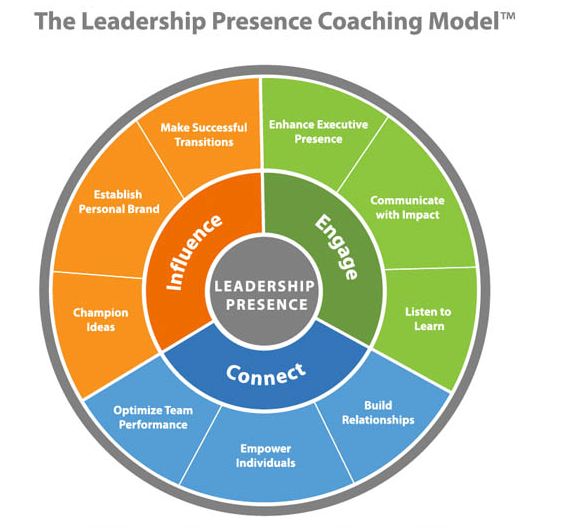
Shtull developed a comprehensive Leadership Presence Coaching model based on the principles of Influence-Engage-Connect.

-*Which of Shtull’s recommendations have most helped you ride the “Glass Elevator”?

Related Posts:

©Kathryn Welds

Three Factors Affecting Women in Corporate Leadership

Sara King

The Center for Creative Leadership’s Sara King and Northwestern University professor Alice Eagly examine the obstacles, pressures and trade-offs women face at every stage of their careers to analyze the reason that only three percent of Fortune 500 leaders are women.

Alice Eagly

King’s and Eagly’s research identified three factors affecting women in corporate leadership roles:

•    “Walking the narrow band” of acceptable behaviors: tough and demanding to be credible and effective but “easy to be with”; demonstrating the desire to succeed but not appearing “too” ambitious

•    “Owned by the job”, with the expectation of availability and productivity 24/7

•    “Traversing the Balance Beam” of conflicting role demands and limited time to fulfill them

They provide familiar suggestions:
•    Seek out mentors and advocates

•    Take risks, accept challenges to demonstrate adaptability, versatility.
Communicate willingness to change jobs and take on special projects to gain experience.
Learn from research findings that women are not viewed as promotable if they stay in one area of expertise or have a narrow functional role.

•    Communicate decisions, demand results, even if unpopular or requiring change management and persuasion

•    Project confident. Projecting an effective leadership image requires confidence. Don’t undermine good results with a weak or too modest self-image

Through the Labyrinth: The Truth About How Women Become Leaders.
Alice H. Eagly  Linda L. Carli, 2007 Harvard Business School Press.
The Center for Creative Leadership showcased related research that identified five themes among high-achieving women: agency, authenticity, connection, self-clarity and wholeness.

Agency, taking control of one’s career:
•    Analyze career steps
•    Set realistic, specific goals and develop a plan for achieving them
•    Ask for challenges outside your current functional orientation
•    Seek recognition
•    Ask for what you deserve

Authenticity, being genuine, being yourself by developing self-awareness to clarify   values, preferences, skills, acceptable trade-offs and acceptable sacrifices.

Connection, by taking time for people, to build personal and professional relationships, networking, finding a mentor, establishing a personal “board of directors” to provide support and feedback.

Self-clarity from seeking feedback and reflecting on one’s values, motivations, behaviors, strengths, weaknesses, impact on others.
This is a continuing process of evaluating changes in your needs, motivations, goals, values, while observing patterns, and being open to possibilities.

Wholeness from seeking roles beyond work or to unite different life roles, by prioritizing commitments and saying “no” to low-priority roles or obligations.

-*What solutions have you seen most effective in navigating the challenges facing women seeking leadership roles?

LinkedIn Open Group Catalyst
Twitter: @kathrynwelds
Google+
Facebook Notes:
Blog: – Kathryn Welds | Curated Research and Commentary

©Kathryn Welds

Six Neuropsychologically-Based Emotional Styles

Richard Davidson

Richard Davidson

Richard Davidson, professor at University of Wisconsin’s book, The Emotional Life of your Brain: How Its Unique Patterns Affect the Way you Think, Feel, and Live–and how You can Change Them suggests that people favor one of six “brain styles.”

• Resilience – speed of recovery from adversity

• Outlook – duration of positive emotion

• Intuition – accuracy of decoding others’ nonverbal signals of emotion

• Self-awareness – accuracy of decoding internal signals of emotional reactions: heart rate, breathing, sweating, muscle tension

• Context – modulate emotional response tailored to environmental demands, constraints, options

• Attention – ability to focus, modulate emotional stimuli

These categories represent interacting elements that form an integrated cognitive-emotional processing pattern, rather than a discrete “style” as Davidson suggests.

He offers a quick assessment of your “brain style” via these surveys and other resources on his website and related locations.
———–
Related Post:
“Contemplative Neuroscience” can transform your mind, change your brain

-*Which Emotional Style is most prevalent is your work organization?
-*Which Style is more effective in your workplace?

LinkedIn Open Group – Executive Coach
Google+
Twitter: @kathrynwelds
Facebook Notes:
Blog: – Kathryn Welds | Curated Research and Commentary

©Kathryn Welds

Making Magic Meaningful as a Life Metaphor

Kim Silverman

Kim Silverman

Kim Silverman is Principal Research Scientist at Apple, and holds a Ph.D. in Experimental Psychology from Cambridge University.
Before his academic credentials, he sharpened his skills as a magician and cultivated an appearance similar to that of Hogwarts’ Professor Albus Percival Wulfric Brian Dumbledore.
He is a president of the Society of American Magicians (Palo Alto), and a Magician Member of the Academy of Magical Arts.

He describes his “hobby” as “performing magic in a meaningful way that gives people something they can take away with them, to make them feel better about themselves and their lives, and thereby thrive more effectively.”

Silverman believes that magic can change the way we think about our lives:

-Things that seem impossible may be possible
-Things that are separated and broken may be rejoined
-There is always a way
-We can get free from something that holds us back
-When we feel trapped by a problem, it is just an illusion.

He asserts that magic provides a change of perspective from negative thoughts, and provides a broader perspective.
He acknowledges that suffering is an intrinsic part of human life and that it brings us together, and through it all, we can experience magic through our relationships.

Silverman concludes that things might not be as they appear, so there is hope, and this is an idea worth sharing.

-*How can the metaphors of perceptual illusion accelerate problem-solving in complex situations?

©Kathryn Welds

Leadership “From the Inside Out”

Kevin Cashman

Kevin Cashman

Kevin Cashman provides a leadership development frame that complements Daniel Goleman’s Emotional Intelligence concepts and Jim Collins’s delineation of Level 5 Leadership, in his book Leadership from the Inside Out.

He is Senior Partner, Korn/Ferry International, and Leadership From the Inside Outhis research and experience indicate that leadership effectiveness originates in the individual’s personal character.

If individuals wish to develop leadership skills, they must apply “learning agility” to acquire new perspectives and skills, then deploy them under new business circumstances.

Cashman reviewed the four elements of “learning agility”:

Mental agility, characterized by questioning solutions, consulting others, demonstrating openness

Interpersonal agility, based on effective, precise listening, using questions to elicit clarification

Results agility, or developing new approaches to achieve results, incorporate new ways to resolve problems

Change agility, which includes flexibility and adaptability

Cashman found three steps in leadership development, common across many approaches, and recommended these elements in any leadership development program:

Building Awareness – Self-discovery of strengths, development areas

Building Commitment – Developing emotional engagement to act on developmental needs and to apply strengths

Building Practice – Undertaking new actions such as journaling to build awareness, commitment and reflection on learnings.

The goal of these steps is to develop three aspects of leadership:

Authenticity, characterized by integrity, alignment between words and actions that is recognized by others; continued striving toward authenticity in future potential

Influence, involving the self-expression and application of personal strengths to create value

Value creation in work and community

Leadership from the Inside Out outlines seven related pathways to leadership mastery, with related practices.
Many of these recommendations may sound spiritual, philosophical, non-specific, and difficult to translate into specific actions.
One element of self-reflection in Cashman’s process may be to operationalize these recommendations into concrete, measurable actions:

Personal Mastery, based on developing self-awareness

Purpose Mastery involves applying talents to serve values and add value through authentic self-expression in leading others

Change Mastery, incorporates acceptance of uncertainty and impermanence to learn from these changes and demonstrate agility in adapting to new circumstances

Interpersonal Mastery relates to human connection, the second element of Goleman’s Emotional Intelligence. Collaboration is a foundation to create contribution and long-term value

Being Mastery represents a spiritual dimension, however the individual defines it, to connect one’s depth of character to support effectiveness and contribution

Balance Mastery refers to building, maintaining energy to foster resilience, effectiveness, fulfillment. It moves beyond time management, a practice to manage a limited resource, to generate and regenerate energy to lead

Action Mastery practices leading by coaching others and self to create value.

-*What actions have helped develop leadership from the inside out?

Related Posts:
The Considered “Pursuit of Less”
Whom Do You Serve as a (Level 5, Level 6) Leader?  
“Contemplative Neuroscience”: Transform your Mind, Change your Brain
Developing “Big 8” Job Competencies

©Kathryn Welds

Considered “Pursuit of Less”

Jim Collins

Jim Collins

Jim Collins in his book How the Mighty Fall: And Why Some Companies Never Give In, outlined how once-successful companies failed, and discovered that one significant contributor was what he labeled “the undisciplined pursuit of more.”  It is true for companies and it is true for careers.
“The Pursuit of Less” can be easier after separating “The Trivial Many from The Significant Few, as Vilfredo Pareto‘s

Vilfredo Pareto

Vilfredo Pareto

principle outlines.

 
Greg McKeown

Greg McKeown

Greg McKeown, co-author with Liz Wiseman (former VP at Oracle Corporation) of Multipliers: How the Best Leaders Make Everyone Smarter, suggests the following steps:

Liz Wiseman

Liz Wiseman

Use more extreme criteria:

  • Do I love this career?
  • Do I love these career activities?

• “What am I deeply passionate about?
• “What taps my talent?
• “What meets a significant need in the world?

These can be organized as a Venn diagram of Talent x Market x Passion to reveal an intersecting area of optimal contribution.

  • What is essential?
    Eliminate the rest
  • Conduct a life audit.
    Eliminate an old activity before you add a new one.

Beware of the endowment effect or divestiture aversion, the self-confirmation bias of valuing something more once we own it.

Kahneman, Knetsch and Thaler found that when coffee mugs and pens of equal value were randomly distributed to volunteers, people were less willing to trade the item they were given for the other item.

The researchers concluded that “owning” either the pen or the coffee mug decreased the volunteers’ willingness to part with their objects, contradicting

Ronald Coase

Ronald Coase

Nobel prize winner Ronald Coase’s economic theorem which predicted that 50% of the objects would be traded.

To break this cognitive bias, Tom Stafford, psychology professor at

Tom Stafford

Tom Stafford

University of Sheffield and author of Mind Hacks, suggests asking “If I did not own this item, how much would I pay, invest, or sacrifice to obtain it?”

Similarly, McKeown argues for considered minimalism and simplicity in organizations, careers, and life.

-*How are you selective about your pursuits in career and life?

LinkedIn Open Group Brazen Careerist:
Twitter @kathrynwelds
Google+
Facebook Notes:
Blog: – Kathryn Welds | Curated Research and Commentary

©Kathryn Welds

Organizational “Learning Agility” Interventions

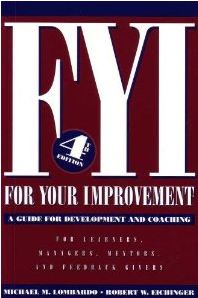
M.M. Lombardo and R.W. Eichinger introduced the concept of “learning agility” in organizations, and proposed its correlates to workplace performance.

They defined four elements of learning agility in employees:

·         People agility – know themselves, learn from experience, treat others with consideration, display calm and resilience under changing conditions

·         Results agility – obtain results under difficult conditions, inspire others to perform “above and beyond”, inspire confidence in other

·         Mental agility – think through problems with a fresh perspective, comfortable with complexity, ambiguity, communicating  reasoning

·         Change agility – curious about ideas, willing to experiment and develop skills.

Lombardo and Eichinger’s framework has been used by subsequent researchers to measure the impact of learning agility (“learning from experience”) on workplace performance.

De Rue, Ashford, and Myers point out that this concept “lacks conceptual clarity” in their recent article in Industrial and Organizational Psychology, and  they propose that learning agility is characterized by differences in speed of learning and flexibility in incorporating new information and skills.

In addition, they suggest that learning agility  includes  both cognitive processes and behavioral processes that can be enhanced by:

·         Cognitive simulations – visualizing scenarios to forecast issues and potential solutions

·         Counterfactual thinking – imagining “what might have been” if different choices had been taken to clarify cause-and effect relations

·         Recognizing patterns – categorizing apparently dissimilar experiences into repeating patterns

·         Seeking feedback  – proactively requesting corrective recommendations and varied perspectives from others, and making it “safe” to provide this information

·         Experimenting – trying new behavioral and thought patterns

·         Reflecting – considering and consolidating “lessons learned” to guide futures behavior decisions

Peter Senge

Peter Senge

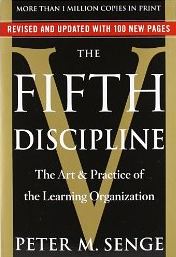
Much past research on learning agility has not fully considered the degree to which the organizational culture and climate provide a context of psychological safety and acceptance of risk-taking, but Peter Senge has called for this type of supportive context in his work on The Learning Organization.

-*How do you differentiate “learning agility” from elements of “Emotional Intelligence”?

LinkedIn Open Group – Psychology in Human Resources (Organisational Psychology)
Twitter: @kathrynwelds
Google+
Facebook Notes:
Blog: – Kathryn Welds | Curated Research and Commentary

©Kathryn Welds

Passion, Purpose, “Personal Mastery” in Work and Life

Srikumar Rao

Srikumar Rao

Srikumar Rao gained acclaim at Columbia, Haas, Kellogg, and London Business Schools for his innovative course, Creativity and Personal Mastery (CPM), which he transformed into his book, Are You Ready to Succeed? Unconventional Strategies to Achieving Personal Mastery in Business and Life
TED talk

According to Rao, those who pursue Creativity and Personal Mastery (CPM) practices:

1) …find that their judgment improves.
While they become deeply passionate about what they do, they also become more objective and less wedded to any particular outcome.
Their newfound ability to entertain many different perspectives makes them vastly more creative.

2) …experience an increase in their ability to inspire others and release pent-up creativity.
They relate better to others – subordinates, peers and bosses – and become more adept at enlisting them to achieve a common goal.

His program is based on 10 principles, which are illustrated in 90-second Inner Espresso Video Clips, listed below:

1: Actions and Not Outcomes

2: Fallacy of Expecting Thanks and Gratitude

3: Whatever you focus on Expands

4: The Power of Labels

5: Time of Attitude

6: The Power of Shifting your Focus

7: Mental Models

8: Miracles Happen Every Day

9: What are others thinking about you?

10: Your Boss is the FedEx Guy

*What practices help you “master” your work and life challenges?

LinkedIn Open Group – Leadership Think Tank
Twitter: @kathrynwelds
Google+:
Facebook Notes:
Blog: – Kathryn Welds | Curated Research and Commentary

©Kathryn Welds

How Parents can Limit Girls’ Leadership and Achievement Potential

Forbes Woman observed that seven parenting and teaching practices may still persist, and have been shown to limit girls’ potential for achievement in school and sports.

These practices can lay the foundation for unchallenged assumptions that may continue to limit their potential to advance in workplace leadership roles.

1. Teach her to be polite and quiet without skills to be proactive and assertive

2. Buy her gender-specific toys

3. Focus on her appearance more than her accomplishments

4. Give in to the allure of the ”princess cult”

5. Assign her father or male caretaker all the physical tasks around the house

6. Limit most of her social contract to other girls

7. Criticize your own body, and/or women’s bodies

-*How do you help girls develop leadership and achievement skills they will need in the next decade and beyond?

LinkedIn Open Group – Leadership Think Tank
Twitter: @kathrynwelds
Google+
Facebook Notes:
Blog: – Kathryn Welds | Curated Research and Commentary

©Kathryn Welds