Paradox of Potential vs Achievement in Job Search

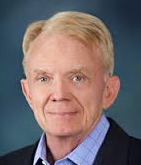
Zachary Tormala

Zachary Tormala

When hiring or promoting, the person’s potential can trump actual accomplishments, according to Stanford’s Zakary Tormala, with Jayson Jia of University of Hong Kong and Harvard’s Michael Norton.

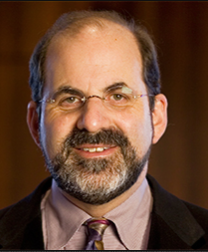
Jayson Shi Jia

Jayson Shi Jia

The paradox of potential occurs because possibility seems to engender greater interest and cognitive effort due to its uncertain outcome, in examples ranging across:

  • Basketball player evaluations,
  • Hiring decisions,
  • Salary offers,
  • Graduate school admissions recommendations,
  • Judgments of artistic talent,
  • Intentions to visit an untried restaurant.
Michael Norton

Michael Norton

Tormala and team demonstrated this effect by presenting identical statistics for a hypothetical NBA basketball player, then describing the data “predictions” or as “actual performance.”
Participants were more likely to judge that the player would become an All-Star player when they viewed “predicted” statistics rather than “actual” performance records.

Volunteers also evaluated a job applicant more favorably when the person performed well on an “Assessment of Leadership Potential rather than on an “Assessment of Leadership Achievement.”

Tormala’s group extended the investigation to evaluate impact of an upcoming comedian’s ”accomplishment” compared with “potential” when they posted different Facebook advertisements:

  • “Critics say he has become the next big thing”
  • “Critics say he could become the next big thing.”

The “potential” ads produced more than three times more click-throughs and five times more fan ratings.

In other studies, Tormala and team compared descriptions of an achievement and potential:

  • “This person has won an award for his work”
  • “This person could win an award for his work.”

“Potential” stimulated greater interest and cognitive information processing, resulting in more favorable reactions to the target person.
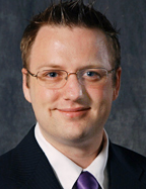
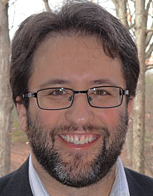
Derek Rucker

Derek Rucker

With Stanford colleague Daniella Kupor and Derek D. Rucker of Northwestern University, Tormala and Norton found that the preference for potential disappeared for people who don’t like uncertainty, and in situations that require higher degrees of certainty.

They noted that when people thoughtfully consider challenging decisions, such as in a Blackjack game, bystanders form positive impressions of others and become more willing to be influenced by them.
However, observers form negative opinions of people who “overthink” simple choices (demonstrate lack “thought calibration”), and are less willing to be influenced by them.

The appeal of potential applies to abstract enjoyable experiences, according to Southern Methodist University’s T. Andrew Poehlman and George Newman of Yale.

T Andrew Poehlman

T Andrew Poehlman

They found that the lure of “potential” makes people more likely to “consume inferior performances” in the present, but may not enjoy them.

Poehlman and Newman argued that “potential” is less influential when experienced in the past, and is less attractive when potential is associated with utilitarian dimensions.

George Newman

George Newman

These findings point to the value of:

  • Positioning one’s own “potential” as well as others’ “potential” to increase persuasiveness of support and advocacy,
  • Considering whether candidates with “potential” seem more appealing than those with greater experience – and whether potential is the appropriate selection criterion.

-*How frequently do you see people hired, promoted, and rewarded for “potential” instead of actual achievement?

Follow-share-like http://www.kathrynwelds.com and @kathrynwelds

RELATED POSTS:

Twitter @kathrynwelds
BlogKathryn Welds | Curated Research and Commentary
Google+ http:www.google.com/+KathrynWelds
LinkedIn Open Group Psychology in Human Resources (Organisational Psychology)
Facebook Notes

©Kathryn Welds

Increase Feelings of Power by Listening to Music with Strong Bass Beat

Dennis Hsu

Dennis Hsu

Listening to music with specific emotional qualities has been associated with productivity, performance, creative problem solving, endurance, decreased pain sensitivity, and decision biases, outlined in previous blog posts.

Loran Nordgren

Loran Nordgren

Subjective power feelings are an additional outcome of listening to music with substantial bass beat, reported Northwestern University’s Dennis Y. Hsu, Loran F. Nordgren, Derek D. Rucker, Li Huang, and Columbia’s Adam D. Galinsky.

Derek D. Rucker

Derek D. Rucker

Hsu’s team found that power-inducing music produced enhanced:

  • Abstract thinking
  • Illusions of control
  • Willingness to volunteer first for a potentially stressful task.
Li Huang

Li Huang

Subjective feelings of power are important contributors to workplace performance because they associated with confidence and self-efficacy, which influence willingness to persist in accomplishing challenging tasks.

Adam Galinsky

Adam Galinsky

More than 75 volunteers listened to an original, two-minute instrumental composition with either a prominent bass line or a subdued bass element in Team Hsu’s investigation.
Participants rated their feelings of power, dominance and determination along with their sense of happiness, excitement, and enthusiasm.

Pamela K. Smith

Pamela K. Smith

People who listened to the heavy-bass music said they experienced greater feelings of power than those who listened to the more subdued variation, but the increased bass element did not affect feelings of happiness or excitement.
Those who heard the composition with prominent bass elements also produced more power-related terms in a word-completion test.

Daniël Wigboldus

Daniël Wigboldus

Likewise, those who heard familiar “high-power music” such as Queen’s “We Will Rock You,” volunteered to be the first participants in a debate competition and scored higher on a test measuring abstract thinking, compared with people who listened to widely-known “low-power music” like “Who Let the Dogs Out?”

Ap Dijksterhuis

Ap Dijksterhuis

Feeling powerful is more important than actually possessing power in achieving superior performance, confirmed by University of California San Diego’s Pamela K. Smith with Daniël H.J. Wigboldus of Radboud University Nijmegen, and University of Amsterdam’s Ap Dijksterhuisc.
They reported this well-validated finding and expanded Smith’s previous report, with NYU’s Yaacov Trope, that people’s subjective sense of power is partly determined by individual information processing style.

Yaacov Trope

Yaacov Trope

Smith’s team found that people who demonstrated abstract thought reported greater sense of power, greater preference for high-power roles, and more feelings of control over the environment, compared with people who were primed to use concrete thinking.

Subjective feelings of power can be enhanced by listening to music with a prominent bass element, in addition to writing “power primes” and assuming expansive body postures.

-*How do you increase your personal experience of power?

Follow-share-like www.kathrynwelds.com and @kathrynwelds


RELATED POSTS:

©Kathryn Welds

“Default Mode Network”, Positive Mood Increase Creative Problem Solving

Sigmund Freud

Sigmund Freud

“Aimless engagement” in an activity can enable a non-linear, integrative “free association” of ideas leading to creative breakthroughs, confirmed Drexel University’s John Kounios.

Graham Wallas

Graham Wallas

Many people recognize this experience of creative “incubation” while performing routine, well-rehearsed tasks, though they may not be aware that nearly 90 years ago, Graham Wallas of London School of Economics proposed this phenomenon one of four stages in the creativity process.

Michael D Greicius

Michael D Greicius

The brain’s posterior cingulate cortex (PCC) and ventral anterior cingulate cortex (vACC) operate as a “default mode network” during this type of relaxed engagement, found Stanford’s Michael D. Greicius, Ben Krasnow, Allan L. Reiss, and Vinod Menon.

Rebecca Koppel

Rebecca Koppel

During free-flowing ideation, these brain regions “untether” thoughts from usual associational “mental ruts” to commingle in original ways.
Fixation forgetting” enables this innovative recombination of thoughts to develop innovative solutions, according to University of Illinois’s Rebecca Koppel and Benjamin C. Storm of University of California Santa Cruz.

Mark Beeman

Mark Beeman

Creative problem solving through insight also involves the right hemisphere’s anterior superior temporal gyrus (aSTG), an area associated with recognizing broad associative semantic relationships, reported Kounios and colleagues at Northwestern, Mark Beeman, Edward M Bowden, Jason Haberman, Stella Arambel-Liu, and Paul J Reber, collaborating with Kounios and Jennifer L Frymiare, also of Drexel, and Source Signal Imaging’s Richard Greenblatt.

John Kounios

John Kounios

They concluded that creative problem solving requires the ability to encode, retrieve, and evaluate information.
When insight is involved, integration of distantly related information is also needed.

Ruby Nadler

Ruby Nadler

In addition to these skills, University of Western Ontario’s Ruby T. Nadler, Rahel Rabi and John Paul Minda found that cognitive flexibility for problem-solving activates the prefrontal cortex and the anterior cingulate cortex, areas important in creative hypothesis-testing and rule-selection.
Additionally, they confirmed that creative solutions can be enabled by eliciting a positive mood.

Rahel Rabi

Rahel Rabi

The team induced positive, neutral, and negative moods using music clips and video clips, and asked volunteers to classify pictures with visually complex patterns.
People in the positive-mood condition showed better classification learning than those with induced neutral or negative moods, suggesting that upbeat music effectively enhanced creative thinking while boosting innovators’ mood.

John Paul Minda

John Paul Minda

Somewhat surprisingly, capturing ideas through handwriting or typing can attenuate innovation because recording requires a shift to a more linear organization of thoughts, posited Kounios.

-*How can you capture creative solutions while maintaining innovative momentum?

-*How can you prevent “fixation forgetting” from interfering with accessing information required for creative work?

Follow-share-like www.kathrynwelds.com and @kathrynwelds


RELATED POSTS:

Twitter  @kathrynwelds
Blog – Kathryn Welds | Curated Research and Commentary  
Google+
LinkedIn Open Group Psychology in Human Resources (Organisational Psychology)
Facebook Notes:

©Kathryn Welds

Concrete Helping Acts Increase “Helpers High” Happiness more than Abstract Goals

Melanie Rudd

Melanie Rudd

People experience greater happiness when they perform specific “prosocial” actions, like trying to make someone smile, rather than pursuing an abstract objective like “trying to make someone happy,” according to University of Houston’s Melanie Rudd, Jennifer Aaker of Stanford and Harvard’s Michael I. Norton.

Jennifer Aaker

Jennifer Aaker

Fifty volunteers were asked to “make someone happy,” or to “make someone smile,” in exchange for a gift card.
When they completed the task, participants described how they accomplished their assignment, and the degree of happiness they experienced.

Michael Norton

Michael Norton

Participants who completed the specific goal, “getting someone to smile,” reported greater happiness than those who worked toward the more abstract, “higher construal level” goal of “making someone happy” – no matter which action they performed to achieve the goal.

Yaacov Trope

Yaacov Trope

Specific goals have a “low construal level”, according to Construal Level Theory (CLT), discussed by NYU’s Yaacov Trope and Nira Liberman of Tel Aviv University.
CLT distinguishes concrete, specific, contextualized, and personal actions from more abstract, distant options based on future time, remote space, social distance, and hypothetical probability.
Team Rudd’s findings demonstrate the emotional impact associated with completing specific prosocial tasks.

Nira Liberman

Nira Liberman

Rudd and team posited that concrete goals reduce the gap between expected and actual impact of one’s actions, and increase goal clarity, measurability, and achievability while setting more realistic outcome expectations.
The team evaluated this speculation by asking participants to rate the degree of similarity between the actual outcome and their expectations before they performed the specific or general task.
Those who performed the more specific action also reported greater similarity between expectations and actual outcomes, as well as experiencing more happiness as a result of their prosocial actions.

Edwin Locke

Edwin Locke

Abstractly-framed goals focus on “why”, broader meaning, and larger purpose, whereas concretely-stated objectives target the “how, found University of Maryland’s Edwin Locke and Gary Latham of University of Toronto.

Gary Latham

Gary Latham

Similarly, smaller expectation-reality gaps were linked to greater satisfaction, happiness, and well-being in research by University of Leiden’s Riël Vermunt and Herman Steensma. 

Riël Vermunt

Riël Vermunt

Rudd’s group replicated Vermunt and Steensma’s findings, for people had a previous friendship or no previous relationship with the beneficiary, and when the prosocial acts varied in magnitude.

Herman Steensma

Herman Steensma

Participants experienced similar degrees of happiness in performing small or large kind deeds, as long as thee specified actions like “increasing recycling of unneeded materials” instead of “supporting environmental sustainability.”

Volunteers were consistently inaccurate in predicting which charitable acts would make them feel most happy 24 hours after they completed the task.

Gal Zauberman

Gal Zauberman

Participants predicted that performing the abstract, “high construal level” task of “making someone happy” would make them happier than the specific task of “trying to make someone smile” – but they actually experienced greater happiness after they did a specific good deed.
Likewise, Wharton’s Gal Zauberman and John G. Lynch of Duke also found that volunteers had inaccurate expectations about future outcomes.

Anyone who has been disappointed when ambitious goals to help others did not result in the desired outcome understands the problems of “donor fatigue” or “helper burnout,” when there is a significant discrepancy between helper expectation and actual outcome.

Carolyn Schwartz

Carolyn Schwartz

This anecdotal experience is confirmed by University of Massachusetts Medical School’s University of Massachusetts’s Carolyn Schwarz, Yunsheng Ma, and George Reed, with Janice Bell Meisenhelder of Emmanuel College, who found that discrepancies between expectations and outcomes are linked to giver unhappiness and dissatisfaction.

Allan Luks

Allan Luks

Rudd and team’s research suggests that much-needed helpers can experience a Helper’s High instead of “helper burnout” when their goals are concretely defined.
Helper’s High is even associated with improved physical health in addition to happiness, according to Fordham University’s Allan Luks.

Helping others is also associated with higher levels of mental health, found Schwartz’s group, although they found less relationship with physical health than Luks.

William Harbaugh

William Harbaugh

The Helper’s High has a physiological basis: “Pleasure centers of the brain” are activated when people make voluntary charitable donations as well as after receiving money for oneself, and even more than when individuals agree to a tax-like transfers to a charity, reported University of Oregon’s William T. Harbaugh and Ulrich Mayr, with Daniel R. Burghart of NYU.

Individuals can increase their experience of happiness by engaging in specific kind acts toward others, and philanthropic organizations can increase volunteer retention by framing requests as concrete, “low construal level” actions.

-*To what extent do specific prosocial actions increase your personal happiness?

Follow-share-like www.kathrynwelds.com and @kathrynwelds


RELATED POSTS:

Twitter  @kathrynwelds
Blog – Kathryn Welds | Curated Research and Commentary  
Google+
LinkedIn Open Group Psychology in Human Resources (Organisational Psychology)
Facebook Notes:

©Kathryn Welds

Is Being at Work Less Stressful than Being at Home?

-*Has the workplace replaced home as a preferred haven?

Sarah Damaske

Sarah Damaske

Both men and women showed fewer physiological signs of stress and reported feeling happier at work than at home, according to Penn State’s Sarah Damaske, Joshua M. Smyth, and Matthew J. Zawadzki.
However, their estimates of workplace were inconsistent with their actual physical stress levels.
This suggests that people report more stress at work than their bodies “register.”

Arlie Hochschild

Arlie Hochschild

Damaske’s team analyzed objective and subjective indicators of stress among more than 120 employed men and women and found support and counterpoints to Arlie Russell Hochschild’s 1997 Time Bind hypothesis, developed at University of California Berkeley.

 A 2013 Pew Research Social and Demographic Trends Report found that 56% of working moms and 50% of working dads say they find it very or somewhat difficult to balance work and family responsibilities, due in large part to a mismatch between available time to fulfill responsibilities at home and work:  More than 40% of working mothers of children under age 18 and 34%-50% of working fathers of minor children said they “always feel rushed.”

Joshua M. Smythe

Joshua M. Smythe

Participants in Team Damaske’s study showed lower physiological indicators of stress at work, measured by blood levels of stress hormone cortisol levels, and this effect was particularly significant for people with lower incomes or no children at home.

However, these same participants reported greater subjective feelings of stress on workdays than on non-work days.

Matthew Zawadzki

Matthew Zawadzki

Women reported greater stress and less happiness at home, perhaps due to the increasingly blurred boundaries between work and home, with work demands continuing at home with email, conference calls, and text messages, suggested Damaske’s team.

In addition, workplace concierge service, prepared meals, onsite health care and gym services may increase workplace attraction.
Further, emotional attachments at work may be somewhat less intense than at home, so it may be easier to “detach” from work relationships.

Jason Schnittker

Jason Schnittker

People who work have better mental and physical health than their non-working peers, according to research by Damaske, University of Pennsylvania’s Jason Schnittker, as well as Mark Tausig and Adrianne Frech of University of Akron, all in separate studies.

Mark Tausig

Mark Tausig

These findings point to the value of continued workplace participation, particularly in Results Only Work Environments (ROWE), which encourage flexibility in the time and location of work while delivering agreed results.

Adrianne Frech

Adrianne Frech

Online collaboration tools like teleconferences with video capabilities and document sharing, computer-based soft phones, and work email integration with personal mobile devices are programs that enable employees to manage personal responsibilities through telecommuting, paid sick days, paternity and maternity leaves.

Cali Ressler-Jody Thompson

Cali Ressler-Jody Thompson

These programs can increase employee productivity and retention while reducing employee stress at the junction between work and home, noted Cali Ressler and Jody Thompson, who evaluated the financial and organizational impact of ROWE.

-*How to you reduce stress in the transition from home to work to home?

Follow-share-like www.kathrynwelds.com and @kathrynwelds

RELATED POSTS:

©Kathryn Welds

Does Customer Recommendation Predict Company Growth?

Fred Reichheld

Fred Reichheld

Net Promoter Scores gauge customer loyalty, expressed by willingness to recommend and advocate the company’s products and services to others.

Its creator, Fred Reichheld of Bain & Company, posited that NPS is a more meaningful measure of a company’s relationship with its customers than customer satisfaction metrics because, he argued, it is correlated with revenue growth.

Richard Owen

Richard Owen

Satmetrix Executives Richard Owen and Laura Brooks further articulated this linkage between customer loyalty and revenue growth.

NPS’s customer loyalty metric is based on 10-point ratings in response to just one question: How likely is it that you would recommend our company/product/service to a friend or colleague?

Laura Brooks

Laura Brooks

“Promoters” respond with a score of 9 or 10 whereas “Detractors” provide ratings of 0-6, and scores of 7 and 8 are ignored in this system, leading to the question of why they are included.
NPS is calculated by subtracting the percentage of customers who are Detractors from the percentage of customers who are Promoters.

Timothy L. Keiningham

Timothy L. Keiningham

Critics, including Ipsos Loyalty’s Timothy L. Keiningham, Bruce Cooil of Vanderbilt, BI Norwegian School of Management’s Tor Wallin Andreassen, and Lerzan Aksoy of Fordham, argue that American Customer Satisfaction Index (ACSI) is an equally accurate predictor of revenue growth.

They reinforced the frequently-replicated finding that actual behaviors, including positive and negative “word of mouth (WOM)are better predictors than attitudes about possible future behaviors, in their evaluation of longitudinal data from 21 firms and 15,500-plus interviews from the Norwegian Customer Satisfaction Barometer.

Claes Fornell

Claes Fornell

Likewise, University of Michigan’s Claes Fornell, Forrest V. Morgensen, and M.S. Krishan, with Sunil Mithas of University of Maryland, found that “it is possible to beat the market consistently by investing in firms that do well on the ACSI.”

Companies that invest in initiatives to increase customer satisfaction, reflected in higher scores than competitors on the American Customer Satisfaction Index (ACSI), also performed better in measures of market value.

More surprisingly, they found that these higher returns are associated with lower stock market risk, probably due to “stock market imperfections” that require time to adjust to news of strong ACSI performance.

Bob Hayes

Bob Hayes

Similarly, customer satisfaction and loyalty researcher Bob Hayes contended that “likelihood to recommend” measures the same construct and has the same predictive value of business growth as customer loyalty questions such as:

  • Overall satisfaction
  • Predicted likelihood to purchase again, evaluated through his Purchasing Loyalty Index (PLI)
  • Number of referrals through “word of mouth” and “word of mouse,” calculated in his Advocacy Loyalty Index (ALI)
  • Resistance to defection to competing offers, measured with his Retention Loyalty Index (RLI).

    Hayes Customer Loyalty Grid

    Hayes Customer Loyalty Grid

Hayes’ findings reinforced the caveat that actual behavior is a more accurate than attitudes about likely future behavior, also demonstrated by University of Connecticut’s V Kumar, J Andrew Petersen and Robert Leone in their analysis of telecoms and financial service customers willing to recommend their service provider.

V Kumar

V Kumar

Only about one-third of these potential Advocates actually recommended the provider, and only about 13% of those referrals actually led to new customers.
Kumar and team called this the “promise gap” and suggested that it can be mitigated by delivering beyond customer expectations, even when a customer complains.

Neal A Morgan

Neil Morgan

Indiana University’s Neil A. Morgan and Lopo Leotte Rego of University of Iowa added a wrinkle to critiques of Net Promoter Scores as the sole necessary indicator of customer satisfaction.

Like Keiningham’s team and Hayes, they found that recommendation intentions (“net promoters”) have “little to no predictive value.
Unlike Hayes, their results found little predictive strength for actual behavior in average number of recommendations.

Instead, Morgan and Rego argued for multiple measures of customer satisfaction as the best predictor of revenue group.
Additionally they found that Top 2 Box satisfaction scores – the sum of percentages for the top two point on surveys of purchase intent, satisfaction or awareness – provided “good” predictive value.

Daniel Schneider

Daniel Schneider

The Net Promoter Score also had the lowest predictive validity when compared to three other scales by Stanford’s Jon Krosnick and Daniel Schneider, with Intuit’s Matt Berent and Hays Interactive’s Randall Thomas.

To improve the NPS, the team recommended replacing the 11 point unipolar rating scale with a 7 point bipolar scale from positive to negative impressions.

Jon Krosnick

Jon Krosnick

Their work replicated Hayes’ finding that liking and satisfaction with a company are highly significantly predictors than the likelihood of recommending, so Krosnick’s team recommended including questions like:

  • Overall, how satisfied are you with the each of the following companies?
  • How much do you like or dislike each of the following companies?

They uncovered correlations among measures of customer experience, and showed that liking is the best predictor of the number of recommendations and satisfaction.

Leon Festinger

Leon Festinger

Customers typically form more positive evaluations after the decision to purchase, probably due to validating purchase choices and reduce cognitive dissonance of purchase dissatisfaction, described by Stanford’s Leon Festinger.

These findings suggest that Reichheld’s claim of NPS as “the only question you need to ask” may be unsubstantiated, and that multiple measures of customer experience are more accurate predictors of a company’s revenue performance.

-*How credible is “willingness to recommend” a company as a predictor of its revenue growth?

Follow-share-like www.kathrynwelds.com and @kathrynwelds

RELATED POSTS:

©Kathryn Welds

Spiritual, Religious Preferences Linked to Thicker Brain Cortex, Reduced Risk of Depression

Lisa Miller

Lisa Miller

Ravi Bansal

Ravi Bansal

People who value spiritual and religious practices show different brain structures than those for whom these beliefs are less important, according to Columbia’s Lisa Miller, Ravi Bansal, Priya Wickramaratne, Xuejun Hao, and Myrna M. WeissmanCraig E. Tenke and Bradley S. Peterson.

This finding is consistent with an earlier summary of transformations of brain structure and function associated with spiritual experiences compiled by University of Pennsylvania’s Andrew B. Newberg.

Andrew Newberg

Andrew Newberg

Priya Wickramaratne

Priya Wickramaratne

Miller’s team rated more than 100 volunteers on their risk of depression, based on family history of having parents or grandparents with major depression.

They also evaluated participants’ ratings of spiritual and religious values as well as religious participation at two times during a five year period.
The team also performed structural magnetic resonance imaging (MRI) of each volunteer’s brain at the second time point. 

Xuejun Hao

Xuejun Hao

Myrna Weissman

Myrna Weissman

MRI brain scans showed significant differences in brain structure for those who valued spiritual and religious practices: Thicker cortices in the left and right parietal and occipital regions and mesial frontal lobes, and left hemisphere cuneus and precuneus.

In separate investigations, Miller, Wickramaratne, Tenke, and Weissman collaborated with Columbia colleagues Daniel Pilowsky, Helen Verdeli, Marc J. Gameroff, and Mia Sage, and New York State Psychiatric Institute’s Virginia Warner, with Yoko Nomura of Queens College in a 20 year longitudinal study following adult children of people diagnosed with major depression.

Craig Tenke

Craig Tenke

Daniel Pilowsky

Daniel Pilowsky

Adult children who also reported at the beginning of the study that religion or spirituality was “highly important” to them had 75%-90% less risk of experiencing major depression over 10 years, compared with people who had no family history of depression.
These findings suggest that spiritual and religious values buffer genetic risk of depressive disorders.

Mia Sage

Mia Sage

Yoko Nomura

Yoko Nomura

Further support for this notion comes from related work by Columbia’s Tenke, who collaborated with Jürgen Kayser, Carlye G. Manna, Shiva Fekri, Christopher J. Kroppmann, Jennifer D. Schaller, Daniel M. Alschuler, Jonathan W. Stewart, Patrick J. McGrath, and Gerard E. Bruder to report that people who recover from depression have high-amplitude alpha brain activity, which is also associated with continued practice of Qigong meditation, according to University of Graz’s Gerhard Litscher, G. Wenzel, Gerald Niederwieser, and Gerhard Schwarz.

Gerhard Litscher

Gerhard Litscher

Gerald Niederwieser

Gerald Niederwieser

Taken together, these findings on brain wave activity, spirituality, and depression suggest that spiritual practice affects brain function.

Miller’s team posited that spiritual or religious practices like mindfulness, meditation, and religious practice may reduce high familial risk for major depression due to structural changes in the brain.

-*How credible are suggestions that spiritual values and practices alter brain structure and function?

Follow-share-like http://www.kathrynwelds.com and @kathrynwelds

RELATED POSTS:

Twitter @kathrynwelds
Blog: Kathryn Welds | Curated Research and Commentary  
Google+
LinkedIn Open Group Psychology in Human Resources (Organisational Psychology)
Facebook Notes

©Kathryn Welds

Most Effective “Calls to Action” Are Aligned to Audience “Construal Level”, Psychological Distance”

Nir Halevy

Nir Halevy

Leaders can elicit stronger commitment and willingness to follow requested actions when they deliver messages tailored to the audience’s “psychological distance” from them, according to Stanford’s Nir Halevy and Yair Berson of Bar-Ilan University.

Yaacov Trope

Yaacov Trope

Construal level theory” (CLT), developed by NYU’s Yaacov Trop and Nira Liberman of Tel Aviv University, posits that the “psychological distance” is related to differences in organizational hierarchy position as well as spatial and temporal distance.

Nira Liberman

Nira Liberman

Halevy and Berson found that greater psychological distance requires greater message abstractness, often characterized as “high level,” “visionary,” and “big picture” communications.

In contrast, communications with people who work closely with each other are more influential when messages are concrete and specific.

Yair Berson

Yair Berson

Halevy and Berson found that “construal fit” is associated with greater job satisfaction, commitment, and social bonding.

These findings add to other “fit” theories, pioneered by Paul Hersey and Ken Blanchard’s Situational Leadership concepts, and suggest leadership behaviors are most effective when tailored to specific workplace situations,

Paul Hersey

Paul Hersey

Practical implications include:

  • Providing more specific messages to people working in different locations and time zones.
  • Pairing individuals at closer organizational levels for workplace mentoring rather than “executive shadowing” experiences.
Ken Blanchard

Ken Blanchard

*How do you tailor leadership communications based on the audience’s “psychological distance” and “construal level?”

Follow-share-like http://www.kathrynwelds.com and @kathrynwelds

Situational LeadershipRELATED POSTS:

Twitter @kathrynwelds
Blog: Kathryn Welds | Curated Research and Commentary  
Google+
LinkedIn Open Group Psychology in Human Resources (Organisational Psychology)
Facebook Notes

©Kathryn Welds

Brief Aerobic Exercise Increases Attention, Reading Performance

Michele Tine

Michele Tine

As little as 12 minutes of aerobic exercise increased selective attention and reading comprehension scores for low-income young adults at a highly selective, ”academically elite” (“Ivy League”) US undergraduate university, reported Dartmouth College’s Michele T. Tine and Allison G. Butler of Bryant University.

Alison Butler

Alison Butler

Even these highly-skilled participants, admitted to one of the US’s top academic institutions, had significantly different scores on Selective Visual Attention (SVA) and reading comprehension pre-test tasks, depending on their socio-economic status.

Courtney Stevens

Courtney Stevens

Selective Visual Attention (SVA) is the ability to focus on visual targets while ignoring irrelevant stimuli, and an Executive Function” (EF) required for academic and on-the-job learning, according to University of Oregon’s Courtney Stevens and Daphne Bavelier of University of Rochester.

Specifically, selective attention predicts skills in:

according to University of Oregon’s Stevens with Brittni Lauinger and Helen Neville.

Daniel Hackman

Daniel Hackman

Executive Functions, like Selective Visual Attention (SVA,) are positively correlated to socioeconomic status, found University of Pennsylvannia’s Daniel A Hackman and Martha J Farah, indicating that people with financial advantages often perform better on Executive Function tasks than people from disadvantaged backgrounds.

Eric Zillmer

Eric Zillmer

One well-validated measure of Selective Visual Attention (SVA) is the d2 Test of Attention, rapid trials of a manual letter cancellation task, developed by Rolf Brickenkamp and Eric Zillmer of Drexel University.
Participants Tine and Butler’s investigation indicated when they observed the target character among visual distractors.

John Best

John Best

One intervention to increase Executive Function skills, including Selective Visual Attention (SVA) is aerobic exercise, according to University of British Columbia’s John Best.

James Williams

James Williams

In addition to increasing Executive Functions, aerobic exercise increases levels of cortisol and brain-derived neurotrophic factor (BDNF).
These elements are associated with cognitive performance including Selective Visual Attention (SVA), reported Texas Tech’s Lee T Ferris and Chwan-Li Shen with James S Williams of Texas State University, as well as University of Dublin’s Eadaoin W. Griffin, Sinead Mulally, Carole Foley, Stuart A. Warmington, Shane M. O’Mara, and Aine M. Kelly.

Éadaoin W Griffin

Éadaoin W Griffin

Likewise, stress increases levels of cortisol, and lower-income people tend to experience more chronic stress, leading to higher levels of cortisol, according to Northwestern’s Edith Chen and Gregory E. Miller with Sheldon Cohen of Carnegie, and separately by Cornell University’s Gary Evans and Michelle Schamberg.

Edith Chen

Edith Chen

Tine and Butler investigated these diverse findings by asking volunteers to:

Gary Evans

Gary Evans

Items include:

  • My parent was fired from his/her job
  • I was a victim of a crime
  • A close friend or family member had health problems
  • My parents divorced or separated
  • I had problems being liked by classmates

Participants also completed three reading comprehension tasks from Sharon Weiner Green and Ira K. Wolf’s GRE Preparation items.

Douglas Williamson

Douglas Williamson

After 45 minutes, participants monitored heart rate to ensure that it was within 10 beats per minute of pre-test measures of resting heart rate.
Brief aerobic exercise sessions eliminated the gap between “Executive Function” performance scores for talented volunteers from lower-income and high-income backgrounds.

Lower-income participants who exercised aerobically had reading comprehension scores comparable to their higher-income counterparts, around 90%,
Likewise, people who exercised significantly improved Selective Visual Attention (SVA) scores, but the video-viewers’ scores did not change, suggesting that exercise was the “active ingredient” in these performance improvements.

In addition, volunteers who exercised and reported higher chronic stress level achieved higher SVA scores and greater SVA score improvement than those who reported less chronic stress.
Cognitive performance improvements were maintained 45 minutes after exercise.

These findings suggest aerobic exercise as an effective, low-cost intervention to reduce achievement differences between people from lower-income and more affluent backgrounds, and this could contribute to increasing the number of diverse applicants in selective higher education settings and skilled employment – as well as increasing endurance, cardiac health, and reducing stress.

-*How have you seen workplaces encourage participation in aerobic exercise for the next generation of potential employees as well as current employees?

-*Do organizations receive more benefit from reducing health care costs and health-related absences or from increasing attention, innovation, and productivity?

Follow-share-like http://www.kathrynwelds.com and @kathrynwelds

RELATED POSTS:

 ©Kathryn Welds

Musical Training Enhances “Executive Functions” of Planned Behavior, Cognitive Performance

Jennifer Zuk

Jennifer Zuk

Christopher Benjamin

Christopher Benjamin

Musical training is associated with well-developed “executive functions (EF)” – the cognitive capacities that enable intentional, controlled behavior and strong academic performance, according to Harvard University’s Jennifer Zuk, Christopher Benjamin, Arnold Kenyon, and Nadine Gaab.

“Executive functions (EF)” include:

John Best

John Best

Executive functions are required for academic readiness and long-term achievement, according to University of British Columbia’s John R Best, Patricia H Miller of San Francisco State University, and University of Virginia’s Jack A Naglieri.

Specific activities improve EF skills, even among children:

  • Kimberley Lakes

    Kimberley Lakes

    Martial arts, found University of California, Irvine’s Kimberly D. Lakes and William Hoyt

  • Lisa Flook

    Lisa Flook

    Mindfulness training, shown in research by UCLA’s Lisa Flook, Susan L. Smalley, M. Jennifer Kitil, Brian M. Galla, Susan Kaiser-Greenland, Jill Locke, Eric Ishijima, and Connie Kasari

  • Laura Chaddock-Heyman

    Laura Chaddock-Heyman

    Physical exercise, noted by University of Illinois’s Laura Chaddock, Michelle W Voss, Matt VanPatter, Matthew B. Pontifex, Charles H. Hillman, Arthur Kramer with Kirk I Erickson of University of Pennsylvania and Ohio State’s Ruchika S Prakash.

Individuals with musical training demonstrate enhanced:

  • Lisianne Hoch

    Lisianne Hoch

    Mathematical achievement, found Auckland University of Technology’s Lisianne Hoch and Barbara Tillmann University of Lyon.

Zuk and team compared adult working musicians and non-musicians, as well as children with at least two years of musical training and those with no previous musical training on cognitive ability tests of verbal fluency, mental processing speed, and working memory.

Nadine Gaab

Nadine Gaab

Adult musicians showed enhanced performance on measures of cognitive flexibility, working memory, and verbal fluency, compared to non-musicians.

Children performed a separate mental task while their brains were scanned using fMRI technology, and musically-trained children showed enhanced performance on measures of verbal fluency and cognitive processing speed.

They also showed significantly greater activation in supplementary motor area (SMA), pre-supplementary area (pre-SMA), and ventrolateral prefrontal cortex (VLPFC) during rule representation and task-switching tasks, compared to musically-untrained children.

This research suggests that current trends to eliminate arts programs in public schools could have a negative impact on development of academic achievement and job-related cognitive skills.

By implication, musical training may correlate with strong performance in pre-professional intern experiences and long term job performance, and remains to be verified by researchers and job recruiters.

-*Have you observed a relationship between musical training and on-the-job performance?

-*To what extent do physical exercise, martial arts, and mindfulness training increase cognitive task performance?

Follow-share-like http://www.kathrynwelds.com and @kathrynwelds

RELATED POSTS:

Twitter @kathrynwelds
Blog: Kathryn Welds | Curated Research and Commentary  
Google+
LinkedIn Open Group Psychology in Human Resources (Organisational Psychology)
Facebook Notes

©Kathryn Welds