Category Archives: Resilience

Resilience

Costs of Workplace Incivility

Christine Pearson

A single incident of incivility in the workplace can result in significant operational costs, reported Christine Pearson of Thunderbird School of Global Management and Christine Porath of Georgetown University.

Additional consequences of workplace incivility include:

  • Decreased work effort due to disengagement,

    Christine Porath

    Christine Porath

  • Less time at work to reduce contact with offensive co-workers or managers,
  • Decreased work productivity due to ruminating about incivility incidents,
  • Less commitment to the organization,
  • Attrition.
Pier Massimo Forni

P.M. Forni

Other organizational symptoms include:

  • Increased customer complaints,
  • Accentuated cultural and communications barriers,
  • Reduced confidence in leadership,
  • Less adoption of changed organizational processes,
  • Reduced willingness to accept additional responsibility and make discretionary work efforts.

Workplace incivility behaviours were described as “rude and discourteous, displaying a lack of regard for others,” noted Pearson and Lynne Andersson, then of St. Joseph’s University.
“Uncivil” behaviors were enumerated in The Baltimore Workplace Civility Study by Johns Hopkins’ P.M. Forni and Daniel L. Buccino with David Stevens and Treva Stack of University of Baltimore:

  • Refusing to collaborate on a team project,
  • Shifting blame for an error to a co-worker,
  • Reading another’s mail,
  • Neglecting to say “please,” “thank you”,
  • Taking a co-worker’s food from the office refrigerator without asking.

Respondents classified more extreme unacceptable behaviors:

  • Pushing a co-worker during an argument,
  • Yelling at a co-worker,
  • Firing a subordinate during a disagreement,
  • Criticising a subordinate in public,
  • Using foul language in the workplace.

Gary Namie

Workplace bullying was included in Gary Namie’s Campaign Against Workplace Bullying.
He defined bullying as “the deliberate repeated, hurtful verbal mistreatment of a person (target) by a cruel perpetrator (bully).

His survey of more than 1300 respondents found that:

  • More than one-third of respondents observed bullying in the previous two years,
  • More than 80% of perpetrators were workplace supervisors,
  • Women bullied as frequently as men,
  • Women were targets of bullying 75% of the time,
  • Few bullies were punished, transferred, or terminated from jobs.

Costs of health-related symptoms experienced by bullying targets included:

  • Depression,
  • Sleep loss, anxiety, inability to concentrate, which reduced work productivity,
  • Post-Traumatic Stress Disorder (PTSD) among 31% of women and 21% of men,
  • Frequent rumination about past bullying, leading to inattention, poor concentration, and reduced productivity.

Choosing CivilityWidespread prevalence of workplace incivility was also reported by Forni, who suggested ways to improve workplace interactions and inclusion:

  • Assume that others have positive intentions,
  • Pay attention, listen,
  • Include all co-workers in workplace activities,
  • Acknowledge others,
  • Give praise when warranted,
  • Respect others’ opinions, time, space, indirect refusals,
  • Avoid asking personal questions,
  • Be selective in asking for favors,
  • Apologize when warranted,
  • Provide constructive suggestions for improvement instead of complaints,
  • Maintain personal grooming, health, and work environment,
  • Accept responsibility for undesired outcomes, if deserved.

More than 95% of respondents in The Baltimore Workplace Civility Study suggested, “Keep stress and fatigue at manageable levels,” a challenging goal for leaders who shape workplace cultures.

Organizational change recommendations include:

  • Institute a grievance process to investigate and address complaints of incivility,
  • Select prospective employees with effective interpersonal skills,
  • Provide a clearly-written policy on interpersonal conduct,
  • Adopt flexibility in scheduling, assignments, and work-life issues.

-*How do you handle workplace incivility when you observe or experience it?

©Kathryn Welds

Nothing to Lose: Effective Negotiating Even When “Powerless”

Michael Schaerer

Most negotiators prefer to have a “fall back position.”
However INSEAD’s Michael Schaerer and Roderick Swaab with Adam Galinsky of Columbia found that having no alternatives and less power than co-negotiators can improve outcomes.

A weak alternative can establish an unfavourably modestanchor point,according to Hebrew University’s late Amos Tversky and Daniel Kahneman of Princeton.

Adam Galinsky
Adam Galinsky

These “lowball” first offers usually undermine a negotiator’s final outcome.

Professional athletes and their agents provided examples of negotiating better deals when they had no “back up” offers and “nothing to lose.”  They set more ambitious anchor points, and often negotiate a more favourable settlement.

Amos Tversky
Amos Tversky

Schaerer and team asked a hundred people whether they would prefer to negotiate a job offer with a weak alternate offer or without any alternative.
More than 90 percent of participants preferred an unattractive alternative offer, confirming that any alternative is usually seen as better than no alternative.

Schaerer asked volunteers to sell previously-owned music when they had:

  • No offers (no alternative),
  • One offer at USD $2 (weak alternative),
  • A bid at USD $8 (strong alternative).
Roderick Swaab
Roderick Swaab

Volunteers in each group proposed a first offer, and rated the degree of power they felt.
People with the “strong” alternative felt most powerful and those with no alternative felt least powerful.

Volunteers with a weak alternative felt more powerful than those with no alternative, but they made lower first offers.
This indicated that they had less confidence than participants with no alternative.

Conclusion: Having any alternative can help people feel powerful but can undermine negotiation performance.

Schaerer’s team asked a volunteer to “sell” a coffee mug to a potential “buyer,” who was a confederate of the researchers.

The volunteer “seller” received a phone call from “another buyer,” who was a confederate of the researchers, before the volunteer seller met the original potential buyer.
When half the “sellers” met the original purchase prospect, the “buyer” made a low offer.
The “buyer” declined to bid for the other half of “sellers.”

Daniel Kahneman
Daniel Kahneman

Sellers without an alternative offer said they felt less powerful, but made higher first offers and received significantly higher sales prices than negotiators with an unattractive alternative.

In another situation, half of the “sellers” concentrated on available alternatives (none, weak, or strong) and the remaining negotiators focused on the target price.

Volunteers with unappealing alternatives negotiated worse deals than those with no options when they focused on alternatives.
“Sellers” avoided this pitfall by concentrating on the target price.
Conclusion:  Focus on the goal when alternatives are weak.

Negotiators with non-existent or unappealing alternatives can set audacious goals and make an ambitious opening offer because they have “nothing to lose.”
This strategy usually renders better results for the disadvantaged negotiator.

  • How do you overcome lowball anchoring when you have few negotiation alternatives?

RELATED POSTS:

©Kathryn Welds

Women, Minorities Increase Performance by Resisting Stereotype Threat

Claude Steele

Claude Steele

Stereotype threat occurs when stigmatised group members receive information about the group’s expected behavior, potential, and outcomes.
Typically, stereotype threat reduces performance among stigmatised group members.

Joshua Aronson

Stanford’s Claude Steele and Joshua Aronson of NYU, substituted a positive shared identity for typical stereotypes of women and African American participants in academic tasks. 
This intervention was associated with improvee performance compared with the control group of volunteers.

Anthony Greenwald

Stereotypes can be invoked by “implicit primes” even when people explicitly disavowed stereotypes, found University of Washington’s Anthony Greenwald and Mahzarin Banaji, then at Yale.
However, when volunteers focused on tasks rather than beliefs, participants were less likely to render discriminatory decisions.

Laura Kray

Laura Kray

Women and men resisted stereotypic negotiation behaviour when they activated a shared identity.
Participants maintained these less-biased behaviours despite receiving explicit stereotype primes, reported University of California, Berkeley’s Laura Kray, Leigh Thompson of Northwestern, and Columbia’s Adam Galinsky.
This finding suggests that vulnerability to stereotype threat can be modified and sustained.

Gordon Moskowitz

Gordon Moskowitz

People can distance themselves from stereotypes with contrast primes that provide alternatives to a stereotype, noted Lehigh University’s Gordon B. Moskowitz and Ian W. Skurnik of University of Utah.

Ryan P. Brown

Ryan P. Brown

Even members of dominant groups can be affected by stereotype threat:  Men from majority groups can perform less effectively after receiving a positive stereotype prime.
University of Oklahoma’s Ryan P. Brown and Robert A. Josephs of University of Texas suggested that this performance suppression among members of dominant groups can occur when participants sense a “pressure to live up to the standard”.

Robert A Josephs

Robert A Josephs

People can manage stereotype threat by mentioning the stereotype to activate stereotype resistance.
Another mitigation strategy is to focus on a shared identity that transcends the stigmatized group identity, and provide examples that contradict the stereotype.

  • How do you manage stereotype threat for yourself and others?
  • How effective have you found activating stereotype reactance?

RELATED POSTS:

©Kathryn Welds

Women’s Self-Advocacy: Violating the “Female Modesty” Norm

Marie‐Hélène Budworth

Marie‐Hélène Budworth

Some women experience anxiety when required to showcase their accomplishments and skills.
They also understand that self-promotion, personal marketing, and “selling yourself” can be required to be achieve recognition and rewards at work, particularly in the U.S..

Sara L. Mann

Sara L. Mann

Gender norms about “modesty” can contribute to women’s discomfort in highlighting their accomplishments, according to York University‘s MarieHélène Budworth and Sara L. Mann of University of Guelph.
These implicit rules advocate that women:

  • hold a moderate opinion of their skills,
  • appear humble,
  • avoid pretentiousness,
  • disclaim personal responsibility for success,
  • accept personal responsibility for failure.
Laurie Rudman

Laurie Rudman

In contrast, many American men proactively showcase their skills, and observers generally evaluate self-promoting men as “competent,” “capable,” and “confident.”

Men who do not advertise their successes often are negatively evaluated, as are women who self-promote, according to Skidmore’s Corinne Moss-Racusin, Julie Phelan of Langer Research Associates, and Rutgers’ Laurie Rudman.
These researchers concluded that anyone who behaves contrary to expected gender stereotypes may be less favorably evaluated and advance more slowly in careers.

Women from cultures that value cooperation, collaboration, and collective accomplishment face limited career advancement if they conform to these norms in self-promoting work cultures, found Budworth and Mann.  

Deborah A. Small

Deborah A. Small

Likewise, women who adhere to implicit “female modesty” expectations were less likely to ask for promotions and salary increases.
This reluctance contributed to women’s long-term pay disparity according to University of Pennsylvania’s Deborah A. Small, Linda Babcock of Carnegie Mellon University, University of Maryland’s Michele Gelfand and Hilary Gettman.

Peter Glick

Peter Glick

However, if women violate “modesty norms,” they can experience discrimination in hiring, promotion, and wages, reported Rutgers’ Rudman and Peter Glick of Lawrence University.
Similarly, Yale’s Victoria Brescoll noted that these “norm violators” can experience other adverse interpersonal consequences.

Mark Zanna

Mark Zanna

People who violate norms typically experience physical arousal including discomfort, anxiety, fear, nervousness, perspiration, increased heart rate, reported University of Waterloo’s Mark Zanna and Joel Cooper of Princeton.

However, if participants attribute this physical activation to “excitement” rather than norm violation, they were more likely to:

  • Engage in self-promotion,
  • Express interest in self-promotion,
  • More effectively describe their accomplishments.
Jessi L Smith

Jessi L Smith

Despite women’s and some men’s career “double bind,” people can consciously communicate more effectively about their successes, demonstrated in studies by Montana State University’s Jessi L. Smith and Meghan Huntoon.

More than 75 women wrote sample essays for a merit-based scholarship valued up to USD $5,000.
One group composed essays about their own accomplishments whereas another group wrote about another person’s accomplishments.

Andrew Elliott

Andrew Elliott

They also completed Achievement Goal Questionnaire – Revised by University of Rochester Andrew Elliot and Kou Murayama of Tokyo Institute of Technology to evaluate “performance approach” and “performance avoidance.”

The laboratory contained a black box described as a “subliminal noise generator.”
Half the volunteers were told the box produced “inaudible but potentially uncomfortable ultra-high frequency noise,” and they were later asked to evaluate “the effects of extraneous distractions on task performance.”
The remaining participants received no information about the black box.

Victoria Brescoll

Victoria Brescoll

Women who could attribute their experience to the “noise generator” produced higher-quality, more convincing descriptions of their achievements, measured by being awarded significantly higher scholarships prizes.
These women also said they were more interested in the task, which is typically associated with greater intrinsic motivation to showcase personal accomplishments.

In contrast, women who violated the “modesty” norm without reference to the “noise generator” said they:

  • Reported less interest in describing their achievements,
  • Negatively evaluated their performance,
  • Produced lower-quality essays,
  • Reported fear of failure.

Women who displayed their accomplishments in essays were negatively evaluated by judges, who awarded significantly less to people wrote about their own accomplishments rather than about someone else’s.

Leon Festinger

Leon Festinger

One “workaround” for this self-promotion trap is to reciprocally advocate for colleagues.
This strategy highlights colleagues’ accomplishments as organizational policies evolve to encourage everyone’s self-promotion.
Google led this approach with a self-nomination process for advancement and promotion, coupled with reminder emails to submit self-nominations.

When people redefine showcasing their professional accomplishments as “part of the job,” they tend to perform more effectively and experience less cognitive dissonance.

  • How do you manage the norm against women “bragging” and showcasing their accomplishments?

RELATED POSTS:

©Kathryn Welds

Career “Planning” = Career Improvisation

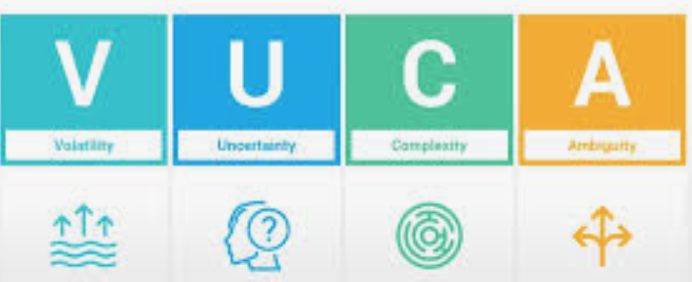
In “VUCA world,” described by the U.S. Army War College as volatile, uncertain, complex, ambiguous environments, career “planning” occurs under rapidly-shifting conditions.

As a result, it is difficult to  meaningfully respond to the interview question: “What are your career plans for the next five years?

Kathleen Eisenhardt

Planning is most suited to relatively certain circumstances when processes and decisions are linear, argued Stanford’s Kathleen Eisenhardt and Behnam Tabrizi.

In contrast, frequently-changing or uncertain conditions require improvisation, frequent testing, and revision.

Behnam Tabrizi

Iterative exploration, rapid prototyping/experimentation, and testing are used in agile software development and are applicable to rapid changes in economic, political, and technology changes that affect career paths.

Alison Maitland

University of London’s Alison Maitland and Peter Thomson offered this perspective in Future Work: How Businesses Can Adapt and Thrive In the New World of Work,

Related views on using flexible “planning” in career development come from Deloitte’s Cathy BenkoMolly Anderson, with Anne Weisberg of Paul, Weiss, Rifkind, Wharton & Garrison LLP in their model of The Corporate Lattice: Achieving High Performance in the Changing World of Work and Mass Career Customization: Aligning the Workplace with Today’s Nontraditional Workforce.

-*When have you found it more useful to “improvise” instead of “plan” your career?
-*What are the benefits of career “improvisation”?

Related Posts:

©Kathryn Welds

Ask a Narcissist

Confidence is correlated with career effectiveness and advancement.
However, people who exhibit too much of a good thing may be seen as “narcissistic.”

Jean Twenge

Jean Twenge

Narcissistic personality is characterized by:

-Inflated views of the self,
-Grandiosity,
-Self-focus,
-Vanity,
-Self-importance,

according to San Diego State University’s Jean M. Twenge, with Sara Konrath and Brad J. Bushman of University of Michigan, collaborating with University of South Alabama’s Joshua D. Foster, and Keith Campbell of University of Georgia,

Calvin S Hall

Calvin S Hall

One well-validated assessment instrument to identify narcissism is the Narcissistic Personality Inventory, developed by University of California Berkeley’s Robert Raskin and Calvin S. Hall.

Sara Konrath

Sara Konrath

Raskin and UC Berkeley colleague, Howard Terry examined responses from more than 1000 volunteers and found seven constructs related to narcissism:

  • Authority,
  • Exhibitionism,
  • Superiority,
  • Vanity,
  • Exploitativeness,
  • Entitlement,
  • Self-Sufficiency.
Timothy Leary

Timothy Leary

They related ratings of “self” and “ideal self” to participants’ responses on the Leary Interpersonal Check List, developed by Harvard’s Timothy Leary before he investigated psychedelic drugs.

Brian P Meier

Brian P Meier

An alternative to Leary’s lengthy NPI was developed by University of Michigan’s Sara Konrath, Brian P. Meier of Gettysburg College, and Ohio State’s Brad J. Bushman of Indiana University.
The Single Item Narcissism Scale (SINS) measures grandiosity, entitlement, and low empathy characteristic of “narcissistic” behavior.

The team asked more than 2,200 participants to rate their answer to a single question on a scale of one to seven: To what extent do you agree with this statement? “I am a narcissist.”

Brad J Bushman

Brad J Bushman

Konrath’s team demonstrated that the Single Item Narcissism Scale is a valid, reliable alternative to longer narcissism scales because it is significantly correlated with scores on the NPI and is uncorrelated with social desirability.

Erika Carlson

Erika Carlson

People who score high on the NPI and SINS say that they are more arrogant, condescending, argumentative, critical, and prone to brag than people who score low on the NPI, according to University of Toronto’s Erika Carlson.

Narcissism was also related in Konrath’s validation studies to:

People who scored high for narcissism also showed behaviors that can be problematic at work:

However, people who scored high for narcissism displayed positive attributes including:

Interacting with a narcissist in the workplace can be challenging, and a previous blog post identifies recommended strategies.

-*How do you identify narcissists in the workplace and in personal life?
-*What are more effective ways to work with them?

RELATED POSTS:

©Kathryn Welds

Employee Workplace Friendships: Global Comparisons

Workplace friendships positively affect task performance, and Americans report fewer friendships at work than employees in other countries.
The result could be reduced productivity and competitive disadvantage for U.S. companies in world markets.

Karen Jehn

Karen Jehn

Teams composed of friends outperformed acquaintance groups in decision making and effort tasks, reported University of Melbourne’s Karen A. Jehn and Priti Pradhan Shah of University of Minnesota.

Likewise, workplace friendships were associated with more effective performance in a meta-analytic study of more than 160 groups with nearly 78,000 employees by David A. Harrison of University of Texas and colleagues.

Even employees’ perceptions of workplace friendship opportunities affected job involvement and job satisfaction.

Christine M. Riordan

Christine M. Riordan

These perceptions indirectly affected organizational commitment and turnover intent among more than 170 employees in a small electric utility, found Adelphi University’s Christine M. Riordan and Rodger W. Griffith of Ohio University.

Olenka Kacperczyk

Olenka Kacperczyk

Fewer than one-third of Americans reported having a close friend at work, one indicator of employee engagement according to The Gallup Organization.
Workplace friendships in the U.S. have significantly declined over the past three (3) decades, but continue to be strong social connections in Polish and Indian organizations, noted MIT’s Olenka Kacperczyk with Jeffrey Sanchez-Burks, and Wayne E. Baker of University of Michigan in an unpublished working paper.

Jeffrey Sanchez-Burkes

Jeffrey Sanchez-Burkes

They conducted surveys across the U.S., Poland, and India and determined that fewer than one-third of Americans reported inviting their closest colleagues to their homes, compared with two-thirds of Polish participants and nearly three-quarters Indian employees.

The discrepancy in amount of off-work time spent with workplace friends in different national groups is significant:  Just under half of Indian survey volunteers reported going on holiday with closest co-workers, whereas one-quarter of Polish workers and only 6% of Americans said they shared a holiday with colleagues.

Richard Nisbett

Richard Nisbett

Americans were also significantly less concerned with social interactions during work tasks, compared with Mexican and Mexican-American participants, found University of Southern California’s Jeffrey Sanchez-Burks with Richard E. Nisbett and Oscar Ybarra of University of Michigan.

Oscar Ybarra

Oscar Ybarra

After volunteers from each cultural background watched a four-minute video of two people working together, Mexicans and Mexican Americans more accurately recalled social and emotional group content.

Mexicans and Mexican Americans also preferred workgroups with a strong interpersonal orientation, and said that group work performance could be improved by focusing on socio-emotional elements.

Robert D. Putnam

This focus on socio-emotional performance more greatly influenced group task success than the group’s ethnic composition.
This suggests that Americans’ trend toward social disengagement, described asbowling alone’ by Harvard’s Robert D. Putnam, could undermine their productivity.

Adam Grant

Adam Grant

One explanation for national differences is that in the U.S., long-term employment is less secure than in countries with labor protection statues.
As a result, people often don’t expect to stay in one role, so they remain detached from colleagues to prepare for voluntary or involuntary job changes.
Wharton’s Adam Grant suggested that “We view co-workers as transitory ties, greeting them with arms-length civility while reserving real camaraderie for outside work.”

Some observers attribute interpersonal disengagement to newer models of working, such as telecommuting and working remotely.

Ravi S. Gajendran

Ravi S. Gajendran

However, evidence from more than 45 studies including about 12,000 employees showed that “telecommuting had no generally detrimental effects on the quality of workplace relationships,” particularly when people came to an office at least half the time, according to University of Illinois’s Ravi S. Gajendran and David A. Harrison of University of Texas.

Even if workplace relationships don’t become friendships, brief encounters can be high-quality connections characterized by respect, trust, and mutual engagement.

Jane Dutton

Jane Dutton

These interactions energize participants, suggested University of Michigan’s Jane E. Dutton, and may mitigate potential decreases in employee engagement and collaborative productivity.

-*To what extent do you have strong workplace friendships?

-*How have you seen workplace friendships affect work quality and productivity?

Related Posts:

©Kathryn Welds

Women Undermine Salary Negotiations with Excessive Gratitude

Andreas Leibbrandt

Candid self-disclosure hurt women’s salary negotiation outcomes when they revealed that a salary exceeded their expectations, in a study by Monash University’s Andreas Leibbrandt and John A. List of the University of Chicago.

John List

John List

Some women applying for administrative assistant jobs were told that the wages were “negotiable,” and these women achieved higher pay offers than women who received no information. Volunteers in the no-information group frequently revealed that they were willing to work for a lower hourly rate, and they received lower average salary offers.

Edward E. Jones

Edward E. Jones

Though this approach likely leads to lower salary, it could be considered strategic ingratiation to enhance the future working relationship>
However, this approach could lead the negotiation partner to question the applicant’s judgment and confidence.
In addition, this maneuver may delay salary increases because the candidate expresses satisfaction with the original offer.

Strategic ingratiation
is observed in several behaviours, according to Duke University’s Edward E. Jones:

-Self-presentation: Self-enhancement or “one-down” humility, providing favors or gifts,

-Flattery: “Other-enhancement” by sharing credible positive comments,

-Agreement: Opinion-conformity and matching non-verbal behaviour.

Steven H. Appelbaum

Steven H. Appelbaum

Positive outcomes from “strategic ingratiation” included promotion or pay increase, observed in a study by Concordia University’s Steven H. Appelbaum and Brent Hughes.

This contradictory finding  was explained by situational and individual factors including:

  • Machiavellianism,
  • Locus of control,
  • Work task uniqueness.
Jeffrey Flory

Jeffrey Flory

In another of Leibbrandt and List’s randomized field studies, collaborating with Concordia colleague Jeffrey Flory, men did not wait for permission to negotiate when no statement was made about salary discussions.

In fact, male participants said they prefer ambiguous salary negotiation norms or“competitive work settings”  in which salary negotiation was typically expected.

Women frequently do not negotiate unless given explicit permission.
but when they are invited to negotiate, they obtained higher salaries as frequently as men

Leibbrandt, List, and Flory concluded that women accept “competitive” workplaces when “the job task is female-oriented” and the local labor market offers few alternatives.

Women who seek higher salaries benefit from proposing their “aspirational salaries” rather than waiting for permission to negotiate.
Women negotiators can achieve better outcomes when they offer moderate expressions of gratitude and avoid revealing their “reserve” salary figure.

-*In what work situations have you benefited from applying ‘strategic ingratiation’?

-*To what extent have you seen expressions of gratitude in negotiation undermine bargaining outcomes?

RELATED POSTS:

©Kathryn Welds

Loneliness as Health Risk; Reframing Can Help

Julianne Holt-Lundstad

Julianne Holt-Lundstad

Loneliness increases mortality risk by 26 percent, comparable to health risks of obesity, cigarette smoking, and excessive alcohol use, according to Brigham Young University’s Julianne Holt-Lunstad, Timothy B. Smith, Mark Baker, Tyler Harris, and David Stephenson.
Loneliness harms people’s health in addition to triggering emotional discomfort.

Timothy Smith

Timothy Smith

Loneliness and social isolation differ.
Some people report feeling lonely in the presence of others, whereas socially isolated people may not report loneliness.
However, both loneliness and social isolation increased risk for mortality in a meta-analysis of more than 3 million participants in studies of loneliness, social isolation, and living alone.

Megan Knowles

Megan Knowles

Lonely individuals benefited more from learning to cope with social performance anxiety than from developing social skills, found Franklin & Marshall College’s Megan L. Knowles, Gale M. Lucas of University of Southern CaliforniaFlorida State University’s Roy Baumeister, and Wendi L. Gardner of Northwestern.

Gale M. Lucas

Gale M. Lucas

More than 85 volunteers completed a loneliness self-report, then identified emotions expressed on computer-presented faces.
Self-described lonely people out-performed non-lonely people when social sensitivity tasks were described as measures of “academic aptitude.”

Roy Baumeister

However, lonely participants performed worse when tasks were presented as tests of “social aptitude.”
These volunteers also reported difficulty forming and maintaining friendships, suggesting that social anxiety leads to “choking” in social “performance” situations.
The result is continued loneliness.

Wendi Gardner

Wendi Gardner

Lonely people may be more socially competent than the non-lonely: They were more skilled at remembering social information in studies by Northwestern’s Wendi L. Gardner, Cynthia L. Pickett of University of California Davis, and Ohio State University’s Marilynn B. Brewer.
The team assessed social recall by presenting volunteers with a simulated computer chat task that provided brief acceptance or rejection experiences, then a diary containing both social and individual events.

Cynthia L. Pickett

Cynthia L. Pickett

When social anxiety could be reattributed to an external cause , task  performance increased.
Volunteers consumed a non-caffeinated energy beverage and were told that any jitters they might experience could be attributed to the “caffeine” they’d just consumed.
This explanation provided a plausible but false rationale for anxious feelings.

Alison Wood Brooks

Alison Wood Brooks

Similarly, Harvard’s Alison Wood Brooks found that reframing nervousness as “excitement” helped people perform better on stressful tasks.

An additional coping approach for lonely people is modifying personal mindsets following social loss cues.

Carol Dweck

Carol Dweck

Fixed mindset, identified by Stanford’s Carol Dweck, is a belief that personal capabilities are limited to present capacities.
This perspective is similar to
security-oriented, prevention-focused behaviors of lonely people observed by University of Southern California’s Lucas with Knowles, Gardner, Daniel C. Molden and Valerie E. Jefferis of Northwestern.
This mindset can lead to fear, anxiety, protectiveness and guardedness.

Daniel Molden

Daniel Molden

In contrast, growth mindset is similar to promotion-focused responses like attempts at social engagement.
This developmental mindset holds that personal capabilities can expand based on commitment, effort, practice, instruction, and correcting mistakes.
This view enables teamwork, collaboration, and social interaction.

Marilynn Brewer

Marilynn Brewer

To demonstrate these effects, Lucas’s group gave volunteers cues of acceptance or rejection.
People who received positive primes were more likely to develop a promotion-focused growth mindset.
These participants also reported more effective social thoughts, intentions, and behaviors.

People who experience social anxiety and loneliness can reduce social avoidance by reframing discomfort as “excitement” and by embracing learning and new experiences in a growth mindset.

-*How do you manage loneliness?

Related Posts:

©Kathryn Welds

Workplace Incivility is Contagious, Damaging

James Bartlett

James Bartlett

Workplace incivility has measurable negative consequences including reduced employee engagement and productivity, according to North Carolina State University’s James E. Bartlett and Michelle E. Bartlett with Florida Atlantic University’s Thomas G. Reio.

Trevor Foulk

Trevor Foulk

Rudeness in the workplace is contagious and leads people to be vigilant for subsequent slights, reported University of Florida’s Trevor Foulk, Andrew Woolum, and Amir Erez.


They suggested that low-level workplace hostility enables similar behavior throughout the organization, leading to eroded culture and productivity.

Andrew Woolum

Andrew Woolum

Ninety volunteers practiced negotiation with partners, and those who rated their initial negotiation partner as rude were more likely to be rated as rude by a subsequent partner.

Participants seemed to assimilate and convey the first partner’s rudeness.
The effect persisted during the week between the first and second negotiations.

Amir Erez

Amir Erez

Foulk’s team staged interactions between an apologetic late-arriving participant and the study leader, who responded neutrally or rudely.
Then, volunteers completed a timed task to distinguish real words from nonsense words.

Participants who observed the leader’s rude response more quickly identified rude words in a task than participants who had observed the neutral interaction.
Observing rude interactions can “prime” people’s awareness and sensitivity to future uncivil interactions.

Walter Mischel

Walter Mischel

People who witnessed rudeness were more likely to be rude to others, confirming the impact of observing aggression on future behavior, earlier demonstrated in often-cited “Bobo” experiments by Stanford’s Walter Mischel, Dorothea Ross and Sheila Ross.

Mischel's experiment with Bobo doll

Mischel’s experiment with Bobo doll

Foulk’s group also observed this priming effect when volunteers watched a video of a rude workplace interaction, then answered a fictitious customer neutral-toned email.
Participants’ responses were more likely to be hostile than those who viewed a polite interaction before responding.

Rudeness will flavor the way you interpret ambiguous cues,” noted Foulk, who contended that harsh interactions can reduce collaboration and trust in the workplace.

-*How do you stop the spread of workplace incivility?

Related Posts:

©Kathryn Welds