Category Archives: Resilience

Resilience

How Gaming Can Help You Live Better and Longer

Jane McGonigal

Jane McGonigal

Game designer Jane McGonigal’s TED Talk that gaming fulfills the basic human wishes expressed by dying hospice patients:

• Work less hard,
• Stay in touch with friends,
• Let myself be happier,
• Have the courage to express my true self,
• Live a life true to my dreams.

She discussed a practical game, Superbetter, she developed following her own experience of Traumatic Brain Injury (TBI), which left her bedridden, in persistent pain, and suicidal for more than a year.

Based on her love of “Special Missions and Secret Objectives”, she developed four research-based challenges to increase her resilience and capabilities:

• Physical,
• Mental,
• Emotional,
• Social.

She asserts that these tasks help players strengthen abilities to remain motivated and optimistic even in the face of difficulty challenge, and boost physical and emotional well-being.
McGonigal links these capabilities to strengthening social support, increasing stamina and willpower.

Perhaps it’s no coincidence that McGonigal’s twin sister and fellow Ph.D., Kelly McGonigal, conducts research at Stanford University on methods to increase willpower and compassion, and to reduce stress and pain.

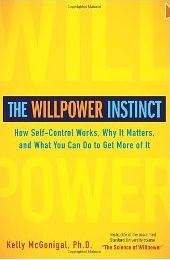
Her recent book is The Willpower Instinct: How Self-Control Works, Why It Matters, and What You Can Do To Get More of It

Jane McGonigal seems to triumph in this Jane vs. Colbert face-off …though he may have tried to distract her by mentioning that she is “a girl, and an attractive one at that…with that Big Hair…”

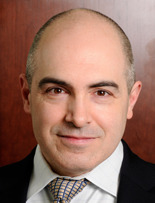
Stephen Colbert

Stephen Colbert

Six-time Stephen Colbert guest, Hayden Planetarium astrophysicist Neil DeGrasse Tyson’s commented that “you’re lucky to come away with your skin when you appear on Colbert’s show.”  Jane seemed to come away with her skin intact.

-*How have you seen gaming improve lives?
-*To what extent do you concur with the hospice patients’ wishes – and implied advice to younger people?

©Kathryn Welds

Finding Work You Love, Measuring Your Life

Clayton Christensen

Clayton Christensen

Clayton Christensen is a Harvard Business School professor, acclaimed for his ground-breaking work on innovation.
His recent book, How Will You Measure Your Life links his years of research in business strategy and innovation, to identifying values and priorities in work-life.

Although this new focus may seem unexpected, Christensen may have pointed to a source of inspiration when he revealed in 2010 that he had been diagnosed with follicular lymphoma and had suffered an ischemic stroke.
In addition, he has been highly visible in his decades of service to The Church of Latter Day Saints.

He reviews “powerful anomalies” in popular conceptions of workforce motivation and incentives designed to drive performance.

He notes that “some of the hardest working people on the planet are employed in charitable organizations. They work in the most difficult conditions imaginable; they earn a fraction of what they would if they were in the private sector. Yet it’s rare to hear of managers of nonprofits complaining about getting their staff motivated. The same goes for the military.”

He points out that incentives are not the same as motivation, and that true motivation involves moving people to do something because they want to.
Hertzberg’s classic article in the Harvard Business Review, introduced the distinction between hygiene factors (if not done right, will cause us to be dissatisfied) and motivation factors (challenging work, recognition, responsibility, and personal growth).

Frederick Herzberg

Frederick Herzberg

Christensen concludes that Herzberg’sHerzberg theory of motivation suggests such questions as:

• Is this work meaningful to me?
• Will I have an opportunity for recognition and achievement?
• Am I going to learn new things?

Evaluating the place of personal motivation factors in relation to the priority of hygiene factors is the foundation of career and life satisfaction.

-*What elements of your “work contract” are motivating?-*What helps you determine value and meaning in your work life and personal life?

LinkedIn Open Group – Psychology in HR (Organisational Psychology)
Twitter: @kathrynwelds
Google+
Facebook Notes:

Blog: – Kathryn Welds | Curated Research and Commentary

©Kathryn Welds

Kept Up at Night by Intrusive Thoughts of Work: Elusive Sleep

According to the US Center for Disease Control, about 70 million Americans have some type of sleep disorder, and I noticed this when colleagues in three different meetings discussed their variations of disrupted sleep.
One person described waking up in the middle of the night with “brain whirlies,” whereas others reported waking up with anxiety about Excel spreadsheet accuracy.

William Dement

William Dement

Many people are familiar with William Dement’s ground-breaking studies of REM and NREM sleep, sleep “architecture”, sleep disorders as the Director of Stanford University Sleep Research Center, and many may know of his research on sleep deprivation’s impact on mood, immune system functioning, work productivity and even public safety.

In fact, he asserts that 33% of traffic accidents and most all major industrial accidents are related to human error based on sleep deprivation.
Dement also shows the relationship between sleep apnea and heart disease and stroke.

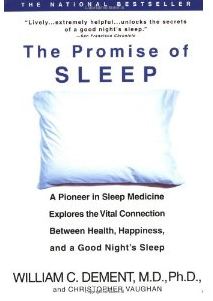
He outlined his research and advocacy in The Promise of Sleep: A Pioneer in Sleep Medicine Explores the Vital Connection Between Health, Happiness, and a Good Night’s Sleep 

Test your Sleep Savvy with his questionnaire by answering the following statements with “true” or “false”:

  1. Depriving people of dreams causes mental illness.
  2. Drowsiness, that feeling when the eyelids are trying to close and we cannot keep them open, is the first step and not the last step before we fall asleep.
  3. Generally, people need to sleep one hour for every two hours awake.
  4. Insomnia is a disease.
  5. The purpose of sleep is to rest the body, especially the muscles.
  6. Although sleep needs vary, people who sleep about eight hours, on average, tend to live longer.
  7. If you are well rested, it should take about five to ten minutes to fall asleep.
  8. The single symptom most frequently found in all severe sleep disorders is daytime fatigue.
  9. Sleep gets lighter and more fragmented as we age.
  10. We know what sleep is for, how it works, and how it affects us on a cellular level.

1,2,4,5,7,10 are false
3,6,8,9 are true

Rosalind Cartwright

Rosalind Cartwright

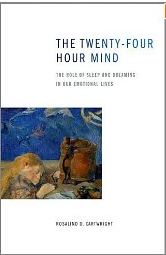
Fewer people may be aware of Dement’s mentor, Rosalind Cartwright, who founded the first accredited Sleep Disorder Service in Illinois in 1978 and wrote The Twenty-four Hour Mind: The Role of Sleep and Dreaming in Our Emotional Lives 

She amplified Dement’s linkage of sleep hygiene with normal mood when she noted that sleep dampens negative emotions “so the next day begins with a calmer frame of mind with which to face the waking world.”

Cartwright recommends behavior modifications to “reclaim healthy sleep” and suggests a three-week “sleep camp” including:

  • Evaluating  risk of sleep disorders
  • Managing sleep “crises”
  • Keeping a sleep diary
  • Measuring  sleep debt

Echoing  the encouragement that “there’s an app for that,” technologists have summarized the most highly-rated Sleep Apps to measure sleep architecture , quality, and duration, and  recommend possible behavioral changes to improve sleep quality and related daily experience:

-*What helps you optimize your sleep experience?
-*Which “sleep myths” do you think are NOT myths?

Twitter: @kathrynwelds
Google+
LinkedIn Open Group – Psychology in HR (Organisational Psychology)
Facebook Notes:

Blog: – Kathryn Welds | Curated Research and Commentary

©Kathryn Welds

“Nudging” Compassion, Resilience to Reduce Conflict, Stress

David DeSteno

David DeSteno, directs Northeastern University’s Social Emotions Lab, where he investigates cognitive and neurological mechanism related to social behavior.
In Out of Character: Surprising Truths About the Liar, Cheat, Sinner (and Saint) Lurking in All of Us , and at his PopTech talk, he shared how he investigated whether evoked compassion and empathy is associated with reduced aggression.

He described experiments in which volunteers solve math problems for money.
In some conditions, one of DeSteno’s associates posed as another volunteer and noticeably cheated to earn more money than the real volunteer.
In other conditions, the confederate abided by the rules.

For some experiments, the cheating confederate, a professional actor, evoked empathy and compassion by saying that she was  worried about her brother, who was just diagnosed with a terminal illness.

In these situations, the volunteers were less likely to intentionally inflict discomfort on her in the following study of “taste perception,” a measure of aggression.

In this experimental trial, the volunteer measured a discretionary amount of extra-hot sauce into a cup for the cheating or non-cheating confederates to taste.

Volunteers poured five times more hot sauce for cheating confederates than non-cheating confederates, but they treated cheaters who evoked empathy the same as non-cheaters.

DeSteno noted most people are willing to help others who have some similarity to them, such as a shared identity of sharing a religious faith or hometown, or even are moving together as in conga lines, military drills.

He suggested that movement “synchrony causes separate identities to merge into one,” and demonstrated this trend in a music perception study, where volunteers in the same room tapped their hands on sensors when they heard tones.

In some conditions, the tones were synchronized so the volunteers were tapping at the same time as other volunteers, and in other conditions, the tones were independent.
De Steno found that 50% of volunteers who tapped at the same time were willing to help other volunteers, whereas 20% of those who tapped at different times helped others.
He concluded that volunteers felt more similar by tapping together, so felt more compassion, and were more likely to help others.

DeSteno is investigating social media like Facebook as a platform for sharing similarities to reduce aggression in conflict, cyber-bullying, victims of distant natural disasters.

He  said uses Cass Sunstein’s and Richard Thaler’s idea that small behavioral and organizational changes can “nudge” people to healthier, safer, more productive, and prosperous habits outlined in Nudge: Improving Decisions About Health, Wealth, and Happiness 

Their practical recommendations for designing effective “choice architecture” are consistent with DeSteno’s research-based findings:

* Align incentives with desired outcomes
* Identify possible alternative outcomes in familiar terms
* Provide default options that favor desired outcome behaviors
* Offer prompt, relevant feedback about choices and outcomes.
* Expect deviation from the targeted outcome, and build in ways to prevent, detect, and minimize this variance.
* Structure complex choices to reduce the difficulty of decisions-making

-*How have you seen “similarity” affect workplace collaboration and support?

-*Where have you seen organizations implement “choice architecture” to encourage employee behaviors toward positive goals?

BJ Fogg

Related Post
“Tiny Habits” Start, Maintain Changes

Twitter @kathrynwelds
Google+
LinkedIn Open Group – Stanford Social Innovation Review
Facebook Notes:

Blog: – Kathryn Welds | Curated Research and Commentary

©Kathryn Welds

Working From Home: Calculating Cost, Time, Environmental Savings

Companies and individuals save money when employees work from home offices, and there’s an environmental impact of reducing traffic congestion and emissions.

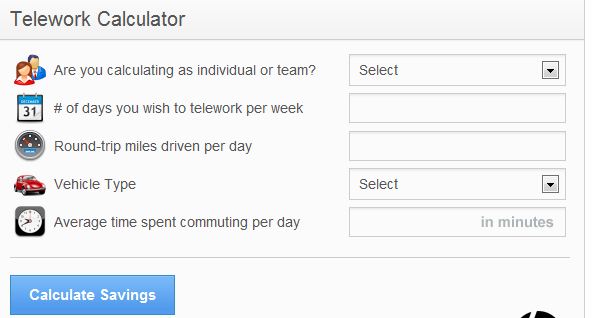
Govloop and HP produced a calculator based on federal databases and studies that considers time and distance traveled each day, vehicle type, and number of telecommuting days to calculate cost savings and productivity gains.

Govloop estimates that the average employer spends about $10,000 in energy, real estate, and production costs per employee annually, while advocacy group American Telecommuting Association claims teleworkers show 10% to 15% improved productivity in nearly every related study over the past two decades.

One Stanford University study  in China found working from home increased performance by 13% and cut attrition by 50%.

Govloop Telework Calculator

Calculators from other organizations consider other costs like work clothes, shoes, and accessories, plus attending office social events.

NIHNational Institute of Health

Seattle’s commuter challenge

More information here and here

-*To what extent does your workplace enable employees to work remotely?

LinkedIn Open Group Stanford Social Innovation Review
Twitter: @kathrynwelds
Google+
Facebook Notes:
Blog: – Kathryn Welds | Curated Research and Commentary

©Kathryn Welds

Questions to Discover, Communicate Personal Mission, Brand

Tina Su

Tina Su, former software engineer at Amazon.com and author of Think Simple Now: A Moment of Clarity blog, shared self- assessment questions that have helped her and others focus on life purpose and mission.

From these, she developed a personal vision “to ‘never work again’, by living a life following one’s inner calling, exploring one’s potential, generating massive value, and living fully in every moment.”

• What activities, people, events, hobbies, projects make you smile?
• What have been your favorite activities in the past?
• What have been your favorite activities now?
• What makes you feel great about yourself?
• Who inspires you: family, friends, authors, artists, leaders, historical figures?
• Which qualities inspire you?
• What are your natural skills, abilities, gifts?
• For what do people ask your advice, help?
• What would you teach?
• What would you regret not fully doing in your life?
• What would you regret not being in your life?
• When you are 90 years old, what achievements will matter most?
• What achievements relationships will matter most?
• What are your 3-6 deepest values?
• What were some challenges, difficulties and hardships you’ve overcome or are in the process of overcoming?
• How did you do it?
• What causes do you strongly believe in or have personal meaning for you?
• What message would you like to effectively convey to a large group of people?
• How can you use your talents, resources, passions and values to serve, to help, to contribute to people, beings, causes, organization, environment?

The answers to these questions can answer the questions addressed in a personal mission statement, as Tina demonstrated in her bold direction.
• What do I want to do?
• Who do I want to help?
• What is the result? What value will I create?

Randall Hansen

Randall Hansen

Randall Hansen offers a different, but compatible The Five-Step Plan for Creative Personal Mission Statements.
• Identify Past Successes
• Identify Core Values
• Identify Contributions
• Identify Goals
• Write Mission Statement

Like any self-assessment process, developing a personal mission statement is an investment of time and attention spanning several days or weeks.

-*What questions have been more revealing in developing your personal brand?

LinkedIn Open Group Brazen Careerist
Twitter: @kathrynwelds
Google+
Facebook Notes:
Blog: – Kathryn Welds | Curated Research and Commentary

©Kathryn Welds

Two Approaches to Following-Through on Plans, Adapting to Changes

Kelly McGonigal

Kelly McGonigal

Stanford University lecturer Kelly McGonigal integrates cognitive psychology and neuroscience in her book, The Willpower Instinct: How Self-Control Works, Why It Matters, and What You Can Do To Get More of It

She argues that willpower can be developed by:

• Paying attention to situations that undermine willpower

• Managing stress and mood,

  • Maintaining exercise, sleep, and healthy eating habits

• Practice small willpower challenges to build the willpower “muscle”

• Expect willpower “slips” and plan for alternate responses

• Associating with others who have strong willpower habits

Begin now:   Willpower is not easier in the future,

• Disputing thoughts of shame and guilt, and re-interpreting them more optimistically, hopefully, and forgivingly.

M.J. Ryan

M.J. Ryan

Several years before McGonigal, M.J. Ryan wrote about life’s challenges, including responding to unplanned changes and following through on commitments and plans.
Her books include self-assessments, encouragement, de-stigmatization, suggestions, and resources.

This Year I Will…: How to Finally Change a Habit, Keep a Resolution, or Make a Dream Come True

Another of her books deals with managing unplanned changes:
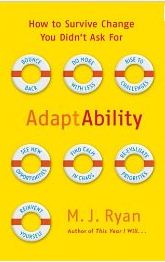
AdaptAbility: How to Survive Change You Didn’t Ask For

See related post on McGonigal’s twin sister, gamer Jane McGonigal, whose TED talk discusses the value to games to improve the quality, duration, and experience of life.

-*What practices have helped you develop and exercise “willpower” to change behaviors and thoughts?

©Kathryn Welds

Non-Verbal Behaviors that Signal “Charisma”

Olivia Fox Cabane

Olivia Fox Cabane

Olivia Fox Cabane defines charismatic behaviors as managing internal states and beliefs through self-awareness, emotional self-management to focus on others and “make them feel good,” in her book, The Charisma Myth: How Anyone Can Master the Art and Science of Personal Magnetism.

She identified four types of “charisma:”

o Focus: Presence, listening intently, confidence
o Visionary: Belief, confidence, inspires others
o Kindness: Warmth, confidence, eye contact, compassion/self-compassion, gratitude, goodwill, enable others to feel important and heard through asking open-ended questions, redirecting focus to other with question about opinion
o Authority: Power, status, confidence, appearance/clothing, “take up space” posture, reduce number of non-verbal reassurances (nodding)

Her book considers three key contributors to “charisma”:

o Presence – mindful attention, patient listening, avoiding interruption

o Power – appearance, clothing, occupy space, positive wording (avoid “don’t”), placebo effect

o Warmth – chin down, eye contact, Duchenne smile (mouth corners, eye corners), gratitude, compassion, appreciation to counteract “hedonic adaptation”

In an interview, Fox Cabane offered three “quick fixes” to amplify perceived “charisma”:

• Lower the intonation of your voice at the end of your sentences (no Valley Girl talk…)
• Reduce the speed and rapidity of nodding
• Pause for two seconds before you speak

She offered a number of self-management and communication tips, including a review of Cognitive Behavior Modification practices:

o Destigmatize Discomfort-Dedramatize
o Neutralize Negativity by disputing thoughts
o Rewrite Reality with cognitive reappraisal-reframing

Other reminders include:

• Increasing resilience by expanding the personal “comfort zone”
• Employing mental rehearsal through visualization
• Adopting equanimity, “radical acceptance”, calm
• Increasing impressions of similarity by increasing subtle mirroring of phrases, posture, gestures (such as handshake)
.Investigating appropriate attire, match level of formality/informality
o Delivering value: entertainment, information, good feeling
o Inhaling through nose to avoid anxious, breathless sound
o Using as few words as possible; be succinct; illustrate with imagery, metaphor, analogy, story, compelling statistics relevant to the listener
o Expressing appreciation for specific help, influence; identify positive impact, and context in which it came to mind
o Avoiding verbal “distractors”: “um”, “ah”, “you know”
o Breathing to avoid self-generated anxiety: ”Pause-Breathe-Slow Down”

-*Which elements of Power, Presence, and Warmth have you observed among the most “charismatic” people you know?

©Kathryn Welds

Developing a SMARTER Mindset for Resilience, Emotional Intelligence – Part 2

Carol Dweck

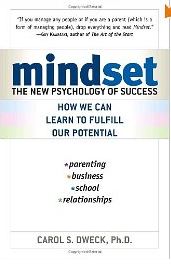
Stanford professor Carol Dweck distilled Salvador Maddi’s three mindsets into two mindsets in her book, Mindset: The New Psychology of Success.

She differentiated:
• Fixed Mindset – Belief that personal capabilities are given, fixed, limited to present capacities.
This “nature” mindset can lead to fear, anxiety, protectiveness and guardedness.
• Growth Mindset– Belief that personal capabilities can expand based on commitment, effort, practice, instruction, confronting and correcting mistakes. This “nurture” mindset enables teamwork and collaboration.
K. Anders Ericcson

K. Anders Ericcson

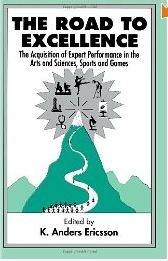
Research by K. Anders Ericsson demonstrated that highly skilled experts in nearly every field are distinguished from their talented peers by practice.
Similarly, Malcolm Gladwell asserted that expert performance comes after 10,000 hours of practice.

The Road to Excellence: The Acquisition of Expert Performance in the Arts and Sciences, Sports, and Games

Expert Performance in Sports: Advances in Research on Sport Expertise

Although mindsets consist of relatively stable beliefs, they can be modified by reinforcing, praising, and rewarding performance strategy and process, not the resulting outcome.

Cynthia Kivland

Cynthia Kivland

Cynthia Kivland introduced a practice of “vetting emotions” using a three step process to investigate and manage emotions

• Validate – Name the emotion
• Explore – What is the broader context?
What are the familiar reaction patterns?
• Tolerate – Transform limiting emotions into information and intelligence to move forward

“Cognitive appraisal” refers to evaluative elements of thoughts, and can provoke emotions.
This type of appraisal is based on three factors, outlined by eminent researcher

Martin Seligman

Martin Seligman

Martin Seligman in his book, Learned Optimism: How to Change Your Mind and Your Life

• Personalization of cause, responsibility: Internal control vs External control
• Pervasiveness of event and impact: Specific vs Global
• Permanence of event and impact: Temporary vs. Continuing

Kivland suggested that mindsets and related attitudes can direct individuals to either of two paths:

• Surviving Path, based on reactive, fearful protecting from anticipated danger

• Hope Path, proactive, thriving, growing, able to let go of fears, observe emotions as information for decision-making rather than as unpleasant experiences to be tolerated

Kivland, Dweck, Maddi, Ericcson, Seligman, and other advocates of Emotional Intelligence practices suggest benefits of the Hope Path.

Dweck model and the mindset of positive psychology

Dweck’s Brainology software for students

Related Post:
Developing a SMARTER Mindset to increase Resilience, Emotional Intelligence – Part 1

-*What “mindsets” help you achieve optimal performance in work and life activities?

©Kathryn Welds

Developing a SMARTER Mindset to increase Resilience, Emotional Intelligence – Part 1

Cynthia Kivland

Cynthia Kivland

Cynthia Kivland, author of Smart2Smarter: How Emotional and Social Connections Bring Humanity into the Workplace: Seven Skills Every Smart Person Needs, reviewed research-based models that suggest ways to increase resilient attitudes and behaviors.

Her “Smart to SMARTER” model is based on interviews with “smart and competent” people in a variety of fields.
Kivland developed a mnemonic device highlight important elements of Emotionally Intelligent or “Emotionally Smart” people:

S – Self – Optimize strengths via self-efficacy
M – Mastery of emotions
A – Attraction – Positive energy, optimism, confidence to attract the best to self, others
R – Resilience – Adapt, reinvent oneself to overcome setbacks
T – Tolerance of emotional experience, changing circumstances, diverse people and beliefs
E – Evolve – Innovate, improve new ways to manage emotions, reactions, behaviors
R – Reciprocity – Lead, be lead; teach, be taught, give, receive

She noted that positive psychology research demonstrated that positive emotions help people endure and grow from life’s changes and adversities.

To help cultivate positive emotions, she suggests three practices:
• Emotional engagement
Schedule fun, enjoyable experiences and opportunities for positive emotions
• Emotional responsiveness
Be present, attentive, and engaged during pleasant moments
• Emotional savoring
“Evolve” by intentionally enjoying positive moments and emotions of joy, contentment, satisfaction, and carrying positive memories into future situations

Salvatore Maddi

“Mindsets” consist of attitudes that can facilitate or impede executing these three recommendations, based on early workplace research by Salvatore Maddi, who studied people affected by organizational change.

He distilled effective coping skills he observed among affected employees as three “Emotional Hardiness” Mindsets:

Commitment vs Alienation – Active involvement with people, life events
Control vs. Powerlessness – Persistence in trying to improve life situations
Challenge vs Threat – Viewing change as an opportunity to learn, adapt, and craft a fulfilling life

In addition, Maddi found that these employees demonstrated two Emotional Resilience Skills:
• Community vs. Isolation – Engaging with others to mobilize social support, feedback
• Proactive Coping (Thriving) vs Reactive Coping (Surviving) – View adversity in context to deepen awareness

Kivland’s Resilience tools

See Part 2 of this post

-*What practices and “mindsets” help you cultivate “emotional hardiness” in your work activities?

LinkedIn Open Group Mindful Leadership
Twitter: @kathrynwelds
Google+
Facebook Notes:
Blog: – Kathryn Welds | Curated Research and Commentary
©Kathryn Welds