Category Archives: Personal Brand

Personal Brand

Women’s Likeability–Competence Dilemma: Overcoming the Backlash Effect

Madeline Heilman

Madeline Heilman

Aaron Wallen

Aaron Wallen

Women face workplace challenges when they “succeed” in traditionally-male roles, found New York University’s Madeline Heilman, Aaron Wallen, Daniella Fuchs and Melinda Tamkins.

Melinda Tamkins

Melinda Tamkins

They found that woman who are recognized as successful in roles dominated by men, are less liked than equally successful men in the same fields.

Tyler Okimoto

Tyler Okimoto

Successful women managers avoided interpersonal dislike when they conveyed “communal” attributes through behaviors, testimonials of others, or their role as mothers, found Heilman, with University of Queensland’s Tyler Okimoto.

Frank Flynn

Frank Flynn

This disconnect between women’s competence and likeability was demonstrated by Stanford’s Frank Flynn in a Harvard Business School case of Silicon Valley entrepreneur Heidi Roizen.  

Heidi Roizen

Heidi Roizen

He and Cameron Anderson of UC Berkeley changed Heidi’s name to “Howard Roizen” for half of the participants who read the case.

Cameron Anderson

Cameron Anderson

These volunteers rated Heidi and “Howard” on perceived competence and likeability.

Heidi was rated as equally highly competent and effective as “Howard,” but she was also evaluated as unlikeable and selfish.
Most participants said they wouldn’t want to hire her or work with her.

Whitney Johnson-Lisa Joy Rosner

Whitney Johnson-Lisa Joy Rosner

Whitney Johnson, co-founder of Disruptive Advisors and her colleague Lisa Joy Rosner evaluated Brand Passion Index” (BPI) for recognisable, accomplished women over 12 months by:

  • Activity (number of media mentions),
  • Sentiment (positive or negative emotional tone),
  • Intensity (strong or weak sentiment).

Public Opinion-Mayer-Sandberg-SlaughterThese competent, well-known women were not liked, and were evaluated with harsh negative attributions based on media coverage and at-a-distance observations. Some were characterised as:

  • impressive and smart, and annoying, a bully,
  • excellent, successful working mom and bizarre,
  • amazing, successful mother and destructive, not a good wife,
Laurie Rudman

Laurie Rudman

The competence-likeability dilemma was demonstrated in hiring behaviour experiments by Rutgers University’s Laurie Rudman and Peter Glick of Lawrence University.

Volunteers made “hiring decisions” for male and female “candidates” competing for a managerial role described in stereotypically feminine terms and a managerial role with more stereotypically masculine terms.

Peter Glick

Peter Glick

Applicants were presented as demonstrating:

  • Stereotypically male behaviors (“agentic”)
  • Stereotypically female behaviors (“communal”)
  • Both stereotypically male and female behaviors (“androgynous”).

Women who displayed “masculine” traits were viewed as less socially acceptable  and were not selected for the “feminized” job.
However, this hiring bias did not occur when these women applied for the “male” job.

“Niceness” was not rewarded when competing for jobs:  Both male and female “communal” applicants received low hiring ratings.
Combining niceness with agency improved the “hiring” outcome for “androgynous” female “applicants.”

Rudman and Glick noted that “… women must present themselves as agentic to be hirable, but may therefore be seen as interpersonally deficient.”
They advised women to “temper their agency with niceness.”

Linda Babcock

Linda Babcock

The likeability-competence disconnect is also observed when women negotiate for salary and position, reported by Linda Babcock of Carnegie Mellon.
Her research demonstrated negative evaluations of women who negotiate for salaries using the same script as men.

Deborah Gruenfeld

The likeability-competence dilemma may be mitigated by integrating powerful body language with appeasing behaviors that build relationships and acknowledge others’ authority, suggested Stanford’s Deborah Gruenfeld.

She suggested that many women have been socialized to adopt less powerful body language including:

  • Smiling,
  • Nodding,
  • Tilting the head,
  • Interrupting eye contact,
  • Speaking in sentence fragments,
  • Using rising intonation at sentence endings, leading to the perception of uncertainty.

Some people in decision roles expect women to behave in these ways, and negatively evaluate behaviors that differ from expectations.

Body language is the greatest contributor to split-second judgments (less than 100 milliseconds) of people’s competence, according to Gruenfeld.
She estimated that body language is responsible for about 55% of judgments, whereas self-presentation accounts for 38%, and words for just 7%.

Her earlier work considered body language on assessments of power, and more recently, she investigated gender differences in attributions of competence and likeability.

The likeability-competence conflict may be reduced when women give up physical space  to convey approachability, empathy, and likeability, she noted.

In contrast, she asserted that holding a powerful body posture for two minutes can change levels of testosterone, a marker of dominance. 
She suggested that this tactic can enable greater comfort in assertive interactions.

Alison Fragale

Alison Fragale

Women’s likeability-competence dilemma is not mitigated by achieving workplace success and status.
University of North Carolina’s Alison Fragale, Benson Rosen, Carol Xu, Iryna Merideth found that successful women and men are judged more harshly for mistakes than lower status individuals who make identical errors.

Benson Rosen

Benson Rosen

Fragale’s team found that observers attributed greater intentionality, malevolence, and self-concern to the actions of high status wrongdoers than the identical actions of low status violators.
Volunteers recommended more severe punishments for higher status individuals.

Iryna Meridith

Iryna Meridith

Wrongdoers who demonstrated concern for others, charitable giving, and interpersonal warmth built goodwill that could protect from subsequent mistakes.

-*How do you convey both likeability and competence?

RELATED POSTS:

©Kathryn Welds

“Self-Packaging” and Appearance as Personal Brand Attributes

Napoleon Hill

Napoleon Hill

Al Ries

Al Ries

During the US economic Depression of the 1930s, motivational writer Napoleon Hill laid the foundation for personal positioning, described nearly forty-five years later by marketing executives Al Ries and Jack Trout in Positioning: The Battle for Your Mind.

By 1997, business writer Tom Peters introduced “personal branding” as self-packaging that communicates an individual’s accomplishments and characteristics, including appearance, as a “brand promise of value.”

Tom Peters

Self-packaging can be considered “the shell of who you are” whereas personal branding is “what sets you apart from the crowd.

Jim Kukral

Jim Kukral

These differentiators can include visible characteristics like attire, education, experience, expertise, sense of humour, and speaking style, according to Jim Kurkal and Murray Newlands.

Daniel Lair

Daniel Lair

University of Michigan’s Daniel Lair with Katie Sullivan of University of Utah, and Kent State’s George Cheney investigated components of personal branding, presentation, and packaging.

George Cheney

George Cheney

They found personal branding worth analysing for its complex rhetoric tactics that shape power relations by gender, age, race, and class.

Sylvia Ann Hewlett

Sylvia Ann Hewlett

Sylvia Ann Hewlett of the Center for Talent Innovation identified some of these power relationships and potential biases facing women and members of minority groups who are expected to demonstrate aspects of personal branding, including executive presence.

These analyses suggest that personal packaging and branding can significantly affect professional opportunities and outcomes.

-*What elements do you consider in “personal packaging” and personal appearance?

-*How do you mitigate possible bias based on expectations for personal appearance?

Related Posts

©Kathryn Welds

Executive Presence: “Gravitas,” Communication…and Appearance?

Professional advancement requires demonstrated knowledge, skill, and competence, coupled with perceived “cultural fit,“collaboration,” and “executive presence.”

Sylvia Ann Hewlett

Sylvia Ann Hewlett

These requirements appear prone to subjective definition and biased judgments.
What is “executive presence”? How is it measured?

Sylvia Ann Hewlett, CEO of Center for Talent Innovation, conducted 18 focus groups and 60 interviews to investigate behavioral and attitudinal aspects of Executive Presence (EP).

Perceived Executive Presence includes three components:Executive Presence

Gravitas” – Authoritative Behavior

    • Confidence, composure,
    • Decisiveness,
    • Integrity,
    • Emotional Intelligence: Self-awareness, self-regulation, interpersonal skills,
    • Personal reputation,
    • Vision for leadership,

Communication

    • Speaking skills:  Voice tone, articulation, grammatical speech conveying competence,
    • Presence,” “bearing,” “charisma” including assertiveness, humour, humility,
    • Ability to sense audience engagement, emotion, interests,

Appearance

    • Grooming, posture,
    • Physical attractiveness, average body weight,
    • Professional attire.
      According to Hewlett’s interviewees, “Executive Presence” accounts for more than a quarter of factors that determine a next promotion.

Harrison Monarth

How can Executive Presence be developed?

 Harrison Monarth suggested that Executive Presence behaviours can be cultivated with Image Management tactics including:

-Maintaining a positive personal reputation to influence others’ favourable perceptions and willingness to collaborate,

-Effectively managing online “brand”,

-Gaining followers online and in the “real world,”

-Influencing and persuading others,

-Demonstrating “Emotional Intelligence” through self-awareness, awareness of others (empathic insight), and regulating one’s own emotions.

He focused less on appearance than Hewlett and Stanford Law School’s Deborah Rhode, who summarized extensive research on Halo Effect and “The Beauty Bias”.

Deborah Rhode

Rhode estimated that annual world-wide investment in appearance was close to $USD 200 billion in 2010.
She contended that bias based on appearance influences career and life outcomes and is:

  • Is prevalent,
  • Infringes on individuals’ fundamental rights,
  • Compromises merit principles,
  • Reinforces negative stereotypes,
  • Compounds disadvantages facing members of non-dominant races, classes, and gender.

Executive Presence is widely recognized as a prerequisite for leadership roles, yet its components remained loosely-defined until Hewlett’s investigation and Rhode’s human rights analysis.

-*Which elements seem most essential to Executive Presence?

See related posts

©Kathryn Welds

How Much Does Appearance Matter?

Linda A. Jackson

Physically attractive people were evaluated as more intellectually competent and likeable in a meta-analysis by Michigan State University’s Linda A. Jackson, John E. Hunter, and Carole N. Hodge.

Nancy Etcoff

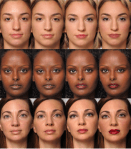
Similarly, women who wore cosmetics were rated more highly on attractiveness, competence, likeability and trustworthiness when viewed for as little as 250 milliseconds by participants in studies by Harvard’s Nancy L. Etcoff, Lauren E. Haley, and David M. House, with Shannon Stock of Dana-Farber Cancer Institute, and Proctor & Gamble’s Sarah A. Vickery.

Models without makeup, with natural, professional, “glamorous” makeup

However, when participants looked at the faces for a longer time, ratings for competence and attractiveness remained the same, but ratings for likeability and trustworthiness changed based on specific makeup looks.

Etcoff’s team concluded that cosmetics could influence automatic judgments because attractiveness “rivets attention and impels actions that help ensure the survival of our genes.”

Most people recognize the bias in assuming that attractive people are competent and that unattractive people are not, yet impression management remains crucial in the workplace and in the political arena.

-*Where have you seen appearance exert an influence in workplace credibility, decision-making and role advancement?

Related Posts

©Kathryn Welds


Women Who Express Anger Seen as Less Influential

Jessica Salerno

Jessica Salerno

Women who expressed anger were less likely to influence their peersin computer-mediated mock jury proceedings, found Arizona State University’s Jessica Salerno and Liana Peter-Hagene of University of Illinois. 

Liana Peter-Hagene

Liana Peter-Hagene

More than 200 U.S. jury-eligible volunteers reviewed opening arguments and closing statements, eyewitness testimonies, crime scene photographs, and an image of the alleged weapon in a homicide.

Participants made individual verdict choices, then exchanged instant messages by computer, with “peers” who were said to be “deliberating their verdict decisions.”

In fact, “peer” messages were scripted, with four of the fictional jurors agreeing with the participant’s verdict, and one disagreeing.
In different test conditions, the dissenting participant had 1) a male user name or 2) a female user name or 3) a gender-neutral name.

Victoria Brescoll

Victoria Brescoll

Half of the dissenting messages contained no emotion, anger, or fear, and had no influence on participants’ opinions.

However, when a single “male dissenter” sent angry messages, characterized by “shouting” in all capital letters, participants’ confidence in their verdict decision significantly dropped.
This confidence-eroding effect of one “male dissenter” held even when the majority of “jurors” shared the same opinion.

A single female dissenter who expressed disagreement in an angry message did not undermine the other juror’s confidence in their decisions.

This finding suggests that a single male dissenter’s angry communication causes people to doubt their opinions, and that “female” anger was less influential than “male” anger.

In contrast, volunteers became more confident in their initial verdict decisions when their vote was echoed by the majority of other participants.

Eric Luis Uhlmann

Eric Luis Uhlmann

Male and female evaluators assigned lower status to female CEOs and female trainees when they expressed anger, compared with angry male professionals in research by Yale University’s Victoria Brescoll and Eric Luis Uhlmann, now of INSEAD.

Kristi Lewis Tyran

Kristi Lewis Tyran

Men who expressed anger in a professional context were conferred higher status than men who expressed sadness.

Likewise, women who expressed anger and sadness were rated less effective than women who shared no emotion, according to Kristi Lewis Tyran of Western Washington University.

Evaluators judged men’s angry reactions more generously, attributing these emotional expressions to external circumstances, such as experiencing pressure and demands from others.

These differing judgments of emotional expression suggest that women’s anger is more harshly evaluated because anger expressions deviate from women’s expected societal, gender, and cultural norms.

-*What impacts and consequences have you observed for women and men who express anger at work?

RELATED POSTS:

©Kathryn Welds


Plastic Surgery Changes Perceived Personality Traits

Michael J. Reilly

Michael J. Reilly

People often infer others’ personality attributes from visual cues, found Georgetown University Hospital’s Michael J. Reilly, Jaclyn A. Tomsic and Steven P. Davison, collaborating with Stephen J. Fernandez of MedStar Health Research Institute.
This facial profiling is cognitive shortcut that can lead to biased impressions and fewer professional and social opportunities for those unfavorably judged.

Jaclyn A. Tomsic

Jaclyn A. Tomsic

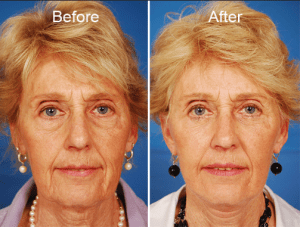
These researchers asked volunteers to evaluate photographs of 30 women shown with neutral facial expressions.

Each rater judged 10 images, including five (5) photographs before the person had plastic surgery procedures and five (5) images following surgical procedures:

  • Chin implant,
  • Eyebrow-lift,
  • Lower blepharoplasty (lower eye lift),
  • Upper blepharoplasty (upper eye lift),
  • Neck-lift,
  • Rhytidectomy (face-lift).

Michael Reilly-Preoperative-Postoperative photos

Raters were not informed that some people in the photos had plastic surgery procedures.

Evaluators assessed each photograph on a 7-point scale for perceived:

  • Aggressiveness,
  • Extroversion,
  • Likeability,
  • Risk-seeking,
  • Social skills,
  • Trustworthiness,
  • Attractiveness.

Michael Reilly - Pre-Post 2Raters assigned higher scores for likeability, social skills, and attractiveness to the images following plastic surgery compared with pre-surgery image ratings.

The researchers concluded that the eyes signal attractiveness and trustworthiness.

They noted that people who had lower eyelid surgery were rated significantly more attractive and trustworthy.

The team concluded that corner of the mouth indicates happy and surprised expressions and personality traits like extroversion.

Likewise, they reported that an upturned mouth and fullness in the cheeks can make a person look more intelligent and socially skilled.

In sum, they found that people who had a facelift procedure were rated significantly more likeable and socially skilled postoperatively.”

Volunteers in a different study attributed positive and negative personality traits to neutral faces when they perceived a similarity to standard positive and negative emotional expressions, reported Princeton’s Christopher P. Said and Alexander Todorov with Nicu Sebe of University of Trento.

Christopher P. Said

Christopher P. Said

This perceptual bias was demonstrated when volunteers attributed positive personality characteristics to faces with neutral expressions when some aspect of the face resembled typical facial expressions of happiness.

Similarly, neutral faces seen attributed negative personality characteristics when they had some similarities to displays of disgust and fear.

These trait inferences resulted from overgeneralization in emotion recognition systems.

Nicu Sebe

Nicu Sebe

 This error can lead to misattributed personality traits and biased impressions.

However, these inaccurate and biased judgments can become more favourable after plastic surgery.

-*To what extent do people’s personality traits seems different following plastic surgery?

-*How often are people treated differently following plastic surgery?

*What are ways to avoid confusing emotional expressions with personality traits?

Related Posts:

©Kathryn Welds

Women’s Self-Advocacy: Violating the “Female Modesty” Norm

Marie‐Hélène Budworth

Marie‐Hélène Budworth

Some women experience anxiety when required to showcase their accomplishments and skills.
They also understand that self-promotion, personal marketing, and “selling yourself” can be required to be achieve recognition and rewards at work, particularly in the U.S..

Sara L. Mann

Sara L. Mann

Gender norms about “modesty” can contribute to women’s discomfort in highlighting their accomplishments, according to York University‘s MarieHélène Budworth and Sara L. Mann of University of Guelph.
These implicit rules advocate that women:

  • hold a moderate opinion of their skills,
  • appear humble,
  • avoid pretentiousness,
  • disclaim personal responsibility for success,
  • accept personal responsibility for failure.
Laurie Rudman

Laurie Rudman

In contrast, many American men proactively showcase their skills, and observers generally evaluate self-promoting men as “competent,” “capable,” and “confident.”

Men who do not advertise their successes often are negatively evaluated, as are women who self-promote, according to Skidmore’s Corinne Moss-Racusin, Julie Phelan of Langer Research Associates, and Rutgers’ Laurie Rudman.
These researchers concluded that anyone who behaves contrary to expected gender stereotypes may be less favorably evaluated and advance more slowly in careers.

Women from cultures that value cooperation, collaboration, and collective accomplishment face limited career advancement if they conform to these norms in self-promoting work cultures, found Budworth and Mann.  

Deborah A. Small

Deborah A. Small

Likewise, women who adhere to implicit “female modesty” expectations were less likely to ask for promotions and salary increases.
This reluctance contributed to women’s long-term pay disparity according to University of Pennsylvania’s Deborah A. Small, Linda Babcock of Carnegie Mellon University, University of Maryland’s Michele Gelfand and Hilary Gettman.

Peter Glick

Peter Glick

However, if women violate “modesty norms,” they can experience discrimination in hiring, promotion, and wages, reported Rutgers’ Rudman and Peter Glick of Lawrence University.
Similarly, Yale’s Victoria Brescoll noted that these “norm violators” can experience other adverse interpersonal consequences.

Mark Zanna

Mark Zanna

People who violate norms typically experience physical arousal including discomfort, anxiety, fear, nervousness, perspiration, increased heart rate, reported University of Waterloo’s Mark Zanna and Joel Cooper of Princeton.

However, if participants attribute this physical activation to “excitement” rather than norm violation, they were more likely to:

  • Engage in self-promotion,
  • Express interest in self-promotion,
  • More effectively describe their accomplishments.
Jessi L Smith

Jessi L Smith

Despite women’s and some men’s career “double bind,” people can consciously communicate more effectively about their successes, demonstrated in studies by Montana State University’s Jessi L. Smith and Meghan Huntoon.

More than 75 women wrote sample essays for a merit-based scholarship valued up to USD $5,000.
One group composed essays about their own accomplishments whereas another group wrote about another person’s accomplishments.

Andrew Elliott

Andrew Elliott

They also completed Achievement Goal Questionnaire – Revised by University of Rochester Andrew Elliot and Kou Murayama of Tokyo Institute of Technology to evaluate “performance approach” and “performance avoidance.”

The laboratory contained a black box described as a “subliminal noise generator.”
Half the volunteers were told the box produced “inaudible but potentially uncomfortable ultra-high frequency noise,” and they were later asked to evaluate “the effects of extraneous distractions on task performance.”
The remaining participants received no information about the black box.

Victoria Brescoll

Victoria Brescoll

Women who could attribute their experience to the “noise generator” produced higher-quality, more convincing descriptions of their achievements, measured by being awarded significantly higher scholarships prizes.
These women also said they were more interested in the task, which is typically associated with greater intrinsic motivation to showcase personal accomplishments.

In contrast, women who violated the “modesty” norm without reference to the “noise generator” said they:

  • Reported less interest in describing their achievements,
  • Negatively evaluated their performance,
  • Produced lower-quality essays,
  • Reported fear of failure.

Women who displayed their accomplishments in essays were negatively evaluated by judges, who awarded significantly less to people wrote about their own accomplishments rather than about someone else’s.

Leon Festinger

Leon Festinger

One “workaround” for this self-promotion trap is to reciprocally advocate for colleagues.
This strategy highlights colleagues’ accomplishments as organizational policies evolve to encourage everyone’s self-promotion.
Google led this approach with a self-nomination process for advancement and promotion, coupled with reminder emails to submit self-nominations.

When people redefine showcasing their professional accomplishments as “part of the job,” they tend to perform more effectively and experience less cognitive dissonance.

  • How do you manage the norm against women “bragging” and showcasing their accomplishments?

RELATED POSTS:

©Kathryn Welds

“Emotional Contagion” in the Workplace By Observing Others, Social Media

Emotions can be “contagious” between individuals, and can affect work group dynamics.

Douglas Pugh

Douglas Pugh

Emotional contagion iinvolves replicating emotions displayed by others.
Contagion differs from compassion, which enables understanding another’s emotional experience without actually feeling it, which is more characteristic of empathy, noted Virginia Commonwealth University’s S. Douglas Pugh.

Adam D I Kramer

Adam D I Kramer

“Viral emotions” can be transmitted through social media platforms with no need to observe nonverbal cues, according to Facebook’s Adam D. I. Kramer, Jamie E. Guillory of University of California, San Francisco and Cornell University’s Jeffrey T. Hancock.
This suggests that social media can significantly affect the emotional tone in workplaces and the interpersonal relations that take place there.
In addition, the emotional tone evoked by social media posts can affect workplace productivity.

Jeffrey Hancock

Jeffrey Hancock

When positive emotional expressions were reduced in Facebook News Feeds, people produced fewer positive posts and more negative posts.
In contrast, when negative emotional expressions were reduced, people reduced negative posts, indicating that others’ emotional expressions influence bystanders’ emotions and behaviors.

Sigal Barsade

Sigal Barsade

People in performance situations are influenced by observing others’ emotions.   
When participants witnessed positive emotions in a decision task, they were more likely to cooperate and perform better in groups, found Wharton’s  Sigal Barsade.

Individuals who were more influenced by others’ emotions on R. William Doherty’s Emotional Contagion Scale also reported greater:

  • Reactivity,
  • Emotionality,
  • Sensitivity to others,
  • Social functioning,
  • Self-esteem,
  • Emotional empathy.

They also reported lower:

  • Alienation,
  • Self-assertiveness,
  • Emotional stability.
Stanley Schachter

Stanley Schachter

People are more likely to be influenced by others’ emotions when they feel threatened, because this elicits increased affiliation with others, according to Stanley Schachter‘s emotional similarity hypothesis.

Brooks B Gump

Brooks B Gump

Likewise, when people believe that others are threatened, they are more likely to mimic others’ emotions, found Syracuse University’s Brooks B. Gump and James A. Kulik of University of California, San Diego.

Elaine Hatfield

Elaine Hatfield

Women reported greater contagion of both positive and negative emotions on the Emotional Contagion Scale in research by Doherty with University of Hawaii colleagues Lisa Orimoto, Elaine Hatfield, Janine Hebb, and Theodore M. Singelis of California State University-Chico.

James Laird

James Laird

People who are more likely to “catch” emotions from others are also more likely to actually feel emotions associated with facial expressions they display, reported Clark University’s James D. Laird, Tammy Alibozak, Dava Davainis, Katherine Deignan, Katherine Fontanella, Jennifer Hong, Brett Levy, and Christine Pacheco.
This suggests that those with greater susceptibility to emotional contagion are convincing to themselves and others.

Christopher K. Hsee

Christopher K. Hsee

Contrary to expectation, people with greater power notice and adopt emotions of people with less power, found University of Hawaii’s Christopher K. Hsee, Hatfield, and John G. Carlson with Claude Chemtob of the U.S. Department of Veterans Affairs.

Participants assumed the role of “teacher” or “learner” to simulate role-based power differentials, then viewed a videotape of a fictitious participant discussing an emotional experience.
Volunteers then described their emotions as they watched the confederate describe a “happiest” and “saddest” life event.
People in higher power roles were more attuned to followers’ emotions than expected.

The service industry capitalizes on emotional contagion by training staff members to show positive emotions with the goal of increasing customer satisfaction and loyalty.

James Kulik

James Kulik

However, customer satisfaction measures were more influenced by service quality than employees’ positive emotional displays, according to Bowling Green State’s Patricia B. Barger and Alicia A. Grandey of Pennsylvania State University.

Emotions can positively or negatively resonate through work organizations with measurable impact on employee attitude, morale, engagement, customer service, safety, and innovation.

-*How do you intentionally convey emotions to individuals and group members?
-*What strategies do you use to manage susceptibility to “emotional contagion”?

RELATED POSTS:

©Kathryn Welds

Attractiveness Bias in Groups

Edward Vul

Edward Vul

Individuals were rated as more attractive when they were observed in a group rather than alonereported University of California, San Diego’s Drew Walker and Edward Vul.

Individuals are generally perceived as similar but not identical to the average group face.
This group average is seen as more attractive than group members’ individual faces, thanks to a perceptual bias called the ”cheerleader effect.

People who are judged attractive are also ascribed positive characteristics including good health, good genes, intelligence, and success as a result of attribution bias.

Michael Cunningham

Michael Cunningham

There is consensus across cultures and genders on ratings of physical attractiveness, found University of Louisville’s Michael R. Cunningham, Anita P. Barbee, Perri B. Druen, who collaborated with Alan R. Roberts of Indiana University and Chung Yuan Christian University’s Cheng-Huan Wu.

Features rated as most attractive for women include: 

  • High cheekbones and forehead,
  • Fuller lips,
  • Large, clear eyes,
  • Shorter jaw,
  • Narrower chin,
  • Waist-to-hips ratio of 7:10,
  • Body Mass Index (BMI) of 20.85.
Alan Roberts

Alan Roberts

Women’s weight was not as significantly related to attractiveness as the elements above.

Preferred characteristics for men were:

  • Large jaw and brow,
  • Prominent cheekbones,
  • Broad chin,
  • Waist-to-hips ratio of 9:10,
  • About 12 percent body fat.


    Smooth skin, shiny hair, and facial symmetry were rated as attractive for both women and men.

Genevieve Lorenzo

Genevieve Lorenzo

Individuals’ physical attractiveness focuses observers’ attention, and enables assessments of personality traits based on brief interactions, according to University of British Columbia’s Genevieve Lorenzo and Jeremy Biesanz with Lauren Human of University of California, San Francisco.

Jeremy Biesanz

Jeremy Biesanz

Observers more accurately identified personality traits of physically attractive people  and these ratings were more similar to attractive people’s self-reported personality traits.

Lauren Human

Lauren Human

Volunteers showed a positive bias toward attractive people and accurately identified the relative ordering of attractive participants’ Big Five personality traits (extraversion, conscientiousness, agreeableness, openness to experience, and emotional stability -“neuroticism”).

Nicholas Rule

Nicholas Rule

Raters also accurately evaluated CEOs’ competence, dominance, likeability, maturity, and trustworthiness by viewing photographs of the executives’ faces in a study by University of Toronto’s Nicholas Rule and Nalini Ambady, then of Tufts.

Nalini Ambady

Nalini Ambady

Thirty volunteers assessed CEOs’ “leadership success” based on appearance alone, and these rating were significantly related to profitability of the organizations the CEOs led.

John Graham

John Graham

CEOs and non-executives compete in an unconscious “corporate beauty contest,” asserted John Graham, Campbell Harvey and Manju Puri of Duke.
Those viewed as attractive are assigned positive attributions, according to these researchers.

Photos of more than 100 white male chief executive officers of large and small companies were paired with with photos of non-executives with similar facial features, hairstyles and clothing.

Campbell Harvey

Campbell Harvey

Nearly 2,000 participants assessed photos and rated CEOs as competent and attractive more frequently than non-executives.
However, volunteers were less likely to rate CEOs as likeable and trustworthy.

Those rated as “competent” earned more money, but in this study, CEO appearance wasn’t associated with company profitability.

Elaine Wong

Elaine Wong

Specific facial structures, not just attributed personality traits, were associated with superior business results, according to University of Wisconsin’s Elaine Wong and Michael P. Haselhuhn working with Margaret E. Ormiston of London Business School.

Firms that achieved superior financial results tended to have male CEOs with wider faces relative to facial height, particularly among organizations with “cognitively simple leadership teams.”

Margaret Ormiston

Margaret Ormiston

Evolutionary biology suggests that specific facial structures may be perceived as associated with trustworthy leadership skills, leading to attributions of competence, and inspiring loyalty to follow.

-*What positive bias do you observe toward attractive individuals in the workplace? 

-*How do you harness the positive bias toward attractive individuals?

RELATED POSTS:

©Kathryn Welds

How Accurate are Personality Judgments Based on Physical Appearance?

Laura Naumann

People pictured in full-body photographs were evaluated by volunteers for likeability, self-esteem, loneliness, religiosity, and political orientation based on their photographed clothing and non-verbal behaviours. 

Simine Vazire

This study, conducted by Sonoma State University’s Laura Naumann, with Simine Vazire then of Washington University, teamed with University of Cambridge’s Peter Rentfrow, and Samuel Gosling of University of Texas, also investigated volunteers’ accuracy in judging Big Five personality traits (Openness, Conscientiousness, Extroversion, Agreeableness, and Neuroticism), proposed by Paul Costa and Robert McCrae of the U.S. National Institutes of Health

Peter Jason Rentfrow

These ratings were compared with evaluations by people acquainted the photographed person.

Samuel Gosling

Samuel Gosling

Observers’ judgments were accurate for extraversion, self-esteem, and religiosity when people were photographed in a standardized pose.
Raters were correct for additional personality traits when judging photographs in spontaneous informal poses.

Paul Costa

These findings suggest that candid photographs provide more accurate cues to some personality characteristics than planned poses.

Robert McCrae

Robert McCrae

Judgments based on clothing cues were associated with less accurate judgments of personality characteristics.
In contrast, facial expression and posture enabled observers to make more accurate judgments.

John Irving

John Irving

Observers can make accurate inferences about some personality characteristics based on visual cues, according to these findings.
Novelist John Irving’s A Prayer for Owen Meany noted that “Things often are as they appear. First impressions matter,” just as these researchers concluded.

-*How accurate are your judgments of personality traits for people you don’t already know?
-*How accurate are other people’s inferences about your personality traits?

RELATED POSTS:

©Kathryn Welds