Category Archives: Neuroscience

Neuroscience

Time of Day Affects Problem Solving Abilities

People differ in their circadian rhythms, which determine times of greatest mental alertness, reflected in body temperature differences.

James A Horne

James A Horne

Morningness” describes people who awaken easily and are most alert early in the morning, whereas “eveningness” refers to “night owls” who awaken later and feel most alert late in the day, according to Loughborough University’s James A. Horne and colleague O. Östberg, who developed a self-report questionnaire to distinguish these these temporal preferences.

Mareike Wieth

Mareike Wieth

Creative problem solving is more effective at “non-optimal” times of day for both “morning people” and “night people,” according to Albion College’s Mareike B. Wieth and Rose T. Zacks of Michigan State University.

Rose Zacks

Rose Zacks

They studied volunteers who solved insight problems and analytic problems at their optimal or non-optimal time of day and found consistently better performance on insight problem-solving during non-optimal times, but no consistent effect for analytic problem solving.

During non-optimal times, people may be more distractible, less focused and more able to consider diverse information, alternatives, and interpretations.
These conditions can enable innovative thinking and creativity.

William Hrushesky

William Hrushesky

William Hrushesky, formerly of University of South Carolina, argued that “timing is everything” in medical treatment, and Wieth and Zacks’ findings suggest suggests that working at “off-peak” times is effective for tasks that require creative thinking rather than analytic rigor.

-*How do you sequence your work tasks to enhance performance during “non-optimal” and “peak” times of day?

Follow-share-like http://www.kathrynwelds.com and @kathrynwelds

RELATED POSTS:


Twitter  @kathrynwelds
Blog – Kathryn Welds | Curated Research and Commentary  
Google+
LinkedIn Open Group Psychology in Human Resources (Organisational Psychology)
Facebook Notes:

©Kathryn Welds

Does Music Training Improve Other Skills?

Considerable research indicates that training in music theory and performance is associated with better performance on quantitative, reasoning, visual, and motor tasks, but recent findings offer a counterpoint.

Leonid Perlovsky

Leonid Perlovsky

Among the evidence supporting the benefits of musical training, De Rochebelle School (C.S.D.D)’s Arnaud Cabanac collaborated with Leonid Perlovsky of Harvard University, Canadian Air Force Research Laboratory’s Marie-Claude Bonniot-Cabanac, and Michel Cabanac of Laval University to report that student musicians earned better grades than peers and performed better on a more stressful, complicated tasks.

Michel Cabanac

Michel Cabanac

German Institute for Economic Research (DIW Berlin)’s Adrian Hille and Jürgen Schupp, also of Free University of Berlin (FUB), concurred that long-term music training during childhood and youth affects cognitive skills development, school grades.

Adrian Hille

Adrian Hille

They examined data from the German Socio-Economic Panel (SOEP) and found that adolescents with music training have better cognitive skills and school grades and were 15 percent more likely to report planning to attend a university.

In addition, these young musicians were more conscientious, open and ambitious across socio-economic statuses.
These improvements in cognitive and non-cognitive skills were more than twice as great as the contribution of sports, theater or dance training and participation.

Sylvain Moreno

Sylvain Moreno

Preschool children, too, demonstrated enhanced performance on a measure of verbal intelligence after participating in an interactive computerized music training, according to Rotman Research Institute’s Sylvain Moreno with University of Toronto colleagues E. Glenn Schellenberg and Tom Chau, who collaborated with York University’s Ellen Bialystok, Raluca Barac, and Nicholas J. Cepeda.  

They reported that after just 20 days of this computer-based music training, these children showed improvement on verbal tasks, and related changes in functional brain plasticity during an executive-function task.

Frances Rauscher

Frances Rauscher

Musical training was associated with better performance on auditory discrimination and fine motor tasks among children who had three years or more musical instrument training, according to University of Wisconsin’s Frances H. Rauscher with Gordon L. Shaw, and Catherine N. Ky of University of California, Irvine.

Marie Forgeard

Marie Forgeard

Children who received at least three years of instrumental music training outperformed their control counterparts on auditory discrimination abilities and fine motor skills, vocabulary and nonverbal reasoning skills in studies by University of Pennsylvania’s Marie Forgeard, with Andrea Norton, and Gottfried Schlaug of Harvard Medical School’s and Boston College’s Ellen Winner.

These performance enhancements were associated with duration of musical training, but Forgeard’s team did not replicate earlier findings of enhanced  spatial skills, phonemic awareness, and mathematical abilities.

In a sample of music listeners instead of music learners, National Cheng Kung University’s Pei-Luen Tsai and colleagues found that stroke patients in Taiwan showed improved visual attention while listening to classical music, compared with white noise and silence.

Samuel Mehr

Samuel Mehr

Despite this affirmative evidence, Samuel Mehr of Harvard University, who plays saxophone, flute, bassoon, oboe, and clarinet, found no evidence of a cognitive benefit when young children receive music lessons.

With Harvard colleagues Adena Schachner, Rachel C. Katz, and Elizabeth S. Spelke, Mehr conducted two Randomized Control Trials (RCT) with four year old preschool children to evaluate the cognitive effects of music classes, compared with non-musical visual arts instruction or to a no instruction.

After six weeks, the team evaluated children’s skills in:

  • Spatial-navigational reasoning
  • Visual form analysis
  • Numerical discrimination
  • Receptive vocabulary.
Adena Schachner

Adena Schachner

Although their initial findings suggested improved performance for children who received musical training, the team was unable to replicate the finding.
The team found a small positive effect of music instruction on intelligence in only one study.

They reported that children who participated in music classes performed no better than those with visual arts or no classes on any assessment.

Elizabeth Spelke

Elizabeth Spelke

Mehr and team concluded that before asserting cognitive benefits of music training, it is essential to:

-*What benefits on performance in other areas have you observed among people who have musical training?

-*How do you evaluate conflicting evidence for and against musical training’s impact on cognitive performance?

 Follow-share-like http://www.kathrynwelds.com and @kathrynwelds

RELATED POSTS:

Women’s Multitasking Skill Linked to Neural Network Patterns

Diane Halpern

Diane Halpern

Differences between men’s and women’s performance on cognitive tasks, particularly mathematics and science have been observed for decades, with men generally excelling at motor and spatial tasks and women excelling in memory and social cognition tasks.

Camilla Benbow

Camilla Benbow

Claremont McKenna College’s Diane F. Halpern led an extensive review of these performance differences with Camilla P. Benbow of Vanderbilt University, University of Missouri‘s David C. Geary, Ruben C. Gur of University of Pennsylvania, Janet Shibley Hyde and Morton Ann Gernsbacher of University of Wisconsin. 

David Geary

David Geary

Their evidence “provided no single or simple answer” to contrasting skills by gender but a comprehensive brain imaging study of more than 400 males and more than 500 females between ages 8 and 22 years, provides evidence for popular observations.

Madhura Ingalhalika

Madhura Ingalhalika

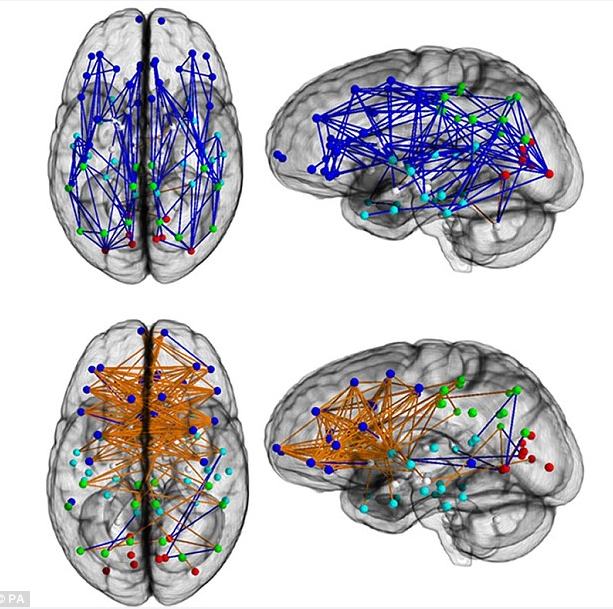
Using diffusion tensor imaging, University of Pennsylvania’s Madhura Ingalhalikar, Alex Smith, Drew Parker, Theodore D. Satterthwaite, Mark A. Elliott, Kosha Ruparel, Raquel E. Gur, Ruben C. Gur and Ragini Verma with Hakon Hakonarson of Children’s Hospital of Philadelphia, demonstrated that male and female brains differ in the network of neural connections.
Known as the “structural connectome,” these connections between neural structures were described by Indiana University’s Olaf Sporns, who reviewed imaging techniques to visualize their activity.

Ted Satterthwaite

Ted Satterthwaite

These gender-linked structural differences result in differing competencies.
Ingalhalikar’s team observed that male brains structures show more connections within the front and back of the brain hemisphere in the supratentorial region.

Olaf Sporns

Olaf Sporns

This area connects perception and coordinated action and enables males’ skill in quickly perceiving and applying information to a single complex task, spatial reasoning, and learning motor skills.

Ingalhalikar connectomeIn contrast, female brains contain more neural connections between hemispheres in supratentorial regions. 
This connection pattern enables females to recall faces and execute multiple complex tasks simultaneously more easily than males due the increased neural connections between analytical and intuitive processing modes.

Dardo Tomasi

Dardo Tomasi

Building on earlier work on these differences by Brookhaven National Lab’s Dardo Tomasi and Nora D. Volkow of National Institute on Drug Abuse, Ingalhalikar’s team found these differences were reversed in the cerebellar connections, where male brains showed greater intrahemispheric connectivity and female brains demonstrated more interhemispheric connections.

Nora Volkow

Nora Volkow

These structural differences lead to different development for girls and boys from an early age, and result in significant, less modifiable differences by adolescence and adulthood. 

Frequently-observed differences in male and female performance are rooted in different neural connection patterns by gender.

 -*What exceptions have you seen to findings of women’s skill in multitasking and social insight, and men’s competence in spatial reasoning and motor skill acquisition?

RELATED POSTS:

Follow-share-like http://www.kathrynwelds.com and @kathrynwelds

Twitter  @kathrynwelds
Blog – Kathryn Welds | Curated Research and Commentary  
Google+
LinkedIn Open Group Psychology in Human Resources (Organisational Psychology)
Facebook Notes

©Kathryn Welds

Detecting Trustworthiness, Opening Your Mind?

Yaacov Schul

Yaacov Schul

-*Does mistrust increases willingness to consider new information, or “open-mindedness”?

When people mistrust information, they are more likely to consider alternative information and interpretations,  according to Hebrew University’s Yaacov Schul and Ruth Mayo, with Eugene Burnstein of University of Michigan.

Ruth Mayo

Ruth Mayo

Likewise, Ann-Christin Posten and Thomas Mussweiler of Universität zu Köln noted that “distrust frees your mind” by leading people to use non-routine cognitive strategies.”

Eugene Burnstein

Eugene Burnstein

Posten and Mussweiler reported that when volunteers participated in an “untrustworthy” interaction, they later provided less stereotypic evaluations of others in an unrelated task.

Ann-Christin Posten

Ann-Christin Posten

The research team replicated this effect when they influence volunteers’ expectations of others by “priming” participants with preliminary information that elicited stereotypes.

When people distrust information and interactions, they focus on dissimilarities and discrepancies,  which enables people to more carefully attend to individual differences that disprove stereotypes, according to Posten and Mussweiler.

Thomas Mussweiler

Thomas Mussweiler

Although trust may feel better, distrust can lead to more mindful observation, and reduced stereotyping.

-*How do people determine trustworthiness?

Princeton’s Alexander Todorov and Sean G. Baron with Nikolaas Oosterhof of Dartmouth presented volunteers computer model-generated faces  representing a range of trustworthiness while participants’ brains were scanned with fMRI.

Alexander Todorov

Alexander Todorov

Specific brain areas, the right amygdala and left and right putamen, became more active when participants’ viewed less trustworthy faces.

Sean Baron

Sean Baron

Faces judged most trustworthy and most untrustworthy faces were associated with greater brain activity in the left amygdala.
In contrast, moderately trustworthy faces evoked strongest responses in the medial prefrontal cortex and precuneus areas.

Nikolaas Oosterhof

Nikolaas Oosterhof

These findings pinpoint brain areas that lead to inferences of trust and distrust, and lead to relaxed or vigilant information processing strategies.

-*How do you determine trustworthiness for information and for people?
-*What helps you minimized stereotyped judgments?

 Follow-share-like http://www.kathrynwelds.com and @kathrynwelds

RELATED POSTS:

Twitter  @kathrynwelds
Blog – Kathryn Welds | Curated Research and Commentary  
Google+
LinkedIn Open Group Psychology in Human Resources (Organisational Psychology)
Facebook Notes:

©Kathryn Welds

Loneliness, Happiness Affect Gene Expression, Health

Loneliness not only feels bad, but it’s also bad for your health.

Steve Cole

Steve Cole

Subjective social isolation is a known social epidemiological risk factor that has been linked to heart disease, viral infections and cancer.

In addition, loneliness has physical effects on gene regulation and expression, according to DNA microarray analyses of 209 gene transcripts (the first step in synthesizing a protein) out of more than 20,000 in white blood cells of 14 volunteers.

Louise Hawkley

Louise Hawkley

UCLA’s Steve Cole, Jesusa Arevalo, and Caroline Sung collaborated with Robert Rosen of University of Texas and University of Chicago’s Louise Hawkley and John Cacioppo to report that individuals who reported high loneliness on Daniel Russell’s UCLA Loneliness Scale showed different gene expression in circulating leukocytes than volunteers who did not report loneliness.

Daniel Russell

Daniel Russell

Lonely individuals were less able to ward off inflammatory responses and viruses, and less able to produce antibodies because controlling genes were under-expressed.
In contrast, lonely individuals were at risk for greater inflammatory responses and more active immune systems  because the related genes were over-expressed.

These volunteers showed “down-regulation” of genes supporting mature B lymphocyte function and type I interferon response, when researchers controlled for effects of circulating cortisol levels, demographic, psychological, health risk, medications, or social network factors.

The social experience of loneliness desensitizes glucocorticoid receptors and reduces cortisol’s immune control and anti-inflammatory effects.

Cole’s team found that loneliness was more dependent on the number of close relationships rather than the total number of acquaintances.
This suggests the importance of cultivating meaningful social relationships for both social support, reciprocity, and for enhanced health.

Barbara Fredrickson

Barbara Fredrickson

Cole, and Arevalo collaborated with UCLA colleague Jeffrey Ma and University of North Carolina’s Barbara Fredrickson, Karen Grewen, Kimberly Coffey, Sara Algo, and Ann Firestine to consider the impact of different types of happiness on gene expression in 80 adult volunteers.

They evaluated two types of happiness:

  • Eudaimonic well-being,“ a Socratic ideal based on leading a virtuous life, striving toward a meaningful purpose, pursuing “worthwhile” service, and more fully developing personal capabilities
  • Hedonic well-being,” focused on pleasure, consumption, and enjoyment.
Karen Grewen

Karen Grewen

Fredrickson’s team compared leukocyte basal gene expression profiles for volunteers who reported hedonic well-being in contrast to those who reported eudaimonic well-being.
The team also considered negative psychological and behavioral factors.

People with high levels of hedonic well-being showed “up-regulated” pro-inflammatory genes and decreased expression of genes involved in antibody synthesis and type I IFN response in peripheral blood mononuclear cells during stress [conserved transcriptional response to adversity (CTRA)].

Kimberly Coffey

Kimberly Coffey

In contrast, volunteers with high levels of eudaimonic well-being showed CTRA down-regulation, suggesting less stress on body systems.

Fredrickson and team concluded that “genes can tell the difference” between a purposeful life and a more pleasure-centric life, even when self-reports do not distinguish between these two types of happiness.

Ann Firestine

Ann Firestine

These finding suggest the importance of pursuing prosocial purposes and developing meaningful, trust-based relationships with others to experience greatest health and happiness – down to your genes.

-*How have you seen social relationships and mood affect immunity to illness and stress?

 Follow-share-like http://www.kathrynwelds.com and @kathrynwelds

RELATED POSTS:

Twitter  @kathrynwelds
Blog – Kathryn Welds | Curated Research and Commentary  
Google+
LinkedIn Open Group Psychology in Human Resources (Organisational Psychology)
Facebook Notes:

©Kathryn Welds

An End to “Death by PowerPoint”: Neuroimaging Studies Improve Visual Display Design

Stephen Kosslyn

Stephen Kosslyn

Harvard’s Stephen Kosslyn‘s fMRI studies of perceptual processes and mental imagery point to  best practices in improving visual display design, such as PowerPoint presentations, so they can be rapidly comprehended.

Alexandra Russell

Alexandra Russell

His imaging studies determined that the left half of the brain excels at encoding categories and generating mental images based on categories.
In contrast he reported that the right half of the brain skillfully encodes specific examples and generating associated images.

While at Stanford, he identified eight psychological principles often violated in PowerPoint® slideshows, in collaboration with Alexandra G. Russell, Harvard colleague Jennifer M. Shephard and Rogier A. Kievit of University of Amsterdam.

Once the viewer has seen a PowerPoint slide, the information must be converted into a storable and retrievable construct for later use.

Rogier Kievit

Rogier Kievit

They noted that perception and comprehension of visual displays require:

  • Encoding based on Discriminability, Perceptual Organization, Salience
  • Working Memory, influenced by Limited Capacity and Informative Changes
  • Accessing Long-Term Memory, enhanced by Appropriate Knowledge, Compatibility, Relevance

 Encodable content must be distinguishable from the background and context.
This requires a “Just Noticeable Difference” (JND) between size, shape, color and other attributes to enable discrimination.

Russell De Valois

Russell De Valois

PowerPoint elements achieve Discriminability with:

  • Sufficiently large typeface with differentiated text (mix of upper case, lower case, bold, italics)
  • Text and graphic color contrast with background color
  • Spatial frequency channel” ratio variance, such as points that are twice as thick as the lines that connect them
    Karen De Valois

    Karen De Valois

    Texture patterns elements, like stripes, should vary by at ratio of least 2:1 to avoid “visual beats,” according to University of California’s Russell DeValois and Karen De Valois

  • Varied line orientation (by at least 30°), to enable processing by different “orientation channels
  • Text or other fine lines in colors other than deep blues, and boundaries in colors other than red.

After encoding, figure/ground segregation processes perceptually organize adjacent (“Law of Proximity”) and similar (“Law of Similarity”) elements into groups of objects, words, and graphics.
Grouping also can be imposed by lines, such as in complex data tables, and this grouping typically increases readability and comprehension.

Additional practices to enhance visual “consumability” by Perceptual Organization include:

  • Applying labels to refer to the nearest graphic element
  • Using a common color to organize parts of a display into a group, even separated
  • Adopting consistent ordering conventions across different parts of displays, such as bar chart legends and pie chart legends
  • Explicitly grouping separated-but-related elements, such as by using inner grid lines to group the tops of bars in a bar graph with locations along the Y axis at the left of the graph
  • Eliminating inadvertently-formed groupings, such as when a banner at the top of a slide groups with nearby, similar but unrelated objects

 Attention is drawn to large perceptible differences, and these elements are processed in detail.  The brain’s superior colliculus draws visual attention to large differences among stimuli.
Salience can be enhanced with:

  • Animation because movement captures and directs attention
  • Text with a distinct format, such as color, size, or typeface
  • Visual incongruities, such as a wedge “exploding” from a pie chart
  • Summary elements like title, keywords, topic sentence, infographic
  • Warm” colors (with longer wavelengths, such as red) for emphasis or in the foreground in contrast to “cool” colors (with short wavelengths, like blue), which recede.
    Avoid using warmer colors for lines that pass beneath other lines to avoid the illusion of background oscillation

After visual patterns are encoded, they must be integrated in Working Memory for later retrieval and application, and are influenced by Limited Capacity and Informative Changes.
People have limited capacity to process and retain information, and presentations can mitigate these constraints by:

  • Limiting perceptual groups to about four units with up to four sub-units for easier processing and retrieval
  • Labeling items in a display rather than using a key or legend to reduce processing load
  • Allowing the audience time to process and assimilate information during a slide presentation
  • Avoiding slow fade-in or fade-out slides, which may lead to incorrect information processing and losing track of the organizational hierarchy.Audience members expect Informative Changes in words and graphics to convey information.
    Similarly, they also expect that each expect unit of information is associated with a perceptible change.
    Capitalize on these expectations by:
  • Avoiding random or arbitrary changes in appearance, transitions, or terminology
  • Clearly indicating section beginnings and ends to enable audience to track progress through the presentation

Retrieving information from Long-Term Memory enables viewers to compare with previously stored information to determine the new information’s relevance and applicability.

Effective presenters ensure that viewers have a common knowledge base of novel concepts, jargon, conventions, formats, terminology or symbols so they understand the presentation’s context.
Presenters ensure Appropriate Knowledge by including an explicit introduction, and explanation and review of these terms and ideas before building reasoning and conclusions.

Kosslyn-Stroop EffectA message is most intelligible and memorable when its form is Compatible with its meaning.
The Stroop effect demonstrates the difficulty people have in processing information when asked to name the color of the ink used to a color name (“red”) a different color from the ink (blue).

Similarly, people are better able to comprehend when audio and visual contents coordinate with text and the overall message.

  • Indicate quantitative difference by color saturation and intensity (or brightness)
    These “prothetic” variables are arranged quantitatively.
    In contrast, hue is ineffective as a measure of quantitative differences because it is a “metathetic” variable that is arranged qualitatively
  • Ensure that animation movements align with the object’s natural movement patterns, such as an automobile entering from the side of the slide rather than the top
  • Select sounds, typefaces, and backgrounds consistent and compatible with the content. such as sans serif typeface for high tech products
  • Use icons that depict the typical examples of represented items, such as a duck to represent “fowl” or “wild bird” but not “pet bird”
  • Include line graphs (rather than bar or mixed graphs) to illustrate trends and interactions:  The continuous variation in the height of a line in a graph directly indicates the continuous variations of a measurement
  • Apply bar graphs to illustrate specific values instead of trends because the discrete heights of the bars directly indicate specific measurements
  • Add maps to illustrate complex information about geographic territories or show alternate routes to a destination
  • Consider charts to portray organizational structure, sequential steps, or processes as in “flow charts.”

Presentations must offer most applicable, meaningful content for the topic in sufficient but not excessive detail.
Enhance Relevance by:

  • Curating content
  • Enabling viewers to organize the information into a narrative by presenting a roadmap of the topic in an outline or overview
  • Providing graphic elements including photos, drawings, graphs, diagrams, and video as well as audio to illustrate concepts clearly and label ambiguous imagery.
Don McMillan

Don McMillan

If presenters adopt Kosslyn’s recommendations, to enhance Discriminability, Perceptual Organization, Salience, Limited Capacity, Informative Changes, Appropriate Knowledge, Compatibility, and Relevance, PowerPoint comedians Don MacMillan and biologist Tim Lee may need to revert to their previous occupations. 

Tim Lee

Tim Lee

-*How do you ensure that your Business Storytelling with PowerPoint keeps your audience engaged?

Follow-share-like http://www.kathrynwelds.com and @kathrynwelds

RELATED POSTS:

Twitter  @kathrynwelds
Blog – Kathryn Welds | Curated Research and Commentary  
Google+
LinkedIn Open Group Psychology in Human Resources (Organisational Psychology)
Facebook Notes:

©Kathryn Welds

Mindfulness Impedes Implicit Learning, but May Enhance Explicit Learning

Chelsea Stillman

Chelsea Stillman

People typically develop habits without consciously and “mindfully” thinking about them, and habits often develop through “implicit” or unconscious learning.
Moreover, the trait of mindfulness can interfere with habit formation and pattern recognition, according to Georgetown’s Chelsea Stillman, Alyssa M. Coffin, James H. Howard and Darlene Howard.

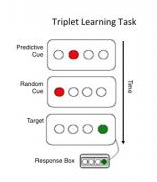
Chelsea Stillman-Triplet Learning TaskMany recent studies linking positive outcomes to increased mindfulness, so this caveat may be surprising.

James Howard

James Howard

Adult volunteers completed an inventory that assessed their degree of mindfulness as a character trait rather than as a transient state.
They also completed either an alternating serial reaction time task or a triplet-learning task using colored circles to assess their ability to learn complex, probabilistic patterns.

Darlene Howard

Darlene Howard

Those who scored high on trait mindfulness were less effective in detecting and learning the patterns than those with lower mindfulness scores.

Stillman concluded that high attention and awareness of stimuli may inhibit implicit learning, suggesting many questions about situations in which mindfulness is most effective.

Previous blog posts noted that mind wandering may have other virtues, like enabling innovative problems solving.

Travis Proulx

Travis Proulx

Implicit learning, such as required to develop habits, is helped by “unrelated meaning threats” in addition to mindlessness, according to Tilburg University’s Travis Proulx and Steven J. Heine of University of British Columbia.

They provided volunteers with an “unrelated meaning threat” in a short story by Franz Kafka or in a task requiring participants to “argue against one’s own self-unity.” Other participants received no “unrelated meaning threat” to serve as a comparison group.

Steven Heine

Steven Heine

Those who received the threat showed increased detection of patterns within letter strings and better performance on a artificial-grammar learning task, in which they detected a novel pattern embedded in the letter strings.

Proulx and Heine concluded that people may use association patterns unrelated to the original meaning threat when trying to maintain meaning, which they called the “meaning-maintenance model.

Gavriel Solomon

Gavriel Solomon

Differing findings were reported by University of Haifa’s Gavriel Solomon and Tamar Globerson of Tel Aviv University, who found that mindfulness may augment explicit rather than implicit learning.
They argued that
effortful, volitional mindful attention is a key contributor to learning and bridging “the know-doing gap,” described by Stanford’s Jeffrey Pfeffer, supporting recent “pro-mindfulness” findings.

Jeffrey Pfeffer

Jeffrey Pfeffer

-*How do you use mindfulness and mindlessness to enhance learning and creative problem solving?

Follow-share-like http://www.kathrynwelds.com and @kathrynwelds

RELATED POSTS:

Twitter  @kathrynwelds
Blog – Kathryn Welds | Curated Research and Commentary  
Google+
LinkedIn Open Group Psychology in Human Resources (Organisational Psychology)
Facebook Notes:

©Kathryn Welds

Measuring and Increasing Hope to Improve Performance, Health

Hope shifts focus from the present moment to action paths (“pathways”) required to achieve future goals and motivation to follow these goal routes (“agency”).

Some advocates of mindful attention to the present moment question cultivating hope because it focuses on the future instead of the present, despite abundant empirical evidence that hope is positively associated with academic achievement, health outcomes, and more.

Benjamn Franklin

Benjamn Franklin

Buddhist thinkers argued that hope is illusory and prolongs human suffering and even America’s sage, Benjamin Franklin, noted that one who lives on hope will die fasting.

C. RIck Snyder

C. RIck Snyder

In contrast, hope investigator University of Kansas’s Charles “Rick” Snyder substantiated the health and performance benefits of hope and distinguished hope from learned optimism, self-efficacy, and self-esteem.

He developed and validated measures of hope as a trait and as a state, evaluating “pathways” and “agency” beliefs, with collaborators Cheri Harris, John R Anderson, Sharon A. Holleran, Lori M Irving, Sandra T. Sigmon, Lauren Yoshinobu, June Gibb, Charyle Langelle, and Pat Harney.

Snyder and team reported that children and adults across ethnic and gender groups who scored higher in hope demonstrated:

He offered tips for setting goals and enhancing “pathways” and “agency” toward goals, including:

  • Prioritizing self-selected goals
  • Developing multiple paths for each goal
  • Expecting positive outcomes while designing ways to remove potential obstacles.
Pam Omidyar

Pam Omidyar

One practical application of Snyder’s Hope Theory is Re-Mission,video game for cancer patients, developed by HopeLab’s Pam Omidyar, Pam Kato, and UCLA’s Steven Cole.

Pam Kato

Pam Kato

Adolescent patients in remission with acute leukemia, lymphoma, and soft-tissue sarcoma are required to continue daily chemotherapy treatments for up to several years.
Those who miss even 20% of their daily treatments increase their mortality risk by 200%.

Steve Cole

Steve Cole

Kato collaborated with Cole, West Virginia University’s Andrew Bradlyn and Brad Pollock of University of Texas to evaluate video-game interventions to improve young people’s medication adherence.

 They conducted a randomized trial with baseline and 1 month and 3 month assessments at 34 medical centers in the United States, Canada, and Australia.

Brad Pollock

Brad Pollock

Volunteers were 375 males and females between 13 to 29 years old undergoing chemotherapy for at least 4 months.
Participants in the video game tailored to young cancer patient increased adherence to chemotherapy by 50%, and showed increased self-efficacy and knowledge, compared with those who played commercial video games or no video games.

fMRI studies showed that their brains were most active when they played the game instead of observing the game interface.
Most active areas were:

  • Limbic structures including caudate, putamen, and nucleus accumbens, measuring anticipatory excitement before securing a reward
  • Thalamus, “the internet of the brain”
  • Hippocampus, the link between experience and long-term memory

Cole further evaluated Re-Mission and Zamzee, a motivational system to promote physical activity among young people, and now leads HopeLab’s Re-Mission 2 to further amplify positive health behavior and resilience.

-*How do you leverage hope to improve your work performance and health behaviors?

Follow-share-like http://www.kathrynwelds.com and @kathrynwelds

RELATED POSTS:

Twitter  @kathrynwelds
Blog – Kathryn Welds | Curated Research and Commentary  
Google+
LinkedIn Open Group Psychology in Human Resources (Organisational Psychology)
Facebook Notes:

©Kathryn Welds

Your Brain in Court: Cognitive Privacy, US Constitution and Neuroimaging

Amanda Pustilnik

Amanda Pustilnik

Neuroimaging techniques, like fMRI, present constitutional dilemmas for criminal law and criminal procedure, according to University of Maryland‘s Amanda Pustilnik.

These technologies raise questions about “cognitive privacy” in relation to “compelled, self-incriminating speech” under the United States Constitution’s Fifth Amendment and “unreasonable search and seizure” under the Fourth Amendment.

Neuroimagery technologies can measure brain blood flow to determine whether the person is making false statements, and can evaluate whether waveform brain activity indicates a person is familiar with an object like a face or weapon.

In addition, these measurement devices can alter brain processes, such as exposing the brain to powerful magnets, resulting in greater or lesser likelihood of offering truthful statements.

Recent Eighth Amendment challenges to execution by lethal injection and legislative restrictions on abortion based on putative fetal pain are additional examples of legal questions informed by neuroimaging technology.

In these cases, neuroimagery measurements can provide evidence of presence and degree of physical pain.
Previously, this subjective state has not been directly observable until pain neuroimaging procedures were developed and admitted as legal evidence.

Pustilnik proposed “embodied morality” to explain how moral concepts of legal rights and duties are informed by human physicality and constrained by observers’ limitations in empathic identification with the pain sufferer’s experience.

U.S. law applies unrealistic criteria to determining defendants’ mental states for criminal trials in light of neuroscientific evidence, she argued, noting that the law maintains “a false trichotomy” among cognition, emotion, and volition to determine whether a defendant was “capable of moral agency” in committing an illegal act.

This decision is based upon whether the admissible evidence demonstrates that the defendant acted with “purpose,” suggested by planning the act in advance and “knowledge” of the act, typically determined by the defendant’s statements.

Pustilnik cited examples of disorders in which emotional impairments and volitional impairments can modify cognition, including temporal lobe injury, drug addiction, and obsessive-compulsive disorder.

Jean Macchiaroli Eggen

Jean Macchiaroli Eggen

In these situations, the defendant may provide an intelligible “explanation” of the act, yet may not be able to control the behavior, as in obsessive-compulsive disorder or drug addiction.
If the criteria of “intent” and “knowledge” are not fulfilled, a defendant may claim to have acted under “diminished capacity.”

To remedy this disconnect, Pustilnik recommends investigating whether the defendant  “understands the wrongfulness of the act.”

Eric Laury

Eric Laury

Widener University’s Jean Macchiaroli Eggen and Eric Laury of Minor and Brown echo Pustilnik’s observations and propose applying neuroimaging evidence to elements of tort law including knowledge, intent, negligence, and recklessness.

Bernard Baertschi

Bernard Baertschi

Critics of the admissibility of neuroimaging evidence like Bernard Baertschi of University of Geneva raise concerns that neuroimagery evidence injecting a systemic bias that influences jurors’ evaluations of defendants.

To test this claim, Nick Schweitzer and Michael Saks
 of Arizona State University investigated decisions by nearly 1200 volunteers in a mock trial involving psychological, neuropsychological, neuroscientific, and neuroimage expert evidence.
Participants evaluated the defendant’s claim of Not Guilty by Reason of Insanity (NGRI).

Nick Schweitzer

Nick Schweitzer

Volunteers said neuroscience evidence was more persuasive than psychological and anecdotal family history evidence, but there was no significant effect for neuroimaging evidence.

The researchers also asked participants to apply different insanity standards, and neuroscience evidence remained most influential across all standards.

Michael Saks

Michael Saks

Mock jurors who were not provided with a neuroimage said they believed neuroimagery would have been the most helpful evidence in evaluating the defendant, although those who actually received neuroimagery data did not judge this evidence as most valuable.
This is another example of forecasted judgments not correlating with actual judgments.

Neuroimaging skeptic Bernard Baertschi evaluated whether Functional Magnetic Resonance Imaging (fMRI) is more reliable than the polygraph to determine whether a person is providing truthful statements.

He outlined technical, methodological, conceptual and legal issues that obscure the conclusion, including technical definitions of lying and legal concerns about potentially biasing effects of brain imaging evidence on lawsuits.
He concluded, “Mind-reading using fMRI is not ready for use in the courts.”

-*How much weight do you give neuroimaging data in evaluating a person’s behavior, credibility, and motivations?

->Follow-share-like http://www.kathrynwelds.com and @kathrynwelds

RELATED POSTS:

Twitter @kathrynwelds
Blog – Kathryn Welds | Curated Research and Commentary
Google+  LinkedIn Open Group Psychology in Human Resources (Organisational Psychology)
Facebook Notes

©Kathryn Welds