Category Archives: Career Development

Career Development

Collaboration Can Encourage Corruption, Lying

Damon Jones

Damon Jones

Many corporations encourage collaboration and make it part of culture statements and annual performance reviews.
Cisco Systems, for example, defined collaboration as “working across boundaries, building teams, managing conflict, earning trust, and recognizing good performance,” part of the CLEAD performance management and development system.

Mark Greenberg

Mark Greenberg

Ability to collaborate develops in childhood and is associated with positive life outcomes, demonstrated in a two decade longitudinal study of more than 750 Americans from kindergarten into adulthood by Penn State’s Damon Jones, Mark Greenberg and Daniel Max Crowley.

Daniel Max Crowley

Daniel Max Crowley

They found that kindergartners whose teachers rated them highly on social competence dimensions including:

Ori Weisel

Ori Weisel

Although collaborative settings may boost honesty due to increased observability, accountability, University of Nottingham’s Ori Weisel and Shaul Shalvi of Ben-Gurion University of the Negev showed that collaboration among equals can trigger corruption by lying, misreporting, and exaggerating performance.

Shaul Shalvi

Shaul Shalvi

They experimentally evaluated performance between 280 partners on a die rolling task for which they earned cash.
Player A privately rolled a die and reported the result to player B, who then privately rolled and reported the result.
Both players were paid only if they both reported the same results — for example, if both reported rolling “6”, each earned €6.

Robert S Feldman

Robert S Feldman

Players tended to inflate potential profit by misreporting actual outcomes, demonstrated by the proportion of reported matches.
The probability of rolling the same number in each round was one in six, or an average of 3.33 times in 20 rounds.
However, teams reported an average of 16.3 matches—nearly five times the expected number, demonstrating likely misrepresentation to achieve financial payoff.

Participants also lied even when they did not benefit, provided their partner benefitted.
Wiesel and Shalvi explained that “people are willing to pay the moral cost of lying even if they don’t stand to get any material benefit—the only benefit is the joy of collaboration.

Paul Ekman

Paul Ekman

When partners’ payoffs were not aligned, they were less likely to inaccurately report performance.
This finding suggests that participants were more likely to engage in “corrupt collaboration” when lying was financially advantageous to themselves and their partners.

Lying, one component of “corrupt collaboration,” occurs many times each day, according to University of Massachusetts’ Robert Feldman.
In fact, he found that two people getting acquainted lied an average of three times in ten minutes.

James Tyler

James Tyler

However, lying may not be detected in collaborative situations.
Feldman asserts that “no single or even combination of verbal or nonverbal behaviors accurately indicate when a person is lying… Most people have no better than a coin-flip chance of telling a lie from the truth….And many of the cues we think are associated with lying are unrelated to deception.”
This view is more pessimistic than  Paul Ekman’s contention that lying can be detected.

Andreas Reichert

Andreas Reichert

Besides being potentially difficult to detect in collaborative situations, lying can be contagious.
For example, volunteers were more likely to engage in their own deceptive behavior toward others as a result of being duped, in research by Purdue’s James M. Tyler, Robert S. Feldman of University of Massachusetts with Andreas Reichert of University of Konstanz.

Greg Willard

Greg Willard

Corrupt collaboration practices like lying may persist due to financial and other benefits.
In fact, people who lie also demonstrated more confidence, higher  achievement goals, positive affect, and composure during a stressful mock job interview scenario by Harvard’s Greg Willard and Richard Gramzow of Syracuse University.

However, when liars knew that their embellishments would be verified, their performance – and their prevarications – were reduced over time.
This finding suggests that visible monitoring seem to curb the potential downsides of collaboration in the workplace.

Richard Gramzow

Richard Gramzow

Despite collaboration’s purported positive effects on innovation, this teamwork approach can be accompanied by a side effect of enabling willful and reckless “corruption”, lying, and exaggeration.
However, this darker side of collaboration can be reduced by verifying the trust instilled in others.

-*How have you maximized the benefit of collaboration and team work while reducing the likelihood of developing “corrupt collaboration”?

Follow-share-like http://www.kathrynwelds.com and @kathrynwelds

Related Posts:

 Twitter: @kathrynwelds
Google+
LinkedIn Groups Psychology in Human Resources (Organisational Psychology)
Facebook

Blog: – Kathryn Welds | Curated Research and Commentary

©Kathryn Welds

Enabling Neurodiversity in the Workplace with Early Detection, Intervention

Eugene Edgar

Eugene Edgar

Reading and related language and information processing skills are crucial for effective academic and occupational performance.
For example, people with reading difficulties face challenges in completing education, securing post-college employment and advancing in careers, found University of Washington’s Phyllis Levine and Eugene Edgar.

However, early detection and intervention can equip people for effective performance in school and work situations by practicing required skills and learn problem solving skills to manage these information processing differences.

Kineret Sharfi

Kineret Sharfi

People with learning disabilities including reading difficulties face significant challenges: They are significantly less likely to attend 4-year college programs or graduate, noted Haifa University’s Kineret Sharfi and Sara Rosenbaum.

David Goldstein

David Goldstein

Similar results were reported separately in a study of U.S. high school graduates from classes of 1985-1990, interviewed in the next 5 year, by De Paul University’s Christopher Murray, with Donald E. Goldstein, Steven Nourse and Eugene Edgar of University of Washington.

Tomer Einat

Tomer Einat

Of even greater concern is that learning disabilities (LD) including low reading skills, were significantly associated with ADHD, school dropout age, and onset of criminal activity among Israeli-born prisoners, according to Bar-Ilan University Tomer Einat and Amela Einat of Tel-Hai Academic College.

Michelle Patterson

Michelle Patterson

Further, these information processing challenges were also prevalent among homeless adults in Canada, reported Simon Fraser University’s Michelle Patterson, Akm Moniruzzaman, and Julian M. Somers with Charles James Frankish of University of British Columbia.

Travis White-Schwoch

Travis White-Schwoch

For those with years of practice in reading, Northwestern’s Travis White-Schwoch noted that learning to read is a chief developmental milestone with lifelong consequences.”
His research colleagues Kali Woodruff Carr, Elaine C. Thompson, Samira Anderson, Trent Nicol, Steven G. Zecker, Ann R. Bradlow and Nina Kraus added “… an ongoing challenge has been to identify candidates for intervention at a young-enough age.

Kali Woodruff Carr

Kali Woodruff Carr

However, it’s possible to identify potential reading difficulty is possible as early as age three.
This early awareness can enable early remediation efforts including skill-building in phonics, sound blending, phonograms, and close listening for comprehension and memorization, suggested among multi-media interventions and practice processes by Johns Hopkins’ Crystal Kelly and Linda Campbell.

Travis White-Schwoch 2White Schwoch’s team asked 112 children ages 3 – 14 years to detect consonants while in a noisy environment.
These children selected and watched a movie in separate booths while wearing electroencephalograms (EEG) and headphones, which provided “babbling” (semantically anomalous English sentences) in the right ear and “da” sounds in the left ear as the movie’s audio played .

Samira Anderson

Samira Anderson

The group accurately predicted that children with higher scores on a test understanding sounds that make up words and sentences (“phonological awareness”) were were more able to quickly and accurately detect the “da” sound.
Similarly, higher performance on phonological awareness predicted higher scores on a literacy test a year later among 37 four year old pre-reading children.

Trent Nicol

Trent Nicol

Neurodiversity” at work is a more frequent topic in popular business publications, public policy and diversity efforts, so it’s essential to understand the complexity of acquiring information processing skills, and the adverse consequences for those who don’t master these capabilities.

Steven Zecker

Steven Zecker

As a result, progressive workplaces enable greater inclusion of these different abilities by offering skill enhancement opportunities for those whose reading difficulties affect their ability to perform their work responsibilities.

-*How do you enable people with neurodiversity to optimally perform in the workplace?

Follow-share-like http://www.kathrynwelds.com and @kathrynwelds

Related Posts:

Twitter: @kathrynwelds
Google+

LinkedIn Groups Psychology in Human Resources (Organisational Psychology)
Facebook

Blog: – Kathryn Welds | Curated Research and Commentary

©Kathryn Welds

Change Future Time Perspective to Reduce Procrastination

Neil Lewis

Neil Lewis

Future events seemed more “proximal” or occurring sooner when volunteers considered in days rather than months or years.

This shift in perspective made the Future Self and the future event seem more tangible and connected to the Present Self, enabling participants to begin progress toward distant goals, according to University of Michigan’s Neil Lewis and Daphna Oyserman of the University of Southern California.

Daphna Oyserman

Daphna Oyserman

Many people know the dilemma between purchasing expensive clothes now instead of putting the money into retirement savings or between enjoying dessert now when “swimsuit season” is just weeks away.
This pull between current rewards and costs vs future events and required efforts was labeled temporal discounting by Stanford’s Kacey Ballard and Brian Knutson.

Kacey Ballard

Kacey Ballard

People may not act when considering future events like retirement because they focus more on whether to take action in the present.
In contrast, people tend to concentrate how to act when faced with imminent situations requiring attention, according to temporal construal theory, described by NYU’s Yaacov Trope and Nira Liberman.

Yaacov Trope

Yaacov Trope

Further, people may not act when an anticipated Future Self seems incongruous or disconnected with the Present Self, found Williams College’s Kris Kirby with Nancy Petry of University of Vermont and Virginia Tech’s Warren Bickel.

Nancy Petry

Nancy Petry

When volunteers have begun preparing for the future, such as a work presentation, saving for a home, retirement, or children’s education, they saw metrics implying when a future event will occur.

More than 160 volunteers considered six scenarios — three with time metrics and three without.
For the time-metric situations, participants imagined that they were shopping, studying, or carrying out other tasks in preparation for future events — a birthday party, presentation, wedding, exam — and were asked to report how long it would be until those events occurred.

Warren Bickel

Warren Bickel

When participants considered time in the smaller of two possible units, the event seemed closer – an average of 29.7 days sooner when considered in days instead of months and an average of 8.7 months sooner when considered in months instead of years.

In other Lewis and Oyserman studies, more than 1100 participants in the U.S. indicated when they should start saving for a future scenario such as a child’s college education, measured either as 18 years or 6,570 days.

Nira Liberman

Nira Liberman

People who realized that this event would arrive within days planned to start saving four times sooner than those who thought that educational expenditures were years away, even when controlling for income, age, and self-control.

In contrast, when participants hadn’t begun preparing for an expected future event, they considered metrics as implying when they should start preparing.

This difference in time perspective can affect whether people achieve future goals that require consistent, long-term investments of time, effort, and money.
In fact, Oyserman argues that changing time perspective is  “… a new way to think about reaching goals that does not require willpower and is not about having character or caring.

Brian Knutson

Brian Knutson

Since the majority of people do not save save sufficient financial resources for required future expenditures, changing time metrics to more granular measures can make both future goals and one’s Future Self more aligned with the Present Self.

-*How do you align Future Self with Present Self when working toward future goals?

Follow-share-like http://www.kathrynwelds.com and @kathrynwelds

Related Posts:

Twitter: @kathrynwelds
Google+
LinkedIn Groups Psychology in Human Resources (Organisational Psychology)
Facebook
Blog: – Kathryn Welds | Curated Research and Commentary

©Kathryn Welds


Managing Collective Emotions Affects Leader Reputation, Impact

Gustave Le Bon

Gustave Le Bon

People in groups and crowds demonstrate collective affect, according to Gustave Le Bon, who asserted that individuals in these contexts collectively act with “impulsiveness, irritability, incapacity to reason, the absence of judgment of the critical spirit, the exaggeration of sentiments…” even if these are not their usual individual behaviors.

Adolph Hitler

Adolph Hitler

Well before the rise of charismatic leader Adolph Hitler, Le Bon claimed that “…an individual immersed for some length of time in a crowd soon finds himself…. in a special state, which much resembles the state of fascination in which the hypnotized individual finds himself in the hands of the hypnotizer.

One way to evaluate individual and collective affect is through facial expressions because they provide information about how others understand people and events.
As a result, these non-verbal cues enable people to tailor responses to individuals and groups they encounter.

Peter Salovey

Peter Salovey

Tailoring interaction style based on observing others is a key element of Emotional Intelligence, described by Yale’s Peter Salovey and Daisy Grewal as accurately perceiving others’ emotional states and effectively responding with emotionally-charged interpersonal situations.

Daisy Grewal

Daisy Grewal

This is also an essential leadership skill because it enables awareness of sentiments that may be out of others’ awareness or that they may consciously try to suppress to align with prevailing organizational cultures — particularly those that do not encourage emotional awareness and expression.

Hillary Anger Elfenbein

Hillary Anger Elfenbein

Consequently, accurate perception of others’ emotions is related to effectively managing interpersonal relationships according to University of California, Berkeley’s Hillary Elfenbein and to subordinates’ ratings of managers as transformational leaders in research by Depaul University’s Robert S. Rubin, David C. Munz of Saint Louis University and Cleveland State University’s William H. Bommer.

However, accurate perception of group sentiment is difficult because many people narrow attention to a few individuals and to focus in detail on them, leading to perceptual bias of collective “tunnel vision.”

Takahiko Masuda

Takahiko Masuda

As a result, much information in social context, including the group’s prevailing emotional tone, may be filtered out, noted University of Alberta’s Takahiko Masuda, Phoebe C. Ellsworth of University of Michigan, Wake Forest University’s Batja Mesquita, Janxin Leu of University of Washington, Hokkaido University’s Shigehito Tanida, and Ellen Van de Veerdonk of University of Amsterdam.

Executives and leaders must decode and attend to collective emotions because they often cannot develop individual relationships with each of their many stakeholders and when addressing group emotions including:

Phoebe Ellsworth

Phoebe Ellsworth

  • Employees’ collective anxiety about corporate restructuring, mergers, divestitures, and reductions in force,
  • Consumers’ collective anger,
  • Board of Directors members’ lack of support.
Jennifer George

Jennifer George

Positive collective emotions tend to be over-estimated, and linked to greater customer service and lower absenteeism, reported Texas A & M’s Jennifer George.
In contrast, negative collective emotions like envy are easily under-estimated, and associated with lower group performance and satisfaction by reducing group potency and cohesion in research by University of Kentucky’s Michelle Duffy and Jason Shaw.

Michelle Duffy

Michelle Duffy

A leader’s ability to respond effectively to patterns of shared emotions during strategic organizational change and other emotionally turbulent organizational processes depends on the leader’s ability to widen the “emotional aperture.”

Emotional Aperture 1Like a camera’s aperture adjustment for increased depth of field, emotional aperture refers to ability to recognize the mix of positive and negative emotional experiences in a team, workgroup or business unit.

This “setting change” can bring into focus both nearby individuals and more distantly scattered groups of people.
Likewise, adjusting the emotional aperture involves moving an information-processing focus from individual emotional experiences to a group’s collective emotional composition.

David Matsumoto

David Matsumoto

Although ability to recognize individual emotional expression has been measured by instruments like the Brief Affect Recognition Testthis tool doesn’t evaluate perception and recognition of collective affect.

Jeffrey Sanchez-Burkes

Jeffrey Sanchez-Burkes

To address this limitationUniversity of Michigan’s Jeffrey Sanchez-Burks and Caroline A. Bartel of University of Texas collaborating with Vanderbilt University’s Laura Rees and Quy Huy of INSEAD developed an Emotional Aperture Measure (EAM).

EAM analyzes a person’s ability to accurately perceive a group’s collective emotions in short video clips of employee groups before and after an organizational event.
Next, participants estimate the proportion of rapid individual positive and negative reactions among group members.
Feedback from this instrument can increase perceiver accuracy through heightened awareness.

Caroline Bartel

Caroline Bartel

Sanchez-Burks contacted direct reports of a global sample of high-ranking managers and requested online evaluations of the manager’s leadership performance.
Three studies demonstrated that collective affect recognition requires a distinct information processing style, differing from perceiving individual emotion.

Laura Rees

Laura Rees

Managers’ EAM performance was significantly correlated with direct reports’ perception of managers’ “transformational leadership” behaviors, suggesting that this ability to accurately perceive group emotion can significantly influence stakeholder impressions and opinions.

People can open their emotional aperture through attention to collective emotions, and may influence prevailing negative group affect by asking the positive minority to share optimistic sentiments with the skeptical majority.
This dialog can increase trust and shared perspectives that may move negative sentiment to become more positive.

Quy Huy

Quy Huy

Leaders who increase the range of their “emotional aperture” can increase followers’ alignment with strategic direction to increase the likelihood to effective execution and change impact.

Try the Emotional Aperture Measure to see your results.Emotional Aperture Measure

-*How do you read the “emotional tone” of a group?

Related Posts:

©Kathryn Welds

Cynical Beliefs Linked to Lower Earnings, Poorer Health

Olga Stavrova

Olga Stavrova

People who hold cynical beliefs about human nature and the world have lower incomes than those with a more optimistic view, found University of Cologne’s Olga Stavrova and Daniel Ehlebracht.

Cynical beliefs are measured by statements including:

  • “I think most people would lie to get ahead,”
  • “It’s safer to trust nobody,”
  • “Most people will use somewhat unfair reasons to gain profit or an advantage rather than lose it.”

Daniel Ehlebracht

Daniel Ehlebracht

People who agree with these ideas may avoid cooperation, trust and collaboration with others and while focusing on monitoring, control, and preventing potential exploitation.

Volunteers who endorsed these self-protective behaviors and cynical beliefs reported lower personal income than people who demonstrate greater trust and interpersonal collaboration in studies using a representative sample of Americans between 1986 and 2012, and replicated with a representative German group between 2003 and 2012.

Robert McCrae

Robert McCrae

A related study showed that income-suppressing cynical beliefs are not associated with enduring personality characteristic measured by Robert McCrae of NIH and Paul Costa’s Big Five personality dimensions.

In addition, lower earnings were not explained by cynical individuals’ poorer health, lower education, and greater agreement with items that measure neuroticism and introversion.

Paul Costa

Paul Costa

However, some cynical beliefs are justified by the local environment, such as in counties with low levels of charitable giving, high homicide rates and high overall societal cynicism levels.
Survey data from 41 countries showed that people in these contexts who held cynical beliefs did not have lower personal income than those with more optimistic views.

Anna-Maija Tolppanen

Anna-Maija Tolppanen

Holding cynical beliefs about people was also associated with greater risk of dementia and death among the elderly in a study over 8 to 10 years, according to University of Eastern Finland’s Elisa NeuvonenMinna Rusanen, Anna-Maija Tolppanen, collaborating with Alina Solomon of University of Kuopio, Flinders University’s Tiina Laatikainen, with Tiia Ngandu of Finland’s National Institute for Health and Welfare, Hilkka Soininen of Hospital District of North Karelia, and Kuopio University Hospital’s Miia Kivipelto.

Alina Solomon

Alina Solomon

The team measured cynical distrust with the Cook-Medley Hostility Scale (CMHS) by University of Minnesota’s Walter Cook and Donald Medley, and cognitive status using screening, clinical phase, and differential diagnosis using the Diagnostic and Statistical Manual of Mental Disorders, 4th Edition (DSM-IV) criteria for more than 1450 people.

People with highest level of cynical distrust had higher risk of dementia after the researchers controlled for confounding factors including:

  • Age,
  • Gender,
  • Systolic blood pressure,
  • Total cholesterol,
  • Fasting glucose,
  • Body mass index,
  • Socioeconomic background,
  • Smoking,
  • Alcohol use,
  • Self-reported health,
  • Apolipoprotein E (APOE).

Tiina Laatikainen

Tiina Laatikainen

People with highest levels of cynical distrust were three times more likely to develop dementia than people with low levels of cynicism, even when Neuvonen’s team controlled for effects of dementia risk, including high blood pressure, high cholesterol and smoking.

Tiia Ngandu

Tiia Ngandu

This finding supports suggestions that people who are more open and optimistic have a lower risk for dementia.

Hilary Tindle

Hilary Tindle

In related findings, positive expectations about the future, and trait optimism were associated with reduced rates of coronary heart disease (CHD) and mortality in postmenopausal women, reported University of Pittsburgh’s Hilary A. Tindle, Yue-Fang Chang, Lewis H. Kuller, Greg J. Siegle, Karen A. Matthews, collaborating with Harvard’s JoAnn E. Manson, Jennifer G. Robinson of University of Iowa, and University of Massachusetts’ Milagros C. Rosal.

Michael Scheier

Michael Scheier

More than 97,250 white and black women with no signs of cancer and cardiovascular disease completed the Life Orientation Test–Revised (LOT-R) by Carnegie Mellon’s Michael Scheier and Charles Carver of University of Miami, plus the Cook Medley Questionnaire’s cynicism subscale.

Charles Carver

Charles Carver

Women who scored in the top quartile for optimism had lower age-adjusted rates of Coronary Heart Disease (CHD) and total mortality.
Black women with this optimistic perspective also had significantly less cancer-related mortality.

In contrast, those who scored in the top quartile for cynical hostility had significantly higher rates of CHD and total mortality, reinforcing the value of cultivating a positive viewpoint.

Hilkka Soininen

Hilkka Soininen

Likewise, individuals with the highest cynical distrust measured by Cook-Medley Hostility Scale had higher risk of dementia after adjusting for confounding factors including socioeconomic position, lifestyle, alcohol use, and health status, found Neuvonen’s team.

Financial, physical, and cognitive well-being can be enhanced by cultivating optimism and trust and reducing cynicism.

-*How do you increase and sustain optimism, trust, and collaboration?

Follow-share-like http://www.kathrynwelds.com and @kathrynwelds

Related Posts:

Twitter:  @kathrynwelds
Google+LinkedIn Groups Psychology in Human Resources (Organisational Psychology)
Facebook
Blog: – Kathryn Welds | Curated Research and Commentary

©Kathryn Welds

Power, Confidence Enhance Performance Under Pressure    

Sonia K. Kang

Sonia K. Kang

Role-based power can affect performance in pressure-filled situations, but has less impact on lower pressure environments, according to University of Toronto’s Sonia K. Kang, Adam D. Galinsky of Columbia University, University of California, Berkeley’s Laura J. Kray and Aiwa Shirako of Google.

Kang’s team assigned more than 130 volunteers to same-gender pairs in three negotiations experiments.
Half the participants acted as a “recruiter” (high-power role) or as a “job candidate” (low-power role) in negotiating salary, vacation time, and related benefits.

Adam Galinsky

Adam Galinsky

Volunteers were told that performance either reflected negotiation ability or was unrelated to ability.
Participants in high power roles tended to perform better under pressure when they were told their negotiation performance was an accurate reflection of ability.
Kang attributed this result to participants’ higher expectations for success based on the higher power role.

Job candidates who thought their negotiation performance indicated their skill level performed significantly worse than those who thought that the exercise was a learning experience unrelated to their negotiating capabilities.

Claude Steele

Claude Steele

Results were similar to Claude Steele of Stanford’s findings for stereotype threat and stereotype uplift, in which individuals from marginalized groups perform less effectively than members of higher-power groups, linked to negative self-attributions and expectations.
Low-power negotiators counteracted underperformance when they self-affirmed their performance.

Laura Kray

Laura Kray

Kang and team concluded that “relative power can act as either a toxic brew (stereotype/low-power threat) or a beneficial elixir (stereotype/high-power lift) for performance… (because) performance in high pressure situations is closely related to expectations of behavior and outcome… Self-affirmation is a way to neutralize … threat.

Aiwa Shirako

Aiwa Shirako

In another experiment, 60 male MBA students were paired as the “buyer” or “seller” of a biotechnology plant.
The sellers held a more powerful role in this situation, and were more assertive, reflected by negotiating a higher selling price, when they thought performance reflected ability.
In contrast, buyers performed worse when they thought negotiating performance reflected ability.

Kang’s team extended this scenario with 88 MBA students (33 male pairs and 11 female pairs), who were told the exercise would gauge their negotiating skills.
Before the negotiation, half of the participants wrote for five minutes about their most important negotiating skill, while the remaining half wrote about their least important negotiating skill.

Buyers who completed the positive self-affirmation performed significantly better in negotiating a lower sale price for the biotechnology plant, effectively reducing the power differences between the buyer and seller.

Based on these findings, Kang advocates writing self-affirmations rather than simply reflecting on positive self-statements about job skills and positive traits to enhance confidence and performance.

-*How do you mitigate differences in role-based power and confidence when performing under pressure?

Related Posts:

©Kathryn Welds

Three Approaches to Identifying a Career Path

-*What’s the best way to find your professional path?

Mark Savickas

Mark Savickas

Career interventions have evolved over the past 70 years from individual differences assessment to occupational development to current emphasis on life planning.
Vocational guidance was supplanted by “career education,” focused on fulfilling developmental tasks and adapting to occupational requirements.
More recently, “career counseling” built on the preceding approaches by considering each individual as the designer and author of a career path.

Mark Savickas of Northeast Ohio Medical University traced this incremental change, and noted that “each time that society has changed the prevalent form of employment, psychology has changed its methods of career intervention to help people deal with new identity issues and lifestyle problems.”

John Holland

John Holland

Early attempts to help people find their occupational paths focused on matching six personality prototypes incorporating six related value types with six associated vocational categories, thanks to John Holland of Johns Hopkins, who developed the Self Directed Search assessment.

Holland's Six Career Themes

Holland’s Six Career Themes

Individual were seen as “actors” who needed to match individual differences with occupations that best fit these characteristics.

John Crites

John Crites

Next came an emphasis on careers as a developmental challenge that requires adaptation and training to develop new attitudes, beliefs, and competencies that foster their vocational adaptation.

Donald Super

Donald Super

People were seen as “agents” striving to develop into an occupational role, with insight from assessments including the Career Maturity Inventory by University of Maryland’s John Crites and Career Development, Assessment, and Counseling (C-DAC) conceived by Donald Super of University of Connecticut.

Careers are currently seen as a “narrative construction” or a “life design project” drawing on emotion valence, autobiographical career stories and life themes that suggest professional construction and reconstruction.

Individuals are seen as “authors” of their career narrative in context of a life story.
Savickas developed this constructivist perspective to serve “workers in societies that have de-standardized the life course and de-jobbed employment” after applying Holland’s individual differences approach and developmental views of Crites and Super.

Three Career Development Approaches

Three Career Development Approaches


Paul Hartung

Paul Hartung

To enable this career narrative, Savickas and Northeast Ohio Medical University colleague Paul Hartung developed a structured career interview.
This “Autobiographical Workbook” asks people to share stories about self, identity, and career, including inquiries about role models, favorite magazines, how they made important decisions, and what their parents wanted for their lives to uncover prevailing interests, values, concerns, and precipitants to action.Career Construction Interview

Ludwig Wittgenstein

Ludwig Wittgenstein

This approach helps people “envision how to use work to actively master what they passively suffer” and “fit work into life rather than life into work” by collecting stories about “…how a person constructed a career, then deconstructs and reconstructs these stories into an identity narrative, and finally co-constructs intentions that lead to action in the real world.
Narrative Construction and Life Design perspectives echo Ludwig Wittgenstein’s observation that problems are solved not by giving information but by rearranging what we already know.

In this collection and rearrangement process, Savickas sees the individual as a career architect whereas a career consultant is like a carpenter who suggests recombinations in light of current needs and future goals while respecting interests, values, and strengths.

This process also enables new perspectives on more productive approaches to past challenges when encountered in future contexts, working around obstacles, and drawing on past examples of competence and self-efficacy.

  • Which perspective on career development most guided your selection of work paths?

Related Posts:

©Kathryn Welds

Reinventing Performance Management to Reduce Bias: Strengths, Future Focus, Frequent Feedback

Steven Scullen

Steven Scullen

Most performance management systems set goals at the beginning of the year and determine variable compensation by rating accomplishment of those objectives.

These evaluations typically are considered in lengthy “consensus meetings” in which managers discuss the performance of hundreds of people in relation to their peers – sometimes called “stack ranking,” or more cynically “rank-and-yank.”

Michael Mount

Michael Mount

These year-end ratings don’t provide “in-the-moment” and “real-time” feedback about actual performance as it happens, so may be less useful in improving performance.

Assessing skills produces inconsistent data based on raters’ own skills in that competency and the value they attach to each performance objective, leading to unconscious bias.

Maynard Goff

Maynard Goff

This risk to performance rating validity was demonstrated by Drake University’s Steven Scullen, Michael Mount of University of Iowa, and Korn Ferry’s Maynard Goff, who considered 360 degree performance evaluations by two bosses, two peers, and two subordinates for nearly 4500 managers.

They found that three times as much rating variance was explained by individual raters’ idiosyncratic evaluation choices, rather than actual performance.

Manual London

Manual London

Sources of bias include halo error, leniency error, and organizational perspective based on current role, suggested by SUNY’s Manuel London and James Smither of LaSalle University, and validated by Scullen’s team.

These findings led the researchers to conclude “Most of what is being measured by the ratings is the unique rating tendencies of the rater. Thus ratings reveal more about the rater than they do about the ratee,” replicating similar findings by University of Georgia’s Charles Lance, Julie LaPointe and Amy Stewart.

Ashley Goodall

Ashley Goodall

To mitigate these biases in Deloitte’s performance management system, Ashley Goodall of Deloitte Services LP engaged Marcus Buckingham, formerly of The Gallup Organization, to analyze existing practices and develop an empirically-validated approach.

Goodall and Buckingham calculated the total annual hours required to conduct performance ratings using the existing process and found that managers invested 2 million hours a year.
This finding confirmed that one goal in revising the process was to increase speed and efficiency.

Marcus Buckingham

Marcus Buckingham

In addition, Goodall and Buckingham sought to increase the meaningfulness of performance management by focusing on discussions about future performance and careers rather than on the appraisal process.

They concluded a performance management system should be characterized by:

  • Reliable performance data, controlling for idiosyncratic rater effects,
  • Speed to administer,
  • Ability to recognize performance,
  • Personalization: “One-size-fits-one”,
  • Considering actions to take in response to data,
  • Continuous learning and improvement.

Deloitte logoDeloitte conducted a separate controlled study of 60 high-performing teams including almost 1300 employees representing all parts of the organization compared with an equal number of employees from an equivalent sample to determine questionnaire items that differentiate high- and lower-performing teams.

They found that performance and related compensation allocations could be more accurately based on managers’ statements about their intended future actions toward each employee rather than asking about team members’ skills.

Several items accounted for the vast majority of response variation between top performing groups and others, particularly At work, I have the opportunity to do what I do best every day.”

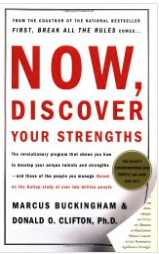
Now Discover Your StrengthsBusiness units whose employees said they “strongly agree” with this item were substantially more likely to be more productive, earn high customer satisfaction scores, and experience low employee turnover.

Other powerful predictors of performance were:

  • I have the chance to use my strengths every day,
  • My coworkers are committed to doing quality work,
  • The mission of our company inspires me.

Deloitte’s revised performance management system asks team leaders to rate four items on a 5-point scale from “strongly agree” to “strongly disagree” or yes-no at the end of every project or once a quarter:

  • Given what I know of this person’s performance, and if it were my money, I would award this person the highest possible compensation increase and bonus [measures overall performance and unique value],
  • Given what I know of this person’s performance, I would always want him or her on my team [measures ability to work well with others],
  • This person is at risk for low performance [identifies problems that might harm the customer or the team],
  • This person is ready for promotion today [measures potential].

These responses provide a performance snapshot that informs but doesn’t completely determine compensation.
Other factors include project assignment difficulty and contributions other than formal projects, evaluated by a leader who knows each individual personally or by a group considering data across several groups.

In addition, every team leader prioritizes once-weekly “check-ins” with each employee to ensure that priorities are clear and progress toward them is consistent.

Strengthfinder 2.0

Strengthfinder 2.0

Goodall and Buckingham opined that “radically frequent check-ins are a team leader’s killer app to recognize, see, and fuel performance,” in addition to using a self-assessment tool that identifies each team members’ strengths and enables sharing with teammates, team leader, and the organization.

These three “interlocking rituals” of the weekly check-in, quarterly or project-end performance snapshot, and annual compensation decision enable a shift from retrospective view of performance to more “real-time” coaching to support performance planning and enhancement.

Deloitte’s approach seeks a “big data“ view of each person’s organizational performance and contribution rather than the “simplicity” of a small data view summarized in a single stack-rank number.

-*How do you develop a “Big Data” view of people’s performance?

-*How do you enable continuous, “in-the-moment” performance feedback instead of once-a-year retrospective view?

Follow-share-like http://www.kathrynwelds.com and @kathrynwelds

Related Posts:

Twitter:  @kathrynwelds
Google+
LinkedIn Groups Psychology in Human Resources (Organisational Psychology)
Facebook
Blog: – Kathryn Welds | Curated Research and Commentary

©Kathryn Welds

Women, Men, and Time: Differences in “Managing” a Limited Resource

Francis Wade

Francis Wade

Special thanks to Francis Wade of 2TimeLabs for his sharing his expertise.

Though women and men have the same amount of time, women seem to manage more time demands and have developed more skillful time practices to grapple with perceived “time scarcity,” according to detailed time-use studies by New South Wales’s Lyn Craig and Janeen Baxter of University of Queensland.

Lyn Craig

Lyn Craig

They found that working mothers invest more hours taking care of children and doing housework than their working husbands.

Arlie Hochschild

Arlie Hochschild

This finding validates the idea that women do a “Second Shift” of work – at home and at the office, described by University of California Berkeley’s Arlie Hochschild.

Brigid Schulte

Brigid Schulte

Personal anecdotes from of women stretched between “two shifts” validate these research findings, distilled in journalist Brigid Schulte’s popular Overwhelmed: Work, Love, and Play When No One Has the Time.

Therese Macan

Therese Macan

To grapple with time demands that may seem to outweigh available time resources, women typically engage in significantly more mechanical time management behaviors like planning, listing, and scheduling, found University of Missouri’s Therese Macan, Comila Shahani of Hofstra University and Robert Dipboye of University of South Florida, who developed the Time Management Behaviors (TMB) inventory

Abdülkadir Pehlivan

Abdülkadir Pehlivan

Many, but not all, gender differences appear to hold across countries and cultures:  Like Macan’s team, Karadeniz Technical University’s Abdülkadir Pehlivan noted that women use more listing, planning and programming than men.

In contrast, male volunteers said they feel more in charge of their time management behaviors, even when they don’t employ the same systematic time procedures as women.

Ranjita Misra

Ranjita Misra

However in a U.S. investigation, females reported better perceived “control” of time, based on using “mechanical” techniques like setting and prioritizing goals as well as planning, reported West Virginia University’s Ranjita Misra and Michelle McKean.
In addition, women said they organize tasks and workspaces more frequently than men.

Despite this efficiency, women paid a price with higher anxiety and lower leisure satisfaction, which may explain the need to develop improved practices.
Males, in contrast, reported more leisure activities and less anxiety.

Tanya Meade

Tanya Meade

In addition, Australian Time Organisation and Management Scale (ATOMS), developed by University of Western Sydney’s Tanya Covic Meade, B.J. Adamson, M. Lincoln and P.L. Kench revealed that 71% of women volunteers recognize this gender difference in time practices:  Women respondents and Meade’s team concluded that “females may be better at carrying out behavioral activities associated with time management, such as making lists and keeping a diary.”

Mark Trueman

Mark Trueman

Another study found that female student volunteers reported considerably greater use of time “management” skills than male students in a five-year investigation by Keele University’s Mark Trueman and James Hartley and in similar research by Al Ain University of Science and Technology Ahmad Saleh Al Khatib.

Nurten Kaya

Nurten Kaya

These gender differences also persisted in specific working environments such as nursing in University of Istanbul’s study by Hatice Kaya with Nurten Kaya, Aylin Öztürk Palloş, Leyla Küçük, which found that female students were able to manage their time better than male students.

Jale Eldeleklioglu

Jale Eldeleklioglu

Because time is a limited and valuable resource, Uludag University’s Jale Eldeleklioglu suggested the life skill of time “management” should begin at a young age in school: ” male students’ time management skills are not as developed as female students’ (so we need) more programs to reduce anxiety and improve students’ time management skills.

-*What differences have you observed in the ways that women and men interact with available time?

-*What practices have you found beneficial in managing time demands?

Follow-share-like http://www.kathrynwelds.com | @kathrynwelds

Follow-share-like www.2time-sys.com | http://perfect.mytimedesign.com |@fwade

Related Posts:

Twitter:  @kathrynwelds
Google+LinkedIn Groups Psychology in Human Resources (Organisational Psychology)
Facebook
Blog: – Kathryn Welds | Curated Research and Commentary

©Kathryn Welds


Women’s Businesses as Engine for GDP Growth

Laura Tyson

Laura Tyson

Women and girls have the most potential to produce economic growth, despite also being marginalized in many countries, according to University of California, Berkeley’s Laura Tyson, who served as chair of the US president’s Council of Economic Advisors.
She added that every year that a girl is in school increases her future income level and the country’s GDP.

Katie Drasser

Katie Drasser

Further, women’s increased workforce participation increases general economic prosperity:  Women who work invest an average of 90 percent of their income back into their families, and drive about 70 percent of global consumption, contributing to positive social and economic outcomes, noted The Aspen Institute’s Katie Drasser and Vanessa Martin of Feministing.

However, women’s economic participation and opportunity is about 15-25 percent less than men’s:  Only about half of working-age women are employed, and they earn only about 74 percent of men’s salaries when they have the same educational attainment and work in the same occupation.

Peter Roberts

Peter Roberts

Gender parity in labor-force participation rates would increase GDP by 12 percent in developed countries over the next 20 years – and even more in developing nations, estimated the Organisation for Economic Co-operation and Development (OECD) in its report, Closing the Gender Gap: Act Now .
In addition, the report advocated equal access to financing for female and male entrepreneurs as well as policy support for women-owned enterprises around the world.

However, the ambitious scope of these recommendations was illustrated by the World Economic Forum’s estimate that it will take until after the beginning of the next century – 2200 – to close the economic gender gap and achieve related economic growth, according to its Global Gender Gap Report 2014.

Required changes to realize these economic benefits include:

  • Equal legal rights for women in land ownership and inheritance,
  • Equal access to credit and lending,
  • Equal educational opportunities from early childhood education to basic literacy through postgraduate training,
  • Elimination of discriminatory practices in recruitment, retention, and pay,
  • Elimination of tax disincentives that discourage women’s labor force participation,
  • Quantified and monitored targets for recruiting and retaining women,
  • Tax credits, benefits, and employment protections for low-wage and part-time workers,
  • Widespread access to affordable childcare, parental leave, and flexible work practices integration policies.

As a result, increasing numbers of startups focus on supporting women and girls, and women’s organizations are shifting in their fundraising habits from seeking foundation funding to generating revenue.

Sean Peters

Sean Peters

Paralleling technology accelerators that “jumpstart” new venture, The Girl Effect Accelerator recently launched an effort to assist 10 organizations improve the lives of disadvantaged girls and women.

The Accelerator provided high-profile mentors, strategic financing, and network partners, supported by the Nike Foundation and the Unreasonable Group, to promising social enterprises.
Social entrepreneurs have also received fellowships, training programs, seed funding, and resources from Propeller, Echoing Green, and other organizations.

Ventures included Embrace, which makes infant warmers for premature infants that cost less than 1 percent of the average incubator, and Jayashree Industries, which distributes affordable sanitary pads via 1,500-plus women-led franchises across India.

Saurabh Lall

Saurabh Lall

Emory’s Peter W. Roberts and Sean Peters with Saurabh Lall of Aspen Network of Development Entrepreneurs analyzed companies that participated in Social Impact Accelerator programs and found they have higher revenue generation than enterprises that didn’t receive this additional support, noted in their Impact of Entrepreneurship Database 2014 mid-year report.

One example is Agora Partnerships Impact Accelerator support of Maya Mountain Cacao‘s efforts to fulfill Eleos Foundation’s investment criteria, resulting $200,000 raised from in 20 investors.

Kristin Gilliss

Kristin Gilliss

In contrast, Aspen Network of Development Entrepreneurs (ANDE) and Village Capital reported less positive results of social investment:  Only 31 percent of companies that worked with Social Impact Accelerators became profitable or received a significant investment.

Social Impact Accelerator success rate could be improved by:

  • Connecting investors with entrepreneurs,
  • Consistently adopting tech startup accelerators’ business models, to fulfill rigorous investment criteria, attract investors and raise funding,
  • Measuring and scaling actual impact, as advocated by Kristin Gilliss of the Mulago Foundation.

-*What additional policies and programs could increase the economic success and impact of social entrepreneurs?

Follow-share-like http://www.kathrynwelds.com and @kathrynwelds

RELATED POSTS:

©Kathryn Welds