Category Archives: Business Communication

Business Communication

Glass Elevator and Nine Principles for Personal Branding, Career Impact

Ora Shtull

Ora Shtull

Ora Shtull points to the small number of women leading Fortune 500 companies to argue that women can benefit from adopting nine practices to enhance personal branding.

Her book, The Glass Elevator – A Guide to Leadership Presence for Women on the Rise, focuses on: The Glass Elevator

• High-impact communication through asking strategic questions,

• Practicing confident body language in posture, body position, and vocal projection,

• Listening to learn and understand,

• Developing a collaborative relationship with your manager,

• Partnering with team members and direct reports to deliver results,

• Expanding your network by being likable and generous,

• Asking for what you want and creating “win-win” proposals,

• Sharing your differentiators,

• Adopting a positive outlook, even if at first it’s “as-if.”

Shtull developed a comprehensive Leadership Presence Coaching model based on the principles of Influence-Engage-Connect.

-*Which of Shtull’s recommendations have most helped you ride the “Glass Elevator”?

Related Posts:

©Kathryn Welds

Three Factors Affecting Women in Corporate Leadership

Sara King

The Center for Creative Leadership’s Sara King and Northwestern University professor Alice Eagly examine the obstacles, pressures and trade-offs women face at every stage of their careers to analyze the reason that only three percent of Fortune 500 leaders are women.

Alice Eagly

King’s and Eagly’s research identified three factors affecting women in corporate leadership roles:

•    “Walking the narrow band” of acceptable behaviors: tough and demanding to be credible and effective but “easy to be with”; demonstrating the desire to succeed but not appearing “too” ambitious

•    “Owned by the job”, with the expectation of availability and productivity 24/7

•    “Traversing the Balance Beam” of conflicting role demands and limited time to fulfill them

They provide familiar suggestions:
•    Seek out mentors and advocates

•    Take risks, accept challenges to demonstrate adaptability, versatility.
Communicate willingness to change jobs and take on special projects to gain experience.
Learn from research findings that women are not viewed as promotable if they stay in one area of expertise or have a narrow functional role.

•    Communicate decisions, demand results, even if unpopular or requiring change management and persuasion

•    Project confident. Projecting an effective leadership image requires confidence. Don’t undermine good results with a weak or too modest self-image
Through the Labyrinth: The Truth About How Women Become Leaders.
Alice H. Eagly  Linda L. Carli, 2007 Harvard Business School Press.
The Center for Creative Leadership showcased related research that identified five themes among high-achieving women: agency, authenticity, connection, self-clarity and wholeness.

Agency, taking control of one’s career:
•    Analyze career steps
•    Set realistic, specific goals and develop a plan for achieving them
•    Ask for challenges outside your current functional orientation
•    Seek recognition
•    Ask for what you deserve

Authenticity, being genuine, being yourself by developing self-awareness to clarify   values, preferences, skills, acceptable trade-offs and acceptable sacrifices.

Connection, by taking time for people, to build personal and professional relationships, networking, finding a mentor, establishing a personal “board of directors” to provide support and feedback.

Self-clarity from seeking feedback and reflecting on one’s values, motivations, behaviors, strengths, weaknesses, impact on others.
This is a continuing process of evaluating changes in your needs, motivations, goals, values, while observing patterns, and being open to possibilities.

Wholeness from seeking roles beyond work or to unite different life roles, by prioritizing commitments and saying “no” to low-priority roles or obligations.

-*What solutions have you seen most effective in navigating the challenges facing women seeking leadership roles?

LinkedIn Open Group Catalyst
Twitter: @kathrynwelds
Google+
Facebook Notes:
Blog: – Kathryn Welds | Curated Research and Commentary

©Kathryn Welds

Igniting Purpose and Passion

Robert Fried

Robert Fried

Robert Fried drew on principles articulated in his previous book, A Marketing Plan for Life, linking a 12-point business marketing plan to clarify life purpose and interests.

He suggests applying these marketing principles to defining personal life purpose, value proposition, brand, and “elevator pitch”:

Define the business you’re in:

• What’s unfinished for me to experience?
• What’s unfinished for me to give?
• What’s unfinished for me to learn?
• What’s unfinished for me to heal?
—–
• What ignites my passion?
.When did I experience joy?
.When did I lose track of time?
.What were my childhood dreams?
.Who do I admire?
• What can I do best to serve others?
• What is my true purpose in life?
• What actions do I need to take to realize my true purpose?

Peter Montoya

Peter Montoya

Fried cited recommendations from Peter Montoya and Tim Vandehey‘s book, The Brand Called You

What business am I in? What do I offer? Who am I?
What do I “stand for”? What are my core values?
What talents, strengths, character traits make me “unique”?

Tim Vandehey

Tim Vandehey

What is my specialty? How do I demonstrate this expertise?
How do I demonstrate the value? How to I communicate the benefit?
How do I “make a difference”?
How do I consistently communicate the alignment between my “offering” and its value?
What should people care? What is my cause beyond profit-making?

  • What are my demonstrable differences? “Features”? “Benefits”?

Opinions different on the optimal duration of responses to these value-clarifying questions, but one benchmark is “more than 25 words and fewer than 25 seconds.”

-*How do you clarify your purpose and mobilize your motivation?

LinkedIn Open Group – Leadership Think Tank
Twitter: @kathrynwelds
Google+
Facebook Notes:
Blog: – Kathryn Welds | Curated Research and Commentary

©Kathryn Welds

Business Influence as “Enchantment”

Guy Kawasaki

Guy Kawasaki

Guy Kawasaki, former Chief Evangelist at Apple, co-founder of Alltop.com, and author of Enchantment: The Art of Changing Hearts, Minds, and Actions, shared with Stanford University entrepreneurship students his conviction that business influence or “enchantment” is the foundation of successful entrepreneurship.

He maintains that business influence, or “charisma”, or persuasiveness, is based on the following characteristics and behaviors.

Likeability
• Smile, engaging the corner of eyes (“crow’s feet”!) of Duchene smile
• Handshake, drawing on University of Manchester research, for the optimal handshake to engage social connection
• Dress equal to audience, not more formally or more casually

Trustworthiness
• Must trust others in order to have others trust you
• “Believe that the world is a non-zero sum game”
• “Default to Yes: How can I help this person?”
• Create something (product, services) DICEE for the listener
o D-eep
o I-ntelligent
o C-ompleteness
o E-mpowering
o E-legant

In promoting products and services, he advises:

• Branding must be “short, sweet, swallowable”: “Mantra, not Mission Statement.”
[Kawasaki’s mantra is “Empower People”]

• Conduct pre-mortem to course-correct: Pretend that the company failed; use diagnosis to course-correct

• Launch product or service by telling a compelling story

• “Plant many seeds: The world has been inverted: LonelyBoy15 needs to embrace your product and he encourages his contacts to embrace your product.”

• “Put your prototype out there because you never know who your LonelyBoy15 will be.”

• Make salient points, things that matter to listeners

• Overcome resistance via:
o Social proof (“others are doing it, so it must be ok”)
o “Find a bright spot – don’t fix something for the nay-sayers; use what is working”
o Enchant all the influencers. “The higher you go, the thinner the air, and the more difficult to support intelligent life. If you deal with CXOs, you will deal with the dumbest people. Look for the influencer, in the middle or bottom.”

• Make something endure
o Don’t default to using money; cultivate genuine “belief” and “commitment”
o Invoke reciprocity –“pay it forward”.
When the person expresses gratitude, say, “I know you would do the same for me.”
Enable the reciprocity to “alleviate the guilt” the other person experiences
o Build an ecosystem beyond your product including all interested stakeholders, users

• Learn to speak
o Customize the introduction: verbally, photos
o Sell your idea
o 10-20-30 rule: 10 slides, 20 minutes, 30 point font

• Provide value via social media
o Information
o Insight, meaning

o Assistance
o Remove the speed bumps, and obstacles to adoption
o Engage within 24 hours – “fast, many, often: it is core to your existence”

• Enchant up
o “Drop everything and whatever the boss asks: Just do it”
o Prototype fast – exceed expectations, deliver early
o Deliver bad news early, with ways to correct

• Enchant down
o Master
o Autonomy: Empower action, convey trust of others’ judgment
o Purpose
o Never ask others to do what you wouldn’t: “Suck it up”

-*How do you use “enchantment” to influence others?

LinkedIn Open Group – The Executive Coach
Twitter: http://www.twitter.com/kathrynwelds
Google+
Facebook Notes:
Blog: – Kathryn Welds | Curated Research and Commentary

©Kathryn Welds

Five Questions to “Work Any Room”

Allison Graham

Allison Graham

Allison Graham asserts in her book, From Business Cards to Business Relationships: Personal Branding and Profitable Networking Made Easy,  that the goal of conversation at business and social events is to determine whether there is enough common ground to connect again.

She offers five questions to start conversations with people you’ve never met before:

• “What’s your connection to the event?
This question can uncover mutual contacts

• “What’s keeping you busy when you’re not at events like this or at work?

• “Are you getting away this summer?
This question can lead to conversations about family, reveal special interests and travel

• “Are you working on any charity initiatives?
This question makes it easy to launch into a deeper connection, revealing values and priorities

• “How did you come to be in your line of work?
For many, the path to where they are today can be an inspiring or challenging journey, full of surprise, suspense, and drama

Graham concludes that:

• Each person decides during the initial contact whether there is enough connection to warrant future interaction

• During these small conversations, people form their opinions about whether they like you, trust you, and believe you’re competent

• Match the depth of dialogue to the environment

• Your words may be forgotten, but how you make people feel will be remembered

• Relaxation, full engagement, genuine interest, enable the conversation to “flow”

-*How do you prepare for professional “networking” with people you’ve never met before?

LinkedIn Open Group – The Executive Coach
Twitter: @kathrynwelds
Google+
Facebook Notes:
Blog: – Kathryn Welds | Curated Research and Commentary

©Kathryn Welds

Questions to Answer in Personal Brand, “Elevator Pitch”, Resume

Colleen Aylward

Colleen Aylward

Colleen Aylward asserts that the following questions must be answered in your resume, “elevator pitch”, information interview, and online presence in her book, From Bedlam to Boardroom: How to get a derailed executive career back on track!

  • What is your [narrow, deep] expertise?
  • What are your strengths?

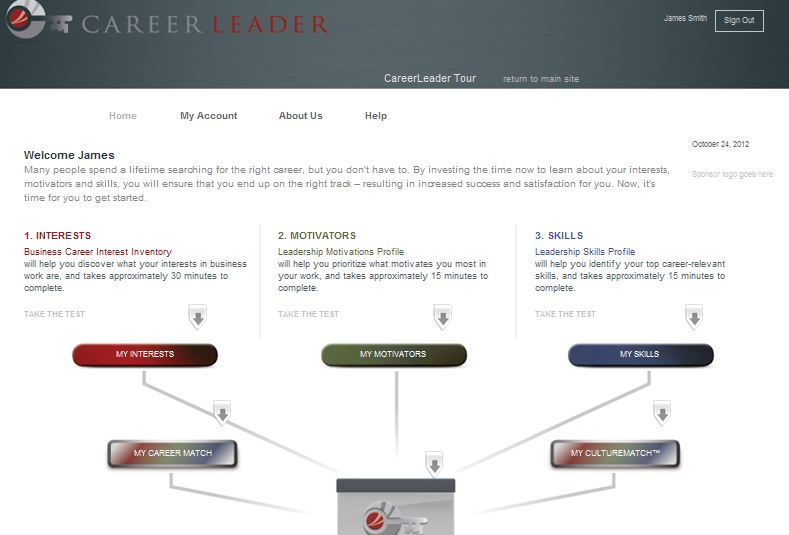
Career Leader by Harvard Business School professor Timothy Butler

  • What is your unique business differentiator?
  • What problems have you solved? How?
    [Note accomplishments and quantified impact, not responsibilities;
    Specify numbers, even if <10 – contrary to style rules]
  • How have you increased revenues, profit?
  • How have you improved processes?
  • How have you demonstrated creativity, innovation?
  • How have you reduced costs?

The last four items, indicated by *, are considered critical Key Performance Indicators that you must convey clearly, repeatedly, and memorably in all in-person and online activities.

-*What assessments and tools have you used to uncover your strengths, expertise and key differentiator?

LinkedIn Open Group – The Executive Coach
Twitter: @kathrynwelds
Google+
Facebook Notes:
Blog: – Kathryn Welds | Curated Research and Commentary

©Kathryn Welds
Women Don’t Ask for Raises or Promotions as Often as Men

Linda Babcock

Linda Babcock

Linda Babcock‘s 2011 research at Carnegie-Mellon University identified one possible reason for the oft-reported pay gap between genders: Women don’t ask for raises as often as men
They wait to be offered a salary increase, a promotion, to be assigned the task or team or job that they want.

Researchers note that this type of unsolicited offer rarely occurs.
The study found that when women do ask, it can lead to others finding them “too demanding and aggressive.”

This trend was demonstrated when researchers showed people videos of a man and a woman each asking for a raise, following the same script.
Viewers of both genders reported similar negative perceptions of women who requested promotion.

The study reviewed approaches to help women improve their negotiation skills without challenging “preconceived notions about appropriate gender behavior.”

Some critics note that this analysis doesn’t consider larger scale inclusion and diversity interventions, such as resources offered by NCWIT.org to guide design and launch of merit-based systems for hiring, promoting, and managing women and other underrepresented groups.

*How likely are you to ask for a salary increase or promotion?
-*What factors do you consider before making a request for more more or an expanded role?

©Kathryn Welds

Business Storytelling = Trance Induction?

Jonathan Brill

Jonathan Brill

Jonathan Brill of Prolific.com asserts that storytelling in sales situations can be memorable, evocative, and often persuasive because stories engender:

• Trust-credibility
• Engagement-interest-attention
• Comprehension
• Transformation
• Vision
• Sharing

Brian Sturm

Brian Sturm

Brill referred to a model of storytelling developed by Brian Sturm, a professor at University of North Carolina’s School of Information and Library Science, who Sturm asserts that storytelling induces a “qualitatively different state of consciousness”, like “a light trance.”

Sturm surmises that trance can be induced ”when stories begin with paradoxical or nonsensical premises that engage both the more logical functions associated with the ‘left brain’ and non-verbal, emotive, creative elements associated with the ‘right brain’.”

He observes that stories “create an immersive, powerful world” that the listener may “struggle to gain access.”
In addition, stories “organize information” to “connect data points.”

Sturm notes that stories convey emotions and opportunities to learn from the example of winners and losers, so stories can build a sense of community and the capacity for empathy through shared experience.

He presents a seven-stage model of the Storylistening Experience in this video.

Mike Bonifer

Mike Bonifer

Brill also drew on Mike Bonifer’s discussion of the difference between “Newtonian narrative” vs “Quantum narrative,” which aligns to the distinction between a linear, logical, rational story in contrast to an organically emerging story suffused with emotion, imagery, and metaphor.

Like Sturm, Bonifer sees story as a way to organize information, and he adapts theatrical improvisation methods to business environments.
Bonifer sees improvisation as a “narrative engine” in the context of his ‘Five Act’ methodology for business consulting:

-Listen
-Connect
-Collaborate
-Adapt
-Perform

-*Where have you seen business stories induce “trance”?

LinkedIn Open Group – Mindful Leadership
Twitter: @kathrynwelds
Google+:
Facebook Notes:

©Kathryn Welds

Self-Marketing: Improve your PVI: Sharpen Perception, Increase Visibility, Exert Influence

Joel Garfinkle

Joel Garfinkle

Joel Garfinkle emphasizes the importance of making your accomplishments and contributions visible to peers and executive: Self-marketing as a career development strategy in his book, Getting Ahead: Three Steps to Take Your Career to the Next Level

His extroverted persona encourages even the most introverted professional to speak up and showcase work contributions to guide career development instead of waiting to be noticed among a field of many able contributors.

-*What practices are effective and acceptable to increase professional visibility?

LinkedInOpen Group – Women in Technology (sponsored by EMC)
Twitter: @kathrynwelds
Google+
Facebook Notes:

©Kathryn Welds

Developing “Charisma” and “Presence”

Olivia Fox Cabane

Olivia Fox Cabane

Olivia Fox Cabane integrated research findings from social psychology and neuropsychology with principles of Emotional Intelligence and “Practical Buddhist Philosophy” in her book, The Charisma Myth: How Anyone Can Master the Art and Science of Personal Magnetism

She concluded that charismatic behaviors are based on managing internal state and beliefs through self-awareness to focus on others and “make them feel good.”

She found that “charisma” or “presence” is composed of:

•Presence – mindful attention, patient listening, avoiding interruption

•Power – appearance, clothing, occupy space, positive wording (avoid “don’t”), placebo effect

•Warmth – chin down, eye contact, Duchenne smile (mouth corners, eye corners), gratitude, compassion, appreciation – counteract “hedonic adaptation”

•Goodwill – wishing the other person well

•Empathy – understanding the other’s experience

•Altruism

•Compassion – a combination of empathy+goodwill

•Forgiveness of self and others

•Self-compassion – self-acceptance. Positively correlated with emotional resilience, sense of personal responsibility, accountability, sense of connectedness, life satisfaction, positive relationships with others, self-confidence, willingness to admit errors, low self-pity, low depression, low anxiety, improved immune system functioning

•”Metta” – loving kindness to self, others

Fox Cabane offered three “quick fixes” to increase your “charisma”:

•Lower the intonation of your voice at the end of your sentences (no “Valley Girl talk”…)
•Reduce the speed and rapidity of nodding
•Pause for two seconds before you speak

-*When you see a charismatic person in action, what behaviors and attitudes add to the interpersonal impact and appeal?

©Kathryn Welds