Category Archives: Behavior Change

Behavior Change

Productivity and Work Motivation Affected by Meaning, Challenge, Mastery, Ownership

Small gestures and verbalizations by managers and organizations can have a large impact on employee productivity, motivation, engagement, and retention – for better or worse.

Dan Ariely

Dan Ariely

Dan Ariely’s research at Duke University showed the small changes in task design dramatically increase or diminish persistence, satisfaction, and commitment to tasks.

The good news is that by simply looking at something that somebody has done, scanning it and saying ‘uh huh,’ [you] dramatically improve people’s motivations…. The bad news is that ignoring the performance of people is almost as bad as shredding their effort in front of their eyes. …,” according to Ariely.

Ariely’s lab experiments found that volunteers valued and liked their work product more when they worked hard and managed obstacles to produce it.
In addition, most people believed, often inaccurately, that other observers shared their positive view of their work product,

His research concluded that people seek meaning, challenge, and ownership in their work, and that these elements can increase work motivation and persistence.

Viktor Frankl

Viktor Frankl

Holocaust survivor and psychiatrist Viktor Frankel articulated this existential perspective in his examination of the critical role that meaning played in the enabling survivors of concentration camp prisoners in Man’s Search for Meaning.

In the less extreme circumstances of the workplace, finding and assigning meaning to work efforts enables people to persist in complex tasks to achieve satisfaction in mastering challenges.

Rosabeth Moss Kanter

Rosabeth Moss Kanter

Harvard’s Rosabeth Moss Kanter concurred that both meaning and mastery are productivity drivers, and to these she added a social dimension, membership, and a distant runner-up, money.
Frederick Herzberg

Frederick Herzberg

In contrast, one of the early though leaders in business management, psychologist Frederick Herzberg, developed a classic formulation of motivational factors contrasted with “hygiene factors.”

Frederick Herzberg - Motivation-Hygiene factorsHis two-factor theory of motivation did not include meaning or money as driving job satisfaction or productivity.

Shawn Achor, formerly of Harvard, argues that happiness is the most important work productivity lever.

Shawn Achor

Shawn Achor

To support his contention, he cited research findings that happy workforces increase an organization’s sales by 37 percent, productivity by 31 percent and accuracy on tasks by 19 percent.

Whether you work for mainly for meaning, money, or other motivations, you may agree that an ideal workplace and manager would foster all of these contributors to employee engagement and productivity.

-*What is the most important work motivator for you?
-*How have you seen managers increase employee engagement and performance through words and actions?

Related Posts

Twitter:  @kathrynwelds
Blog |Kathryn Welds| Curated Research and Commentary
Google+:
LinkedIn Open Group Psychology in Human Resources (Organisational Psychology)
Facebook Notes:

©Kathryn Welds
Interpersonal Envy in Competitive Organizations

Workplace envy is rarely discussed, although it is a logical outcome of competition for scarce resources:  Recognition, advancement, power, reputation, compensation in explicit or implicit organizational “tournaments.”

Jayanth Narayanan

Jayanth Narayanan

National University of Singapore’s Jayanth Narayanan, Kenneth Tai, and Daniel McAllister broached the near-taboo of workplace envy as an inevitable outgrowth of social comparison and related “cognitive dissonance” in attempting to self-regulate or return to emotional and equity “homeostasis.”

Daniel McAllister

Daniel McAllister

They differentiated malicious envy from benign envy and argue that the latter can drive performance through emulating admired outcomes.

This process, called firgun in Hebrew, is characterized by happiness, envy, and support of others, and is positively related to organizational success.
Mudita in Buddhist texts, refers to similar feelings of vicarious joy at another’s success and good fortune.

Hidehiko Takahashi

Hidehiko Takahashi

Narayan and team posit that envy is pain at another’s good fortune, and Hidehiko Takahashi’s team at Japan’s National Institute of Radiological Sciences demonstrated that the social-emotional pain of envy is a variation of the physical pain experience.

Their fMRI study found that the emotional pain of workplace envy is physically manifested in activation of the brain’s anterior cingulate cortex.

Nathan DeWall

Nathan DeWall

As such, Nathan DeWall of University of Kentucky and colleagues reported that Tylenol™ reduces behavioral and neural responses associated with social pain in two fMRI studies.

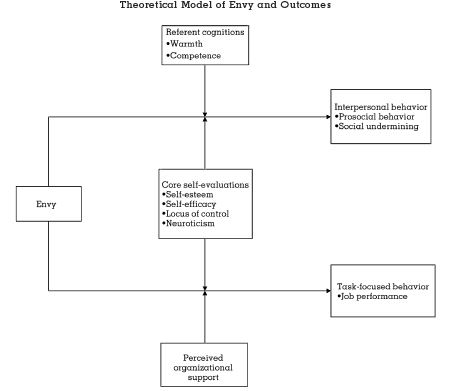
Narayanan argues that envy exerts its differential effect on workplace behavior through each individual’s specific:

  • Core self-evaluations (self-esteem, self-efficacy, locus of control, and neuroticism),
  • Referent cognitions” regarding warmth, likeability, and competence of the envied  person
  • Perceived organizational support

Workplace envy, they argue, can affect:

  • Social undermining
  • Prosocial behavior
  • Job performance

Narayanan and team proposed that those with higher self-esteem are less prone to negative workplace behaviors when experiencing on-the-job envy.

They propose that people are less likely to socially undermine the envied individual when the envied person is viewed as both warm-likeable and competent.

Similarly, they suggest that people who think their organization values them and their work, and supports their work and career development efforts are less likely to decrease job performance when envious at work.

Chade-Meng Tan

Chade-Meng Tan

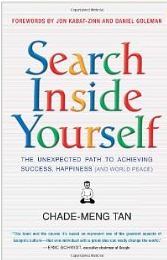
Search Inside YourselfGoogle’s Jolly Good Fellow ChadeMeng Tan proposes the mindfulness-based program “Search Inside Yourself” (SIY) as a way to self-manage workplace envy and other painful social experiences, by developing skills in:

  • Trained attention
  • Self-knowledge and self-mastery
  • Creating useful mental habits.

-*How do you manage workplace envy when you notice it in yourself or others?

RELATED POSTS:

©Kathryn Welds

ROI of Effective Managers

Dilbert and Pointy-Haired Boss

Dilbert and Pointy-Haired Boss

Inept managers cause stress, cynical posting of Dilbert cartoons, and foment incredulous recounting of unparalleled cluelessness.
However, the all-too-rare effective manager delivers a creditable Return on Investment.

Edward Lazear

Edward Lazear

Stanford’s Edward Lazear and Kathryn Shaw collaborated with Christopher Stanton, now of of University of Utah to study the impact of nearly 2000 supervisors on more than 23,000 employees’ output productivity in a large  services firm.

Kathryn Shaw

Kathryn Shaw

They found that although there is substantial variation in managerial quality, as measured by their effect on worker productivity, the skillful managers in this workplace improved productivity by 10 percent.

Christopher Stanton

Christopher Stanton

Lazear, Shaw and Stanton demonstrated that replacing managers rated in the lower 10% of boss quality by employee output with managers in the upper 10%, the resulting increase in team total output is about the same amount as adding one worker to a nine member team.

In addition, effective managers are associated with increased productivity among both top-rated workers and the lowest-performing workers, with greater performance increases among the firm‘s top performers.

The researchers noted that employees’ peers had negligible impact on productivity measures, so they concluded that productivity increases are significantly influenced by managerial behaviors.

These findings point to the importance of hiring skilled managers and improving or removing unskilled managers to drive productivity and associated profit.

As a result, pre-employment assessment and managerial training industries are required to demonstrate efficacy in selecting already-skilled managers, and transforming less-skilled managers into top performing supervisors.

Some argue that developing managerial skill is a long-term behavior change because many of the interpersonal behaviors of effective managers have long-standing characterological roots.

For example, Lazear reported that the best managers in this large sample demonstrated humility and a sense of humor in their efforts to teach and motivate employees.
These attitudes develop over years, and may not be amenable to short-term training interventions.

Randy Hodson

Randy Hodson

Randy Hodson of Ohio State University conducted an ethnographic study of “worker citizenship behavior”, including level of work effort, absenteeism, and employee engagement.

He found “manager citizenship behavior” has the greatest impact on employee engagement, work effort, and employee’s related productivity.
These management behaviors include:

  • Leadership practices
  • Communication style
  • Commitment to worker job security
  • Providing appropriate work supplies and tools to achieve workers’ output requirements
  • Absence of “management abuse.”

Managers who respected worker rights and maintained an effective, productive environment for workers  had workers who invested more efforts in work and achieved greater productivity, besides having a better relationship with each other and with bosses.

Watson Wyatt TowersWatson Wyatt’s WorkUSA 2009 survey of 13,000 full-time U.S. workers across all job levels and in all major industries that organizations with highly engaged employees had:

The report found waning employee engagement over job tenure:  Employee engagement is highest in the first six months on the job, and is more than 11 percent higher during that “honeymoon period” than for longer-tenure employees.
Employee engagement drops nine percent after the first six months on the job, and continues to decline.

Watson Wyatt’s regression analysis of these data found that this 11% decline in employee engagement has the same expected impact on employee productivity as a decline of assets per employee of nearly 0.6 percent.

To offset the impact on productivity, a typical firm would need to invest more than $2,700 per employee.

A similar regression analysis controlled for industry, firm size and capital intensity and estimated that 11% decline in engagement is associated with a 1.7 percent reduction in market value.
For the typical S&P 500 firm, this decreased expected market value could be $216 million, suggesting that managerial behavior is a critical determinant of productivity and ultimate market value.

The challenge for top management is to evaluate sustained improvement in managerial behavior attributable to managerial learning and development interventions, to ensure Return on Investment for managerial development.

-*What managerial attitudes and behaviors have you seen increase employee productivity?

Related Post

Twitter:  @kathrynwelds
Google+:
Blog: – Kathryn Welds | Curated Research and Commentary
LinkedIn Open Group Psychology in Human Resources (Organisational Psychology)
Facebook Notes:

©Kathryn Welds

Perseverance Increases Skill Increases Luck: “The Harder I Work, The Luckier I Get”

Samuel Goldwyn

Samuel Goldwyn

Thomas Jefferson

Thomas Jefferson

Samuel Goldwyn recast Thomas Jefferson’s earlier observation: “I am a great believer in luck, and I find the harder I work, the more I have of it.”

Michael Mauboussin, of Columbia University, and previously Chief Investment Strategist at Legg Mason Capital Management Inc. investigated this relationship between effort and luck in his book, The Success Equation.The Success Equation

Michael Mauboussin

Michael Mauboussin

Mauboussin, an innovator in behavioral finance, adopted Harvard biologist Stephen Jay Gould’s “paradox of skill” to analyze the interaction of effort, skills, and luck, and best strategies to optimize outcomes in investing, sports, and career performance.

Stephen Jay Gould

Stephen Jay Gould

He posits that as skill improves in activities where outcomes are affected by skill and luck, the standard deviation of skills narrows.
In this case, luck becomes more important in determining outcomes:

Whenever you see an outlier in sports, it is always a combination of really good skill and really good luck… (Often) they are about one and a half or two standard deviations away from the average…not all skilled players have (winning) streaks, but all (winning) streaks are held by skillful players.”

For example, as investors become more sophisticated and have access to advanced computational tools, as athletes benefit from targeted training and development regimens, and as students are groomed for admission to top universities, differences among these skilled performers decreases.
Chance influences can determine outcomes.

Mauboussin says that luck has several elements:

  • Affects an individual or organization,
  • May be evaluated as “good” or “bad”
  • Another outcome could have occurred
  • The outcome is uncontrollable, but is comprised of several elements

To increase luck, he advises assessing each contender’s strength in the situation and finding “…something completely different to get you on the right side of the tail of the skill distribution,” such as employing an unusual or unexpected tactic.

The stronger player has positive asymmetric resources, so the effective strategy is to simplify the game.
In contrast the underdog should seek to complicate the game, such as through disruptive innovation, a flank strategy or a guerilla tactic.

Because most people have a bias toward optimism and overestimate personal capabilities, it may be difficult to assess oneself as an “underdog” in a performance situation.

Daniel Kahneman

Daniel Kahneman

Nobel Prize winner Daniel Kahneman and Amos Tversky explained that individuals who adopt an inside view gather substantial information, combine it with their own inputs, then project into the future without considering “distributional information” about a wide variety of previous instances.
This approach risks developing an idiosyncratic, overconfident perspective by underestimating costs, completion times, and risks of planned actions, while overestimating benefits.

Amos Tversky

Amos Tversky

In contrast, people who adopt the outside view consider the problem as an instance of a larger reference class and consider the entire distribution of outcomes when this type of situation occurred previously.
This approach can reduce overconfidence.
However, this approach could discourage entrepreneurs, who will realize that a small percentage actually succeeds.

In addition, besides the bias toward overconfidence, people tend to “under-sample” instances of failure when a previously successful approach is applied in a new situation and doesn’t succeed.

Nate Silver

Nate Silver

Sabermetricians like Nate Silver, posit that worthwhile statistics provide:

  • Persistence or correlation from one period to the next, a strong indicator of high skill
  • Predictive value or high correlation with the target objective

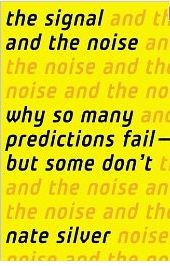
Nate Silver-The Signal and The NoiseThe Oakland As baseball team uncovered these principles in determining that  a superior measure of athletic performance in this sport is on-base percentage rather than the traditional measure, batting average.

In this case, on-base percentage has a higher correlation from one season to the next and a higher correlation with run production than batting average, fulfilling both criteria.

Daniel Kahneman also suggested that skill, expertise, and intuition render more uniform results in a predictable environment.

Thinking Fast and SlowHowever, many organizational environments are unstable and non-linear, rendering experts less accurate because they cannot employ an effective predictive model.

Collective judgments through “the wisdom of crowds” may mitigate the challenges of unstable contexts because they provide more data points.

Mauboussin advocated considering the continuum of stability vs instability in which the issue is situated to determine strategy and to beware of applying simple heuristics that are vulnerable to bias, and social or situational influences.

He suggested the guideline “think twice” to prepare, detect and correct for common mental traps, including:

  • The Inside-only View
  • Tunnel Vision
  • Oversimplification
  • Situational Power
  • Overvaluing Expert Knowledge

-*How do you optimize your performance when chance elements can affect your outcomes?

Related Posts

©Kathryn Welds

Resilient Performance Enhanced by Warmth, Touch

John Bargh

John Bargh

Idit Shalev

Idit Shalev

John Bargh of Yale and Idit Shalev now of Ben Gurion University found a bi-directional causal relationship between physical warmth and social warmth.

They used social affiliation as a proxy for social warmth; Loneliness and interpersonal rejection were examples of social coldness.

Results from their four studies concluded that feelings of social warmth or coldness can be induced by experiences of physical warmth or coldness, and vice versa.

In addition, Bargh and Shalev demonstrated that volunteers unconsciously self-regulated feelings of social warmth by applying physical warmth.

This type of self-regulation is a form of exerting control over the environment and managing feelings.
Self-management strategies reinforce people’s perception that they have some control over choices and environment.

Paul Zak

Paul Zak

Kerstin Uvnas-Moberg

Kerstin Uvnas-Moberg

Paul Zak and Kerstin Uvnas Moberg argue that touch can be another self-regulation strategy because it activates the vagus nerve and the release of oxytocin, resulting in increased feelings of interpersonal warmth, compassion, and collaboration.

Both of these self-management strategies – inducing warmth and engaging in touch – can increase task performance and reduce the likelihood that people will experience depression.

Carl Honore

Carl Honore

Martin Seligman

Martin Seligman

Canadian Journalist Carl Honore provided evidence in Martin Seligman’s important finding in studies of “learned helplessness,” that when people have a sense of control – whether real or a “positive illusion” – it can have a salutary effect on performance and mood.

-*How do you self-regulate performance and mood?

The Slow FixMartin Seligman-HelplessnessRelated Posts

Twitter:   @kathrynwelds
Google+:
Blog: – Kathryn Welds | Curated Research and Commentary 
LinkedIn Open Group Psychology in Human Resources (Organisational Psychology)
Facebook Notes:

©Kathryn Welds

Beware of Seeking, Acting on Advice When Anxious, Sad

Just as wise grandmothers advise, it’s best to avoid decisions when upset, anxious, or sad.

Maurice Schweitzer

Maurice Schweitzer

Maurice Schweitzer and Alison Wood Brooks of Wharton validated Grandmother Wisdom in eight experiments that demonstrated anxiety’s impact on lowering self-confidence, impairing information processing, and impeding ability to distinguish advice from neutral advisors and those with a conflict of interest.

Alison Wood Brooks

Alison Wood Brooks

They found that people experiencing anxiety tend to seek advice and act on it, but they are less able to differentiate poor advice from valid recommendations, and these results are applicable to making decisions about crucial medical treatment, financial investments, or even guidance counseling.

The team evoked anxious feeling among volunteers by presenting potentially frightening film clips and music, and asked them to judge a person’s weight based on a photograph or number of coins in a jar or solve a complex math problem.

Participants were offered money for correct judgments, and the opportunity to receive advice from others when they were uncertain.
Those who heard the scary music or saw the alarming film clip rated themselves as less confident of their decision, and were more likely to ask others for advice.
These effects were not observed when volunteers were shown a film clip that could provoke anger.

Schweitzer and Brooks concluded that people vary in their receptivity to advice based on:

  • Advisor’s characteristics, such as expertise, consistent with Cialdini’s observation

    Robert Cialdini

    Robert Cialdini

  • Perceived difficulty of the decision
  • Decision maker’s emotional state when receiving advice

The researchers advised decision-makers to:

  • Monitor their internal states for anxiety
  • Use feedback from multiple sources when making important decisions
  • Work toward developing increased self-confidence
  • Evoke calm state, often possible with systematic breathing or mindful attention and equanimity
Catherine Hartley

Catherine Hartley

Catherine Hartley, then of New York University and Elizabeth Phelps of New York University contributed to the neuroeconomic analysis of anxiety’s impact on decision- making when they reported that brain structures responsible for regulating fear and anxiety are also involved in economic decision-making under uncertain conditions.

Elizabeth Phelps

Elizabeth Phelps

Specifically, the amygdala is crucial in learning, experiencing, and regulating both fear and anxiety and it is also implicated in decision-making in situations of potential loss.
The prefrontal cortex is specialized in controlling fear and is also involved in decisions containing risk elements.

Hartley and Phelps suggest that techniques for altering fear and anxiety may also improve economic decisions-making.

Rajagopal Raganathan

Rajagopal Raganathan

Rajagopal Raghunathan, then of New York University and Michel Tuan Pham of Columbia University demonstrated the same connection between anxiety and making decisions about gambling and job selection.

Michel Tuan Pham

Michel Tuan Pham

They conducted three experiments and found that sad individuals select high risk / high-reward gambling and job options, whereas anxious individuals are biased in favor of low-risk / low-reward options.

Raghunathan and Pham posit that anxiety tends to motivate people to reduce uncertainty whereas sadness moves people to replace rewards.
They suggest suggesting two different decision biases related to mood states.

Raghunathan and Pham add to Schweitzer and Brooks’s recommendations for mitigating decision bias:

  • “Monitor feelings”
  • Consider alternate options
  • Speculate on future moods and preferences if each option were selected: “What would I feel better about . . .?

-*How do you mitigate the potential decision bias when anxious or sad?

Related posts:
Memorable Business Stories: Ideas and Numbers
Business Influence as “Enchantment”

  • ©Kathryn Welds

Health Benefits of Positive Emotions, Outlook

Barbara Fredrickson

Barbara Fredrickson

Barbara Frederickson of University of North Carolina posits that negative emotions aid human survival by narrowing and limiting people’s perceived range of possible actions, whereas positive emotions enhance survival by “broadening and building” options for action.

She detailed her lab-based research in Positivity: Top-Notch Research Reveals the 3 to 1 Ratio That Will Change Your Life and her talk at UC Berkeley Greater Good Science CenterPositivity

Her lab’s findings suggest that positive thinking expands awareness and perception of the surrounding world, so can lead to innovative solutions to problems.

She suggests intentionally implementing a “broaden-and-build” approach to emulate this expanded view: Choose a degree of focus and perspective depending on requirements.

For example, to garner more clout in a discussion, she suggests involving more people who will provide support.
Similarly, to mitigate negative thinking or “tunnel vision,” think more broadly by viewing “the big picture.”

Rosabeth Moss Kanter of Harvard Business School referred this perceptual shift as “zooming in” and “zooming out”, depending on the perspective requires.

Rosabeth Moss Kanter

Rosabeth Moss Kanter

Frederickson found that people who experience positive thinking are:

* Healthier
* More generous
* More productive
* Bounce back from adversity more quickly
* Are better managers of people
* Live longer
than those with a bleaker outlook.

Fredrickson’s research implies that positive emotions can mitigate the cardiovascular effects of negative emotions and stress.

In these activated conditions, people generally have increased heart rate, higher blood sugar, greater immunosuppression.
These conditions tax physical systems and can lead to life-threatening illnesses like coronary disease.

To mitigate these negative health consequences, Fredrickson recommends observing positive emotional experiences of joy, gratitude, serenity, interest, hope, pride, amusement, inspiration, awe, and love.
Besides noticing these experiences, she advocates writing and meditating about these to increase grateful awareness.

In addition, Frederickson echoes common wisdom:

  • Spend time in nature to appreciate the natural world
  • Develop interests
  • Invest time in relationships
  • Reduce exposure to negative news
  • Practice kindness
  • Dispute negative thoughts and replace them with more positive, realistic thoughts.

Frederickson extends her research agenda on positive emotions in her latest book, Love 2.0: How Our Supreme Emotion Affects Everything We Feel, Think, Do, and Become. Love 2-0

She broadens the concept of love to suggest that love – or an intense connection – occurs when people share positive emotion.
This lead to alignment between people’s biochemistries,  particularly the release of oxytocin and vagal nerve functioning.
Related emotions and behaviors synchronize and mirror each other, resulting in shared interest in mutual well-being  in a three-phase  “positivity resonance.”

She argues that love “literally changes your mind.
It expands your awareness of your surroundings, even your sense of self.
The boundaries between you and not-you – what lies beyond your skin – relax and become more permeable.
While infused with love, you see fewer distinctions between you and others.”

Fredrickson argues that this intense connection requires physical presence, and cannot be replaced by existing digital media — reinforcing her recommendation to invest in relationships with others.

-*What practices enable you to cultivate and sustain positive emotions?

Related posts:

Twitter:  @kathrynwelds
Google+:
Blog: – Kathryn Welds | Curated Research and Commentary
LinkedIn Open Group Psychology in Human Resources (Organisational Psychology)
Facebook Notes:

©Kathryn Welds

Reduce Evaluator Bias: Showcase Best Features in Any Offer

Less can be more when designing offers, whether when offering services in job applications, crafting sales offers, or positioning for advantage in any negotiation.

Kimberlee Weaver

Kimberlee Weaver

Kimberlee Weaver of Virginia Tech and University of Michigan’s Stephen Garcia and Norbert Schwarz showed that more is not better in augmenting offers when additional elements are of lower quality.

Stephen Garcia

Stephen Garcia

Using the Presenter’s Paradox in a series of studies, they showed that positive impressions can be reduced when they are presented in the company of lower value items.

Norbert Schwartz

Norbert Schwartz

Weaver, Garcia and Schwarz offered volunteer “buyers” different iPod Touch packages: iPod and cover OR this package with a free music download.

“Buyers”, on average, offered to pay more for the lesser package, and sellers inaccurately expected that buyers would prefer the fully-featured package.
This suggests that expectations about consumer preferences may be poor predictors of people’s actual selection and purchasing behaviors.

The average price offered for the basic package, iPod and cover was $242, but the package with one free song download averaged just $177.
The additional feature reduced package’s perceived value by more than 25%.

Those designing and evaluating offers can mitigate the impact of this judgment bias by considering the value of the overall offering, then eliminating lower-value components that might reduce the comprehensive value.

This is relevant to job seekers who might be tempted to “pad” a resume with low-value activities, accomplishments and skills.
Weaver, Schwartz, and Garcia’s findings suggest that showcasing most compelling capabilities provides a more power presentations of personal and product attributes.

Santa Clara University’s Jerry Burger might argue that “more might be more” when he found that Steve Jobs’s “that’s-not-all” (TNA) technique was more effective than the much-researched “door-in-the-face” (DITF) approach in gaining agreement to sales propositions.

Jerry Burger

Jerry Burger

That’s-not-all” offers a product at a high price, then doesn’t allowing the volunteer to respond immediately.
The procedure follows up by augmenting the offer with another product or lowering the price.

Burger found “that’s-not-all” produced superior simulated sales outcomes to the much-researched “door-in-the face” (DITF) approach, which presents an unreasonably high offer, then follows with a more acceptable proposal.

Numerous replications of “door-in-the-face” have shown than people are more likely to agree to a second more modest request after an unreasonable high first proposal.
Even when the same offer is presented as a single offer, people are significantly more likely to accept it when it’s presented after an unreasonable proposal.

Burger suggested that “that’s-not-all” may have produced greater compliance because people felt obliged to respond to a new offer through an implicit norm of reciprocity,  and because the augmented offer changed the perceived anchor point that volunteers used to evaluate the offer.

-*How do you mitigate bias in evaluating offers?
-*How do you design the most attractive offer when offering something for sale?
-*Which technique for designing offers has been most persuasive to you as a purchaser?

Related Posts
:

Twitter:    @kathrynwelds
Google+:
Blog: – Kathryn Welds | Curated Research and Commentary  
LinkedIn Open Group
Facebook Notes:

©Kathryn Welds

Practice Outweighs Talent in Developing Expert Performance

Daniel Coyle

Daniel Coyle

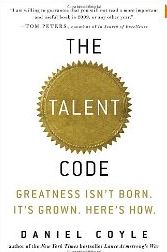
Journalist Daniel Coyle consolidated neuroscience research with stories of expert performers in The Talent Code: Greatness Isn’t Born. It’s Grown. Here’s How .
He distilled three principles that enable performance development across a variety of skills and fields: The Talent Code

“Deep” Practice, which includes daily repetition for up to several hours, observation, and corrective feedback by an expert to develop the myelin of “muscle memory” and increase neural signal strength, speed and accuracy.
This practice must be characterized by focused attention to mimic expert performance, reduce errors, and willingness to practice at increasingly more challenging levels.

Ignition, or commitment based on “unconscious desires” and “triggered by primal cues”

Master Coaching, in which to expert teacher encourages “ignition” and “deep” practice with:

1. Task-specific knowledge explained with vivid examples and meaningful metaphors
2. Perceptive tailoring to each student’s skills and needs
3. “The GPS Reflex”, or providing timely, specific guidance
4. “Theatrical Honesty,” or ability to empathically connect with students

K Anders Ericcson

K Anders Ericsson

Related Posts review foundational research by K. Anders Ericsson, who suggested that expert performance requires “10000 hours of practice.”

Geoff Colvin

Geoff Colvin

Talent is Overrated

Talent is Overrated

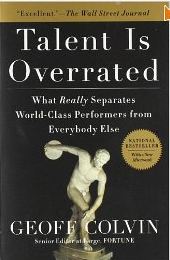
Like Coyle, Geoff Colvin argues that Talent is Overrated and can be eclipsed by systematic practice with corrective coaching.

Paul Herr’s Primal Management: Unraveling the Secrets of Human Nature to Drive High Performance also argues that motivation in the workplace, as in Coyle’s broader discussion of performance and motivation, is based on the “evolutionary psychology” of “tribal survival” and includes:

Paul Herr

Paul Herr

  • Self-Protection, the foundation of Maslow’s hierarch of higher-order needs

    Abraham Maslow

    Abraham Maslow

  • Cooperation, collaborative work in groups fulfills people’s social desires to belong to a group working toward a shared goal
  • Skill deployment, opportunity to develop skills and experience satisfaction with progressive improvement
  • Competency, opportunity to demonstrate skills and receive social recognition for these improvements
  • Innovation, based on people’s curiosity and desire to make in processes, systems, ideas, Primal Managementevents

-*How do you develop your talents?

-*Where do you find expert coaching?

-*How do you persist in “Deep Practice” even when it’s “no fun”?

Related Posts

Twitter  @kathrynwelds
Google+
Blog
: – Kathryn Welds | Curated Research and Commentary
LinkedIn Open Group Psychology in Human Resources (Organisational Psychology)
Facebook Notes

©Kathryn Welds

Leadership Qualities that Lead to the Corner Office?

Adam Bryant

Adam Bryant

Adam Bryant, deputy national editor at the New York Times interviewed more than 200 CEOs of top companies for his column, and distilled the leadership qualities that moved them to The Corner Office: Indispensable and Unexpected Lessons from CEOs on How to Lead and Succeed :

  • Passionate curiosity, deep engagement with questioning mind and a balance of analytical and creative competencies
  • Confidence based on facing adversity, knowing capabilities
  • Collaboration, ability to “read” and shape team dynamics
  • Ability to translate complex to simple explanations
  • Fearlessness in acting on considered risks  The Corner Office

These five characteristics augment qualities that might be considered “table stakes” – or “must-haves” for any leadership candidate:

  • Preparation
  • Patience
  • Navigating organizational obstacles  
  • Building a team of diverse members by galvanizing with a clear mission and spending time with members

Bryant argues that these behavioral competencies may be developed through attentive effort, but he acknowledges that some people have greater natural predisposition and aptitude for these “ways of being.”

Lois Frankel

Lois Frankel

Lois Frankel’s earlier book, Nice Girls Don’t Get the Corner Office: 101 Unconscious Mistakes Women Make That Sabotage Their Careers provided different recommendations for women seeking leadership roles, later empirically validated in research studies:

  • Act like a mature woman rather than a “girl”
  • Frame statements as assertions rather than questions
  • State and initiate a course of action, rather than waiting to request permissionNice Girls Dont Get The Corner

In contrast, Bryant particularly advises women to “meet as many people as possible and build relationships because serendipity and chance encounters can lead to unplanned opportunities.”

Research organizations like Catalyst and Center for Talent Innovation conduct social science research to investigate these behavioral and attitudinal recommendations.

CatalystBoth groups have questioned the applicability of mainstream recommendations in leadership development curricula when implemented by women, minorities and “people of color.”

Their continuing research agendas include analyzing the behavioral components of general recommendations such as “demonstrate gravitas” which the majority of top executives affirmed as “… critical for leadership. I can’t define it but I know if when I see it.”Center for Talent Innovation

These research organizations seek to more clearly define what these key executives see in critical leadership attributes like “gravitas” and to define them in replicable behavior terms.

-*Which leadership behaviors do you consider most important for any executive?
-*Which behavioral competencies are most crucial for aspiring women leaders?

Related posts:

©Kathryn Welds