Tag Archives: Performance

Productivity and Work Motivation Affected by Meaning, Challenge, Mastery, Ownership

Small gestures and verbalizations by managers and organizations can have a large impact on employee productivity, motivation, engagement, and retention – for better or worse.

Dan Ariely

Dan Ariely

Dan Ariely’s research at Duke University showed the small changes in task design dramatically increase or diminish persistence, satisfaction, and commitment to tasks.

The good news is that by simply looking at something that somebody has done, scanning it and saying ‘uh huh,’ [you] dramatically improve people’s motivations…. The bad news is that ignoring the performance of people is almost as bad as shredding their effort in front of their eyes. …,” according to Ariely.

Ariely’s lab experiments found that volunteers valued and liked their work product more when they worked hard and managed obstacles to produce it.
In addition, most people believed, often inaccurately, that other observers shared their positive view of their work product,

His research concluded that people seek meaning, challenge, and ownership in their work, and that these elements can increase work motivation and persistence.

Viktor Frankl

Viktor Frankl

Holocaust survivor and psychiatrist Viktor Frankel articulated this existential perspective in his examination of the critical role that meaning played in the enabling survivors of concentration camp prisoners in Man’s Search for Meaning.

In the less extreme circumstances of the workplace, finding and assigning meaning to work efforts enables people to persist in complex tasks to achieve satisfaction in mastering challenges.

Rosabeth Moss Kanter

Rosabeth Moss Kanter

Harvard’s Rosabeth Moss Kanter concurred that both meaning and mastery are productivity drivers, and to these she added a social dimension, membership, and a distant runner-up, money.
Frederick Herzberg

Frederick Herzberg

In contrast, one of the early though leaders in business management, psychologist Frederick Herzberg, developed a classic formulation of motivational factors contrasted with “hygiene factors.”

Frederick Herzberg - Motivation-Hygiene factorsHis two-factor theory of motivation did not include meaning or money as driving job satisfaction or productivity.

Shawn Achor, formerly of Harvard, argues that happiness is the most important work productivity lever.

Shawn Achor

Shawn Achor

To support his contention, he cited research findings that happy workforces increase an organization’s sales by 37 percent, productivity by 31 percent and accuracy on tasks by 19 percent.

Whether you work for mainly for meaning, money, or other motivations, you may agree that an ideal workplace and manager would foster all of these contributors to employee engagement and productivity.

-*What is the most important work motivator for you?
-*How have you seen managers increase employee engagement and performance through words and actions?

Related Posts

Twitter:  @kathrynwelds
Blog |Kathryn Welds| Curated Research and Commentary
Google+:
LinkedIn Open Group Psychology in Human Resources (Organisational Psychology)
Facebook Notes:

©Kathryn Welds
Interpersonal Envy in Competitive Organizations

Workplace envy is rarely discussed, although it is a logical outcome of competition for scarce resources:  Recognition, advancement, power, reputation, compensation in explicit or implicit organizational “tournaments.”

Jayanth Narayanan

Jayanth Narayanan

National University of Singapore’s Jayanth Narayanan, Kenneth Tai, and Daniel McAllister broached the near-taboo of workplace envy as an inevitable outgrowth of social comparison and related “cognitive dissonance” in attempting to self-regulate or return to emotional and equity “homeostasis.”

Daniel McAllister

Daniel McAllister

They differentiated malicious envy from benign envy and argue that the latter can drive performance through emulating admired outcomes.

This process, called firgun in Hebrew, is characterized by happiness, envy, and support of others, and is positively related to organizational success.
Mudita in Buddhist texts, refers to similar feelings of vicarious joy at another’s success and good fortune.

Hidehiko Takahashi

Hidehiko Takahashi

Narayan and team posit that envy is pain at another’s good fortune, and Hidehiko Takahashi’s team at Japan’s National Institute of Radiological Sciences demonstrated that the social-emotional pain of envy is a variation of the physical pain experience.

Their fMRI study found that the emotional pain of workplace envy is physically manifested in activation of the brain’s anterior cingulate cortex.

Nathan DeWall

Nathan DeWall

As such, Nathan DeWall of University of Kentucky and colleagues reported that Tylenol™ reduces behavioral and neural responses associated with social pain in two fMRI studies.

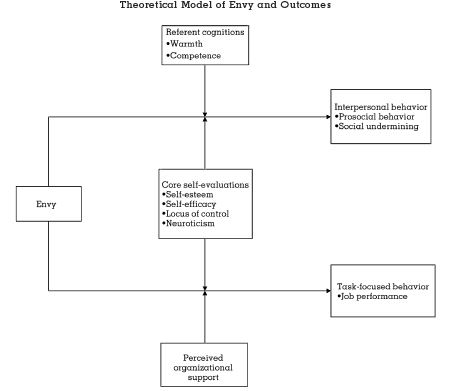
Narayanan argues that envy exerts its differential effect on workplace behavior through each individual’s specific:

  • Core self-evaluations (self-esteem, self-efficacy, locus of control, and neuroticism),
  • Referent cognitions” regarding warmth, likeability, and competence of the envied  person
  • Perceived organizational support

Workplace envy, they argue, can affect:

  • Social undermining
  • Prosocial behavior
  • Job performance

Narayanan and team proposed that those with higher self-esteem are less prone to negative workplace behaviors when experiencing on-the-job envy.

They propose that people are less likely to socially undermine the envied individual when the envied person is viewed as both warm-likeable and competent.

Similarly, they suggest that people who think their organization values them and their work, and supports their work and career development efforts are less likely to decrease job performance when envious at work.

Chade-Meng Tan

Chade-Meng Tan

Search Inside YourselfGoogle’s Jolly Good Fellow ChadeMeng Tan proposes the mindfulness-based program “Search Inside Yourself” (SIY) as a way to self-manage workplace envy and other painful social experiences, by developing skills in:

  • Trained attention
  • Self-knowledge and self-mastery
  • Creating useful mental habits.

-*How do you manage workplace envy when you notice it in yourself or others?

RELATED POSTS:

©Kathryn Welds

Results-Only Work Environments, Productivity, and Employee Engagement

Cali Ressler-Jody Thompson

Cali Ressler-Jody Thompson

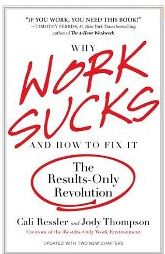
Why Work SucksJody Thompson and Cali Ressler proposed compensating employees based on outputs, rather than elapsed time, in a “Results-Only Work Environments (ROWE)” policy.

This management strategy evaluated “performance, not presence” practices at Best Buy and has been implemented at another large retailer, Gap.
Is this is a return to a “piece-work” approach of decades ago?
Or is it a performance management practice that emphasizes achieving targeted results?

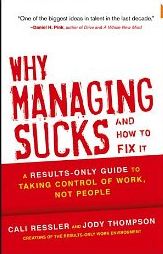
Why Managing SucksROWE  is being considered at such tech giants as Cisco Systems, in direct contrast to Yahoo’s recent call for employees to be present in offices.
The underlying goal of Yahoo’s “presentism” policy may be to increase innovative performance outputs, although the explanation provided to employees emphasized presence as a prerequisite for effective collaboration.

Widespread negative reaction to Yahoo’s on-site work policy, based on complaints that the policy:

  • Conveys lack of trust in employees
  • Undermines opportunities to manage complex work-life responsibilities
  • Places emphasis on “face time” rather than results
  • Leads to employee resentment and disengagement.
Erin Kelly

Erin Kelly

In contrast, University of Minnesota sociologists Erin Kelly and Phyllis Moen with University of Delaware’s Eric Tranby documented the positive impact of ROWE practices in their survey of more than 600 Best Buy employees before and after the program was implemented.

Phyllis Moen

Phyllis Moen

The researchers found turnover was reduced by 45 percent after they controlled for gender, job level, organizational tenure, job satisfaction, income adequacy, job security and turnover intentions.

Participants reported reduced stress and improved work-home interfaces by increasing employees’ schedule control, and reduced the “opting out” of the workforce due to personal commitments for both men and women.

Eric Tranby

Eric Tranby

Kelly, Moen, and Tranby opine that ROWE “moves us away from the “time cages” developed around the work day…ROWE challenges these taken-for-granted clockworks…our mantra is ‘change the workplace, not the worker’.

Rachelle Hill, also of University of Minnesota collaborated with Moen and Kelly in a related study that documented ROWE moderated turnover effects of negative home-to-work spillover, personal troubles, and physical symptoms.

-*What impacts – positive and negative – have you seen in “Performance, not Presence” workplace policies like ROWE?

RELATED POST

©Kathryn Welds
Perseverance Increases Skill Increases Luck: “The Harder I Work, The Luckier I Get”

Samuel Goldwyn

Samuel Goldwyn

Thomas Jefferson

Thomas Jefferson

Samuel Goldwyn recast Thomas Jefferson’s earlier observation: “I am a great believer in luck, and I find the harder I work, the more I have of it.”

Michael Mauboussin, of Columbia University, and previously Chief Investment Strategist at Legg Mason Capital Management Inc. investigated this relationship between effort and luck in his book, The Success Equation.The Success Equation

Michael Mauboussin

Michael Mauboussin

Mauboussin, an innovator in behavioral finance, adopted Harvard biologist Stephen Jay Gould’s “paradox of skill” to analyze the interaction of effort, skills, and luck, and best strategies to optimize outcomes in investing, sports, and career performance.

Stephen Jay Gould

Stephen Jay Gould

He posits that as skill improves in activities where outcomes are affected by skill and luck, the standard deviation of skills narrows.
In this case, luck becomes more important in determining outcomes:

Whenever you see an outlier in sports, it is always a combination of really good skill and really good luck… (Often) they are about one and a half or two standard deviations away from the average…not all skilled players have (winning) streaks, but all (winning) streaks are held by skillful players.”

For example, as investors become more sophisticated and have access to advanced computational tools, as athletes benefit from targeted training and development regimens, and as students are groomed for admission to top universities, differences among these skilled performers decreases.
Chance influences can determine outcomes.

Mauboussin says that luck has several elements:

  • Affects an individual or organization,
  • May be evaluated as “good” or “bad”
  • Another outcome could have occurred
  • The outcome is uncontrollable, but is comprised of several elements

To increase luck, he advises assessing each contender’s strength in the situation and finding “…something completely different to get you on the right side of the tail of the skill distribution,” such as employing an unusual or unexpected tactic.

The stronger player has positive asymmetric resources, so the effective strategy is to simplify the game.
In contrast the underdog should seek to complicate the game, such as through disruptive innovation, a flank strategy or a guerilla tactic.

Because most people have a bias toward optimism and overestimate personal capabilities, it may be difficult to assess oneself as an “underdog” in a performance situation.

Daniel Kahneman

Daniel Kahneman

Nobel Prize winner Daniel Kahneman and Amos Tversky explained that individuals who adopt an inside view gather substantial information, combine it with their own inputs, then project into the future without considering “distributional information” about a wide variety of previous instances.
This approach risks developing an idiosyncratic, overconfident perspective by underestimating costs, completion times, and risks of planned actions, while overestimating benefits.

Amos Tversky

Amos Tversky

In contrast, people who adopt the outside view consider the problem as an instance of a larger reference class and consider the entire distribution of outcomes when this type of situation occurred previously.
This approach can reduce overconfidence.
However, this approach could discourage entrepreneurs, who will realize that a small percentage actually succeeds.

In addition, besides the bias toward overconfidence, people tend to “under-sample” instances of failure when a previously successful approach is applied in a new situation and doesn’t succeed.

Nate Silver

Nate Silver

Sabermetricians like Nate Silver, posit that worthwhile statistics provide:

  • Persistence or correlation from one period to the next, a strong indicator of high skill
  • Predictive value or high correlation with the target objective

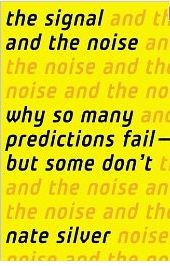
Nate Silver-The Signal and The NoiseThe Oakland As baseball team uncovered these principles in determining that  a superior measure of athletic performance in this sport is on-base percentage rather than the traditional measure, batting average.

In this case, on-base percentage has a higher correlation from one season to the next and a higher correlation with run production than batting average, fulfilling both criteria.

Daniel Kahneman also suggested that skill, expertise, and intuition render more uniform results in a predictable environment.

Thinking Fast and SlowHowever, many organizational environments are unstable and non-linear, rendering experts less accurate because they cannot employ an effective predictive model.

Collective judgments through “the wisdom of crowds” may mitigate the challenges of unstable contexts because they provide more data points.

Mauboussin advocated considering the continuum of stability vs instability in which the issue is situated to determine strategy and to beware of applying simple heuristics that are vulnerable to bias, and social or situational influences.

He suggested the guideline “think twice” to prepare, detect and correct for common mental traps, including:

  • The Inside-only View
  • Tunnel Vision
  • Oversimplification
  • Situational Power
  • Overvaluing Expert Knowledge

-*How do you optimize your performance when chance elements can affect your outcomes?

Related Posts

©Kathryn Welds

Practice Outweighs Talent in Developing Expert Performance

Daniel Coyle

Daniel Coyle

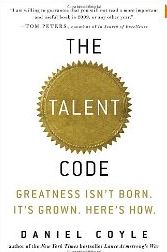
Journalist Daniel Coyle consolidated neuroscience research with stories of expert performers in The Talent Code: Greatness Isn’t Born. It’s Grown. Here’s How .
He distilled three principles that enable performance development across a variety of skills and fields: The Talent Code

“Deep” Practice, which includes daily repetition for up to several hours, observation, and corrective feedback by an expert to develop the myelin of “muscle memory” and increase neural signal strength, speed and accuracy.
This practice must be characterized by focused attention to mimic expert performance, reduce errors, and willingness to practice at increasingly more challenging levels.

Ignition, or commitment based on “unconscious desires” and “triggered by primal cues”

Master Coaching, in which to expert teacher encourages “ignition” and “deep” practice with:

1. Task-specific knowledge explained with vivid examples and meaningful metaphors
2. Perceptive tailoring to each student’s skills and needs
3. “The GPS Reflex”, or providing timely, specific guidance
4. “Theatrical Honesty,” or ability to empathically connect with students

K Anders Ericcson

K Anders Ericsson

Related Posts review foundational research by K. Anders Ericsson, who suggested that expert performance requires “10000 hours of practice.”

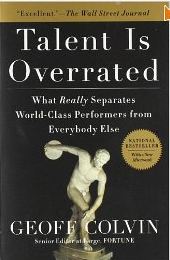
Geoff Colvin

Geoff Colvin

Talent is Overrated

Talent is Overrated

Like Coyle, Geoff Colvin argues that Talent is Overrated and can be eclipsed by systematic practice with corrective coaching.

Paul Herr’s Primal Management: Unraveling the Secrets of Human Nature to Drive High Performance also argues that motivation in the workplace, as in Coyle’s broader discussion of performance and motivation, is based on the “evolutionary psychology” of “tribal survival” and includes:

Paul Herr

Paul Herr

  • Self-Protection, the foundation of Maslow’s hierarch of higher-order needs

    Abraham Maslow

    Abraham Maslow

  • Cooperation, collaborative work in groups fulfills people’s social desires to belong to a group working toward a shared goal
  • Skill deployment, opportunity to develop skills and experience satisfaction with progressive improvement
  • Competency, opportunity to demonstrate skills and receive social recognition for these improvements
  • Innovation, based on people’s curiosity and desire to make in processes, systems, ideas, Primal Managementevents

-*How do you develop your talents?

-*Where do you find expert coaching?

-*How do you persist in “Deep Practice” even when it’s “no fun”?

Related Posts

Twitter  @kathrynwelds
Google+
Blog
: – Kathryn Welds | Curated Research and Commentary
LinkedIn Open Group Psychology in Human Resources (Organisational Psychology)
Facebook Notes

©Kathryn Welds
Action Beats Visualization to Improve Performance

Richard Wiseman

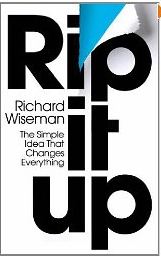
Richard Wiseman of University of Hertfordshire, and a magician before becoming a psychologist, debunked the notion that visualizing desired outcomes achieves results more effectively than direct action in Rip It Up: The radically new approach to changing your life: The Simple Idea That Changes Everything

Citing research by Lien Pham at the University of California, who asked student volunteers to visualize earning a high grade in an upcoming exam or to visualize adopting better study habits.
Pham reported that students who visualized the outcome of a high grade actually received poorer outcomes that those who visualized a better process to achieve a higher grade.

Similarly, Gabriele Oettingen of New York University asked students to record the duration of fantasies about leaving college and starting a “dream job”.
She found that students who spent more time imagining these positive outcomes, but had lower expectations of actually achieving these goals received fewer job offers and lower starting salaries.

Wiseman uses these findings to argue that action rather than imagined rehearsal, fantasy or visualization leads to successful performance outcomes.

Napoleon Bonaparte

This principle was implied by Napoleon Bonaparte more than two centuries ago as he anticipated battle: On s’engage et puis on voit, translated as “You commit yourself; and then, you see”

In the 1880s, William James, brother of novelist Henry James and considered “The Father of American Psychology,” asserted that action precedes emotional experience: “You do not run from a bear because you are afraid of it, but rather become afraid of the bear because you run from it.”

William James

This notion contrasts popular concepts, which led to numerous books encouraging people to change their thinking to change their behaviors and feelings.

Since the 1970s, research has focused on whether changing behavior can change feelings.
To test this relationship, James Laird of Clark University asked volunteers to create an angry expression by drawing down their eyebrows and clenching their teeth and to create a happy expression by drawing back the corners of the mouth.

James Laird

Participants reported feeling significantly happier when they forced their faces into smiles, and much angrier when they were clenching their teeth.
“Acting ‘as-if’ and “faking it until you make it” are examples of initiating behaviors to drive emotional and attitudinal change.

Wiseman offers ten behavioral modifications that can lead to feeling better and improved performance.

INCREASE:

  • Happiness: Smile as widely as possible, extend eyebrow muscles slightly upward, and hold for 20 seconds.
  • Willpower: Tense muscles –  Make a fist, contract biceps or press thumb and first finger together
  • Health Eating: Eat with non-dominant hand to increase “mindful” awareness of eating, based on research by Neal, Wood, Wu & Kurlander
  • Persistence: Sit up straight, cross your arms, from research by Ron Friedman of University of Rochester.
    He found that volunteers who sat up straight and crossed arms persisted in working to solve challenging problems nearly twice as long as volunteers who didn’t assume this posture
  • Confidence: Adopt expanded chest posture
    Sitting down, lean back, look up, and interlock your hands behind your head.
    Standing up, place your feet flat on the floor, push your shoulders back, and your chest forward.
  • Negotiation Effectiveness: Use soft chairs
    Joshua Ackerman of the MIT Sloan School of Management conducted simulated negotiations for a used car, and found that volunteers who sat on soft chairs were more flexible in their negotiations and likely to pay higher prices than those who sat on firm chairs.
  • Persuasion: Nod
    Gary Wells of Iowa State University reported that when volunteers nodded their heads, they were more easily able to learn and retain information with which they didn’t agree or that wasn’t true.
  • Love: Open up
    Robert Epstein of the Cambridge Centre for Behavioral Studies found that eye contact, self-disclosure, sharing vulnerability increase perceived liking, loving, and closeness.

DECREASE:

  • Procrastination: Start for Five Minutes – Do the task for five minutes, and ask yourself if you want to stop or continue at the end of the time.
    Often, it is easy to continue after 5 minutes.
    If not, stop and begin again for 5 minutes several hours later.
  • Guilt: Wash your hands
    Chen-Bo Zhong of the University of Toronto found that volunteers who carried out a perceived immoral act, then cleaned their hands with an antiseptic wipe felt significantly less guilty than others who didn’t wash

These varied streams of research support the call for intentional action over contemplation to improve mood and initiate positive behavior changes.

-*What counterarguments would you offer to Wiseman?

See related post on “bias for action”:

Startup Success Correlates with Women Executive Involvement

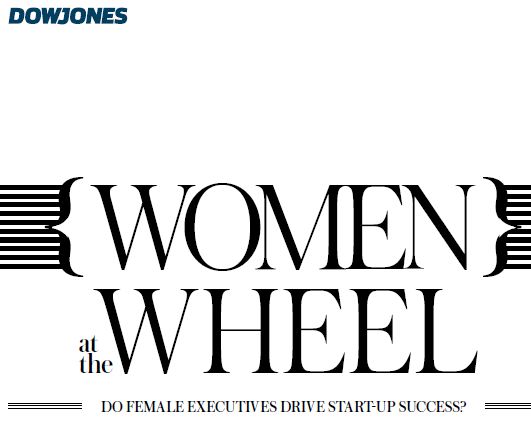
A Dow Jones Venture Source study of 167,500 executives and 2,200 venture-backed companies funded between 1997 and 2011 showed that women helped lead more start-ups to success.

Women are less involved as founders and leaders of start-ups than men.

Just 1.3 percent of start-ups have a female founder, 6.5 percent have a female CEO, and 20 percent have one or more C-level female executives.

Women at the WheelAbout 27 percent were in sales and marketing roles, and many as vice presidents.
Companies that have been acquired, went public or gained profitability have 7.1 percent of executive staff members are women.

In contrast, only about 3.1 percent  executives are women at companies that failed, exited at a low valuation, or haven’t reached other milestones.

-*To what extent have you observed a correlation between gender balance in executive leadership and successful financial performance among new enterprises?

LinkedIn Open Group Catalyst:
Twitter: @kathrynwelds
Google+
Facebook Notes:
Blog: – Kathryn Welds | Curated Research and Commentary

©Kathryn Welds

Super-Star Skills May Not be Transferrable to New Job Opportunities

Boris Groysberg

Boris Groysberg

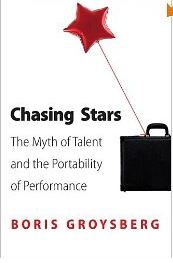
Harvard Business School professor Boris Groysberg outlines findings from a study of 1053 top Wall Street Analysts at 78 investment banks between 1988 and 1996 in his book, Chasing Stars: The Myth of Talent and Portability of Performance

His team examined 546 job changes and compared the top performers’ performance with that of 20,000 “non-star” analysts at 400 investment banks.
They interviewed 200 of these analysts and talked with their institutional investor clients.

Groysberg’s team found that the star performers’ “job performance plunged sharply and continued to suffer for at least five years after moving to a new firm”, because they “…lost access to colleagues, teammates and internal networks than can take years to develop…new and unfamiliar ways of doing things took the place of routines and procedures and systems that …had become second nature.”

He suggested that firms can prevent this performance decrement by hiring the entire team (“liftout”) and by “hiring more women, who…suffer less on leaving one firm to join another (because) they had formed stronger ties outside the firm than many male analysts and so were less dependent on their former work colleagues…and they made wiser choices when it came to agreeing to move.”

Team Groysberg identifies mistakes star employees make when leaving a firm:

  • Doing inadequate research into the new company
  • Leaving because they are escaping something unpleasant rather than choosing something better
  • Over-estimating their own abilities
  • Failing to take a long-term view

Groysberg’s book considers how some Wall Street research departments are successfully growing, retaining, and deploying their own “stars,” and how these practices might be applied in other organizations.

-*When have you seen super-star skills transfer to a new work environment?
-*When have these skills not transferred as successfully to a different organization?

LinkedIn Open Group: Brazen Careerist
Twitter: @kathrynwelds
Google+
Facebook Notes:
Blog: – Kathryn Welds | Curated Research and Commentary

©Kathryn Welds