Tag Archives: Bias

Do Unintended Consequences of Forced-Ranking of Employee Performance Outweigh their Short-Term Benefits?

Forced ranking (“stack ranking” or “rank and yank”) of employee performance was one contribution to MSFT’s loss of momentum, according to Kurt Eichenwald’s article on How Microsoft lost its Mojo. 

His extensive interviews with current and past Microsoft employees point to forced rankings leading to:

  •     Competitive sabotage and undermining of peers
  •     Focus on short-term results that coincide with twice-yearly rankings
  •     Undermined intrinsic motivation in face of  “impossible”-seeming odds
  •     Reduced innovation
  •     Lack of collaboration
  •     Focus on “visibility” to managers’ peers instead of improving performance
  •     Misguided decisions
  •     Mistrust of management and colleagues
  •     Unwanted attrition
  •     Stress for all.Forced ranking systems, used by a substantial number of Fortune 500 companies, is the eighth most-frequently used appraisal technique in the U.S.

It requires management teams to evaluate employees’ performance against other employees, rather against pre-determined standards.
The goal is to create a meritocracy in which superior performance is recognized and under-performance is “managed.”

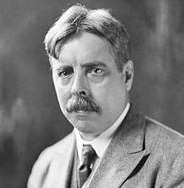
Steve Scullen

Steve Scullen evaluated “forced distribution rating system” (FDRS) in a simulation study of 100 companies of 100 employees each over a three year period.
He reported in Personnel Journal that forced ranking and hypothetically firing of the bottom 5% or 10%, resulted in a 16% productivity improvement.
Productivity gains increase when more low performers were removed.

He acknowledged the negative consequences of forced rankings for employee morale, teamwork, collaboration, recruitment, shareholder perception, and brand image.
Nevertheless, Scullen found that the potential problems were counterbalanced by benefits.

Scullen determined that most benefit from forced ranking comes in the first few years of implementation: “…each time a company improves its workforce by replacing an employee with a new hire, it becomes more difficult to do so again… the better the workforce is, the more difficult it must be to hire applicants who are superior to the current employees who would be fired.

Dick Grote’s Forced Ranking: Making Performance Management Work, argues that most companies achieve benefits of forced ranking systems in “a few years” and are advised to replace
forced ranking with other talent management initiatives after the organization has implemented a refined selection process to ensure hiring top talent.

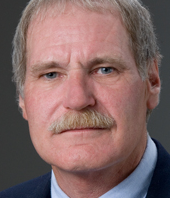
Peter Capelli

Peter Cappelli of The Wharton School and author of Talent on Demand: Managing Talent in an Age of Uncertainty, quantified the benefit of removing low performers:  This group contributes about five times less to organizations than high performers, according to his research.

In contrast, Alys Woodward of IDC challenged these arguments in her article on misunderstanding and misuse of statistics in stack ranking.

Alys Woodward

She concluded that “stack ranking assumes the statistics dictate reality, rather than reflect reality.”

Likewise, W. Edwards Deming opposed ranking because he thought that it destroys pride in workmanship, and opined that “the only way to improve a product or service is for management to improve the system that creates that product or service. Rewarding or punishing individuals trapped in the system is pointless and counterproductive.”
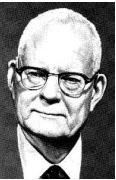
W. Edwards Deming

Robert Mathis and John Jackson pointed out potential legal challenges to stack-ranking.
They note that the practice may be difficult to defend in a court test because it does not comply with the following legal criteria:

  •     Criteria based on job analysis
  •     Absence of disparate impact and evidence of validity
  •     Formal evaluation criteria that limit managerial discretion
  •     Rating linked to job duties and responsibilities
  •     Documentation of appraisal activities
  •     Prevents action from controlling employee’s career
  •     Counseling to help poor performers improve

Though most employees do not seek out employers who use stack ranking, organizations may realize a short-term benefit in streamlining the workforce.
However, the practice may have unintended “soft” consequences, legal challenges, and time-limited value.

-*What positive and negative impacts have you observed related to forced-ranking appraisal systems?

Twitter:  @kathrynwelds
Facebook Notes:


©Kathryn Welds

Perceived Diversity = “Like Me”

Christopher Bauman

Christopher Bauman

Judgments of “diversity” are rarely completely objective:
People tend to rate a group as “diverse” when it includes members of the evaluator’s race, found University of California, Irvine’s Christopher W. Bauman, Sophie Trawalter of University of Virginia and UCLA’s Miguel M. Unzueta.

Sophie Trawalter

Sophie Trawalter

Almost 1900 volunteers from diverse racial groups rated headshots of a fictional company’s six-person management team for its “ethnically diversity”:

  • Caucasian team” included six white headshots (100% white),
  • Asian team” showed four white and two Asian people (mirroring the 66% majority of white people in the U.S.),
  • Black team” featured four white and two black people (66% white),
  • Asian + Black” team had four white, one black, and one Asian person (66% white).
Miguel Unzueta

Miguel Unzueta

Members of racial minority groups rated leadership groups as “more diverse” when they included members of their own racial group rather than members of other racial minority groups.

Participants rated groups as it “less racially diverse” when they did not include at least one member of their own racial group.
This “in-group representation effect” was stronger for African Americans than for Asian Americans.

In another study, more than 1,000 volunteers read news articles about the prevalence of prejudice, then provided ratings.
They showed no “in-group representation effect,” suggesting that reading about how another minority group suffers from prejudice reduced raters’ self-referential evaluation bias.

These results indicate that people’s expectations affect perceptions of diversity.
Priming awareness and empathy for similar experiences encountered by other groups reduced in-group biases.

Jim Sidanius

Jim Sidanius

African Americans are often judged as experiencing:

Lower social status,

More negative stereotypes,

More discrimination, reported Harvard’s Jim Sidanius and Felicia Pratto of University of Connecticut.

Felicia Pratto

Felicia Pratto

In contrast, Asian Americans tend to be attributed higher status so report less discrimination than other racial minority groups.

Andrea Romero

Andrea Romero

Despite this advantage, Asian Americans have a lower return on their investment in education than Whites, even though they achieve higher levels of education and income than other racial minority groups, reported University of Arizona’s Andrea Romero with Robert Roberts of University of Texas and another group led by UT colleague Myrtle P. Bell with David A. Harrison and Mary E. McLaughlin.

Myrtle P Bell

Myrtle P Bell

Higher levels of “diversity” have been linked to greater:

Valerie Purdie-Vaughns

Valerie Purdie-Vaughns

These findings were confirmed in studies by Columbia’s Valerie Purdie-Vaughns and Ruth Ditlmann, Claude M. Steele of Stanford, University of British Columbia’s Paul G. Davies and Jennifer Randall Crosby of Williams College and separate work by UCLA’s Jaana Juvonen and Sandra Graham with University of California Davis’s Adrienne Nishina 

Jaana Juvonen

Jaana Juvonen

Diversity is “in the eye of the beholder” because a team may appear more diverse to raters when the group’s composition aligns with the observers’ own characteristics.

-*How do you reduce personal in-group biases based on individual expectations and experiences?


RELATED POSTS:

Twitter  @kathrynwelds
Facebook Notes

©Kathryn Welds


Male Peer Raters Discount Women’s Expertise in Science, Engineering

J Stuart Bunderson

J Stuart Bunderson

Problem-solving work groups and individual career development benefit from accurate recognition and deployment of expertise.

Nancy DiTomaso

Nancy DiTomaso

People who are perceived as experts by team members, regardless of their actual expertise, have a number of career advantages, found Washington University’s J. Stuart Bunderson:

  • Greater influence in group decision-making,
  • More opportunities to perform,
  • Great opportunity for team leadership roles.
D Randall Smith

D Randall Smith

In addition, peer evaluations of expertise frequently contribute to individual rewards, compensation, and advancement, noted Rutgers’ Nancy DiTomaso, D. Randall Smith and George F. Farris with Corinne Post of Pace University and New Jersey Institute of Technology ‘s Rene Cordero.

Melissa Thomas-Hunt

Melissa Thomas-Hunt

Teams benefit when they accurately identify and use group members’ expertise because they perform more effectively and produce higher quality work products, found Cornell’s Melissa C. Thomas-Hunt, Tonya Y. Ogden of Washington University, and Stanford’s Margaret A. Neale.

Aparna Joshi

Aparna Joshi

However, women in science and engineering do not have equal opportunities to fully use their expertise in work groups, and to receive commensurate rewards, reported Penn State’s Aparna Joshi.

George Farris

George Farris

She obtained peer ratings and longitudinal research productivity data for 500 scientists and engineers and found that women’s technical expertise was undervalued by male colleagues in peer ratings.

Rene Cordero

Rene Cordero

Male and female raters assigned different importance to education when evaluating team members’ expertise.
Women’s ratings were correlated with the target person’s education level, but males evaluators considered educational attainment less than male gender in assigning highest ratings for expertise.

As a result, women’s highest ratings went to those with the highest education level, whereas men’s top evaluations were assigned to other men, no matter their education level.

Margaret Neale

Margaret Neale

Women received significantly lower expertise evaluations than men, and men evaluated highly educated women more negatively than female raters who assessed their peers.

These findings suggest that male peers discount women’s educational achievements and are unlikely to effectively use women’s expertise, to the detriment of team work output as well as individual recognition.

-*How do you ensure that your expertise is recognized and applied in work groups?


RELATED POSTS:

Twitter  @kathrynwelds
Facebook Notes

©Kathryn Welds

Gender-Neutral Language Associated with Greater Gender Wage Parity

Lucas van der Velde

Lucas van der Velde

Nations that use gender-neutral languages have a smaller Gender Wage Gap (GWG) than countries with clear gender differentions in their languages, reported University of Warsaw’s Lucas van der Velde, Joanna Tyrowicz, and Joanna Siwinska.

Gender-Neutral Language

Gender-Neutral Language

The team evaluated Yale linguists Benjamin Whorf and Edward Sapir’s hypothesis that linguistic categories influence perception, thinking, and behavior by examining data from the World Atlas of Linguistic Structures to determine whether the primary language spoken in a given country had a “sex-based gender system” of grammar rules like gender-specific noun and pronouns.

Benjamin Whorf

Benjamin Whorf

For example, French language links specific nouns to genders, whereas English generally uses different pronouns for men and women (“his” and “hers”) — despite the increasing use of “they” to indicate an individual of either gender, not a group of people.
In contrast, Mandarin and Finnish languages “have no system of gender identification.”

The researchers analyzed whether the primary language contained expressions that celebrate one gender while disparaging another, and compared these findings with estimates for Gender Wage Disparities (GWD) in more than 50 countries from 117 studies published between 2005 and 2014.

Benjamin Whorf

The gender wage gap may be driven by some deep societal features stemming from such basic social codes as language,” they concluded, supporting the Sapir-Whorf Hypothesis.

Katarzyna Bojarska

Katarzyna Bojarska

Gender cues are implicitly and unconsciously used to decode a message’s full meaning in addition to its semantic content, suggested University of Gdańsk’s Katarzyna Bojarska.

She argued that when gender is not clearly specified, unconscious cognitive processing attempts to plausibly reconstruct missing gender information with non-semantic cues.

Gender Neutral Occupational Titles

Gender Neutral Occupational Titles

These findings suggest that countries that favor policies to reduce disparate earnings by gender can enable this goal by providing early training to set children’s expectations of gender equality, particularly in countries using a gendered language,

-*To what extent has your workplace adopted gender-inclusive language?

-*How does your organization’s use of gendered language relate to its wage parity practices?

Related Posts:

Twitter:  @kathrynwelds
Google+
Facebook

©Kathryn Welds

“Honest Confidence” Enables Performance, Perceived Power

Confidence mobilizes people’s performance and increases others’ perceptions of competence, likeability, and persuasiveness – but may lead to careless errors that undermine performance.

David Dunning

David Dunning

Women and men show significantly different levels of confidence, with cascading effects on performance and participation in specific occupations.

For example women tend to underestimate their performance in scientific reasoning, but actually perform about equally to men, found Cornell’s David Dunning and Washington State University psychologist Joyce Ehrlinger in their investigation of women’s low representation in Science, Technology, Engineering, and Mathematics (STEM) academic programs and work roles.
They concluded that women underestimate their performance, based on lower levels of confidence.

Joyce Ehrlinger

Joyce Ehrlinger

In a related tasks, Dunning and Ehrlinger invited these volunteers to participate in a science competition for prizes.
Women were less likely to accept the invitation than men, also attributed to lower confidence in their capabilities in scientific tasks.
The researchers pointed to low confidence as a source of women’s proportionally lower participation in Science, Technology, Engineering, and Mathematics (STEM) job roles.

Jessica Kennedy

Jessica Kennedy

Confidence – even unjustified confidence – seems to lead  observers to perceive assured individuals as competent, high status leaders, found Wharton’s  Jessica A. Kennedy, Cameron Anderson of University of California at Berkeley, and Don A. Moore.

Cameron Anderson

Cameron Anderson

They asked more than 240 students to estimate their confidence in identifying “historical” names and events, which included real and bogus entries.
Some participants said they could identify items that were actually fake, indicating that they believed – or wanted to convey – they knew more than they actually did.

Don A Moore

T Don A Moore

Then, Kennedy and team asked participants to rate each other based on status in the group.
Volunteers who said they could identify the most fraudulent items were rated as most prominent in the group, suggesting that confidence, even false confidence, contributes to perceived status.
The team suggested that overconfident volunteers genuinely believed their self-assessments, their confidence persuaded their peers of their task skill and commitment to the group’s success.

Ernesto Reuben

Ernesto Reuben

Honest overconfidence,” was also observed by Ernesto Reuben of Columbia, Paola Sapienza of Northwestern University, and University of Chicago’s Luigi Zingales, in their finding that men rated their performance on a set of math problems to be about 30 percent better than it was, whereas women underestimated their performance.

Carol Dweck

Carol Dweck

The power of honest and unjustified confidence may be rooted in childhood socialization patterns, observed Stanford’s Carol Dweck:  Boys’ mistakes are attributed to a lack of effort (whereas)…girls … see mistakes as a reflection of their deeper qualities.”
These different types of feedback lead men to attribute negative outcomes to external factors like unfairly difficult task, but women attribute undesirable results to their personal qualities like low ability.

Confidence is reflected in employees’ willingness to speak in work settings, and those who speak more than others are considered dominant.
However, women who exert authority by speaking more than others, even when they are in senior organizational levels, may alienate others and be seen as less capable.

Victoria Brescoll

Victoria Brescoll

Yale’s Victoria Brescoll found that even senior-level women hesitate to speak as much senior-level men due to anticipated negative reaction from others.

These concerns were validated by Brescolls investigation of men’s and women’s rating of a fictitious female CEO who talked more than other people.
Both women and men evaluated the female CEO as significantly less competent and less suited to leadership than a male CEO who talked for the same amount of time.
However, when the female CEO was described as talking less than others, participants rated her as significantly more competent.

Roger Shepard

Roger Shepard

Similarly, a high-power male who talked much less was evaluated as incompetent and undeserving of leadership, just like the high-power female who spoke more than average.
Brescoll suggested that these reactions are associated with stereotypic gender expectations.

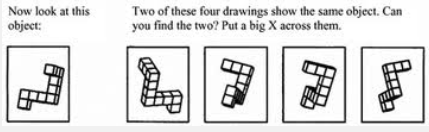
Roger Shepard-Jacqueline MetzlerAs a result, women are unlikely to increase confidence, perceived status and power by speaking and behaving like men because this approach would violate gender stereotype expectations, leading to a “backlash” effect.

Zachary Estes

Zachary Estes

However, when women are “primed” to experience confidence, they performed better on 3D rotation spatial tasks in Roger Shepard and Jacqueline Metzler’s Mental Rotations Test, reported University of Warwick’s Zachary Estes and Sydney Felker, then of University of Georgia Health Center.

In one set of tests, women and men performed similarly when women and men again completed each item and reported their:
Confidence level in their answers,
-Whether they would change their responses if given the opportunity.

Women’s performance dropped below previous scores whereas men’s increased significantly when they elected to change answers.
Second-guessing” and “over-thinking” eroded women’s confidence which affected their scores.

Albert Bandura

Albert Bandura

People who have a strong sense of efficacy focus their attention on analyzing and figuring out solutions to problems, whereas those beset with self-doubts of their efficacy tend to turn their attention inwardly and become self-preoccupied with evaluative concerns when their efforts prove unsuccessful,” explained Stanford’s Albert Bandura and Forest Jourdan.

Robert K Merton

Robert K Merton

However, both men and women significantly improved their scores after they were told that they achieved high scores on the previous test irrespective of actual score.
This finding demonstrates the performance-enhancing effect of positive expectancy, and replicated “The Rosenthal Effect,” or “self-fulfilling prophecy,” described by Robert K. Merton of Columbia.

Jeffrey Vancouver

Jeffrey Vancouver

Confidence may have performance-eroding effects despite much previous research documenting performance-enhancing effects, according to Ohio University’s Jeffrey Vancouver and Charles Thompson, with University of Cincinnati’s E. Casey Tischner, and Dan Putka of Human Resources Research Organization.

Dan Putka

Dan Putka

They primed confidence or “self-efficacy” among half the participants in an analytic game, and found that those who received positive feedback about their performance didn’t perform as well in the next game, and were more likely to make logical errors.

Vancouver and team suggested that participants whose confidence was artificially-inflated tended to apply less mental effort to challenging tasks before attempting the next item.

Fortunately, actual skill trumps inflated confidence.
Women considering technical training and careers may be reassured by Kennedy and team’s observation that, “…Acting capable was beneficial, but actually being capable was better.”

However, these findings suggest that women aspiring to STEM careers are likely to be more effective when they create a “hybrid” style of communication and professional presence, drawing on behaviors that demonstrate confidence, competence, and proactivity without violating gender-linked expectations.

-*How do you capitalize on the performance-enhancing effects of confidence without alienating others or reducing future performance efforts?


RELATED POSTS:

©Kathryn Welds

Perceived Physical Attractiveness Shapes Views of Social Hierarchies

Nielsen Product SpendingCosmetic surgery is the fastest-growing medical expenditure in the U.S, and Americans spend more on personal grooming than on reading material.

Even during the recession of 2008, Americans spent at least $200 billion on products and services to enhance their appearances, according to Stanford’s Margaret Neale and Peter Belmi, now of University of Virginia.

Margaret Neale

Margaret Neale

Personal appearance and attractiveness have been linked with likeability, perceived competence, income and more, and Neale and Belmi found further connections between people’s self-perceived attractiveness and their attitudes toward social inequality and hierarchies.

Attractiveness Bias2The team asked participants to write about a time when they felt more attractive or less attractive, and then indicate whether they agreed with statements such as, “Some groups of people are simply inferior to other groups,” and “Lower wages for women and ethnic minorities simply reflect lower skill and education level.”

The researchers found that people who think they are attractive also think they have greater social standing, and believe that people are entitled to their social position based on their personal (“dispositional”) qualities.

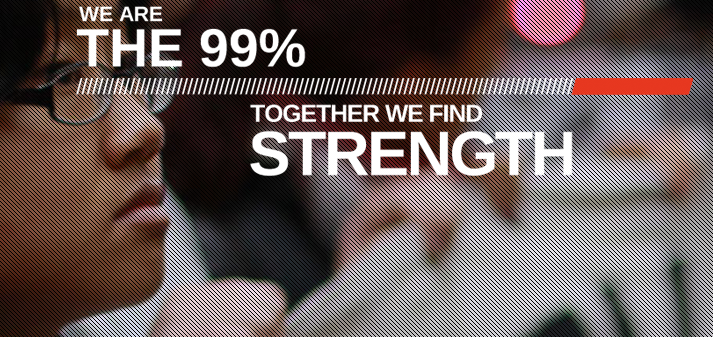
Occupy 99As a result, people who rate themselves as attractive generally feel that people in lower social strata are there due to their characteristics or behaviors.
These beliefs are associated with less willingness to donate money to a social equality non-profit organization (the Occupy movement).

Peter Belmi

Peter Belmi

By contrast, people who thought they were less attractive also thought they belonged to a lower-status social group, and rejected existing social hierarchies.
They attributed unequal social status to external factors often beyond the full control of those in less prestigious social groups. One example is lack of access to quality education.

Unlike self-perceptions of attractiveness, empathy and integrity were not related to people’s views of their social class and others’ place in society.

-*How have you seen appearance affect acceptance or organizational hierarchy and philanthropic giving?

RELATED POSTS:

©Kathryn Welds

Attractive Appearance Helps Men Gain Business Funding

Laura Huang

Laura Huang

Entrepreneurs create jobs and contribute to economic growth with early investment by financial backers who trust the perceived business proposal’s viability and the founders’ previous experience.

Alison Wood Brooks

Alison Wood Brooks

Additional implicit criteria for new venture-funding include gender and physical attractiveness, asserted Harvard’s Alison Wood Brooks, Laura Huang of Wharton, MIT’s Sarah Wood Kearney and Fiona E. Murray.

Sarah Wood Kearney

Sarah Wood Kearney

Brooks and colleagues enlisted 60 experienced investors to:

  • Evaluate videos of 90 randomly-selected presentations by entrepreneurs at three pitch contests in the US,
  • Comment on presenters’ appearance and effectiveness.
Fiona E. Murray

Fiona E. Murray

Male presenters who were rated more attractive were 36% more likely to receive funding than men judged as less attractive, but there was no difference in funding rates for women based on attractiveness ratings.

In a separate study, investors evaluated identical pitches delivered by a man or a woman, and rated male-narrated pitches as more persuasive, logical and fact-based compared with the same presentation delivered by a woman.

These finding suggest that financial backers favor attractive male entrepreneurs, leaving women entrepreneurs – attractive or not – at a disadvantage in creating new businesses, jobs, and economic growth.

This finding underscores financial backers’ preference for male entrepreneurs’ proposals, based on attractive men’s greater perceived persuasiveness than women or less attractive men.

Edward Thorndike

Edward Thorndike

Previous blog posts have noted the “halo effect” of physical attractiveness leading to positive attributions of intelligence, competence, and likeability, originally described by Columbia’s Edward Thorndike.

Woods’ latest findings point to the double advantage enjoyed by attractive men seeking new venture funding.
Aspiring women entrepreneurs, on the other hand, continue to encounter significant unacknowledged disadvantages, not improved by physical attractiveness.

Eleanor Holly Buttner

Eleanor Holly Buttner

However, these findings were not confirmed by University of North Carolina’s E. Holly Buttner and Benson Rosen in their investigation of bank loan officers’ funding decisions.

Loan officers, who typically make funding decisions based on the business plan and interview with the entrepreneur, evaluated a:

  • Business plan or
  • Business plan plus a videotaped interview conducted by a loan officer with a male or female entrepreneur seeking a loan to start a business.
Benson Rosen

Benson Rosen

Bankers rated their likelihood of:

  • Recommending loan approval of the requested amount,
  • Making a counteroffer of a smaller amount, which they specified.

This study found no difference in funding decisions for male entrepreneurs compared with female entrepreneurs presenting the same business case.
In fact, loan officers made larger counteroffers to female entrepreneurs when considering both the business plan and the loan application interview.

Student volunteers’ loan funding decisions were compared with loan professionals, and the younger generation of lay people made larger counteroffers to the male entrepreneur instead of the female when they evaluated both the business plan and the loan interview,
Loan officers, in contrast, made significantly more cautious and conservative funding decisions than student participants.

Buttner and Benson recommended that female entrepreneurs ask to meet with loan officers to present their business proposals because this personal contact resulted in more successful funding of requested loans.

John Becker-Blease

John Becker-Blease

Another source of funding is “angel investors,” and Oregon State University’s John R. Becker-Blease and Jeffrey E. Sohl of University of New Hampshire found no difference in funding for male and female entrepreneurs.
They noted that women seek private investments substantially lower rates than men, but they are equally likely to receive investment.

However, when the “angels” are women, female entrepreneurs are more likely to seek financing and are as likely to receive the requested funding.

Jeffrey Sohl

Jeffrey Sohl

Women entrepreneurs may still face obstacles in starting new ventures,  a barrier shared with less attractive males.

-*How do you mitigate biases based on gender or attractiveness when asking for funding – for a business, initiative, or idea?

RELATED POSTS:

©Kathryn Welds

Brand You: Pronounceable Names are More Likeable, Maybe More Hireable

Simon Laham

Simon Laham

Personal names, like brands, evoke inferences about likability and specific characteristics, like gender, ethnicity, social class, intellectual competence, masculinity-femininity, and even personality characteristics, according to University of Melbourne’s Simon M. Laham, Peter Koval of University of Leuven, and NYU’s Adam L. Alter.

Peter Koval

Peter Koval

They argue that these assumptions affect impression formation and may lead to bias.

More than 20 years ago, UCLA’s Albert Mehrabian began investigating the impact of personal names and developed the Name Connotation Profile to assess attributions to specific names.

Albert Mehrabian

Albert Mehrabian

He concluded that “people with desirable or attractive names are treated more favorably by others than are those with undesirable or unattractive names,” base on findings from more than ten studies.

Personal names are also associated income and educational attainment, reported Saku Aura of University of Missouri, collaborating with Claremont McKenna College’s Gregory D. Hess.

Saku Aura

Saku Aura

They evaluated the relationship among “first name features” (FNF) including:

  • “Popularity” (frequency),
  • Number of syllables,
  • Phonetic features,
  • Scrabble score (?),
  • “Blackness” (fraction of people with that name who are African-American),
  • “Exogenous” background factors (sex, race, parents’ education).
Gregory Hess

Gregory Hes

In addition, Aura and Hess scrutinized associations between first names and “lifetime outcomes” including:

  • Financial status,
  • Occupational prestige,
  • Perceived social class,
  • Education,
  • Happiness,
  • Becoming a parent before age 25. 


First name features predicted education, happiness and early fertility, which were also related to labor market productivity.
However, workforce productivity can be reduced when discriminatory decisions about names reduce labor market participation, such as for names rated for “blackness.”

Marianne Bertrand

Marianne Bertrand

University of Chicago’s Marianne Bertrand and Sendhil Mullainathan of Harvard documented this effect when they found that name discrimination affects hiring decisions. 
 Job applicants with “African American-sounding” names were less likely to be invited for a job interview than a person with a “White-sounding” name.

Sendhil Mullainathan

Sendhil Mullainathan

Bertrand and Mullainathan responded to help-wanted ads in Boston and Chicago newspapers by sending fictitious resumes containing “African-American” or “White” names.

They found that “White name” candidate received 50% more interview invitations across occupation, industry, and employer size.
This bias was centered more on inferred race than social class, suggesting that discrimination in hiring practices persists but has become more subtle, and perhaps even unconscious.

Claire Etaugh

Claire Etaugh

Another form of name discrimination is women who take their husband’s surname.
They are typically seen as less “agentic” and more “communal” than those who retain their own names, noted Bradley University’s Claire E. Etaugh, Myra Cummings-Hill, and Joseph Cohen with Judith S. Bridges of University of Hartford.
These attributions are usually associated with stereotypic “feminine” attitudes and behaviors, which can slow career advancement.

David Figlio

David Figlio

Gender-based name discrimination can affect males as well:  Gender-incongruous names seem to invoke social penalties for boys, according to Northwestern’s David Figlio.

He reported that boys who had names usually associated with girls were more likely to be expelled from school after disruptive behavior beginning in middle school.

Daniel Y Lee

Daniel Y Lee

In related findings, Shippensburg University’s David E. Kalist and Daniel Y. Lee found that people with unusual names (less “popular”) were more likely to have juvenile delinquency experiences.

These finding suggest that unusual names may provoke negative and stigmatizing attributions, which can lead to confirmatory behaviors that lead to asocial acts.

Besides racial and ethnic associations with names, some are easier for English speaking people to pronounce.

Adam Alter

Adam Alter

Easy-to-say names are judged more favorably than difficult-to-pronounce names, in related findings by LahamKoval, and Alter.

In fact, they found that people with easier-to-pronounce surnames occupy higher status positions in law firms, demonstrating the importance of “processing fluency”- the subjective ease or difficulty of a cognitive task – when forming an impression.

Laham and team pointed to the “hedonic marking hypothesis,” that posits “processing fluency” automatically activates a positive emotional reaction, which is then attributed to the evaluated “stimulus object” – a person’s name.

They noted that pronouncability strongly influences likeability and other evaluations, and can lead to decision bias, as in hiring choices.

Names matter, whether for products or people, because they carry emotional and cognitive associations that may bias impressions and decisions.

-*How have you modified your name?

-*What have been the effects on how others perceive you?
Your occupational opportunities?

Follow-share-like www.kathrynwelds.com and @kathrynwelds

RELATED POSTS:

Twitter  @kathrynwelds
Blog – Kathryn Welds | Curated Research and Commentary  
Google+
LinkedIn Open Group Psychology in Human Resources (Organisational Psychology)
Facebook Notes

©Kathryn Welds

Unrealistic Optimism Drives Profitability

Overconfident decision-making in financial markets led to myriad negative consequences in the past decade, when companies underestimated business risks. 

Gilles Hilary

Gilles Hilary

In contrast to overconfidence, unrealistically optimistic judgments can result in increased profitability and market value, according to INSEAD’s Gilles Hilary and Benjamin Segal with Charles Hsu of Hong Kong University of Science & Technology.

Benjamin Segal

Benjamin Segal

Hilary, Hsu, and Segal demonstrated that over-optimism differs from overconfidence, and may result in larger growth projections.

Charles Hsu

Charles Hsu

The team drew on earlier work by University of Illinois’s Dirk Hackbarth that showed both overconfident, and overoptimistic managers chose higher debt levels and issued more new debt.
Hackbarth did not differentiate over-confident and over-optimistic investment behaviors, and reported that both tendencies reduce manager-shareholder conflict, which can increase firm value.

Dirk Hackbarth

Dirk Hackbarth

Static over-optimism” refers to an unrealistically positive view of the impact of one’s own actions on future outcomes.
In contrast, “dynamic overconfidence” refers to overvaluation of one’s skills and the accuracy of private information.
In addition, “dynamic overconfidence”  is associated with  underestimates of random events after several positive outcomes, according to Hackbarth.

Together, static over-optimism and dynamic overconfidence lead to “dynamic over-optimism” after successes.

Neil Weinstein

Neil Weinstein

The pervasiveness of this “rose-tinted glasses” view leading to over-optimistic assessments was demonstrated by Neil Weinstein of University of Arizona.
He investigated people’s beliefs about future positive and negative health events, discussed in a previous blog post.
Weinstein reported that people tend to believe negative events are less likely to happen to them than to others, whereas they expect they are more likely than other people to experience positive events.

Hilary’s team built on Hackbarth’s concepts by comparing North American companies’ quarterly earnings forecasts with analysts’ predictions and actual performance.
Then, they calculated the number of company-issued press releases containing optimistic language.

Optimistic performance forecasts were correlated with better-than-expected performance, suggesting that successes led to additional effort and positive expectations.

Hilary noted the potentiating effect of past successful performance, though it may lead to “burnout” after about four quarters due to the challenge of continually exceeding performance expectations.

The team noted that this cycle of over-optimism and burnout might be mitigated by instituting policies to moderate overestimates or underestimates future performance by rewarding executives who provide accurate forecasts.

Sheryl Winston Smith

Sheryl Winston Smith

Similarly, Temple’s Sheryl Winston Smith noted that optimistic entrepreneurs chose higher levels of debt financing relative to equity, facilitating patent-based and product-based innovation among nearly 5,000 US firms tracked by the Kauffman Firm Survey (KFS).

Young-Hoon Kim

Young-Hoon Kim

In contrast to these financial studies, Yonsei University’s Young-Hoon Kim, Nanyang Technical University’s Chi-yue Chiu and Zhimin Zou of University of Illinois reported mixed results for self-enhancing (overconfident) and self-effacing (pessimistic) biases on performance

Chiu Chi-Yue

Chiu Chi-Yue

Kim’s team posited that either over-optimistic or pessimistic biases lead to “self-handicapping” behavior, in which people perform under disadvantageous conditions that provide an explanation for any poor performance outcomes.

Although over-optimism may drive innovation and financial results, longer-term consequences may include performance “burnout,” reduced motivation, and lower performance.

-*How to you manage the impact of optimism bias and pessimism bias on judgments and performance?

Please follow-share-like www.kathrynwelds.com and @kathrynwelds

RELATED POSTS:

Twitter:  @kathrynwelds
Blog: – Kathryn Welds | Curated Research and Commentary
Google+ google.com/+KathrynWelds
LinkedIn Open Group Psychology in Human Resources (Organisational Psychology)
Facebook Notes:

©Kathryn Welds

Managerial Gender Bias in Granting Flex Time, Backlash Against Men Flex-Time Seekers

Managers hold gender biases in granting flex time requests, and most employees inaccurately anticipate managers’ likelihood of approving these proposals, found Yale’s Victoria Brescoll with Jennifer Glass of University of Texas-Austin and Harvard’s Alexandra Sedlovskaya.

Victoria Brescoll

Victoria Brescoll

Men across job levels were more likely than women to receive flex time to pursue career advancement or to address family issues, found their survey of 76 managers.

Jennifer Glass

Jennifer Glass

Men in high-status jobs were more likely receive approval for career development, and men in low-level jobs tended to get flex time for family issues.
Both groups were more likely than women to receive requested work schedule accommodations.

Women in low-status jobs with childcare requirements were among the least likely to receive accommodations from their managers.
In addition, all employees tended to overestimate the likelihood of receiving a flexible work schedule and underestimate “backlash” after the request.

Women in high-status jobs requesting flextime for career advancement were most likely to expect their requests would be granted, yet they had a lower approval rate than men in high-status jobs.
Conversely, these schedule-accommodated men were least likely to believe they would receive flextime for career development reasons, yet they often received approval.

Brescoll suggested that men in high-status positions who are granted flex time to pursue career development achieve more rapid career advancement.
In contrast, women in high-status roles who request flex time for the same purpose may “…be suspected of hiding the true reason for their request, or they may be viewed as less deserving of further training because it’s assumed that they’ll leave their jobs in the future.”

Women in the workplace encounter a “gendered wall of resistance” (schedule accommodation denials due to gender), whereas men face “status-specific resistance” (objections based on reason for flex time request), according to Brescoll.

Employees’ lack of awareness of managerial bias in granting flextime coupled with realistic concern about negative consequences of workplace accommodation requests can lead to lower productivity, unnecessary turnover and persistent social problems like child poverty and lack of upward mobility for low-wage workers.

Laurie Rudman

Laurie Rudman

In fact, volunteers attributed more “feminine” traits (weakness, uncertainty) and fewer “masculine” traits (competitiveness, ambition) to male leave requestors, found Laurie Rudman and Kris Mescher of Rutgers University.

Kris Mescher

Kris Mescher

Rudman and Mescher asked volunteers of both genders and diverse ethnic backgrounds to evaluate fictional vignettes concerning men who requested a 12-week family leave to care for a sick child or an ailing mother.

Participants attributed poor organizational citizenship (“bad worker stigma”) to men who requested family leave and recommended organizational penalties (e.g., demotion, layoff, ineligibility for bonus) for them.

When men were viewed with the “feminine stigma” of “weakness” and other traditionally-feminine characteristics, they were more likely to incur organizational penalties.

Joseph Vandello

Joseph Vandello

Jennifer Bosson

Jennifer Bosson

The impact of these stigmas on men seeking flexible work arrangements was confirmed in related research by University of South Florida’s Joseph Vandello, Vanessa Hettinger, Jennifer  Bosson, and Jasmine Siddiqi.

Their experimental study found that volunteers assigned lower job evaluations, less masculine and more feminine traits to employees who requested flex time than those with traditional work arrangements.

Jasmine Siddiqi

Jasmine Siddiqi

However, evaluators judged requestors as “warmer” and more “moral,” suggesting that flexibility-seeking employees may be more well-liked and judged as a desirable work colleague.

-*How do you counteract implicit biases in approving workplace flexibility arrangements?

RELATED POSTS:

Twitter@kathrynwelds
Blog: – Kathryn Welds | Curated Research and Commentary

Google+
LinkedIn Open Group Psychology in Human Resources (Organisational Psychology)
Facebook Notes:

©Kathryn Welds