Category Archives: Leadership

Leadership

Leadership Qualities that Lead to the Corner Office?

Adam Bryant

Adam Bryant

Adam Bryant, deputy national editor at the New York Times interviewed more than 200 CEOs of top companies for his column, and distilled the leadership qualities that moved them to The Corner Office: Indispensable and Unexpected Lessons from CEOs on How to Lead and Succeed :

  • Passionate curiosity, deep engagement with questioning mind and a balance of analytical and creative competencies
  • Confidence based on facing adversity, knowing capabilities
  • Collaboration, ability to “read” and shape team dynamics
  • Ability to translate complex to simple explanations
  • Fearlessness in acting on considered risks  The Corner Office

These five characteristics augment qualities that might be considered “table stakes” – or “must-haves” for any leadership candidate:

  • Preparation
  • Patience
  • Navigating organizational obstacles  
  • Building a team of diverse members by galvanizing with a clear mission and spending time with members

Bryant argues that these behavioral competencies may be developed through attentive effort, but he acknowledges that some people have greater natural predisposition and aptitude for these “ways of being.”

Lois Frankel

Lois Frankel

Lois Frankel’s earlier book, Nice Girls Don’t Get the Corner Office: 101 Unconscious Mistakes Women Make That Sabotage Their Careers provided different recommendations for women seeking leadership roles, later empirically validated in research studies:

  • Act like a mature woman rather than a “girl”
  • Frame statements as assertions rather than questions
  • State and initiate a course of action, rather than waiting to request permissionNice Girls Dont Get The Corner

In contrast, Bryant particularly advises women to “meet as many people as possible and build relationships because serendipity and chance encounters can lead to unplanned opportunities.”

Research organizations like Catalyst and Center for Talent Innovation conduct social science research to investigate these behavioral and attitudinal recommendations.

CatalystBoth groups have questioned the applicability of mainstream recommendations in leadership development curricula when implemented by women, minorities and “people of color.”

Their continuing research agendas include analyzing the behavioral components of general recommendations such as “demonstrate gravitas” which the majority of top executives affirmed as “… critical for leadership. I can’t define it but I know if when I see it.”Center for Talent Innovation

These research organizations seek to more clearly define what these key executives see in critical leadership attributes like “gravitas” and to define them in replicable behavior terms.

-*Which leadership behaviors do you consider most important for any executive?
-*Which behavioral competencies are most crucial for aspiring women leaders?

Related posts:

©Kathryn Welds

Lean In: Sheryl Sandberg launches Book, Foundation to Advance Women in Organizational Leadership

Sheryl Sandberg

Sheryl Sandberg

Facebook COO Sheryl Sandberg distilled her calls-to-action from her much-viewed TED talk and 2011 Commencement address at Barnard College in her forthcoming book, Lean In: Women, Work and the Will to Lead, scheduled for release 11 March 2013.

She reviews why women in the U.S. hold few of the top leadership roles in organizations and government, and offers greater detail on her much-discussed encouragement to:

  • Think Big
  • Sit at the table
  • Don’t leave before you leave
  • Lean in
  • Be bold, be unafraid
  • Choose the right partner
  • Seek challenges and take risks required to pursue ambitious goals.
Sheryl Sandberg at Barnard

Sheryl Sandberg at Barnard

Sandberg draws on current findings from Stanford University’s Clayman Institute for Gender Research and other top research organizations to offer practical advice on negotiation techniques, mentorship, building a satisfying career, setting boundaries, and replacing the goal of “having it all” with a more achievable target.

Sheryl Sandberg at Clayman Institute

Sheryl Sandberg at Clayman Institute

Sandberg is currently establishing The Lean In Foundation in collaboration with the Clayman Institute and corporate partners, to provide:

  • Online community to share insights and tools,
  • Online lectures by recognized thought leaders to enhance critical career skills,
  • Career discussion circles for women, men, and organizations, so they can deploy women’s talents to solve society’s most challenging issues.

-*How far can you “lean in” without losing your balance?

Related Posts:

  • Self-managed career discussion circles

“Greenlight Group”: No-cost, Self-managed Support to Achieve Professional, Personal Goals

  • “Think Big, Play Big” at Cisco’s 2013 Women in Technology Forum:

“Everything is Negotiable:” Prepare, Ask, Revise, Ask Again

Twitter  @kathrynwelds
Google+
Blog
: – Kathryn Welds | Curated Research and Commentary 
LinkedIn Open Group Women in Technology (sponsored by EMC)
Facebook Notes:

©Kathryn Welds

“Productive Pause”, Intuition for Better Decisions

Everyday wisdom offers familiar advice to curtail impulsivity through slowing down and reflecting:

  • “Go slow to go fast”
  • “Sleep on it”
  • “Wait before sending an emotional email”
  • “Count to 10, think again”
Frank Partnoy

Frank Partnoy

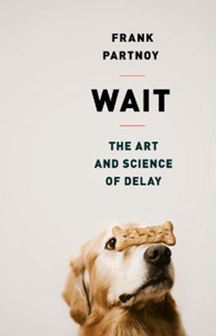
Former investment banker and lawyer Frank Partnoy’s Wait: The Art and Science of Delay provides empirical evidence on the value of delay to increase the quality of decisions and performance across investment, sports, comedy, and other disciplines.Wait

Creativity experts have demonstrated the importance of an “incubation period” in developing innovative solutions, and Partnoy suggests that similar principles provide and advantage: gathering maximum information in uncertain situations, by executing decisions and performance close to the last opportunity.

University of San Diego’s Partnoy recommends a three step approach to decision-making:

1) Determine the maximum time available to gather information and take the decision
2) Consider, reflect, “incubate” on the information as long as possible
3) Act quickly at the last possible moment

Malcolm Gladwell

Malcolm Gladwell

His approach could be summarized by referring to Malcolm Gladwell’s best-seller, Blink: The Power of Thinking Without Thinking : “Don’t just blink but think.”

Nalini Ambady

Nalini Ambady

Gladwell argues that people with expert experience and insight are often skilled at using ‘adaptive unconscious’ intuition to “thin-slice” subtle cues to filter relevant information from “noise,” a concept based on Nalini Ambady and Robert Rosenthal’s research at Harvard.

Justin Albrechtsen

Justin Albrechtsen

Christian Meissner

Christian Meissner

Research by Justin Albrechtsen, Christian Meissner, and Kyle Susa  of University of Texas at El Paso demonstrated “thin-slicing” when they found that intuitive processing can lead to more accurate judgments of deception when compared with deliberative processing.

Kyle Susa

Kyle Susa

Gladwell and these researchers acknowledge that non-experts, and even experts, can be make erroneous decisions due to bias and prejudice that comes from automatic thinking and habitual cognitive heuristics like the halo effect.

Gerard Hodgkinson

Gerard Hodgkinson

Gerard Hodgkinson of Leeds University found that biased intuitive judgment may be mitigated by “devil’s advocacy” and applying analytical tools like multi-attribute decision analysis and root cause analysis.

He suggests that informed intuition or ‘intelligent-unconscious’ results from subconscious information storage, processing and retrieval, and has conducted several empirical studies to evaluate its mechanisms applied to developing business strategies.

Intuitive judgment was positively correlated with quality and speed of decisions, organizational financial and non-financial performance in at least five studies.

Hodgkinson’s team summarized recent advances in neuroscience, including functional magnetic resonance imaging (fMRI) studies to explain complementary intuitive and analytical approaches to decision making  instead of the overly-simplified notion of left brain vs right brain processing  strengths.

He synthesized intuition attributes:

  • Instantaneous insight after incubation period
  • Subjective judgments
  • Based on experience, tacit knowledge, “knowing without knowing
  • Arise through rapid, non-conscious holistic associations
  • Affectively-charged: “feels right”, experienced as ‘‘inklings’’ or ‘‘glimmerings’’
  • Lacking verbalization or conscious awareness of problem solving.

Cognitive neuroscientists have differentiated intuition from instinct and insight using functional magnetic resonance imaging (fMRI) techniques.

Instinct refers to hardwired, autonomous reflex actions, whereas insight involves recognizing and articulating a problem’s structure, and may follow from intuition.

Hodgkinson’s research suggests that intuition can be enhanced by increasing:

  • Expertise (“prepared mind” or ‘‘deep smarts’’)
  • Self-awareness (feeling and cognitive style)
  • Reflection
Akio Morita

Akio Morita

His team’s research supports an assertion by Akio Morita, co-founder of Sony and driving force behind its successful Sony Walkman, that ‘‘creativity requires something more than the processing of information. It requires human thought, spontaneous intuition and a lot of courage.’’

-*How have you used pauses or intuition to strengthen decision-making and advance business innovation?

Related Posts

©Kathryn Welds

Pattern Recognition in Entrepreneurship

Steve Blank

Steve Blank

Steve Blank, serial entrepreneur (E.piphany, Zilog, and more) and Stanford consulting associate professor, argues that entrepreneurs need two types of “wisdom” or cognitive processing:

  • Pattern recognition based on a “constrain stream of data processing in the background”
  • Epiphanies that “serendipitously snap together”, outlined in Four Steps to the Epiphany.

He provides examples of pattern recognition in each of the four phases toward “epiphany” in building a business:The Four Steps to the Epiphany

  • Customer Discovery, which assesses market potential and customer preferences
  • Customer Validation, in early sales
  • Customer Creation, including strategy definition, startup launch, and iterative product  experimentation
  • Company Building, which prepares to “Cross the Chasm” in Geoffrey Moore’s model.
    Robert Baron

    Robert Baron

    Crossing the Chasm

Robert Baron of Renssalaer Polytechnic Institute echoed Blanks emphasis on pattern recognition in his Academy of Management Perspectives article,

Opportunity Recognition as Pattern Recognition: How Entrepreneurs “Connect the Dots” to Identify New Business Opportunities” which he said enables entrepreneurs to evaluate:

  • Economic value
  • Newness
  • Desirability

by comparing existing “mental models” or cognitive prototypes and real-world exemplars to new offerings.

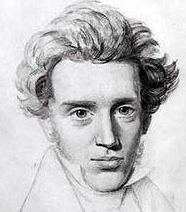
Soren Kierkegaard

Soren Kierkegaard

He quoted Danish philosopher Soren Kierkegaard, “…I should …wish…for the passionate sense of the potential, for the eye which. . .sees the possible…”

Venessa Miemis

Venessa Miemis

Venessa Miemis says that pattern recognition is a critical skill for in intelligent decision making, and cites Tor Nørretranders’s The User Illusion-Cutting Consciousness Down to Size to point out that most cognitive processing is outside of normal awareness.

In fact, his research suggests that over 99.99% of the processing in the brain happens at a subconscious level, and is therefore beyond our “control.”

Tor Nørretranders

Tor Nørretranders

She added to Blank’s description of “processing in the background” that synthesizing past
experience, intuition, and common sense and sorting out the “noise” can equip people with relative accurate “best guesses” about future occurrences.

The User Illusion-Cutting Consciousness Down to Size-Tor NørretrandersHowever, if the filter is overzealous, individuals may overlook opportunities because “cognitive dissonance” makes it uncomfortable to integrate information that doesn’t fit with an existing mental model.

Another cognitive bias is overlooking the potential impact of “wild cards” refer to low-probability, high-impact events.

Nassim Nicholas Taleb

Nassim Nicholas Taleb

Nassim Nicholas Taleb introduced the related idea of black swans: unforeseen rare, difficult-to-predict, high-impact, rare events – such as financial crises, natural disasters.

He observed that these occurrences are often explained away when hindsight reveals individual and collective “blindness” to uncertainty and its large role in these rare historical events.
His book recent book, Antifragile: Things that Gain from Disorder, posits that randomness  enables strengthening processes under pressure and can catalyze positive change.

AntifragileHe celebrates volatility as a sign that recalibration may be more achievable than after long periods of stability enable risks to accumulate until a catastrophe.

Applied to career choices, he argues that a seemingly “secure” corporate job disguises dependency on a single employer – often an “at-will” employer, though he discounts the value of “economies of scale” in this work arrangement.

As a result, the unlikely possibility of unemployment leads to cataclysmic reduction in income.
In contrast, occupations with variable earnings, like sales or professional services, acclimates the individual to cyclic or unpredicted income reductions, and practice enables mitigation planning.

This perceptual bias impairs people’s accurate anticipation adaptation to changing.

Pattern recognition can be increased by mindful attention to thinking processes, and frequent self-reminders to scan for perceptual bias and unconscious cognitive processing.
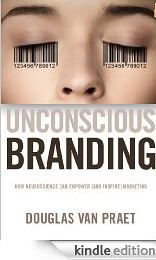
However, other people’s unconscious cognitive processing can be an advantage for marketers, according to Douglas Van Praet, who suggests taking advantage of these via six steps to robust marketing in Unconscious Branding: How Neuroscience Can Empower (and Inspire) MarketingUnconscious Branding

  1. Interrupt the Recognized Pattern
  2. Create Comfort
  3. Lead the Imagination
  4. Shift the Feeling
  5. Satisfy the Critical Mind
  6. Change the Associations
  7. Take Action.

Related Posts:

Twitter:    @kathrynwelds
Google+:
LinkedIn Open Group  Psychology in Human Resources (Organisational Psychology)
Blog: – Kathryn Welds | Curated Research and Commentary
Facebook Notes:

©Kathryn Welds

Effective Questions as Change and Innovation Catalyst

James Thurber

James Thurber

American humorist and cartoonist James Thurber reassured his readers that “It is better to know some of the questions than all of the answers,” a dictum supported by philosophers, mindfulness meditation practitioners, psychotherapists, scientists, artists, and creative others.

Given the importance of questioning, many resources are available to refine skill in inquiry:  Understanding others’ questions, framing high-impact queries, responding to others, and using questions to catalyze individual and organizational change.

QBQJohn Miller’s sales-oriented QBQ! The Question Behind the Question: Practicing Personal Accountability at Work and in Life advocates understanding the intent of statements phased as questions by crafting “What?” and “How?” questions instead of defense-provoking “Why?”

His approach is applicable in organizational management and change situations, and argues for increasing personal accountability while decreasing blame by focusing on the underlying work concerns like achieving revenue targets, deliverable timelines, customer satisfaction goals, cost savings.

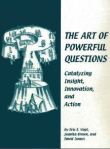
The Art of Powerful QuestionsLike Miller, Eric Vogt, Juanita Brown, David Isaacs advocate “What?” questions in The Art of Powerful Questions: Catalyzing Insight, Innovation, and Action.

This team asserts that high-impact questions in business situations are valuable because they

• Evoke the listener’s curiosity, imagination, creative problem-solving, new possibilities
• Stimulate reflective conversation
• Provoke thoughtful consideration of diverse perspectives, contributions
• Clarify underlying assumptions
• Generates energy, progress, improvement
• Focus attention on issues and alternatives
• Memorably resonate with meaning
• Articulate progress toward shared understanding
• Suggest more questions

Dennis Matthies

Dennis Matthies, Chief Questioning Officer of Training organization Vervago supplies the “how” of questioning by helping business participants refine skill in formulating seven types of “precision” analytic questions, drawing on formal logic and critical thinking disciplines:

  • Assumption Questions, including existence, uniqueness, measurement, possibility, value, audience, time constancy, category, similarity
  • Basic Critical Questions (BCQ), including data, source
  • Questions of Clarification, including ambiguity/vagueness, “pivot table” segmentation for granular analysis
  • Go/No Go Questions, including “meeting basics and participation”, participant motivation analysis, inquiry focus

Vervago advocates “precision” responses to questions by:

  • Referring to the question
  • Answering briefly
  • Anticipating and addressing underlying concerns embedded in the question.
David Cooperrider

David Cooperrider

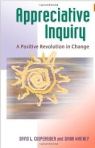
David Cooperrider of Case Western Reserve University broadened the vision of effective questioning’s potential impact when he developed Appreciative Inquiry (AI) as an affirmative approach collaborative organizational change.

This approach reduces resistance by focusing on desired change instead of the perceived problem, outlined in his book, with Diana Whitney, Appreciative Inquiry: A Positive Revolution in Change.

Appreciative InquiryAI’s “4Ds” of organizational change share some similarities with Design Thinking Processes:

  • Discovery Phase – Appreciating strengths and best practices of the current situation
  • Dream Phase – Envisioning the value and benefits of a proposed change
  • Design Phase – Defining processes and organizational structures that can deploy demonstrated strengths while moving toward a defined change state
  • Destiny Phase – Strengthen the organizational system’s capacity to sustain ongoing positive change

-*How do you use questions to clarify direction and initiate change?

Related Posts:

Twitter  @kathrynwelds
Google+
LinkedIn Open Group Mindful Leadership
Facebook Notes

Blog: – Kathryn Welds | Curated Research and Commentary

©Kathryn Welds

First Emotionally Intelligent, Mindful Presidents: Barack Obama, Peter Salovey?

Peter Salovey

Peter Salovey, newly appointed President-Elect of Yale University, introduced the term “Emotional Intelligence” in 1989 as “the ability to monitor one’s own and others’ feelings and emotions, to discriminate among them, and to use this information to guide one’s thinking and actions”.

Yale’s new President, is considered a pioneer and originator of research into four elements of EQ used to think and behave adaptively:

  • Accurately perceiving, identifying, pinpointing emotions in self, others
  • Expressing, using emotions as information to decide,  plan, achieve, communicate, create, think
  • Understanding, predicting own and others’ emotions, temporary moods
  • Self-regulating, transforming emotions.
  • Peter Salovey

    Salovey is widely regarded as one who embodies these characteristics and creates community  through his bluegrass band performances with Professors of Bluegrass, active participation in student life (as a Super Mario Brother at Halloween 2009, accompanied by the Yale Symphony orchestra during his tenure as Provost), and award-winning teaching and research.

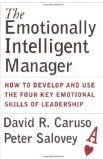
He applied EQ concepts to business with David Caruso in The Emotionally Intelligent Manager: How to Develop and Use the Four Key Emotional Skills of Leadership

Emotional Intelligence can be intentionally increased in work and personal settings by increasing awareness of one’s own and others’ emotions.
One way to achieve this goal is through “Mindfulness,” or non-evaluatively, non-judgmentally attending to physical, cognitive, and emotional experiences arising in the present moment.

Jon Kabat-Zinn

Jon Kabat-Zinn introduced this practice in 1979 and founded Stress Reduction Clinic and the Center for Mindfulness in Medicine, Health Care, and Society at the University of Massachusetts Medical School.
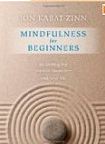
His programs and books, including Mindfulness for Beginners: Reclaiming the Present Moment–and Your Life  help develop skill in being “present” through:

  • Observing – expanded awareness with detachment
  • Describing
  • Participating fully
  • Focused, narrowed attention

He discussed the possible impact of these practices on business leadership and government, building on research findings that mindfulness practice can lower aggressive feelings and increase peaceful sentiments.

Kabat-Zinn provided an example in recently-re-elected U.S. President Barack Obama is the first mindful President, “…since Lincoln, or maybe ever.”

The Dalai Lama, Barack Obama

He added that Obama “… is really present, he has a lot of different qualities that seem to indicate he is emotionally balanced, not driven by ego concerns, that he knows how to balance family life and the impossible job that he has.
There is something about him that’s measured, very peaceful, he listens very, very deeply.”

Many observers will evaluate whether Salovey can put into practice Emotionally Intelligent leadership at Yale, and whether Barack Obama can demonstrate Mindfulness in peaceful international relations and domestic issue-resolution during his final term in office.

-*Where do you observe emotional intelligence and mindfulness among top leaders?

Twitter:  @kathrynwelds
Google+
LinkedIn Open Group Mindful Leadership
Facebook Notes:

Blog: – Kathryn Welds | Curated Research and Commentary

©Kathryn Welds

Minimize “Quest for the Best” Bias

Sheena Iyengar

Sheena Iyengar

Columbia Business School professor Sheena Iyengar, Cassie Mogilner of University of Pennsylvania’s Wharton School, and Baba Shiv of Stanford’s Graduate School of Business collaborated to assess the relative satisfaction and commitment to “sequential choices,” as in “love marriages,” compared with “simultaneous choices”, like arranged marriages.

Iyengar’s earlier research revealed that more choices available at one time are associated with reduced satisfaction.
The Art of ChoosingTo evaluate satisfaction with simultaneous vs sequential choosing, Iyengar, Shiv, and Mogilner studied volunteers’ satisfaction and commitment to choices of wine, chocolate, and nail polish colors.
Results, forthcoming in the Journal of Consumer Research, found thatsimultaneous” choosers were more satisfied and committed to their decisions than “sequential” choosers.

Cassie Moligner

In the chocolate experiment, participants considered detailed descriptions of fine chocolates (“dark chocolate ganache with black tea and hints of citrus and vanilla”), and chose which they wanted to taste.
The “simultaneous” group saw the entire list, whereas the “sequential” group saw one choice at a time.

After they selected and tasted the chocolate, participants rated their satisfaction with their choice.
Verdict? “Simultaneous” choosers were more satisfied with their choices than “sequential” choosers.

Baba Shiv

When participants had an opportunity to switch to a different but randomly-selected chocolate, more “sequential” choosers took this option, though they had little information about the choice.
However, when “sequential” choosers were permitted to choose an option they’d already considered, they were less committed to their choice.

The researchers suggest that “sequential” choosers may have regretted forgoing options they didn’t select, and hoped that a future option would be better.

Shiv summarized the dilemma of the “sequential” chooser (or serial dater, serial monogamist): Hope and regret prompt people to move to the next option even though the next option could be worse.
In contrast, “simultaneous” choosers are aware of available options at a point in time, so may spend less time in regret and hope.

Retailers, daters, venture capitalists, hiring managers, house purchasers, and job candidates benefit from presenting and evaluating all choices at one time.

However, simultaneous choice may not be possible, and to avoid the “bias of the eternal quest for the best,” Shiv suggests “mentally converting sequential choices into “quasi-simultaneous” choices by recalling situations when you were happy with you choice, and when you regretted your choices.”

Though an imperfect heuristic, quasi-simultaneous choice may may provide instructive clues to the elements of a satisfying decision.

-*How do you take decisions among many options?

Related Posts on Decision-Making and Bias:

Twitter:  @kathrynwelds
Google+
LinkedIn Open Group Stanford Social Innovation Review
Facebook Notes:

Blog: – Kathryn Welds | Curated Research and Commentary
©Kathryn Welds

Hypothetical Questions May Lead to Bias

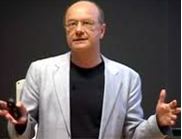
Baba Shiv

Baba Shiv, Stanford Graduate School of Business profession, showed that hypothetical questions can sway opinion and affect behavior through innuendo and implied rumor.

One example is a political “push poll” during the 2000 South Carolina Republican Primary Elections, which asked voters whether they’d vote for John McCain if they learned that he had fathered an illegitimate child.

Shiv and Duke University Fuqua School of Business professor Gavan Fitzsimons  conducted experimental inquiries of voter attitudes and behavior in 2001, and found that hypothetical questions increase information “accessibility” because the implied criticism is memorable and may align with existing stereotypes, becomes “top-of-mind,” and can direct behavioral choices.

Gavan Fitzsimons

The researchers found that participants simply focus on the hypothetical content, and don’t evaluate its credibility, even when reminded that the situation is hypothetical.

This effect was seen in one experiment where researchers gave a pretrial jury selection questionnaire to a group of actual prospective jurors.

The potential jurors were told not to use the questions to draw conclusions about the case, then some of the prospective jurors were asked how their decision would be affected by learning that the defendant was a gang member.

Participants who received the hypothetical question gave more hypothetical guilty verdicts and harsher sentences than those who received no suggestive questions.

Shiv cautions against posing hypothetical questions in situations where they are frequently used: Jury selection, political polls, marketing focus groups, job interviews.

Despite research findings (by many including Wiesner & Cronshaw’s classic 1988 article in Journal of Applied Psychology) that hypothetical questions about future behavior in work situations do not predict job performance as effectively as actual past job performance, this interview tactic is still used by some employers.

Astute job candidates can respond to hypothetical questions by citing actual past behavior as a “proof-point” of expected job performance, and may explore the interviewer’s underlying concerns in posing hypothetical questions.

-*What impact have you observed for hypothetical questions posed in the workplace?

Related Posts on Decision-Making and Bias:

Twitter:  @kathrynwelds
Google+
LinkedIn Open Group Mindful Leadership
Facebook Notes:

Blog: – Kathryn Welds | Curated Research and Commentary
©Kathryn Welds

How and Who of Innovation

Many innovation experts urge overcoming roadblocks by “doing something different”, and Alex Cornell joins the chorus in his Breakthrough!: Proven Strategies to Overcome Creative Block and Spark Your Imagination 

In contrast, Tom Kelley offered more specific guidance in the stages of “how” innovation is managed at IDEO in   
  The Art of Innovation: Lessons in Creativity from IDEO, America’s Leading Design Firm:

•              Analyze the market, potential client groups, technology, and constraints for each innovation problem
•              Observe people in typical life situations
•              Visualize novel concepts and their intended customers
•              Evaluate and refine prototypes during rapid iterations
•              Implement new concept for commercialization

Steven Johnson offers seven non-linear principles of innovation in Where Good Ideas Come From: The Natural History of Innovation:                                                          

•              Adjacent possible: Timing is essential for innovation to be accepted

•              Liquid networks: Connections between different disciplines to enable ideas development and implementation

•              Slow hunch: Insights incubate, germinate over time before becoming executable

•              Serendipity: Spontaneous, chance juxtaposition of ideas applied to other

•              Error: Outcomes considered “failures” from numerous trials  may lead to – and be required – to successfully implement ideas

•              Exaptation: Reusing existing ideas, technologies for a different purpose

•              Platforms: Adapting, recombining existing knowledge, components, implementation approaches to develop something new

Expert innovators seem to follow these guidelines and have developed skill through what Geoff Colvin calls “Deliberate Practice” in “What Really Separates World-Class Performers from Everybody Else”, the sub-title of his book, Talent is Overrated.

He notes that Deliberate Practice is not considered “fun”, but is a highly demanding and repeated mental challenge, systematically designed to improve performance with consistent expert monitoring and feedback.

Colvin’s premise is based on K. Anders Ericsson’s classic Harvard Business Review article, “The Making of an Expert“, which outlines three contributors to superior performance across disciplines:

•             Deliberate Practice to improve existing skills and to extend the reach and range of skills
•             Expert coaching with consistent monitoring and corrective feedback
•              Support from family and mentors

Kelley of IDEO focused more recently on the “who” of innovation in The Ten Faces of Innovation: IDEO’s Strategies for Defeating the Devil’s Advocate and Driving Creativity Throughout Your Organization, organized by Learning, Building, and Organizing capabilities:                     

•              Experience
•              Set Designer
•              Caregiver
•              Storyteller
•              Anthropologist
•              Cross-pollinator
•              Hurdler
•              Experimenter
•              Collaborator
•              Director
Meredith Belbin offered similar analysis of eight team roles in his Team Roles at Work  and Management Teams: Why they succeed or fail  to ignite collaborative strategy definition and execution.   

These findings suggest that processes and practices can help shape innovation, but consistent, focused and attentive practice increases capacity to innovate more than “natural talent” — validating the well-known homespun advice to “work hard” and demonstrate a “strong work ethic.”

-*What processes and roles do you use to increase innovation at work?

Related post:  
It’s Mostly Random, So Just Do Something: Suggestions to Guide Innovation, Creativity

Twitter: @kathrynwelds
LinkedIn Open Group The Executive Coach
Google+
Facebook Notes:

Blog: – Kathryn Welds | Curated Research and Commentary

©Kathryn Welds

It’s Mostly Random, So Just Do Something

Several recent books showcase Big Ideas in innovation:

  • Success often has random elements
  • Active experiments and reflective “incubation” are required for effective innovation.
Frans Johansson

Frans Johansson

Frans Johansson argues that most success “comes from things we cannot predict and plan: serendipitous moments, unexpected and spontaneous approaches, unusual combinations, and lucky breaks,” in the form of “click moments”, which can move people and ideas to a new, unexpected direction” in in Click: Seizing Opportunity in an Unpredictable World.

Leonard Mlodinow

Leonard Mlodinow

Johansson, Leonard Mlodinow and Nate Silver (“American statistician, sabermetrician, psephologist”) all demonstrate that events are more random than people typically acknowledge, and Johansson recommends specific actions that individuals and organizations can take to favorably focus this randomness

Nate Silver

Nate Silver

Follow your curiosity:  Capitalize on interests and “passions” to drive creative explorations

  • Use cross-disciplinary, “inter-sectional” thinking to break “associative barriers”
  • Examine surprises and unintended consequences for possible inspiration and re-usable ideas
  • Be aware of opportunities everywhere, requiring a mindful engagement rather than living “automatically”, and explore “all” opportunities
  • Scan for momentum and align to it
  • Choose a less predictable, or more “contrarian” solution
  • Act: Place many “purposeful bets” to try many options, with no expectation or guarantee of “success”
  • Minimize bet size to reduce the impact of loss
  • Take the smallest executable step (measured by time, money, partners)
  • Calculate acceptable loss rather than focusing on return on investment
  • Create “large hooks” to scaffold and leverage creative “borrowing” from existing sources
  • Shift focus from the problem to enable cognitive “incubation” of ideas
  • “Double down” when opportunities are not obvious

Many of these recommendations are more similar to behaviors intended to increase creativity and innovation than to quantitative finesse maneuvers.

For example Johansson’s recommendation to engage in “purposeful bets” draws from Peter Sims’ recommendations to place Little Bets: How Breakthrough Ideas Emerge from Small Discoveries, which are low-risk experiments to discover, develop, and test an idea.

  • Experiment to “fail quickly to learn fast”  – see post on Eddie Obeng
  • “Play”  by establishing a fun environment to cultivate innovation
  • Immerse  by interacting with customers
  • Reorient by make celebrating small wins and undertaking improvement “pivots”
  • Iterate by frequently testing, refining and improving-*How do you detect and optimize opportunities?
    -*How do you manage uncertainty in your career?

See more recommendations to boost innovation and creativity at: How and Who of Innovation  LinkedIn Open Group The Executive Coach

Related posts
Cognitive Biases in Unconscious Automatic Mental Processing, and “Work-Arounds”

Twitter @kathrynwelds
Google+
LinkedIn Open Group-Mindful Leadership:
LinkedIn Open Group – Women in Technology (sponsored by EMC)
Facebook Notes:

Blog: – Kathryn Welds | Curated Research and Commentary

©Kathryn Welds