Category Archives: Career Development

Career Development

Genes Influence Investment Risk-Taking: Implications for Taking Career Risks?

Camelia Kuhnen

Camelia Kuhnen

Brian Knutson

Brian Knutson

Camelia Kuhnen, then of Stanford with her Stanford colleague Brian Knutson and Vanderbilt’s Gregory Samanez-Larkin posit a small but meaningful genetic basis to risk-averse financial investing, providing a biological basis for findings that women hedge fund managers outperformed male counterparts.

Volunteers with two short serotonin transporter genes (5-HTTLPR) reported that they tend to worry, and this pattern was associated with chosing less risky investment choices.

Gregory Samanez-Larkin

Gregory Samanez-Larkin

“Short allele carriers” also showed higher levels of the personality trait “neuroticism,” but no significant difference in cognitive skills, education, or financial status.
Kuhnen estimates that less than 30 percent of variance in risk-taking is attributable to short 5-HTTLPR, and the remaining difference is derived from experience, culture, education, and social environment.

Kuhnen and Knutson reported the neural basis of financial risk taking using event-related fMRI.
They observed that the nucleus accumbens was activated before volunteers made risky choices and made risk-seeking mistakes.
In contrast, they found that the anterior insula was activated before risk-free choices and risk-aversion mistakes.

They proposed that different neural circuits are associated with differing emotions as volunteers anticipate gain or loss associated with financial choices.
This emotional activation “signature” can lead to specific investment choices, favoring or avoiding risk, and may lead to investing mistakes.

In unpublished research, Kuhnen found that short-allele carriers showed increased anxiety before making a decision in a trial-and-error risk discovery task, but reacted no differently than long-allele carriers when they observed a negative outcome.

She noted that volunteers differ in how they anticipate and react to a potential decision before they make it rather that in their reactions to actual outcomes of investment decisions.

Joan Chiao

Joan Chiao

Kuhnen, now at Northwestern collaborated with Northwestern colleague Joan Chiao to investigate the impact of both the 5-HTTLPR gene and the DRD4, gene, which regulates dopamine transmission.
These genes and their related neurotransmitters have been linked to emotional behavior, anxiety and addiction.

Their research replicated Kuhnen’s earlier finding that individuals with two short 5-HTTLPR alleles take 28% less risk than people with other combinations, and they demonstrated that the double DRD4 7 allele carriers took 25% more risk than people with other combinations.
They conclude that serotonin is associated with risk-averse investment choices, whereas dopamine is associated with riskier choices.

Kuhnen and Chiao argue that risky investment behavior shares commonalities with other risky behaviors like drug use, gambling, unsafe sex, dangerous physical and social pursuits, and more.

-*How do you determine the right amount of risk to undertake in career development and financial investing?

Related Posts

©Kathryn Welds

Mastering the Power Sandwich with Skillful Upward Influence

David Bradford

David Bradford

Employees’ advancement in organizations is based on preventing problems before they develop, and pre-emptively uncovering opportunities to add value, according to Stanford’s David Bradford and Allan R. Cohen of Babson College in Influencing Up.

Allan Cohen

Allan Cohen

Complementing their Influence without Authority, they distilled common-sense win-win approaches to influence those over whom one has no formal authority or control: one’s manager and others higher in the hierarchy.

Influencing UpOrganizational power discrepancies can be accentuated when the employee is female or a member of a minority group.
Cohen and Bradford’s suggest six elements to reduce power differences, and improve influence and negotiation outcomes:

  • Clarify needs and priorities
  • Consider others as potential partners rather than adversaries
  • Establish trustworthiness by sharing information and develop understanding of the other’s perspective, concerns, and “care-abouts” — empathy in a business setting
  • Determine reciprocal value exchange in “currencies” that matter to others: information, budget, removing obstacles, brokering agreements, support
  • Gain access to others by showcasing your potential value exchange
  • Negotiate a win-win outcome

Robert Cialdini

Robert Cialdini

Bradford and Cohen’s work complements influential research by Stanford colleagues Margaret Neale and Deborah Gruenberg, as well as Robert Cialdini’s classic investigation of influence.

Roger Fisher

Roger Fisher

William Ury

William Ury

Their emphasis on crafting a win-win negotiated outcome echoes earlier work by Roger Fisher and William Ury in Getting to Yes and Linda Babcock’s consideration of negotiation challenges faced by women and minority group members in the workplace.

-*How do you manage the Power Sandwich, requiring skillful 360 degree influence in your organization?

Related Posts:

Twitter:  @kathrynwelds
Google+:
Blog: – Kathryn Welds | Curated Research and Commentary
LinkedIn Open Group
Facebook Notes:

©Kathryn Welds

Hiring by Cultural Matching: Potential for Bias

Lauren Rivera

Lauren Rivera

Northwestern’s Lauren Rivera found that job interviewing at elite professional services firms – and perhaps in other industries – is a process of skill sorting as well as cultural matching.

She noted that hiring interviewers who did not employ systematic measures of job-specific requirements tended to use themselves as a benchmark of qualification.
As a result, interviewees rated as “most qualified” tended to resemble their interviewers in educational and geographic backgrounds, self-presentation, hobbies, and more.

Katherine Phillips

Katherine Phillips

This hiring practice leads to cultural homogeneity, which undermines innovation from diversity of thought and experience, demonstrated in research by Katherine Phillips, then of Northwestern, with Katie Liljenquist of Brigham Young University, and Margaret Neale at Stanford University.

Katie Liljenquist

Katie Liljenquist

Their laboratory study demonstrated the value of diverse groups in task performance and decision making:    Teams with out-group newcomers correctly completed a task more frequently than teams joined by an in-group newcomer.
However members of the heterogenous group expressed lower confidence in their performance.

Margaret Neale

Margaret Neale

Newcomers can improve group performance by shifting alliances and group interaction, and bringing fresh information to problems.

eHarmony, the online dating service, is developing a job search and candidate matching product intended to reduce the rate of “job-hopping,” according to Grant Langston, VP of customer experience.

Grant Langston

Grant Langston

This online offering is expected to match supervisors with potential employees based on 40 dimensions including personalities, work habits, hobbies, in addition to competency metrics, corresponding to Rivera’s observation that elite professional service firms “hired in a manner more closely resembling the choice of friends or romantic partners than how sociologists portraying employers selecting new workers.”

Though eHarmony’s candidate matching product may offer a satisfying match between candidate and supervisor, it may exclude qualified candidates who may bring a fresh perspective to the organization and work group.

-*How do you ensure cultural match and diversity of thought and experience in candidate selection?

Related Posts

Twitter:    @kathrynwelds
Google+:
Blog: – Kathryn Welds | Curated Research and Commentary
LinkedIn Open Group Psychology in Human Resources (Organisational Psychology)
Facebook Notes:

©Kathryn Welds

Resilient Performance Enhanced by Warmth, Touch

John Bargh

John Bargh

Idit Shalev

Idit Shalev

John Bargh of Yale and Idit Shalev now of Ben Gurion University found a bi-directional causal relationship between physical warmth and social warmth.

They used social affiliation as a proxy for social warmth; Loneliness and interpersonal rejection were examples of social coldness.

Results from their four studies concluded that feelings of social warmth or coldness can be induced by experiences of physical warmth or coldness, and vice versa.

In addition, Bargh and Shalev demonstrated that volunteers unconsciously self-regulated feelings of social warmth by applying physical warmth.

This type of self-regulation is a form of exerting control over the environment and managing feelings.
Self-management strategies reinforce people’s perception that they have some control over choices and environment.

Paul Zak

Paul Zak

Kerstin Uvnas-Moberg

Kerstin Uvnas-Moberg

Paul Zak and Kerstin Uvnas Moberg argue that touch can be another self-regulation strategy because it activates the vagus nerve and the release of oxytocin, resulting in increased feelings of interpersonal warmth, compassion, and collaboration.

Both of these self-management strategies – inducing warmth and engaging in touch – can increase task performance and reduce the likelihood that people will experience depression.

Carl Honore

Carl Honore

Martin Seligman

Martin Seligman

Canadian Journalist Carl Honore provided evidence in Martin Seligman’s important finding in studies of “learned helplessness,” that when people have a sense of control – whether real or a “positive illusion” – it can have a salutary effect on performance and mood.

-*How do you self-regulate performance and mood?

The Slow FixMartin Seligman-HelplessnessRelated Posts

Twitter:   @kathrynwelds
Google+:
Blog: – Kathryn Welds | Curated Research and Commentary 
LinkedIn Open Group Psychology in Human Resources (Organisational Psychology)
Facebook Notes:

©Kathryn Welds

Women’s Career Development: Contest and Sponsorship Paths to Advancement

Ines Wichert

Ines Wichert

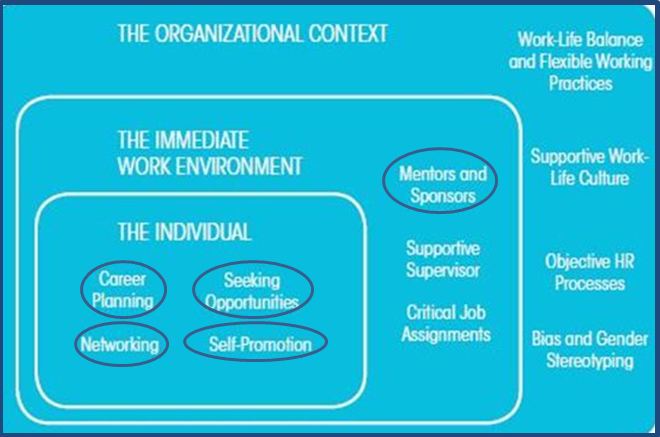
Ines Wichart of Kenexa High Performance Institute (KHPI), a subsidiary of IBM, proposed a model of women’s career development that focuses on:

  • The individual
  • The immediate work environment
  • The organizational context

She identified four behaviors that individuals can execute to increase the likelihood of career advancement:

  • Career planning 
  • Opportunity-seeking, Negotiation
  • Career-building networking; Mentoring-Sponsorship     
  • Skillful self-promotion

Ralph Turner

Ralph Turner

Kenexa Career Development Model-Individual Behaviors

Kenexa Career Development Model-Individual Behaviors

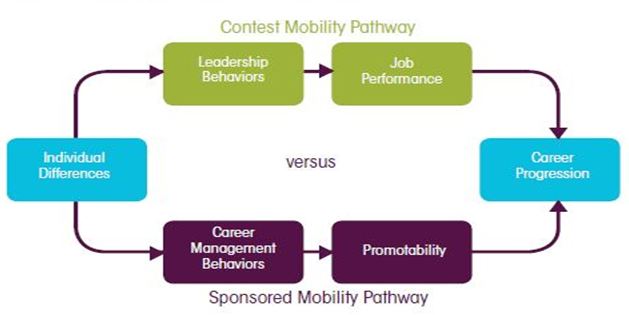
Within the domain of Career Planning, Ralph Turner, then of UCLA, proposed two ways that people advance their careers based on measures of promotions obtained and progression in the organizational hierarchy:

  • Contest Pathway is an open, merit-based system that enables career advancement by evaluating past accomplishments and impact

    Kenexa Career Progression Pathways- Contest and Sponsorship

    Kenexa Career Progression Pathways- Contest and Sponsorship

  • Sponsorship Pathway is a closed system in which candidates for advancement are chosen by senior leaders based “promotability” or “future potential“ to undertake and excel in future challenges

Henry Wadsworth Longfellow

Henry Wadsworth Longfellow

More than a century and a half ago, Henry Wadsworth Longfellow anticipated this distinction between the the contest and sponsorship pathways when he proposed how people assess  their performance:
We judge ourselves by what we feel capable of doing, while others judge us by what we have already done.”

Thomas Ng

Thomas Ng

Lillian Eby

Lillian Eby

More recent work by Thomas Ng and Kelly Sorensen, then of University of Georgia with their colleagues Lillian Eby and Daniel Feldman, found that women excel in the Contest Pathway, which requires:

Daniel Feldman

Daniel Feldman

  • Initiative
  • Risk-taking
  • Perseverance  

Amy Hurley Hanson

Amy Hurley Hanson

Jeffrey Sonnenfeld

Jeffrey Sonnenfeld

In contrast, Amy Hurley-Hanson of Chapman University and Yale’s Jeffrey Sonnenfeld  as well as Cranfield’s Susan Vinnicombe and Val Singh found that men tend to excel in the Sponsorship Pathway, based on:

Susan Vinnicombe

Susan Vinnicombe

  • Val Singh

    Val Singh

    Skillful networking

  • Visibility
  • Reputation for delivering outstanding results
  • Promoting accomplishments  

Philip Roth

Philip Roth

Philip Bobko

Philip Bobko

Another reason that women are not part of the Sponsorship Pathway as frequently as men is that women are less likely to be viewed as “promotable” even though men and women are rated equally effective as leaders, according to findings by Philip Roth of Clemson University, Kristen Purvis then of Cornell University, Philip Bobko of Gettysburg College.

  • How have you seen the Contest Pathway and the Sponsorship Pathway operate in your career advancement?
  • How do you “actively manage” your career toward advancement in the Contest Pathway or the Sponsorship Pathway?

Next: Women’s Career Development Model – Part 2 of 2Negotiation, Networking-Mentoring-Sponsorship, Skillful Self-Promotion

Related Posts

©Kathryn Welds

Women’s Career Development: Negotiation, Networking-Mentoring-Sponsorship, Skillful Self-Promotion

Kenexa Career Development Model-Individual Behaviors

Kenexa Career Development Model-Individual Behaviors

Part 1 of this post, Women’s Career Development: Career Planning, Career “Contest”, Sponsorship  highlighted Ines Wichart’s model of women’s career development with three levels and 11 components, based on her research as Kenexa High Performance Institute (KHPI), a subsidiary of IBM.

Ines Wichert

Ines Wichert

She outlined four behaviors that individuals can control or influence toward career advancement:

  • Career planning 
  • Opportunity-seeking, Negotiation
  • Career-building networking; Mentoring-Sponsorship    
  • Skillful self-promotion

The first segment of this two-part post considered facets of Career Planning and two independent paths to career advancement: Contest and Sponsorship routes.

Let’s consider the additional elements that respond to individual attention and efforts, including Opportunity-seeking while embracing risk.  

Susan Vinnicombe

Susan Vinnicombe

Val Singh

Val Singh

Highly effective career advancement opportunities include stretch assignments and on-the-job training.

Susan Vinnicombe and Val Singh of Cranfield University report that these development activities are most effective in building credibility, visibility, reputation as a capable, well-rounded leader.

However, their research found that women need more encouragement to take on challenging assignments than men, who are more likely to ask for these assignments.

Linda Babcock

Linda Babcock

Similarly, Linda Babcock reported that women tend to need encouragement to ask for promotions and salary increases.

Her research demonstrated that women are less likely to negotiate for their first salaries, unless they know that these are acceptable practices.

Manhattan CollegeAs a countermeasure, Babcock recommends negotiation practices demonstrated to mitigate negative perceptions by both men and women negotiation partners

Like Babcock, Mary Wade’s research at Manhattan College found that both men and women evaluated more negatively women who negotiated for salary using the same script as men.

Corinne Moss-Racusin

Corinne Moss-Racusin

Laurie Rudman

Laurie Rudman

Corinne Moss-Racusin and Laurie Rudman replicated this disconcerting finding at Rutgers University, leading to their formulation of “The Backlash Avoidance Model” (BAM)”.

According to this construct, women may demonstrate traditional gender role behaviors to mitigate “backlash” of negative reaction by men and women to “role discrepant” behaviors like asking for career advancement and commensurate compensation.

  • What approaches have been effective when you have asked for a salary increase or promotion?
         –How did you prepare?

         -How did you overcome objections?
  • When people ask you for a salary increase or promotion, what negotiation approaches have been most effective?
              -What have been least effective?

Wichart’s model of individual initiatives toward career advancement points to the importance of skillful professional networking, mentoring, and sponsorship.

National Center for Women and Information TechnologyNational Center for Women & Information Technology (NCWIT) reported that nearly half of technical women surveyed said they lack role models and mentors, and 84% said they lack sponsors.
The result is that these women are four times more likely to leave the current job role.

One reason that women’s professional networking efforts and seeking mentors may yield less effective career advancement than men:  Women tend to engage in professional networking for affiliation and emotional support with people close to their job level whereas men tend to network for career development with people significantly above the job level, according to Adelina Broadbridge of University of Stirling.University of Stirling

As a result of these differing approaches to professional networking, men may enjoy more rapid career advancement due to visibility and sponsorship.

Pamela Perrewe

Pamela Perrewe

F. Randy Blass

F. Randy Blass

In addition, women are likely to demonstrate less political understanding and insight because mentors are not sufficiently senior, according to Florida State University’s F. Randy Blass, Pamela Perrewe, and Gerald Ferris with Robyn Brouer of SUNY Buffalo.

Gerald Ferris

Gerald Ferris

Robyn Brouer

Robyn Brouer

Organizational support for formal and informal mentoring has been shown to increase employee engagement, satisfaction, and retention.

Therefore, organizations concerned with retaining talented women and minorities can increase the likelihood of keeping skilled employees by initiating structured mentoring programs and encouraging selective sponsorship.

  •  How have mentors and sponsors enabled your career moves?
  •  How do you decide who you are willing to mentor or sponsor?   

Previous posts have shared much current research and leading recommendations in building personal brand and practicing skillful self-promotion:

In light of the potential negative perceptions of women who showcase their accomplishments as they ask for salary increases and role advancement:

  •   How do you raise awareness of your accomplishments’ impact to avoid “backlash”?
  •   How do you define, develop, and communicate, “skillfully promote” your personal brand?

These research findings suggest three parting suggestions for women who want to Play Bigger:

  1. Question the thought that “I’m not ready yet.”
  2. Develop resilience and “a thick skin”:   If you are doing something innovative or important, you may draw both praise and criticism when you are noticed.
  3. Filter advice:  Implement recommendations that have “the ring of truth” and “resonate”;
    leave the rest.
  • What is the most helpful career advice you implemented?
  • What career advice have you decided not to implement?

Related Posts

©Kathryn Welds

Women Hedge Fund Managers Outperform Male Counterparts

Meredith Jones

Meredith Jones

Meredith Jones of Rothstein Kass, reported  that female hedge fund managers significantly outperform their male counterparts in Women in Alternative Investments: Building Momentum in 2013 and Beyond .
In the third quarter of 2012, women scored a net return of 8.95% compared to a 2.69% net return overall on the HFRX Global Hedge Fund Index.

Given women’s superior contribution to profitability, they would seem qualified for leadership roles in organizations seeking to maximize financial returns.
However, women hold fewer than 20% of top jobs in “alternate investment” organizations, according to 366 senior women in hedge funds, private equity, and venture capital.

Respondents attribute this low representation of women in executive roles to:

  • Low interest in remaining in this “alternate investment” sector due to limited opportunities for work-life balance.
    More than 18% of respondents said they wanted to work part-time or flex-time.
  • Few positions available for skilled women to establish a strong performance record.

Similar issues were discussed in Women’s Post-Business School Work-Life Issues .

Jones of Rothstein Kass suggested that some of women’s effectiveness is based on their greater patience and risk-averseness so they are “…potentially better able to escape market downturns and volatility.”

She continued, “…if women do in fact have a different, more risk-averse investing profile, then at least theoretically, their returns, particularly in difficult markets, should be higher than those of their male counterparts.”  

Kelly Easterling

Kelly Easterling

Kelly Easterling and Camille Asaro, also of Rothstein Kass, contributed to the report, which found women’s assessment of their most important professional assets:

  • Professional networks
  • Strong personal and support networks
  • Strategic career planning
  • Willingness to take considered risks

Jean Brittingham

Jean Brittingham

Jean Brittingham of The Smart Girls Way posited additional correlates of women’s effective financial performance:

  • Systems-thinking skills
  • Seeking balance between work and life
  • Caring more about solutions than who gets credit
  • Strong collaboration competencies
  • Persistence when “passionate about something”

Camille Asaro

Camille Asaro

The Rothstein Kass report noted that some U.S. states have mandates for diversity in their asset management firms, and observed an increase in state public pension plans with stated or implied preference for women-owned investment managers.

-*In which industries have you observed women delivering equal or better results than male counterparts?

Related posts

Twitter:  @kathrynwelds
Google+
Blog: – Kathryn Welds | Curated Research and Commentary 
LinkedIn Open Group Psychology in Human Resources (Organisational Psychology)
Facebook Notes

©Kathryn Welds

How Well Do Today’s Career Choices Endure Over Time?

Donald Clifton

Donald Clifton

Career development and job search are founded on uncovering individual skills, competencies, strengths, capabilities, interests and likes.

This discovery can involve introspective “personal archaeology,” often enabled by standardized career and personality assessment tools.

However, social science research suggests that it is difficult to “know” preference – career and otherwise – in order to map this “supply” to the “demand” in available career roles.

Gilbert Ryle

Gilbert Ryle

More than 60 years ago, acclaimed Oxford University philosopher Gilbert Ryle foreshadowed the philosophical and cognitive problems entailed in “knowing one’s own mind.”

Rene Descartes

Rene Descartes

Ryle considered how people acquire attitudes, traits, and their dispositions to act in The Concept of Mind  , an erudite attack on Cartesian dualism of mind and body

Daryl Bem

Daryl Bem

Two decades later, Daryl Bem of Cornell University substituted laboratory research for Ryle’s philosophical reasoning, and demonstrated that people may not know what they like or their skills until they observe their behavior in studies of “self-perception theory.”

Bem found that people draw inferences about who they are and they “become what they do,” particularly when people are not certain of what they think or feel, and when they believe that they freely chose to behave as they did.

Bruce Hood

Bruce Hood

Bruce Hood of University of Bristol expanded the self-perception argument to posit that “the self” is an illusion, so it is difficult to “know” what the “self” likes, values, and prefers.

However, behaviors can be shaped and constrained by external social standards:  People learn to become themselves by interacting with others, according to Charles Horton Cooley, who coined the term “the looking glass self” more than a century ago.

Charles Horton Cooley

Charles Horton Cooley

Therefore, people may choose a career acceptable to parents or social observers who attribute “respect” and “prestige.”

Hood showed that the fluid process of constructing the self is a created narrative which is experienced as “a cohesive, integrated character.”
Since the “self” is constructed, it changes over time, and people significantly and consistently underestimate how much they will change in the future.

This finding has important implications for anyone seeking to distill values, strengths, and preference a job search “elevator speech,” “value proposition,” and “pitch.”

Introspection, therefore, offers limited career insight and guidance: People need to see how they respond, then infer attitudes and preferences for career and other life choices.
This argues for taking exploratory action to “try on” choices, such as in “realistic job previews” found in internships and other on-the-job experiences.

The challenge to career development and decision-making doesn’t end there.
Even if it’s possible to infer preferences from one’s behavior, those inferences are likely to change – a lot – over time.
This means that today’s career may not change in synchrony with one’s personal changes.

Daniel Gilbert

Daniel Gilbert

Daniel T. Gilbert and Jordi Quoidbach of Harvard collaborated with Timothy D. Wilson of the University of Virginia demonstrated this shift in in personalities, values, and preferences over decades of life – and people’s underestimate of these changes – and called it the “end of history illusion.”

Jordi Quoidbach

Jordi Quoidbach

They surveyed more than 19,000 people ages 18 to 68 and found that  young people, middle-aged people, and older people all believed they had changed a lot in the past decade but would change relatively little in the future decade.

Timothy Wilson

Timothy Wilson

The researchers reported that the typical 20-year-old woman participant’s predictions for her next decade were not nearly as radical as the typical 30-year-old woman’s recollection of how much she had changed in her 20s, with this trend holding for volunteers into their 60s.

They found that participants were able to accurately recall personality changes that correlated well expected results, based on independent research charting of personality trait shifts with age.

Gilbert, Quoidbach and Wilson conducted lab studies that found people tend to overpay for future opportunities to indulge their current preferences due to this “end of history” illusion.
This trend may have significant consequences when choices involve potential life partners, long-term financial commitments, and career choices.

These researchers suggest that people underestimate future changes because people may be threatened by the idea that current values and preferences are transitory.
They speculate that such a realization may lead people to doubt many decisions, and experience decision-slowing due to anxiety.

An alternate explanation is that the mental energy required to imagine future changes exceed the effort of recalling the past, so “people may confuse the difficulty of imagining personal change with the unlikelihood of change itself.”

Dan McAdams

Dan McAdams

Dan McAdams of Northwestern University seconded this view and added, “The end-of-history effect may represent a failure in personal imagination,” based on his observations of how people construct stories about their past and future lives in Identity and Story: Creating Self in Narrative (The Narrative Study of Lives).
He noticed that many people tell complex, dynamic stories about the past but then make vague, prosaic projections of a future similar to the present.

These findings suggest that introspection and standardized assessment instruments may have more value when coupled with observing one’s actual behavior and reflected impressions from others.

Additionally, it is wise to:

  • Anticipate the value of changing, expanding, or modifying one’s job role over time
  • Develop a wide array of transferrable skills, applicable across a variety of domains to increase the breadth of options for later preferences.
  • How do you uncover or infer your career strengths and preferences?
  • How do you monitor a possible “end of history” illusion when making career plans?

Related Posts

©Kathryn Welds

Extract More Value from Meetings with Effective Questions

Shane Snow

Shane Snow

Shane Snow, co-founder of Contently.com  advocates asking incisive questions to extract more value from meetings, mentors’ guidance, and chance encounters with thought leaders and influencers.

He notes that expert journalists, researchers, innovators, and therapists are trained to ask effective questions, and their common “best practices” include:

  • Listening more than talking
  • Asking open-ended questions to avoid suggesting responses: “Who?”, “What?”, “When?”, “Where?”, “How?”, “Why?”
    They use closed-ended questions sparingly: “Is?”, “Would?” and “Do?”
  • Posing one concise question at a time.
    They avoid multiple choice questions
  • Waiting for an answer without interjecting more questions or comments.
    They rarely interrupt themselves or others
  • Tolerating the other person’s silence for several seconds before talking
  • Directly, repeatedly probing for insightful, revealing replies
  • Nodding only when the response is intelligible, logical, and understandable
  • Interjecting questions or rephrasing the original question to redirect tangential responses
  • Cross-checking information and following up possible inconsistencies with more probing questions

Sakichi Toyoda

Sakichi Toyoda

Nearly a century earlier, Sakichi Toyoda, founder of Toyota Industries introduced an iterative problem-solving approach based on posing “Five Whys” to uncover the root cause of an issue.

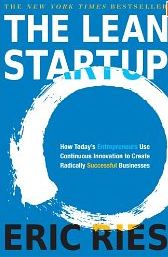
The Lean StartupThis technique is now-widely applied in Lean Manufacturing, and is advocated by Eric Reis in The Lean Startup: How Today’s Entrepreneurs Use Continuous Innovation to Create Radically Successful Businesses .

‘”Five Whys” were reduced to “Three Whys” to uncover customer objections in sales situations, and was modified Judith Beck in cognitive therapy to identify underlying Core Beliefs that lead to negative automatic thoughts.

Judith Beck

Judith Beck

Beck softens the “Five Whys” by repeatedly asking “If that were true, what would it mean?”
Her model that suggest connections among:

Early experience->Core beliefs (schemas) ->Underlying assumptions (if/then – conditional) ->Automatic thoughts-> Physical Experiences->Self-Limiting Behaviors

Five Whys to Uncover Core Beliefs

Lois Frankel

Lois Frankel

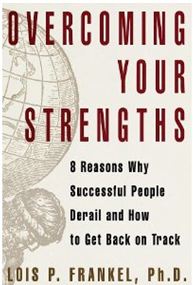
Therapist and writer Lois Frankel illustrated the similarity of effective questions in psychotherapy sessions with those used to spur inquiry and innovative breakthroughs.
She advises interviewers and consultants to:

  • Use questions to define your purpose:
    What do you want to gain from this conversation?

    • Help
    • Advice
    • Information
    • Commitment
    • New ideas
    • Clarification of opinions or attitudes
    • Decision
      Overcoming your strengths
    • What is the “real” problem? Engineers and business people answer this question using a “Root Cause Analysis”
      • What are the options?
      • What are the likely consequences?
      • What results will justify the invested time, effort or money?
      • Ask specific questions:
        • What could we do differently?
        • Why is this important?
        • How can we best meet our objective?
        • What do you want to happen?
          • What don’t you want to happen?
          • What is the best thing that could happen?
          • What is the worst thing that could happen?
          • How will you react if you don’t follow this course of action?

Frankel advises to

  • Maintain eye contact:
  • Focus full attention on the interviewee
  • Repeat and summarize important points to verify accurate understanding
  • Listen for:
  • Content (facts)
  • Intent (feelings)
  • The way these are expressed (process).

    Warren Berger

    Warren Berger

    Journalist Warren Berger applied refined questioning in Design Thinking processes to produce innovative solutions in Glimmer: How Design Can Transform Your World .

    He advocates continued exploration of meaningful “big” questions in his blog, A More Beautiful Question.

-*What effective questioning practices have you found most helpful in achieving business results?

Related Posts:

Twitter:   @kathrynwelds
Blog: – Kathryn Welds | Curated Research and Commentary
Google+
LinkedIn Open Group Psychology in Human Resources (Organisational Psychology)
Facebook Notes:

©Kathryn Welds

Beware of Seeking, Acting on Advice When Anxious, Sad

Just as wise grandmothers advise, it’s best to avoid decisions when upset, anxious, or sad.

Maurice Schweitzer

Maurice Schweitzer

Maurice Schweitzer and Alison Wood Brooks of Wharton validated Grandmother Wisdom in eight experiments that demonstrated anxiety’s impact on lowering self-confidence, impairing information processing, and impeding ability to distinguish advice from neutral advisors and those with a conflict of interest.

Alison Wood Brooks

Alison Wood Brooks

They found that people experiencing anxiety tend to seek advice and act on it, but they are less able to differentiate poor advice from valid recommendations, and these results are applicable to making decisions about crucial medical treatment, financial investments, or even guidance counseling.

The team evoked anxious feeling among volunteers by presenting potentially frightening film clips and music, and asked them to judge a person’s weight based on a photograph or number of coins in a jar or solve a complex math problem.

Participants were offered money for correct judgments, and the opportunity to receive advice from others when they were uncertain.
Those who heard the scary music or saw the alarming film clip rated themselves as less confident of their decision, and were more likely to ask others for advice.
These effects were not observed when volunteers were shown a film clip that could provoke anger.

Schweitzer and Brooks concluded that people vary in their receptivity to advice based on:

  • Advisor’s characteristics, such as expertise, consistent with Cialdini’s observation

    Robert Cialdini

    Robert Cialdini

  • Perceived difficulty of the decision
  • Decision maker’s emotional state when receiving advice

The researchers advised decision-makers to:

  • Monitor their internal states for anxiety
  • Use feedback from multiple sources when making important decisions
  • Work toward developing increased self-confidence
  • Evoke calm state, often possible with systematic breathing or mindful attention and equanimity

Catherine Hartley

Catherine Hartley

Catherine Hartley, then of New York University and Elizabeth Phelps of New York University contributed to the neuroeconomic analysis of anxiety’s impact on decision- making when they reported that brain structures responsible for regulating fear and anxiety are also involved in economic decision-making under uncertain conditions.

Elizabeth Phelps

Elizabeth Phelps

Specifically, the amygdala is crucial in learning, experiencing, and regulating both fear and anxiety and it is also implicated in decision-making in situations of potential loss.
The prefrontal cortex is specialized in controlling fear and is also involved in decisions containing risk elements.

Hartley and Phelps suggest that techniques for altering fear and anxiety may also improve economic decisions-making.

Rajagopal Raganathan

Rajagopal Raganathan

Rajagopal Raghunathan, then of New York University and Michel Tuan Pham of Columbia University demonstrated the same connection between anxiety and making decisions about gambling and job selection.

Michel Tuan Pham

Michel Tuan Pham

They conducted three experiments and found that sad individuals select high risk / high-reward gambling and job options, whereas anxious individuals are biased in favor of low-risk / low-reward options.

Raghunathan and Pham posit that anxiety tends to motivate people to reduce uncertainty whereas sadness moves people to replace rewards.
They suggest suggesting two different decision biases related to mood states.

Raghunathan and Pham add to Schweitzer and Brooks’s recommendations for mitigating decision bias:

  • “Monitor feelings”
  • Consider alternate options
  • Speculate on future moods and preferences if each option were selected: “What would I feel better about . . .?

-*How do you mitigate the potential decision bias when anxious or sad?

Related posts:
Memorable Business Stories: Ideas and Numbers
Business Influence as “Enchantment”

  • ©Kathryn Welds