Tag Archives: Leadership

Leadership

“Zooming” to Shift Strategic Thinking Perspective

Rosabeth Moss Kanter

Rosabeth Moss Kanter

Rosabeth Moss Kanter of Harvard Business School suggests the electronic metaphor of “zooming in” and “zooming out”, to characterize a critical practice of changing points of view in strategic thinking.

She says that “zooming” represents the flexible shift from detail to context to better consider other routes to the ultimate goals.

Kanter observed the traditional association of women with the “zoom in” perspective to focus on detail and transactions (such as CFO roles), whereas men are often found in “big-picture” roles that define vision and direction (such as CEOs).

She argues for systematically incorporating both “zooming in” and “zooming out” in strategic problem analysis, and for recognizing potential biases that may exclude men from roles that focus on “zooming in” and women from roles that emphasize “zooming out.”

-*What practices do you use to intentionally shift your perspective from “big picture” to implementation details?

LinkedIn Open Group Women in Technology (EMC)
Twitter
Google+
Facebook Notes:
Blog: – Kathryn Welds | Curated Research and Commentary

©Kathryn Welds

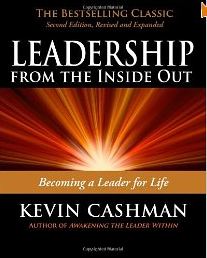
Leadership “From the Inside Out”

Kevin Cashman

Kevin Cashman

Kevin Cashman provides a leadership development frame that complements Daniel Goleman’s Emotional Intelligence concepts and Jim Collins’s delineation of Level 5 Leadership, in his book Leadership from the Inside Out.

He is Senior Partner, Korn/Ferry International, and Leadership From the Inside Outhis research and experience indicate that leadership effectiveness originates in the individual’s personal character.

If individuals wish to develop leadership skills, they must apply “learning agility” to acquire new perspectives and skills, then deploy them under new business circumstances.

Cashman reviewed the four elements of “learning agility”:

Mental agility, characterized by questioning solutions, consulting others, demonstrating openness

Interpersonal agility, based on effective, precise listening, using questions to elicit clarification

Results agility, or developing new approaches to achieve results, incorporate new ways to resolve problems

Change agility, which includes flexibility and adaptability

Cashman found three steps in leadership development, common across many approaches, and recommended these elements in any leadership development program:

Building Awareness – Self-discovery of strengths, development areas

Building Commitment – Developing emotional engagement to act on developmental needs and to apply strengths

Building Practice – Undertaking new actions such as journaling to build awareness, commitment and reflection on learnings.

The goal of these steps is to develop three aspects of leadership:

Authenticity, characterized by integrity, alignment between words and actions that is recognized by others; continued striving toward authenticity in future potential

Influence, involving the self-expression and application of personal strengths to create value

Value creation in work and community

Leadership from the Inside Out outlines seven related pathways to leadership mastery, with related practices.
Many of these recommendations may sound spiritual, philosophical, non-specific, and difficult to translate into specific actions.
One element of self-reflection in Cashman’s process may be to operationalize these recommendations into concrete, measurable actions:

Personal Mastery, based on developing self-awareness

Purpose Mastery involves applying talents to serve values and add value through authentic self-expression in leading others

Change Mastery, incorporates acceptance of uncertainty and impermanence to learn from these changes and demonstrate agility in adapting to new circumstances

Interpersonal Mastery relates to human connection, the second element of Goleman’s Emotional Intelligence. Collaboration is a foundation to create contribution and long-term value

Being Mastery represents a spiritual dimension, however the individual defines it, to connect one’s depth of character to support effectiveness and contribution

Balance Mastery refers to building, maintaining energy to foster resilience, effectiveness, fulfillment. It moves beyond time management, a practice to manage a limited resource, to generate and regenerate energy to lead

Action Mastery practices leading by coaching others and self to create value.

-*What actions have helped develop leadership from the inside out?

Related Posts:
The Considered “Pursuit of Less”
Whom Do You Serve as a (Level 5, Level 6) Leader?  
“Contemplative Neuroscience”: Transform your Mind, Change your Brain
Developing “Big 8” Job Competencies

©Kathryn Welds

Overcoming Decision Bias: Allure of “Availability Heuristic”, “Primacy Effect”

Dana Carney

Dana Carney of Berkeley’s Haas School of Business and Mahzarin Banaji of Harvard University investigated whether people prefer the first option they receive in their paper, “First is Best”.

Olympics gymnastic competitors are aware of this phenomenon, and typically prefer to perform first, to “set the standard” against which other competitors must excel.
Volunteers in one experience were shown pictures of two violent criminals and then asked which one deserved parole.

Mahzarin Banaji

Mahzarin Banaji

Most favored the first mug shot they viewed, no matter the order of viewing.
Similarly, 68% of respondents at a railway station in Boston preferred the first stick of gum they were offered, and volunteers preferred to buy a car from the first salesperson they met.
This is one reason that the first advertisement break on television costs 10-15% more than the second, according to Jonathan Allan, sales director at British broadcaster Channel 4.

Carney and Banaji concluded that people “consistently” the first choice if they have time limits or are distracted, and that this primacy effect is even more important online, because few people scroll through dozens of pages of search results.
Google page rankings, and dating sites such as Badoo, are aware of this trend, and offer enhancements to position results in a more eye-catching location.

Awareness of the human cognitive short-cuts that bias decision making can mitigate their effects.

-*What decision short-cuts do you use?
-*When have you seen these heuristics lead to decision bias?

Blindspot: Hidden Biases of Good People, Mahzarin R. Banaji, Anthony G. Greenwald

LinkedIn Open Group: Mindful Leadership
Twitter: @kathrynwelds
Google+:
Facebook Notes:
Blog: – Kathryn Welds | Curated Research and Commentary

©Kathryn Welds

Female and Minority Supervisor Influence

Katherine L. Milkman

Wharton operations and information management professor Katherine L. Milkman and Harvard Business School professor Kathleen L. McGinn, investigated how race and gender affect career mobility for young professionals, especially those entering career fields where they must be promoted to remain (law firms, universities, consulting firms).

Kathleen L. McGinn

They examined five years of personnel data and employee interviews from a large national law firm and found a correlation between the number of female supervisors and the probability of promotion and retention of junior-level female employees, published in Harvard Business School’s Working Knowledge as “Looking Up and Looking Out: Career Mobility Effects of Demographic Similarity among Professionals.”

The enabling benefit of demographically similar employees and supervisors was accompanied by a perhaps surprising correlation.
Work groups with a high number of same-gender or same-race underrepresented minorities had a higher attrition rate, attributed to employees’ perception that the competition reduced their chances for promotion.

Milkman and McGinn noted that placing many underrepresented employees (women and underrepresented minorities) in the same group may lead to structural marginalization, or “ghettoes” of low-power.
This effect was present in groups composed mostly of men.
In contrast, the exit decisions of white and Asian employees did not seem affected by working in groups with other white and Asian employees.

The researchers cited the massively unequal representation of women and minorities among partners in professional services organizations.
A 2009 study that showed women made up 46% of associates but 19% of partners across U.S. law firms, and racial minorities represented 20% of the lawyers across the country but only 6% of partners.

Milkman is currently analyzing data on the role that race and gender play in sponsorship or patronage in academia.
She sent emails to 6,500 professors at academic institutions across the country from purported male, female, white, or minority “students”  requesting a 10-minute meeting for one-time mentoring, either that day or next week.

She found that “female” and “minority” students received significantly fewer responses from prospective mentors, particularly when asked for assistance in the future.
She noted that these findings contrast with the popular expectation of less overt or unconscious discrimination in academic settings.

-*How have you seem race and gender affect career mobility in the past year?

LinkedIn Open Group – Diversity – A World of Change 
Twitter: @kathrynwelds
Google+
Facebook Notes:
Blog: – Kathryn Welds | Curated Research and Commentary

©Kathryn Welds

Human Decision Biases Modeled with Automatons

Yuval Salant

Yuval Salant

Yuval Salant of Northwestern University’s Kellogg School of Management, notes that research by psychologists and behavioral economists established that humans exhibit predictable biases in making decisions.

He created an algorithm-based mathematical model of how a machine would make choices with limited information.
Some automatons make the same type of predictable errors as humans, including the “primacy” effect (choosing one of the first items on a list) or the “recency” effect (selecting the last item on a list).

One of Salant’s automatons is based the decision-making strategy known as “satisficing”, or establishing in advance the criteria an option must fulfill to be selected.
This type of decision-making may pertain in selecting a meal, a residence, vehicle, vacation, or mate.

These three decision-making tendencies might be considered short-cuts, or heuristics, to avoid the exhaustive task of thoroughly analyzing every possible option.

As a result, computer scientists surmise that this type of “rational” (thorough) decision making does not scale for large problems, due to limitations of processing power and memory.
The same may be true for human decision-making in light of limitations to “working memory” (correlated with IQ), not to mention inevitable time constraints.

Salant’s most human-like automaton is a “history-dependent satisficer,” which may remember previously-considered and may modify its decision criteria based on available options.

He pointed to examples that support the decision biases he identified: people are more likely to vote for candidates who appear first on a ballot, to order one of the first items on a menu, to click on options at the top of a computer screen (such as an airline or hotel option).

-*What decision biases do you experience?
-*How do you neutralize your potential decision biases?

LinkedIn Open Group – Social Media Marketing
Twitter: @kathrynwelds
Google+
Facebook Notes:
Blog: – Kathryn Welds | Curated Research and Commentary

©Kathryn Welds

Large-Cap Companies with Women Board Members Outperformed Peers

Credit Suisse Research Institute analyzed the performance of close to 2,400 companies with and without women board members from 2005 onward, and evaluated four key financial metrics:

1. Higher return on equity (ROE): The average ROE of companies with at least one woman on the board over the past six years is 16 percent; four percentage points higher than the average ROE of companies with no female board representation (12 percent).

2. Lower net debt to equity ratio: Net debt to equity of companies with no women on the board averaged 50 percent over the past six years; those with one or more have a marginally lower average, at 48 percent.

3. Higher price/book value (P/BV) multiples: In line with higher average ROEs, aggregate P/BV for companies with women on the board (2.4x) is on average a third higher than the ratio for those with no women on the board (1.8x).

4. Better average growth: Net income growth for companies with women on the board averaged 14 percent over the past six years compared to 10 percent for those with no female board representation.

The report offered seven hypotheses to explain the performance findings, including:

Improved Corporate Governance: Academic research reveals that a greater number of women on the board improves performance on corporate and social governance metrics.

Risk Aversion: The study analyzed the MSCI AC World constituents and found that stocks of companies with women on the board are more likely to have lower levels of gearing than their peer group where there are no women on the board.

Lower relative debt levels have been a useful determinant of equity market out-performance, delivering average out-performance of 2.5 percent per year over the last 20 years and 6.5 percent per year over the last four years.

Gender Diversity and Corporate Performance report

-*What financial results have you observed among large organizations with women board members?

LinkedIn Open Group – Harvard Business Review
Twitter: @kathrynwelds
Google+
Facebook Notes:
Blog: – Kathryn Welds | Curated Research and Commentary  

©Kathryn Welds

How Parents can Limit Girls’ Leadership and Achievement Potential

Forbes Woman observed that seven parenting and teaching practices may still persist, and have been shown to limit girls’ potential for achievement in school and sports.

These practices can lay the foundation for unchallenged assumptions that may continue to limit their potential to advance in workplace leadership roles.

1. Teach her to be polite and quiet without skills to be proactive and assertive

2. Buy her gender-specific toys

3. Focus on her appearance more than her accomplishments

4. Give in to the allure of the ”princess cult”

5. Assign her father or male caretaker all the physical tasks around the house

6. Limit most of her social contract to other girls

7. Criticize your own body, and/or women’s bodies

-*How do you help girls develop leadership and achievement skills they will need in the next decade and beyond?

LinkedIn Open Group – Leadership Think Tank
Twitter: @kathrynwelds
Google+
Facebook Notes:
Blog: – Kathryn Welds | Curated Research and Commentary

©Kathryn Welds

Business Influence as “Enchantment”

Guy Kawasaki

Guy Kawasaki

Guy Kawasaki, former Chief Evangelist at Apple, co-founder of Alltop.com, and author of Enchantment: The Art of Changing Hearts, Minds, and Actions, shared with Stanford University entrepreneurship students his conviction that business influence or “enchantment” is the foundation of successful entrepreneurship.

He maintains that business influence, or “charisma”, or persuasiveness, is based on the following characteristics and behaviors.

Likeability
• Smile, engaging the corner of eyes (“crow’s feet”!) of Duchene smile
• Handshake, drawing on University of Manchester research, for the optimal handshake to engage social connection
• Dress equal to audience, not more formally or more casually

Trustworthiness
• Must trust others in order to have others trust you
• “Believe that the world is a non-zero sum game”
• “Default to Yes: How can I help this person?”
• Create something (product, services) DICEE for the listener
o D-eep
o I-ntelligent
o C-ompleteness
o E-mpowering
o E-legant

In promoting products and services, he advises:

• Branding must be “short, sweet, swallowable”: “Mantra, not Mission Statement.”
[Kawasaki’s mantra is “Empower People”]

• Conduct pre-mortem to course-correct: Pretend that the company failed; use diagnosis to course-correct

• Launch product or service by telling a compelling story

• “Plant many seeds: The world has been inverted: LonelyBoy15 needs to embrace your product and he encourages his contacts to embrace your product.”

• “Put your prototype out there because you never know who your LonelyBoy15 will be.”

• Make salient points, things that matter to listeners

• Overcome resistance via:
o Social proof (“others are doing it, so it must be ok”)
o “Find a bright spot – don’t fix something for the nay-sayers; use what is working”
o Enchant all the influencers. “The higher you go, the thinner the air, and the more difficult to support intelligent life. If you deal with CXOs, you will deal with the dumbest people. Look for the influencer, in the middle or bottom.”

• Make something endure
o Don’t default to using money; cultivate genuine “belief” and “commitment”
o Invoke reciprocity –“pay it forward”.
When the person expresses gratitude, say, “I know you would do the same for me.”
Enable the reciprocity to “alleviate the guilt” the other person experiences
o Build an ecosystem beyond your product including all interested stakeholders, users

• Learn to speak
o Customize the introduction: verbally, photos
o Sell your idea
o 10-20-30 rule: 10 slides, 20 minutes, 30 point font

• Provide value via social media
o Information
o Insight, meaning

o Assistance
o Remove the speed bumps, and obstacles to adoption
o Engage within 24 hours – “fast, many, often: it is core to your existence”

• Enchant up
o “Drop everything and whatever the boss asks: Just do it”
o Prototype fast – exceed expectations, deliver early
o Deliver bad news early, with ways to correct

• Enchant down
o Master
o Autonomy: Empower action, convey trust of others’ judgment
o Purpose
o Never ask others to do what you wouldn’t: “Suck it up”

-*How do you use “enchantment” to influence others?

LinkedIn Open Group – The Executive Coach
Twitter: http://www.twitter.com/kathrynwelds
Google+
Facebook Notes:
Blog: – Kathryn Welds | Curated Research and Commentary

©Kathryn Welds

White Men can Lead in Improving Workplace Culture

Catalyst’s recent research study of employees at Rockwell Automation, Calling All White Men: Can Training Help Create Inclusive Workplaces?, found that white men who participate in leadership development training, modify their workplace attitudes and behavior to enable career advancement for women and minorities.
The study found that Rockwell employees who participated in leadership training labs presented by White Men as Full Diversity Partners:

• Reported increased in workplace civility and decreased gossip, attributable in part to improved communication and respect

• Managers were more likely to acknowledge that inequities exist in career advancement opportunities and practices for women and racial/ethnic minorities

• Managers increased five inclusion behaviors, including seeking out varied perspectives to becoming more direct in addressing emotionally charged matters

• Managers with few prior cross-racial relationships reported most change in thinking about issues and opportunities for different demographic groups

• Managers who reported least concern about appearing prejudiced reported most change in taking personal responsibility for being inclusive following the leadership training lab.

As in any civil rights transition, change adoption is increased when representative of the often privileges “majority” articulate the issue and present a call-to-action for change.

-*How have you seen men improve the culture in your workplace?

LinkedIn Open Group – Diversity
Twitter @kathrynwelds
Google+
Facebook Notes:
Blog: – Kathryn Welds | Curated Research and Commentary

©Kathryn Welds

Developing “Charisma” and “Presence”

Olivia Fox Cabane

Olivia Fox Cabane

Olivia Fox Cabane integrated research findings from social psychology and neuropsychology with principles of Emotional Intelligence and “Practical Buddhist Philosophy” in her book, The Charisma Myth: How Anyone Can Master the Art and Science of Personal Magnetism

She concluded that charismatic behaviors are based on managing internal state and beliefs through self-awareness to focus on others and “make them feel good.”

She found that “charisma” or “presence” is composed of:

•Presence – mindful attention, patient listening, avoiding interruption

•Power – appearance, clothing, occupy space, positive wording (avoid “don’t”), placebo effect

•Warmth – chin down, eye contact, Duchenne smile (mouth corners, eye corners), gratitude, compassion, appreciation – counteract “hedonic adaptation”

•Goodwill – wishing the other person well

•Empathy – understanding the other’s experience

•Altruism

•Compassion – a combination of empathy+goodwill

•Forgiveness of self and others

•Self-compassion – self-acceptance. Positively correlated with emotional resilience, sense of personal responsibility, accountability, sense of connectedness, life satisfaction, positive relationships with others, self-confidence, willingness to admit errors, low self-pity, low depression, low anxiety, improved immune system functioning

•”Metta” – loving kindness to self, others

Fox Cabane offered three “quick fixes” to increase your “charisma”:

•Lower the intonation of your voice at the end of your sentences (no “Valley Girl talk”…)
•Reduce the speed and rapidity of nodding
•Pause for two seconds before you speak

-*When you see a charismatic person in action, what behaviors and attitudes add to the interpersonal impact and appeal?

©Kathryn Welds