Tag Archives: Leadership

Leadership

Positive to Negative Feedback Ratios – 3:1 @ work, 5:1: @ home

Sandra Mashihi

Sandra Mashihi

Envisia’s Kenneth Nowack and Sandra Mashihi provided “evidence-based answers” to 15 questions about leveraging 360-degree feedback.

Kenneth Nowack

Kenneth Nowack

Their first question was “Does 360-degree feedback do more harm than good”?
Nowack and Mashihi concluded that found “poorly-designed 360-degree feedback assessments and interventions can increase disengagement and contribute to poor individual and team performance.”

Specifically, individuals can “experience strong discouragement and frustration” when feedback is not as affirming as anticipated.
In addition, negatively-perceived information may be discounted and disregarded.

John Gottman’s studies of positive-to-negative interaction ratios in marriage suggest that intact and well-functioning marriages have a a 5:1 ratio, and research by his colleagues, Schwartz and team, found a similar effect for 360-feedback sessions, though the ratio was closer to 3:1 to encourage  enhanced individual and team performance, individual workplace engagement, effectiveness, and emotional “flourishing,” according to Frederickson and Losada.

Proportions of negative feedback and interactions that exceed these ratios can interfere with insight and motivation and diminish willingness to engage in work-related practice and performance effectiveness.

Barbara Fredrickson suggested in Positivity: Groundbreaking Research Reveals How to Embrace the Hidden Strength of Positive Emotions, Overcome Negativity, and Thrive that this 3:1 ratio of positive to negative feedback is a “tipping point.”

UCLA’s Naomi Eisenberger and Matthew Lieberman collaborated with Kipling Williams of  Macquarie University to demonstrate the physical and emotional impact when people are overloaded of negative feedback:  The same neurophysiologic pathways associated with physical pain are triggered.
Under these circumstances, volunteers reported higher levels of physical pain and demonstrate diminished performance on a cognitively-demanding task, according to Purdue’s Zhansheng Chen, Williams and  Julie Fitness of Macquarie University, and University of New South Wales’s Nicola C. Newton.


Anyone providing evaluations or 360-degree feedback may organize and “titrate” negative (“constructive”) feedback to remain within tolerable ratios so that those receiving this coaching can assimilate and execute recommendations.

-*What ratios of positive to negative feedback do you apply in helping others improve performance?

Twitter: @kathrynwelds
Google+
LinkedIn Open Group – Psychology in Human Resources (Organisational Psychology)
Facebook Notes:

Blog: – Kathryn Welds | Curated Research and Commentary

©Kathryn Welds

“Nudging” Compassion, Resilience to Reduce Conflict, Stress

David DeSteno

David DeSteno, directs Northeastern University’s Social Emotions Lab, where he investigates cognitive and neurological mechanism related to social behavior.
In Out of Character: Surprising Truths About the Liar, Cheat, Sinner (and Saint) Lurking in All of Us , and at his PopTech talk, he shared how he investigated whether evoked compassion and empathy is associated with reduced aggression.

He described experiments in which volunteers solve math problems for money.
In some conditions, one of DeSteno’s associates posed as another volunteer and noticeably cheated to earn more money than the real volunteer.
In other conditions, the confederate abided by the rules.

For some experiments, the cheating confederate, a professional actor, evoked empathy and compassion by saying that she was  worried about her brother, who was just diagnosed with a terminal illness.

In these situations, the volunteers were less likely to intentionally inflict discomfort on her in the following study of “taste perception,” a measure of aggression.

In this experimental trial, the volunteer measured a discretionary amount of extra-hot sauce into a cup for the cheating or non-cheating confederates to taste.

Volunteers poured five times more hot sauce for cheating confederates than non-cheating confederates, but they treated cheaters who evoked empathy the same as non-cheaters.

DeSteno noted most people are willing to help others who have some similarity to them, such as a shared identity of sharing a religious faith or hometown, or even are moving together as in conga lines, military drills.

He suggested that movement “synchrony causes separate identities to merge into one,” and demonstrated this trend in a music perception study, where volunteers in the same room tapped their hands on sensors when they heard tones.

In some conditions, the tones were synchronized so the volunteers were tapping at the same time as other volunteers, and in other conditions, the tones were independent.
De Steno found that 50% of volunteers who tapped at the same time were willing to help other volunteers, whereas 20% of those who tapped at different times helped others.
He concluded that volunteers felt more similar by tapping together, so felt more compassion, and were more likely to help others.

DeSteno is investigating social media like Facebook as a platform for sharing similarities to reduce aggression in conflict, cyber-bullying, victims of distant natural disasters.

He  said uses Cass Sunstein’s and Richard Thaler’s idea that small behavioral and organizational changes can “nudge” people to healthier, safer, more productive, and prosperous habits outlined in Nudge: Improving Decisions About Health, Wealth, and Happiness 

Their practical recommendations for designing effective “choice architecture” are consistent with DeSteno’s research-based findings:

* Align incentives with desired outcomes
* Identify possible alternative outcomes in familiar terms
* Provide default options that favor desired outcome behaviors
* Offer prompt, relevant feedback about choices and outcomes.
* Expect deviation from the targeted outcome, and build in ways to prevent, detect, and minimize this variance.
* Structure complex choices to reduce the difficulty of decisions-making

-*How have you seen “similarity” affect workplace collaboration and support?

-*Where have you seen organizations implement “choice architecture” to encourage employee behaviors toward positive goals?

BJ Fogg

Related Post
“Tiny Habits” Start, Maintain Changes

Twitter @kathrynwelds
Google+
LinkedIn Open Group – Stanford Social Innovation Review
Facebook Notes:

Blog: – Kathryn Welds | Curated Research and Commentary

©Kathryn Welds

Oxytocin Increases Empathic Work Relationships, Workplace Trust, Generosity

Paul Zak

Paul Zak

Paul Zak, director of the Center for Neuroeconomic Studies at Claremont Graduate Center, and author of The Moral Molecule: The Source of Love and Prosperity, suggests that the hormone oxytocin empathic understanding, generosity (donating to charities, giving money to others in experimental situations), happiness, and trust/trustworthiness.The Moral Molecule

He verified these laboratory-based findings in real-world situations, like a wedding he attended in southern England, prior to which he drew blood samples from the wedding party.

Zak says that oxytocin can be increased by massage, dance, story-telling, prayer, engaging in social media with a loved one, and hugs.
As a result, he “prescribes 8 hugs a day” for better mood and improved “relationships of all types.”

He says that oxytocin can be inhibited by improper nurturing in childhood, stress, abuse, and by oxytocin’s antagonist, testosterone.
Known as the “selfish hormone,” testosterone is also correlated with expressions of power and leadership in the workplace.

One reason women may have challenges expressing these traits in work situations is that their average testosterone levels are ten times lower than men’s.
Zak’s TED Talk

Amy Cuddy

Amy Cuddy

Related Post:

Thoughts change bodies, bodies change minds, roles shapes hormones: Amy Cuddy on “Faking Until It’s Real”

-*To what extent have you seen “eight hugs a day improve mood and relationships”?

LinkedIn Open Group
Twitter @kathrynwelds
Google+
Facebook Notes:
Blog: – Kathryn Welds | Curated Research and Commentary

©Kathryn Welds

Startup Success Correlates with Women Executive Involvement

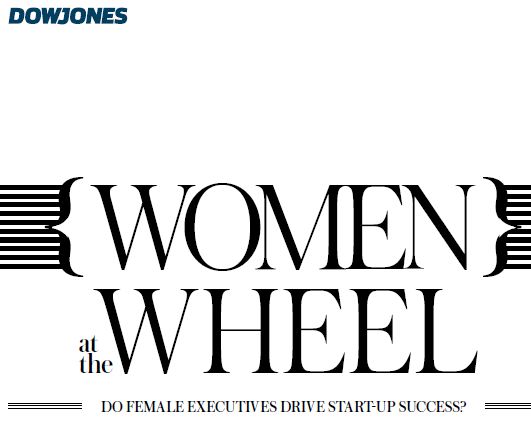
A Dow Jones Venture Source study of 167,500 executives and 2,200 venture-backed companies funded between 1997 and 2011 showed that women helped lead more start-ups to success.

Women are less involved as founders and leaders of start-ups than men.

Just 1.3 percent of start-ups have a female founder, 6.5 percent have a female CEO, and 20 percent have one or more C-level female executives.

Women at the WheelAbout 27 percent were in sales and marketing roles, and many as vice presidents.
Companies that have been acquired, went public or gained profitability have 7.1 percent of executive staff members are women.

In contrast, only about 3.1 percent  executives are women at companies that failed, exited at a low valuation, or haven’t reached other milestones.

-*To what extent have you observed a correlation between gender balance in executive leadership and successful financial performance among new enterprises?

LinkedIn Open Group Catalyst:
Twitter: @kathrynwelds
Google+
Facebook Notes:
Blog: – Kathryn Welds | Curated Research and Commentary

©Kathryn Welds

Silicon Valley Venture Capitalist’s Leadership Credo for Growing Businesses, Careers

Ann Winblad

Ann Winblad

Ann Winblad is one of the most prominent, yet low-profile venture capitalists and among a minority of women venture capitalists – about 11 percent of today’s VCs.

She co-founded Open Systems, an accounting software company in 1976, then co-founded Venture Capital firm Hummer Winblad Venture Partners, which invests more than $1 billion in software companies.

Hummer Winblad She offers recommendations for women and men investing in businesses, careers, and themselves:

• Seek risk and fail fast to enable rapid course-correction
• Strive to be more resilient than strong
• Adapt as quickly as possible
• Place greater value on learning from all sources over formal education
• Exercise intellectual curiosity and stamina
• Tolerate ambiguity and lack of experts during high-growth periods
• Look for possibility in the “half-full glass”
• State assumptions and build on those of others
• Cultivate honesty and transparency

-*Which of Winblad’s recommendations have you seen practiced by the most effective organizational leaders and entrepreneurs you know?

LinkedIn Open Group: Women in Technology (Sponsored by EMC)
Twitter: @kathrynwelds
Google+
Facebook Notes:
Blog: – Kathryn Welds | Curated Research and Commentary   

©Kathryn Welds

Two Models of Business Innovation, Courtesy of Two Kaplans

Two Kaplans present differing but possibly compatible innovation guidelines in recent books.
Both offer vivid and familiar business examples, and argue that transformational change rather than incremental change is required to drive innovation.

Saul Kaplan

Saul Kaplan

Saul Kaplan founded Business Innovation Factory (BIF), after serving as the Executive Counselor to the Governor of Rhode Island on Economic Growth and Community Development, Executive Director of the Rhode Island Economic Development Corporation, and Senior Partner at Accenture’s Health & Life Science practice.

He boldly states in his book, The Business Model Innovation Factory: How to Stay Relevant When the World Is Changing,  that business transformations that underlie innovation start by “transforming ourselves” 

This Kaplan says the top three action steps for innovators are:
• Do more stuff
• Use a different lens
• Enable random collisions of unusual suspects

He advises innovators to:
• Embrace a culture of “fail early, fail often” to enable risk-taking
• Think and act with the system in mind

Soren Kaplan

Soren Kaplan

Soren Kaplan offers LEAPS as an acronym of innovation practices in his well-received book Leapfrogging: Harness the Power of Surprise for Business Breakthroughs 

• Listen: Start with yourself, not the market
• Explore: Go outside to stretch the inside
• Act: Take small steps again, again, and again
• Persist: Take the surprise out of failure
• Seize: Making the journey part of the final destination

He advocates “optimistic persistence” in the face of repeated trials that depart from intended outcomes, and reframing these efforts as progressive learning that inspires continued forward efforts.
Though he attributes effective business to achieving “surprise”, this effect has also been characterized as “differentiation” and “customer delight.”
This Kaplan acknowledges that many business executives openly state that they do not like surprises, and that they hire people to prevent surprises.

Both Kaplans recommend breaking conceptual limitations and perceptual tunnel vision, and offer compatible tips for systems thinking and courageous experimentation to drive business innovation.

-*What models of business innovation have been most effective in igniting creative problem solving in your work environment?

LinkedIn Open Group Stanford Social Innovation Review
Twitter@kathrynwelds
Google+
Facebook Notes:
Blog: – Kathryn Welds | Curated Research and Commentary

©Kathryn Welds

Glass Elevator and Nine Principles for Personal Branding, Career Impact

Ora Shtull

Ora Shtull

Ora Shtull points to the small number of women leading Fortune 500 companies to argue that women can benefit from adopting nine practices to enhance personal branding.

Her book, The Glass Elevator – A Guide to Leadership Presence for Women on the Rise, focuses on: The Glass Elevator

• High-impact communication through asking strategic questions,

• Practicing confident body language in posture, body position, and vocal projection,

• Listening to learn and understand,

• Developing a collaborative relationship with your manager,

• Partnering with team members and direct reports to deliver results,

• Expanding your network by being likable and generous,

• Asking for what you want and creating “win-win” proposals,

• Sharing your differentiators,

• Adopting a positive outlook, even if at first it’s “as-if.”

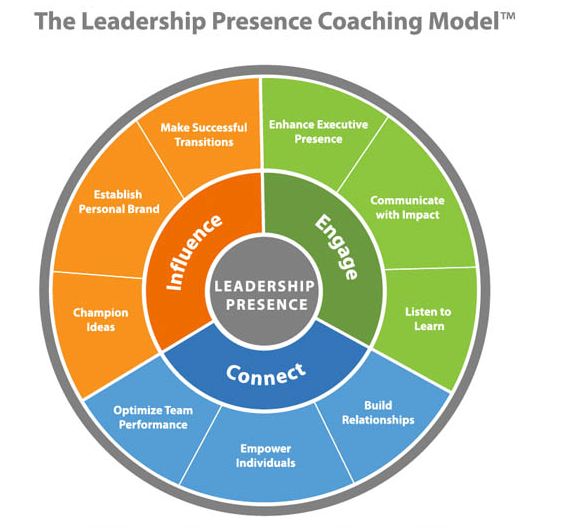
Shtull developed a comprehensive Leadership Presence Coaching model based on the principles of Influence-Engage-Connect.

-*Which of Shtull’s recommendations have most helped you ride the “Glass Elevator”?

Related Posts:

©Kathryn Welds

Crash Course on Innovation, Creativity

Tina Seelig

Tina Seelig

Tina Seelig, Executive Director for the Stanford Technology Ventures Program (STVP), the entrepreneurship center at Stanford University’s School of Engineering, and the Director of the National Center for Engineering Pathways to Innovation (Epicenter), offers a “crash course” in creativity.

She summarized her recommendations in her book, inGenius: A Crash Course on Creativity, and explored factors that stimulate and inhibit creativity in individuals, teams, and organizations, including framing problems, challenging assumptions, and creative teams.

She introduces six interdependent elements of the “Innovation Engine”:

• Internal
o Information that becomes knowledge (fuel),
o Imagination (a catalytic converter that transforms knowledge into new ideas),
o Attitude (a spark that ignites the Engine, setting it in motion).

• External
o Resources (a community’s assets),
o Habitats (physical locations within which the Engine functions at peak performance),
o Culture (shared beliefs, values, and behaviors of the given community).

inGenius: A Crash Course on Creativity also discusses models and tools that can be applied to class projects:

o The “Theory of Inventive Problem Solving” or TRIZ (the Russian acronym) methodology (Pages 50-51)
o A two-by-two creativity/pressure matrix (106-108)
o Habitats that simulate or inhibit creativity (128-131)
o Edward de Bono’s “Six Thinking Hats” model/exercise (128-131)
o Creating a habitat that encourages and supports risk taking and experimentation (160-163)
o Tapping into and activating strong emotional engagement (179-180)
o Précis: Knowledge, Imagination, and Attitude (185-189)

Seelig was awarded the 2009 Gordon Prize from the National Academy of Engineering, recognizing her as a national leader in engineering education, and the 2008 National Olympus Innovation Award, and the 2005 Stanford Tau Beta Pi Award for Excellence in Undergraduate Teaching.
She earned her Ph.D. in Neuroscience from Stanford University Medical School and has written 16 popular science books and educational games.

Another of Seelig’s books is What I Wish I Knew When I Was 20: A Crash Course on Making Your Place in the World

-*What “Innovation Engine” components have been most effective in generating creative solutions in your organization?

LinkedIn Open Group Stanford Social Innovation Review
Twitter:  @kathrynwelds
Google+
Facebook Notes:
Blog: – Kathryn Welds | Curated Research and Commentary

©Kathryn Welds

Three Factors Affecting Women in Corporate Leadership

Sara King

The Center for Creative Leadership’s Sara King and Northwestern University professor Alice Eagly examine the obstacles, pressures and trade-offs women face at every stage of their careers to analyze the reason that only three percent of Fortune 500 leaders are women.

Alice Eagly

King’s and Eagly’s research identified three factors affecting women in corporate leadership roles:

•    “Walking the narrow band” of acceptable behaviors: tough and demanding to be credible and effective but “easy to be with”; demonstrating the desire to succeed but not appearing “too” ambitious

•    “Owned by the job”, with the expectation of availability and productivity 24/7

•    “Traversing the Balance Beam” of conflicting role demands and limited time to fulfill them

They provide familiar suggestions:
•    Seek out mentors and advocates

•    Take risks, accept challenges to demonstrate adaptability, versatility.
Communicate willingness to change jobs and take on special projects to gain experience.
Learn from research findings that women are not viewed as promotable if they stay in one area of expertise or have a narrow functional role.

•    Communicate decisions, demand results, even if unpopular or requiring change management and persuasion

•    Project confident. Projecting an effective leadership image requires confidence. Don’t undermine good results with a weak or too modest self-image

Through the Labyrinth: The Truth About How Women Become Leaders.
Alice H. Eagly  Linda L. Carli, 2007 Harvard Business School Press.
The Center for Creative Leadership showcased related research that identified five themes among high-achieving women: agency, authenticity, connection, self-clarity and wholeness.

Agency, taking control of one’s career:
•    Analyze career steps
•    Set realistic, specific goals and develop a plan for achieving them
•    Ask for challenges outside your current functional orientation
•    Seek recognition
•    Ask for what you deserve

Authenticity, being genuine, being yourself by developing self-awareness to clarify   values, preferences, skills, acceptable trade-offs and acceptable sacrifices.

Connection, by taking time for people, to build personal and professional relationships, networking, finding a mentor, establishing a personal “board of directors” to provide support and feedback.

Self-clarity from seeking feedback and reflecting on one’s values, motivations, behaviors, strengths, weaknesses, impact on others.
This is a continuing process of evaluating changes in your needs, motivations, goals, values, while observing patterns, and being open to possibilities.

Wholeness from seeking roles beyond work or to unite different life roles, by prioritizing commitments and saying “no” to low-priority roles or obligations.

-*What solutions have you seen most effective in navigating the challenges facing women seeking leadership roles?

LinkedIn Open Group Catalyst
Twitter: @kathrynwelds
Google+
Facebook Notes:
Blog: – Kathryn Welds | Curated Research and Commentary

©Kathryn Welds

Silicon Valley Tech Women Encourage STEM Careers

Mala Devlin

Mala Devlin

Mala Devlin, Engineering Manager at Cisco Systems and Trina Alexson‘s book, Bit by Bit encourages young women in high school and university to pursue high tech careers.

Trina Alexson

Trina Alexson

Devlin and Alexson interviewed more than 40 women across leading Silicon Valley companies to highlight the top 10 reasons why young women should consider careers in Science, Technology, Engineering, and Mathematics (STEM) careers, despite women’s under-representation in these fields.

The authors provide descriptions of job roles and career paths, and list skills required to succeed in technology careers.

Insights from this book are equally applicable to young men, and the authors encourage members of all under-represented groups to consider STEM careers.

Devlin and Alexson donated all profits from the book to the Anita Borg Society for Women in Technology

-*What practices have you seen increase interest in STEM careers among young women and other under-represented groups?

Linkedin Open Group Women in Technology (sponsored by EMC)
Linkedin Open Group Catalyst
Linked Open Group Diversity
Twitter: @kathrynwelds
Google+
Facebook Notes:
Blog: – Kathryn Welds | Curated Research and Commentary

©Kathryn Welds