Tag Archives: Emotional intelligence

Career Navigation by Embracing Uncertainty

John Krumboltz

John Krumboltz

John Krumboltz of Stanford echoes the message in an earlier blog post, Is Career “Planning” Actually Career “Improvisation”? in his book, Luck is No Accident: Making the Most of Happenstance in Your Life and Career  Luck is no accident

He notes that people can’t control outcomes of unpredictable life and career situations, but he advocates paying attention to thoughts and actions that hinder progress toward goals — and to modify them with small steps.

Related Post:
Creating Productive Thought Patterns through “Thought Self-Leadership”

Increased mindful attention to habitual patterns can set the conditions for desired outcomes by planning contingencies for undesirable eventualities.

Part of this process is being:

  • Open to possibilities that diverge from an original plan
  • Willing to consider unexpected opportunities
  • Able to risk mistakes and rejection.

This may see demanding and undesirable for goal-directed people with a plan, but Krumboltz’s research demonstrates the effectiveness of these guidelines and other familiar recommendations:

  • Research areas of interest
  • Network
  • Ask for what you want
  • Keep learning
Daniel Pink

Daniel Pink

Similarly, Daniel Pink advises flexibility in career “planning” in his anime-like The Adventures of Johnny Bunko: The Last Career Guide You’ll Ever Need and questions whether there can be a career “plan”, given many unpredictable possibilities.The Adventures of Johnny Bunko

Like Peter Drucker and Donald Clifton before him, Pink urges building on existing strengths and finding ways to compensate for less strong areas, rather than investing effort in remedying them.

Donalid Clifton

Donalid Clifton

In addition to familiar suggestions – persist in taking on ambitious challenges while learning from them – he recommends focusing on solving problems for others, and finding a niche to deliver valuable results.Now Discover Your Strengths

This service-orientation pays dividends as a career development strategy and in “making a difference” in the community and one’s family.

DrivePink’s later book, Drive: The Surprising Truth About What Motivates Us ,   draws on Frederick Herzberg’s delineation of intrinsic motivation and extrinsic motivation.

Frederick Herzberg

Frederick Herzberg

People are motivated, Pink says, by career roles that provide opportunities for:

  • Autonomy, exerting control over work content and context
  • Mastery, improving skill in work over time through persistence, effort, corrective feedback
  • Purpose, participating in an inspiring goal

Related Post:
Finding Work You Love, Measuring Your Life

Pink’s TED Talk demonstrates his passionate advocacy for replacing traditional rewards and recognition with “Motivation 2.0” that provides opportunities for autonomy, mastery, and purpose.

Edward Deci - Richard Ryan

Edward Deci – Richard Ryan

Draw on strengths

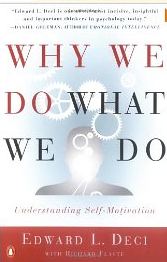
Pink cites Edward Deci’s and Richard Ryan‘s Cognitive Evaluation Theory (CET) that investigated variability in intrinsic motivation, and Deci’s Why We Do What We Do: Understanding Self-Motivation which advised managers to adopt “autonomy-supportive”   behaviors to encourage employees’ intrinsic motivation.Why we do what we do
These varied studies suggest the value of flexibility in career “planning” to capitalize on serendipitous opportunities, and seeking work roles that:

  • Draw on strengths
  • Enable intrinsic motivators like autonomy, purpose, mastery, and affiliation, instead of focusing primarily on monetary or status rewards.

-*How do you navigate your career in the face of incomplete information about future outcomes?

Related Posts:

©Kathryn Welds

Happiness-Money Connection: Halo Effect of Happy Mood? Part 2

Daniel Kahneman

Daniel Kahneman

The Happiness-Money Connection: Halo Effect of Happy Mood? Part 1 outlined studies by Nobel Prize winner and psychologist Daniel Kahneman, with Angus Deaton and by British researchers Jan-Emmanuel De Neve and Andrew Oswald, documenting the long-term positive impact of subjective positive emotions on life outcomes including academic attainment, employment status, and income over time.Michael Norton’s research added the insight that money can buy happiness – if it’s used for other people.

Taken together, these findings point to the value of cultivating positive emotional states.

Martin Seligman

Martin Seligman

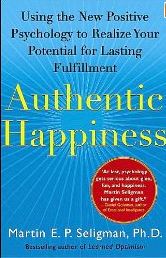
Distinguished psychologist Martin E. P. Seligman was one of the first researchers to empirically investigate correlates of happiness and well-being, and his recent book,

Flourish: A Visionary New Understanding of Happiness and Well-being recasts his

Flourish

earlier emphasis on Authentic Happiness: Using the New Positive Psychology to Realize Your Potential for Lasting Fulfillment.
He opined that “well-being” is a more accurate concept, defined by the acronym PERMA:

  • Positive Emotion
  • Engagement
  • Relationships
  • Meaning
  • Accomplishment

Authentic Happiness

Though this is largely a conceptual model, he offers several exercises like considering one’s “signature strengths” and “three blessings” or things that have gone well during a day.

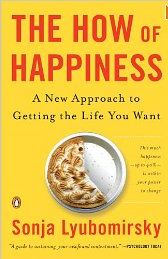
Sonja Lyubomirsky of UC Riverside synthesized happiness-enhancing recommendations from self-help books in The How of Happiness: A New Approach to Getting the Life You Want,  and provided familiar happiness-enhancing strategies:The How of Happiness

  • Cultivate optimism, consciously stop negative thoughts
  • Avoid “overthinking“, social comparison
  • Practice kindness
  • Invest time in social relationships, family
  • Develop coping strategies
  • Forgive self, others
  • Increase “flow” experiences, do enjoyable things
  • Savor life’s joyful experiences
  • Live in the present
  • Commit to goals
  • Organize space, work, life
  • Participate in religious or meditative practice
  • Keep self-reflection Journals

The Happiness Project

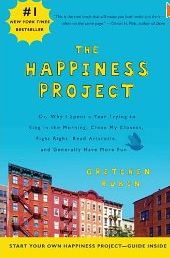
Gretchen Rubin combined some of these recommendations with erudite references to great philosophers’ and thinkers’ guidance, health recommendations, and time-tested common sense in The Happiness Project.

Daniel Gilbert of Harvard’s bestseller, Stumbling on Happiness , synthesized social science research about imagined expected future outcomes and control over them in relation to the experience of happiness.Stumbling on Happiness

He noted that human imagination and prediction are inaccurate, so he suggested using “surrogates” of future events to more accurately test future satisfaction with real-life choices like having children, moving to a new home, or working in a new job.

Other ways to cultivate the Emotional Intelligence capabilities of positive emotional experience are highlighted in related Posts:

-*How have you cultivated happiness?
-*How have happiness and money been related in your experience?

Twitter: @kathrynwelds
Google+
LinkedIn Open Group The Executive Coach
Facebook Notes
Blog: – Kathryn Welds | Curated Research and Commentary 

©Kathryn Welds

First Emotionally Intelligent, Mindful Presidents: Barack Obama, Peter Salovey?

Peter Salovey

Peter Salovey, newly appointed President-Elect of Yale University, introduced the term “Emotional Intelligence” in 1989 as “the ability to monitor one’s own and others’ feelings and emotions, to discriminate among them, and to use this information to guide one’s thinking and actions”.

Yale’s new President, is considered a pioneer and originator of research into four elements of EQ used to think and behave adaptively:

  • Accurately perceiving, identifying, pinpointing emotions in self, others
  • Expressing, using emotions as information to decide,  plan, achieve, communicate, create, think
  • Understanding, predicting own and others’ emotions, temporary moods
  • Self-regulating, transforming emotions.
  • Peter Salovey

    Salovey is widely regarded as one who embodies these characteristics and creates community  through his bluegrass band performances with Professors of Bluegrass, active participation in student life (as a Super Mario Brother at Halloween 2009, accompanied by the Yale Symphony orchestra during his tenure as Provost), and award-winning teaching and research.

He applied EQ concepts to business with David Caruso in The Emotionally Intelligent Manager: How to Develop and Use the Four Key Emotional Skills of Leadership

Emotional Intelligence can be intentionally increased in work and personal settings by increasing awareness of one’s own and others’ emotions.
One way to achieve this goal is through “Mindfulness,” or non-evaluatively, non-judgmentally attending to physical, cognitive, and emotional experiences arising in the present moment.

Jon Kabat-Zinn

Jon Kabat-Zinn introduced this practice in 1979 and founded Stress Reduction Clinic and the Center for Mindfulness in Medicine, Health Care, and Society at the University of Massachusetts Medical School.
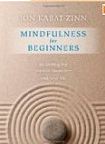
His programs and books, including Mindfulness for Beginners: Reclaiming the Present Moment–and Your Life  help develop skill in being “present” through:

  • Observing – expanded awareness with detachment
  • Describing
  • Participating fully
  • Focused, narrowed attention

He discussed the possible impact of these practices on business leadership and government, building on research findings that mindfulness practice can lower aggressive feelings and increase peaceful sentiments.

Kabat-Zinn provided an example in recently-re-elected U.S. President Barack Obama is the first mindful President, “…since Lincoln, or maybe ever.”

The Dalai Lama, Barack Obama

He added that Obama “… is really present, he has a lot of different qualities that seem to indicate he is emotionally balanced, not driven by ego concerns, that he knows how to balance family life and the impossible job that he has.
There is something about him that’s measured, very peaceful, he listens very, very deeply.”

Many observers will evaluate whether Salovey can put into practice Emotionally Intelligent leadership at Yale, and whether Barack Obama can demonstrate Mindfulness in peaceful international relations and domestic issue-resolution during his final term in office.

-*Where do you observe emotional intelligence and mindfulness among top leaders?

Twitter:  @kathrynwelds
Google+
LinkedIn Open Group Mindful Leadership
Facebook Notes:

Blog: – Kathryn Welds | Curated Research and Commentary

©Kathryn Welds

Doonesbury Celebrates Women’s Contributions to Work Groups via Thought Diversity and Emotional Intelligence

Doonesbury Celebrates Women’s Contributions to Work Groups via Thought Diversity and Emotional Intelligence

-* How have you seen women’s Emotional Intelligence applied in the workplace?

Online Brain Training For Attention, Memory, Processing Speed, Interpersonal Skills

Michael Merzenich

Michael Merzenich

Michael Merzenich is Chief Scientific Officer of Posit Science and his work has been featured on four PBS specials: The Brain Fitness Program, Brain Fitness 2: Sight and Sound, The New Science of Learning, and Brain Fitness Frontiers.

He asserts that “you can change your brain at any age…You lose your memory because what you hear is not represented clearly in your brain.”
Posit’s online BrainHQ training is designed to help users develop and maintain accurate listening to better remember and speak

This 30-40 hour training uses tasks validated by scientific research to improve the accuracy of receiving information and using it.
Peer-reviewed research studies support the use of systematic brain training to combat the effects of age-related performance decrements, and to assist children with conditions that slow their progress in learning to read.

Posit’s online brain training helps users:
• Focus attention
• Increase brain speed
• Improve memory
• Enhance people skills

Like a gym membership, this series of exercises focuses on increasing strength, stamina, speed, resilience, and capacity.
Exercises include auditory processing, a foundation of accurate memory processing, and useful field of view, imperative in tasks like driving a car safely.

Merzenich discusses the development of brain plasticity from birth
and his TED Talk expands his remarks.

MyBrainSolution offers a different solution based on similar findings in brain plasticity and training studies.
Free trial .

-*What brain development practices have you seen render more benefits?

LinkedIn Open Group Women in Technology (Sponsored by EMC)
Twitter: @kathrynwelds
Google+
Facebook Notes:
Blog: – Kathryn Welds | Curated Research and Commentary

©Kathryn Welds

claim token A44X23VUV3Q6

Developing a SMARTER Mindset for Resilience, Emotional Intelligence – Part 2

Carol Dweck

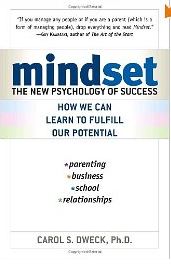
Stanford professor Carol Dweck distilled Salvador Maddi’s three mindsets into two mindsets in her book, Mindset: The New Psychology of Success.

She differentiated:
• Fixed Mindset – Belief that personal capabilities are given, fixed, limited to present capacities.
This “nature” mindset can lead to fear, anxiety, protectiveness and guardedness.
• Growth Mindset– Belief that personal capabilities can expand based on commitment, effort, practice, instruction, confronting and correcting mistakes. This “nurture” mindset enables teamwork and collaboration.
K. Anders Ericcson

K. Anders Ericcson

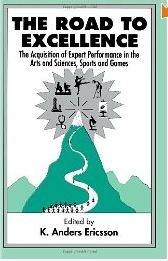
Research by K. Anders Ericsson demonstrated that highly skilled experts in nearly every field are distinguished from their talented peers by practice.
Similarly, Malcolm Gladwell asserted that expert performance comes after 10,000 hours of practice.

The Road to Excellence: The Acquisition of Expert Performance in the Arts and Sciences, Sports, and Games

Expert Performance in Sports: Advances in Research on Sport Expertise

Although mindsets consist of relatively stable beliefs, they can be modified by reinforcing, praising, and rewarding performance strategy and process, not the resulting outcome.

Cynthia Kivland

Cynthia Kivland

Cynthia Kivland introduced a practice of “vetting emotions” using a three step process to investigate and manage emotions

• Validate – Name the emotion
• Explore – What is the broader context?
What are the familiar reaction patterns?
• Tolerate – Transform limiting emotions into information and intelligence to move forward

“Cognitive appraisal” refers to evaluative elements of thoughts, and can provoke emotions.
This type of appraisal is based on three factors, outlined by eminent researcher

Martin Seligman

Martin Seligman

Martin Seligman in his book, Learned Optimism: How to Change Your Mind and Your Life

• Personalization of cause, responsibility: Internal control vs External control
• Pervasiveness of event and impact: Specific vs Global
• Permanence of event and impact: Temporary vs. Continuing

Kivland suggested that mindsets and related attitudes can direct individuals to either of two paths:

• Surviving Path, based on reactive, fearful protecting from anticipated danger

• Hope Path, proactive, thriving, growing, able to let go of fears, observe emotions as information for decision-making rather than as unpleasant experiences to be tolerated

Kivland, Dweck, Maddi, Ericcson, Seligman, and other advocates of Emotional Intelligence practices suggest benefits of the Hope Path.

Dweck model and the mindset of positive psychology

Dweck’s Brainology software for students

Related Post:
Developing a SMARTER Mindset to increase Resilience, Emotional Intelligence – Part 1

-*What “mindsets” help you achieve optimal performance in work and life activities?

©Kathryn Welds

Career Resilience in Managing Job Loss, Unexpected Changes

Mary Lynn Pulley

Mary Lynn Pulley

Mary Lynn Pulley, a Center for Creative Leadership adjunct faculty member and author of Losing Your Job – Reclaiming Your Soul: Stories of Resilience, Renewal, and Hope, shares practical recommendations to respond to change or hardship:

Resilience enables people to recover from adversity and is characterized by some of the same attributes as Emotional Intelligence:

• Flexibility
• Durability
• Optimism
• Openness to learning.

The flipside of resilience is burnout, fatigue, malaise, depression, defensiveness and cynicism.

Pulley asserts that resilience can be developed by modifying thoughts to broaden personal outlook and adapt to change.
The second step is modifying actions based on modified attitudes, beliefs, and concepts.

She suggests developing resilience by:

Embracing continuous learning
• Learn and apply new skills to more adapt more quickly during changes
Finding purpose
• Develop a “personal why” to provide meaning and context to work
• Take responsibility to direct your personal and career development
• Separate who your self-definition and core identity from your work tasks and job title. “Who you are is not just what you do.”

Cultivating relationships
• Maintain personal and professional relationships for support and feedback, to develop perspective, achieve goals, deal with hardships

Questioning and modifying self-definition and career
• Reassess awareness of personal skills, talents and interests, and personal narrative
• Consider new work opportunities to align with current skills
• Practice new behavioral competencies to align with current situational requirements

Re-thinking money
• Live within your means to remain flexible during unexpected change

Keeping a journal
• The Center for Creative Leadership suggests that writing in “learning journals” or “reflection journals” enables reflection, self-awareness, learning, adaptability, and insight.

Three recommended journal sections include:
1. Event or experience
Describe the occurrence in factual, objective, quantifiable terms:
Who? What? When? Where? How? Why?

2. Reaction
Describe your reaction to the event in factual, objective, quantifiable terms. What did you want to do in response to the event?
What did you actually do?
What were your thoughts?
What were your feelings?

3. Lessons
What did you learn from the event and from your reaction to it?
What did the event suggest as a development area?
What common reaction patterns occur in similar situations?
What different reactions patterns have occurred in the past?
What do these different reactions suggest about progress in developing resilience?

The Center for Creative Leadership suggests that learning comes “reflecting on the doing,” and not just on the “doing” of specific actions.

-*Which of Pulley’s recommendations seem most applicable and feasible to rebound from unbidden changes, like job loss?

LinkedIn Open Group Brazen Careerist
Twitter: @kathrynwelds
Google+:
Facebook Notes:
Blog: – Kathryn Welds | Curated Research and Commentary
©Kathryn Welds
Leadership “From the Inside Out”

Kevin Cashman

Kevin Cashman

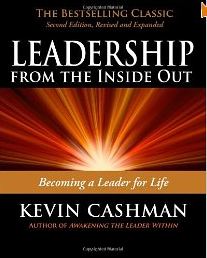
Kevin Cashman provides a leadership development frame that complements Daniel Goleman’s Emotional Intelligence concepts and Jim Collins’s delineation of Level 5 Leadership, in his book Leadership from the Inside Out.

He is Senior Partner, Korn/Ferry International, and Leadership From the Inside Outhis research and experience indicate that leadership effectiveness originates in the individual’s personal character.

If individuals wish to develop leadership skills, they must apply “learning agility” to acquire new perspectives and skills, then deploy them under new business circumstances.

Cashman reviewed the four elements of “learning agility”:

Mental agility, characterized by questioning solutions, consulting others, demonstrating openness

Interpersonal agility, based on effective, precise listening, using questions to elicit clarification

Results agility, or developing new approaches to achieve results, incorporate new ways to resolve problems

Change agility, which includes flexibility and adaptability

Cashman found three steps in leadership development, common across many approaches, and recommended these elements in any leadership development program:

Building Awareness – Self-discovery of strengths, development areas

Building Commitment – Developing emotional engagement to act on developmental needs and to apply strengths

Building Practice – Undertaking new actions such as journaling to build awareness, commitment and reflection on learnings.

The goal of these steps is to develop three aspects of leadership:

Authenticity, characterized by integrity, alignment between words and actions that is recognized by others; continued striving toward authenticity in future potential

Influence, involving the self-expression and application of personal strengths to create value

Value creation in work and community

Leadership from the Inside Out outlines seven related pathways to leadership mastery, with related practices.
Many of these recommendations may sound spiritual, philosophical, non-specific, and difficult to translate into specific actions.
One element of self-reflection in Cashman’s process may be to operationalize these recommendations into concrete, measurable actions:

Personal Mastery, based on developing self-awareness

Purpose Mastery involves applying talents to serve values and add value through authentic self-expression in leading others

Change Mastery, incorporates acceptance of uncertainty and impermanence to learn from these changes and demonstrate agility in adapting to new circumstances

Interpersonal Mastery relates to human connection, the second element of Goleman’s Emotional Intelligence. Collaboration is a foundation to create contribution and long-term value

Being Mastery represents a spiritual dimension, however the individual defines it, to connect one’s depth of character to support effectiveness and contribution

Balance Mastery refers to building, maintaining energy to foster resilience, effectiveness, fulfillment. It moves beyond time management, a practice to manage a limited resource, to generate and regenerate energy to lead

Action Mastery practices leading by coaching others and self to create value.

-*What actions have helped develop leadership from the inside out?

Related Posts:
The Considered “Pursuit of Less”
Whom Do You Serve as a (Level 5, Level 6) Leader?  
“Contemplative Neuroscience”: Transform your Mind, Change your Brain
Developing “Big 8” Job Competencies

©Kathryn Welds

“Contemplative Neuroscience” Can Modify Brain Functioning

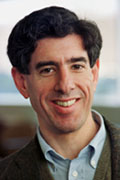
Richard Davidson

Richard Davidson

Richard Davidson, professor at the University of Wisconsin-Madison, says disorders like depression and anxiety can be changed with brain training.

He is an award-winning researcher in neuroplasticity, the process by which the brain’s adaptable, transformative capabilities are deployed.
Davidson asserts that this intentional transformation is enabled by contemplative cognitive practices, including meditation to increase moment-to-moment consciousness.

Davidson distinguishes the neural and behavioral consequences of various contemplative practices, and argues for their positive impacts on physical health for both beginning and experienced practitioners.

His recent research demonstrated that even meditation-based interventions delivered online can produce behavioral and neural changes.
He explained that the field of epigenetics investigates how genes are regulated by the environment, including the neural milieu.

Davidson suggested that contemplative practices can modify the neural environment, and revealed that neurally-inspired behavioral interventions (NIBI) can invoke greater change than any currently-known pharmacological intervention.

He detailed research studies of expert practitioners of contemplative practice, both in the US and in India. He discussed the work showing the link between brain and heart, citing work of Francisco Varela in “neurophenomenology”.

He cited results comparing the impact of training in compassion training (visualizing suffering and wishing freedom from suffering for loved one, self, stranger, difficult person, all beings with the thought: “May you be free from suffering. May you experience joy and ease,” while noticing visceral sensations around the heart) vs cognitive reappraisal training.

Daniel Goleman

Daniel Goleman

He collaborated with his Harvard University graduate student colleague, Daniel Goleman, now known as the originator of the term, “Emotional Intelligence,” to produce a book on Consciousness: the Brain, States of Awareness, and Alternate Realities .

-*How have you used contemplated practices to evoke personal change in attitudes or behaviors?

LinkedIn Open Group – Mindful Leadership:
Twitter: @kathrynwelds
Google+
Facebook Notes:

©Kathryn Welds

Developing “Charisma” and “Presence”

Olivia Fox Cabane

Olivia Fox Cabane

Olivia Fox Cabane integrated research findings from social psychology and neuropsychology with principles of Emotional Intelligence and “Practical Buddhist Philosophy” in her book, The Charisma Myth: How Anyone Can Master the Art and Science of Personal Magnetism

She concluded that charismatic behaviors are based on managing internal state and beliefs through self-awareness to focus on others and “make them feel good.”

She found that “charisma” or “presence” is composed of:

•Presence – mindful attention, patient listening, avoiding interruption

•Power – appearance, clothing, occupy space, positive wording (avoid “don’t”), placebo effect

•Warmth – chin down, eye contact, Duchenne smile (mouth corners, eye corners), gratitude, compassion, appreciation – counteract “hedonic adaptation”

•Goodwill – wishing the other person well

•Empathy – understanding the other’s experience

•Altruism

•Compassion – a combination of empathy+goodwill

•Forgiveness of self and others

•Self-compassion – self-acceptance. Positively correlated with emotional resilience, sense of personal responsibility, accountability, sense of connectedness, life satisfaction, positive relationships with others, self-confidence, willingness to admit errors, low self-pity, low depression, low anxiety, improved immune system functioning

•”Metta” – loving kindness to self, others

Fox Cabane offered three “quick fixes” to increase your “charisma”:

•Lower the intonation of your voice at the end of your sentences (no “Valley Girl talk”…)
•Reduce the speed and rapidity of nodding
•Pause for two seconds before you speak

-*When you see a charismatic person in action, what behaviors and attitudes add to the interpersonal impact and appeal?

©Kathryn Welds