Four Career Trajectories: Linear, Expert, Spiral, Transitory

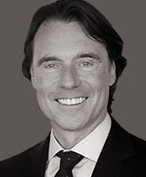
Kenneth Brousseau

Kenneth Brousseau

Successful careers can follow forms other than “up or out,” according to Decision Dynamics’ Kenneth Brousseau, Michael Driver of USC, with Lund University’s Kristina Eneroth, and Rikard Larsson.

Their “pluralistic career concept framework” classified careers as:

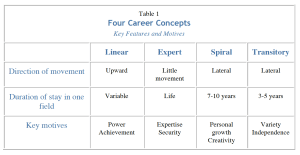
Four Career Concepts

Four Career Concepts

LinearTraditional upward movement, with variable job role tenure, and motivated by power and achievement.

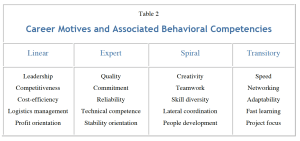
Behavioral competencies include leadership, competitiveness, cost-efficiency, logistics management, profit orientation.

This career concept is most seen in tall hierarchies with a narrow span of control.

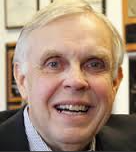
Michael Driver

Michael Driver

Expert – Little movement and long role tenure due to deepening expertise in a narrow discipline.

Motives include mastery, expertise, and security.
Meaningful rewards are continued training, benefits, recognition.

Competencies are quality, commitment, reliability, technical competence, stability orientation.
This career concept is well-matched to flat functional organizations.

Career Motives, Competencies

Career Motives, Competencies

SpiralLateral movement to broaden functional exposure, with seven to ten year tenure in roles.

Motivated by personal growth, creativity, and suited to matrix organizations with cross-functional teams, this pattern is seen in loose, temporary team structures.

Rewards include cross-functional lateral assignments and training.
Key competencies include creativity, teamwork, skill diversity, lateral coordination, people development.

Transitory – Lateral moves with three to five year tenures are motivated by desire for variety, independence.
Most often found in temporary team structures, behavioral skills include speed, networking, adaptability, fast learning, project focus.
Meaningful rewards are job rotation, temporary assignments, immediate cash bonuses.

This team’s research was distilled into assessment tools focused on career “fit” with an organization’s structure and objectives.

Timothy Butler

Timothy Butler

A similar emphasis on cultural fit is found in CareerLeader Inventory, based on Timothy Butler and James Waldroop’s research at Harvard Business School.

James Waldroop

James Waldroop

-*Which of the four career trajectories seems most like yours?

-*Which career assessment tools have you found most useful to determine your skills, interests, and best-fit organizational context?

RELATED POSTS:

©Kathryn Welds
Ask a Narcissist

Confidence is correlated with career effectiveness and advancement.
However, people who exhibit too much of a good thing may be seen as “narcissistic.”

Jean Twenge

Jean Twenge

Narcissistic personality is characterized by:

-Inflated views of the self,
-Grandiosity,
-Self-focus,
-Vanity,
-Self-importance,

according to San Diego State University’s Jean M. Twenge, with Sara Konrath and Brad J. Bushman of University of Michigan, collaborating with University of South Alabama’s Joshua D. Foster, and Keith Campbell of University of Georgia,

Calvin S Hall

Calvin S Hall

One well-validated assessment instrument to identify narcissism is the Narcissistic Personality Inventory, developed by University of California Berkeley’s Robert Raskin and Calvin S. Hall.

Sara Konrath

Sara Konrath

Raskin and UC Berkeley colleague, Howard Terry examined responses from more than 1000 volunteers and found seven constructs related to narcissism:

  • Authority,
  • Exhibitionism,
  • Superiority,
  • Vanity,
  • Exploitativeness,
  • Entitlement,
  • Self-Sufficiency.
Timothy Leary

Timothy Leary

They related ratings of “self” and “ideal self” to participants’ responses on the Leary Interpersonal Check List, developed by Harvard’s Timothy Leary before he investigated psychedelic drugs.

Brian P Meier

Brian P Meier

An alternative to Leary’s lengthy NPI was developed by University of Michigan’s Sara Konrath, Brian P. Meier of Gettysburg College, and Ohio State’s Brad J. Bushman of Indiana University.
The Single Item Narcissism Scale (SINS) measures grandiosity, entitlement, and low empathy characteristic of “narcissistic” behavior.

The team asked more than 2,200 participants to rate their answer to a single question on a scale of one to seven: To what extent do you agree with this statement? “I am a narcissist.”

Brad J Bushman

Brad J Bushman

Konrath’s team demonstrated that the Single Item Narcissism Scale is a valid, reliable alternative to longer narcissism scales because it is significantly correlated with scores on the NPI and is uncorrelated with social desirability.

Erika Carlson

Erika Carlson

People who score high on the NPI and SINS say that they are more arrogant, condescending, argumentative, critical, and prone to brag than people who score low on the NPI, according to University of Toronto’s Erika Carlson.

Narcissism was also related in Konrath’s validation studies to:

People who scored high for narcissism also showed behaviors that can be problematic at work:

However, people who scored high for narcissism displayed positive attributes including:

Interacting with a narcissist in the workplace can be challenging, and a previous blog post identifies recommended strategies.

-*How do you identify narcissists in the workplace and in personal life?
-*What are more effective ways to work with them?

RELATED POSTS:

©Kathryn Welds

“Strategic Umbrage” as Negotiation Strategy

Daniel R Ames

Daniel R Ames

Negotiation assertiveness style and understanding how others perceive assertive behaviours can determine success in bargaining, according to Columbia University’s Daniel Ames and Abbie Wazlawek.

Individuals who apply more assertiveness than required to achieve their goals have less-accurate self-perception than less assertive people, and both groups experience “self-awareness blindness.

Abbie Wazlawek

Abbie Wazlawek

A mismatch between negotiation partners’ ratings of appropriate assertiveness was linked to poorer negotiation outcomes for both parties.

Nearly 60% of negotiators who were rated as appropriately assertive but felt over-assertive (“line-crossing illusion”) negotiated the inferior deals for themselves and their counterparts. 

This finding suggests that disingenuous emotional displays (such as “strategic umbrage” – feigned anger) were associated with a negotiation partner seeking the first acceptable deal
This reduces the opportunity to achieve an optimal outcome for both participants.

Jeffrey Kern

Jeffrey Kern

Negotiators can increase their accuracy in judging their negotiation partner’s impression of their degree of assertiveness in the negotiation, (“meta-perception“) by:

-Participating in 360 degree feedback,

-Increasing skill in listening for content and meaning,

Considering whether negotiation proposals are reasonable in light of alternatives,

-Requesting feedback on reactions to “strategic umbrage” displays to better understand perceptions of “offer reasonableness,

-Evaluating costs and benefits of specific assertiveness styles.

Gary Yukl

Over-assertiveness may provide the benefit of “claiming value” in a negotiation but may lead to ruptured interpersonal relationships, according to Jeffrey M. Kern of Texas A&M, SUNY’s Cecilia Falbe and Gary Yukl.

Cultural norms for assertiveness vary across countries. 
In “low context” cultures like Israel, dramatic displays of emotion and assertion are  expected in negotiations.
In contrast, “high context” cultures like Japan, require more nuanced assertiveness, with fewer direct disagreements and fewer “strategic umbrage” displays, according to Edward T. Hall, then of the U.S. Department of State.

Edward T Hall

Edward T Hall

Under-assertiveness may minimise interpersonal conflict, but may lead to poorer negotiation outcomes and undermined credibility in future interactions, according to Ames’ related research.

To augment a less assertive style, he suggested:

  • Set slightly higher goals,
  • Reconsider assumptions that greater assertion leads to conflict,
  • Increase proactivity to show respect and improve outcomes,
  • Observe outcomes when collaborating with more assertive other people.

To modulate a more assertiveness style:

  • Make slight concessions to increase trust with others,
  • Evaluate the outcomes when collaborating with less assertive other people.

*How do you match your degree of assertiveness to negotiation situations?

RELATED POSTS:

©Kathryn Welds
Gender Transitions Show Gender Differences in Pay, Workplace Experience

People who change gender continue to use their education and experience at work. However, many of these people report that their compensation, degree of respect, and recognition at work changed following gender change.
This suggests that gender can directly affect compensation and workplace interactions.

Two Stanford professors’ personal experiences in gender transition were highlighted by University of Chicago’s Kristen Schilt.

Joan Roughgarden

Joan Roughgarden – Jonathan Roughgarden

Stanford’s Joan Roughgarden, was an evolutionary biologist for more than 25 years as Jonathan Roughgarden before she made her male-to-female (MTF) transition.
Known for her work integrating evolutionary theory with Christian beliefs (“theistic evolutionism”), she reported feeling less able to make bold conjectures and no longer had “the right to be wrong.”

Her experience contrasts with Stanford colleague, neurobiologist Ben Barres, who made scientific contributions as Barbara Barres until after he was 40.

Barbara Barres - Ben Barres

Barbara Barres – Ben Barres

After his female-to-male (FTM) transition, Ben delivered a lecture at Whitehead Institute, where an audience member commented, “Ben Barres gave a great seminar today, but, then, his work is much better than his sister’s.”

Schilt surveyed FTM and MTF to compare earnings and employment experiences before and after gender transitions with questions similar to 2002 Current Population Survey (CPS) survey items:

  • Last job before gender transition,
  • First job after gender transition,
  • Most recent job.

Kristen Schilt

Kristen Schilt

Female-to-male transsexuals (FTMs) reported that as men, they had more authority, reward, and respect in the workplace than they received as women, even when they remained in the same jobs.

Height and skin color affected potential advantages enjoyed by FTM.

Tall, white FTMs experienced greater benefits than short FTMs and FTMs of color.
In contrast, MTF reported reduced authority and pay, and often harassment and termination.

University of Illinois’s Donald McCloskey, for example, was told by his department chair “in jest” that he could expect a salary reduction when he became Deirdre McCloskey.

Deirdre McCloskey

Deirdre McCloskey

However, salary reduction was no joke for MTFs in Schilt’s survey sample.
Participants reported significant losses of 12% in hourly earnings after becoming female.

Additionally, MTFs transitioned on average 10 years later than FTMs, delaying the loss of financial advantages attributable to male gender.

FTMs, however, experienced no change in earnings or small positive increases up to 7.5% in earnings after transitioning to becoming men.

Any gender transition was associated with risks of harassment and discrimination, reported more frequently in “blue-collar” jobs, particularly for those with “non-normative” appearance and not consistently “passing” as the other gender.

These “naturalistic experiments” confirm continuing gender-based pay discrepancies.

-*To what extent have you observed these gender-linked differences in compensation and workplace credibility?

RELATED POSTS:

©Kathryn Welds

“Surface Acting” At Work Leads to Stress Spillover

David Wagner

David Wagner

Situations outside the workplace can affect employees’ productivity, commitment, mindset, attitudes, and health.

Similarly, experiences at work can affect employees’ quality of life at work and outside of work.
Workplace Employee Assistance Programs, on-site medical centers, concierges, meals, and fitness centers are intended to address this bi-directional influence to improve employee retention and productivity.

Christopher Barnes

Christopher Barnes

When employees suppress their true feelings about work experiences, they engage in “surface acting” as they display appropriate, but unfelt facial expressions, verbal interactions, and body language.

Brent Scott

Brent Scott

Surface acting at work was associated with emotional exhaustion, work-to-family conflict, and insomnia outside of work for more than 70 volunteers in a high stress public service occupation, found Singapore Management University’s David T. Wagner, Christopher M. Barnes of University of Washington, and Brent A. Scott of Michigan State University.

Arlie Hochschild

Arlie Hochschild

Emotional labor” was Arlie Hochshild’s earlier term for “surface acting” in customer service interactions when employees present prescribed verbalizations and emotions.

She contrasted “surface acting” with “deep acting” in which the person:

  • Exhibits the emotion actually felt,
  • Uses past emotional experiences to elicit real emotion and empathic connection with others, in a form of “organizational method acting.

Christina Maslach

Christina Maslach

“Surface acting” at work can lead to occupational “burnout,” characterized by emotional exhaustion, detachment from others, and reduced workplace performance, noted University of California Berkeley’s Christina Maslach and Susan Jackson.

Céleste Brotheridge

Céleste Brotheridge

In contrast, high emotional labor with deep acting was associated with a greater sense of personal accomplishment in research by University of Regina’s Celeste Brotheridge and Alicia Grandey of Penn State.

Veikko Surakka

Veikko Surakka

Recipients of “surface acting” are usually accurately detect that it’s an inauthentic display, according to University of Tampere Veikko Surakka and Jari K Hietanen of University of Helsinki.

Patricia Hewlin

Patricia Hewlin

Similarly, “Facades of Conformity,” impression management, and
unwilling compliance are associated with generalized stress and reduced quality of life outside of work, according to Georgetown’s Patricia Hewlin, University of Lethbridge’s Karen H. Hunter, Andrew A. Luchak of University of Alberta, and Athabasca University’s Kay Devine.

These three experiences are defined as:

Kay Devine

Kay Devine

  • Terence Mitchell

    Impression management, characterized by ingratiating behaviors in two-person relationships which can favorably influence career outcomes, according to Georgia Tech’s Robert C. Liden and Terence R. Mitchell of University of Washington.

Leon Festinger

Leon Festinger

Most people at work encounter situations in which they choose to behave in “appropriate” ways that are inconsistent with their true feelings, and may experience similar stress spillover from “surface acting” at work.

-*How do you prevent “burnout” when workplace settings seem to require “surface acting”?


RELATED POSTS:

©Kathryn Welds

“Emotional Contagion” in the Workplace By Observing Others, Social Media

Emotions can be “contagious” between individuals, and can affect work group dynamics.

Douglas Pugh

Douglas Pugh

Emotional contagion iinvolves replicating emotions displayed by others.
Contagion differs from compassion, which enables understanding another’s emotional experience without actually feeling it, which is more characteristic of empathy, noted Virginia Commonwealth University’s S. Douglas Pugh.

Adam D I Kramer

Adam D I Kramer

“Viral emotions” can be transmitted through social media platforms with no need to observe nonverbal cues, according to Facebook’s Adam D. I. Kramer, Jamie E. Guillory of University of California, San Francisco and Cornell University’s Jeffrey T. Hancock.
This suggests that social media can significantly affect the emotional tone in workplaces and the interpersonal relations that take place there.
In addition, the emotional tone evoked by social media posts can affect workplace productivity.

Jeffrey Hancock

Jeffrey Hancock

When positive emotional expressions were reduced in Facebook News Feeds, people produced fewer positive posts and more negative posts.
In contrast, when negative emotional expressions were reduced, people reduced negative posts, indicating that others’ emotional expressions influence bystanders’ emotions and behaviors.

Sigal Barsade

Sigal Barsade

People in performance situations are influenced by observing others’ emotions.   
When participants witnessed positive emotions in a decision task, they were more likely to cooperate and perform better in groups, found Wharton’s  Sigal Barsade.

Individuals who were more influenced by others’ emotions on R. William Doherty’s Emotional Contagion Scale also reported greater:

  • Reactivity,
  • Emotionality,
  • Sensitivity to others,
  • Social functioning,
  • Self-esteem,
  • Emotional empathy.

They also reported lower:

  • Alienation,
  • Self-assertiveness,
  • Emotional stability.
Stanley Schachter

Stanley Schachter

People are more likely to be influenced by others’ emotions when they feel threatened, because this elicits increased affiliation with others, according to Stanley Schachter‘s emotional similarity hypothesis.

Brooks B Gump

Brooks B Gump

Likewise, when people believe that others are threatened, they are more likely to mimic others’ emotions, found Syracuse University’s Brooks B. Gump and James A. Kulik of University of California, San Diego.

Elaine Hatfield

Elaine Hatfield

Women reported greater contagion of both positive and negative emotions on the Emotional Contagion Scale in research by Doherty with University of Hawaii colleagues Lisa Orimoto, Elaine Hatfield, Janine Hebb, and Theodore M. Singelis of California State University-Chico.

James Laird

James Laird

People who are more likely to “catch” emotions from others are also more likely to actually feel emotions associated with facial expressions they display, reported Clark University’s James D. Laird, Tammy Alibozak, Dava Davainis, Katherine Deignan, Katherine Fontanella, Jennifer Hong, Brett Levy, and Christine Pacheco.
This suggests that those with greater susceptibility to emotional contagion are convincing to themselves and others.

Christopher K. Hsee

Christopher K. Hsee

Contrary to expectation, people with greater power notice and adopt emotions of people with less power, found University of Hawaii’s Christopher K. Hsee, Hatfield, and John G. Carlson with Claude Chemtob of the U.S. Department of Veterans Affairs.

Participants assumed the role of “teacher” or “learner” to simulate role-based power differentials, then viewed a videotape of a fictitious participant discussing an emotional experience.
Volunteers then described their emotions as they watched the confederate describe a “happiest” and “saddest” life event.
People in higher power roles were more attuned to followers’ emotions than expected.

The service industry capitalizes on emotional contagion by training staff members to show positive emotions with the goal of increasing customer satisfaction and loyalty.

James Kulik

James Kulik

However, customer satisfaction measures were more influenced by service quality than employees’ positive emotional displays, according to Bowling Green State’s Patricia B. Barger and Alicia A. Grandey of Pennsylvania State University.

Emotions can positively or negatively resonate through work organizations with measurable impact on employee attitude, morale, engagement, customer service, safety, and innovation.

-*How do you intentionally convey emotions to individuals and group members?
-*What strategies do you use to manage susceptibility to “emotional contagion”?

RELATED POSTS:

©Kathryn Welds

Coaching Can Increase Goal Achievement, Performance

Anthony Grant

Anthony Grant

Coaching is a collaborative process to facilitate coachees’ self-directed learning, personal growth, and goal attainment, according to University of Sydney’s Anthony Grant.

Anthony Grant modelHe integrated practices from solution-focused approaches and cognitive-behavioral interventions into Solution-Focused Cognitive-Behavioral (SF-CB) Coaching and a “Coach Yourself” program with Jane Greene.

Participants reported increased:

John Franklin

on the Self-Reflection and Insight Scaledeveloped with Macquarie University colleagues John Franklin and Peter Langford.

Two types of empirical studies provide evidence about coaching’s efficacy:

  • Randomized Controlled Trials (RCT), in which participants receive one of several interventions or no intervention.
    This is considered the more credible research approach.
  • Peter Langford

    Peter Langford

    Quasi-Experimental Field Studies (QEFS), which use “time series analysis” but not random participants to measure outcomes.

Linley Curtayne

Linley Curtayne

Randomized Controlled Trials (RCT) found several effects among executives who received 360-degree feedback and four coaching sessions over ten weeks:

Lower stress, according to Grant with University of Sydney colleagues Linley Curtayne and Geraldine Burton,

Geraldine Burton

Geraldine Burton

  • Greater goal attainment compared with an eight week educational mindfulness-based health coaching program, reported by University of Sydney’s Gordon B. Spence, Michael J. Cavanagh and Grant,
  • Gordon Spence

    Gordon Spence

    • Increased goal commitment, and environmental mastery, compared with peer coaching among adults in a Solution Focused/Cognitive Behavioral (SF/CB) life coaching program, according to research by Spence and Grant,
  • Lindsay Oades

    Lindsay Oades

    • Increased goal striving, well-being, hope, with gains maintained up to 30 weeks, reported by Grant and Green with University of Wollongong colleague Lindsay G. Oades.

C. RIck Snyder

C. RIck Snyder

Increased hope is crucial to pursue any goal, according to University of Kansas’s C.R. Snyder, Scott T. Michael of University of Washington, and Ohio State’s Jennifer Cheavens.

Individuals seeking change are more effective when they:

  • Develop one or more ways to achieve a goals (“pathways”),
  • Use these routes to reach the goal (“agency”).

Edward Deci - Richard Ryan

Edward Deci – Richard Ryan

Three additional elements contribute to goal achievement, suggested University of Rochester’s Edward L. Deci and Richard M. Ryan:

  • Competence,
  • Autonomy,
  • Relatedness.

According to their Self-Determination Theory (SDT), these characteristics are associated with increased:

  • Goal motivation,
  • Enhanced performance,
  • Persistence,
  • Mental health.

Kristina Gyllensten

Kristina Gyllensten

The other category of research, Quasi-Experimental Field Studies (QEFS), reported that coaching for managers of a federal government:

  • Stephen Palmer

    Stephen Palmer

    • Decreased anxiety and stress among UK finance organization participants, in findings by Kristina Gyllensten and Stephen Palmer of City University London.

These empirical studies validate coaching’s contribution to participants’ increased goal attainment and increased satisfaction, well-being, and hope.

-*How do you “coach yourself” and others toward increased goal attainment and performance?

-*What are the “active ingredients” of effective coaching practices?

RELATED POSTS:

©Kathryn Welds


Mindfulness Meditation Improves Decisions, Reduces Sunk-Cost Bias

Sigal Barsade

Sigal Barsade

Andrew Hafenbrack

Andrew Hafenbrack

Sunk-cost bias” is the tendency to continue unsuccessful actions after time and money have been invested.
Frequent examples include:

  • Holding poorly-performing stock market investments,
  • Staying in unsatisfying personal relationships,
  • Continuing ineffective military engagements.
Zoe Kinias

Zoe Kinias

In these cases, people focus on past behaviors rather than current circumstances, leading to emotion-driven decision biases.

Brief meditation sessions can help decision makers consider factors beyond past “sunk costs,” reported Wharton’s Sigal Barsade, with Andrew C. Hafenbrack and Zoe Kinias of INSEAD.

Meditation practices can:

  • Increase focus on the present moment,
  • Shift attention away from past and future actions,
  • Increase positive emotions.
Kirk Brown

Kirk Brown

The team asked volunteers to complete Mindful Attention Awareness Scale,  developed by Virginia Commonwealth University’s Kirk Brown and Richard Ryan of University of Rochester.

Richard Ryan

Richard Ryan

They also measured participants’ ability to resist “sunk cost” bias using Adult Decision-Making Competence Inventory, developed by Leeds University’s Wändi Bruine de Bruin with Baruch Fischhoff of Carnegie Mellon and  RAND Corporation’s Andrew M. Parker.

Wändi Bruine de Bruin

Wändi Bruine de Bruin

In a decision task, participants could take an action or to do nothing, as a measure of sunk-cost bias.
Taking action indicated resistance to the sunk-cost bias, whereas those who took no action were influenced by the sunk-cost bias.

Baruch Fischhoff

Baruch Fischhoff

Volunteers who listened to a 15-minute focused-breathing guided meditation were more likely to choose action, resisting sunk-cost bias, than those who had not heard the meditation instruction.

Andrew M Parker

Andrew M Parker

Barsade’s team noted that, “People who meditated focused less on the past and future, which led to them experiencing less negative emotion. That helped them reduce the sunk-cost bias.

Jochen Reb

Jochen Reb

Mindful attention enabled negotiators to craft better deals by “claiming a larger share of the bargaining zone” in “fixed pie” negotiations, found Singapore Management University’s Jochen Reb, Jayanth Narayanan of National University of Singapore, and University of California, Hastings College of the Law’s Darshan Brach.
Effective negotiators also expressed greater satisfaction with the bargaining process and outcome. 

Jayanth Narayanan

Jayanth Narayanan

Mindful attention also leads to a lower negativity bias, the tendency to weigh pessimistic information more heavily than positive, reported Virginia Commonwealth University’s Laura G. Kiken and Natalie J. Shook of West Virginia University.

The team assessed negativity bias with BeanFest, a computer game developed by Shook, with Ohio State’s Russell Fazio and J. Richard Eiser of University of Sheffield.

Natalie Shook

Natalie Shook

Participants associated novel stimuli with positive or negative outcomes during attitude formation exercises.

Russell Fazio

Russell Fazio

Volunteers who listened to a mindfulness induction correctly classified positive and negative stimuli more equally, expressed greater optimism, and demonstrated less negativity bias than those in the control condition.

J Richard Eiser

J Richard Eiser

Mindful attention improves decision-making and enhances negotiation outcomes by reducing biases linked to negative emotions.

As a result, taking a brief mental break (“time-out”) during decision-making can improve choices and can reduce the possibility that “the wrong emotions cloud the decision-making process.”

-*How do you reduce bias in making decisions and crafting negotiation proposals?

RELATED POSTS:

 ©Kathryn Welds

Multiple Paths Toward Goals Can Motivate, then Derail Success

Szu-Chi Huang

Szu-Chi Huang

Goal motivation changes as people move closer to their target, according to Stanford’s Szu-chi Huang and Ying Zhang of University of Texas.
This finding confirms Heinz Heckhausen’s earlier studies of goal motivation.

Ying Zhang

Ying Zhang

In the first stages of effort toward a goal, multiple path makes the target seem attainable, noted Huang and Zhang.

Albert Bandura

Albert Bandura

This perception of “self-efficacy,” belief in ability to achieve a goal, provides motivation to continue goal striving, reported Stanford’s Albert Bandura.

Clark Hull

Clark Hull

When people are close to achieving a goal, a single goal path provides greater motivation.   
This observation is consistent with Clark Hull’s finding that motivation increases closer to the goal.

Sheena Iyengar

Sheena Iyengar

A single route to the finish reduces the “cognitive load” of considering different approaches, supporting Sheena Iyengar and Mark Lepper’s finding that “more choice is not always better.” 

Huang and Zhang also demonstrated the motivational impact of number of choices.
Volunteers with fewer choices were more likely to achieve the goal in a study of incentive to claim a reward.
“…relatively rigid structures can often simplify goal pursuit by removing the need to make choices,” explained Huang.

Peter Gollwitzer

Peter Gollwitzer

These stages of goal pursuit are characterized by different mindsets.
Deliberative Mindset” describes considering effort toward a goal whereas “Implemention Mindset” characterises planning actions toward a goal, according to NYU’s Peter Gollwitzer, Heinz Heckhausen, and Birgit Steller of University of Heidelberg.

Motivation toward a goal is also determined by:

  • Goal value,
  • Expectancy of success, based on probability, difficulty, sufficiency, necessity,
Nira Liberman

Nira Liberman

reported Tel Aviv Universitys Nira Liberman and Jens Förster of Jacobs University of Bremen and Universiteit van Amsterdam.

Jens Förster

Jens Förster

A practical application of these findings is that nonprofit organizations can increase fund-raising campaign participation and contributions by offering fewer and simpler contribution options when a fund-raising target is nearly met.

-*How do you maintain motivation when you are close to achieving a goal?

RELATED POSTS:

©Kathryn Welds

Employee Workplace Friendships: Global Comparisons

Workplace friendships positively affect task performance, and Americans report fewer friendships at work than employees in other countries.
The result could be reduced productivity and competitive disadvantage for U.S. companies in world markets.

Karen Jehn

Karen Jehn

Teams composed of friends outperformed acquaintance groups in decision making and effort tasks, reported University of Melbourne’s Karen A. Jehn and Priti Pradhan Shah of University of Minnesota.

Likewise, workplace friendships were associated with more effective performance in a meta-analytic study of more than 160 groups with nearly 78,000 employees by David A. Harrison of University of Texas and colleagues.

Even employees’ perceptions of workplace friendship opportunities affected job involvement and job satisfaction.

Christine M. Riordan

Christine M. Riordan

These perceptions indirectly affected organizational commitment and turnover intent among more than 170 employees in a small electric utility, found Adelphi University’s Christine M. Riordan and Rodger W. Griffith of Ohio University.

Olenka Kacperczyk

Olenka Kacperczyk

Fewer than one-third of Americans reported having a close friend at work, one indicator of employee engagement according to The Gallup Organization.
Workplace friendships in the U.S. have significantly declined over the past three (3) decades, but continue to be strong social connections in Polish and Indian organizations, noted MIT’s Olenka Kacperczyk with Jeffrey Sanchez-Burks, and Wayne E. Baker of University of Michigan in an unpublished working paper.

Jeffrey Sanchez-Burkes

Jeffrey Sanchez-Burkes

They conducted surveys across the U.S., Poland, and India and determined that fewer than one-third of Americans reported inviting their closest colleagues to their homes, compared with two-thirds of Polish participants and nearly three-quarters Indian employees.

The discrepancy in amount of off-work time spent with workplace friends in different national groups is significant:  Just under half of Indian survey volunteers reported going on holiday with closest co-workers, whereas one-quarter of Polish workers and only 6% of Americans said they shared a holiday with colleagues.

Richard Nisbett

Richard Nisbett

Americans were also significantly less concerned with social interactions during work tasks, compared with Mexican and Mexican-American participants, found University of Southern California’s Jeffrey Sanchez-Burks with Richard E. Nisbett and Oscar Ybarra of University of Michigan.

Oscar Ybarra

Oscar Ybarra

After volunteers from each cultural background watched a four-minute video of two people working together, Mexicans and Mexican Americans more accurately recalled social and emotional group content.

Mexicans and Mexican Americans also preferred workgroups with a strong interpersonal orientation, and said that group work performance could be improved by focusing on socio-emotional elements.

Robert D. Putnam

This focus on socio-emotional performance more greatly influenced group task success than the group’s ethnic composition.
This suggests that Americans’ trend toward social disengagement, described asbowling alone’ by Harvard’s Robert D. Putnam, could undermine their productivity.

Adam Grant

Adam Grant

One explanation for national differences is that in the U.S., long-term employment is less secure than in countries with labor protection statues.
As a result, people often don’t expect to stay in one role, so they remain detached from colleagues to prepare for voluntary or involuntary job changes.
Wharton’s Adam Grant suggested that “We view co-workers as transitory ties, greeting them with arms-length civility while reserving real camaraderie for outside work.”

Some observers attribute interpersonal disengagement to newer models of working, such as telecommuting and working remotely.

Ravi S. Gajendran

Ravi S. Gajendran

However, evidence from more than 45 studies including about 12,000 employees showed that “telecommuting had no generally detrimental effects on the quality of workplace relationships,” particularly when people came to an office at least half the time, according to University of Illinois’s Ravi S. Gajendran and David A. Harrison of University of Texas.

Even if workplace relationships don’t become friendships, brief encounters can be high-quality connections characterized by respect, trust, and mutual engagement.

Jane Dutton

Jane Dutton

These interactions energize participants, suggested University of Michigan’s Jane E. Dutton, and may mitigate potential decreases in employee engagement and collaborative productivity.

-*To what extent do you have strong workplace friendships?

-*How have you seen workplace friendships affect work quality and productivity?

Related Posts:

©Kathryn Welds