Category Archives: Career Development

Career Development

Organizational “Learning Agility” Interventions

M.M. Lombardo and R.W. Eichinger introduced the concept of “learning agility” in organizations, and proposed its correlates to workplace performance.
They defined four elements of learning agility in employees:

·         People agility – know themselves, learn from experience, treat others with consideration, display calm and resilience under changing conditions

·         Results agility – obtain results under difficult conditions, inspire others to perform “above and beyond”, inspire confidence in other

·         Mental agility – think through problems with a fresh perspective, comfortable with complexity, ambiguity, communicating  reasoning

·         Change agility – curious about ideas, willing to experiment and develop skills.

Lombardo and Eichinger’s framework has been used by subsequent researchers to measure the impact of learning agility (“learning from experience”) on workplace performance.

De Rue, Ashford, and Myers point out that this concept “lacks conceptual clarity” in their recent article in Industrial and Organizational Psychology, and  they propose that learning agility is characterized by differences in speed of learning and flexibility in incorporating new information and skills.

In addition, they suggest that learning agility  includes  both cognitive processes and behavioral processes that can be enhanced by:

·         Cognitive simulations – visualizing scenarios to forecast issues and potential solutions

·         Counterfactual thinking – imagining “what might have been” if different choices had been taken to clarify cause-and effect relations

·         Recognizing patterns – categorizing apparently dissimilar experiences into repeating patterns

·         Seeking feedback  – proactively requesting corrective recommendations and varied perspectives from others, and making it “safe” to provide this information

·         Experimenting – trying new behavioral and thought patterns

·         Reflecting – considering and consolidating “lessons learned” to guide futures behavior decisions

Peter Senge

Peter Senge

Much past research on learning agility has not fully considered the degree to which the organizational culture and climate provide a context of psychological safety and acceptance of risk-taking, but Peter Senge has called for this type of supportive context in his work on The Learning Organization.

-*How do you differentiate “learning agility” from elements of “Emotional Intelligence”?

LinkedIn Open Group – Psychology in Human Resources (Organisational Psychology)
Twitter: @kathrynwelds
Google+
Facebook Notes:
Blog: – Kathryn Welds | Curated Research and Commentary

©Kathryn Welds

Female and Minority Supervisor Influence

Katherine L. Milkman

Wharton operations and information management professor Katherine L. Milkman and Harvard Business School professor Kathleen L. McGinn, investigated how race and gender affect career mobility for young professionals, especially those entering career fields where they must be promoted to remain (law firms, universities, consulting firms).

Kathleen L. McGinn

They examined five years of personnel data and employee interviews from a large national law firm and found a correlation between the number of female supervisors and the probability of promotion and retention of junior-level female employees, published in Harvard Business School’s Working Knowledge as “Looking Up and Looking Out: Career Mobility Effects of Demographic Similarity among Professionals.”

The enabling benefit of demographically similar employees and supervisors was accompanied by a perhaps surprising correlation.
Work groups with a high number of same-gender or same-race underrepresented minorities had a higher attrition rate, attributed to employees’ perception that the competition reduced their chances for promotion.

Milkman and McGinn noted that placing many underrepresented employees (women and underrepresented minorities) in the same group may lead to structural marginalization, or “ghettoes” of low-power.
This effect was present in groups composed mostly of men.
In contrast, the exit decisions of white and Asian employees did not seem affected by working in groups with other white and Asian employees.

The researchers cited the massively unequal representation of women and minorities among partners in professional services organizations.
A 2009 study that showed women made up 46% of associates but 19% of partners across U.S. law firms, and racial minorities represented 20% of the lawyers across the country but only 6% of partners.

Milkman is currently analyzing data on the role that race and gender play in sponsorship or patronage in academia.
She sent emails to 6,500 professors at academic institutions across the country from purported male, female, white, or minority “students”  requesting a 10-minute meeting for one-time mentoring, either that day or next week.

She found that “female” and “minority” students received significantly fewer responses from prospective mentors, particularly when asked for assistance in the future.
She noted that these findings contrast with the popular expectation of less overt or unconscious discrimination in academic settings.

-*How have you seem race and gender affect career mobility in the past year?

LinkedIn Open Group – Diversity – A World of Change 
Twitter: @kathrynwelds
Google+
Facebook Notes:
Blog: – Kathryn Welds | Curated Research and Commentary

©Kathryn Welds

Investing in Women for Venture Capitalists, Angel Investors

Pemo Theodore

Pemo Theodore

Pemo Theodore, Founder of Ezebis, collaborated with Ai Ching, co-founder of  Piktochart to create an informative, sobering infographic about investing in women.

They note that only 15% of angel investors are women and only 11% of investing partners at VC firms in the United States are women.

Ai Ching

Ai Ching

Theodore and Ching  portrayed the meaning of these statistics in relation to women’s participation in the workforce, and other dimensions in this compelling infographic, using Ching’s inforgraphic-generating product, Piktochart.

-*What barriers and enablers have you observed for women entrepreneurs?
-*What infographic tools do you find most useful?

LinkedIn Open Group – Harvard Business Review
Twitter: @kathrynwelds
Google+
Facebook Notes:
Blog: – Kathryn Welds | Curated Research and Commentary

©Kathryn Welds

Passion, Purpose, “Personal Mastery” in Work and Life

Srikumar Rao

Srikumar Rao

Srikumar Rao gained acclaim at Columbia, Haas, Kellogg, and London Business Schools for his innovative course, Creativity and Personal Mastery (CPM), which he transformed into his book, Are You Ready to Succeed? Unconventional Strategies to Achieving Personal Mastery in Business and Life
TED talk

According to Rao, those who pursue Creativity and Personal Mastery (CPM) practices:

1) …find that their judgment improves.
While they become deeply passionate about what they do, they also become more objective and less wedded to any particular outcome.
Their newfound ability to entertain many different perspectives makes them vastly more creative.

2) …experience an increase in their ability to inspire others and release pent-up creativity.
They relate better to others – subordinates, peers and bosses – and become more adept at enlisting them to achieve a common goal.

His program is based on 10 principles, which are illustrated in 90-second Inner Espresso Video Clips, listed below:

1: Actions and Not Outcomes

2: Fallacy of Expecting Thanks and Gratitude

3: Whatever you focus on Expands

4: The Power of Labels

5: Time of Attitude

6: The Power of Shifting your Focus

7: Mental Models

8: Miracles Happen Every Day

9: What are others thinking about you?

10: Your Boss is the FedEx Guy

*What practices help you “master” your work and life challenges?

LinkedIn Open Group – Leadership Think Tank
Twitter: @kathrynwelds
Google+:
Facebook Notes:
Blog: – Kathryn Welds | Curated Research and Commentary

©Kathryn Welds

Igniting Purpose and Passion

Robert Fried

Robert Fried

Robert Fried drew on principles articulated in his previous book, A Marketing Plan for Life, linking a 12-point business marketing plan to clarify life purpose and interests.

He suggests applying these marketing principles to defining personal life purpose, value proposition, brand, and “elevator pitch”:

Define the business you’re in:

• What’s unfinished for me to experience?
• What’s unfinished for me to give?
• What’s unfinished for me to learn?
• What’s unfinished for me to heal?
—–
• What ignites my passion?
.When did I experience joy?
.When did I lose track of time?
.What were my childhood dreams?
.Who do I admire?
• What can I do best to serve others?
• What is my true purpose in life?
• What actions do I need to take to realize my true purpose?

Peter Montoya

Peter Montoya

Fried cited recommendations from Peter Montoya and Tim Vandehey‘s book, The Brand Called You

What business am I in? What do I offer? Who am I?
What do I “stand for”? What are my core values?
What talents, strengths, character traits make me “unique”?

Tim Vandehey

Tim Vandehey

What is my specialty? How do I demonstrate this expertise?
How do I demonstrate the value? How to I communicate the benefit?
How do I “make a difference”?
How do I consistently communicate the alignment between my “offering” and its value?
What should people care? What is my cause beyond profit-making?

  • What are my demonstrable differences? “Features”? “Benefits”?

Opinions different on the optimal duration of responses to these value-clarifying questions, but one benchmark is “more than 25 words and fewer than 25 seconds.”

-*How do you clarify your purpose and mobilize your motivation?

LinkedIn Open Group – Leadership Think Tank
Twitter: @kathrynwelds
Google+
Facebook Notes:
Blog: – Kathryn Welds | Curated Research and Commentary

©Kathryn Welds

Business Influence as “Enchantment”

Guy Kawasaki

Guy Kawasaki

Guy Kawasaki, former Chief Evangelist at Apple, co-founder of Alltop.com, and author of Enchantment: The Art of Changing Hearts, Minds, and Actions, shared with Stanford University entrepreneurship students his conviction that business influence or “enchantment” is the foundation of successful entrepreneurship.

He maintains that business influence, or “charisma”, or persuasiveness, is based on the following characteristics and behaviors.

Likeability
• Smile, engaging the corner of eyes (“crow’s feet”!) of Duchene smile
• Handshake, drawing on University of Manchester research, for the optimal handshake to engage social connection
• Dress equal to audience, not more formally or more casually

Trustworthiness
• Must trust others in order to have others trust you
• “Believe that the world is a non-zero sum game”
• “Default to Yes: How can I help this person?”
• Create something (product, services) DICEE for the listener
o D-eep
o I-ntelligent
o C-ompleteness
o E-mpowering
o E-legant

In promoting products and services, he advises:

• Branding must be “short, sweet, swallowable”: “Mantra, not Mission Statement.”
[Kawasaki’s mantra is “Empower People”]

• Conduct pre-mortem to course-correct: Pretend that the company failed; use diagnosis to course-correct

• Launch product or service by telling a compelling story

• “Plant many seeds: The world has been inverted: LonelyBoy15 needs to embrace your product and he encourages his contacts to embrace your product.”

• “Put your prototype out there because you never know who your LonelyBoy15 will be.”

• Make salient points, things that matter to listeners

• Overcome resistance via:
o Social proof (“others are doing it, so it must be ok”)
o “Find a bright spot – don’t fix something for the nay-sayers; use what is working”
o Enchant all the influencers. “The higher you go, the thinner the air, and the more difficult to support intelligent life. If you deal with CXOs, you will deal with the dumbest people. Look for the influencer, in the middle or bottom.”

• Make something endure
o Don’t default to using money; cultivate genuine “belief” and “commitment”
o Invoke reciprocity –“pay it forward”.
When the person expresses gratitude, say, “I know you would do the same for me.”
Enable the reciprocity to “alleviate the guilt” the other person experiences
o Build an ecosystem beyond your product including all interested stakeholders, users

• Learn to speak
o Customize the introduction: verbally, photos
o Sell your idea
o 10-20-30 rule: 10 slides, 20 minutes, 30 point font

• Provide value via social media
o Information
o Insight, meaning

o Assistance
o Remove the speed bumps, and obstacles to adoption
o Engage within 24 hours – “fast, many, often: it is core to your existence”

• Enchant up
o “Drop everything and whatever the boss asks: Just do it”
o Prototype fast – exceed expectations, deliver early
o Deliver bad news early, with ways to correct

• Enchant down
o Master
o Autonomy: Empower action, convey trust of others’ judgment
o Purpose
o Never ask others to do what you wouldn’t: “Suck it up”

-*How do you use “enchantment” to influence others?

LinkedIn Open Group – The Executive Coach
Twitter: http://www.twitter.com/kathrynwelds
Google+
Facebook Notes:
Blog: – Kathryn Welds | Curated Research and Commentary

©Kathryn Welds

Five Questions to “Work Any Room”

Allison Graham

Allison Graham

Allison Graham asserts in her book, From Business Cards to Business Relationships: Personal Branding and Profitable Networking Made Easy,  that the goal of conversation at business and social events is to determine whether there is enough common ground to connect again.

She offers five questions to start conversations with people you’ve never met before:

• “What’s your connection to the event?
This question can uncover mutual contacts

• “What’s keeping you busy when you’re not at events like this or at work?

• “Are you getting away this summer?
This question can lead to conversations about family, reveal special interests and travel

• “Are you working on any charity initiatives?
This question makes it easy to launch into a deeper connection, revealing values and priorities

• “How did you come to be in your line of work?
For many, the path to where they are today can be an inspiring or challenging journey, full of surprise, suspense, and drama

Graham concludes that:

• Each person decides during the initial contact whether there is enough connection to warrant future interaction

• During these small conversations, people form their opinions about whether they like you, trust you, and believe you’re competent

• Match the depth of dialogue to the environment

• Your words may be forgotten, but how you make people feel will be remembered

• Relaxation, full engagement, genuine interest, enable the conversation to “flow”

-*How do you prepare for professional “networking” with people you’ve never met before?

LinkedIn Open Group – The Executive Coach
Twitter: @kathrynwelds
Google+
Facebook Notes:
Blog: – Kathryn Welds | Curated Research and Commentary

©Kathryn Welds

Questions to Answer in Personal Brand, “Elevator Pitch”, Resume

Colleen Aylward

Colleen Aylward

Colleen Aylward asserts that the following questions must be answered in your resume, “elevator pitch”, information interview, and online presence in her book, From Bedlam to Boardroom: How to get a derailed executive career back on track!

  • What is your [narrow, deep] expertise?
  • What are your strengths?

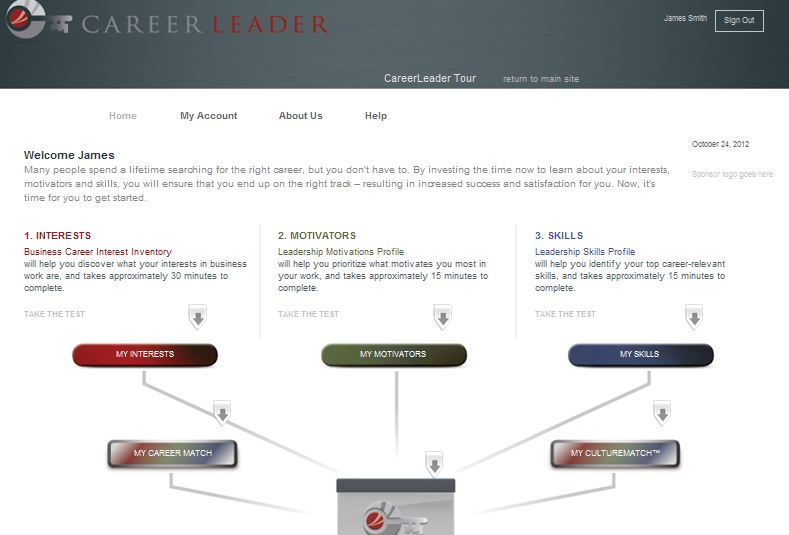
Career Leader by Harvard Business School professor Timothy Butler

  • What is your unique business differentiator?
  • What problems have you solved? How?
    [Note accomplishments and quantified impact, not responsibilities;
    Specify numbers, even if <10 – contrary to style rules]
  • How have you increased revenues, profit?
  • How have you improved processes?
  • How have you demonstrated creativity, innovation?
  • How have you reduced costs?

The last four items, indicated by *, are considered critical Key Performance Indicators that you must convey clearly, repeatedly, and memorably in all in-person and online activities.

-*What assessments and tools have you used to uncover your strengths, expertise and key differentiator?

LinkedIn Open Group – The Executive Coach
Twitter: @kathrynwelds
Google+
Facebook Notes:
Blog: – Kathryn Welds | Curated Research and Commentary

©Kathryn Welds

Super-Star Skills May Not be Transferrable to New Job Opportunities

Boris Groysberg

Boris Groysberg

Harvard Business School professor Boris Groysberg outlines findings from a study of 1053 top Wall Street Analysts at 78 investment banks between 1988 and 1996 in his book, Chasing Stars: The Myth of Talent and Portability of Performance

His team examined 546 job changes and compared the top performers’ performance with that of 20,000 “non-star” analysts at 400 investment banks.
They interviewed 200 of these analysts and talked with their institutional investor clients.

Groysberg’s team found that the star performers’ “job performance plunged sharply and continued to suffer for at least five years after moving to a new firm”, because they “…lost access to colleagues, teammates and internal networks than can take years to develop…new and unfamiliar ways of doing things took the place of routines and procedures and systems that …had become second nature.”

He suggested that firms can prevent this performance decrement by hiring the entire team (“liftout”) and by “hiring more women, who…suffer less on leaving one firm to join another (because) they had formed stronger ties outside the firm than many male analysts and so were less dependent on their former work colleagues…and they made wiser choices when it came to agreeing to move.”

Team Groysberg identifies mistakes star employees make when leaving a firm:

  • Doing inadequate research into the new company
  • Leaving because they are escaping something unpleasant rather than choosing something better
  • Over-estimating their own abilities
  • Failing to take a long-term view

Groysberg’s book considers how some Wall Street research departments are successfully growing, retaining, and deploying their own “stars,” and how these practices might be applied in other organizations.

-*When have you seen super-star skills transfer to a new work environment?
-*When have these skills not transferred as successfully to a different organization?

LinkedIn Open Group: Brazen Careerist
Twitter: @kathrynwelds
Google+
Facebook Notes:
Blog: – Kathryn Welds | Curated Research and Commentary

©Kathryn Welds

Work-Life Balance – “Getting to 50/50”

Sharon Meers

Sharon Meers

Sharon Meers and Joanna Strober are professionals with demanding careers in addition to their responsibilities as wives and parents.

Their book, Getting to 50/50: How Working Couples Can Have It All by Sharing It All, presents an action plan for couples to negotiate work-life balance (“have it all”), through equal participation so both partners “win.”

Joanna Strober

Joanna Strober

Many will question the feasibility and desirability of “having it all,” but the book’s practical suggestions on managing the sometimes conflicting demands of job, child-care, home-life, couple-relationship, and extended family responsibilities have been well-received by both men and women.

Meers and Strober conducted interviews with parents and employers, surveys with working mothers, and a comprehensive review of current social science research to conclude that children and parents benefit from equal partnership: Mothers work with less guilt, fathers bond more with their kids, and children have attention from two involved parents.

In addition to the tactical suggestions, Meers and Strober acknowledge that the foundation of this social change is based on acting on a new model of equal participation, and advocating for this model in the workplace and in social contexts.

-*What actions have helped you move toward “50/50”?

LinkedIn Open Group – Brazen Careerist
Twitter: @kathrynwelds
Google+
Facebook Notes:
Blog: – Kathryn Welds | Curated Research and Commentary

©Kathryn Welds