Category Archives: Career Development

Career Development

Authoritative Non-Verbal Communication for Women in the Workplace

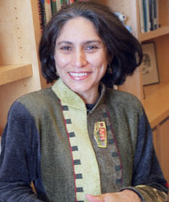
Carol Kinsey Goman

Carol Kinsey Goman

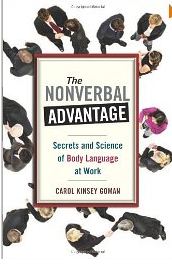
Carol Kinsey Goman has integrated research on the impact of non-verbal behavior on workplace outcomes for women in two books:
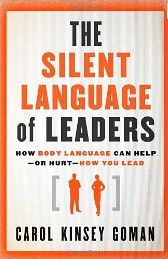
The Silent Language of Leaders: How Body Language Can Help–or Hurt–How You Lead

The Nonverbal Advantage: Secrets and Science of Body Language at Work

She notes that all business leaders need to establish interpersonal warmth and likability balanced with authority, power, and credibility.
Women have been viewed as likeable, but lacking authority, so Goman suggests the following behavior changes:

• Focusing eye contact in business situations on the conversation partner’s forehead and eyes instead of eyes and mouth, which is more appropriate for social situations

• Limit the number of head tilts and head nods, which may signal empathy and encouragement, but may be interpreted as submissive and lacking authority

 Occupy space: Stand tall with erect posture and head, and a wider stance hold your head high.  Claim territory with belongings.

• Keep your hands on your lap or on the conference table where they can be seen to limit nervous hand gestures such as rubbing hands, grabbing arms, touching neck, tossing hair, leaning forward.

  • Use authoritative hand gestures:

o Show palms when indicating openness and inclusiveness

o “Steeple” fingers by touching fingertips with palms separated to indicate precision

o Turn hands palms-down to signal confidence and certainty

o Keep gestures at waist height or above. Drop the pitch at the end of each sentence to make an authoritative statement. Avoid raising tone at the end of a sentence when not asking a question, as this may be interpreted as uncertain or submissive.

• Smile selectively and appropriately to maintain both likeability and authority

• “Learn to interrupt,” advised former U.S. Secretary of State Madeleine Albright. ”
Like occupying physical space, occupy “air-space.”

• Moderate emotional expressiveness, movement, and animation to signal authority and composure

• Cultivate a firm handshake, with palm-to-palm contact and that the web of your hand (the skin between your thumb and first finger) touching the web of the other person’s. Face the person squarely, look in the eyes, smile, and greet the person.

Goman stated that women generally excel at accurately read the body language of others, and this can be an advantage in intuitively grasping underlying issues in a meeting or during a negotiation.

-*How do you cultivate both credibility and likeability in work relationships?

See related posting on Olivia Fox Cabane’s discussion of non-verbal contributors to “charisma

RELATED POST:

Deborah Gruenfeld‘s discussion of power non-verbal behaviors

©Kathryn Welds

Silicon Valley Venture Capitalist’s Leadership Credo for Growing Businesses, Careers

Ann Winblad

Ann Winblad

Ann Winblad is one of the most prominent, yet low-profile venture capitalists and among a minority of women venture capitalists – about 11 percent of today’s VCs.

She co-founded Open Systems, an accounting software company in 1976, then co-founded Venture Capital firm Hummer Winblad Venture Partners, which invests more than $1 billion in software companies.

Hummer Winblad She offers recommendations for women and men investing in businesses, careers, and themselves:

• Seek risk and fail fast to enable rapid course-correction
• Strive to be more resilient than strong
• Adapt as quickly as possible
• Place greater value on learning from all sources over formal education
• Exercise intellectual curiosity and stamina
• Tolerate ambiguity and lack of experts during high-growth periods
• Look for possibility in the “half-full glass”
• State assumptions and build on those of others
• Cultivate honesty and transparency

-*Which of Winblad’s recommendations have you seen practiced by the most effective organizational leaders and entrepreneurs you know?

LinkedIn Open Group: Women in Technology (Sponsored by EMC)
Twitter: @kathrynwelds
Google+
Facebook Notes:
Blog: – Kathryn Welds | Curated Research and Commentary   

©Kathryn Welds

Non-Verbal Behaviors that Signal “Charisma”

Olivia Fox Cabane

Olivia Fox Cabane

Olivia Fox Cabane defines charismatic behaviors as managing internal states and beliefs through self-awareness, emotional self-management to focus on others and “make them feel good,” in her book, The Charisma Myth: How Anyone Can Master the Art and Science of Personal Magnetism.

She identified four types of “charisma:”

o Focus: Presence, listening intently, confidence
o Visionary: Belief, confidence, inspires others
o Kindness: Warmth, confidence, eye contact, compassion/self-compassion, gratitude, goodwill, enable others to feel important and heard through asking open-ended questions, redirecting focus to other with question about opinion
o Authority: Power, status, confidence, appearance/clothing, “take up space” posture, reduce number of non-verbal reassurances (nodding)

Her book considers three key contributors to “charisma”:

o Presence – mindful attention, patient listening, avoiding interruption

o Power – appearance, clothing, occupy space, positive wording (avoid “don’t”), placebo effect

o Warmth – chin down, eye contact, Duchenne smile (mouth corners, eye corners), gratitude, compassion, appreciation to counteract “hedonic adaptation”

In an interview, Fox Cabane offered three “quick fixes” to amplify perceived “charisma”:

• Lower the intonation of your voice at the end of your sentences (no Valley Girl talk…)
• Reduce the speed and rapidity of nodding
• Pause for two seconds before you speak

She offered a number of self-management and communication tips, including a review of Cognitive Behavior Modification practices:

o Destigmatize Discomfort-Dedramatize
o Neutralize Negativity by disputing thoughts
o Rewrite Reality with cognitive reappraisal-reframing

Other reminders include:

• Increasing resilience by expanding the personal “comfort zone”
• Employing mental rehearsal through visualization
• Adopting equanimity, “radical acceptance”, calm
• Increasing impressions of similarity by increasing subtle mirroring of phrases, posture, gestures (such as handshake)
.Investigating appropriate attire, match level of formality/informality
o Delivering value: entertainment, information, good feeling
o Inhaling through nose to avoid anxious, breathless sound
o Using as few words as possible; be succinct; illustrate with imagery, metaphor, analogy, story, compelling statistics relevant to the listener
o Expressing appreciation for specific help, influence; identify positive impact, and context in which it came to mind
o Avoiding verbal “distractors”: “um”, “ah”, “you know”
o Breathing to avoid self-generated anxiety: ”Pause-Breathe-Slow Down”

-*Which elements of Power, Presence, and Warmth have you observed among the most “charismatic” people you know?

©Kathryn Welds

Remaining Workplace Challenges after 1970 Newsweek Sex-Discrimination Lawsuit

As recently as 2006, a young female journalist at Newsweek observed that men received higher-profile assignments and better opportunities, at higher salaries.
She learned that decades earlier, women Newsweek staffers brought the first sex discrimination lawsuit in the media industry concerning the same issues.

Lynn Povich

Lynn Povich

Lynn Povich, one of the original Newsweek staffers, recounts the incident in its larger social context, in The Good Girls Revolt: How the Women of Newsweek Sued their Bosses and Changed the Workplace 

Their complaint to the Equal Employment Opportunity Commission was filed on the same day that Newsweek ran a cover story on “Women in Revolt,” March 16, 1970.

Women staffers charged that they had been “systematically discriminated against in both hiring and promotion and forced to assume subsidiary role” due entirely to their gender.

As viewers enjoy the quaint period elements of the Mad Men-era workplace, Povich’s book illustrates that significant remnants of this discriminatory culture persists today.

-*What continuing workplace inequities have you observed in the past year?
-*What are effective ways to respond to differential workplace opportunities and treatment?

LinkedIn Open Group Catalyst
Twitter: @kathrynwelds
Google+
Facebook Notes:
Blog: – Kathryn Welds | Curated Research and Commentary

©Kathryn Welds

Toys, Books, and Kits Attract Girls to Engineering

The small number of women role models in Science, Technology, Engineering, and Mathematics (STEM) careers is widely recognized.

Debbie Sterling

Debbie Sterling

Debbie Sterling, a Stanford-educated engineer, is among a group of educators and entrepreneurs developing toys, books, games, and kits to attract girls to technical careers.

She introduced books and construction toys for girls centered on a fictional role model, Goldie, in response to her experience of collaborating mostly with men during her studies of product design in Stanford’s mechanical engineering department.

The first book, intended for girls, ages 5 to 9, is called GoldieBlox and the Spinning Machine. Goldie lives in “her engineering house with gears and moving parts everywhere,” five character figurines (including Nacho the dog and Benjamin Cranklin the cranky cat), and a construction toy, featuring a pegboard, wheels, axles, blocks, a crank, a ribbon, and washers.

Goldie creates a “spinning machine” for her dog, who enjoys chasing his tail and yelling out random words in Spanish, by deconstructing a ballerina music box and reverse engineering it. Girls can create their own spinning toys with as they read through the story.

Her next products include books with a pulley system elevator, a parade float, circuits and gears, and an eBook where Goldie learns to code.

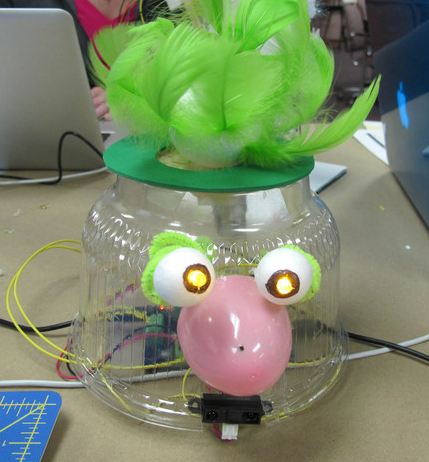
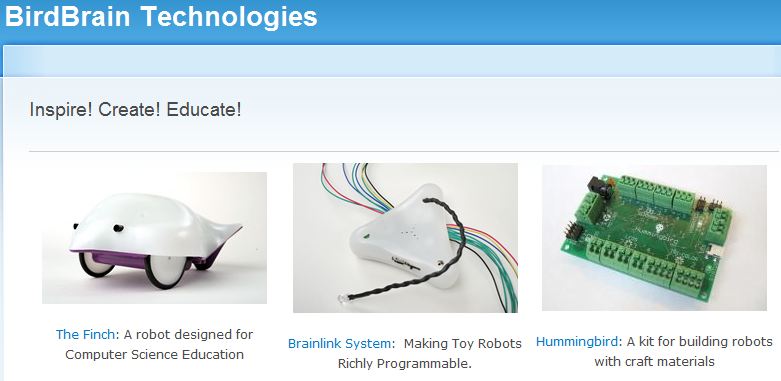
Another product intended to increase girls’ skill and confidence in working with technology is Hummingbird, an educational robotics kit.
Developed at Carnegie Mellon University’s Robotics Institute’s Arts and Bots program, spin-off startup BirdBrain Technologies, showcases robotics with craft materials and text to communicate thoughts, feelings, or ideas.

The kit includes a control board, lights, sensors, and motors.
Students (usually ages 11 and up) program their creations on a computer by dragging and dropping icons, so they don’t have to learn computer languages.

Students have experimented with making a robot from cardboard wrapped in tin foil that can twirl, flash lights, and even impersonate the Star Wars robot, R2D2.
Another project was a dragon made of paper and popsicle sticks that flaps its wings and hisses.
Others crafted a robotic arm with muscles made of cast-off pantyhose.

Pennsylvania students analyzed poetry, then created animated scenes for poems using the kit.
Elsewhere high school students created kinetic sculptures with sensors that detect environmental changes and respond with movement.
Others built a “coin monster” for the school’s ancient coin exhibit.

Emily Hamner

Emily Hamner

Research Associate Emily Hamner and Tom Lauwers, the founder of BirdBrain Technologies conducted workshops to learn girls’ goals and interests in making robots.
They learned that girls are most interested in creating robots that can tell stories, dance, communicate, and interact with people.

Hamner and Lauwers’ goal is to enable young people “to create whatever they can imagine,” to inspire students’ interest in STEM careers, and to increase their “understanding and confidence in using the technology.”

-*What toys and games have you seen increase young people’s interest in Science, Technology, Engineering, and Mathematics activities?

LinkedIn Open Group Women in Technology (sponsored by EMC)
Twitter: @kathrynwelds
Google+
Facebook Notes:
Blog: – Kathryn Welds | Curated Research and Commentary

©Kathryn Welds

Career Resilience in Managing Job Loss, Unexpected Changes

Mary Lynn Pulley

Mary Lynn Pulley

Mary Lynn Pulley, a Center for Creative Leadership adjunct faculty member and author of Losing Your Job – Reclaiming Your Soul: Stories of Resilience, Renewal, and Hope, shares practical recommendations to respond to change or hardship:

Resilience enables people to recover from adversity and is characterized by some of the same attributes as Emotional Intelligence:

• Flexibility
• Durability
• Optimism
• Openness to learning.

The flipside of resilience is burnout, fatigue, malaise, depression, defensiveness and cynicism.

Pulley asserts that resilience can be developed by modifying thoughts to broaden personal outlook and adapt to change.
The second step is modifying actions based on modified attitudes, beliefs, and concepts.

She suggests developing resilience by:

Embracing continuous learning
• Learn and apply new skills to more adapt more quickly during changes
Finding purpose
• Develop a “personal why” to provide meaning and context to work
• Take responsibility to direct your personal and career development
• Separate who your self-definition and core identity from your work tasks and job title. “Who you are is not just what you do.”

Cultivating relationships
• Maintain personal and professional relationships for support and feedback, to develop perspective, achieve goals, deal with hardships

Questioning and modifying self-definition and career
• Reassess awareness of personal skills, talents and interests, and personal narrative
• Consider new work opportunities to align with current skills
• Practice new behavioral competencies to align with current situational requirements

Re-thinking money
• Live within your means to remain flexible during unexpected change

Keeping a journal
• The Center for Creative Leadership suggests that writing in “learning journals” or “reflection journals” enables reflection, self-awareness, learning, adaptability, and insight.

Three recommended journal sections include:
1. Event or experience
Describe the occurrence in factual, objective, quantifiable terms:
Who? What? When? Where? How? Why?

2. Reaction
Describe your reaction to the event in factual, objective, quantifiable terms. What did you want to do in response to the event?
What did you actually do?
What were your thoughts?
What were your feelings?

3. Lessons
What did you learn from the event and from your reaction to it?
What did the event suggest as a development area?
What common reaction patterns occur in similar situations?
What different reactions patterns have occurred in the past?
What do these different reactions suggest about progress in developing resilience?

The Center for Creative Leadership suggests that learning comes “reflecting on the doing,” and not just on the “doing” of specific actions.

-*Which of Pulley’s recommendations seem most applicable and feasible to rebound from unbidden changes, like job loss?

LinkedIn Open Group Brazen Careerist
Twitter: @kathrynwelds
Google+:
Facebook Notes:
Blog: – Kathryn Welds | Curated Research and Commentary

©Kathryn Welds

Glass Elevator and Nine Principles for Personal Branding, Career Impact

Ora Shtull

Ora Shtull

Ora Shtull points to the small number of women leading Fortune 500 companies to argue that women can benefit from adopting nine practices to enhance personal branding.

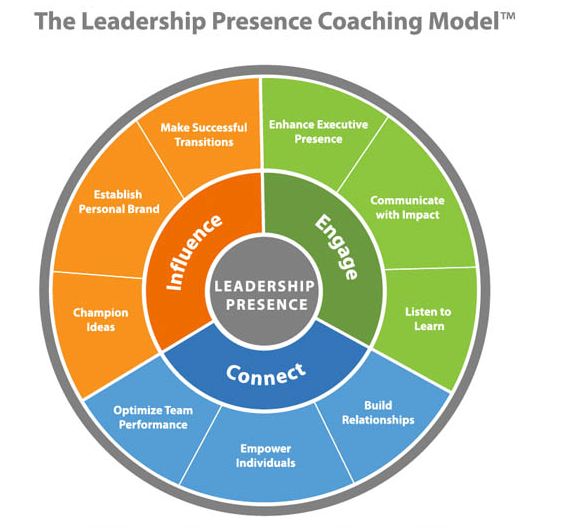
Her book, The Glass Elevator – A Guide to Leadership Presence for Women on the Rise, focuses on: The Glass Elevator

• High-impact communication through asking strategic questions,

• Practicing confident body language in posture, body position, and vocal projection,

• Listening to learn and understand,

• Developing a collaborative relationship with your manager,

• Partnering with team members and direct reports to deliver results,

• Expanding your network by being likable and generous,

• Asking for what you want and creating “win-win” proposals,

• Sharing your differentiators,

• Adopting a positive outlook, even if at first it’s “as-if.”

Shtull developed a comprehensive Leadership Presence Coaching model based on the principles of Influence-Engage-Connect.

-*Which of Shtull’s recommendations have most helped you ride the “Glass Elevator”?

Related Posts:

©Kathryn Welds

Three Factors Affecting Women in Corporate Leadership

Sara King

The Center for Creative Leadership’s Sara King and Northwestern University professor Alice Eagly examine the obstacles, pressures and trade-offs women face at every stage of their careers to analyze the reason that only three percent of Fortune 500 leaders are women.

Alice Eagly

King’s and Eagly’s research identified three factors affecting women in corporate leadership roles:

•    “Walking the narrow band” of acceptable behaviors: tough and demanding to be credible and effective but “easy to be with”; demonstrating the desire to succeed but not appearing “too” ambitious

•    “Owned by the job”, with the expectation of availability and productivity 24/7

•    “Traversing the Balance Beam” of conflicting role demands and limited time to fulfill them

They provide familiar suggestions:
•    Seek out mentors and advocates

•    Take risks, accept challenges to demonstrate adaptability, versatility.
Communicate willingness to change jobs and take on special projects to gain experience.
Learn from research findings that women are not viewed as promotable if they stay in one area of expertise or have a narrow functional role.

•    Communicate decisions, demand results, even if unpopular or requiring change management and persuasion

•    Project confident. Projecting an effective leadership image requires confidence. Don’t undermine good results with a weak or too modest self-image

Through the Labyrinth: The Truth About How Women Become Leaders.
Alice H. Eagly  Linda L. Carli, 2007 Harvard Business School Press.
The Center for Creative Leadership showcased related research that identified five themes among high-achieving women: agency, authenticity, connection, self-clarity and wholeness.

Agency, taking control of one’s career:
•    Analyze career steps
•    Set realistic, specific goals and develop a plan for achieving them
•    Ask for challenges outside your current functional orientation
•    Seek recognition
•    Ask for what you deserve

Authenticity, being genuine, being yourself by developing self-awareness to clarify   values, preferences, skills, acceptable trade-offs and acceptable sacrifices.

Connection, by taking time for people, to build personal and professional relationships, networking, finding a mentor, establishing a personal “board of directors” to provide support and feedback.

Self-clarity from seeking feedback and reflecting on one’s values, motivations, behaviors, strengths, weaknesses, impact on others.
This is a continuing process of evaluating changes in your needs, motivations, goals, values, while observing patterns, and being open to possibilities.

Wholeness from seeking roles beyond work or to unite different life roles, by prioritizing commitments and saying “no” to low-priority roles or obligations.

-*What solutions have you seen most effective in navigating the challenges facing women seeking leadership roles?

LinkedIn Open Group Catalyst
Twitter: @kathrynwelds
Google+
Facebook Notes:
Blog: – Kathryn Welds | Curated Research and Commentary

©Kathryn Welds

Silicon Valley Tech Women Encourage STEM Careers

Mala Devlin

Mala Devlin

Mala Devlin, Engineering Manager at Cisco Systems and Trina Alexson‘s book, Bit by Bit encourages young women in high school and university to pursue high tech careers.

Trina Alexson

Trina Alexson

Devlin and Alexson interviewed more than 40 women across leading Silicon Valley companies to highlight the top 10 reasons why young women should consider careers in Science, Technology, Engineering, and Mathematics (STEM) careers, despite women’s under-representation in these fields.

The authors provide descriptions of job roles and career paths, and list skills required to succeed in technology careers.

Insights from this book are equally applicable to young men, and the authors encourage members of all under-represented groups to consider STEM careers.

Devlin and Alexson donated all profits from the book to the Anita Borg Society for Women in Technology

-*What practices have you seen increase interest in STEM careers among young women and other under-represented groups?

Linkedin Open Group Women in Technology (sponsored by EMC)
Linkedin Open Group Catalyst
Linked Open Group Diversity
Twitter: @kathrynwelds
Google+
Facebook Notes:
Blog: – Kathryn Welds | Curated Research and Commentary

©Kathryn Welds

Overcoming Decision Bias: Allure of “Availability Heuristic”, “Primacy Effect”

Dana Carney

Dana Carney of Berkeley’s Haas School of Business and Mahzarin Banaji of Harvard University investigated whether people prefer the first option they receive in their paper, “First is Best”.

Olympics gymnastic competitors are aware of this phenomenon, and typically prefer to perform first, to “set the standard” against which other competitors must excel.
Volunteers in one experience were shown pictures of two violent criminals and then asked which one deserved parole.

Mahzarin Banaji

Mahzarin Banaji

Most favored the first mug shot they viewed, no matter the order of viewing.
Similarly, 68% of respondents at a railway station in Boston preferred the first stick of gum they were offered, and volunteers preferred to buy a car from the first salesperson they met.
This is one reason that the first advertisement break on television costs 10-15% more than the second, according to Jonathan Allan, sales director at British broadcaster Channel 4.

Carney and Banaji concluded that people “consistently” the first choice if they have time limits or are distracted, and that this primacy effect is even more important online, because few people scroll through dozens of pages of search results.
Google page rankings, and dating sites such as Badoo, are aware of this trend, and offer enhancements to position results in a more eye-catching location.

Awareness of the human cognitive short-cuts that bias decision making can mitigate their effects.

-*What decision short-cuts do you use?
-*When have you seen these heuristics lead to decision bias?

Blindspot: Hidden Biases of Good People, Mahzarin R. Banaji, Anthony G. Greenwald

LinkedIn Open Group: Mindful Leadership
Twitter: @kathrynwelds
Google+:
Facebook Notes:
Blog: – Kathryn Welds | Curated Research and Commentary

©Kathryn Welds