Category Archives: Career Development

Career Development

Practice Outweighs Talent in Developing Expert Performance

Daniel Coyle

Daniel Coyle

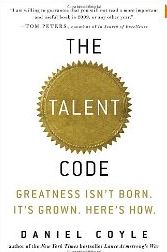
Journalist Daniel Coyle consolidated neuroscience research with stories of expert performers in The Talent Code: Greatness Isn’t Born. It’s Grown. Here’s How .
He distilled three principles that enable performance development across a variety of skills and fields: The Talent Code

“Deep” Practice, which includes daily repetition for up to several hours, observation, and corrective feedback by an expert to develop the myelin of “muscle memory” and increase neural signal strength, speed and accuracy.
This practice must be characterized by focused attention to mimic expert performance, reduce errors, and willingness to practice at increasingly more challenging levels.

Ignition, or commitment based on “unconscious desires” and “triggered by primal cues”

Master Coaching, in which to expert teacher encourages “ignition” and “deep” practice with:

1. Task-specific knowledge explained with vivid examples and meaningful metaphors
2. Perceptive tailoring to each student’s skills and needs
3. “The GPS Reflex”, or providing timely, specific guidance
4. “Theatrical Honesty,” or ability to empathically connect with students

K Anders Ericcson

K Anders Ericsson

Related Posts review foundational research by K. Anders Ericsson, who suggested that expert performance requires “10000 hours of practice.”

Geoff Colvin

Geoff Colvin

Talent is Overrated

Talent is Overrated

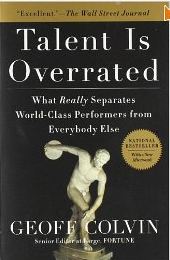
Like Coyle, Geoff Colvin argues that Talent is Overrated and can be eclipsed by systematic practice with corrective coaching.

Paul Herr’s Primal Management: Unraveling the Secrets of Human Nature to Drive High Performance also argues that motivation in the workplace, as in Coyle’s broader discussion of performance and motivation, is based on the “evolutionary psychology” of “tribal survival” and includes:

Paul Herr

Paul Herr

  • Self-Protection, the foundation of Maslow’s hierarch of higher-order needs

    Abraham Maslow

    Abraham Maslow

  • Cooperation, collaborative work in groups fulfills people’s social desires to belong to a group working toward a shared goal
  • Skill deployment, opportunity to develop skills and experience satisfaction with progressive improvement
  • Competency, opportunity to demonstrate skills and receive social recognition for these improvements
  • Innovation, based on people’s curiosity and desire to make in processes, systems, ideas, Primal Managementevents

-*How do you develop your talents?

-*Where do you find expert coaching?

-*How do you persist in “Deep Practice” even when it’s “no fun”?

Related Posts

Twitter  @kathrynwelds
Google+
Blog
: – Kathryn Welds | Curated Research and Commentary
LinkedIn Open Group Psychology in Human Resources (Organisational Psychology)
Facebook Notes

©Kathryn Welds

Leadership Qualities that Lead to the Corner Office?

Adam Bryant

Adam Bryant

Adam Bryant, deputy national editor at the New York Times interviewed more than 200 CEOs of top companies for his column, and distilled the leadership qualities that moved them to The Corner Office: Indispensable and Unexpected Lessons from CEOs on How to Lead and Succeed :

  • Passionate curiosity, deep engagement with questioning mind and a balance of analytical and creative competencies
  • Confidence based on facing adversity, knowing capabilities
  • Collaboration, ability to “read” and shape team dynamics
  • Ability to translate complex to simple explanations
  • Fearlessness in acting on considered risks  The Corner Office

These five characteristics augment qualities that might be considered “table stakes” – or “must-haves” for any leadership candidate:

  • Preparation
  • Patience
  • Navigating organizational obstacles  
  • Building a team of diverse members by galvanizing with a clear mission and spending time with members

Bryant argues that these behavioral competencies may be developed through attentive effort, but he acknowledges that some people have greater natural predisposition and aptitude for these “ways of being.”

Lois Frankel

Lois Frankel

Lois Frankel’s earlier book, Nice Girls Don’t Get the Corner Office: 101 Unconscious Mistakes Women Make That Sabotage Their Careers provided different recommendations for women seeking leadership roles, later empirically validated in research studies:

  • Act like a mature woman rather than a “girl”
  • Frame statements as assertions rather than questions
  • State and initiate a course of action, rather than waiting to request permissionNice Girls Dont Get The Corner

In contrast, Bryant particularly advises women to “meet as many people as possible and build relationships because serendipity and chance encounters can lead to unplanned opportunities.”

Research organizations like Catalyst and Center for Talent Innovation conduct social science research to investigate these behavioral and attitudinal recommendations.

CatalystBoth groups have questioned the applicability of mainstream recommendations in leadership development curricula when implemented by women, minorities and “people of color.”

Their continuing research agendas include analyzing the behavioral components of general recommendations such as “demonstrate gravitas” which the majority of top executives affirmed as “… critical for leadership. I can’t define it but I know if when I see it.”Center for Talent Innovation

These research organizations seek to more clearly define what these key executives see in critical leadership attributes like “gravitas” and to define them in replicable behavior terms.

-*Which leadership behaviors do you consider most important for any executive?
-*Which behavioral competencies are most crucial for aspiring women leaders?

Related posts:

©Kathryn Welds

Lean In: Sheryl Sandberg launches Book, Foundation to Advance Women in Organizational Leadership

Sheryl Sandberg

Sheryl Sandberg

Facebook COO Sheryl Sandberg distilled her calls-to-action from her much-viewed TED talk and 2011 Commencement address at Barnard College in her forthcoming book, Lean In: Women, Work and the Will to Lead, scheduled for release 11 March 2013.

She reviews why women in the U.S. hold few of the top leadership roles in organizations and government, and offers greater detail on her much-discussed encouragement to:

  • Think Big
  • Sit at the table
  • Don’t leave before you leave
  • Lean in
  • Be bold, be unafraid
  • Choose the right partner
  • Seek challenges and take risks required to pursue ambitious goals.
Sheryl Sandberg at Barnard

Sheryl Sandberg at Barnard

Sandberg draws on current findings from Stanford University’s Clayman Institute for Gender Research and other top research organizations to offer practical advice on negotiation techniques, mentorship, building a satisfying career, setting boundaries, and replacing the goal of “having it all” with a more achievable target.

Sheryl Sandberg at Clayman Institute

Sheryl Sandberg at Clayman Institute

Sandberg is currently establishing The Lean In Foundation in collaboration with the Clayman Institute and corporate partners, to provide:

  • Online community to share insights and tools,
  • Online lectures by recognized thought leaders to enhance critical career skills,
  • Career discussion circles for women, men, and organizations, so they can deploy women’s talents to solve society’s most challenging issues.

-*How far can you “lean in” without losing your balance?

Related Posts:

  • Self-managed career discussion circles

“Greenlight Group”: No-cost, Self-managed Support to Achieve Professional, Personal Goals

  • “Think Big, Play Big” at Cisco’s 2013 Women in Technology Forum:

“Everything is Negotiable:” Prepare, Ask, Revise, Ask Again

Twitter  @kathrynwelds
Google+
Blog
: – Kathryn Welds | Curated Research and Commentary 
LinkedIn Open Group Women in Technology (sponsored by EMC)
Facebook Notes:

©Kathryn Welds

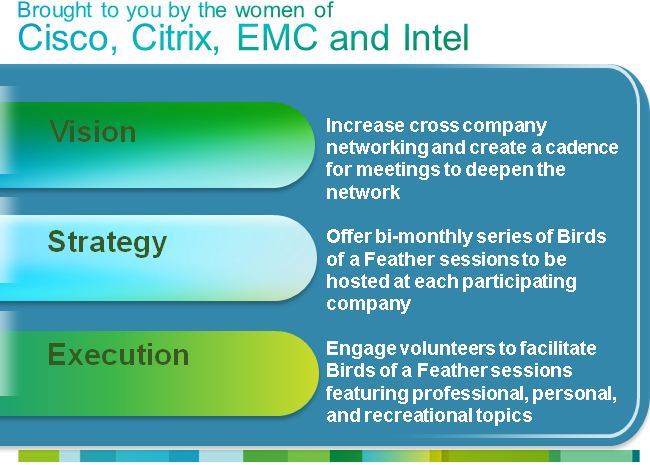
“Birds of a Feather” brings together Silicon Valley women for Network Development

CiscoWomen of Cisco, Citrix, EMC, Intel come together on Thursday  17 January 2013 at Cisco Systems in San Jose, California, for the first of three “unconferences” to build professional relationships across technology companies. Citrix

EMCEach firm has an Employee Resource Group (ERG) focusing on career development and advancement for women in technical and non-technical roles, and each recognizes the value of building cross-organizational business networks and relationships.IntelWomen of Cisco-Citrix-EMC-Intel

Women of Intel (WIN) has been a leader by hosting annual events that bring together women from other local technology firms, and occasional efforts have brought together women from Google, Applied Materials, EMC, Intel, Yahoo, Cisco, IBM, Hewlett-Packard, Citrix, Symantec, Adobe, and other Silicon Valley technology companies.

Marylene Delbourg-Delphis

Marylene Delbourg-Delphis

In 2012, EMC and Cisco collaborated on an event designed to encourage longer-term relationships through small-group discussions of a talk by the versatile Marylene Delbourg-Delphis, serial tech entrepreneur, philosophy professor and fashion journalist.

Anna Van Rijswijk

Anna Van Rijswijk

Anna Van Rijswijk of Cisco, member of the EMC-Cisco planning team, expanded this concept to a multi-session series  and incorporated  a “Birds of a Feather” format, developed by the Internet Engineering Task Force (IETF) to denote initial meetings of members interested in a particular issue.

Olivia Shen Green

Olivia Shen Green

This  “Birds of a Feather” structure was  successfully launched in Cisco’s 2012 one-day event, Women in Technology Forum, attended by more than 1200 Cisco employees worldwide, and led by Cisco’s Olivia Shen Green, who shared principles for conducting an “unconference.”  Women In Techology Forum

The goal of the multi-company, multi-session “Birds of a Feather” networking event is to increase insight and resource-sharing on topics crucial to professional women’s career advancement in technology firms, while establishing and developing stronger cross-company resource networks.

Unconference GuidelinesDiscussion topics, facilitated by members of multiple sponsor companies, include:

  • Developing “personal brand”
  • Practicing superior communication skills,  “Executive Presence”
  • Striving toward Work – Life Balance
  • Establishing Peer Mentoring and “Greenlight Groups”
  • Developing technical skills
  • Best practices in design, innovation, and creative processes

Upcoming sessions in the spring of 2013 will hosted onsite at Citrix, EMC, and Intel, and will continue these themes.

-*How do you expand your professional network across companies in your industry and across professional roles?

Twitter:   @kathrynwelds
Google+:
Blog: – Kathryn Welds | Curated Research and Commentary 
LinkedIn Open Group Women in Technology (sponsored by EMC)
Facebook Notes

©Kathryn Welds

Career Navigation by Embracing Uncertainty

John Krumboltz

John Krumboltz

John Krumboltz of Stanford echoes the message in an earlier blog post, Is Career “Planning” Actually Career “Improvisation”? in his book, Luck is No Accident: Making the Most of Happenstance in Your Life and Career  Luck is no accident

He notes that people can’t control outcomes of unpredictable life and career situations, but he advocates paying attention to thoughts and actions that hinder progress toward goals — and to modify them with small steps.

Related Post:
Creating Productive Thought Patterns through “Thought Self-Leadership”

Increased mindful attention to habitual patterns can set the conditions for desired outcomes by planning contingencies for undesirable eventualities.

Part of this process is being:

  • Open to possibilities that diverge from an original plan
  • Willing to consider unexpected opportunities
  • Able to risk mistakes and rejection.

This may see demanding and undesirable for goal-directed people with a plan, but Krumboltz’s research demonstrates the effectiveness of these guidelines and other familiar recommendations:

  • Research areas of interest
  • Network
  • Ask for what you want
  • Keep learning
Daniel Pink

Daniel Pink

Similarly, Daniel Pink advises flexibility in career “planning” in his anime-like The Adventures of Johnny Bunko: The Last Career Guide You’ll Ever Need and questions whether there can be a career “plan”, given many unpredictable possibilities.The Adventures of Johnny Bunko

Like Peter Drucker and Donald Clifton before him, Pink urges building on existing strengths and finding ways to compensate for less strong areas, rather than investing effort in remedying them.

Donalid Clifton

Donalid Clifton

In addition to familiar suggestions – persist in taking on ambitious challenges while learning from them – he recommends focusing on solving problems for others, and finding a niche to deliver valuable results.Now Discover Your Strengths

This service-orientation pays dividends as a career development strategy and in “making a difference” in the community and one’s family.

DrivePink’s later book, Drive: The Surprising Truth About What Motivates Us ,   draws on Frederick Herzberg’s delineation of intrinsic motivation and extrinsic motivation.

Frederick Herzberg

Frederick Herzberg

People are motivated, Pink says, by career roles that provide opportunities for:

  • Autonomy, exerting control over work content and context
  • Mastery, improving skill in work over time through persistence, effort, corrective feedback
  • Purpose, participating in an inspiring goal

Related Post:
Finding Work You Love, Measuring Your Life

Pink’s TED Talk demonstrates his passionate advocacy for replacing traditional rewards and recognition with “Motivation 2.0” that provides opportunities for autonomy, mastery, and purpose.

Edward Deci - Richard Ryan

Edward Deci – Richard Ryan

Draw on strengths

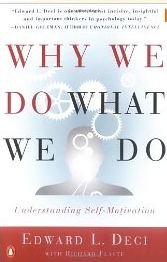
Pink cites Edward Deci’s and Richard Ryan‘s Cognitive Evaluation Theory (CET) that investigated variability in intrinsic motivation, and Deci’s Why We Do What We Do: Understanding Self-Motivation which advised managers to adopt “autonomy-supportive”   behaviors to encourage employees’ intrinsic motivation.Why we do what we do

These varied studies suggest the value of flexibility in career “planning” to capitalize on serendipitous opportunities, and seeking work roles that:

  • Draw on strengths
  • Enable intrinsic motivators like autonomy, purpose, mastery, and affiliation, instead of focusing primarily on monetary or status rewards.

-*How do you navigate your career in the face of incomplete information about future outcomes?

Related Posts:

©Kathryn Welds

Pattern Recognition in Entrepreneurship

Steve Blank

Steve Blank

Steve Blank, serial entrepreneur (E.piphany, Zilog, and more) and Stanford consulting associate professor, argues that entrepreneurs need two types of “wisdom” or cognitive processing:

  • Pattern recognition based on a “constrain stream of data processing in the background”
  • Epiphanies that “serendipitously snap together”, outlined in Four Steps to the Epiphany.

He provides examples of pattern recognition in each of the four phases toward “epiphany” in building a business:The Four Steps to the Epiphany

  • Customer Discovery, which assesses market potential and customer preferences
  • Customer Validation, in early sales
  • Customer Creation, including strategy definition, startup launch, and iterative product  experimentation
  • Company Building, which prepares to “Cross the Chasm” in Geoffrey Moore’s model.
    Robert Baron

    Robert Baron

    Crossing the Chasm

Robert Baron of Renssalaer Polytechnic Institute echoed Blanks emphasis on pattern recognition in his Academy of Management Perspectives article,

Opportunity Recognition as Pattern Recognition: How Entrepreneurs “Connect the Dots” to Identify New Business Opportunities” which he said enables entrepreneurs to evaluate:

  • Economic value
  • Newness
  • Desirability

by comparing existing “mental models” or cognitive prototypes and real-world exemplars to new offerings.

Soren Kierkegaard

Soren Kierkegaard

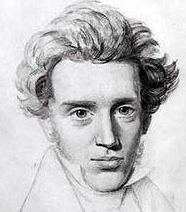
He quoted Danish philosopher Soren Kierkegaard, “…I should …wish…for the passionate sense of the potential, for the eye which. . .sees the possible…”

Venessa Miemis

Venessa Miemis

Venessa Miemis says that pattern recognition is a critical skill for in intelligent decision making, and cites Tor Nørretranders’s The User Illusion-Cutting Consciousness Down to Size to point out that most cognitive processing is outside of normal awareness.

In fact, his research suggests that over 99.99% of the processing in the brain happens at a subconscious level, and is therefore beyond our “control.”

Tor Nørretranders

Tor Nørretranders

She added to Blank’s description of “processing in the background” that synthesizing past
experience, intuition, and common sense and sorting out the “noise” can equip people with relative accurate “best guesses” about future occurrences.

The User Illusion-Cutting Consciousness Down to Size-Tor NørretrandersHowever, if the filter is overzealous, individuals may overlook opportunities because “cognitive dissonance” makes it uncomfortable to integrate information that doesn’t fit with an existing mental model.

Another cognitive bias is overlooking the potential impact of “wild cards” refer to low-probability, high-impact events.

Nassim Nicholas Taleb

Nassim Nicholas Taleb

Nassim Nicholas Taleb introduced the related idea of black swans: unforeseen rare, difficult-to-predict, high-impact, rare events – such as financial crises, natural disasters.

He observed that these occurrences are often explained away when hindsight reveals individual and collective “blindness” to uncertainty and its large role in these rare historical events.
His book recent book, Antifragile: Things that Gain from Disorder, posits that randomness  enables strengthening processes under pressure and can catalyze positive change.

AntifragileHe celebrates volatility as a sign that recalibration may be more achievable than after long periods of stability enable risks to accumulate until a catastrophe.

Applied to career choices, he argues that a seemingly “secure” corporate job disguises dependency on a single employer – often an “at-will” employer, though he discounts the value of “economies of scale” in this work arrangement.

As a result, the unlikely possibility of unemployment leads to cataclysmic reduction in income.
In contrast, occupations with variable earnings, like sales or professional services, acclimates the individual to cyclic or unpredicted income reductions, and practice enables mitigation planning.

This perceptual bias impairs people’s accurate anticipation adaptation to changing.

Pattern recognition can be increased by mindful attention to thinking processes, and frequent self-reminders to scan for perceptual bias and unconscious cognitive processing.
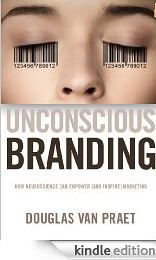
However, other people’s unconscious cognitive processing can be an advantage for marketers, according to Douglas Van Praet, who suggests taking advantage of these via six steps to robust marketing in Unconscious Branding: How Neuroscience Can Empower (and Inspire) MarketingUnconscious Branding

  1. Interrupt the Recognized Pattern
  2. Create Comfort
  3. Lead the Imagination
  4. Shift the Feeling
  5. Satisfy the Critical Mind
  6. Change the Associations
  7. Take Action.

Related Posts:

Twitter:    @kathrynwelds
Google+:
LinkedIn Open Group  Psychology in Human Resources (Organisational Psychology)
Blog: – Kathryn Welds | Curated Research and Commentary
Facebook Notes:

©Kathryn Welds

Memorable Business Stories: Ideas and Numbers

Chip Heath-Dan Heath

Chip Heath-Dan Heath

Chip Heath of Stanford and Dan Heath, Senior Fellow at Duke University’s CASE center, distill principles that make messages memorable in  Made to Stick: Why Some Ideas Survive and Others Die

Citing urban legends and advertisements as examples of tenaciously “sticky” messages, they argue that unforgettable ideas can be recalled with an acronym that means “success” in French:   Made to Stick

  • Simplicity
  • Unexpectedness
  • Concreteness, with many details to act as “hooks” to “stick” to  memory’s many “loops” (Velcro theory of memory)
  • Credibility
  • Emotion-laden stories.
Robert Cialdini

Robert Cialdini

The Heaths’ principle of credibility draws on the three elements of persuasive messages outlined by Robert Cialdini in his best-selling Influence: The Psychology of PersuasionInfluence

Credibility is enhanced by liking, authority, and social proof in Cialdini’s model:

  • Liking – Appealing public figures or personal friends endorses
  • Authority – Well-respected role model or respected authority provides testimonial
  • Social proof – Others like me endorse it, and others provide justification: “because…”, though the actual reason is immaterial
  • Reciprocity – “I know you’d do the same for me,” recommended by Guy Kawasaki to convey that “You owe me…”
  • Scarcity – “While supplies last…”, “Limited time offer!”, “Act now, don’t wait!”
  • Commitment, consistency – Draws on people’s desire to appear consistent, and even trustworthy by following through on commitments: “I do what I say I will do…”
  • Contrast principle – Sales people sell the most expensive item first so related items seem inexpensive by comparison: Real estate transaction fees may appear minimal in contrast to a large investment in a house.

Both memorable messages and persuasive messages take advantage of habitual reactions to typical situations.

These automated and sometimes unconscious processes are a heuristic to help people to deal rapidly and efficiently with routine activities and tasks.
However, “auto-pilot” reactions  may lead to being persuaded to act in ways that might not be helpful, such as excessive eating, drinking, spending, or engaging in risky activities.

Jonah Berger

Jonah Berger

ContagiousWharton’s Jonah Berger formulated an acronyn, STEPPS, to describe narrative elements that increase the likelihood that a story, idea, or product will spread like a contagious virus: 

  • Social Currency – Passing along the information makes the sender appear “good” – knowledgeable, helpful or other   
  • Triggers – The message evokes a familiar, frequent situation
  • Emotion – The story evokes emotion, so will strengthen the emotional between the sender and receiver   
  • Public – Similar to Social Currency, passing the message reflects favorably on the sender
  • Practical Value – The sender provides actionable value in sharing the message
  • Stories –  Memorable, surprising elements increase the likelihood that others will convey the message
Randall Bolten

Randall Bolten

Finance executive Randall Bolten draws on similar observations about human cognitive and perceptual processing to recommend ways to tell a memorable and motivating quantitative story.

His Painting with Numbers: Presenting Financials and Other Numbers So People Will Understand You, discusses “quantation” as another type of business storytelling that affects  “personal brand image.”Painting with Numbers

Edward Tufte

Edward Tufte

Even more practical than Edward Tufte’s breathtaking examples of effective “information architecture” in The Visual Display of Quantitative Information and Envisioning Information, Bolten provides coaching on designing memorable, persuasive presentations and “pitches” featuring quantitative information as “proof points.”

His book demonstrates the Heaths’ principles of simplicity, concreteness, and credibility while drawing on Cialdini’s proven approaches of authority, commitment, consistency, and contrast. The Visual Display of Quantitative InformationEnvisioning Information

-*What principles do you use to tell stories that motivate others to act as you hope?

Related Posts:

Twitter:   @kathrynwelds
Google+
Blog: – Kathryn Welds | Curated Research and Commentary
LinkedIn Open Group Mindful leadership
Facebook Notes

©Kathryn Welds

Guy Kawasaki Disrupts Again: Innovative “Artisinal Publishing,” Entrepreneurship to build Brand, Visibility

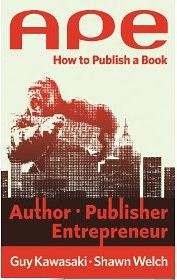
APEGuy Kawasaki’s new book and most recent book have departed from his focus on business strategy, marketing, and storytelling to focus on tactical “how-to” guides.
APE: Author, Publisher, Entrepreneur-How to Publish a Book echoes his earlier imperatives to “add value, make meaning”, whether writing or developing an entrepreneurial idea.

This reference manual enumerates the benefits of self-publishing (aka “artisinal publishing”) compared with traditional publishing models:

  • Content and design control
  • Longevity
  • Revisions   
  • Money
  • Direct connection
  • Price control
  • Time to market
  • Global distribution
  • Control of foreign rights
  • Analytics
  • Deal flexibility.
Guy Kawasaki

Guy Kawasaki

He acknowledges drawbacks, but argues that “artisinal publishing” trumps traditional publishing models despite:

  • No advance
  • No editing team
  • No corporate marketing team
  • Possibly lower prestige
  • Self-service distribution
  • Self-service foreign rights and translations
Guy Kawasaki

Guy Kawasaki

Kawasaki crowd-sourced the origami butterfly concept for his last book cover, Enchantment: The Art of Changing Hearts, Minds, and Actions, and applied the same social approach to “beta-testing,” proof reading, critiquing, and editing this volume.

He candidly acknowledged the value of a professional copy editor to ensure that “artisinally-published” books look professional: even with massive iterations of crowd-sourced review, the copy editor found 1500 issues for correction.Enchantment

He provides clear cost delineations in 2012 US dollars and suggestions to fund the development process, such as engaging in affiliate fee arrangements for products and services mentioned in a book and taking advantage of discounts through the Independent Booksellers Association.

Kawasaki candidly reveals that publishing a book may not be a revenue generator, citing his experience of making more from speaking engagements than royalties on his more than a dozen traditionally-published books

Despite his track record of evangelizing Apple products, he advocated using Microsoft Word for manuscript layout because many who collaborate on an “artisinally-published” book may require this format.

A seasoned marketer, he demystified distribution channels and suggested:

  • Amazon (Kindle Direct Publishing),
  • Apple (iBookstore),
  • Barnes & Noble (Nook),
  • Google (Google Play),
  • Kobo

He clarified the implications of producing digital media in contrast to physical media in discussing distribution through Gumroad for direct sales or printed books.
The latter requires the self-published author to collect, record, and report sales tax for sales within the same state or locale.

As a founder of Alltop and a Twitter evangelist, Kawasaki provided recommendations for promoting awareness of “artisinally-published” books via social media, Net Galley reviewers and bloggers, as well as virtual book tours.

He offers recommendations for independent author and publisher resources including:The Chicago Manual of Style

The Chicago Manual of Style: The Essential Guide for Writers, Editors, and Publishers (14th Edition)

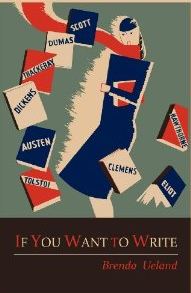
If You Want to WriteIf You Want to Write by Brenda Ueland, which he said “changed my life by empowering me to write even though I didn’t consider myself a writer.”

Kawasaki provided an unexpected “pearl of wisdom,” applicable to many life situations beyond building personal brand reach through “artisinal publishing,” from book enthusiast Marilyn Monroe who said,

Marilyn Monroe

Marilyn Monroe

“Sometimes good things fall apart so better things can fall together.”

-*What has been your experience in traditional or “artisinal” publishing?

Related post:
Business Influence as “Enchantment”

Happiness-Money Connection: Halo Effect of Happy Mood? Part 2

Daniel Kahneman

Daniel Kahneman

The Happiness-Money Connection: Halo Effect of Happy Mood? Part 1 outlined studies by Nobel Prize winner and psychologist Daniel Kahneman, with Angus Deaton and by British researchers Jan-Emmanuel De Neve and Andrew Oswald, documenting the long-term positive impact of subjective positive emotions on life outcomes including academic attainment, employment status, and income over time.Michael Norton’s research added the insight that money can buy happiness – if it’s used for other people.

Taken together, these findings point to the value of cultivating positive emotional states.

Martin Seligman

Martin Seligman

Distinguished psychologist Martin E. P. Seligman was one of the first researchers to empirically investigate correlates of happiness and well-being, and his recent book,

Flourish: A Visionary New Understanding of Happiness and Well-being recasts his

Flourish

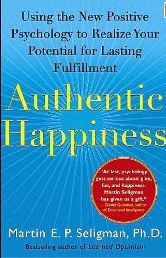
earlier emphasis on Authentic Happiness: Using the New Positive Psychology to Realize Your Potential for Lasting Fulfillment.
He opined that “well-being” is a more accurate concept, defined by the acronym PERMA:

  • Positive Emotion
  • Engagement
  • Relationships
  • Meaning
  • Accomplishment

Authentic Happiness

Though this is largely a conceptual model, he offers several exercises like considering one’s “signature strengths” and “three blessings” or things that have gone well during a day.

Sonja Lyubomirsky of UC Riverside synthesized happiness-enhancing recommendations from self-help books in The How of Happiness: A New Approach to Getting the Life You Want,  and provided familiar happiness-enhancing strategies:The How of Happiness

  • Cultivate optimism, consciously stop negative thoughts
  • Avoid “overthinking“, social comparison
  • Practice kindness
  • Invest time in social relationships, family
  • Develop coping strategies
  • Forgive self, others
  • Increase “flow” experiences, do enjoyable things
  • Savor life’s joyful experiences
  • Live in the present
  • Commit to goals
  • Organize space, work, life
  • Participate in religious or meditative practice
  • Keep self-reflection Journals

The Happiness Project

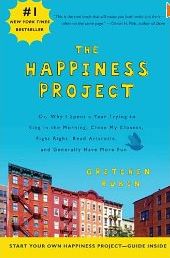
Gretchen Rubin combined some of these recommendations with erudite references to great philosophers’ and thinkers’ guidance, health recommendations, and time-tested common sense in The Happiness Project.

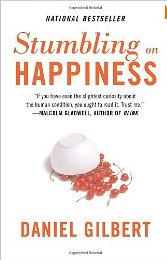
Daniel Gilbert of Harvard’s bestseller, Stumbling on Happiness , synthesized social science research about imagined expected future outcomes and control over them in relation to the experience of happiness.Stumbling on Happiness

He noted that human imagination and prediction are inaccurate, so he suggested using “surrogates” of future events to more accurately test future satisfaction with real-life choices like having children, moving to a new home, or working in a new job.

Other ways to cultivate the Emotional Intelligence capabilities of positive emotional experience are highlighted in related Posts:

-*How have you cultivated happiness?
-*How have happiness and money been related in your experience?

Twitter: @kathrynwelds
Google+
LinkedIn Open Group The Executive Coach
Facebook Notes
Blog: – Kathryn Welds | Curated Research and Commentary 

©Kathryn Welds

Happiness-Money Connection: Halo Effect of Happy Mood? Part 1

Daniel Kahneman

Daniel Kahneman

“(More) Money can’t buy (more) happiness” has been demonstrated in a research study published in the Proceedings of the National Academy of Sciences by Nobel Prize winner and psychologist Daniel Kahneman, with Angus Deaton.

They analyzed more than 450,000 responses to the Gallup-Healthways Well-Being Index, a daily survey of 1,000 US residents conducted by the Gallup Organization, and distinguished two elements of “subjective well-being” or happiness:

  • Emotional well-being – Frequency and intensity of joy, stress, sadness, anger, and affection,leading to pleasant or unpleasant quality of life, measured by Cantril’s Self-Anchoring Scale of yesterday’s emotional experiences
  • Life evaluation – Subjective assessment of one’s life.

They found that as emotional well-being rises with income up to about $75,000 in 2010 US dollars, then does not continue increasing with higher income levels.
In addition, daily emotions were predicted by health status, care giving, loneliness, and smoking.

Life evaluation increased as income and education increased, and the study confirmed that low income exacerbates the emotional pain associated with divorce, ill health, and being alone.

Michael Norton

Michael Norton

In fact, Michael Norton of Harvard Business School found that volunteers’ happiness increased with more money only when they spent money on others.

Replicated in Canada, Uganda, Rwanda, and other countries, his research found that happiness increases when people:

  • Select experiences over things
  • Spend money on others, regardless of the amount of money spent
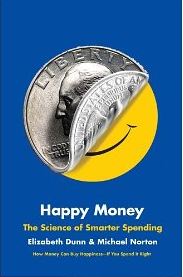
 He concluded that money can buy happiness when it’s spent on other people and experiences in Happy Money: The Science of Smarter Spending … a worthwhile reminder in this season of gift-giving.
Norton’s TED talk

British researchers investigated longitudinal connections between happiness and money, and found that people who express more positive emotions as teenagers have more positive life outcomes as adults, including higher education and income.

Jan-Emmanuel De Neve of University College London and Andrew Oswald of

Jan-Emmanuel De Neve

Jan-Emmanuel De Neve

University of Warwick  analyzed Carolina Population Center’s National Longitudinal Study of Adolescent Health (“Add Health”) profiles of more than 10,000 Americans at ages 16, 18 and 22 and  their annual incomes at age 29.

De Neve and Oswald controlled for education level, IQ, height and self-esteem, all known to contribute to financial success.

Reported in Proceedings of the National Academy of Sciences, they found that those who express more positive emotions in their teen years, reported greater life satisfaction and optimism as young adults, were more likely to earn a university degree, secure employment, advance to higher-level roles, and have higher incomes by age 29.

The survey assessed life satisfaction on a 5-point scale, and found that an increase of 1-point at age 22 made translated to a $2,000 difference in later income measured in in 2012 US dollars, and the later income difference between the happiest and unhappiest participants was $8,000 by the same measure.

Andrew Oswald

Andrew Oswald

DeNeve and Oswald validated the finding by comparing about 3,000 sibling pairs who shared the same parents and socioeconomic status.
They found that the happier siblings also had more positive emotions and life evaluation than less-happy participants.

One explanation of these findings is that observers generalize positive impressions of people who display more positive emotions in a “halo effect”, so these happier individuals are seen as more likeable, competent and attractive, and are offered more opportunities for education, employment, and social relationships.

These findings suggest the importance of increasing the “Emotional Intelligence” competencies of emotional self-regulation.
See The Happiness-Money Connection: Halo Effect of Happy Mood?Part 2 for research-based recommendations on developing happiness and well-being.

-*How do you view the connection between happiness and money?

Related posts:

Twitter: @kathrynwelds
Google+
LinkedIn Open Group Executive Coach
Facebook Notes
Blog: – Kathryn Welds | Curated Research and Commentary

©Kathryn Welds