Category Archives: Career Development

Career Development

Premium Pay to Attract Diverse Women Candidates?

Companies must pay more to attract and hire women from diverse backgrounds because there are few qualified female and nonwhite candidates – and because these candidates are highly sought by employers.

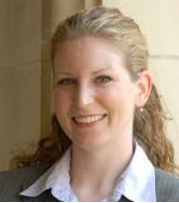
Deborah Ashton

Deborah Ashton

Myth or reality?, asks Deborah Ashton of Novant Health.

Myth: American women earned significantly less than men, so it is unlikely that diverse women enjoy a salary advantage over men.

In fact, women in the U.S. earned $0.82 for every $1.00 earned by American men in 2013, up from $0.79 the year before, according to the 2012 Bureau of Labor Statistics earnings survey.

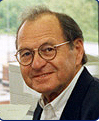
Daryl G. Smith

Daryl G. Smith

Nana Osei-Kofi

Nana Osei-Kofi

More education may not result in higher or even equitable salaries for African-American, white, and Hispanic women: The gender pay gap actually increases as when these women complete higher education levels.
In fact, workers with the least education actually experienced the least pay gap, but they are rewarded with “equal opportunity poverty.”

Sandra Richard Mayo

Sandra Richard Mayo

Men, regardless of race or ethnicity, earn more than women of any race when education level is held constant, except for Asian women with at least a Bachelor’s degree, who earned more than African-American men – the lowest-earning group of men.

Caroline Turner

Caroline Turner

These data and related studies reviewed by Claremont Graduate University’s Daryl G. Smith, Nana Osei-Kofi of Oregon State University, Azusa Pacific University’s Sandra Richards Mayo,  and Caroline S. Turner of Arizona State University, do not support claims that most diverse female candidates are paid more than men.

Patricia White

Patricia White

Likewise, Patricia E. White of the U.S. National Science Foundation, found no evidence for “bidding wars” to attract, hire and retain diverse women job candidates.

The gap in pay equity continues, and affects women across all ethnic and racial categories, with particularly adverse impact on Hispanic and African-American women. Deborah Ashton Table 1

-*How frequently have you encountered the myth of salary premiums to attract qualified diverse women and men job candidates?

Follow-share-like

http://www.kathrynwelds.com and @kathrynwelds

RELATED POSTS:

Twitter @kathrynwelds
Blog: Kathryn Welds | Curated Research and Commentary
Google+
LinkedIn Open Group Psychology in Human Resources (Organisational Psychology)
Facebook Notes

©Kathryn Welds

Gender Bias in STEM Hiring Even When it Reduces Financial Returns  

Women are under-represented in Science, Technology, Engineering, and Mathematics (STEM) academic programs and professional roles, and some question whether this is a a result of personal preference, implicit bias, institutional barriers, or other factors,

Ernesto Reuben

Ernesto Reuben

To investigate, Columbia University’s Ernesto Reuben, Paola Sapienza of Northwestern University, and University of Chicago’s Luigi Zingales developed an experimental job market.
Both male and female candidates demonstrated equal skill in performing an arithmetic task, yet both female and male “hiring managers” were twice as like to hire comparable male candidateseven when the hiring managers earned less by hiring less qualified males.
*Even when participants had a financial incentive to choose the candidate with the greatest task-relevant skills, they chose less-qualified male candidates.

Paola Sapienza

Paola Sapienza

Reuben and team also found that when candidates were asked to report their performance on the task-related achievement test, men exaggerated their performance with “honest overconfidence.”
In contrast, women generally underreported their accomplishments, found University of Wisconsin’s Sylvia Beyer.

Luigi Zingales

Luigi Zingales

This gender-based bias in hiring decisions was reduced, but not eliminated when candidates’ previous performance was provided by a third party.

Sylvia Beyer

Sylvia Beyer

Some candidates were directed to report expected future performance based on initial math task performance, then the “employer” made the hiring decision.
Other candidates provided no estimate, but Reuben’s team reported candidates’ past performance to the “hiring managers.”

In other studies, “employers” had no information on each “candidate’s” previous performance, but met each applicant in person before making a hiring decision.
After the hiring managers’ choice, candidates reported expected future performance, or Reuben’s team provided candidates’ past performance to the “hiring manager.”

Anthony Greenwald

Anthony Greenwald

Volunteers then completed the Implicit Association Test (IAT), developed by University of Washington’s Anthony Greenwald, Debbie McGhee, and Jordan Schwartz, to elicit unconscious stereotypes of gender, competencies, and occupations.

When the candidates reported their expected performance and the “hiring manager” chose a candidate with a lower score than other contenders, 90% of the selected but underperforming candidates were male.
As a result, “hiring managers” who selected less qualified male candidates sacrificed 5-7% of their own compensation for biased selections.

Pedro Rey-Biel

Pedro Rey-Biel

Reuben and colleagues, with Pedro Rey-Biel of Universitat Autònoma de Barcelona previously demonstrated that this preference for underperforming candidates was explained by the persuasive impact of men’s significantly exaggerated statements (usually by at least 30%) about past and future performance and by scores on the Implicit Association Test.

Hyperbole is apparently effective for male candidates in job interviews when the “hiring manager” scores high on the IAT.

However, this embellishment strategy is ineffective for women, as Reuben and team demonstrated:  In another study, women were still selected 33% less than expected even when they showcased their accomplishments.
Women’s overt self-promotion may provoke “backlash” against those who behave in counter-stereotypic ways.

This research suggests the prevalence of implicit biases against hiring women to perform science, technology, engineering, and mathematics (STEM) functions, and male candidates’ tendency to embellish past performance and boast about future potential accomplishments.

As a result, women are selected less frequently for roles in STEM careers, continuing their under representation in these fields.

Even if women do not exaggerate past accomplishments and future potential, this research implies that they should ensure that they communicate and reinforce the full range of skills.

“Real life” hiring managers can overcome implicit hiring biases through awareness and “proper information processing” by focusing on validated performance data, and comparing candidates of the same gender with each other..

-*What strategies have you seen mitigate the influence of implicit bias influence in hiring decisions?

Follow-share-like http://www.kathrynwelds.com and @kathrynwelds

RELATED POSTS:

Twitter @kathrynwelds
BlogKathryn Welds | Curated Research and Commentary
Google+  http:www.google.com/+KathrynWelds
LinkedIn Open Group Psychology in Human Resources (Organisational Psychology)
Facebook Notes

©Kathryn Welds

Work with Experts – But Don’t Compete – to Improve Performance

Francis Flynn

Francis Flynn

People can improve performance on tasks ranging across:

Emily Amanatullah

Emily Amanatullah

when performing individually but alongside an outstanding performer, according to Stanford’s Francis Flynn and University of Texas, Austin’s Emily Amanatullah.

They attributed performance enhancement to increased mental focus and physical effort, motivated by:

Robert Zajonc

Robert Zajonc

  • Social facilitation due to the expert role model’s mere presence, described more than 50 years ago by Robert Zajonc, then of University of Michigan
  • Social comparison” with “skillful coactors,” demonstrated by University of North Carolina’s John Seta.

    John Seta

    John Seta

However, performance declined when people competed directly with a strong performer, Flynn and Amanatullah reported.
They concluded that “high status coactors” enable people to “psych up” performance when not competing, but become “psyched out” when challenging the expert, based on their analysis of Masters golf tournament statistics over five years.

Ray Reagans

Ray Reagans

High status co-actors can achieve their influential position through demonstrated skill or their greater awareness of status dynamics due to better ability to “self-monitor,” found Flynn and Amanatullah with Ray E. Reagans of Carnegie Mellon and Daniel R. Ames of Columbia University.

Daniel R Ames

Daniel R Ames

People with greater self-monitoring ability tend to more effective in managing their “exchange relationships,” and generally establish a reputation as a generous “exchange partner.”

As a result, they are typically more likely than low self-monitors to be sought out for help and to refrain from asking others for help.

Co-action,” organizational status differences and interpersonal “exchange” all occur in organizations when employees work independently but in near proximity with others, and when people collaborate toward shared goals.

These finding suggest that working near expert colleagues can enable improve performance among co-workers, but competition for salary increases, promotions, access to special training, and other perks can undermine individual achievement by provoking anxiety.

Flynn and Amanatullah recommended that organizations and employees can showcase desired skillful performance by role models, while enabling employees to earn rewards and incentives through individual efforts rather than competition.
This recommendation may be impossible to implement in hierarchical organizations that identify “high potential” employees and differentiate performance through “stack ranking.”

-*How do you avoid the “psych out” effect of competing with highly skilled performers?

Follow-share-like http://www.kathrynwelds.com and @kathrynwelds

RELATED POSTS:

Twitter @kathrynwelds
BlogKathryn Welds | Curated Research and Commentary
Google+
LinkedIn Open Group Psychology in Human Resources (Organisational Psychology)
Facebook Notes

©Kathryn Welds

Mitigating Pervasive “Cheap Talk” at Work, in Dating

Paul Oyer

Paul Oyer

“Cheap talk,” a game theory concept, took on personal meaning for Stanford’s Paul Oyer during his foray into the online dating “marketplace” at OkCupid.

He was candid on some parts of his profile but edited details in other areas is explained by game theory’s “cheap talk,” which suggests that the value of editing and embellishing information is based on expected utility – potential dating partners’ selection criteria – in relation to the possible cost of selective reporting – “overcoming barriers to entry” but being disqualified for lack of full disclosure.

Data from OkCupid and match.com suggest that many participants engage in cheap talk, to enhance physical attractiveness and fitness as well as income.
As a result, “profile inflators’ curatorial enhancements” (non-cooperative cheap talk) led most to discount most all claims as “cheap talk,” leading to a significant disadvantage for truthfully uninflated profiles (cooperative cheap talk), noted Oyer.

Jonathan Zinman

Jonathan Zinman

Marketing and advertising campaigns have the reputation for employing cheap talk, documented by Dartmouth’s Jonathan Zinman and Eric Zitzewitz, who found that ski resorts exaggerate snowfall, especially during periods including holidays and weekends.

Eric Zitzewitz

Eric Zitzewitz

However, external verification through real time reporting via smartphones reduced the revenue-enhancing effect of meteorological exaggeration, according to Zinman and Zitzewitz.

Like resort marketers, CEOs may engage in a cycle of optimistic forward-looking statements, based on expectations that any statement would be discounted as “cheap talk,” noted Harvard’s Jeremy Stein.

Jeremy Stein

Jeremy Stein

Similarly, before he became a member of the Federal Reserve, Stein found that official statements by the Chair of the Federal Reserve were more credible and less likely to contain “cheap talk” when a target range for inflation was announced, instead of a precise value.

Stock analysts, too, are a source of influential “cheap talk,” particularly when a company goes public, because their employer’s other services securities underwriting become more valuable, observed National Taiwan University’s Hsiou-wei Lin and Maureen McNichols of Stanford.

Hsiou-Wei Lin

Hsiou-Wei Lin

They found that analysts employed by a bank that worked with the target company provided higher forecasts than independent analysts.
As a result, the stock market was “less responsive” to assumed “cheap talk” of in-house analysts.

Maureen McNichols

Maureen McNichols

To manage “cheap talk,” Stanford’s Nobel laureate A. Michael Spence modeled signaling information to a valued target audience in the job market.
In online dating, this could be sending a virtual rose, to indicate greater-than-average interest in meeting, resulting in increased acceptance rates for participants with “average desirability” of income level and physical characteristics.

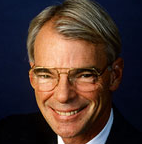
A Michael Spence

A Michael Spence

“Signaling” has become a familiar process in university application processes, when candidates indicate clear preference and intention to attend if accepted, at the “cost” of foregoing other early decision applications.

Like “signaling,” external verification of “cheap talk” claims review sites like Yelp.com, or even friend-of-a-friend accounts can increase the “cost” and reduce exaggerated claims.

-*When has “cheap talk” contributed to achieving goals?
-*How do you manage “cheap talk” by others?

Follow-share-like http://www.kathrynwelds.com and @kathrynwelds

RELATED POSTS:

·         Unrealistic Optimism Drives Profitability

·         Useful Fiction: Optimism Bias of Positive Illusions

Twitter @kathrynwelds
BlogKathryn Welds | Curated Research and Commentary
Google+
LinkedIn Open Group Psychology in Human Resources (Organisational Psychology)
Facebook Notes:

©Kathryn Welds

Racial Categorizations Change Based on Social Status Markers

Aliya Saperstein

Aliya Saperstein

Race is a changeable status marker of rather than a fixed individual attribute, according to Stanford’s Aliya Saperstein and Andrew Penner of University of California, Irvine.

Andrew Penner

Andrew Penner

Racial fluidity” – or changeable racial categorization – influences and is influenced by racial inequality in the United States, noted Saperstein and Penner.

They analyzed longitudinal U.S. national survey data collected over two decades and found that individuals’ racial classification, both rated by themselves and by others, changed over time in response to changes in social position.

In these data, unemployed, incarcerated, or impoverished Americans were more likely to be seen and self-identify as Black, even if the same individuals were originally classified in a different racial category.

Jonathan Freeman

Jonathan Freeman

Racial self-perception and racial perceptions by others depend on social position, even though most people believe that race is perceived in facial features, such as skin color.
However, social status cues around a face systematically change the perception of race, found Dartmouth’s Jonathan B. Freeman, Matthias Scheutz of Tufts, with Penner, Saperstein and her Stanford colleague, Nalini Ambady.

Matthias Scheutz

Matthias Scheutz

Participants categorized 16 computer-generated face identities (8 male) that were morphed along a 13-point race continuum, from White (morph −6) to Black (morph +6).
Developed by Max Planck Institute’s Volker Blanz and Thomas Vetter, this program generated 3D models based on laser scans of human faces.

Volunteers saw faces in a randomized order and evaluated them as White or Black using the keyboard, which recorded and analyzed mouse movement with MouseTracker software.

Participants rated the race of faces along “White–Black morph continua” when they saw faces with “high-status” attire (suit) or “low-status” attire (maintenance uniform).

“Low-status” attire increased the likelihood of categorization as Black, whereas “high-status” attire increased the likelihood of categorization as White, and this effect increased as physical characteristics associated with each race became more ambiguous.

The team  also monitored hand movements to determine hesitation in making a racial category decision.

They noted hesitation and shifting between choices when participants categorized faces with high-status attire as “Black” or faces with low-status attire as “White.”
Stereotypes interact with contextual and physical cues to shape “neutrally- plausible” person categorization, concluded Freeman and team.

When stereotypes associated with race and occupation categories overlap, contextual cues to occupation can activate social status stereotypes, then exert “top-down pressure” on the race categorization process.

For example, business attire can activate high-status stereotypes that influence visual processing of race-categorization.
Race categorization, therefore, could be driven by both “bottom-up” processing of facial features, and “top-down” stereotypes activated by contextual cues.

Racial fluidity reinforces stereotypic status differences by classifying “successful” or high-status people as “White” or “not Black” and “unsuccessful” or low-status people as “Black” or “not White.”

“Social cognition” can influence visual perception because “person perception…makes compromises between how other people “actually” appear and the stereotyped expectations dictating how they ‘should’ appear,” noted Freeman and team.

Aaron Gullickson

Aaron Gullickson

The U.S. briefly fluidity and ambiguity in racial classification when it adopted a “mulatto” category for the U.S. Census between 1870 and1920.

Saperstein and University of Oregon’s Aaron Gullickson noted that people categorized as “mulatto” in one census were re-categorized as Black in the next census, particularly when Southern men’s occupational status changed “downward” between censuses.

Like clothing, another non-racial factor – cause of death – influences racial classification, and can bias official U.S. statistics, according to Penner and UC Irvine colleague
Andrew Noymer with Saperstein in their analysis of a representative sample of U.S. death certificates.

Andrew Noymer

Andrew Noymer

They controlled for existing statistical reports by interviewing decedents’ next-of-kin regarding cause of death and racial classification.

Noymer’s team reported significant discrepancies between the two racial classifications by cause of death, with cirrhosis decedents more likely to be recorded as Native American and homicide victims more likely to be recorded as Black.

These findings are another example of interaction between changeable indicators of social status and seemingly fixed characteristics like physical appearance of race – both in forming perceptions of others and in defining oneself.

-*How have you adjusted your self-categorization based on occupational role and status over time?

Related Posts:

Follow-share-like http://www.kathrynwelds.com and @kathrynwelds

©Kathryn Welds


Does Music Training Improve Other Skills?

Considerable research indicates that training in music theory and performance is associated with better performance on quantitative, reasoning, visual, and motor tasks, but recent findings offer a counterpoint.

Leonid Perlovsky

Leonid Perlovsky

Among the evidence supporting the benefits of musical training, De Rochebelle School (C.S.D.D)’s Arnaud Cabanac collaborated with Leonid Perlovsky of Harvard University, Canadian Air Force Research Laboratory’s Marie-Claude Bonniot-Cabanac, and Michel Cabanac of Laval University to report that student musicians earned better grades than peers and performed better on a more stressful, complicated tasks.

Michel Cabanac

Michel Cabanac

German Institute for Economic Research (DIW Berlin)’s Adrian Hille and Jürgen Schupp, also of Free University of Berlin (FUB), concurred that long-term music training during childhood and youth affects cognitive skills development, school grades.

Adrian Hille

Adrian Hille

They examined data from the German Socio-Economic Panel (SOEP) and found that adolescents with music training have better cognitive skills and school grades and were 15 percent more likely to report planning to attend a university.

In addition, these young musicians were more conscientious, open and ambitious across socio-economic statuses.
These improvements in cognitive and non-cognitive skills were more than twice as great as the contribution of sports, theater or dance training and participation.

Sylvain Moreno

Sylvain Moreno

Preschool children, too, demonstrated enhanced performance on a measure of verbal intelligence after participating in an interactive computerized music training, according to Rotman Research Institute’s Sylvain Moreno with University of Toronto colleagues E. Glenn Schellenberg and Tom Chau, who collaborated with York University’s Ellen Bialystok, Raluca Barac, and Nicholas J. Cepeda.  

They reported that after just 20 days of this computer-based music training, these children showed improvement on verbal tasks, and related changes in functional brain plasticity during an executive-function task.

Frances Rauscher

Frances Rauscher

Musical training was associated with better performance on auditory discrimination and fine motor tasks among children who had three years or more musical instrument training, according to University of Wisconsin’s Frances H. Rauscher with Gordon L. Shaw, and Catherine N. Ky of University of California, Irvine.

Marie Forgeard

Marie Forgeard

Children who received at least three years of instrumental music training outperformed their control counterparts on auditory discrimination abilities and fine motor skills, vocabulary and nonverbal reasoning skills in studies by University of Pennsylvania’s Marie Forgeard, with Andrea Norton, and Gottfried Schlaug of Harvard Medical School’s and Boston College’s Ellen Winner.

These performance enhancements were associated with duration of musical training, but Forgeard’s team did not replicate earlier findings of enhanced  spatial skills, phonemic awareness, and mathematical abilities.

In a sample of music listeners instead of music learners, National Cheng Kung University’s Pei-Luen Tsai and colleagues found that stroke patients in Taiwan showed improved visual attention while listening to classical music, compared with white noise and silence.

Samuel Mehr

Samuel Mehr

Despite this affirmative evidence, Samuel Mehr of Harvard University, who plays saxophone, flute, bassoon, oboe, and clarinet, found no evidence of a cognitive benefit when young children receive music lessons.

With Harvard colleagues Adena Schachner, Rachel C. Katz, and Elizabeth S. Spelke, Mehr conducted two Randomized Control Trials (RCT) with four year old preschool children to evaluate the cognitive effects of music classes, compared with non-musical visual arts instruction or to a no instruction.

After six weeks, the team evaluated children’s skills in:

  • Spatial-navigational reasoning
  • Visual form analysis
  • Numerical discrimination
  • Receptive vocabulary.
Adena Schachner

Adena Schachner

Although their initial findings suggested improved performance for children who received musical training, the team was unable to replicate the finding.
The team found a small positive effect of music instruction on intelligence in only one study.

They reported that children who participated in music classes performed no better than those with visual arts or no classes on any assessment.

Elizabeth Spelke

Elizabeth Spelke

Mehr and team concluded that before asserting cognitive benefits of music training, it is essential to:

-*What benefits on performance in other areas have you observed among people who have musical training?

-*How do you evaluate conflicting evidence for and against musical training’s impact on cognitive performance?

 Follow-share-like http://www.kathrynwelds.com and @kathrynwelds

RELATED POSTS:

Reading Literary Fiction Increases “Theory of Mind” Empathic Insight

Franz Kafka

Franz Kafka

Franz Kafka opined that people should read literature as “an axe to break the frozen sea inside us.”

David Comer Kidd-Emanuele Castano

David Comer Kidd-Emanuele Castano

New School for Social Research’s Emanuele Castano and David Comer Kidd showed the effectiveness of Kafka’s recommendation:  Reading award-winning literary fiction increased emotional intelligence, social perception, and empathy, known as Theory of Mind (ToM) abilities.

Theory of Mind (ToM) skills enable people to recognize and infer mental states like emotions, attitudes, concerns, and beliefs, and to understand that other people may have different beliefs, wishes, and goals.

In contrast, people with autism spectrum disorders, schizophrenia, attention deficit hyperactivity disorder, neurotoxicity due to alcohol abuse, can experience ToM deficits.

Castano and Kidd asked volunteers ages 18 to 75 to read:

  • Commercial fiction or
  • Literary non-fiction or
  • Factual non-fiction or
  • Nothing

Next, they asked participants to describe their own emotional states, or people’s emotions from photographs of their eyes.

Those who read literary fiction more accurately judge others’ emotions, a measure of emotional intelligence, social perception, and empathy.
Results demonstrated that literary fiction, which requires making inferences about characters, their emotions, relationships, and motivations, triggered this increased social insight.

Simon Baron-Cohen

Simon Baron-Cohen

Examples of tests to assess these skills are summarized by Simon Baron-Cohen, an expert on autism, and cousin of comedian Sacha Baron Cohen, along with the New School Researchers.

P. Matthijs Bal

P. Matthijs Bal

Vrije Universiteit‘s P. Matthijs Bal and Martijn Veltkamp of FrieslandCampina differentiated “transporting” fiction that “emotionally transported the reader into the story” with fiction that did not.

Martijn Veltkamp

Martijn Veltkamp

Bal and Veltkamp found that reading “transporting” fiction increases the reader’s empathic capabilities, but not fiction that lacks “transporting” qualities.

-*Which works of literary fiction have influenced your attitudes and empathic attunement with others?

Follow-share-like http://www.kathrynwelds.com and @kathrynwelds

RELATED POSTS:

©Kathryn Welds

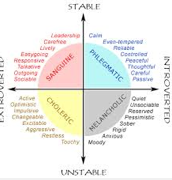
Introversion and Extraversion Starts with Your Genes and Shows in Your Brain

Susan Cain

Susan Cain

Introverts seem to be experiencing an increasingly “level playing field” in work and social environments after Susan Cain’s best-selling book celebrating “the power of introverts in a world that can’t stop talking.”

Hans Eysenck

Hans Eysenck

University of London’s Hans Eysenck provided one of the first physiological explanations of this duality after Carl Jung’s introduction to “psychological types.”

The subjective experience of introversion and extraversion is measured by the Big Five personality dimensions, developed by Robert McRae and Paul Costa, then of the National Institutes of Health, in addition to the widely-used yet psychometrically-criticized Myers-Briggs Type Indicator. 

Eysenck's Three-Factor Theory of Personality

Eysenck’s Three-Factor Theory of Personality

Observable behaviors associated with extraversion include positive emotions, assertiveness, sociability and talkativeness with energetic engagement in work and social contexts.

In contrast, external manifestations of introversion are lower social engagement and energy, and less need for external social stimulation than extraverts, with a quieter, more deliberate style.

Robert McCrae

Robert McCrae

These behaviors are at least partially based on individuals’ genetic profiles, leading to differing brain activity associated with introverted and extraverted thinking and behavior.

Paul Costa

Paul Costa

Eysenck posited that extraverts and introverts differ in their levels of cortical arousal:  Introverts, he suggested, have a higher baseline level of arousal than extraverts, so need less external stimulation.

In contrast, he hypothesized that extraverts seek external stimulation because they have a lower baseline level of cortical arousal.

Yasuyuki Taki

Yasuyuki Taki

Differences in brain structure and function among introverts and extraverts was analyzed by Yasuyuki Taki’s team at Tohoku University, including collaborators  Benjamin Thyreau, Shigeo Kinomura, Kazunori Sato, Ryoi Goto, Kai Wu, Ryuta Kawashima, and Hiroshi Fukuda. 

The evaluated whether personality traits measured on a revised Big Five inventory (Revised NEO Personality Inventory – NEO-PI-R) were related cortical gray matter volume, measured by brain magnetic resonance images (MRI) for more than 270 healthy volunteers over 6 years.

Colin DeYoung

Colin DeYoung

Likewise, University of Minnesota’s Colin DeYoung, Jacob Hirsh of University of Toronto, The Mind Research Institute’s Matthew Shane, and Yale’s Xenophon Papademetris, Nallakkandi  Rajeevan, and Jeremy Gray used a similar method to conclude that behavioral and subjective extraversion was positively correlated with orbitofrontal cortex metabolism and increased cerebral volume of the medial orbitofrontal cortex in 116 adults. 

Michael X. Cohen

Michael X. Cohen

Extraversion has been correlated with sensitivity to rewards and to the brain’s dopamine system, so University of Amsterdam’s Michael X. Cohen and team investigated the brain’s dopamine-based reward system.

He collaborated with Jennifer Young, Jong-Min Baek, Christopher Kessler, and Charan Ranganath of University of California, Davis to demonstrate the connection among trait extraversion, the A1 allele on the dopamine D2 receptor gene, and “extraverted” activity in the brain’s reward system during a gambling task.

Charan Ranganath

Charan Ranganath

Participants received rewards either immediately following a behavioral response or after a 7.5 second “anticipation” interval.
The research team monitored differing fMRI brain activity in the amygdala, which processes emotional stimuli and triggers excitement, and in the nucleus accumbens, which pushes people to seek rewards, novelty and risks.

Brain activation patterns were related to individual differences in extraversion and presence of the A1 allele on the dopamine D2 receptor gene.
Neural pathways differed for extraverts and introverts, validating anecdotal observations that these personality styles are distinctly different, even deep inside the brain and genes.

Many introverts adopt extraverted behaviors in work and social situations, and a remaining question is how fMRI patterns differ for introverts displaying uncharacteristic extraverted behaviors in contrast to people with trait extraversion.

-*How easily can you adopt your non-dominant personality style when you need to display introversion or extraversion behaviors?

-*What tactics enable you to adopt your less-preferred personality style?

Please follow-share-like www.kathrynwelds.com and @kathrynwelds

RELATED POSTS:

Twitter:  @kathrynwelds
Blog: – Kathryn Welds | Curated Research and Commentary
Google+ google.com/+KathrynWelds
LinkedIn Open Group Psychology in Human Resources (Organisational Psychology)
Facebook Notes:

©Kathryn Welds

How the Brain Perceives Time So You Can Manage Time Demands, not Time

Many daily actions like perceiving through the senses, speaking, and walking require accurate timing, often to milliseconds.

These underlying brain mechanisms are crucial to determining causality, decoding temporal patterns, and managing “time demands,” a commitment to complete a task in the future.

Francis Wade

Francis Wade

Francis Wade suggests conducting a systemic diagnostic assessment of current time demand management practices to identify effective approaches, and those that can benefit from fine-tuning.
This leads to a plan that requires external support from people and technology.

But these processes depend on the brain’s accurate time perception.
-*How does the brain perceive time?

David Eagleman

David Eagleman

Baylor College of Medicine’s David M. Eagleman summarized extensive research that answers this question, with collaboration from Peter U. Tse of Dartmouth, UCLA’s Dean Buonomano, Peter Janssen of Katholieke Universiteit Leuven, University of Oxford’s Anna Christina Nobre, and Alex O. Holcombe of Cardiff University.

Peter Tse

Peter Tse

One recent change to the prevailing view that the basal ganglia and cerebellar systems are the brain’s main timekeepers comes from University of New Mexico’s Deborah L. Harrington and Kathleen Y. Haaland.

Kathleen Haaland

Kathleen Haaland

They built on this finding in work with Robert T. Knight of University of California, Davis, investigating the cerebral cortex’s role in perceptual timekeeping by studying task performance of volunteers with focal left (LHD) or right hemisphere (RHD) lesions compared with uninjured participants.

Robert T. Knight

Robert T. Knight

The groups performed a time duration perception task and a frequency perception task, which controlled for non-time processes in both tasks.
Only people with right hemisphere cerebral cortex lesions showed time perception deficits, suggesting that this area also contributes to perceptual timekeeping

People with this damage who accurately perceived time were also able to switch nonspatial attention, implying that time perception and attention switching are linked.
This group had no damage in the premotor and prefrontal cortex, in contrast to those who performed poorly on the time perception.
These results indicate that premotor and prefrontal cortex areas also contribute to accurate time perception.

Richard Ivry

Richard Ivry

Neural systems underlying timing processes may point to remedies for brain injuries that involve motor timing irregularities such as Parkinson’s disease, according to UC Berkeley’s Richard Ivry and Rebecca Spencer of UMass.  

Rebecca Spencer

Rebecca Spencer

Medical University of South Carolina’s Catalin V. Buhusi and
 Warren H. Meck of Duke University suggest that subjective time perception or psychological time is represented by multiple “internal clocks” that judge duration relative to the relevant time context.

Catalin V. Buhusi

Catalin V. Buhusi

Richard Ivry reported that the cerebellum can be considered as operating multiple “internal clocks,” suggesting a physiological basis for Buhusi and Meck’s multi-clock construct.

-*How do you manage time demands for future performance?

Please follow-share-like www.kathrynwelds.com and @kathrynwelds

RELATED POSTS:

Twitter:  @kathrynwelds
Blog: – Kathryn Welds | Curated Research and Commentary
Google+ google.com/+KathrynWelds
LinkedIn Open Group Psychology in Human Resources (Organisational Psychology)
Facebook Notes:

©Kathryn Welds

Gender Differences in Emotional Expression: Smiling

Previous blog posts have outlined dilemmas women face in being seen as competent yet  “likeable” in negotiations.

Deborah Gruenfeld

Deborah Gruenfeld

Deborah Gruenfeld of Stanford and researcher Carol Kinsey Goman note that women can increase perceived authority. if they smile when situationally-appropriate instead of consistently.

Simine Vazire

Simine Vazire

They imply that observers assign different interpretations to women’s smiles than to men’s smiles.
Washington University in St. Louis’s
Simine Vazire teamed with Laura Naumann of University of California, Berkeley, University of Cambridge’s Peter Rentfrow, and Samuel Gosling of University of Texas to investigate gender differences in the meaning of smiling behavior.   

Jacob Miguel Vigil

Jacob Miguel Vigil

They drew on University of New Mexico professor Jacob Miguel Vigil‘s theory that emotional behaviors promote attraction and aversion, based on others’ perceived:

  • Power to provide resources or harm (dominant, masculine behaviors)
  • Trustworthiness to reciprocate altruism (submissive, feminine)
Laura Naumann

Laura Naumann

Vazire’s team reported that women’s smiles signal positive affect and warmth, which are seen as “trustworthiness cues” in Vigil’s model, and typically attract fewer, but closer relationships.
Gruenfeld and Goman argue that women’s smiling also signals low power in negotiation situations and interpersonal interactions.

Peter Rentfrow

Peter Rentfrow

In contrast, smiling among men indicates confidence and lack of self-doubt, seen as “capacity cues” to the ability to either help or hurt others.
These expressions usually attract numerous, but less-intimate relationships while
conveying a key element of power, self-assurance.

Samuel Gosling

Samuel Gosling

Team Vazire’s research validated Gruenfeld’s and Goman’s hypothesis that observers interpreted women’s smiles differently than men’s, even if the underlying, subjective emotional experience is similar.

Their work supports  Gruenfeld’s and Goman’s recommendation that women balance smiling, a signal of interpersonal warmth, with powerful non-verbal behaviors to achieve best outcomes in negotiations and workplace performance.

-*How has smiling helped establish your warmth?
-*When has smiling undermined your credibility and power?

->Follow-share-like http://www.kathrynwelds.com and @kathrynwelds

RELATED POSTS:

©Kathryn Welds