Author Archives: kathrynwelds

Unknown's avatar

About kathrynwelds

Organizational Psychologist | Change Consultant | Leadership and Career Coach | Thought Partner | Accountability Ally | Creating value by connecting people, information, and ideas, to accomplish strategic results Professional experience spans roles as an organizational psychologist, coach, consultant, leader in technology, healthcare, professional services, public sector.

Business Influence as “Enchantment”

Guy Kawasaki

Guy Kawasaki

Guy Kawasaki, former Chief Evangelist at Apple, co-founder of Alltop.com, and author of Enchantment: The Art of Changing Hearts, Minds, and Actions, shared with Stanford University entrepreneurship students his conviction that business influence or “enchantment” is the foundation of successful entrepreneurship.

He maintains that business influence, or “charisma”, or persuasiveness, is based on the following characteristics and behaviors.

Likeability
• Smile, engaging the corner of eyes (“crow’s feet”!) of Duchene smile
• Handshake, drawing on University of Manchester research, for the optimal handshake to engage social connection
• Dress equal to audience, not more formally or more casually

Trustworthiness
• Must trust others in order to have others trust you
• “Believe that the world is a non-zero sum game”
• “Default to Yes: How can I help this person?”
• Create something (product, services) DICEE for the listener
o D-eep
o I-ntelligent
o C-ompleteness
o E-mpowering
o E-legant

In promoting products and services, he advises:

• Branding must be “short, sweet, swallowable”: “Mantra, not Mission Statement.”
[Kawasaki’s mantra is “Empower People”]

• Conduct pre-mortem to course-correct: Pretend that the company failed; use diagnosis to course-correct

• Launch product or service by telling a compelling story

• “Plant many seeds: The world has been inverted: LonelyBoy15 needs to embrace your product and he encourages his contacts to embrace your product.”

• “Put your prototype out there because you never know who your LonelyBoy15 will be.”

• Make salient points, things that matter to listeners

• Overcome resistance via:
o Social proof (“others are doing it, so it must be ok”)
o “Find a bright spot – don’t fix something for the nay-sayers; use what is working”
o Enchant all the influencers. “The higher you go, the thinner the air, and the more difficult to support intelligent life. If you deal with CXOs, you will deal with the dumbest people. Look for the influencer, in the middle or bottom.”

• Make something endure
o Don’t default to using money; cultivate genuine “belief” and “commitment”
o Invoke reciprocity –“pay it forward”.
When the person expresses gratitude, say, “I know you would do the same for me.”
Enable the reciprocity to “alleviate the guilt” the other person experiences
o Build an ecosystem beyond your product including all interested stakeholders, users

• Learn to speak
o Customize the introduction: verbally, photos
o Sell your idea
o 10-20-30 rule: 10 slides, 20 minutes, 30 point font

• Provide value via social media
o Information
o Insight, meaning

o Assistance
o Remove the speed bumps, and obstacles to adoption
o Engage within 24 hours – “fast, many, often: it is core to your existence”

• Enchant up
o “Drop everything and whatever the boss asks: Just do it”
o Prototype fast – exceed expectations, deliver early
o Deliver bad news early, with ways to correct

• Enchant down
o Master
o Autonomy: Empower action, convey trust of others’ judgment
o Purpose
o Never ask others to do what you wouldn’t: “Suck it up”

-*How do you use “enchantment” to influence others?

LinkedIn Open Group – The Executive Coach
Twitter: http://www.twitter.com/kathrynwelds
Google+
Facebook Notes:
Blog: – Kathryn Welds | Curated Research and Commentary

©Kathryn Welds

Five Questions to “Work Any Room”

Allison Graham

Allison Graham

Allison Graham asserts in her book, From Business Cards to Business Relationships: Personal Branding and Profitable Networking Made Easy,  that the goal of conversation at business and social events is to determine whether there is enough common ground to connect again.

She offers five questions to start conversations with people you’ve never met before:

• “What’s your connection to the event?
This question can uncover mutual contacts

• “What’s keeping you busy when you’re not at events like this or at work?

• “Are you getting away this summer?
This question can lead to conversations about family, reveal special interests and travel

• “Are you working on any charity initiatives?
This question makes it easy to launch into a deeper connection, revealing values and priorities

• “How did you come to be in your line of work?
For many, the path to where they are today can be an inspiring or challenging journey, full of surprise, suspense, and drama

Graham concludes that:

• Each person decides during the initial contact whether there is enough connection to warrant future interaction

• During these small conversations, people form their opinions about whether they like you, trust you, and believe you’re competent

• Match the depth of dialogue to the environment

• Your words may be forgotten, but how you make people feel will be remembered

• Relaxation, full engagement, genuine interest, enable the conversation to “flow”

-*How do you prepare for professional “networking” with people you’ve never met before?

LinkedIn Open Group – The Executive Coach
Twitter: @kathrynwelds
Google+
Facebook Notes:
Blog: – Kathryn Welds | Curated Research and Commentary

©Kathryn Welds

Reduce Stress by Resetting Expectations about Life’s Five “Givens”

David Richo

David Richo

David Richo integrates Eastern and Western philosophies in his book, The Five Things We Cannot Change: And the Happiness We Find by Embracing Them,  to conclude that human life operates in the context of five unavoidable “givens”:

• Everything changes and ends
• Things do not always go as planned
• Life is not always fair
• Pain is a part of life
• People are not always loving and loyal

He asserts that people can experience misery, frustration, anxiety and a host of other uncomfortable emotions if they expect life to contradict these five “givens.”

An approach to reducing stress generated by fighting these “givens” is to reset expectations and to practice a “radical acceptance” of these realities.

Abundant social science research demonstrates that dissatisfaction is generated by the gap between expectations and experience.

Individuals have more control over their expectations than their actual experiences, so a stress-reduction tactic is to modify expectations related to life’s five “givens.”

-*How do you deal with life’s “givens” that may not be as you would like?

LinkedIn Open Group – Brazen Careerist:
Twitter @kathrynwelds
Google+
Facebook Notes:
Blog: – Kathryn Welds | Curated Research and Commentary

©Kathryn Welds

Questions to Answer in Personal Brand, “Elevator Pitch”, Resume

Colleen Aylward

Colleen Aylward

Colleen Aylward asserts that the following questions must be answered in your resume, “elevator pitch”, information interview, and online presence in her book, From Bedlam to Boardroom: How to get a derailed executive career back on track!

  • What is your [narrow, deep] expertise?
  • What are your strengths?

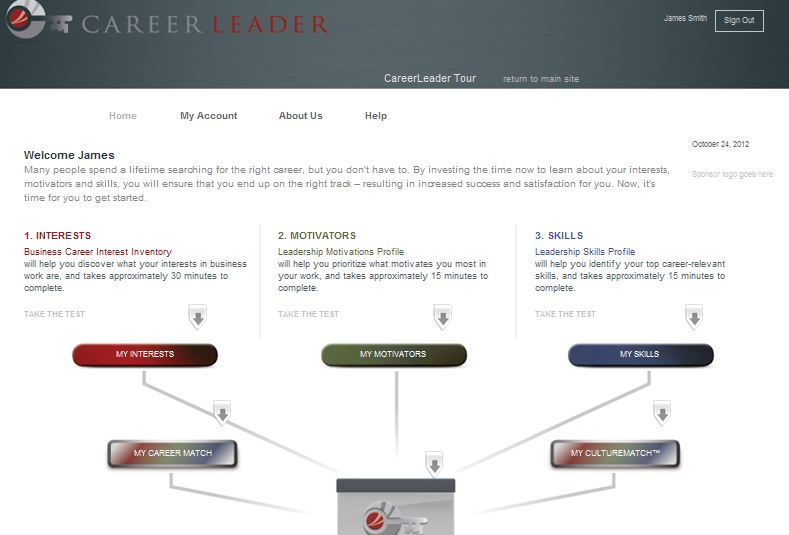
Career Leader by Harvard Business School professor Timothy Butler

  • What is your unique business differentiator?
  • What problems have you solved? How?
    [Note accomplishments and quantified impact, not responsibilities;
    Specify numbers, even if <10 – contrary to style rules]
  • How have you increased revenues, profit?
  • How have you improved processes?
  • How have you demonstrated creativity, innovation?
  • How have you reduced costs?

The last four items, indicated by *, are considered critical Key Performance Indicators that you must convey clearly, repeatedly, and memorably in all in-person and online activities.

-*What assessments and tools have you used to uncover your strengths, expertise and key differentiator?

LinkedIn Open Group – The Executive Coach
Twitter: @kathrynwelds
Google+
Facebook Notes:
Blog: – Kathryn Welds | Curated Research and Commentary

©Kathryn Welds
Super-Star Skills May Not be Transferrable to New Job Opportunities

Boris Groysberg

Boris Groysberg

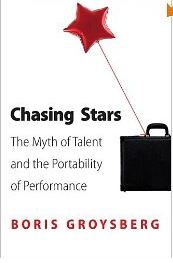
Harvard Business School professor Boris Groysberg outlines findings from a study of 1053 top Wall Street Analysts at 78 investment banks between 1988 and 1996 in his book, Chasing Stars: The Myth of Talent and Portability of Performance

His team examined 546 job changes and compared the top performers’ performance with that of 20,000 “non-star” analysts at 400 investment banks.
They interviewed 200 of these analysts and talked with their institutional investor clients.

Groysberg’s team found that the star performers’ “job performance plunged sharply and continued to suffer for at least five years after moving to a new firm”, because they “…lost access to colleagues, teammates and internal networks than can take years to develop…new and unfamiliar ways of doing things took the place of routines and procedures and systems that …had become second nature.”

He suggested that firms can prevent this performance decrement by hiring the entire team (“liftout”) and by “hiring more women, who…suffer less on leaving one firm to join another (because) they had formed stronger ties outside the firm than many male analysts and so were less dependent on their former work colleagues…and they made wiser choices when it came to agreeing to move.”

Team Groysberg identifies mistakes star employees make when leaving a firm:

  • Doing inadequate research into the new company
  • Leaving because they are escaping something unpleasant rather than choosing something better
  • Over-estimating their own abilities
  • Failing to take a long-term view

Groysberg’s book considers how some Wall Street research departments are successfully growing, retaining, and deploying their own “stars,” and how these practices might be applied in other organizations.

-*When have you seen super-star skills transfer to a new work environment?
-*When have these skills not transferred as successfully to a different organization?

LinkedIn Open Group: Brazen Careerist
Twitter: @kathrynwelds
Google+
Facebook Notes:
Blog: – Kathryn Welds | Curated Research and Commentary

©Kathryn Welds

Work-Life Balance – “Getting to 50/50”

Sharon Meers

Sharon Meers

Sharon Meers and Joanna Strober are professionals with demanding careers in addition to their responsibilities as wives and parents.

Their book, Getting to 50/50: How Working Couples Can Have It All by Sharing It All, presents an action plan for couples to negotiate work-life balance (“have it all”), through equal participation so both partners “win.”

Joanna Strober

Joanna Strober

Many will question the feasibility and desirability of “having it all,” but the book’s practical suggestions on managing the sometimes conflicting demands of job, child-care, home-life, couple-relationship, and extended family responsibilities have been well-received by both men and women.

Meers and Strober conducted interviews with parents and employers, surveys with working mothers, and a comprehensive review of current social science research to conclude that children and parents benefit from equal partnership: Mothers work with less guilt, fathers bond more with their kids, and children have attention from two involved parents.

In addition to the tactical suggestions, Meers and Strober acknowledge that the foundation of this social change is based on acting on a new model of equal participation, and advocating for this model in the workplace and in social contexts.

-*What actions have helped you move toward “50/50”?

LinkedIn Open Group – Brazen Careerist
Twitter: @kathrynwelds
Google+
Facebook Notes:
Blog: – Kathryn Welds | Curated Research and Commentary

©Kathryn Welds

Tired of Motivational Cheerleading? Larry Smith on Why You’ll Fail to Have a Great Career

Larry Smith

Larry Smith

Economist Larry Smith, confesses that he “does dismal” as a motivational curmudgeon in his entertaining TED Talk

He reveals reasons that his audience, and perhaps you, will fail to have a great career:

1. Good jobs are disappearing; what remains are high work load and soul destroying jobs OR great jobs and great careers

2. You will not follow your passion

3. You will hope for luck

4. You think that only geniuses can “succeed” and have a great career

5. You think you’re not weird enough to follow your passion

6. You will not identify your passion; you will fall back on interests

7. You fail to find the highest expression of your talent

8. You will fail to execute on your passion because you value human relationships over great accomplishment

9. You say your parents won’t encourage you to follow your passion, and you won’t encourage your children to pursue their passions

10. You are afraid to fail

11. You are afraid to look ridiculous

“Unless….”

-*What actions do you take to prove Larry Smith wrong?

LinkedIn Open Group, Brazen Careerist:
Twitter: @kathrynwelds
Google+
Facebook Notes:
Blog: – Kathryn Welds | Curated Research and Commentary

©Kathryn Welds

White Men can Lead in Improving Workplace Culture

Catalyst’s recent research study of employees at Rockwell Automation, Calling All White Men: Can Training Help Create Inclusive Workplaces?, found that white men who participate in leadership development training, modify their workplace attitudes and behavior to enable career advancement for women and minorities.
The study found that Rockwell employees who participated in leadership training labs presented by White Men as Full Diversity Partners:

• Reported increased in workplace civility and decreased gossip, attributable in part to improved communication and respect

• Managers were more likely to acknowledge that inequities exist in career advancement opportunities and practices for women and racial/ethnic minorities

• Managers increased five inclusion behaviors, including seeking out varied perspectives to becoming more direct in addressing emotionally charged matters

• Managers with few prior cross-racial relationships reported most change in thinking about issues and opportunities for different demographic groups

• Managers who reported least concern about appearing prejudiced reported most change in taking personal responsibility for being inclusive following the leadership training lab.

As in any civil rights transition, change adoption is increased when representative of the often privileges “majority” articulate the issue and present a call-to-action for change.

-*How have you seen men improve the culture in your workplace?

LinkedIn Open Group – Diversity
Twitter @kathrynwelds
Google+
Facebook Notes:
Blog: – Kathryn Welds | Curated Research and Commentary

©Kathryn Welds
“The Motherhood Penalty” in the Workplace

Myra Strober

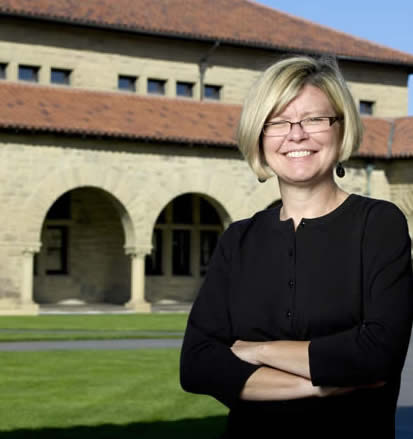
Myra Strober, Labor Economist at Stanford University and Founder of Clayman Center for Gender Research, argues that women who are mothers are at an economic disadvantage in the workplace.
TED Talk

She found that they are less likely to be hired, are offered lower salaries, and are perceived as being less committed to a job than fathers or women without children, according to a recent study by Stanford sociologist Shelley Correll.

Shelley Correll

Strober and Correll discuss costs of child care (day care as well as nannies), as well as the cost of lost wages for the time that women leave the workplace to serve as primary caregivers to children.

-*What career impacts have you observed among employees with parenting responsibilities?

©Kathryn Welds

Women’s Post-Business School Work-Life Issues

Claudia Goldin

Harvard Business School’s Claudia Goldin and Lawrence Katz showed the high price women pay if they choose careers in finance

Goldin and Katz’s survey of 6,500 Harvard and Radcliffe graduates from 1969 and 1992, found that women who had earned an M.B.A. were less likely to be employed and have children (30%) at their fifteenth class reunion than were female who earned M.D. degrees (45%).

Lawrence Katz

They concluded that female M.B.A.s with children select professions with shorter hours, compared to their male peers with children and childless peers of both genders.

The financial impact of this choice is significant: Goldin and Katz found that even after correcting for the amount of time out of work, female M.B.A.s who took a year and a half off made 41 percent less than their counterparts who had worked continuously.
The pay gap was somewhat less for J.D.s (29 percent) and M.D.s (16 percent).

Marianne Bertrand

Goldin and Katz collaborated with University of Chicago economist Marianne Bertrand on another survey of 2,500 male and female University of Chicago M.B.A.s graduating between 1990 and 2006, considered women M.B.A.s involvement in finance roles.

They found that only 8 percent of respondents working in venture capital were women, half the rate of women in investment banking.
In contrast, 59 percent worked in advertising and 71 percent held roles in human resources.

Again, this choice has a significant financial impact for women: Nine years after graduating, the Chicago M.B.A.s working in investment banking (both male and female) were making, on average, $700,000 a year (median was $470,000), compared to an average income for all respondents of $370,000 (median was $190,000).

Occupations with the highest numbers of men also had the highest average number of hours worked, with investment banking averaging 74 hours a week, and consulting averaging 61 hours per week.

In contrast, occupations with the highest numbers of women had the shortest hours: Human resources averaged 51 hours per week and advertising averaged 52 hours a week.
These occupations tend to have lower average pay in addition to requiring fewer average hours of work.

This trend was replicated in medical specialties, in which those with shorter and more predictable hours tend to have more females.
Women now make up 41 percent of new M.D.s in the U.S., but fewer than 30 percent of physicians under the age of 35 practice emergency medicine or general surgery, but 70 percent of gynecologists and nearly 60 percent of dermatologists in the same age cohort are women.

These studies demonstrate the relationship between income, hours worked, and gender-based occupational role choice.

LinkedIn Open Group – Diversity:
Twitter: @kathrynwelds
Google+
Blog: – Kathryn Welds | Curated Research and Commentary
Facebook Notes:

©Kathryn Welds