Tag Archives: Performance

Intrinsic Motives Linked to Achieving Goals

Amy Wrzesniewski

Amy Wrzesniewski

Effort toward a goal may be sustained when the person is intrinsically motivated by personal commitment to a larger purpose than the goal itself.
Goal-seeking activity can also be decreased by tangible external rewards

Xiangyu Cong

Xiangyu Cong

This interaction between internal and external motives was investigated among more than 10,000 people admitted to the United States Military Academy (“West Point”) by Yale’s Amy Wrzesniewski, Xiangyu Cong, Michael Kane, Audrey Omar, and Thomas Kolditz, with Barry Schwartz of Swarthmore.

Michael John Kane

Michael John Kane

Wrzesniewski’s team considered the long-term impact of holding both intrinsic motives (desire to serve and protect citizens) and extrinsic motives (have a respected career) on West Point cadets’:

-Promotion to commissioned officer rank,

-Extending officer service beyond the minimum required period of 5 years,

-Selection for early career promotions.

Audrey Omar

Audrey Omar

Cadets who were intrinsically motivated were more likely to accomplish these goals.
However, those who also reported extrinsic motivation were less likely to achieve these career distinctions.

Richard Koestner

Richard Koestner

A meta-analytic review of nearly 130 experiments by University of Rochester’s Edward Deci and Richard Ryan with Richard Koestner of McGill confirmed the undermining effects of extrinsic rewards from childhood through adulthood.

Mark Lepper

Mark Lepper

People may report less intrinsic motivation when extrinsic rewards are available, a trend called the “over-justification hypothesis”  by Stanford’s Mark Lepper, David Greene, and Richard Nisbett of University of Michigan.

Clark McCauley

Clark McCauley

People typically view their work as being intrinsically or extrinsically motivated depending on whether they see work as a:

Job, mostly extrinsically motivated, 

-Career, some intrinsic and extrinsic motivation, 

-Calling, intrinsically motivated by fulfillment from the work itself.

Volunteers reported greater satisfaction and better performance when they saw their work as a “calling,” according to Wrzesniewski’s work with Schwartz, collaborating with Bryn Mawr’s Clark McCauley and Paul Rozin of Penn.

Paul Rozin

Paul Rozin

These results suggest the value of finding meaning in work rather than focusing on positive consequences of goal achievement.

Thomas Kolditz

Thomas Kolditz

The U.S. Military has employed extrinsic motive appeals in marketing messages to recruit cadets, suggesting that military services provides “money for college,” “career training,” and enables members to “see the world.”

However, extrinsic motives tend to be associated with less career recognition and tenure than those who find meaning in the organization’s mission.

-*How do you increase intrinsic motivation when extrinsic motivation may seem more appealing?

-*What elements make your work “a calling”?

Related Posts:

©Kathryn Welds

Laptop Note-Taking leads to “Shallower Cognitive Processing” than Manual Notes

Pam Mueller

Pam Mueller

Taking notes by hand was associated with better factual and conceptual understanding and recall than capturing content on a laptop computer, reported Princeton’s Pam Mueller and Daniel Oppenheimer of UCLA.

Mueller and Oppenheimer differentiated two types of note-taking:

  • G Michael Pressley

    G Michael Pressley

    Nongenerative Note-taking, identified by verbatim copying from dictated content.
    This strategy is associated with “shallow cognitive processing, explained Penn State University’s Peggy Van Meter, Linda Yokoi of University of Maryland, and G Michael Pressley, then of Michigan State University.

Virpi Slotte

Virpi Slotte

More “superficial” information processing is linked to less accurate text comprehension, found University of Helsinki’s Virpi Slotte and Kirsti Lonka.
Shallow processing also is associated with less integrative and conceptual understanding, reported Clemson University’s Brent Igo, Roger Bruning of University of Nebraska, and Victoria University’s Matthew McCrudden.

Kirsti Lonka

Kirsti Lonka

Participants viewed 15-minute TED Talks or recorded lectures.
Meanwhile, volunteers recorded notes on a laptop computer or in handwriting.
Volunteers then completed two 5-minute distracter tasks and a reading span task to assess working memory.

Roger Bruning

Roger Bruning

Thirty minutes after the lecture, participants answered questions about the content:

  • Factual-recall, such as “Approximately how many years ago did the Indus civilization exist?”
  • Conceptual-application, like “How do Japan and Sweden differ in their approaches to equality within their societies?”

Mueller-Oppenheim Question TypesVolunteers who took notes on a laptop were more likely to record verbatim notes and showed poorer performance on factual-recall questions and conceptual-application questions.

Even when participants were told to “take notes in your own words and don’t just write down word-for-word what the speaker is saying,” laptop users recorded more verbatim notes than manual note-takers, and their comprehension performance did not improve.

Matthew McCrudden

Matthew McCrudden


Daniel Oppenheimer

Daniel Oppenheimer

Findings in a similar study confirmed that people who paraphrase content demonstrate greater content comprehension, enabled by  slower processing with manual note-taking.

Taking notes on a laptop computer enables users to transcribe information at higher speeds, and drawbacks include:

  • Shallower information processing,
  • Decreased conceptual understanding,
  • Reduced factual recall,
  • Distraction in multi-tasking on email or social media.

-*How do you maintain increase comprehension and retention when taking notes using a laptop computer?

RELATED POSTS:

©Kathryn Welds

Ethnic Diversity Reduces “Groupthink,” Economic “Bubbles”

Most people are unlikely to trust recommendations and evaluations from people of different ethnic groups.

Sheen Levine

Sheen Levine

However, this bias may reduce the “herd mentality” that characterized price “bubbles” in U.S. housing and global financial markets, reported Columbia’s Sheen S. Levine, Evan P. Apfelbaum of MIT, Goethe University’s Mark Bernard, Texas A&M’s Valerie L. Bartelt, Edward J. Zajac of Northwestern, and University of Warwick’s David Stark.
They concluded that, “Diversity facilitates friction that enhances deliberation and upends conformity.”

Economic “bubbles” occur when the majority of traders set inaccurate prices, probably influenced by a type of  “groupthink.
This cognitive error results in a mismatch between market prices and true asset values.

Irving Janis

Irving Janis

Groupthink can occur when three conditions interact, according to Yale’s Irving Janis:

  • Group Cohesiveness
    • Deindividuation” occurs when group belonging becomes more important than individual dissenting views,
  • Group Structure
    • Homogeneity of group’s social backgrounds and ideology,
    • Group insulation from feedback,
    • Lack of impartial leadership,
    • Lack of norms to conduct systematic analysis and clearly structured decision procedures,
  • Context
    • Stressful external threats,
    • Recent failures,
    • Decision-making difficulties,
    • Moral dilemmas.

      Scott E. Page

A wider range of viewpoints leads to less groupthink and more balanced decisions in a mathematical model developed by University of Michigan’s Scott E. Page and Lu Hong of Loyola University.

Diverse groups ran into fewer “dead ends” when they developed solutions than did groups comprised of individuals who tended to think similarly.

David A. Thomas

David A. Thomas

Likewise, Georgetown’s David A Thomas and Robin J. Ely of Harvard confirmed that identity-diverse groups can outperform homogeneous groups
summarized in a formula:

Collective Accuracy = Average Accuracy + Diversity.

To test the impact of group diversity on market “bubbles,” Levine’s group constructed experimental markets in Singapore and Texas, USA, in which participants traded stocks to earn money.

Evan Apfelbaum

Evan Apfelbaum

More than 175 volunteers with backgrounds in business or finance were randomly-assigned to groups of six ethnically-homogeneous or ethnically- diverse participants.

Traders knew the ethnic composition of their groups, but they couldn’t communicate with each other.
In addition, their “trades” of dividend-paying stock were anonymous.

Homogeneous groups set inflated selling prices, yet traders in those groups bought the stock, resulting in increasing stock prices.

Mark Bernard

Mark Bernard

In contrast, traders in diverse groups refused inflated selling prices, so the stock price fell to approximately the price in an “ideal” market with “rational” traders.

When traders and other decision-makers come from similar ethnic, social, and attitudinal backgrounds, they tend to place undue confidence in others’ opinions, and tend not to subject them to rigorous analysis.

Valerie Bartelt

Valerie Bartelt

As a result, people in homogeneous may be more likely to accept prices and deals that deviate from actual underlying values.
Levine’s group concluded that “homogeneity…imbues people with false confidence in the judgment of coethnics, discouraging them from scrutinizing behavior.”

  • How do you mitigate “groupthink” in organizational decision-making?

RELATED POSTS:

©Kathryn Welds

Comparative Rankings May Reduce Gender Bias in Career Advancement

Iris Bohnet

Iris Bohnet

An “evaluation nudge” is a decision framing aid that may reduce biased judgments in hiring, promotion, and job assignments, according to Harvard’s Iris Bohnet, Alexandra van Geen, and Max H. Bazerman.

Alexandra van Geen

Alexandra van Geen

They recommended that organizations evaluate multiple employees simultaneously rather than each person independently.
This approach differs from “Stack Ranking” (“Rank and Yank”), advocated by GE’s Jack Welch and critiqued by many.

Multiple simultaneous evaluations are frequently used for hiring decisions, but less frequently when considering employee candidates for developmental job assignments and promotions.

Max Bazerman

Max Bazerman

Bazerman and Sally B. White, then of Northwestern with George F. Loewenstein of Carnegie Mellon demonstrated preference reversals between joint and separate evaluation.

George F. Loewenstein

George F. Loewenstein

Lack of comparison information in separate evaluation typically leads people to rely on internal referents as decision norms. These internal criteria may be biased preferences, according to Princeton’s Nobel laureate Daniel Kahneman and Dale T. Miller of Stanford.

Dale T. Miller

Dale T. Miller

Lack of comparative referents also can lead evaluators to rely on easily calibrated attributes, found University of Chicago’s Christopher K. Hsee.
Both of these mental shortcuts can systematically exclude members of under-represented groups.

Christopher K. Hsee

Christopher K. Hsee

Another problem is the “want/should” battle of emotions and preferences, outlined by Bazerman and Ann E. Tenbrunsel of Notre Dame, with Duke’s Kimberly A. Wade-Benzoni in their provocatively titled article, “Negotiating with Yourself and Losing.”

Ann E. Tenbrunsel

Ann E. Tenbrunsel

They argue that the want self” tends to dominate when deciding on a single option because there’s less information and less need to justify the decision.
In contrast, the more analytic “should self” is activated by the need to explain decision rationales.

Kimberly Wade-Benzoni

Kimberly Wade-Benzoni

Bohnet’s team asked more than 175 volunteer “employees” to perform a math task or a verbal task, then 554 “employer” evaluators (44% male, 56% female) received information on “employees’” past performance, gender, and the average past performance for all “employees.”

“Employers” were paid based on their “employees’’” performance in future tasks, similar to managerial incentives in many organizations.
Consequently, “employers” were rewarded for selecting people they considered effective performers.
Based on information about “employee” performance, evaluators decided to:

  • “Hire” the “employees,” or
  • Recommend the “employees” to perform the task in future, or
  • Return “employees” to the pool for random assignment to an employer.

Keith E. Stanovich

Keith E. Stanovich

The Harvard team found that “employers” who evaluated “employees” in relation to each other’s performance were more likely to select employees based on past performance, rather than relying on irrelevant criteria like gender.

Richard F. West

Richard F. West

In contrast, more than 50% of “employers” evaluated each candidate separately without reference to other “employees,” selected under-performing people for advancement.
Only 8% of employers selected under-performers when comparing “employees” to each other, and multiple raters for multiple candidates also tended to select the higher performing “employees.”

Team Bohnet suggested that people have two distinct and situation-specific modes of thinking, “System 1” and “System 2,” illustrated by University of Toronto’s Keith E. Stanovich and Richard F. West of James Mason University.

Keith Stanovich-Richard West System 1- System 2 ThinkingThese cognitive patterns can lead evaluators to select incorrect decision norms, leading to biased outcomes.

Decision tools like the “evaluative nudge” decision-framing can reduce bias in hiring and promotion decisions, leading to a more equitable workplace opportunity across demographic groups.

-*What other evaluation procedures can reduce unconscious bias in performance appraisal and career advancement selection processes?

Related Posts:

©Kathryn Welds

Developing “Big 8” Job Competencies

George Hallenbeck

George Hallenbeck

Better job performance is associated with eight capabilities known as “The Big 8”, according to Korn-Ferry International’s George Hallenbeck, in the Leadership Architect® Library of Competencies:

• Dealing with Ambiguity,
• Creativity,
• Innovation Management,
• Strategic Agility,
• Planning,
• Motivating Others,
• Building Effective Teams,
• Managing Vision & Purpose.

He analyzed more than 1500 ratings on this 360 degree assessment, and found that just 12% of executives possessed four or more of “The Big 8.”
None of these organizational leaders demonstrated more than six of these competencies, though they consistently showed more than individual contributors.
This suggests that although executives demonstrate more of critical leadership capabilities than non-leaders, the vast majority have significant room for professional development.

Daniel GolemanExecutives and individual contributors who had more of “The Big 8” competencies also had more of “Career Staller and Stopper” behaviors.
Bold individuals who demonstrate persistance may effectively execute, but may run afoul of key stakeholders and influencers.

Self-Awareness and Self-Management, identified in Daniel Goleman’s framework for Emotional Intelligence, may be a key to balancing between the Big 8’s performance enhancing impacts while mitigating their potential drawbacks in stalling careers.

-*What have you found the most important job competences among organizational leaders and those preparing for future leadership roles?

Related Posts:

©Kathryn Welds

“Honest Confidence” Enables Performance, Perceived Power

Confidence mobilizes people’s performance and increases others’ perceptions of competence, likeability, and persuasiveness – but may lead to careless errors that undermine performance.

David Dunning

David Dunning

Women and men show significantly different levels of confidence, with cascading effects on performance and participation in specific occupations.

For example women tend to underestimate their performance in scientific reasoning, but actually perform about equally to men, found Cornell’s David Dunning and Washington State University psychologist Joyce Ehrlinger in their investigation of women’s low representation in Science, Technology, Engineering, and Mathematics (STEM) academic programs and work roles.
They concluded that women underestimate their performance, based on lower levels of confidence.

Joyce Ehrlinger

Joyce Ehrlinger

In a related tasks, Dunning and Ehrlinger invited these volunteers to participate in a science competition for prizes.
Women were less likely to accept the invitation than men, also attributed to lower confidence in their capabilities in scientific tasks.
The researchers pointed to low confidence as a source of women’s proportionally lower participation in Science, Technology, Engineering, and Mathematics (STEM) job roles.

Jessica Kennedy

Jessica Kennedy

Confidence – even unjustified confidence – seems to lead  observers to perceive assured individuals as competent, high status leaders, found Wharton’s  Jessica A. Kennedy, Cameron Anderson of University of California at Berkeley, and Don A. Moore.

Cameron Anderson

Cameron Anderson

They asked more than 240 students to estimate their confidence in identifying “historical” names and events, which included real and bogus entries.
Some participants said they could identify items that were actually fake, indicating that they believed – or wanted to convey – they knew more than they actually did.

Don A Moore

T Don A Moore

Then, Kennedy and team asked participants to rate each other based on status in the group.
Volunteers who said they could identify the most fraudulent items were rated as most prominent in the group, suggesting that confidence, even false confidence, contributes to perceived status.
The team suggested that overconfident volunteers genuinely believed their self-assessments, their confidence persuaded their peers of their task skill and commitment to the group’s success.

Ernesto Reuben

Ernesto Reuben

Honest overconfidence,” was also observed by Ernesto Reuben of Columbia, Paola Sapienza of Northwestern University, and University of Chicago’s Luigi Zingales, in their finding that men rated their performance on a set of math problems to be about 30 percent better than it was, whereas women underestimated their performance.

Carol Dweck

Carol Dweck

The power of honest and unjustified confidence may be rooted in childhood socialization patterns, observed Stanford’s Carol Dweck:  Boys’ mistakes are attributed to a lack of effort (whereas)…girls … see mistakes as a reflection of their deeper qualities.”
These different types of feedback lead men to attribute negative outcomes to external factors like unfairly difficult task, but women attribute undesirable results to their personal qualities like low ability.

Confidence is reflected in employees’ willingness to speak in work settings, and those who speak more than others are considered dominant.
However, women who exert authority by speaking more than others, even when they are in senior organizational levels, may alienate others and be seen as less capable.

Victoria Brescoll

Victoria Brescoll

Yale’s Victoria Brescoll found that even senior-level women hesitate to speak as much senior-level men due to anticipated negative reaction from others.

These concerns were validated by Brescolls investigation of men’s and women’s rating of a fictitious female CEO who talked more than other people.
Both women and men evaluated the female CEO as significantly less competent and less suited to leadership than a male CEO who talked for the same amount of time.
However, when the female CEO was described as talking less than others, participants rated her as significantly more competent.
Roger Shepard

Roger Shepard

Similarly, a high-power male who talked much less was evaluated as incompetent and undeserving of leadership, just like the high-power female who spoke more than average.
Brescoll suggested that these reactions are associated with stereotypic gender expectations.

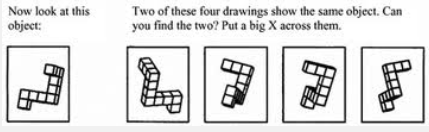
Roger Shepard-Jacqueline MetzlerAs a result, women are unlikely to increase confidence, perceived status and power by speaking and behaving like men because this approach would violate gender stereotype expectations, leading to a “backlash” effect.

Zachary Estes

Zachary Estes

However, when women are “primed” to experience confidence, they performed better on 3D rotation spatial tasks in Roger Shepard and Jacqueline Metzler’s Mental Rotations Test, reported University of Warwick’s Zachary Estes and Sydney Felker, then of University of Georgia Health Center.

In one set of tests, women and men performed similarly when women and men again completed each item and reported their:
Confidence level in their answers,
-Whether they would change their responses if given the opportunity.

Women’s performance dropped below previous scores whereas men’s increased significantly when they elected to change answers.
Second-guessing” and “over-thinking” eroded women’s confidence which affected their scores.

Albert Bandura

Albert Bandura

People who have a strong sense of efficacy focus their attention on analyzing and figuring out solutions to problems, whereas those beset with self-doubts of their efficacy tend to turn their attention inwardly and become self-preoccupied with evaluative concerns when their efforts prove unsuccessful,” explained Stanford’s Albert Bandura and Forest Jourdan.

Robert K Merton

Robert K Merton

However, both men and women significantly improved their scores after they were told that they achieved high scores on the previous test irrespective of actual score.
This finding demonstrates the performance-enhancing effect of positive expectancy, and replicated “The Rosenthal Effect,” or “self-fulfilling prophecy,” described by Robert K. Merton of Columbia.

Jeffrey Vancouver

Jeffrey Vancouver

Confidence may have performance-eroding effects despite much previous research documenting performance-enhancing effects, according to Ohio University’s Jeffrey Vancouver and Charles Thompson, with University of Cincinnati’s E. Casey Tischner, and Dan Putka of Human Resources Research Organization.

Dan Putka

Dan Putka

They primed confidence or “self-efficacy” among half the participants in an analytic game, and found that those who received positive feedback about their performance didn’t perform as well in the next game, and were more likely to make logical errors.

Vancouver and team suggested that participants whose confidence was artificially-inflated tended to apply less mental effort to challenging tasks before attempting the next item.

Fortunately, actual skill trumps inflated confidence.
Women considering technical training and careers may be reassured by Kennedy and team’s observation that, “…Acting capable was beneficial, but actually being capable was better.”

However, these findings suggest that women aspiring to STEM careers are likely to be more effective when they create a “hybrid” style of communication and professional presence, drawing on behaviors that demonstrate confidence, competence, and proactivity without violating gender-linked expectations.

-*How do you capitalize on the performance-enhancing effects of confidence without alienating others or reducing future performance efforts?


RELATED POSTS:

©Kathryn Welds

Price of Job “Flexibility” for Women: Lower Salaries

Claudia Goldin

Claudia Goldin

Women in professions noted for their schedule and location “flexibility” are shortchanged with smaller paychecks than men in equivalent roles, according to Harvard’s Claudia Goldin.
She analyzed higher-paying occupations, and validated the frequently-cited finding that women earn an average of 71 percent of men’s wages after controlling for age, race, hours and education.

In addition, Goldin found significant differences related to flexibility in work schedule or location or ability of colleagues to substitute for each other.
For example, women financial specialists earned 66 percent of men’s pay in the same field, but women pharmacists earned 91 percent of their male colleagues’ salaries.  Goldin-Womens salaries as percentage of mens

Comparable salaries were reported for male and female tax preparers, ad sales agents and human resources specialists, attributable to workers’ ability to substitute for each other.
Among medical professions, obstetricians and “hospitalists” have introduced “interchangeability” with trusted colleagues.

This difference is explained by higher pay for roles that require longer hours, physical presence for “office face time,” and 24×7 availability, known as “non-linear” occupations.

In these fields, like law and investment banking, women typically work fewer hours and earn less than men:  A lawyer who works 80 hours a week at a large corporate law firm earns more than double one who works 40 hours a week as an in-house counsel at a smaller business.

Francine Blau

Francine Blau

In contrast, women and men in “linear” occupations such as pharmacists, computer hardware engineers, and computer software engineers, report similar number of hours worked and earn equivalent incomes:  A pharmacist who works 40 hours a week generally earns double the salary of a pharmacist who works 20 hours a week, and as a result, the pay gap for pharmacists is one of the smallest.

Lawrence Kahn

Lawrence Kahn

The U.S. reports relatively larger gender-based pay gap than other advanced countries, found Cornell’s Francine Blau and Lawrence M. Kahn, and they attributed this wage disparity to “the very high level of U.S. wage inequality.

Uri Gneezy

Uri Gneezy

Another explanation for this discrepancy was that men in competitive environments improve their performance, but when women’s performance remains about the same as in non-competitive situations with they challenge men, reported University of California San Diego’s Uri Gneezy, Muriel Niederle of Stanford and Aldo Rustichini of University of Minnesota.

Muriel Niederle

Muriel Niederle

In contrast, women’s performance increased when they competed with women, suggesting that women are willing and able to compete, but may not experience the enhancing effect of the workplace “tournament.”  

Aldo Rustichini

Aldo Rustichini

This gender difference in competitive environments may explain women’s under-representation in Science, Technology, Engineering, and Mathematics (STEM) academic programs and job roles.
Supporting this hypothesis is the finding that competition and lack of mentor and peer support are linked to women’s voluntary exit from engineering programs, according to Goodman Research Group’s Irene F. Goodman with Christine M. Cunningham and Cathy Lachapelle of Boston Museum of Science.

Irene Goodman

Irene Goodman

These organizational climate factors have been tied to decreased feelings of competence, confidence, and optimism, reported University of North Carolina’s Beril Ülkü-Steiner and Beth Kurtz-Costes, with C. Ryan Kinlaw of Marist College, and these can undermine women’s work performance.

 Beth Kurz-Costes

Beth Kurz-Costes

Wage parity is more likely for those who optimize performance during cross-gender competition and select roles with a high degree of “interchangeability” and “linearity” between hours worked and salaries.

C Ryan Kinlaw

C Ryan Kinlaw

Another solution for those who prefer to earn more than average for their occupation is to work longer hours and more continuously throughout their careers.

-*How can women increase performance with competing with men?

-*What occupations have a “linear” relationship between hours worked and compensation?

Follow-share-like http://www.kathrynwelds.com and @kathrynwelds

RELATED POSTS:

Twitter @kathrynwelds
BlogKathryn Welds | Curated Research and Commentary
Google+
Facebook Notes

©Kathryn Welds

Stress Increases Women’s Performance and Empathic Attunement, but not Men’s

Livia Tomova

Livia Tomova

Task performance, social interaction skills, and empathic attunement increase for women under stress, but not for men.
Women seek social support (“become prosocial”), but men turn toward themselves and away from others when they experience stress, according to University of Vienna’s Livia Tomova and Claus Lamm with Bernadette von Dawans and Markus Heinrichs of University of Freiburg, and Giorgia Silani, International School for Advanced Studies, SISSA-ISAS, Trieste

Claus Lamm

Claus Lamm

Tomova’s team evaluated the impact of stress on 20 women and 20 men, elicited by Clemens Kirschbaum, Karl-Martin Pirke, and Dirk Hellhammer’s (Universität) Trier Social Stress Test, in which participants delivered a speech and performed mental arithmetic in front of an audience.

Bernadette von Dawans

Bernadette von Dawans

Tomova and team measured “self-other distinctions” during three types of tasks:

  • Imitated movements  (perceptual-motor task): “Move objects on a shelf according to the instructions of a director,” requiring participants to “disentangle their own visual perspective” from that of the director,
  • Identifying  one’s  own  emotions or  other  people’s  emotions  (emotional  task),  or
  • Making a judgment from another person’s perspective (cognitive task).

Markus Heinrichs

Markus Heinrichs

As a comparison, 20 men and 20 women completed non-stressful activities like “easy counting.”

Women and men showed similar physiological reactions to stress, but stress decreased men’s performance in all tasks.
In contrast, women’s performance on all tasks improved under stress

Giorgia Silani

Giorgia Silani

Specifically, women who experienced stress demonstrated more accurate understanding of others’ perspective than non-stressed women and men.
However, men under stress showed less ability to accurately detect others’ probable thoughts and feelings.

Walter Cannon

Walter Cannon

Studies of stress were pioneered by Harvard’s Walter Cannon, who described the fight-or-flight response in1914, and popularized by Hans Selye of Université de Montréal.  

Hans Selye

Hans Selye

People can cope with stress by:

  • Seeking social support or
  • Reducing “internal cognitive load” that requires additional coping efforts.

One way to reduce “internal cognitive load” is to disconnect from others’ perspective and emotional experience through reducing empathy.
Besides this process of “mentalizing,” empathy also requires people to distinguish their representations of themselves from representations of others.

Clemens Kirschbaum

Clemens Kirschbaum

Women under stress “flexibly disambiguate” mental representations of themselves from others and increase “self-other distinction,” found Tomova’s research group.
This cognitive style enables women to more accurately perceive others’ perspective, enabling more empathic interaction with others in a “tend-and-befriend” approach.

In contrast, men under stress typically turn inward with “increased egocentricity” to conserve mental and emotional resources for “flight-or-flight” responses, leading to less adaptive social interactions.

Dirk Hellhammer

Dirk Hellhammer

These differences may be rooted in gender-specific learning experiences and biological differences including higher levels of oxytocin (a hormone that mediates social behaviors) among women who experienced stress, noted Tomova’s research team.
As a result, women may seek more frequently seek social support, may interact with others more empathically, and may be rewarded with external help in a reinforcing cycle.

Nikolas Rose

Nikolas Rose

Social support can improve performance and reduce stress, probably because the brain is “wired for sociality,” according to King’s College London’s Nikolas Rose and Joelle Abi-Rached of Harvard.

Gender differences in performance under stress are associated with different styles of “sociality” and empathic insight.

-*How do you maintain task performance and “Emotional Intelligence” of empathy when experiencing stress?

Follow-share-like http://www.kathrynwelds.com and @kathrynwelds

RELATED POSTS:

Twitter @kathrynwelds
BlogKathryn Welds | Curated Research and Commentary
Google+
LinkedIn Open Group Psychology in Human Resources (Organisational Psychology)
Facebook Notes

©Kathryn Welds


Diverse Teams Analyze Problems More Effectively

When people anticipate working with people similar to themselves, they process information less effectively than when they anticipate collaborating with diverse co-workers.

Denise Lewin Loyd

Denise Lewin Loyd

Volunteers completed a survey about their political attitudes, read a murder mystery, determined the perpetrator, and rated their confidence in their conclusion in a study designed by MIT’s Denise Lewin Loyd, Cynthia S. Wang of Oklahoma State University, Columbia’s Katherine Phillips  and Robert Lount Jr. of Ohio State University.

Participants then wrote a statement about their conclusions before meeting another volunteer who had a different conclusion about the perpetrator to solve the case.

Cynthia Wang

Cynthia Wang

They learned the other person’s political affiliation and opinion about the murder and wrote their statements but were told the experiment was over, without meeting the other person.

Loyd’s team analyzed these preparation statements to determine “elaboration,” a measure of analysis complexity and depth, when people anticipated working with others who have different attitudes.

Katherine Phillips

Katherine Phillips

People who said they were members of any political party wrote less-detailed statements when they anticipated meeting with someone affiliated with the same political party.
In contrast, participants wrote more detailed statements when they anticipated meeting someone of a different political orientation.

Volunteers prepared less carefully when they anticipated working with someone who shared their views.
In contrast, when they expected to work with someone holding different views, they applied greater critical thinking to their problem analyses.

Robert B Lount Jr

Robert B Lount Jr

Some volunteers were instructed before preparing their written case analysis that developing a positive interpersonal relationship with the other person would increase solution accuracy.

Other participants learned that “concentrating on the task rather than the interpersonal relationship was most important way to have a productive meeting.”

People primed to focus on their interpersonal relations wrote less detailed preparation statements, suggesting that analytic rigor was sacrificed for interpersonal harmony.
In addition, when people were primed to focus on the task, they produced more thoroughly considered solutions.

When volunteers actually met to solve the case after writing their statements,
partners with the most accurate solutions came to the meeting with most detailed case analyses.

People in homogeneous groups may prepare less completely if they focus on cultivating interpersonal harmony and avoiding conflict.
In contrast, diverse groups may not attempt to form close social relationships, so are more able to focus on task analysis and solutions.
Diverse teams, then, provide multiple perspectives and greater focus on shared work tasks.

Ron Elsdon

Ron Elsdon

However, other researchers advocate workplace affiliation as a way to engage and retain employees.
Ron Elsdon, formerly of Cambridge University and Air Liquide America, suggested that workplace affiliation leads to organizational value creation, and Gallup’s Marcus Buckingham and Curt Coffman argued that “having a best friend at work” is both important for employee engagement and “one of the most controversial of the 12 traits of highly productive workgroups.”

Marcus Buckingham

Marcus Buckingham

Social relationships among similar people at work may feel good, but may not lead to the most effective or innovative problem analysis.

-*To what extent have you observed homogeneous work groups focusing on maintaining harmony at the expense of rigorous task analysis?

Curt Coffman

Curt Coffman

RELATED POSTS:


Follow-share-like http://www.kathrynwelds.com and @kathrynwelds  

Twitter  @kathrynwelds
Blog – Kathryn Welds | Curated Research and Commentary  
Google+
LinkedIn Open Group Psychology in Human Resources (Organisational Psychology)
Facebook Notes:

©Kathryn Welds

“Derailing” Executive Personality Measures Predict Leadership Mishaps

Ellen Van Velsor

Ellen Van Velsor

Executive Derailment” occurs when a person with an executive-level position is seen by others to “fail” in achieving the most important goals for the role, including business outcomes and interpersonal relationships.
Ellen Van Velsor and Jean Brittain Leslie of The Center for Creative Leadership’s reassessed and confirmed their earlier findings on derailment dynamics.

Jean Brittain Leslie

Jean Brittain Leslie

Executive derailment can occur when:

  • An executive overuses or underuses a strength, resulting in a performance liability,
  • Superiors overlook an executive’s performance-impairing deficiencies in personality or character,
  • An executive encounters extreme market challenges or personal difficulties,
  • Career advancement leads the executive to behave arrogantly.

Derailed executives typically:

  • Do not achieve business objectives,
  • Are unable or unwilling to adapt to frequent changes,
  • Have interpersonal problems,
  • Lack broad functional experience,
  • Do not hire the right people and build a cohesive, readable team.

Derailment can also occur when an executive’s interpersonal skill deficits interact with adverse organizational conditions:

  • Unclear organizational direction, with misalignment between corporate strategy and objectives,
  • Lack of role mandate or clarity, in which the executive is not endowed with necessary power and authority to achieve the organization’s goals,
  • Lack of rapport with key stakeholders including the board, the management team, employees,
  • Inability to perceive, understand and respond to strategic market trends, customer priorities,
  • Inaccurate prioritization and abdicating accountability for delivery, execution, performance,
  • Unresponsiveness to rapidly changing market conditions and innovation opportunities.
Joyce Hogan-Robert Hogan

Joyce Hogan-Robert Hogan

“Derailing” personality measures were empirically differentiated from “everyday” personality tendencies by Robert Hogan and Joyce Hogan, then at University of Tulsa, with Gordon Curphy, then at Personnel Decisions, Inc.

They asked observers to rate individuals when they are “at their best” on the “Big Five” personality dimensions, also known as the Five-Factor Model (FFM) – Emotional Stability, Extraversion/Ambition, Agreeableness, Conscientiousness, and Intellect/Openness to Experience.

Gordon Curphy

Gordon Curphy

This approach differs from self-report inventories because it is based on “socioanalytic theory” to understand individual differences in work performance, and avoids biases inherent in self report.

Hogan and Hogan observed a high base rate for managerial incompetence in any organizations based on validated assessment inventories.
These tools, they argue, can promote professional development by providing candid performance feedback to help managers modify dysfunctional behaviors associated with derailment.
However, this quantified feedback is valuable only if inept managers are willing to receive feedback and coaching, and develop a plan to observe and modify unproductive behaviors.

Brent Holland

Brent Holland

These “everyday” personality assessment scales also predicted occupational performance in addition to behavior patterns, in Joyce Hogan with Brent Holland‘s review of more than 450 validation studies predicting occupational performance across job roles and industries.

Timothy Judge

Timothy Judge

Similarly, the Five Factor model’s measures correlated with leadership behaviors, reported University of Notre Dame’s Timothy Judge, and Remus Ilies of National University of Singapore, with Joyce Bono of University of Florida and Miami University’s Megan Gerhardt.

They noted that extraversion consistently correlates with leadership dimensions, including leader emergence and leadership effectiveness.
Recent emphasis on the “power of introverts” suggests further investigation of how introverts assume and exercise leadership.

Joyce Bono

Joyce Bono

Derailment may be mitigated by developing:

  • Diverse career experiences,
  • Hardiness and composure under stress,
  • Responsibility by acknowledging mistakes and failures with honesty, candor, and poise,
  • Focus on solutions and learning from errors,
  • Ability to collaborate with diverse groups and individuals
Megan Gerhardt

Megan Gerhardt

-*How do you evaluate potential for leadership success and derailment?

-*How do you prevent derailment in your work activities?


RELATED POSTS:

©Kathryn Welds