Tag Archives: Laura Kray

Women, Minorities Increase Performance by Resisting Stereotype Threat

Claude Steele

Claude Steele

Stereotype threat occurs when stigmatised group members receive information about the group’s expected behavior, potential, and outcomes.
Typically, stereotype threat reduces performance among stigmatised group members.

Joshua Aronson

Stanford’s Claude Steele and Joshua Aronson of NYU, substituted a positive shared identity for typical stereotypes of women and African American participants in academic tasks. 
This intervention was associated with improvee performance compared with the control group of volunteers.

Anthony Greenwald

Stereotypes can be invoked by “implicit primes” even when people explicitly disavowed stereotypes, found University of Washington’s Anthony Greenwald and Mahzarin Banaji, then at Yale.
However, when volunteers focused on tasks rather than beliefs, participants were less likely to render discriminatory decisions.

Laura Kray

Laura Kray

Women and men resisted stereotypic negotiation behaviour when they activated a shared identity.
Participants maintained these less-biased behaviours despite receiving explicit stereotype primes, reported University of California, Berkeley’s Laura Kray, Leigh Thompson of Northwestern, and Columbia’s Adam Galinsky.
This finding suggests that vulnerability to stereotype threat can be modified and sustained.

Gordon Moskowitz

Gordon Moskowitz

People can distance themselves from stereotypes with contrast primes that provide alternatives to a stereotype, noted Lehigh University’s Gordon B. Moskowitz and Ian W. Skurnik of University of Utah.

Ryan P. Brown

Ryan P. Brown

Even members of dominant groups can be affected by stereotype threat:  Men from majority groups can perform less effectively after receiving a positive stereotype prime.
University of Oklahoma’s Ryan P. Brown and Robert A. Josephs of University of Texas suggested that this performance suppression among members of dominant groups can occur when participants sense a “pressure to live up to the standard”.

Robert A Josephs

Robert A Josephs

People can manage stereotype threat by mentioning the stereotype to activate stereotype resistance.
Another mitigation strategy is to focus on a shared identity that transcends the stigmatized group identity, and provide examples that contradict the stereotype.

  • How do you manage stereotype threat for yourself and others?
  • How effective have you found activating stereotype reactance?

RELATED POSTS:

©Kathryn Welds

“Feminine Charm” as Negotiation Tactic

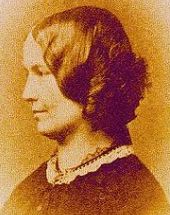
Charlotte Brontë

Charlotte Brontë

Feminine charm” was one of the few available negotiation tactics for women in past decades, portrayed in novels by Charlotte Brontë, Jane Austen, and George Eliot

Jane Austen

Jane Austen

Former United States Secretary of State Madeleine Albright said that she used “charm” in negotiations with heads of state. This statement inspired University of California, Berkeley’s Laura Kray and Alex Van Zant with Connson Locke of London School of Economics to investigate “feminine charm” in negotiation situations.

Madeleine Albright

Madeleine Albright

They found that “the aim of feminine charm is to make an interaction partner feel good as a way of gaining compliance” and “charm” is characterized by:

Laura Kray

  • Friendliness, or concern for the other person,
  • Flirtation, or concern for self-presentation.

Hannah Riley Bowles

“Feminine charm” (friendliness plus flirtation) partially buffered the social penalties (“backlash”) against women’s efforts to negotiate, identified by Harvard’s Hannah Riley Bowles and her colleagues.

Linda Babcock

Women who were perceived as flirtatious achieved superior economic deals in negotiations compared with women who were seen as friendly.

This finding validates Carnegie Mellon’s Linda Babcock’s discovery that women achieve better negotiation outcomes when they combine power tactics with warmth.

These research results expose “a financial risk associated with female friendliness:…the resulting division of resources may be unfavorable if she is perceived as ‘too nice’.”

-*How do you mitigate the “financial risk associated with female friendliness”?

RELATED POSTS:

©Kathryn Welds