Tag Archives: Information processing

Enabling Neurodiversity in the Workplace with Early Detection, Intervention

Eugene Edgar

Eugene Edgar

Reading and related language and information processing skills are crucial for effective academic and occupational performance.
For example, people with reading difficulties face challenges in completing education, securing post-college employment and advancing in careers, found University of Washington’s Phyllis Levine and Eugene Edgar.

However, early detection and intervention can equip people for effective performance in school and work situations by practicing required skills and learn problem solving skills to manage these information processing differences.

Kineret Sharfi

Kineret Sharfi

People with learning disabilities including reading difficulties face significant challenges: They are significantly less likely to attend 4-year college programs or graduate, noted Haifa University’s Kineret Sharfi and Sara Rosenbaum.

David Goldstein

David Goldstein

Similar results were reported separately in a study of U.S. high school graduates from classes of 1985-1990, interviewed in the next 5 year, by De Paul University’s Christopher Murray, with Donald E. Goldstein, Steven Nourse and Eugene Edgar of University of Washington.

Tomer Einat

Tomer Einat

Of even greater concern is that learning disabilities (LD) including low reading skills, were significantly associated with ADHD, school dropout age, and onset of criminal activity among Israeli-born prisoners, according to Bar-Ilan University Tomer Einat and Amela Einat of Tel-Hai Academic College.

Michelle Patterson

Michelle Patterson

Further, these information processing challenges were also prevalent among homeless adults in Canada, reported Simon Fraser University’s Michelle Patterson, Akm Moniruzzaman, and Julian M. Somers with Charles James Frankish of University of British Columbia.

Travis White-Schwoch

Travis White-Schwoch

For those with years of practice in reading, Northwestern’s Travis White-Schwoch noted that learning to read is a chief developmental milestone with lifelong consequences.”
His research colleagues Kali Woodruff Carr, Elaine C. Thompson, Samira Anderson, Trent Nicol, Steven G. Zecker, Ann R. Bradlow and Nina Kraus added “… an ongoing challenge has been to identify candidates for intervention at a young-enough age.

Kali Woodruff Carr

Kali Woodruff Carr

However, it’s possible to identify potential reading difficulty is possible as early as age three.
This early awareness can enable early remediation efforts including skill-building in phonics, sound blending, phonograms, and close listening for comprehension and memorization, suggested among multi-media interventions and practice processes by Johns Hopkins’ Crystal Kelly and Linda Campbell.

Travis White-Schwoch 2White Schwoch’s team asked 112 children ages 3 – 14 years to detect consonants while in a noisy environment.
These children selected and watched a movie in separate booths while wearing electroencephalograms (EEG) and headphones, which provided “babbling” (semantically anomalous English sentences) in the right ear and “da” sounds in the left ear as the movie’s audio played .

Samira Anderson

Samira Anderson

The group accurately predicted that children with higher scores on a test understanding sounds that make up words and sentences (“phonological awareness”) were were more able to quickly and accurately detect the “da” sound.
Similarly, higher performance on phonological awareness predicted higher scores on a literacy test a year later among 37 four year old pre-reading children.

Trent Nicol

Trent Nicol

Neurodiversity” at work is a more frequent topic in popular business publications, public policy and diversity efforts, so it’s essential to understand the complexity of acquiring information processing skills, and the adverse consequences for those who don’t master these capabilities.

Steven Zecker

Steven Zecker

As a result, progressive workplaces enable greater inclusion of these different abilities by offering skill enhancement opportunities for those whose reading difficulties affect their ability to perform their work responsibilities.

-*How do you enable people with neurodiversity to optimally perform in the workplace?

Follow-share-like http://www.kathrynwelds.com and @kathrynwelds

Related Posts:

Twitter: @kathrynwelds
Google+

LinkedIn Groups Psychology in Human Resources (Organisational Psychology)
Facebook

Blog: – Kathryn Welds | Curated Research and Commentary

©Kathryn Welds

Increase Feelings of Power by Listening to Music with Strong Bass Beat

Dennis Hsu

Dennis Hsu

Listening to music with specific emotional qualities has been associated with productivity, performance, creative problem solving, endurance, decreased pain sensitivity, and decision biases, outlined in previous blog posts.

Loran Nordgren

Loran Nordgren

Subjective power feelings are an additional outcome of listening to music with substantial bass beat, reported Northwestern University’s Dennis Y. Hsu, Loran F. Nordgren, Derek D. Rucker, Li Huang, and Columbia’s Adam D. Galinsky.

Derek D. Rucker

Derek D. Rucker

Hsu’s team found that power-inducing music produced enhanced:

  • Abstract thinking
  • Illusions of control
  • Willingness to volunteer first for a potentially stressful task.
Li Huang

Li Huang

Subjective feelings of power are important contributors to workplace performance because they associated with confidence and self-efficacy, which influence willingness to persist in accomplishing challenging tasks.

Adam Galinsky

Adam Galinsky

More than 75 volunteers listened to an original, two-minute instrumental composition with either a prominent bass line or a subdued bass element in Team Hsu’s investigation.
Participants rated their feelings of power, dominance and determination along with their sense of happiness, excitement, and enthusiasm.

Pamela K. Smith

Pamela K. Smith

People who listened to the heavy-bass music said they experienced greater feelings of power than those who listened to the more subdued variation, but the increased bass element did not affect feelings of happiness or excitement.
Those who heard the composition with prominent bass elements also produced more power-related terms in a word-completion test.

Daniël Wigboldus

Daniël Wigboldus

Likewise, those who heard familiar “high-power music” such as Queen’s “We Will Rock You,” volunteered to be the first participants in a debate competition and scored higher on a test measuring abstract thinking, compared with people who listened to widely-known “low-power music” like “Who Let the Dogs Out?”

Ap Dijksterhuis

Ap Dijksterhuis

Feeling powerful is more important than actually possessing power in achieving superior performance, confirmed by University of California San Diego’s Pamela K. Smith with Daniël H.J. Wigboldus of Radboud University Nijmegen, and University of Amsterdam’s Ap Dijksterhuisc.
They reported this well-validated finding and expanded Smith’s previous report, with NYU’s Yaacov Trope, that people’s subjective sense of power is partly determined by individual information processing style.

Yaacov Trope

Yaacov Trope

Smith’s team found that people who demonstrated abstract thought reported greater sense of power, greater preference for high-power roles, and more feelings of control over the environment, compared with people who were primed to use concrete thinking.

Subjective feelings of power can be enhanced by listening to music with a prominent bass element, in addition to writing “power primes” and assuming expansive body postures.

-*How do you increase your personal experience of power?

Follow-share-like www.kathrynwelds.com and @kathrynwelds


RELATED POSTS:

©Kathryn Welds

Detecting Trustworthiness, Opening Your Mind?

Yaacov Schul

Yaacov Schul

-*Does mistrust increases willingness to consider new information, or “open-mindedness”?

When people mistrust information, they are more likely to consider alternative information and interpretations,  according to Hebrew University’s Yaacov Schul and Ruth Mayo, with Eugene Burnstein of University of Michigan.

Ruth Mayo

Ruth Mayo

Likewise, Ann-Christin Posten and Thomas Mussweiler of Universität zu Köln noted that “distrust frees your mind” by leading people to use non-routine cognitive strategies.”

Eugene Burnstein

Eugene Burnstein

Posten and Mussweiler reported that when volunteers participated in an “untrustworthy” interaction, they later provided less stereotypic evaluations of others in an unrelated task.

Ann-Christin Posten

Ann-Christin Posten

The research team replicated this effect when they influence volunteers’ expectations of others by “priming” participants with preliminary information that elicited stereotypes.

When people distrust information and interactions, they focus on dissimilarities and discrepancies,  which enables people to more carefully attend to individual differences that disprove stereotypes, according to Posten and Mussweiler.

Thomas Mussweiler

Thomas Mussweiler

Although trust may feel better, distrust can lead to more mindful observation, and reduced stereotyping.

-*How do people determine trustworthiness?

Princeton’s Alexander Todorov and Sean G. Baron with Nikolaas Oosterhof of Dartmouth presented volunteers computer model-generated faces  representing a range of trustworthiness while participants’ brains were scanned with fMRI.

Alexander Todorov

Alexander Todorov

Specific brain areas, the right amygdala and left and right putamen, became more active when participants’ viewed less trustworthy faces.

Sean Baron

Sean Baron

Faces judged most trustworthy and most untrustworthy faces were associated with greater brain activity in the left amygdala.
In contrast, moderately trustworthy faces evoked strongest responses in the medial prefrontal cortex and precuneus areas.

Nikolaas Oosterhof

Nikolaas Oosterhof

These findings pinpoint brain areas that lead to inferences of trust and distrust, and lead to relaxed or vigilant information processing strategies.

-*How do you determine trustworthiness for information and for people?
-*What helps you minimized stereotyped judgments?

 Follow-share-like http://www.kathrynwelds.com and @kathrynwelds

RELATED POSTS:

Twitter  @kathrynwelds
Blog – Kathryn Welds | Curated Research and Commentary  
Google+
LinkedIn Open Group Psychology in Human Resources (Organisational Psychology)
Facebook Notes:

©Kathryn Welds

Improving Visual Information Processing for Better Performance – Boston Subway Map and More

Transit maps are one example of graphic displays that require the viewer to rapidly process visual information to make quick decisions in often crowded and noisy conditions.

MBTA Map 2013

MBTA Map 2013

Cognitive scientists have studied this type of challenging task load in human performance, but seem not to have been consulted when Boston’s Massachusetts Bay Transportation Authority (MBTA) sponsored a contest to redesign the system map in Spring 2013.

Michael Kvrivishvili

Michael Kvrivishvili

Michael Kvrivishvili, a graphic designer at Moscow’s Art Lebedev Studio, submitted the winning design, which was judged by aesthics and presumed usability.

MIT’s Ruth Rosenholtz, Lavanya Sharan, and Shaiyan Keshvari empirically scrutinized Kvrivishivili’s design using computational modeling to analyze the design’s potential visual clutter and its impact on peripheral vision.

Ruth Rosenholtz

Ruth Rosenholtz

Team Rosenholtz’s model generated “mongrels,” or  alternate representations of Kvrivishvili’s redesigned subway map, that abbreviate and abstract visual elements like color, text, space, line orientation before processing in the visual cortex.

Lavanya Sharan

Lavanya Sharan

Mongrels can account for peripheral vision’s generalized synthesis of information outside direct line-of-sight, which provides an overall impression while sacrificing details to speed information processing.

Shaiyan Keshvari

Shaiyan Keshvari

Their analysis recognized the many positive elements of Kvrivishvili’s design and noted opportunities for design optimization.

Amal Dorai

Amal Dorai

Rosenholtz’s earlier collaboration with MIT colleague Amal Dorai and Rosalind Freeman of Skidmore College evaluated the effectiveness of Dorai’s DesignEye tool to assist designers with this type of human factors optimization.

MBTA 2013 by Behr-Harnot

MBTA 2013 by Behr-Harnot

DesignEye tool enables A/B comparisons between designs and judgments about the quality of a design through simple design visualization.

Design optimization seeks to remedy effects of visual clutter, or excessive and disorganized items that can cause:

  • Crowding
  • Masking
  • Reduced recognition due to occlusion
  • Decreased ability to segment scenes
  • Poorer visual search performance.

 Rosenholtz’s group investigated reliable measures of visual clutter to help designers optimize displays for more effective information processing.

Jeremy Wolfe

Jeremy Wolfe

Among them are Jeremy Wolfe of Harvard’s Guided Search metrics, which measure reaction time (RT), errors, and distinguishing a single item in a crowded visual field provided an alternative to an earlier measure, “set size.”

Yuanzhen Li

Yuanzhen Li

Rosenholtz’s MIT colleagues Yuanzhen Li, Jonathan Mansfield, and Zhenlan Jin evaluated a revised version of her earlier Feature Congestion metric that focused on color and luminance contrast to consider the a new item’s distinctiveness in a crowded display to draw attention.

Michael Mack

Michael Mack

They also assessed Subband Entropy, a measure of visual information in the display, and Edge Density, used by University of Texas’s  Michael Mack and Aude Oliva of MIT to evaluate subjective visual complexity.

Aude Oliva

Aude Oliva

Cognitive science research focused on visual and auditory processing can be applied to optimize human performance through improved usability in many technology and graphic user interfaces.

Eric Johnson

Eric Johnson

Eric Johnson of EMC Computer Systems and a veteran of several Silicon Valley high tech companies, builds on these empirical findings and addresses the challenge of reducing visual clutter with a the ancient practice of feng shui in the workplace.

-*How do you reduce visual clutter in your work environment?

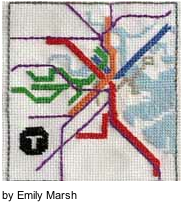
MBTA-Emily Marsh-*What cues do you seek when navigating complex systems like subway systems?

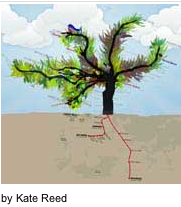
MBTA-Kate Reed

Please follow-share-like www.kathrynwelds.com and @kathrynwelds

RELATED POSTS:

Career Navigation by Embracing Uncertainty
Pattern Recognition in Entrepreneurship

Twitter:  @kathrynwelds
Blog: – Kathryn Welds | Curated Research and Commentary

Google+ google.com/+KathrynWelds
LinkedIn Open Group Psychology in Human Resources (Organisational Psychology)
Facebook Notes:

©Kathryn Welds

 

Reduce “Affective Forecasting” Errors

People often make “affective predictions” about choice of life partner, occupation, residence, yet most everyone makes small, but systematic errors in forecasting personal emotional responses.

These misjudgments can negatively affect personal health, happiness, financial well-being, and interpersonal relationships.

Kostadin Kushlev

Kostadin Kushlev

University of British Columbia’s Kostadin Kushlev and Elizabeth Dunn identified these decision biases, and noted that one of the most well-known and widely-occurring affective forecasting errors is impact bias, the tendency to overestimate the intensity of emotional responses to future positive and negative events.

Elizabeth Dunn

Elizabeth Dunn

In addition, Kushlev and Dunn reported that people tend to overestimate the duration of future emotional reactions, labeled durability bias.

Seymour Epstein

Seymour Epstein

Durability bias (focalism) can occur when people rely on the “rational system” for information processing, according to Seymour Epstein of University of Massachusetts.

His Cognitive-Experiential Self Theory proposes that the “rational system” is used to make affective forecasts using slow, analytic and abstract processing.

Seymour Epstein-CESTIn contrast, the “experiential system” of information processing is rapid, associative, holistic, and concrete.

Shifts between rational (“cold”) and experiential (“hot”) decision systems can cause another bias, “Empathy gap.”

Epstein posits that rational system processing can lead to imagining the event isolated from its broader context, which can underestimate its emotional impact.
This can lead to focus on and overvalue distinctive, observable characteristics. 

Immune neglect is a related error, when people underestimate their likelihood of later reinterpreting future events to reduce regret.

Underestimating the power of future physical states is another predictive error recognised in Alcoholics Anonymous guidance to analyse whether cravings occur when people experience “HALT” (“Hungry, Angry, Lonely, Tired”.)
Personality neglect,” is another error that occurs when people underestimate the influence of personal dispositions and characteristics. 

Roger Buehler

Roger Buehler

Expectations affect future emotions, according to Wilfrid Laurier University’s Roger Buehler, Vassili Spyropoulos and Kent C. H. Lam with Cathy McFarland of Simon Fraser University.  They found that those with positive expectations experience more positive present and future emotions. This optimism bias may provide protection and benefit to each individual’s “psychological immune system.”

Kristin Weger

People can reduce errors in predicting future emotions by evaluating expectations in comparison to actual experience during a “post-mortem” session to review “lessons learned,” found University of Alabama at Huntsville’s Kristin Weger and Sandra Carpenter.

-*How accurate are you in predicting your feelings about a specific choice or situation in the future?

-*How do you detect and mitigate bias in predicting your future emotional reactions?

-*What positive and negative impacts have you observed in affective forecasting errors?


RELATED POSTS:

©Kathryn Welds