Ways to Reduce Unemployment among African-American, Latino, Female Workforces

Lucy Sanders

Lucy Sanders

Lucy Sanders of National Center for Women in Information Technology (NCWIT) reports the organization’s research, underscoring the value of encouraging today’s students in pursuing STEM (Science, Technology, Engineering, Mathematics) careers:

• The current unemployment rate in the U.S. is 7.9%, but for computing-related occupations it’s less than half of that (3.5%)

• The number of African Americans and Latinos employed in computing-related jobs should be double what it is today, given their proportional participation in the US workforce

• Across all STEM careers, tech jobs are growing fastest and have the second-highest starting salaries

The U.S. Bureau of Labor Statistics projects that by 2020, there will be nearly 1.4 million computing-related jobs added to the U.S. workforce.

With the existing pipeline of students, however, we’ll be able to fill only 30% of these jobs with computing graduates.

NCWIT offers the following tools:

Counselors for Computing (C4C) Pathway Cards help connect students’ interest with next steps toward IT and computing careers. C4C is a project of the NCWIT K-12 Alliance, made possible by the Merck Company Foundation and Google.

• A job-search tool at the NCWIT website, powered by Indeed.com, lets people search for computing-related jobs within NCWIT member organizations — including large companies, startups, universities, and non-profits all around the country.

Top 10 Ways Successful Technical Women Increase Their Visibility includes ten things that highly successful women say they do in order to increase their visibility throughout the company, industry, and technical community.

-* What “best practices” have you seen to increase professional employment among diverse employees?

LinkedIn Open Group – Psychology in HR (Organisational Psychology)
Twitter: @kathrynwelds
Google+
Facebook Notes:

Blog: – Kathryn Welds | Curated Research and Commentary

©Kathryn Welds

Silicon Valley Executive Recruiter’s Advice for Getting to the Top

Kathryn Ullrich

Kathryn Ullrich

Kathryn Ullrich is a Silicon Valley executive recruiter who also advises UCLA’s Anderson Graduate School of Management Career Center.

She notes that companies have delegated career development responsibilities to employees, so she advocates the critical importance of individuals taking responsibility for their own career success.

In her book, Getting to the Top: Strategies for Career Success, Ullrich outlines executive skills she finds critical for career, and has organized these in a 3-D pyramid-shaped model including:

• Strategic vision
• Customer perspective
• Communications
• Team leadership
• Distinguishing skills

In contrast, Cisco Systems conducted research on characteristics and correlates of successful performance among its executive leaders and found that these different capabilities are essential:

Collaboration
Learning (Developing self and others)
Execution
Acceleration (Alignment with organizational goals)
Disruption (Innovation, Change management)

Both models are a “convenient heuristic” for effective career performance in Silicon Valley’s culture of innovative technology and business models.

-*What do you see as top five skills for leadership effectiveness?

LinkedIn Open Group – Mindful Leadership
Twitter: @kathrynwelds
Google+
Facebook Notes:

Blog: – Kathryn Welds | Curated Research and Commentary

©Kathryn Welds

Integrating Natural Sciences and Business to Consider Strategy as “Structured Chaos”

Shona Brown

Shona Brown

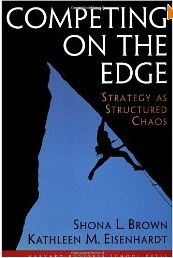
Former Google Senior Vice President of Business Operations Shona Brown and Stanford Engineering Professor Kathleen Eisenhardt assert in their best-selling book, Competing on the Edge: Strategy as Structured Chaos, that “the key driver of superior performance is the ability to change. Success is measured by the ability to survive, to change, and ultimately to reinvent the firm constantly over time.”

The book investigates matched pairs of anonymized companies in the computer industry as an example of strategy in fast-moving, unpredictable, competitive markets.

It draws upon concepts from the natural sciences, such as evolutionary theory and natural selection, as an analogy to change in businesses.

The authors state that decisions on what to structure or not, draw on:

-Improvisation
-Co-adaptation
-Regeneration
-Experimentation
-Time-pacing

These considerations set the pace of change by “balancing on the edge of time” from the past to the future.
They assert that these five phenomena enable a “semi-coherent” strategy, that is “unpredictable, uncontrolled, inefficient, proactive, continuous, diverse.”

Kathleen Eisenhardt

Kathleen Eisenhardt

Brown and Eisenhardt define natural science concepts in business terms:

• Complexity Theory
• Evolutionary Theory
• Dissipative Equilibrium
• Coadaptation
• Natural Selection
• Mutations
• Complexity Catastrophe
• Error Catastrophe
• Repeated Layering
• Genetic Algorithm
• Recombination
• Rearchitecture
• Modularity
• Entrainment

The authors advise to move to “the edge of time” and “the edge of chaos”, and offer guidelines including:

• Prune to reveal the core of the business
• Build the business through growth, not assembly, of modular parts
• Recognize that the business’s starting point and the order of implementing change strategies, are among outcome determinants
• Devote 15% of the product portfolio to experimental probes
• Apply successes from experimental probes in new ways
• Institute regular planning meetings focused on the future
• Exploit current capabilities in new ways
• Develop time-pacing through regular benchmark reviews
• Watch for missing linkage between key processes and innovation elements
• Use “patching” to match the best people resources with required tasks

This book offers an original examples and metaphors for change strategies in business, including jazz improvisation, The Tour de France, American Baseball.

-*What models do you use to understand and execute business strategy?

LinkedIn Open Group – Business Strategy & Competitive Strategy Forum
Twitter: @kathrynwelds
Facebook Notes:
Google+
Blog
: – Kathryn Welds | Curated Research and Commentary

©Kathryn Welds

 

Kept Up at Night by Intrusive Thoughts of Work: Elusive Sleep

According to the US Center for Disease Control, about 70 million Americans have some type of sleep disorder, and I noticed this when colleagues in three different meetings discussed their variations of disrupted sleep.
One person described waking up in the middle of the night with “brain whirlies,” whereas others reported waking up with anxiety about Excel spreadsheet accuracy.

William Dement

William Dement

Many people are familiar with William Dement’s ground-breaking studies of REM and NREM sleep, sleep “architecture”, sleep disorders as the Director of Stanford University Sleep Research Center, and many may know of his research on sleep deprivation’s impact on mood, immune system functioning, work productivity and even public safety.

In fact, he asserts that 33% of traffic accidents and most all major industrial accidents are related to human error based on sleep deprivation.
Dement also shows the relationship between sleep apnea and heart disease and stroke.

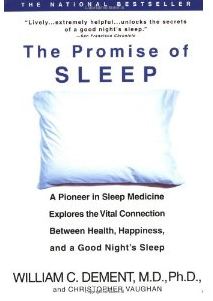
He outlined his research and advocacy in The Promise of Sleep: A Pioneer in Sleep Medicine Explores the Vital Connection Between Health, Happiness, and a Good Night’s Sleep 

Test your Sleep Savvy with his questionnaire by answering the following statements with “true” or “false”:

  1. Depriving people of dreams causes mental illness.
  2. Drowsiness, that feeling when the eyelids are trying to close and we cannot keep them open, is the first step and not the last step before we fall asleep.
  3. Generally, people need to sleep one hour for every two hours awake.
  4. Insomnia is a disease.
  5. The purpose of sleep is to rest the body, especially the muscles.
  6. Although sleep needs vary, people who sleep about eight hours, on average, tend to live longer.
  7. If you are well rested, it should take about five to ten minutes to fall asleep.
  8. The single symptom most frequently found in all severe sleep disorders is daytime fatigue.
  9. Sleep gets lighter and more fragmented as we age.
  10. We know what sleep is for, how it works, and how it affects us on a cellular level.

1,2,4,5,7,10 are false
3,6,8,9 are true

Rosalind Cartwright

Rosalind Cartwright

Fewer people may be aware of Dement’s mentor, Rosalind Cartwright, who founded the first accredited Sleep Disorder Service in Illinois in 1978 and wrote The Twenty-four Hour Mind: The Role of Sleep and Dreaming in Our Emotional Lives 

She amplified Dement’s linkage of sleep hygiene with normal mood when she noted that sleep dampens negative emotions “so the next day begins with a calmer frame of mind with which to face the waking world.”

Cartwright recommends behavior modifications to “reclaim healthy sleep” and suggests a three-week “sleep camp” including:

  • Evaluating  risk of sleep disorders
  • Managing sleep “crises”
  • Keeping a sleep diary
  • Measuring  sleep debt

Echoing  the encouragement that “there’s an app for that,” technologists have summarized the most highly-rated Sleep Apps to measure sleep architecture , quality, and duration, and  recommend possible behavioral changes to improve sleep quality and related daily experience:

-*What helps you optimize your sleep experience?
-*Which “sleep myths” do you think are NOT myths?

Twitter: @kathrynwelds
Google+
LinkedIn Open Group – Psychology in HR (Organisational Psychology)
Facebook Notes:

Blog: – Kathryn Welds | Curated Research and Commentary

©Kathryn Welds
“Smart Failure” to Manage in a Fast-Changing World

Eddie Obeng

Eddie Obeng

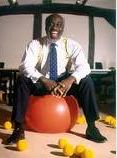
Eddie Obeng’s dizzyingly rapid-fire TED talk asserts that we live in a “New World” in which “the local environment of individuals, organizations and governments changes faster than we can learn.”

As a result, he contends that most commonly-used concepts, best practices and assumptions to plan, manage and lead, organizations are obsolete.

He refers to this “New World” as the “World After Midnight” and shares discussion and observations.

To offer a forum to discuss and advance this approach with a “continuous link between learning and implementation”, he established Pentacle (The Virtual Business School), which offers tools and courses, with an emphasis on executing strategy through project management best practices.

Obeng draws on his experience as an engineer at Royal Dutch Shell, then Professor at the School of Entrepreneurship and Innovation, Henley Business School, and a Council Member at the UK Design Council in his books:

Like the Silicon Valley mantra “Fail Fast” to capture relevant learning experiences, Obeng urges “Smart Failure” through multiple experiments or trials, and rapid prototyping.

-*Where have you seen “Fast Failure” aid workplace innovation?

Twitter
: @kathrynwelds
Google+:
LinkedIn Open Group – Stanford Social Innovation Review:
Facebook Notes:

Blog: – Kathryn Welds | Curated Research and Commentary

©Kathryn Welds

Positive to Negative Feedback Ratios – 3:1 @ work, 5:1: @ home

Sandra Mashihi

Sandra Mashihi

Envisia’s Kenneth Nowack and Sandra Mashihi provided “evidence-based answers” to 15 questions about leveraging 360-degree feedback.

Kenneth Nowack

Kenneth Nowack

Their first question was “Does 360-degree feedback do more harm than good”?
Nowack and Mashihi concluded that found “poorly-designed 360-degree feedback assessments and interventions can increase disengagement and contribute to poor individual and team performance.”

Specifically, individuals can “experience strong discouragement and frustration” when feedback is not as affirming as anticipated.
In addition, negatively-perceived information may be discounted and disregarded.

John Gottman’s studies of positive-to-negative interaction ratios in marriage suggest that intact and well-functioning marriages have a a 5:1 ratio, and research by his colleagues, Schwartz and team, found a similar effect for 360-feedback sessions, though the ratio was closer to 3:1 to encourage  enhanced individual and team performance, individual workplace engagement, effectiveness, and emotional “flourishing,” according to Frederickson and Losada.

Proportions of negative feedback and interactions that exceed these ratios can interfere with insight and motivation and diminish willingness to engage in work-related practice and performance effectiveness.

Barbara Fredrickson suggested in Positivity: Groundbreaking Research Reveals How to Embrace the Hidden Strength of Positive Emotions, Overcome Negativity, and Thrive that this 3:1 ratio of positive to negative feedback is a “tipping point.”

UCLA’s Naomi Eisenberger and Matthew Lieberman collaborated with Kipling Williams of  Macquarie University to demonstrate the physical and emotional impact when people are overloaded of negative feedback:  The same neurophysiologic pathways associated with physical pain are triggered.
Under these circumstances, volunteers reported higher levels of physical pain and demonstrate diminished performance on a cognitively-demanding task, according to Purdue’s Zhansheng Chen, Williams and  Julie Fitness of Macquarie University, and University of New South Wales’s Nicola C. Newton.


Anyone providing evaluations or 360-degree feedback may organize and “titrate” negative (“constructive”) feedback to remain within tolerable ratios so that those receiving this coaching can assimilate and execute recommendations.

-*What ratios of positive to negative feedback do you apply in helping others improve performance?

Twitter: @kathrynwelds
Google+
LinkedIn Open Group – Psychology in Human Resources (Organisational Psychology)
Facebook Notes:

Blog: – Kathryn Welds | Curated Research and Commentary

©Kathryn Welds

Power Tactics for Better Negotiation

Selena Rezvani

Selena Rezvani

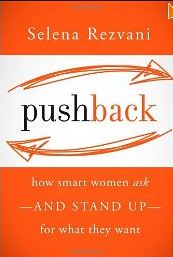
Selena Rezvani points to research documenting women’s tendency to negotiate for salaries, promotions – and even task-sharing in relationships, less often than men in Pushback: How Smart Women Ask–and Stand Up–for What They Want

Her book offers guidelines to speak up assertively while developing the resilience and “thick skins” many in sales have mastered.

These recommendations echo those suggested in research studies and popular articles, and perhaps more Machiavellian, realistic, and perhaps disconcerting come from one of her endorsers, Stanford University Graduate School of Business Professor Jeffrey Pfeffer.

Jeffrey Pfeffer

Jeffrey Pfeffer

He analyzes individual power dynamics in corporate hierarchies, and offers recommendations to acquire and use power in Power: Why Some People Have It—and Others Don’t 

Power-Jeffrey PfefferIn Rezvani’s book, Pfeffer notes that “Power is about 20% conferred and 80% taken.
Good things don’t come to those who wait; they come to those who ask, negotiate, and push.
For women—or men—to get what they deserve, they must get over the platitudes and attitudes that hold them bac
k.”

Pfeffer debunks the hopeful idea that the world is fair and just,  and counsels those seeking to have the power to “get things done” to promote themselves, avoid giving up or delegating power, but instead,  give up the wish to be well-liked.

Because the work world is not fair, Pfeffer says that intelligence, performance, and likeability alone are not the most important factors in advancing in an organization.
Instead, he argues that ambition, energy, and focus drive key power behaviors:

  • Self-promotion and seeking organizational visibility
  • Building relationships, networking, and supporting the immediate manager
    Cultivating a reputation for control and authority by managing information and first impressions (halo effect, attention decrement, cognitive discounting, self-fulfilling prophecy, biased assimilation)
  • Embodying powerful demeanor in speech, dress, posture

Useful skills in acquiring power are:

  • Self-reflection and self-knowledge
  • Confidence and self-assurance
  • Ability to “read” others by empathically understanding their perspectives
  • Capacity to tolerate and remain calm in conflict

Although power is valuable to enable execution and results, there are downsides and “prices to pay” for having and using power.
Often, the costs of power are not fully considered or anticipated by those who aspire to it, so Pfeffer usefully suggests the following drawbacks of power:

  • Loss of privacy due to public scrutiny
  • Loss of autonomy
  • Necessary investment of time and effort that might be spent in other ways, such as with family, maintaining a healthy lifestyle, pursuing non-work interests
  • Trust, confidentiality, conflict-of-interest, ethical dilemmas
  • Possible intoxication with power as an “addictive drug”
Kathleen Kelly Reardon

Kathleen Kelly Reardon

It's All PoliticsPfeffer’s Stanford University colleague, Kathleen Kelly Rearson shares specific examples of skillful, modulated application of power in her book, It’s all Politics.

-*How do you ask for what you want at work?

-*What power tactics do you employ to influence your negotiation outcomes?

RELATED POSTS

©Kathryn Welds

“Nudging” Compassion, Resilience to Reduce Conflict, Stress

David DeSteno

David DeSteno, directs Northeastern University’s Social Emotions Lab, where he investigates cognitive and neurological mechanism related to social behavior.
In Out of Character: Surprising Truths About the Liar, Cheat, Sinner (and Saint) Lurking in All of Us , and at his PopTech talk, he shared how he investigated whether evoked compassion and empathy is associated with reduced aggression.

He described experiments in which volunteers solve math problems for money.
In some conditions, one of DeSteno’s associates posed as another volunteer and noticeably cheated to earn more money than the real volunteer.
In other conditions, the confederate abided by the rules.

For some experiments, the cheating confederate, a professional actor, evoked empathy and compassion by saying that she was  worried about her brother, who was just diagnosed with a terminal illness.

In these situations, the volunteers were less likely to intentionally inflict discomfort on her in the following study of “taste perception,” a measure of aggression.

In this experimental trial, the volunteer measured a discretionary amount of extra-hot sauce into a cup for the cheating or non-cheating confederates to taste.

Volunteers poured five times more hot sauce for cheating confederates than non-cheating confederates, but they treated cheaters who evoked empathy the same as non-cheaters.

DeSteno noted most people are willing to help others who have some similarity to them, such as a shared identity of sharing a religious faith or hometown, or even are moving together as in conga lines, military drills.

He suggested that movement “synchrony causes separate identities to merge into one,” and demonstrated this trend in a music perception study, where volunteers in the same room tapped their hands on sensors when they heard tones.

In some conditions, the tones were synchronized so the volunteers were tapping at the same time as other volunteers, and in other conditions, the tones were independent.
De Steno found that 50% of volunteers who tapped at the same time were willing to help other volunteers, whereas 20% of those who tapped at different times helped others.
He concluded that volunteers felt more similar by tapping together, so felt more compassion, and were more likely to help others.

DeSteno is investigating social media like Facebook as a platform for sharing similarities to reduce aggression in conflict, cyber-bullying, victims of distant natural disasters.

He  said uses Cass Sunstein’s and Richard Thaler’s idea that small behavioral and organizational changes can “nudge” people to healthier, safer, more productive, and prosperous habits outlined in Nudge: Improving Decisions About Health, Wealth, and Happiness 

Their practical recommendations for designing effective “choice architecture” are consistent with DeSteno’s research-based findings:

* Align incentives with desired outcomes
* Identify possible alternative outcomes in familiar terms
* Provide default options that favor desired outcome behaviors
* Offer prompt, relevant feedback about choices and outcomes.
* Expect deviation from the targeted outcome, and build in ways to prevent, detect, and minimize this variance.
* Structure complex choices to reduce the difficulty of decisions-making

-*How have you seen “similarity” affect workplace collaboration and support?

-*Where have you seen organizations implement “choice architecture” to encourage employee behaviors toward positive goals?

BJ Fogg

Related Post
“Tiny Habits” Start, Maintain Changes

Twitter @kathrynwelds
Google+
LinkedIn Open Group – Stanford Social Innovation Review
Facebook Notes:

Blog: – Kathryn Welds | Curated Research and Commentary

©Kathryn Welds

Why and How of Business Storytelling

Jonathan Gottschall

Jonathan Gottschall

Jonathan Gottschall’s book, The Storytelling Animal: How Stories Make Us Human, adds to the burgeoning number of volumes that analyze the meaning, mechanisms, and impact of storytelling in business settings.

He argues that stories help people navigate life’s complex social problems at work and home, by helping develop empathic understanding and “trying on” solutions through observational learning in a virtual “experience simulator.”

The Storytelling AnimalGottschall discusses dreams as “night stories,” focused on a protagonist’s quest to achieve goals, and he acknowledges dream researchers’ definition of dreams: “intense sensorimotor hallucinations with a narrative structure,” including literary elements like plot, theme, character, scene, setting, point of view, perspective.

He considers psychotherapists as “script doctors,” who help individuals revise personal narratives to restore efficacy as protagonists in one’s life story.

HBR Guide to Persuasive PresentationsNancy Duarte provides guidance on best practices to tell compelling business stories using literary and graphic elements in her latest book, HBR Guide to Persuasive Presentations, published by Harvard Business School Press.

She is well-known for producing Al Gore’s original slides that formed the foundation of his Academy Award-winning film, An Inconvenient Truth.

Nancy Duarte

Nancy Duarte

Duarte gained wide-spread recognition for her first book, a business best-seller, slide:ology: The Art and Science of Creating Great Presentations 

Her second book was well-received and built on the principles she articulated in her original book. Resonate: Present Visual Stories that Transform Audiences 

-*When have you been able to “try on solutions” to life’s challenges by telling or hearing relevant stories?

-*When have you served as an informal “script doctor” to help someone modify a problematic personal narrative?

Related posts:

Lessons from Business Storytelling in Constructive Personal Narrative

Whoever Tells the Best Story Wins Five Elements to Construct a Good Story

 Business Stories as Narratives 

Business Storytelling = Trance Induction?

LinkedIn Open Group
Google+
Twitter: @kathrynwelds
Facebook Notes:

©Kathryn Welds

Oxytocin Increases Empathic Work Relationships, Workplace Trust, Generosity

Paul Zak

Paul Zak

Paul Zak, director of the Center for Neuroeconomic Studies at Claremont Graduate Center, and author of The Moral Molecule: The Source of Love and Prosperity, suggests that the hormone oxytocin empathic understanding, generosity (donating to charities, giving money to others in experimental situations), happiness, and trust/trustworthiness.The Moral Molecule

He verified these laboratory-based findings in real-world situations, like a wedding he attended in southern England, prior to which he drew blood samples from the wedding party.

Zak says that oxytocin can be increased by massage, dance, story-telling, prayer, engaging in social media with a loved one, and hugs.
As a result, he “prescribes 8 hugs a day” for better mood and improved “relationships of all types.”

He says that oxytocin can be inhibited by improper nurturing in childhood, stress, abuse, and by oxytocin’s antagonist, testosterone.
Known as the “selfish hormone,” testosterone is also correlated with expressions of power and leadership in the workplace.

One reason women may have challenges expressing these traits in work situations is that their average testosterone levels are ten times lower than men’s.
Zak’s TED Talk

Amy Cuddy

Amy Cuddy

Related Post:

Thoughts change bodies, bodies change minds, roles shapes hormones: Amy Cuddy on “Faking Until It’s Real”

-*To what extent have you seen “eight hugs a day improve mood and relationships”?

LinkedIn Open Group
Twitter @kathrynwelds
Google+
Facebook Notes:
Blog: – Kathryn Welds | Curated Research and Commentary

©Kathryn Welds