Powerful Non-Verbal Behavior May Have More Impact Than a Good Argument

Deborah Gruenfeld

Deborah Gruenfeld

Deborah Gruenfeld is a social psychologist and professor at Stanford Graduate School of Business, who co-directs its Executive Program for Women Leaders.

Her research focuses on power and group behavior, and she notes that power can corrupt without conscious awareness.
She notes that power can disinhibit behavior by reducing concern for the social consequences of one’s actions, and by strengthening the link between personal wishes and acts that fulfill these desires.

Her recent work demonstrates that power leads to an action-orientation, limits the ability to take another’s perspective, and increases the tendency to view others as a “means to an end.”

This talk reviews her research and its practical implications, such as non-verbal behaviors that anyone can adopt to increase the impression of being a powerful individual.

-*How have you seen powerful non-verbal behavior trump the content of an argument?

©Kathryn Welds

Organizational Hierarchies are Easier to Understand, Remember, Manage – Especially those Lead by Men…

Larissa Tiedens

Larissa Tiedens of Stanford’s Graduate School of Business and Emily Zitek of Cornell, assert that “we produce hierarchies to make our lives easier cognitively… (so we) like them more.”

They conducted a series of studies, published in the Journal of Personality and Social Psychology, to investigate organizational structure preferences and their impact on organizational performance. They suggest that organizational design should be determined by organizational objectives rather than allegiance to the ideal of “equality” in all situations.

Emily Zitek

Tiedens and Zitek demonstrated that there was a negative correlation between remembering and liking hierarchies; that is, people didn’t like what they couldn’t easily remember, and they liked what they could remember.

They observed that participants had difficulty understanding and learning symmetric organizational relationships, in which people could give orders to peers and receive orders from these same peers.

Their final experiment determined that participants more quickly memorized hierarchies in which men were at the top, and surmised that male hierarchies are more familiar and expected than other types of social structures.
As with the other experiments, the subjects were more likely to express a preference for the structure they learned the quickest.

Tiedens and Zitek conclude that people generally understand, learn, and like hierarchies more than egalitarian relationships because they are predictable and familiar.
If firms eliminate hierarchies, Tiedens suggests making explicit specific role because “people need a way of organizing information, including information about relationships among people. You need a way to enhance people’s ability to understand what the organization is and how individuals operate within it.”

-*Which organizational hierarchies do you find most memorable? Which are most attractive to you?

LinkedIn Open Group – Psychology in HR (Organisational Psychology)
Twitter: @kathrynwelds
Facebook Notes:
Google+:

Blog: – Kathryn Welds | Curated Research and Commentary

©Kathryn Welds
Google+

Five Steps and Exercises to Drive Breakthrough Creativity

Josh Linkner

Josh Linkner

Entrepreneur, columnist for Fast Company and Inc. Magazine, and former jazz guitarist, Josh Linkner asserts that creativity is sustainable differentiator  in today’s rapidly-changing business landscape, in his book Disciplined Dreaming: A Proven System to Drive Breakthrough Creativity

He outlines a five-step process to develop creativity, which he notes, can be increased with focused effort and practice:

1. ASK: Define objectives for creativity or innovation
2. PREPARE: Become ready – mentally, physically, before  generating creative solutions
3. DISCOVER: Employ techniques to explore new cognitive territory and ideation:

• Asking “Why?”, “What if?”, and “Why not?”
• Developing a Long List of 200 creative idea
• “Role Storming” in which ideas a presented “in character”.

Albert Einstein

Albert Einstein

For example,  creative ideas may be presented from the role of Albert Einstein, Steve Jobs or another respected innovator

Steve Jobs

Steve Jobs

4. IGNITE: Focus. using  methods such as his technique of “Doing the Opposite” of the expected
5. LAUNCH: Select work target, set metrics, and begin implementation

Linkner’s website recommends the best books on developing creativity and innovation

-*What steps help you create innovate solutions to business problems?

LinkedIn Open Group – Stanford Social Innovation Review
Twitter: @kathrynwelds
Google+
Facebook Notes:

©Kathryn Welds

Biases in Unconscious Automatic Mental Processing, and “Work-Arounds”

Leonard Mlodinow
Leonard Mlodinow

Leonard Mlodinow’s Subliminal: How Your Unconscious Mind Rules Your Behavior reviews evidence of automatic, out-of-awareness brain processing that handles emotional experience and routine task execution, in the same vein as  best sellers by Nobel laureate Daniel Kahneman (Thinking, Fast and Slow) and writer Malcolm Gladwell (Blink: The Power of Thinking Without Thinking).

Daniel Kahneman
Daniel Kahneman

All three authors outline the potential costs of rapid mental processing: error and bias in perception and decision-making, which are less present during mindful analytic problem-solving.

Mlodinow, a Physics Professor at CalTech, has collaborated with Stephen Hawking on two books, and like Kahneman and Gladwell, is a talented storyteller who explains implications of laboratory-based research on cognition and brain functioning.

Carol Tavris
Carol Tavris

Psychologist Carol Tavris discusses the cost of similar biases in cognitive processing in Mistakes Were Made (But Not by Me): Why We Justify Foolish Beliefs, Bad Decisions, 

Numerous studies of erroneous eyewitness testimony demonstrate that memory is constructed of fragmentary elements “stitched” together to form a cohesive narrative.
This contrasts the notion that memory is a “snapshot” replica of an event.

Opportunities for cognitive error are apparent in this Constructivist view of perception and cognition.

Most authors suggest “mindful” practices to counteract inherent biases in cognitive short-cuts, consciously focusing in present perceptions and experiences.

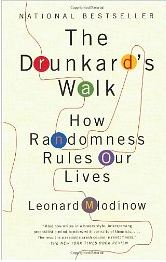
Mlodinow’s previous book, The Drunkard’s Walk: How Randomness Rules Our Lives, demystifies the use of statistics in everyday life, and prepares readers with considered questions to avoid mis-judgments based on seemingly convincing quantitative data.

He demonstrates the prevalence of chance influences in life outcomes, and the pervasive illusion that people have control over many more outcomes than they actually do.

Mlodinow reminds readers that “success” and “failure” contain random influences, and “success” is more dependent on persistence and maintaining an optimistic outlook than raw ability.

-*What practices have helped you mitigate potential cognitive bias associated with rapid mental processing and cognitive “short-cuts”?

*Related posts:

©Kathryn Welds

Conducting “Due Diligence” by Interviewing the Hiring Manager

Have you ever had the fleeting thought “Did I make a mistake in accepting this role?” after finding that the work, manager, team, culture, expectations were not “as advertised”?

Julie Jansen

Julie Jansen

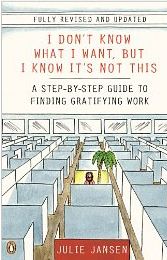
If so, next time you interview for a new role, consider Julie Jansen’s suggested questions to evaluate “fit” with the prospective manager, outlined in her book, I Don’t Know What I Want, But I Know It’s Not This: A Step-by-Step Guide to Finding Gratifying Work

Questions to ask any (and every) Prospective Manager 

  •  What deliverables, accomplishments, behaviors do you expect of the person hired for this role during the first three months?
  • First six months?
  • First year?
  • How will you measure success in this role after a year?
  • What challenges the previous incumbent encounter in the role?
  • What do you see as the role’s current challenges?
  • What are the three top priorities for this role in the next year?
  • How do these priorities align with the organization’s strategy?
  • How can the person selected for this role help you manage your highest-concern challenges?
  • How do you mentor, coach, and develop your direct reports?
  • What was the next career move for the role’s previous incumbent?
  • What did the previous incumbent accomplish in the role?
  • How do you prefer to communicate with your direct reports?
  • How do you prefer to receive information from your direct reports?
  • In person, email, telephone, text message, other?
  • How frequently do team members work remotely?
  • How frequently do you want updates from your direct reports?
  • How do you and your team integrate work and life priorities toward “work-life balance”?
  • How would you describe your work style?
  • Your management style?
  • Your leadership style?
  • Your decision style?
  • How do you manage conflict within the team?
  • With other organizations?
  • What are your three most important values?
  • How do your direct reports describe your management style?
  • What are the characteristics of the best manager you’ve worked with?
  • How are you and your team perceived in the organization?

Questions to ask the prospective manager’s direct reports (peers to target role)

  • What are the manager’s job priorities?
  • How does the manager develop, coach, and mentor direct reports?
  • How frequently does the manager provide feedback?
  • What work and person characteristics does the manager value?
  • How would you describe the manager’s work style?
  • What is the manager’s decision process?
  • How does the manager deal with conflict?
  • To what extent does the manager involve you and your peers in decisions?
  • To what extent does the manager support work-life balance?
  • What are the manager’s strengths?
  • What are the manager’s development areas?
  • What are the manager’s “hot buttons” or “pet peeves”?
  • How does the manager prefer to communicate with you and your team?
  • How does the manager prefer to receive information?
  • How is the manager viewed in the organization?
  • With what roles and organizations are manager allied?
  • Who are the manager’s mentors in the organization?
  • What advice would you give to the person selected for this role to ensure a positive working relationship with the manager?

These queries can’t guard against managers who leave the role a few days after you start, or re-organizations and restructurings that leave you reporting to a new manager in a new role in a new group, but they may provide additional guidance to potential “warning signs” of job mismatch or “misemployment.”

-*What questions have you found most effective in assessing work style “fit” and compatibility with a potential manager?

LinkedIn Open Group Brazen Careerist
Twitter: @kathrynwelds
Google+:
Facebook Notes:
Blog: – Kathryn Welds | Curated Research and Commentary

©Kathryn Welds

Technorati claim token: A44X23VUV3Q6

2012 Top Companies for Work-Life Balance

Glassdoor.com synthesized employee ratings for the past 12 months to produce a list of companies in which is it possible to both make a living and live a life.

Silicon Valley companies include Agilent Technologies (#3), LinkedIn (#8), and Hitachi Data Systems (#20), but not Google, Facebook, Synopsis, or Intuit.

-*How do you assess a potential employer’s organizational culture for balancing work priorities with life priorities?

LinkedIn Open Group – Mindful Leadership
Twitter: @kathrynwelds
Google+
Facebook Notes:

©Kathryn Welds

10 Ways to Build Resilience

A key factor in “psychological resilience”, or the process of adapting to unexpected adversity, trauma, tragedy, threats, or stress, is having caring and supportive relationships within and outside the family, according to research by the American Psychological Association (APA).

Other factors include:

• Making realistic plans and executing them
• Positive view of self
• Confidence in your strengths and abilities
• Skills in communication and problem solving
• Managing strong feelings and impulses

APA outlines actions that increase personal resilience

• Make connections with family members, friends, or others to request and accept support. Civic groups, faith-based organizations, or volunteering to help others can make meaningful connections

• Consider crises as solvable problems. You can change how you interpret and respond to these events.

• Recognize that change occurs with increasing frequency. You can balance thoughtful acceptance of a situation with acting to change it.

• Move toward your goals, with regular small accomplishments

• Take decisive actions

• Look for opportunities for self-discovery and learning “life lessons” that may benefit others

• Develop confidence that you can address the issues. Others in the social support network may assist.

• Keep things in perspective, in relation to the great challenges faced by others

• Visualize your goals and aspirations

  • Cultivate an optimistic outlook, and consider hope as essential as oxygen

• Take care of yourself with exercise, relaxation, balanced diet and lifestyle, medical attention

Additional strategies may assist: the process of adapting well in the face of adversity, trauma, tragedy, threats, or even significant sources of stress

-*What are your most effective strategies for building personal resilience in the face of challenges?

LinkedIn Open Group – Mindful Leadership
Twitter: @kathrynwelds
Google+
Facebook Notes:

©Kathryn Welds

Women Get More Promotions With “Behavioral Flexibility”

More business promotions were awarded to women who display assertive, confident, and “aggressive” behaviors and who reduce these characteristics depending on the social circumstance through “self-monitoring”, according to Olivia Mandy O’Neill of George Mason University and Charles O’Reilly of Stanford Graduate School of Business.

Olivia Mandy O’Neill

Charles O’Reil

Related research findings discuss “impression management” and “self-monitoring” skills for women to mitigate the impact of subtle factors that impede career advancement.


Twitter: @kathrynwelds
Google+
Facebook Notes: 
 

©Kathryn Welds