How Sure are You of Your “Memories”? Suggestibility, Insertion, and Construction of Recall

Elizabeth Loftus
Elizabeth Loftus

Experimental psychologist, Elizabeth Loftus investigated memory and its quirks, such as mistaken eyewitness testimony and “repressed memory” of pedophilia in laboratory and naturalistic settings for nearly 40 years.

William Saletan
William Saletan

William Saletan of Slate replicated one of Loftus’s experiments in memory insertion by using digitally-altered photos by developing five images of events that did not actually occur:

  • Sen. Joe Lieberman voting to convict President Clinton at his impeachment trial
  • Vice President Cheney rebuking Sen. John Edwards in their debate for mentioning Cheney’s lesbian daughter
  • President Bush relaxing at his ranch with Roger Clemens during Hurricane Katrina
  • Hillary Clinton using Jeremiah Wright in a 2008 TV ad
  • President Obama shaking hands with Iranian President Mahmoud Ahmadinejad

These images were mixed with photos of actual events:

  • 2000 Presidential election recount in Florida
  • Colin Powell’s prewar assessment of Iraq’s weapons of mass destruction
  • 2005 congressional vote to intervene in the Terri Schiavo’s “right-to-die” case.

Each participant viewed three true incidents and one randomly selected fake incident, and was asked whether the subject remembered each one.
Next, each volunteer was informed that one of the incidents was false and was asked select the fake.

Slate’s results replicated the trend observed by Loftus:  Fewer than half of the volunteers correctly detected fake photos and many “misremembered” fake photos by giving detailed explanations of their recollections of events that did not actually occur and photos that did not exist before the experiment.

Frederic Bartlett
Frederic Bartlett

The findings validate psychologist Frederic Bartlett’s claim wrote almost a century ago at Cambridge University:

Remembering is not the re-excitation of innumerable fixed, lifeless and fragmentary traces.
It is an imaginative reconstruction, or construction, built out of the relation of our attitude towards a whole active mass of organized past reactions or experience.

Rosalind Cartwright
Rosalind Cartwright

More recently, sleep researcher Rosalind Cartwright summarized Bartlett’s point by concluding that “Memory is never a precise duplicate of the original… it is a continuing act of creation,” and artist Austin Kleon translated these concepts into current vernacular:  “you are a mash-up of what you let into your life.”

Austin Kleon
Austin Kleon
Philippa Perry
Philippa Perry

British psychotherapist Philippa Perry points to the logical conclusion from these observations in advising, “Be careful which stories you expose yourself to. … The meanings you find, and the stories you hear, will have an impact on how optimistic you are…

-*How do you monitor the accuracy of your memories?
-*How do you detect “memory mash-ups”?
-*How do you select the experiences from which you form memories?

Related Posts:

©Kathryn Welds

Women’s Career Development: Negotiation, Networking-Mentoring-Sponsorship, Skillful Self-Promotion

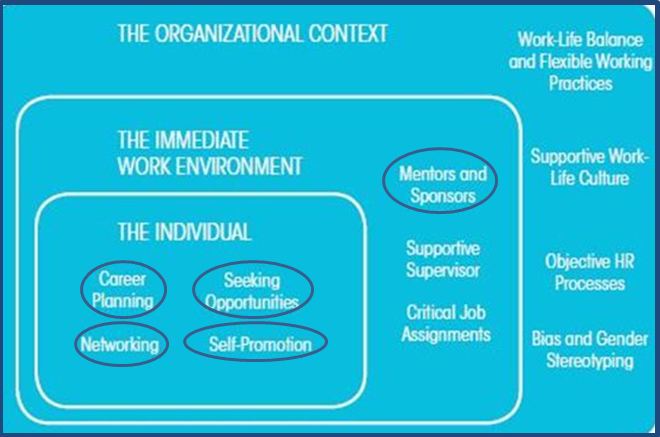
Kenexa Career Development Model-Individual Behaviors

Kenexa Career Development Model-Individual Behaviors

Part 1 of this post, Women’s Career Development: Career Planning, Career “Contest”, Sponsorship  highlighted Ines Wichart’s model of women’s career development with three levels and 11 components, based on her research as Kenexa High Performance Institute (KHPI), a subsidiary of IBM.

Ines Wichert

Ines Wichert

She outlined four behaviors that individuals can control or influence toward career advancement:

  • Career planning 
  • Opportunity-seeking, Negotiation
  • Career-building networking; Mentoring-Sponsorship    
  • Skillful self-promotion

The first segment of this two-part post considered facets of Career Planning and two independent paths to career advancement: Contest and Sponsorship routes.

Let’s consider the additional elements that respond to individual attention and efforts, including Opportunity-seeking while embracing risk.  

Susan Vinnicombe

Susan Vinnicombe

Val Singh

Val Singh

Highly effective career advancement opportunities include stretch assignments and on-the-job training.

Susan Vinnicombe and Val Singh of Cranfield University report that these development activities are most effective in building credibility, visibility, reputation as a capable, well-rounded leader.

However, their research found that women need more encouragement to take on challenging assignments than men, who are more likely to ask for these assignments.

Linda Babcock

Linda Babcock

Similarly, Linda Babcock reported that women tend to need encouragement to ask for promotions and salary increases.

Her research demonstrated that women are less likely to negotiate for their first salaries, unless they know that these are acceptable practices.

Manhattan CollegeAs a countermeasure, Babcock recommends negotiation practices demonstrated to mitigate negative perceptions by both men and women negotiation partners

Like Babcock, Mary Wade’s research at Manhattan College found that both men and women evaluated more negatively women who negotiated for salary using the same script as men.

Corinne Moss-Racusin

Corinne Moss-Racusin

Laurie Rudman

Laurie Rudman

Corinne Moss-Racusin and Laurie Rudman replicated this disconcerting finding at Rutgers University, leading to their formulation of “The Backlash Avoidance Model” (BAM)”.

According to this construct, women may demonstrate traditional gender role behaviors to mitigate “backlash” of negative reaction by men and women to “role discrepant” behaviors like asking for career advancement and commensurate compensation.

  • What approaches have been effective when you have asked for a salary increase or promotion?
         –How did you prepare?

         -How did you overcome objections?
  • When people ask you for a salary increase or promotion, what negotiation approaches have been most effective?
              -What have been least effective?

Wichart’s model of individual initiatives toward career advancement points to the importance of skillful professional networking, mentoring, and sponsorship.

National Center for Women and Information TechnologyNational Center for Women & Information Technology (NCWIT) reported that nearly half of technical women surveyed said they lack role models and mentors, and 84% said they lack sponsors.
The result is that these women are four times more likely to leave the current job role.

One reason that women’s professional networking efforts and seeking mentors may yield less effective career advancement than men:  Women tend to engage in professional networking for affiliation and emotional support with people close to their job level whereas men tend to network for career development with people significantly above the job level, according to Adelina Broadbridge of University of Stirling.University of Stirling

As a result of these differing approaches to professional networking, men may enjoy more rapid career advancement due to visibility and sponsorship.

Pamela Perrewe

Pamela Perrewe

F. Randy Blass

F. Randy Blass

In addition, women are likely to demonstrate less political understanding and insight because mentors are not sufficiently senior, according to Florida State University’s F. Randy Blass, Pamela Perrewe, and Gerald Ferris with Robyn Brouer of SUNY Buffalo.

Gerald Ferris

Gerald Ferris

Robyn Brouer

Robyn Brouer

Organizational support for formal and informal mentoring has been shown to increase employee engagement, satisfaction, and retention.

Therefore, organizations concerned with retaining talented women and minorities can increase the likelihood of keeping skilled employees by initiating structured mentoring programs and encouraging selective sponsorship.

  •  How have mentors and sponsors enabled your career moves?
  •  How do you decide who you are willing to mentor or sponsor?   

Previous posts have shared much current research and leading recommendations in building personal brand and practicing skillful self-promotion:

In light of the potential negative perceptions of women who showcase their accomplishments as they ask for salary increases and role advancement:

  •   How do you raise awareness of your accomplishments’ impact to avoid “backlash”?
  •   How do you define, develop, and communicate, “skillfully promote” your personal brand?

These research findings suggest three parting suggestions for women who want to Play Bigger:

  1. Question the thought that “I’m not ready yet.”
  2. Develop resilience and “a thick skin”:   If you are doing something innovative or important, you may draw both praise and criticism when you are noticed.
  3. Filter advice:  Implement recommendations that have “the ring of truth” and “resonate”;
    leave the rest.
  • What is the most helpful career advice you implemented?
  • What career advice have you decided not to implement?

Related Posts

©Kathryn Welds

Women Hedge Fund Managers Outperform Male Counterparts

Meredith Jones

Meredith Jones

Meredith Jones of Rothstein Kass, reported  that female hedge fund managers significantly outperform their male counterparts in Women in Alternative Investments: Building Momentum in 2013 and Beyond .
In the third quarter of 2012, women scored a net return of 8.95% compared to a 2.69% net return overall on the HFRX Global Hedge Fund Index.

Given women’s superior contribution to profitability, they would seem qualified for leadership roles in organizations seeking to maximize financial returns.
However, women hold fewer than 20% of top jobs in “alternate investment” organizations, according to 366 senior women in hedge funds, private equity, and venture capital.

Respondents attribute this low representation of women in executive roles to:

  • Low interest in remaining in this “alternate investment” sector due to limited opportunities for work-life balance.
    More than 18% of respondents said they wanted to work part-time or flex-time.
  • Few positions available for skilled women to establish a strong performance record.

Similar issues were discussed in Women’s Post-Business School Work-Life Issues .

Jones of Rothstein Kass suggested that some of women’s effectiveness is based on their greater patience and risk-averseness so they are “…potentially better able to escape market downturns and volatility.”

She continued, “…if women do in fact have a different, more risk-averse investing profile, then at least theoretically, their returns, particularly in difficult markets, should be higher than those of their male counterparts.”  

Kelly Easterling

Kelly Easterling

Kelly Easterling and Camille Asaro, also of Rothstein Kass, contributed to the report, which found women’s assessment of their most important professional assets:

  • Professional networks
  • Strong personal and support networks
  • Strategic career planning
  • Willingness to take considered risks

Jean Brittingham

Jean Brittingham

Jean Brittingham of The Smart Girls Way posited additional correlates of women’s effective financial performance:

  • Systems-thinking skills
  • Seeking balance between work and life
  • Caring more about solutions than who gets credit
  • Strong collaboration competencies
  • Persistence when “passionate about something”

Camille Asaro

Camille Asaro

The Rothstein Kass report noted that some U.S. states have mandates for diversity in their asset management firms, and observed an increase in state public pension plans with stated or implied preference for women-owned investment managers.

-*In which industries have you observed women delivering equal or better results than male counterparts?

Related posts

Twitter:  @kathrynwelds
Google+
Blog: – Kathryn Welds | Curated Research and Commentary 
LinkedIn Open Group Psychology in Human Resources (Organisational Psychology)
Facebook Notes

©Kathryn Welds

How Well Do Today’s Career Choices Endure Over Time?

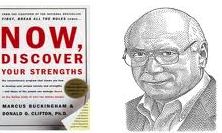
Donald Clifton

Donald Clifton

Career development and job search are founded on uncovering individual skills, competencies, strengths, capabilities, interests and likes.

This discovery can involve introspective “personal archaeology,” often enabled by standardized career and personality assessment tools.

However, social science research suggests that it is difficult to “know” preference – career and otherwise – in order to map this “supply” to the “demand” in available career roles.

Gilbert Ryle

Gilbert Ryle

More than 60 years ago, acclaimed Oxford University philosopher Gilbert Ryle foreshadowed the philosophical and cognitive problems entailed in “knowing one’s own mind.”

Rene Descartes

Rene Descartes

Ryle considered how people acquire attitudes, traits, and their dispositions to act in The Concept of Mind  , an erudite attack on Cartesian dualism of mind and body

Daryl Bem

Daryl Bem

Two decades later, Daryl Bem of Cornell University substituted laboratory research for Ryle’s philosophical reasoning, and demonstrated that people may not know what they like or their skills until they observe their behavior in studies of “self-perception theory.”

Bem found that people draw inferences about who they are and they “become what they do,” particularly when people are not certain of what they think or feel, and when they believe that they freely chose to behave as they did.

Bruce Hood

Bruce Hood

Bruce Hood of University of Bristol expanded the self-perception argument to posit that “the self” is an illusion, so it is difficult to “know” what the “self” likes, values, and prefers.

However, behaviors can be shaped and constrained by external social standards:  People learn to become themselves by interacting with others, according to Charles Horton Cooley, who coined the term “the looking glass self” more than a century ago.

Charles Horton Cooley

Charles Horton Cooley

Therefore, people may choose a career acceptable to parents or social observers who attribute “respect” and “prestige.”

Hood showed that the fluid process of constructing the self is a created narrative which is experienced as “a cohesive, integrated character.”
Since the “self” is constructed, it changes over time, and people significantly and consistently underestimate how much they will change in the future.

This finding has important implications for anyone seeking to distill values, strengths, and preference a job search “elevator speech,” “value proposition,” and “pitch.”

Introspection, therefore, offers limited career insight and guidance: People need to see how they respond, then infer attitudes and preferences for career and other life choices.
This argues for taking exploratory action to “try on” choices, such as in “realistic job previews” found in internships and other on-the-job experiences.

The challenge to career development and decision-making doesn’t end there.
Even if it’s possible to infer preferences from one’s behavior, those inferences are likely to change – a lot – over time.
This means that today’s career may not change in synchrony with one’s personal changes.

Daniel Gilbert

Daniel Gilbert

Daniel T. Gilbert and Jordi Quoidbach of Harvard collaborated with Timothy D. Wilson of the University of Virginia demonstrated this shift in in personalities, values, and preferences over decades of life – and people’s underestimate of these changes – and called it the “end of history illusion.”

Jordi Quoidbach

Jordi Quoidbach

They surveyed more than 19,000 people ages 18 to 68 and found that  young people, middle-aged people, and older people all believed they had changed a lot in the past decade but would change relatively little in the future decade.

Timothy Wilson

Timothy Wilson

The researchers reported that the typical 20-year-old woman participant’s predictions for her next decade were not nearly as radical as the typical 30-year-old woman’s recollection of how much she had changed in her 20s, with this trend holding for volunteers into their 60s.

They found that participants were able to accurately recall personality changes that correlated well expected results, based on independent research charting of personality trait shifts with age.

Gilbert, Quoidbach and Wilson conducted lab studies that found people tend to overpay for future opportunities to indulge their current preferences due to this “end of history” illusion.
This trend may have significant consequences when choices involve potential life partners, long-term financial commitments, and career choices.

These researchers suggest that people underestimate future changes because people may be threatened by the idea that current values and preferences are transitory.
They speculate that such a realization may lead people to doubt many decisions, and experience decision-slowing due to anxiety.

An alternate explanation is that the mental energy required to imagine future changes exceed the effort of recalling the past, so “people may confuse the difficulty of imagining personal change with the unlikelihood of change itself.”

Dan McAdams

Dan McAdams

Dan McAdams of Northwestern University seconded this view and added, “The end-of-history effect may represent a failure in personal imagination,” based on his observations of how people construct stories about their past and future lives in Identity and Story: Creating Self in Narrative (The Narrative Study of Lives).
He noticed that many people tell complex, dynamic stories about the past but then make vague, prosaic projections of a future similar to the present.

These findings suggest that introspection and standardized assessment instruments may have more value when coupled with observing one’s actual behavior and reflected impressions from others.

Additionally, it is wise to:

  • Anticipate the value of changing, expanding, or modifying one’s job role over time
  • Develop a wide array of transferrable skills, applicable across a variety of domains to increase the breadth of options for later preferences.
  • How do you uncover or infer your career strengths and preferences?
  • How do you monitor a possible “end of history” illusion when making career plans?

Related Posts

©Kathryn Welds

Why Organizations Care about Employee “Happiness”

“Command-and-control” managers of the past might have scoffed at current business research on happiness.
Under their spans-of-control, employees ought to have been happy to have a job from which they derived an income.
This view has been supplanted by widespread recognition that desirable outcomes like innovative problem solving, flexible decision making, and workplace productivity are associated with employees’ positive mood.

GallupResearch by the Gallup Organization offers further justification in its finding that disgruntled employees disengage and cost the American economy up to $350 billion a year in lost productivity.

Therefore, organizations can increase financial performance by improving operational efficiency in the many processes involving people.

Sigal Barsade

Sigal Barsade

Sigal Barsade of the Wharton School of Business contributed to the investigation of happiness’s impact on organizational productivity.
She found that positive moods prompt “more flexible decision-making, wider search behavior and greater analytic precision,” which enable the organization to take considered risks.

Jennifer Aaker

Jennifer Aaker

On the other coast, Jennifer Aaker, award-winning professor at Stanford Graduate School of Business, links workplace happiness and a sense of meaning.

She asserts that having a meaningful impact on the world is a strong predictor of happiness and that it’s possible to cultivate mindfulness and awareness of meaning in work and personal activities.
This cultivated awareness, she said, influences people’s subjective well-being and may positively affect that of others in a contagion effect.

Jonathan Haidt

Jonathan Haidt

New York University’s Jonathan Haidt, a psychologist in the Stern School of Business, takes a more philosophical view of happiness.
He redefines “wisdom” – other might say “leadership” or “self-management” – as the ability to adapt, shape the environment, and know when to move to new environments.

His moral and ethical framework includes high-level philosophical “virtues” associated with a sense of well-being and shared across cultures:

  • Courage
  • Humanity
  • Justice
  • Temperance
  • Transcendence

The Happiness HypothesisHaidt’s book, The Happiness Hypothesis: Finding Modern Truth in Ancient Wisdom , specified contributors to well-being:

  • Strong marriages
  • Physical touch
  • Meaningful relationships
  • Religious affiliation
  • Autonomy
  • Meaningful engagement in work
  • Contributing to a community through voluntary effort

Engineering organizations analyze issues according to “Is-Is Not.
Using this approach, Jonathan Haidt’s research offered some surprising happiness detractors or “is-nots”:

  • Persistent noise
  • Long commutes
  • Lack of situational and person control
  • Shame
  • Dysfunctional relationships

Matthias Mehl

Matthias Mehl

Matthias Mehl of the University of Arizona offered an additional contributor to happiness: Interpersonal dialog.
He found that volunteers who engaged in a meaningful conversation create shared meaning, strengthened their connections, and reported feeling happy.

Jennifer Michael Hecht

Jennifer Michael Hecht

Jennifer Michael Hecht’s The Happiness Myth, offers a framework for types and levels of happiness:

  • Good day, awareness, savoring, and gratitude for the fortunate conditions of one’s life
  • Good life, engaging in meaningful and challenging tasks that help provide a material quality of life and doing one’s best in any endeavor
  • Peak, choosing experiences that inspire awe and a sense of the eternal, connect to families and communities.

The Happiness MythShe cites familiar recommendations to:

  • Cultivate self-knowledge
  • Develop a clear view of one’s worth
  • Moderate desires
  • Appreciate mortality and time limits
  • Try new things
  • Increase involvement with others and the community.

Organizational policies can contribute to employees’ sense of well-being through establishing:

  • Opportunities for career movement and development
  • Regular acknowledgement and praise for a job well done
  • Focus on well-being as individuals through health and work/life integration programs

The payoffs to organizations include increased productivity, innovation and engagement.

-*How have you seen efforts to increase organizational “happiness” result in improved employee engagement, productivity, or decision-making?

Related Posts:

©Kathryn Welds

Extract More Value from Meetings with Effective Questions

Shane Snow

Shane Snow

Shane Snow, co-founder of Contently.com  advocates asking incisive questions to extract more value from meetings, mentors’ guidance, and chance encounters with thought leaders and influencers.

He notes that expert journalists, researchers, innovators, and therapists are trained to ask effective questions, and their common “best practices” include:

  • Listening more than talking
  • Asking open-ended questions to avoid suggesting responses: “Who?”, “What?”, “When?”, “Where?”, “How?”, “Why?”
    They use closed-ended questions sparingly: “Is?”, “Would?” and “Do?”
  • Posing one concise question at a time.
    They avoid multiple choice questions
  • Waiting for an answer without interjecting more questions or comments.
    They rarely interrupt themselves or others
  • Tolerating the other person’s silence for several seconds before talking
  • Directly, repeatedly probing for insightful, revealing replies
  • Nodding only when the response is intelligible, logical, and understandable
  • Interjecting questions or rephrasing the original question to redirect tangential responses
  • Cross-checking information and following up possible inconsistencies with more probing questions

Sakichi Toyoda

Sakichi Toyoda

Nearly a century earlier, Sakichi Toyoda, founder of Toyota Industries introduced an iterative problem-solving approach based on posing “Five Whys” to uncover the root cause of an issue.

The Lean StartupThis technique is now-widely applied in Lean Manufacturing, and is advocated by Eric Reis in The Lean Startup: How Today’s Entrepreneurs Use Continuous Innovation to Create Radically Successful Businesses .

‘”Five Whys” were reduced to “Three Whys” to uncover customer objections in sales situations, and was modified Judith Beck in cognitive therapy to identify underlying Core Beliefs that lead to negative automatic thoughts.

Judith Beck

Judith Beck

Beck softens the “Five Whys” by repeatedly asking “If that were true, what would it mean?”
Her model that suggest connections among:

Early experience->Core beliefs (schemas) ->Underlying assumptions (if/then – conditional) ->Automatic thoughts-> Physical Experiences->Self-Limiting Behaviors

Five Whys to Uncover Core Beliefs

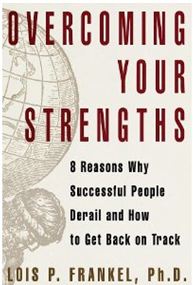
Lois Frankel

Lois Frankel

Therapist and writer Lois Frankel illustrated the similarity of effective questions in psychotherapy sessions with those used to spur inquiry and innovative breakthroughs.
She advises interviewers and consultants to:

  • Use questions to define your purpose:
    What do you want to gain from this conversation?

    • Help
    • Advice
    • Information
    • Commitment
    • New ideas
    • Clarification of opinions or attitudes
    • Decision
      Overcoming your strengths
    • What is the “real” problem? Engineers and business people answer this question using a “Root Cause Analysis”
      • What are the options?
      • What are the likely consequences?
      • What results will justify the invested time, effort or money?
      • Ask specific questions:
        • What could we do differently?
        • Why is this important?
        • How can we best meet our objective?
        • What do you want to happen?
          • What don’t you want to happen?
          • What is the best thing that could happen?
          • What is the worst thing that could happen?
          • How will you react if you don’t follow this course of action?

Frankel advises to

  • Maintain eye contact:
  • Focus full attention on the interviewee
  • Repeat and summarize important points to verify accurate understanding
  • Listen for:
  • Content (facts)
  • Intent (feelings)
  • The way these are expressed (process).

    Warren Berger

    Warren Berger

    Journalist Warren Berger applied refined questioning in Design Thinking processes to produce innovative solutions in Glimmer: How Design Can Transform Your World .

    He advocates continued exploration of meaningful “big” questions in his blog, A More Beautiful Question.

-*What effective questioning practices have you found most helpful in achieving business results?

Related Posts:

Twitter:   @kathrynwelds
Blog: – Kathryn Welds | Curated Research and Commentary
Google+
LinkedIn Open Group Psychology in Human Resources (Organisational Psychology)
Facebook Notes:

©Kathryn Welds

Beware of Seeking, Acting on Advice When Anxious, Sad

Just as wise grandmothers advise, it’s best to avoid decisions when upset, anxious, or sad.

Maurice Schweitzer

Maurice Schweitzer

Maurice Schweitzer and Alison Wood Brooks of Wharton validated Grandmother Wisdom in eight experiments that demonstrated anxiety’s impact on lowering self-confidence, impairing information processing, and impeding ability to distinguish advice from neutral advisors and those with a conflict of interest.

Alison Wood Brooks

Alison Wood Brooks

They found that people experiencing anxiety tend to seek advice and act on it, but they are less able to differentiate poor advice from valid recommendations, and these results are applicable to making decisions about crucial medical treatment, financial investments, or even guidance counseling.

The team evoked anxious feeling among volunteers by presenting potentially frightening film clips and music, and asked them to judge a person’s weight based on a photograph or number of coins in a jar or solve a complex math problem.

Participants were offered money for correct judgments, and the opportunity to receive advice from others when they were uncertain.
Those who heard the scary music or saw the alarming film clip rated themselves as less confident of their decision, and were more likely to ask others for advice.
These effects were not observed when volunteers were shown a film clip that could provoke anger.

Schweitzer and Brooks concluded that people vary in their receptivity to advice based on:

  • Advisor’s characteristics, such as expertise, consistent with Cialdini’s observation

    Robert Cialdini

    Robert Cialdini

  • Perceived difficulty of the decision
  • Decision maker’s emotional state when receiving advice

The researchers advised decision-makers to:

  • Monitor their internal states for anxiety
  • Use feedback from multiple sources when making important decisions
  • Work toward developing increased self-confidence
  • Evoke calm state, often possible with systematic breathing or mindful attention and equanimity

Catherine Hartley

Catherine Hartley

Catherine Hartley, then of New York University and Elizabeth Phelps of New York University contributed to the neuroeconomic analysis of anxiety’s impact on decision- making when they reported that brain structures responsible for regulating fear and anxiety are also involved in economic decision-making under uncertain conditions.

Elizabeth Phelps

Elizabeth Phelps

Specifically, the amygdala is crucial in learning, experiencing, and regulating both fear and anxiety and it is also implicated in decision-making in situations of potential loss.
The prefrontal cortex is specialized in controlling fear and is also involved in decisions containing risk elements.

Hartley and Phelps suggest that techniques for altering fear and anxiety may also improve economic decisions-making.

Rajagopal Raganathan

Rajagopal Raganathan

Rajagopal Raghunathan, then of New York University and Michel Tuan Pham of Columbia University demonstrated the same connection between anxiety and making decisions about gambling and job selection.

Michel Tuan Pham

Michel Tuan Pham

They conducted three experiments and found that sad individuals select high risk / high-reward gambling and job options, whereas anxious individuals are biased in favor of low-risk / low-reward options.

Raghunathan and Pham posit that anxiety tends to motivate people to reduce uncertainty whereas sadness moves people to replace rewards.
They suggest suggesting two different decision biases related to mood states.

Raghunathan and Pham add to Schweitzer and Brooks’s recommendations for mitigating decision bias:

  • “Monitor feelings”
  • Consider alternate options
  • Speculate on future moods and preferences if each option were selected: “What would I feel better about . . .?

-*How do you mitigate the potential decision bias when anxious or sad?

Related posts:
Memorable Business Stories: Ideas and Numbers
Business Influence as “Enchantment”

  • ©Kathryn Welds
Health Benefits of Positive Emotions, Outlook

Barbara Fredrickson

Barbara Fredrickson

Barbara Frederickson of University of North Carolina posits that negative emotions aid human survival by narrowing and limiting people’s perceived range of possible actions, whereas positive emotions enhance survival by “broadening and building” options for action.

She detailed her lab-based research in Positivity: Top-Notch Research Reveals the 3 to 1 Ratio That Will Change Your Life and her talk at UC Berkeley Greater Good Science CenterPositivity

Her lab’s findings suggest that positive thinking expands awareness and perception of the surrounding world, so can lead to innovative solutions to problems.

She suggests intentionally implementing a “broaden-and-build” approach to emulate this expanded view: Choose a degree of focus and perspective depending on requirements.

For example, to garner more clout in a discussion, she suggests involving more people who will provide support.
Similarly, to mitigate negative thinking or “tunnel vision,” think more broadly by viewing “the big picture.”

Rosabeth Moss Kanter of Harvard Business School referred this perceptual shift as “zooming in” and “zooming out”, depending on the perspective requires.

Rosabeth Moss Kanter

Rosabeth Moss Kanter

Frederickson found that people who experience positive thinking are:

* Healthier
* More generous
* More productive
* Bounce back from adversity more quickly
* Are better managers of people
* Live longer
than those with a bleaker outlook.

Fredrickson’s research implies that positive emotions can mitigate the cardiovascular effects of negative emotions and stress.

In these activated conditions, people generally have increased heart rate, higher blood sugar, greater immunosuppression.
These conditions tax physical systems and can lead to life-threatening illnesses like coronary disease.

To mitigate these negative health consequences, Fredrickson recommends observing positive emotional experiences of joy, gratitude, serenity, interest, hope, pride, amusement, inspiration, awe, and love.
Besides noticing these experiences, she advocates writing and meditating about these to increase grateful awareness.

In addition, Frederickson echoes common wisdom:

  • Spend time in nature to appreciate the natural world
  • Develop interests
  • Invest time in relationships
  • Reduce exposure to negative news
  • Practice kindness
  • Dispute negative thoughts and replace them with more positive, realistic thoughts.

Frederickson extends her research agenda on positive emotions in her latest book, Love 2.0: How Our Supreme Emotion Affects Everything We Feel, Think, Do, and Become. Love 2-0

She broadens the concept of love to suggest that love – or an intense connection – occurs when people share positive emotion.
This lead to alignment between people’s biochemistries,  particularly the release of oxytocin and vagal nerve functioning.
Related emotions and behaviors synchronize and mirror each other, resulting in shared interest in mutual well-being  in a three-phase  “positivity resonance.”

She argues that love “literally changes your mind.
It expands your awareness of your surroundings, even your sense of self.
The boundaries between you and not-you – what lies beyond your skin – relax and become more permeable.
While infused with love, you see fewer distinctions between you and others.”

Fredrickson argues that this intense connection requires physical presence, and cannot be replaced by existing digital media — reinforcing her recommendation to invest in relationships with others.

-*What practices enable you to cultivate and sustain positive emotions?

Related posts:

Twitter:  @kathrynwelds
Google+:
Blog: – Kathryn Welds | Curated Research and Commentary
LinkedIn Open Group Psychology in Human Resources (Organisational Psychology)
Facebook Notes:

©Kathryn Welds

Reduce Evaluator Bias: Showcase Best Features in Any Offer

Less can be more when designing offers, whether when offering services in job applications, crafting sales offers, or positioning for advantage in any negotiation.

Kimberlee Weaver

Kimberlee Weaver

Kimberlee Weaver of Virginia Tech and University of Michigan’s Stephen Garcia and Norbert Schwarz showed that more is not better in augmenting offers when additional elements are of lower quality.

Stephen Garcia

Stephen Garcia

Using the Presenter’s Paradox in a series of studies, they showed that positive impressions can be reduced when they are presented in the company of lower value items.

Norbert Schwartz

Norbert Schwartz

Weaver, Garcia and Schwarz offered volunteer “buyers” different iPod Touch packages: iPod and cover OR this package with a free music download.

“Buyers”, on average, offered to pay more for the lesser package, and sellers inaccurately expected that buyers would prefer the fully-featured package.
This suggests that expectations about consumer preferences may be poor predictors of people’s actual selection and purchasing behaviors.

The average price offered for the basic package, iPod and cover was $242, but the package with one free song download averaged just $177.
The additional feature reduced package’s perceived value by more than 25%.

Those designing and evaluating offers can mitigate the impact of this judgment bias by considering the value of the overall offering, then eliminating lower-value components that might reduce the comprehensive value.

This is relevant to job seekers who might be tempted to “pad” a resume with low-value activities, accomplishments and skills.
Weaver, Schwartz, and Garcia’s findings suggest that showcasing most compelling capabilities provides a more power presentations of personal and product attributes.

Santa Clara University’s Jerry Burger might argue that “more might be more” when he found that Steve Jobs’s “that’s-not-all” (TNA) technique was more effective than the much-researched “door-in-the-face” (DITF) approach in gaining agreement to sales propositions.

Jerry Burger

Jerry Burger

That’s-not-all” offers a product at a high price, then doesn’t allowing the volunteer to respond immediately.
The procedure follows up by augmenting the offer with another product or lowering the price.

Burger found “that’s-not-all” produced superior simulated sales outcomes to the much-researched “door-in-the face” (DITF) approach, which presents an unreasonably high offer, then follows with a more acceptable proposal.

Numerous replications of “door-in-the-face” have shown than people are more likely to agree to a second more modest request after an unreasonable high first proposal.
Even when the same offer is presented as a single offer, people are significantly more likely to accept it when it’s presented after an unreasonable proposal.

Burger suggested that “that’s-not-all” may have produced greater compliance because people felt obliged to respond to a new offer through an implicit norm of reciprocity,  and because the augmented offer changed the perceived anchor point that volunteers used to evaluate the offer.

-*How do you mitigate bias in evaluating offers?
-*How do you design the most attractive offer when offering something for sale?
-*Which technique for designing offers has been most persuasive to you as a purchaser?

Related Posts
:

Twitter:    @kathrynwelds
Google+:
Blog: – Kathryn Welds | Curated Research and Commentary  
LinkedIn Open Group
Facebook Notes:

©Kathryn Welds