Perceived Power Affects Vocal Characteristics, Life Outcomes

Margaret Thatcher

Margaret Thatcher

British Prime Minister Margaret Thatcher participated in vocal training to project greater authority in her political role, with highly effective results.

Even without specific vocal training, research volunteers adopted powerful vocal elements when believed they had power and informational advantages in lab experiments by San Diego State University’s Sei Jin Ko and Melody S. Sadler with Adam D. Galinsky of Columbia.

Sei Jin Ko

Sei Jin Ko

Ko’s team asked more than 160 volunteers to read a text designed to evaluate speaking skills as a baseline for later comparison.
Then, they randomly assigned volunteers to a “high” ranking role with the prime “you have a strong alternative offer, valuable inside information, or high status in the workplace, or by asking participants to recall an experience in which they had power.

The remaining participants were told they had “a weak offer, no inside information, or low workplace status,” or were asked to recall an experience in which they lacked power.

Melody Sadler

Melody Sadler

To compare the impact of these power primes with the baseline reading performance, participants in both groups read a text about negotiating.
People in the high power group spoke in a higher pitch, with greater volume, and less tone variability than the low-power group.
In fact, team Ko found that people in the high power prime group had a similar vocal profile to Thatcher following her vocal training.

Mariëlle Stel

Mariëlle Stel

This contrasts previous research that demonstrated lower vocal pitch is associated with greater perceived power in work by Tilburg University’s Mariëlle Stel and Farah M. Djalal with Eric van Dijk and Wilco W. van Dijk of Leiden University, collaborating with University of California, San Diego’s Pamela K. Smith.

Eric van Dijk

Eric van Dijk

In additional investigations by Ko’s team, additional participants listened to recordings of people who read in the previous condition, and accurately determined which volunteers conveyed higher status and were more likely to engage in high-power behaviors, based only on vocal elements.

Joris Lammers

Joris Lammers

Power primes” or asking people to recall a time they had power and felt powerful, can significantly influence important life opportunities determined by hiring and university admission decisions, reported Tilburg University’s Joris Lammers with David Dubois of INSEAD and Northwestern’s Derek D. Rucker collaborating with Adam D. Galinsky of Columbia.

Thomas Mussweiler

Thomas Mussweiler

Self-generated primes are especially influential because they lead to “assimilation of the power suggestion, whereas primes provided by other people, as in Ko’s investigation, yield “contrast,” suggested Universität Würzburg’s Thomas Mussweiler and Roland Neumann.

Egon Brunswik

Egon Brunswik

The strong impact of beliefs about power has been explained by Egon Brunswik of Berkeley’s “lens model” of perception, self-fulfilling prophecy theory by University of California’s Robert Rosenthal, and self-efficacy theory described Stanford’s Albert Bandura.

These findings suggest that beliefs about personal power shape behaviors like vocal profile, which can lead to differing outcomes in occupational and life opportunities.
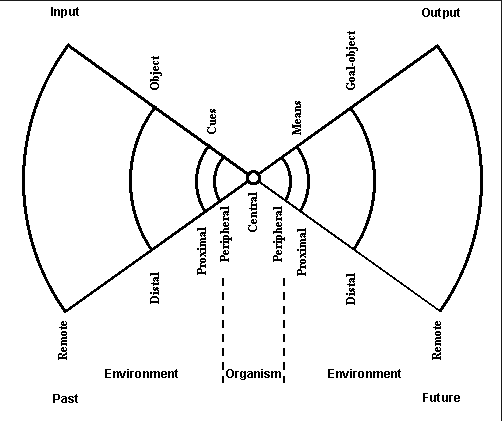
Egon Brunswik's Lens Model

Egon Brunswik’s Lens Model

  • How do you modify your voice to convey power and authority?
  • How do you develop confidence in your power?

RELATED POSTS:

©Kathryn Welds
Reduce “Time Famine” By Doing for Others

Feeling “starved for time,” with “too much to do and too little time to do it”? University of Michigan’s Leslie Perlow identified the subjective experience “time famine” among software engineers, whose productivity was reduced based on frequent interruptions by others, a pervasive “crisis mentality,” rewards linked to “individual heroics.”

Cassie Moligner

Cassie Moligner

One counterintuitive remedy for “time famine” is giving time by helping other people.
This use of time increased feelings of “time affluence” in a study by Wharton’s Cassie MolignerZoë Chance of Yaleand Harvard’s Michael I. Norton.

Ernst Pöppel

Ernst Pöppel

Volunteers judged that they “did a lot with their time,” and had more available time when they helped others.
Mogilner and colleagues analyzed people’s elementary time experiences,” described by Ernst Pöppel of Ludwig-Maximilians-Universität München.

Francis Wade

Francis Wade

As Francis Wade of 2Time Labs pointed out, people cannot increase actual chronological time, but individual time experiences can vary based on physiological state, emotion, and context.

Moligner’s team compared people’s perceptions of time abundance when they:

  • Did something for someone else by writing an encouraging note to a gravely ill child or helping an at-risk student by editing his or her research essay for 15 minutes,
  • Spent 10 minutes doing something “for yourself that you weren’t already planning to do today,”
  • Spent 30 minutes doing something for someone else “that you weren’t already planning to do today,”
  • “Wasted” time on a low-meaning task by counting the letter “e” in multiple pages of Latin text,
  • Gained unexpected “free” time when they learned that “all essays had been edited,” so they could leave early.

Spending time on others seemed to “expand the future” and increase the perceived amount of available time, compared with spending time on oneself or “finding” free time.
In fact, people who unexpectedly gained fifteen minutes actually spent less time on a later required task than those who invested time helping another person.
This suggests that spending time pro-socially may increase one’s future work efforts, whereas finding free time may diminish work motivation.

Michael DeDonno

Michael DeDonno

Perceived time pressure undermined learning performance more than actual time constraints on the Iowa Gambling Task (IGT), found Florida Atlantic University’s Michael DeDonno and Heath Demaree of Case Western.

The team told more than 80 volunteers that time available for the task was “insufficient,” whereas they advised another group of more than 80 people that they had “sufficient” time to complete the task.
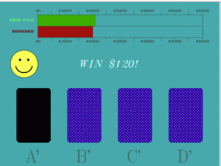
The time available to both groups was identical and adequate to complete the IGT, which asks participants to select from four decks of cards to win as much “money” as possible.

Heath Demaree

Heath Demaree

Two of the decks yield higher payoffs or “positive utility” whereas the remaining two decks render less favorable winnings, offering “negative utility.”
To win, participant learn which decks offer the greatest payoff in the shortest time for 100 trials.

Each group of more than 80 volunteers was separated into two sub-groups given different amounts of time between card selections to consider the task, while the total time available remained the same.

People who thought they had insufficient time for the task achieved lower payoff than volunteers who believed they had enough time.
Since both groups had the same amount of time, the performance difference was attributed to their beliefs about time constraints, suggesting the importance of focusing on the task rather than on potential time limits.

Steven J. Karau

Steven J. Karau

Actual time constraints affected both group interactions and task performance in a planning task evaluated by Southern Illinois University’s Steven J Karau and Janice R Kelly of Purdue.

They asked 36 groups of three volunteers to complete a planning task while group interactions were videotaped and coded using the Time-by-Event-by-Member Pattern Observation (TEMPO) system, developed by Texas Tech’s Gail Clark Futoran, Janice Kelly of Purdue, and University of Illinois’s Joseph McGrath.

Gail Clark Futoran

Gail Clark Futoran

Twelve of the groups had inadequate time, whereas another twelve groups had optimal time for task completion, and the final twelve groups has more than enough time.

Group performance was evaluated based on:

  • Length,
  • Originality,
  • Creativity,
  • Adequacy,
  • Issue Involvement,
  • Presentation quality,
  • Optimism,
  • Action orientation.

The groups that had greater time constraints actually focused less on the task than groups with more time, supporting Karau and Kelly’s recommendation to maintain task focus when performance time is limited to optimize performance.

Janice Kelly

Janice Kelly

Time constraints differentially affected each performance evaluation, and one way to mitigate the impact of time constraints is to shift focus from perceived time scarcity and stress to attend to the task.

-*How do you maintain task focus when perceiving time pressure?

-*To what extent does investing time in other people give you the sense of greater “time abundance”?

Follow-share-like http://www.kathrynwelds.com and @kathrynwelds

RELATED POSTS:

Twitter  @kathrynwelds
Blog – Kathryn Welds | Curated Research and Commentary
Google+
LinkedIn Open Group Psychology in Human Resources (Organisational Psychology)
Facebook Notes

©Kathryn Welds

Recognizing, Coping with Long-Lasting Emotions

Philippe Verduyn

Philippe Verduyn

Most people feel sad longer than they feel ashamed, surprised, irritated or bored because sadness is most often triggered by important events that require time for emotional and cognitive processing, according to University of Leuven’s Philippe Verduyn and Saskia Lavrijsen.

Saskia Lavrijssen

Saskia Lavrijssen

This finding that emotions triggered by personally-important events are longer-lasting may seen intuitively obvious, but Verduyn and Lavrjsen empirically validated earlier hypotheses suggested by University of Amsterdam’s Joep Sonnemans and Nico Frijda as well as University of Leuven’s Verduyn, Iven Van Mechelen, and Francis Tuerlinckx.

Joep Sonnemans

Joep Sonnemans

They asked more than 230 volunteers to remember recent emotional episodes and report their duration.

Klaus R. Scherer

Klaus R. Scherer

Participants also described their strategies to evaluate and deal with emotions categorized by Swiss Center for Affective Sciences’ s Klaus R. Scherer, including admiration, anger, anxiety, being touched, boredom, compassion, contentment, desperation, disappointment, disgust, enthusiasm, fear, gratitude, guilt, hatred, hope, humiliation, irritation, jealousy, joy, pride, relaxation, relief, sadness, shame, stress, and surprise.

James Gross

James Gross

Volunteers rated coping strategies according to a model of emotional regulation developed by Stanford’s James Gross and Ross A. Thompson of University of California Davis:

  • Situation selection – Entering the situation that elicited emotion
  • Situation modification – Trying to change the event that elicited the emotion
  • Distraction – Attempting to distract attention from the emotional situation
  • Rumination – Continued thinking about feelings and consequences of the event
  • Reflecting – Considering the emotion-eliciting event, but not repetitively ruminating
  • Reappraisal – Trying to differently view the emotion-eliciting event
  • Emotional suppression – Attempting to stop experiencing the emotion
  • Expressive suppression – Trying not expressing the emotion.
Iven Van Mechelen

Iven Van Mechelen

Participants also rated their appraisal of the situation that triggered emotion based on Scherer’s Geneva Appraisal Questionnaire:

  • Event importance – Extent the event that elicited the emotion was important to them
  • Event impact – Advantages and disadvantages of the event that elicited the emotion
  • Other responsibility – Degree that someone else was responsible for the emotion-eliciting event
  • Self responsibility – Degree that they were responsible for the emotion-eliciting event
  • Problem-focused coping – Extent that they could change something about the emotion- eliciting event
  • Emotion-focused coping – Extent that they could change something about the emotion elicited by the event
  • Expectedness – Degree to which they anticipated the emotion-eliciting event
  • Negative impact on self-image – Extent to which they judged the emotion-evoking event as reducing self-esteem
  • Injustice – Degree to which they judged the emotion-eliciting event as unjust
  • Immorality – Extent to which they judged the emotion-eliciting event as immoral.

Verduyn and Lavrijsen differentiated emotions from moods by telling volunteers that an emotion is always elicited by an external or internal event with a specific onset point.

Karen Brans

Karen Brans

The team also provided two differing definitions of an emotion’s end point:
Half the participants were told than an emotion ends as soon as the emotion is no longer felt for the first time (except for sleep) whereas the remaining volunteers were told than an emotion ends as soon as one has fully recovered from the event.

Emotion duration differed for similar emotions, such as persistent guilt compared with transient shame, and longer-lasting anxiety contrasted with intense but fleeting fear.

Susan Nolen-Hoeksema

Susan Nolen-Hoeksema

Two regulation strategiesrumination and reflection – and one appraisal dimensionevent importance – were associated with increased emotion duration, supporting theories by KU Leuven’s Iven Van Mechelen, Verduyn, and Karen Brans, and empirical research by Yale’s Susan Nolen-Hoeksema.

Of these 27 emotions, sadness lasted the longest.
Other positive and negative emotions, including shame, surprise, fear, disgust, boredom, being touched, irritated or feeling relief, rapidly dissipated, supporting other findings by Verduyn and Brans.

Though boredom, shame, and fear seem to endure endlessly, this research indicates that they are more transient than most people expect.
These unpleasant experiences pass, as do significant incidents that require time to “process.”

Follow-share-like http://www.kathrynwelds.com and @kathrynwelds

  • What coping and appraisal strategies are most helpful in shortening the duration of unpleasant emotions?

RELATED POSTS:

Twitter  @kathrynwelds
Blog – Kathryn Welds | Curated Research and Commentary

Google+
LinkedIn Open Group Psychology in Human Resources (Organisational Psychology)
Facebook Notes

©Kathryn Welds


Do “Hot” Emotions Lead to Better Decisions?

-*Do people in an agitated emotional state tend to make decisions they later regret?

Popular wisdom counsels against making decisions when influenced by “hot emotions” including feeling HALT – Hungry, Angry, Lonely, Tired,
This guidance is based on the assumption that these physical and emotional experiences lead to regrettable decisions, such as relapsing to substance use.

Shane Frederick

Shane Frederick

Contradictory theories and research findings compete to explain the process of emotional decision-making.
One view, suggested by Princeton’s Nobel laureate Daniel Kahneman with Shane Frederick of Yale, is that these two modes operate sequentially:  Intuitive judgments (“reflexive system”) are rapidly generated, whereas the analytical decisions (“reflective system”) are slower, and involve monitoring and modifying initial intuitive responses.

Andreas Glöckner

Andreas Glöckner

A contrasting view is that the two thinking modes work in parallel, and are applied in different decision environments, proposed by Max Planck Institute’s Andreas Glöckner and Tillman Betsch of Universität Erfurt.

J. Scott Armstrong

J. Scott Armstrong

Similarly, there are two divergent views of the quality of emotional decision-making.
One position is that the intuitive mode’s emotional approach may lead to faulty decisions, argued by Decision Research’s Donald MacGregor and J. Scott Amstrong of Wharton.

Marius Usher

Marius Usher

A counterpoint view is that the intuitive mode yields equal or better decisions compared with the analytical mode, offered by Tel Aviv University’s Marius Usher, Ran Brauner, and Dan Zakay with Zohar Rusou of Open University of Israel and University College London’s Mark Weyers.

Antonio Damasio

Antonio Damasio

Consistent with this view that intuitive thinking can enhance decisions, University of Southern California’s Antonio Damasio suggested that uncomfortable physical states like hunger, can provide access to unconscious processes that may determine decisions later rationalized with more rational explanations:  We feel, therefore we are, despite Descartes’ contrary assertion, he argued.

Dan Zakay

Dan Zakay

An integrative view is that decision quality depends on consistency (“transitivity”) between thinking modes during decision-making and characteristics of the decision, proposed Tel Aviv University’s Zohar Rusou and Marius Usher, with Dan Zakay of IDC Herzliya in their comparison of thinking during intuitive or analytical tasks.

Based on these views of thinking during decision making, the HALT theory that physiological arousal leads to poorer decisions was tested by asking hungry people to make complex choices.

Denise de Ridder

Denise de Ridder

Utrecht University’s Denise de Ridder, Floor Kroese, Marieke Adriaanse, and Catharine Evers asked volunteers to avoid eating and drinking between 11 p.m. the night before the experiment and 8:30 – 9:15 am, when they arrived at the lab.

Antoine Bechara

Antoine Bechara

Half of the participants received breakfast before beginning the task, whereas the remaining group immediately began the Iowa Gambling Task, developed by University of Southern California’s Antoine Bechara, Antonio Damasio and Hannah Damasio, with Steven W Anderson of University of Iowa to simulate real-life decision making using uncertainty, rewards, and penalties.

Iowa Gambling Task

Iowa Gambling Task

Participants received four decks of cards and were told to earn as much money as possible and lose the least possible when they selected one card at a time.
Cards in decks A and B had a 100 Euro payoff, whereas those in decks C and D has a 50 Euro reward.

In addition, decks A and B also had cards with a larger penalty than in decks C and D.
Consequently, selecting cards from decks A and B resulted in a loss, whereas cards from C and D led to a gain.

Floor Kroese

Floor Kroese

Hungry participants selected more cards from decks C and D, leading to greater financial gains.
Similarly, hungry participants made equally astute decisions about long term payoffs when choosing between 50 Euros in 21 days instead of 27 Euros today.

People in a “hot” emotional state like hunger actually made better decisions involving uncertain outcomes because recognized the risks of loss associated with higher rewards, concluded de Ridder’s team.
This team’s findings contrasts to conventional belief that impulsivity impairs decision-making.

  • When do you make better decisions in “hot” states like “HALT”?

Follow-share-like http://www.kathrynwelds.com and @kathrynwelds

RELATED POSTS:

Twitter  @kathrynwelds
Blog – Kathryn Welds | Curated Research and Commentary
Google+
LinkedIn Open Group Psychology in Human Resources (Organisational Psychology)
Facebook Notes

©Kathryn Welds

Low Field Magnetic Stimulation To Improve Mood, Learning, Performance?

Michael L. Rohan

Michael L. Rohan

An unexpected observation during a diagnostic MRI brain scan may provide relief for people with medication-resistant, life-threatening depressive disorders.
People diagnosed bipolar disorder (BPD) who had diagnostic MRI brain scans, reported rapid mood elevation after the procedure.

Rinah Yamamoto

Rinah Yamamoto

The magnetic resonance imaging procedure was not intended to be therapeutic, but this unexpected finding led a team from Harvard directed by Michael L. Rohan, and including Rinah T. Yamamoto, Kenroy R. Cayetano, David P. Olson, Caitlin T. Ravichandran, Oscar G. Morales, Gordana Vitaliano, with Cornell colleagues  Steven M. Paul and Bruce M. Cohen in developing Low Field Magnetic Stimulation (LFMS) that reproduces the rapidly oscillating (1 kHz, <1 V/m) electromagnetic field.

They evaluated this device’s potential to provide mood elevation to more than 40 people diagnosed with depression associated with bipolar disorder (BPD) and more than 20 people diagnosed with major depressive disorder in a randomized, double blind, controlled study.

Steven M. Paul

Steven M. Paul

Participants received a single, 20-minute treatment of 256 microsecond pulses separated by 1 millisecond, then Rohan’s team immediately evaluated mood using the Visual Analog Scale (VAS), the 17-item Hamilton Depression Rating Scale (HDRS-17), and the Positive and Negative Affect Schedule (PANAS) scales.

They found substantial mood improvement following LFMS electric stimulation throughout the cerebral cortex, compared with a sham “treatment” for both volunteer groups.

Andre R. Brunoni

Andre R. Brunoni

In fact, six weeks of Transcranial Direct Current Stimulation (tDCS) was equally effective as antidepressant Sertraline (Zoloft) for 120 participants diagnosed with major depressive disorder, reported University of São Paulo’s Andre R. Brunoni, Leandro Valiengo, Alessandra Baccaro, Tamires A. Zanão, Janaina F. de Oliveira, Alessandra Goulart, Paulo A. Lotufo, and Isabela M. Benseñor, with Paulo S. Boggio of Mackenzie Presbyterian University and Harvard’s Felipe Fregni.
Both treatments were more effective than either alone when Brunoni’s team combined Transcranial Direct Current Stimulation (tDCS) with Sertraline (Zoloft).

Marom Bikson

Marom Bikson

The typical current dose used in tDCS is a thousand times lower than the dose used in Electroconvulsive Therapy (ECT), and may enable neural connections to rewire, depending on the position of current flows, found City College of New York’s Marom Bikson and Abhishek Datta, with Peter Bulow of Columbia University, Seton Hall University’s Fortunato Battaglia, John W. Stiller of St. Elizabeth’s Hospital, Princeton’s Sergei V. Karnup, and Teodor T. Postolache of University of Maryland.

tDCS has also shown potential to improve learning and motor skill performance – with caveats.

Peter E. Turkeltaub

Peter E. Turkeltaub

One study demonstrated tDCS’s impact on improved word reading efficiency among 25 right-handed volunteers, due to increased left lateralization of the brain’s posterior temporal cortex (pTC), reported Georgetown’s Peter E. Turkeltaub with Jennifer Benson of University of Michigan, collaborating with Roy H. Hamilton and H. Branch Coslett of University of Pennsylvania and City College of New York’s Abhishek Datta and Marom Bikson.

The team asserted that these findings offer a low-cost, accessible treatment option for people with below-average reading skills and developmental dyslexia.

Roi Cohen Kadosh

Roi Cohen Kadosh

Likewise, tDCS brain stimulation during numerical learning over five days enhanced people’s ability to learn a new number system based on arbitrary symbols – with significant improvement enduring up to 6 months in a study by University of Oxford Roi Cohen Kadosh, with Sonja Soskic, Teresa Iuculano, Ryota Kanai, and Vincent Walsh of University College London.

However, these benefits came with costs when the team compared volunteers who received electrical stimulation to:

  • Posterior parietal cortex, implicated in numerical cognition,
  • Dorsolateral prefrontal cortex, involved in learning and memory.
Sonja Soskic

Sonja Soskic

The team also provided a “sham” treatment that caused no change in brain activity to another.
Volunteers who had the parietal area electrical stimulation learned the new number system more quickly than those who got sham stimulation.

Teresa Iuculano

Teresa Iuculano

However, the cost was slower reaction times when they applied the learned skill to novel tasks.
Those who received prefrontal stimulation were slower than the control group to learn the new numerical system, but they performed faster on the new test at the end of the experiment.

Shinichi Furuya

Shinichi Furuya

Skilled physical performance selectively improved with noninvasive Transcranial Stimulation (tDCS) among musically-untrained volunteers, but not for highly-trained musicians, found Hanover University of Music, Drama and Media’s Shinichi Furuya, Matthias Klaus and Eckart Altenmüller, with Michael A. Nitsche and Walter Paulus of Georg-August-University. 

Vincent Walsh

Vincent Walsh

Further caveats come from University College London’s Vincent Walsh, who critiqued this and other studies, for potential shortcomings, including:

  • Inadequate control experiments,
  • Speculation about brain areas excited and inhibited by tDCS,
  • Real-world relevance of small effects noted in lab experiments.

-*To what extent does electrical brain stimulation offer appealing therapeutic and performance benefits?

 Related Posts:

Twitter:  @kathrynwelds
Google+
LinkedIn Groups Psychology in Human Resources (Organisational Psychology)
Facebook
Blog: – Kathryn Welds | Curated Research and Commentary

©Kathryn Welds


Task Switching Skills Improved With Musical Training

Ira Hyman

Ira Hyman

“Multitasking” is more accurately described as “task switching” because people typically can’t effectively sustain split attention.
However, it is possible to alternate between two mental tasks, but there is a “cognitive switching cost” in decreased speed and performance accuracy.

S. Matthew Boss

S. Matthew Boss

One vivid example of performance decrements when performing simple “multitasking” is illustrated in a study of walking while using a mobile phone, conducted by Western Washington University’s Ira E. Hyman Jr., S. Matthew Boss, Breanne M. Wise-Swanson, Kira E. McKenzie, and Jenna M. Caggiano.

Ira Hyman-Unicycling Clown Attentional BlindnessThey found that walking and talking caused most volunteers to experience “inattentional blindness” to unicycling clown.

Breanne M Wise-Swanson

Breanne M Wise-Swanson

In addition, the “multitasking” participants walked more slowly, changed directions more frequently, and were less likely to acknowledge other people than individuals.

Hyman and team concluded, “Doing more than one task at a time, especially more than one complex task, takes a toll on productivity,” and went on to note the dangers of driving while talking on a phone.
In fact, a previous blog reviewed the evidence for reduced driving performance when listening to music, a less-demanding activity than texting or talking on a telephone.

Ranate Meuter

Ranate Meuter

Even switching between two well-practiced languages can reduce cognitive processing speed, found Queensland University of Techology’s Renata Meuter and University of Oxford’s Alan Allport.

They asked bilingual participants to name numerals in their first language or second language in an unpredictable sequence.
Participants responded more slowly when they switched to the other language, indicating a “cognitive switching cost.”

Volunteers named digits associated with a background color in their first language or second language.
They named digits in their second language more slowly, but were slower in their first language after the language changed from the previous cue.

Jeffrey Evans

Jeffrey Evans

Involuntary persistence of the second-acquired language interfered with participants actively suppressing their original language, leading to delays when responding in their more well practiced “birth tongue,” they argued.

As tasks become more complex, the performance-hampering effects of task switching increase, according to United Stated Federal Aviation Authority’s Joshua Rubinstein with Jeffrey Evans, and David Meyer of University of Michigan, who evaluated switching between different task like solving math problems or classifying geometric objects.

David Meyer

David Meyer

Like Meuter and Allport, they noted that people switching tasks navigate two stages of “executive control:”

  • Goal shifting: “I want to do this now instead of that,”
  • Rule activation: “I’m turning off the rules for that and turning on the rules for this”.Rubinstein’s team estimated that traversing these phases can reduce productivity by much as 40 percent, and noted that the problem is compounded for individuals with damage to the dorsolateral prefrontal cortex.
Linda Moradzadeh

Linda Moradzadeh

However, musical training seems to reduce the costs of task switching, found York University’s Linda Moradzadeh, Galit Blumenthal, and Melody Wiseheart.
This team matched more than 150 similar age and socioeconomic status participants who were also:

  • Monolingual musicians (averaging 12 years of musical training) or
  • Bilingual musicians (averaging 12 years of musical training) or
  • Bilingual non-musicians or
  • Monolingual non-musicians.
Galit Blumenthal

Galit Blumenthal

Volunteers performed task switching and dual-task challenges, along with intelligence and vocabulary measures.
Musicians demonstrated fewer global and local switch costs compared with non-musicians and bilingual volunteers.
This finding contrasts other results regarding bilingualism’s advantage for task switching performance in a previous blog post.

Melody Wiseheart

Melody Wiseheart

In addition, Moradzadeh’s team found no benefit of combining bilingual expertise with musical training to reduce task-switching costs,

These results suggest that musical training can contribute to increased ability to shift between mental sets in both task switching and dual-task efforts, thanks to “superior ability to maintain and manipulate competing information in memory, allowing for efficient “global” or holistic processing.”

-*To what extent do you find “multitasking” an effective practice to accomplish cognitive tasks?

Follow-share-like http://www.kathrynwelds.com and @kathrynwelds

Related Posts:

Twitter:  @kathrynwelds
Google+
LinkedIn Groups Psychology in Human Resources (Organisational Psychology)
Facebook
Blog: – Kathryn Welds | Curated Research and Commentary

©Kathryn Welds

Low-Stakes Testing Improves Learning Retention, Retrieval

Henry L. Roediger III

Henry L. Roediger III

Few people enjoy having knowledge gaps exposed by formal testing, but those who receive this corrective feedback are more likely to retain information over time, according to studies by Washington University’s Henry L. Roediger III and Jeffrey D. Karpicke.

Mary Pyc

Mary Pyc

Their work confirms considerable previous research, and the idea that testing acts as a “meditator” to retrieve stored information, suggested by Kent State University’s Mary A. Pyc and Katherine A. Rawson.

Katherine A. Rawson

Katherine A. Rawson

Participants in Roediger and Karpicke’s investigation read texts and were tested by writing as much as they recalled of selected sections, rather than completing a multiple choice test or writing a critical thinking essay on the topic.
Volunteers recalled about 70 percent of the ideas they’d read, then re-read the
remaining passages that were not tested.

Jeffrey D. Karpicke

Jeffrey D. Karpicke

Delayed testing on both sets of readings occurred after two days or seven days, and volunteers were significantly more able to remember material on which they’d been tested.

Roediger and Karpicke noted that testing requires people to retrieve knowledge from memory, rather than merely acquire information as when reading or listening to a lecture.
The testing effect, also known as the retrieval practice effect, strengthens learning by embedding information in memory.

Karl Szpunar

Karl Szpunar

Most effective testing is integrated into learning with frequent, low-stakes checkpoints in contrast to less frequent, higher-stakes testing in the traditional British education system, they suggested.

Novall Y. Khan

Novall Y. Khan

Additionally, “interpolated testing” during learning activities enables people to sustain attention, reduce mind wandering, test anxiety, and perceived “cognitive load,” found Harvard’s Karl K. Szpunar, Novall Y. Khan, and Daniel L. Schacter.

Sarah L. Eddy

Sarah L. Eddy

The testing effect can benefit people who have previously under-performed relative to their peers, and are under-represented in courses, reported University of Washington’s Sarah L Eddy and Mary Pat Wenderoth with Sara E Brownell of Arizona State University.

Mary Pat Wenderoth

Mary Pat Wenderoth

They evaluated women’s academic achievement and participation in class discussions in more than 20 large university biology courses.

Sara E. Brownell

Sara E. Brownell

Unlike in science, technology, engineering, and mathematics, 60% of the students were women.
However, they responded to only 40% of questions posed by the instructor during classes, much less than their representation in the course.
In addition, these women achieved lower exam scores than men with similar overall academic performance.

Daniel Schachter

Daniel Schachter

However, when the researchers introduced frequent, low-stakes testing – even without providing test results – women’s information retention and accessing significantly improved.

Frequent low-stakes testing integrated into learning activities leads to longer-term information comprehension, retention, and application – and this frequent exposure to a sometimes-feared or disliked activity can reduce avoidant reactions.

-*How effective do you find frequent tests to increase recall and retention of learning materials?

Related Posts:

Twitter:  @kathrynwelds
Google+
LinkedIn Groups Psychology in Human Resources (Organisational Psychology)
Facebook
Blog: – Kathryn Welds | Curated Research and Commentary

©Kathryn Welds

Fewer Wedding Expenses, More Guests to Stay Married Longer

A persistent advertising campaign in the United States claims that “A Diamond is Forever” and provides more explicit guidance in the rhetorical question, “How else could two months’ salary last forever?”

Andrew M. Francis

Andrew M. Francis

Emory University’s Andrew M. Francis and Hugo M. Mialon evaluated the purported connection between wedding-related expenditures to duration of marriage based on a survey of more than 3,000 ever-married volunteers in the United States.

Hugo Mialon

Hugo Mialon

They conducted a number of statistical controls across nearly 40 demographic and relationship characteristics, and found that marriage duration in this widely varied group was inversely related to expenditures on engagement ring and wedding ceremony.

Francis and Mialon noted that the wedding industry is a big business in the U.S.:  More than $50 billion in 2014, and the average wedding cost in the U.S. during 2013 was an astonishing $29,858.

However, most people in the U.S. are unable to afford this lavish expenditure because it represents about 60% of the median U.S. household income.
Further, U.S. wages are increasing at a much slower rate than increases in average wedding costs, according to the U.S. Department of Labor – only about 2% over the last several years.

As a result, expenditures of this magnitude can induce stress and disagreements among people who make financial commitments beyond their capacity, and can be associated with shorter-duration marriages.

Support for this speculation comes Francis and Mialon’s finding that women who spent more than $20,000 on the wedding – well below the average, according to TheKnot.com – are 3.5 times more likely to divorce than those who spent between $5,000 and $10,000 – still a significant sum in relation to average annual income.
Likewise, men who spent between $2,000 and $4,000 on an engagement ring ended their marriages 30% more often than those who spent between $500 and $2,000.

Margaret Brinig

Margaret Brinig

Some expenditures may be anachronisms:  Engagement rings were originally a contractual assurance if the marriage promise was breached, noted University of Toronto’s Margaret F. Brinig.
It could be argued that there may be less current-day utility for this practice in light of no-fault divorce laws in many areas of the U.S.

Lee Cronk

Lee Cronk

Similarly, premarital gifts like a ring continuously worn contain visible “signaling properties” to indicate that a woman is “in contract” to wed, remarked Rutgers University’s Lee Cronk and Bria Dunham of Boston University.

Some wedding characteristics were associated with longer-enduring marriages:  People whose weddings had higher attendance had longer-lasting marriages, perhaps related to participants having a strong social network to provide support, encouragement, and reminders of wedding promises during the inevitable challenges of marriage.

Bria Dunham

“…Weddings associated with the lower likelihood of divorce are those that are relatively inexpensive but high in attendance,” noted Francis and Mialon.

People who went on a honeymoon, regardless of cost, also tended to stay with their spouses longer than those who did not, suggesting that this ritual may reinforce the interpersonal bond after a sometimes stressful but happy event.

  • What are other financial correlates of longer-lasting marriages and relationships?

RELATED POST:

Twitter  @kathrynwelds

Google+

Facebook Notes

©Kathryn Welds

Bilingual Competence Strengthens Brain’s “Executive Control,” “Adaptive Modulation”

Andrea Stocco

Andrea Stocco

Learning a second language in childhood or later in life provides numerous benefits, including:

  • Increased cultural awareness,
  • Enhanced creativity,
  • Possibly delaying cognitive deterioration associated with dementia.

Bilingual individuals excel on several cognitive measures, including “executive control”, measured by speed in applying new rules and switching tasks on a Rapid Instructed Task Learning (RITL) paradigm, according to University of Washington’s Andrea Stocco and Chantel S. Prat.

Chantel Prat

Chantel Prat

In addition, bilingual volunteers showed greater “adaptive modulation” of the brain’s the basal ganglia striatal activity, suggesting that competence in multiple languages changes brain activation patterns and structures.

Bilingual people’s performance advantages in executive functioning may develop as they adaptively select and apply different rules when speaking multiple languages, surmised Stocco and Prat.
They suggested that this behavioral flexibility may strengthen the brain’s fronto-striatal loops that connect to the prefrontal cortex.

The team evaluated 17 bilingual and 14 monolingual volunteers on their language proficiency and arithmetic problems defined by a set of operations and two uniquely-specified inputs.
Participants completed practice problems using just two operation sets, then tackled another set combining new items and some from the practice set.
For the final round, volunteers completed new and practice items while in an fMRI brain scanner.

Bilinguals completed the new problems significantly more quickly than monolinguals, although both groups performed similarly on familiar items, suggesting that people with multiple language competence may have an advantage in rapidly processing new information and unfamiliar challenges.

The physiological basis for this performance difference was revealed by the fMRI scan:  There was increased activity during work on novel problems in the bilingual volunteers’ basal ganglia.
This brain area is associated with learning linked to rewards and motor functions, and to prioritizing information before directing it to the prefrontal cortex for further processing. 

Ellen Bialystok

Ellen Bialystok

This research suggests that learning multiple languages trains the basal ganglia to switch more efficiently between the rules and vocabulary of different languages, a skill which can generalize to other tasks such as arithmetic.

Michelle Martin-Rhee

Michelle Martin-Rhee

The roots of this cognitive advantage is based on childhood bilingualism, which can also train inhibition of attention for perceptual information, found York University’s Ellen Bialystok and Michelle M. Martin-Rhee.

They noted that this effect was not due to differences in representational abilities because monolinguals ands bilinguals performed similarly on these tasks.
Bilingual preschoolers also showed greater creativity in non-mathematical and mathematical problem solving, reported University of Haifa’s Mark Leikin.

Mark Leikin

Mark Leikin

He compared bilingual children from a Hebrew–Russian kindergarten and a Hebrew monolingual kindergarten was well as monolingual children from a monolingual school on the Picture Multiple Solution task’s measure of general creativity and the Creating Equal Number task for mathematical creativity.
Bilingual children from the bilingual kindergarten showed significantly greater creativity on general and mathematical tasks than monolingual children.

Fergus I.M. Craik

Fergus I.M. Craik

Besides the benefit of enhanced creativity, bilingualism seems to be associated with later onset of dementia by four years, and less cognitive decline among more than 180 volunteers evaluated by York University’s Bialystok with Fergus I.M. Craik and Morris Freedman of University of Toronto.

Morris Freedman

Morris Freedman

They analyzed repeated Mini-Mental State Examination (MMSE) scores and also found that elderly bilinguals performed better on switching attention between objects, as demonstrated in Stocco and Prat’s work.

Though learning a second language in adulthood is “an order of magnitude more difficult” than learning in childhood, according to Stocco and Prat, the cognitive benefits can make it worth the challenge and effort.

-*What benefits have you experienced associated with learning a second language or life-long fluency in another language?

Follow-share-like http://www.kathrynwelds.com and @kathrynwelds

RELATED POST:

Twitter  @kathrynwelds
Blog – Kathryn Welds | Curated Research and Commentary
Google+
LinkedIn Open Group Psychology in Human Resources (Organisational Psychology)
Facebook Notes

©Kathryn Welds

Perceived Personal Power Can Modify Time Perception, Perceived Stress

Alice Moon

Alice Moon

People’s subjective experience of time differ based on individual characteristics, which can influence feelings of control over time and coping with time demands.

Serena Chen

Serena Chen

University of California Berkeley’s Alice Moon and Serena Chen evaluated more than 550 volunteers’ ratings of their perceived personal power and their perspectives on available time to accomplish goals.

Moon and Chen asked more than 100 participants to assume the role of a “manager” while sitting in a “high-power chair,” or the role of an “employee” while both groups rated their perceived personal resources of time and power.
Participants who played the more powerful role of “manager” reported that they had more time than “employee.”

Moon and Chen also primed more than 100 American adults to think of themselves in high-power or low-power positions, and asked them to rate statements about availability of time to achieve goals.

Even when participants did not actually have more available time, those who felt most powerful perceived greater control over their time, and greater time availability.
This is another example of the power of expectation exceeding the importance of an actual resource, competency, or experience.

Mario Weick

Mario Weick

These findings support other reports that managers experience less stress than subordinates in organizations, attributable to their “position power.”

Ana Guinote

Ana Guinote

People who feel powerful tend to hold a significantly optimistic bias when predicting time required to complete task, reported University of Kent’s Mario Weick and Ana Guinote of University College London.

They attributed this unrealistic optimism to
confident belief in personal self-efficacy accompanying subjective feelings of power in their evaluation of:

  • Actual power and time perception,
  • Induced feelings of power through priming,
  • Pre-existing personal self-perceptions.
Priyanka D. Joshi

Priyanka D. Joshi

This “planning fallacy” of underestimating task completion time often results from a narrow focus on the goal, coupled with the optimism bias that obscures potential obstacles and risks.

Nathanael Fast

Nathanael Fast

Likewise, people who feel powerful also tend to feel more confident about the future, more aware of their “future self,” and more willing to wait for longer-term rewards, found University of Southern California ’s Priyanka D. Joshi and Nathanael J. Fast.

Specifically, participants assigned to high-power roles and to power priming instructions were less likely to display temporal discounting, or choosing smaller short-term rewards over larger goals that require a longer waiting period.

This suggests that people who feel powerful have a sense of abundance in other domains, including time and money.
As a result, feeling powerful enables people to forego current rewards, “delay gratification,” and make present investments to achieve potentially larger longer-term pay-offs.

-*How do you increase your personal experience of power and time perspective?

Follow-share-like www.kathrynwelds.com and @kathrynwelds


RELATED POSTS:

Twitter  @kathrynwelds
Blog – Kathryn Welds | Curated Research and Commentary  
Google+
LinkedIn Open Group Psychology in Human Resources (Organisational Psychology)
Facebook Notes:

©Kathryn Welds